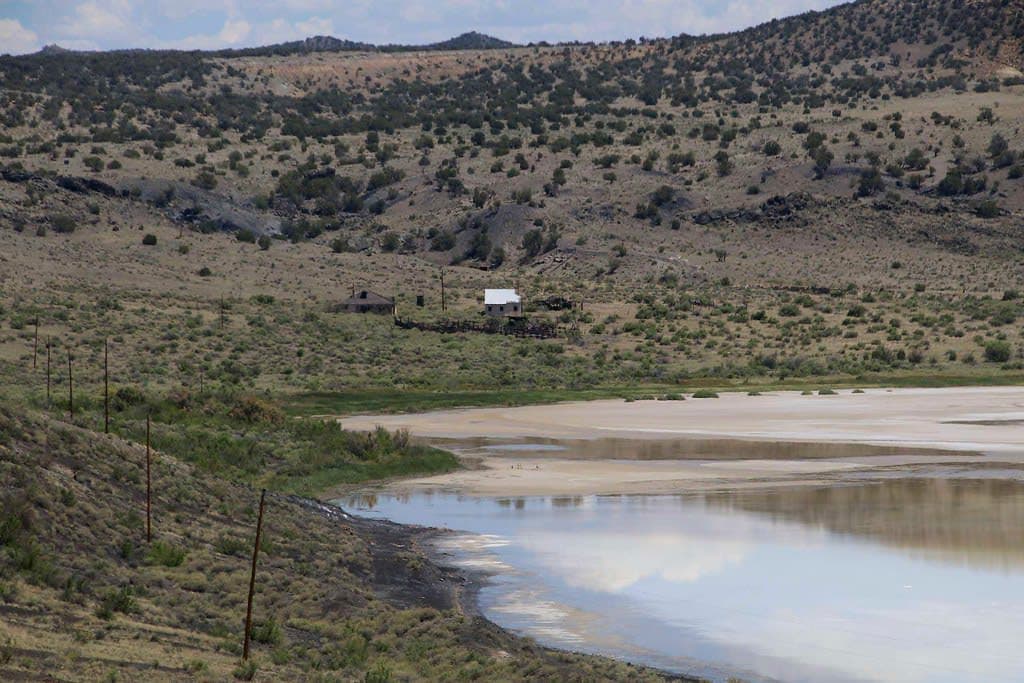
Zuni Lake, New Mexico
Home of Salt Woman, where seven tribes walk barefoot across the desert to harvest her flesh
Catron County, New Mexico, United States
At A Glance
- Coordinates
- 34.4483, -108.7681
- Suggested Duration
- Not applicable for general visitors. Traditional pilgrimages involve multi-day journeys of approximately 60 miles each way from Zuni Pueblo.
- Access
- Zuni Salt Lake is located in Catron County, New Mexico, approximately 60 miles south of Zuni Pueblo. The lake is on Zuni tribal land, returned to the tribe in 1985. There is no public access road, no visitor center, and no infrastructure at the lake. The nearest point of contact is the Zuni Pueblo Visitor Center in the Pueblo of Zuni, New Mexico (on Route 53). Mobile phone signal is unreliable to nonexistent in the area around the lake. The nearest settlement with services is the Pueblo of Zuni, 60 miles north. Do not attempt to approach the lake without explicit tribal authorization.
Pilgrim Tips
- Zuni Salt Lake is located in Catron County, New Mexico, approximately 60 miles south of Zuni Pueblo. The lake is on Zuni tribal land, returned to the tribe in 1985. There is no public access road, no visitor center, and no infrastructure at the lake. The nearest point of contact is the Zuni Pueblo Visitor Center in the Pueblo of Zuni, New Mexico (on Route 53). Mobile phone signal is unreliable to nonexistent in the area around the lake. The nearest settlement with services is the Pueblo of Zuni, 60 miles north. Do not attempt to approach the lake without explicit tribal authorization.
- Not applicable for general visitors, as the site is restricted. If granted access, dress practically for remote high desert terrain and follow all guidance from tribal authorities.
- Prohibited without explicit tribal authorization. This applies to the lake, the surrounding Sanctuary zone, and any archaeological or cultural features within the area. Camera permits available at the Zuni Pueblo Visitor Center do not extend to the Salt Lake or its environs.
- Do not attempt to visit Zuni Salt Lake without explicit permission from the Zuni Pueblo. Do not attempt to harvest salt or collect any materials from the site or surrounding area. Do not photograph, record, or sketch any sacred features. The 185,000-acre Sanctuary zone contains over 5,000 archaeological sites, burial grounds, and shrines — treat the entire area as sacred ground. Approaching the lake without authorization is a violation of tribal sovereignty and a desecration of sacred space.
Overview
Zuni Salt Lake is a volcanic maar in the high desert of western New Mexico, sixty miles south of Zuni Pueblo. For the Zuni people, this shallow crater lake is not a geological feature. It is the living home of Ma'l Oyattsik'i — Salt Woman — whose flesh is the salt that sustains ceremonial life across seven tribal nations. Annual barefoot pilgrimages along sacred trails have been maintained for centuries. The lake and its surrounding 185,000-acre Sanctuary remain among the most sacred and restricted sites in North America.
Sixty miles of high desert separate Zuni Pueblo from the shallow lake where Salt Woman lives. The land between is sparse — drought-resistant grasses, shrubs, cacti, volcanic rock from the Red Hill field. No road was built for this journey. The path is older than roads. For centuries, Zuni pilgrims have walked it barefoot, following trails they describe as umbilical cords connecting them to their salt deity.
The lake itself is a maar — a shallow crater formed when magma met groundwater and exploded upward, roughly twelve thousand years ago. It has no natural outlet. When rain fills it, the water is shallow and saline. When the sun takes the water back, salt remains on the crater floor, white against the dark volcanic rock. The Zuni understand this salt as the flesh of Ma'l Oyattsik'i, Salt Woman, who came to live here after the people mistreated her at her earlier home near the pueblo. Her departure was punishment and gift at once: the salt would still sustain them, but only if they made the journey to her on her terms.
Seven tribal nations — Zuni, Hopi, Acoma, Laguna, Taos, Navajo, and Apache — make pilgrimages to this lake. The 185,000-acre Sanctuary zone surrounding it functioned for centuries as a neutral territory where even warring peoples could approach together in peace. More than five thousand archaeological sites lie within this zone: burial grounds, shrines, the traces of generations who walked these same trails.
This is not a place that welcomes visitors. It is a place that welcomes pilgrims who have earned the right to approach. What follows is offered not as a guide to visiting but as an account of why this remote crater in the New Mexico desert matters profoundly to the people for whom it is home — the home of a deity whose body they carry back across sixty miles of desert to sustain the ceremonies that hold their world together.
Context And Lineage
Zuni Salt Lake is a volcanic maar in Catron County, New Mexico, formed approximately 12,000 years ago. It is the living home of Ma'l Oyattsik'i (Salt Woman) in Zuni cosmology. Seven tribal nations — Zuni, Hopi, Acoma, Laguna, Taos, Navajo, and Apache — conduct annual pilgrimages to harvest salt for ceremonial use. The surrounding 185,000-acre Sanctuary contains over 5,000 archaeological sites and functioned for centuries as a multi-tribal neutral zone. The lake was returned to Zuni control in 1985. A proposed coal mine was defeated in 2003 after nearly two decades of tribal opposition.
In Zuni teaching, Salt Woman once lived at Black Rock, near the Pueblo of Zuni, where the people could reach her easily. But the Zunis grew wasteful and disrespectful, polluting her home with refuse. Salt Woman departed. She traveled south through the high desert, making water salt wherever she stopped, until she reached the volcanic maar sixty miles from the pueblo and settled there permanently.
The story is a lesson encoded in geography. The distance between Zuni Pueblo and the lake is not an accident of geology but a consequence of human behavior. The arduous pilgrimage required to reach Salt Woman's new home is the price of the original disrespect. Every barefoot mile is a reminder that sacred resources require right relationship, that access to the divine is not a convenience but a commitment.
An alternative version preserved in the ethnographic record describes the Goddess of Salt troubled by people who took away her treasures without offering sacrifice. She left the ocean and went to live in the mountains far away, settling at the remote lake. Both versions carry the same teaching: the sacred withdraws from those who fail to honor it, and the journey to recover that relationship demands everything the pilgrim can give.
The lineage of pilgrimage to Zuni Salt Lake reaches back beyond the historical record. Salt grains matching those from the lake have been found in corn husk wrappings at archaeological sites in the San Juan Basin, including sites associated with the Chaco culture (circa 850-1250 CE). This physical evidence demonstrates that the trade in sacred salt predates European contact by centuries and connected Zuni Salt Lake to the great ceremonial centers of the Ancestral Puebloans.
The Zuni relationship with the lake survived Spanish colonization, which disrupted but did not sever the pilgrimage tradition. It survived Franciscan exploitation of the salt. It survived the imposition of American sovereignty. In 1985, when the U.S. government returned the lake to Zuni control, the recognition was less a gift than a belated acknowledgment of a relationship that had never been legitimately severed.
The coal mine campaign of the 1980s and 1990s tested the lineage most severely. The Salt River Project's proposed strip mine eleven miles from the lake threatened to draw down the water table and potentially drain the maar. The Zuni response drew on both spiritual authority and Western science. Tribal hydrologists demonstrated the aquifer connection. Tribal leaders articulated the stewardship obligation. Allied tribes — Hopi, Acoma, Laguna, and others — joined the opposition, forming a coalition that reflected the lake's multi-tribal significance. When the Salt River Project abandoned the mine in 2003, it marked a rare victory for indigenous sacred site protection in the American legal and political system.
Ma'l Oyattsik'i (Salt Woman)
deity
The Salt Woman who inhabits Zuni Salt Lake. The salt deposited on the maar floor is understood as her flesh. She is not a historical or symbolic figure but a living presence who sustains the ceremonial life of multiple tribal nations through the salt that pilgrims harvest with proper ceremony.
Andrew Othole
historical
Past Zuni lieutenant governor who articulated the significance of the pilgrimage trails as umbilical cords connecting the tribes to their salt deity and connecting the lake to the tribes' other sacred places. His language captured the organic, life-sustaining quality of the relationship.
Dan Simplicio
contemporary
Zuni councilman who led the effort to protect the lake from the proposed Salt River Project coal mine. He hired hydrologists to demonstrate the threat to the lake's water table and articulated the tribe's obligation as stewards: 'When we were given Salt Lake, we were given an obligation as stewards, caretakers. That is her home, and we have to protect it.'
Pablo Padilla
contemporary
Zuni environmental protection specialist who created environmental programs for the tribe and played a central role in the nearly two-decade campaign to defeat the coal mine. His work bridged Western scientific methods (hydrology, environmental impact assessment) and Zuni spiritual values.
Why This Place Is Sacred
Zuni Salt Lake's thinness operates at every scale. Geologically, it is a point where subterranean forces breached the surface — a volcanic maar where deep earth met sky. Seasonally, the lake enacts a visible cycle of death and renewal as water becomes salt. Culturally, the Sanctuary zone dissolves ordinary social boundaries — enemies become pilgrims in the same neutral space. And at the most intimate scale, harvesting salt from the lake bed is understood as touching the body of a deity.
The maar was formed twelve thousand years ago when magma rising through the Red Hill volcanic field encountered groundwater. The explosion that followed was steam-driven — a meeting of fire and water that tore open the earth's surface and left a shallow crater. The geological violence of that formation created the conditions for everything that followed: a closed basin with no outlet, where water accumulates and evaporates, concentrating salt season after season in a cycle that has continued for millennia.
The Zuni see this cycle as something other than evaporation. The lake fills, the water stands shallow and saline, alive with brine shrimp and ringed by alkali-adapted plants. Then the water recedes, and salt appears — white crystalline deposits on the dark crater floor. What geologists describe as a hydrological cycle, the Zuni understand as revelation: Salt Woman making her flesh available to those who come with proper ceremony.
The thinness extends far beyond the lake's edge. The 185,000-acre Sanctuary zone that surrounds it is itself a sacred space — one of the rarest cultural landscapes in North America. For centuries, this vast area functioned as a neutral zone. Tribes that might be in conflict elsewhere would lay down their weapons before entering, approaching the lake together as pilgrims rather than enemies. The trails that cross this zone connect the lake to pueblos and sacred sites across hundreds of miles, forming what Zuni elder Andrew Othole described as umbilical cords tying the tribes to their salt deity and tying the sacred salt lake to the tribes' other holy places.
The pilgrimage itself is the primary form of thinning. Sixty miles barefoot across high desert is not a pleasant walk. It is an ordeal, a stripping away of comfort, a physical enactment of the commitment required to approach the sacred. By the time pilgrims reach the lake, the journey has already changed them. The boundary between the ordinary world and the sacred one has been worn thin by the miles themselves.
At the lake, the harvesting of salt completes the encounter. To take salt from the maar floor is, in Zuni understanding, to touch the body of Ma'l Oyattsik'i. The salt that pilgrims carry back to their communities is not a commodity. It is flesh — the flesh of a deity who sustains ceremonies marking every stage of life, from an infant's first cry to the final rites. The thinness at Zuni Salt Lake is not atmospheric or mystical. It is material, tactile, carried home in the hands.
The lake's sacred function centers on the relationship between the Zuni people and Ma'l Oyattsik'i. In Zuni teaching, Salt Woman once lived at Black Rock near the Pueblo of Zuni, where she was easily accessible. But the people became wasteful and disrespectful, polluting her home. In response, she departed southward to the remote volcanic maar, establishing a fundamental principle: sacred resources demand respect, and access to the sacred requires sacrifice and right relationship. The arduous pilgrimage is not an inconvenience but a consequence and a teaching — the distance is the lesson.
The relationship between Zuni Salt Lake and its peoples has been tested repeatedly by colonial and industrial forces. Spanish colonizers recognized the salt's value and attempted to control access. In the colonial period, Franciscan missionaries exploited the salt commercially, extracting it without the ceremonial protocols that the Zuni understood as essential. The disruption of the sacred relationship with salt was, for the Zuni, not merely an economic loss but a spiritual violation.
In 1985, the U.S. government returned the lake and approximately 5,000 surrounding acres to Zuni tribal control, recognizing what Zuni councilman Dan Simplicio articulated: when they were given Salt Lake, they were given an obligation as stewards and caretakers.
The most severe modern threat came in the 1980s and 1990s, when the Salt River Project proposed a coal strip mine eleven miles from the lake. The Zuni, joined by the Hopi, Acoma, Laguna, and other tribes as well as environmental organizations, mounted a sustained campaign against the mine. Zuni activists like Pablo Padilla helped create environmental programs for the tribe, and tribal hydrologists demonstrated that the mine's proposed water pumping would likely lower the water table and drain the lake itself. In 2003, the Salt River Project abandoned the project. The victory is cited as a landmark case in indigenous sacred site protection — a case where the spiritual significance of a landscape was successfully argued alongside its ecological value.
Traditions And Practice
Annual barefoot pilgrimages to Zuni Salt Lake are conducted by seven tribal nations to harvest salt understood as the flesh of Salt Woman. The specific ceremonial protocols are sacred knowledge maintained within tribal communities. The salt is used in ceremonies throughout the year, including life-cycle rituals. The site is not open to visitor participation in any form.
The central practice is the pilgrimage itself. Zuni pilgrims walk approximately sixty miles barefoot along sacred trails from the pueblo to the lake, following routes understood as umbilical cords connecting the community to Salt Woman. The journey is ceremonial from the first step — not a hike that becomes sacred upon arrival, but a sacred act in its entirety. The specific protocols of the pilgrimage, the prayers spoken along the way, and the ceremonies performed at the lake are sacred knowledge maintained within the Zuni community.
At the lake, salt is harvested during the dry season when the water has evaporated and deposits lie exposed on the maar floor. The harvesting is itself a ceremony, not a collection task. The salt is understood as the flesh of Ma'l Oyattsik'i, and taking it requires proper ritual relationship.
The harvested salt enters the ceremonial life of the community throughout the year. It is used in rituals marking the stages of life — including ceremonies when an infant first cries and smiles. The salt from this specific lake is not interchangeable with salt from other sources; its sacred identity derives from its origin in Salt Woman's body at this specific place.
Annual pilgrimages continue to be conducted by the Zuni, Hopi, Acoma, Laguna, and other tribes. The ceremonial salt harvesting remains an active practice. The Zuni Tribe exercises sovereignty over the lake and its surrounding land, protecting both the physical site and the cultural practices it sustains.
The successful defense against the coal mine added a new dimension to the tradition of stewardship. Zuni environmental protection programs, created in part by Pablo Padilla, blend Western scientific methods with traditional ecological knowledge. The protection of the aquifer that feeds the lake is understood as an extension of the sacred obligation to protect Salt Woman's home.
Zuni Salt Lake does not invite the practices of outside visitors. The appropriate engagement for non-tribal people is learning, respect, and support for the Zuni community's stewardship.
If you are drawn to the Salt Woman teaching, consider what it says about your own relationship with the resources you depend on. Salt Woman departed because the people took without giving, consumed without respecting. She did not disappear — she withdrew to a place that required effort to reach, making the relationship honest. The teaching applies far beyond this specific lake.
Zuni (A:shiwi)
ActiveZuni Salt Lake is the living home of Ma'l Oyattsik'i (Salt Woman), whose flesh — the salt deposited on the maar floor — sustains the ceremonial life of the Zuni people. Annual barefoot pilgrimages along sacred trails have been maintained for centuries, representing one of the longest continuously practiced religious pilgrimages in North America. The lake was returned to Zuni control in 1985, and the tribe exercises sovereignty over the site as sacred stewards.
Annual barefoot pilgrimages from Zuni Pueblo along sacred trails described as umbilical cords connecting the community to Salt Woman. Ceremonial salt harvesting during the dry season. Use of sacred salt in life-cycle ceremonies throughout the year, including rituals when an infant first cries and smiles. Environmental stewardship of the lake and its aquifer. Specific ceremonial protocols are sacred knowledge maintained within the community.
Hopi
ActiveThe Hopi make annual pilgrimages to Zuni Salt Lake to harvest salt for ceremonial and domestic use. The practice connects them to their Chaco-era ancestors, who obtained salt from the same lake over a thousand years ago. Physical evidence of this connection has been found in archaeological sites across the San Juan Basin.
Annual pilgrimages to harvest salt. Ceremonial use of the salt in Hopi religious practices. The specific protocols are maintained within the Hopi community.
Acoma, Laguna, Navajo, Apache, and Taos Pueblos
ActiveMultiple additional tribal nations conduct pilgrimages to Zuni Salt Lake for ceremonial salt harvesting. The Acoma and Laguna Pueblos, the Navajo, the Apache, and Taos Pueblo all maintain sacred relationships with the lake. The Navajo and Pueblo peoples use salt from the lake in life-cycle ceremonies. The multi-tribal use of the lake is the basis for the 185,000-acre Sanctuary's tradition as a neutral zone.
Pilgrimages to harvest salt. Use of salt in ceremonies including life-cycle rituals. Participation in the coalition that defeated the coal mine threat in 2003. Specific ceremonial practices are maintained within each tribal community.
Experience And Perspectives
Zuni Salt Lake is not a site for general visitor experience. It is sacred tribal land with restricted access. For the tribal pilgrims who approach it through annual ceremonies, the experience is one of sustained physical effort across sixty miles of desert, culminating in the encounter with Salt Woman's home and the harvesting of her flesh. The landscape surrounding the lake is one of high desert austerity — volcanic rock, sparse vegetation, vast silence.
The experience of Zuni Salt Lake belongs to the pilgrims who walk to it. Any honest account must begin with that acknowledgment. What non-tribal people can know about the experience is limited to what tribal members have chosen to share publicly, and that sharing has been deliberately measured.
What is known is that the pilgrimage covers approximately sixty miles of high desert terrain. The trails are not marked for outsiders. They are known to those who walk them, passed from generation to generation as sacred knowledge. The journey is undertaken barefoot, in a ceremony whose specific protocols are maintained within the tribal communities. The physical difficulty of the walk — the heat, the distance, the volcanic rock underfoot — is not incidental. It is integral. The effort is the offering.
The landscape itself communicates austerity. The high desert of western New Mexico is not lush. It is spare, exposed, honest in a way that gentler landscapes are not. Volcanic formations from the Red Hill field punctuate the terrain. The grasses are adapted to drought. The silence is deep and uninterrupted by human infrastructure.
The lake, when reached, shifts between states. In wet seasons, it holds shallow water — saline, home to brine shrimp and alkali flies, ringed by salt-tolerant vegetation. In dry seasons, the water retreats and the salt remains: white deposits on the dark crater floor, visible evidence of what the Zuni understand as Salt Woman's presence. The maar itself — the volcanic crater — creates a sense of contained space within the vastness of the surrounding landscape, a bowl holding something precious.
Those who have been in the presence of the lake with proper authorization describe a quality of stillness that the surrounding desert, for all its quiet, does not quite prepare you for. The lake sits within its crater as though waiting. The weight of centuries of pilgrimage — thousands of journeys along those umbilical cord trails — is not visible but is, by multiple accounts, felt.
Zuni Salt Lake is not a destination for uninvited visitors. If you wish to understand this place, the appropriate starting point is the Pueblo of Zuni itself. The Zuni Pueblo Visitor Center provides context for Zuni culture and history. The A:shiwi A:wan Museum and Heritage Center in Zuni preserves and interprets Zuni cultural heritage on Zuni terms.
From a distance, you can honor this place by learning its story, supporting Zuni sovereignty and environmental stewardship, and recognizing that some sacred places serve their purpose precisely because access is earned, not given. The Salt Woman's departure from her convenient location near the pueblo to the remote maar sixty miles south is itself a teaching about the relationship between accessibility and reverence.
Zuni Salt Lake sits at the intersection of volcanic geology, indigenous sacred tradition, and contemporary struggles over tribal sovereignty and environmental protection. The scholarly, indigenous, and alternative perspectives diverge sharply, and honest engagement requires recognizing that the indigenous perspective is not one view among equals — it is the perspective of the peoples who have walked barefoot to this lake for centuries and who carry its salt back in their hands as the body of a deity.
Anthropological and archaeological research confirms Zuni Salt Lake as one of the most significant multi-tribal sacred sites in North America. The 185,000-acre Sanctuary zone is recognized as an extraordinarily rare cultural landscape — a traditional neutral zone containing over 5,000 documented archaeological sites. Physical evidence links the salt trade to the Chaco culture, with salt grains from the lake found in corn husk wrappings at San Juan Basin sites dating to 850-1250 CE, demonstrating centuries of long-distance ceremonial trade.
Geologically, the lake is a well-documented volcanic maar formed approximately 12,000 years ago in the Red Hill volcanic field. Recent USGS research is investigating the hydrological dynamics of the maar — the sources of water and salt — with implications for the lake's long-term sustainability.
The 2003 defeat of the Salt River Project coal mine is studied in both legal and environmental scholarship as a landmark case in indigenous sacred site protection. The Zuni strategy of combining Western scientific evidence (hydrology, environmental impact) with assertions of spiritual significance and tribal sovereignty established important precedents.
For the Zuni and allied tribal nations, the lake is Ma'l Oyattsik'i's home. The salt is her flesh. The trails are umbilical cords. These are not metaphors. They are descriptions of how reality is structured.
The stewardship obligation that comes with the lake — articulated by Dan Simplicio as fundamental to the tribe's relationship with the site — extends to every aspect of the landscape. The aquifer that feeds the lake, the volcanic geology that created it, the desert ecosystem that surrounds it, the burial grounds and shrines within the Sanctuary — all are part of a single sacred system that the Zuni are obligated to protect. The coal mine fight was not an environmental campaign but an act of sacred duty.
The specific ceremonial knowledge associated with the lake is not public, and this privacy is itself a form of protection. Sacred knowledge survives colonization and cultural disruption precisely because it is guarded. The Zuni share what they choose to share; what they keep private is kept private because the integrity of their relationship with Salt Woman depends on it.
Some New Age and alternative spiritual sources frame Zuni Salt Lake in terms of earth energy, goddess worship, or generic indigenous spirituality. These characterizations strip the site from its specific tribal context and can contribute to cultural appropriation. Ma'l Oyattsik'i is not a generic goddess figure available for personal spiritual consumption. She is a specific Zuni deity with a specific origin story, specific ceremonial protocols, and a specific relationship to specific peoples. The appropriate response to her story is not appropriation but respect.
Much about Zuni Salt Lake remains unknown to outsiders, by design. The full network of pilgrimage trails has not been publicly mapped. The complete ceremonial protocols are sacred knowledge. The earliest human use of salt from the lake predates the documented Chaco-era evidence, but the timeline remains uncertain. How the Salt Woman tradition developed within Zuni cosmology, and whether related traditions exist in other Pueblo cultures beyond those currently documented, are questions that only tribal knowledge holders can fully address. Recent USGS hydrological research may illuminate the physical dynamics of the maar, but the questions that matter most to the Zuni — questions about relationship, obligation, and the sustaining presence of Salt Woman — are not answerable by hydrology.
Visit Planning
Zuni Salt Lake is located approximately 60 miles south of Zuni Pueblo in Catron County, New Mexico. It is sacred tribal land with restricted access. There is no visitor infrastructure, no public road to the lake, and no accommodation nearby. Contact the Zuni Pueblo Visitor Center for any inquiries. This is not a tourism destination.
Zuni Salt Lake is located in Catron County, New Mexico, approximately 60 miles south of Zuni Pueblo. The lake is on Zuni tribal land, returned to the tribe in 1985. There is no public access road, no visitor center, and no infrastructure at the lake. The nearest point of contact is the Zuni Pueblo Visitor Center in the Pueblo of Zuni, New Mexico (on Route 53). Mobile phone signal is unreliable to nonexistent in the area around the lake. The nearest settlement with services is the Pueblo of Zuni, 60 miles north. Do not attempt to approach the lake without explicit tribal authorization.
There are no accommodations at or near Zuni Salt Lake. The Pueblo of Zuni (60 miles north) has the Inn at Halona, a Zuni-operated bed and breakfast, and limited other options. Gallup, New Mexico (approximately 40 miles north of Zuni Pueblo) offers standard lodging. Visitors interested in Zuni culture should base themselves at or near the Pueblo of Zuni and visit the A:shiwi A:wan Museum and Heritage Center.
Zuni Salt Lake demands the highest possible level of cultural respect. This is sacred tribal land, not a visitor destination. Access requires permission from the Zuni Pueblo. All photography, recording, and collection are prohibited without explicit authorization. The appropriate etiquette for most non-tribal people is to learn about the site's significance and support Zuni stewardship from a respectful distance.
The fundamental etiquette at Zuni Salt Lake is not visiting it. For the vast majority of non-tribal people, the appropriate relationship with this site is one of informed respect maintained at a distance. The lake belongs to Salt Woman. The land belongs to the Zuni. The ceremonies belong to the tribal nations who have walked these trails for centuries. None of these belong to outsiders.
If extraordinary circumstances bring you into the area — with tribal authorization — follow every instruction provided by tribal authorities without question or negotiation. Do not take anything. Do not leave anything. Do not photograph, record, or sketch anything. Do not ask questions about ceremonial practices. The information that tribal members choose to share publicly is sufficient; what they keep private is kept private for reasons that take precedence over any outsider's curiosity.
The Zuni Pueblo's general rules of etiquette, available through the Zuni Tourism office, apply throughout Zuni territory and offer a starting framework: no photography of ceremonies, no recording of ceremonies, no unauthorized entry into restricted areas, no collection of cultural materials. At the Salt Lake, these restrictions are absolute.
Not applicable for general visitors, as the site is restricted. If granted access, dress practically for remote high desert terrain and follow all guidance from tribal authorities.
Prohibited without explicit tribal authorization. This applies to the lake, the surrounding Sanctuary zone, and any archaeological or cultural features within the area. Camera permits available at the Zuni Pueblo Visitor Center do not extend to the Salt Lake or its environs.
Non-tribal visitors should not leave offerings at or near the site. The ceremonial protocols for the lake are exclusively for tribal participants.
The lake is on Zuni tribal land. Access requires permission from the Zuni Pueblo. Do not attempt to visit without authorization. Do not harvest salt or collect any materials. Do not photograph, record, or sketch. Do not disturb archaeological sites, shrines, or burial grounds. The entire 185,000-acre Sanctuary zone is sacred ground. Tribal sovereignty is absolute in all matters relating to access and conduct.
Sacred Cluster
Nearby sacred places create the location cluster described in the growth plan. This block is intentionally crawlable and links into the wider regional graph.
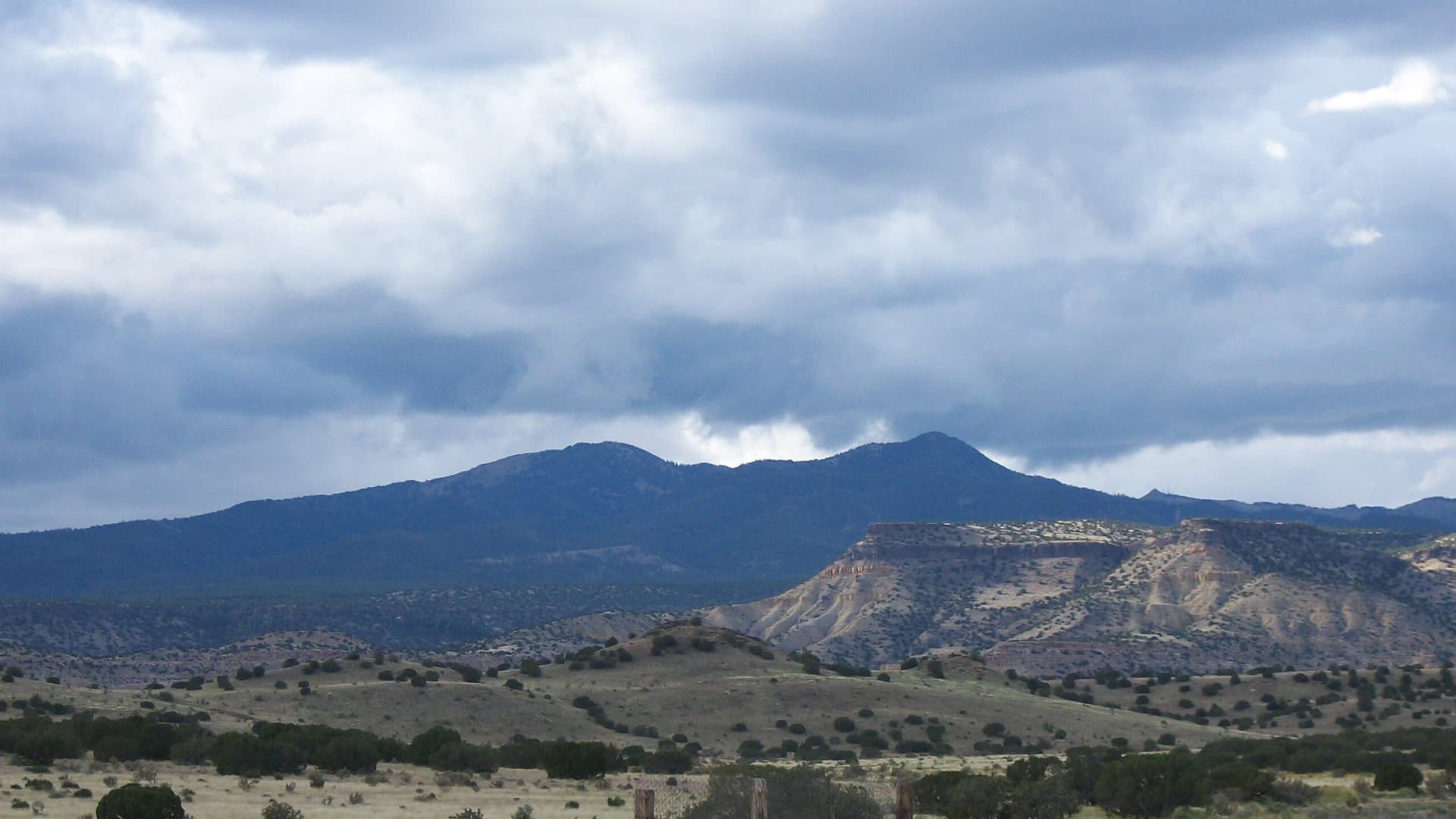
Mt. Taylor, New Mexico
Cibola County, New Mexico, United States
137.6 km away
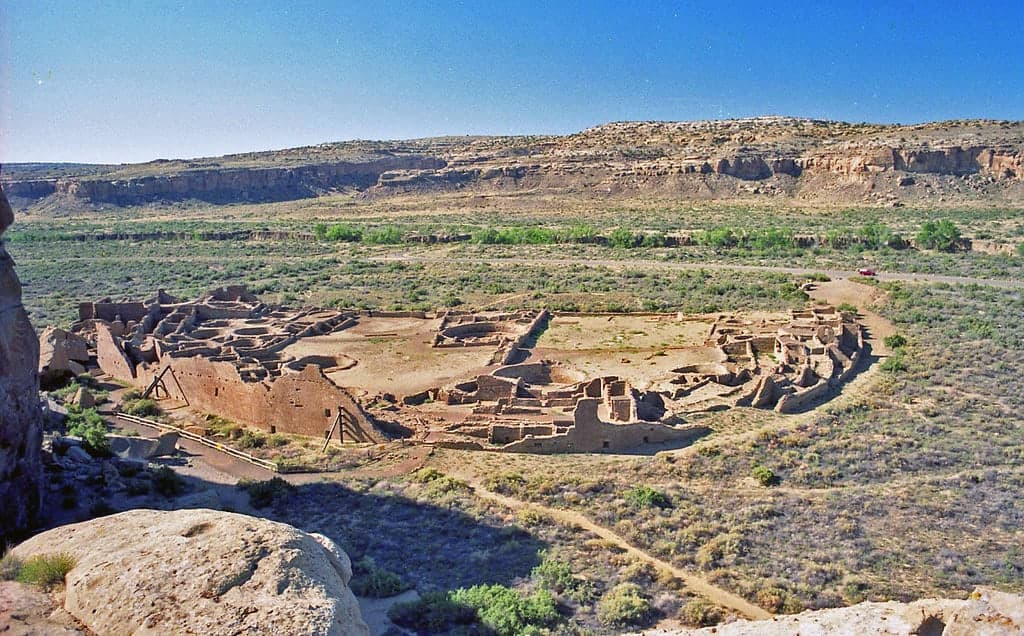
Chaco Canyon, New Mexico
San Juan County, New Mexico, United States
193.6 km away
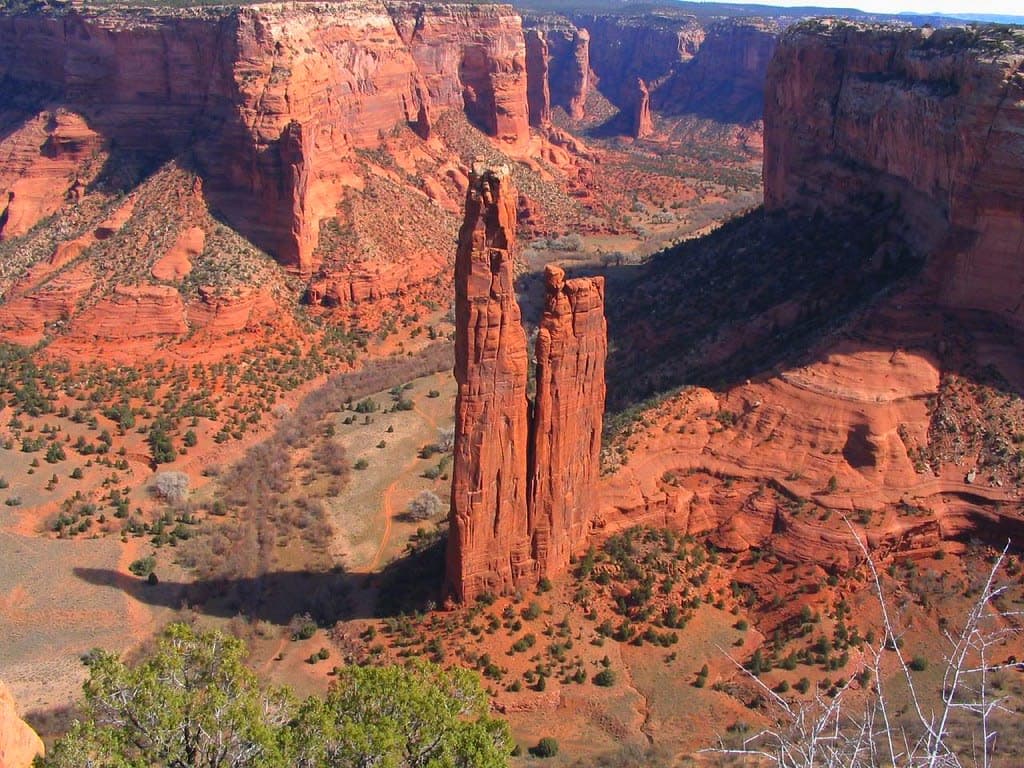
Canyon de Chelly, Arizona
Chinle Agency, Arizona, United States
202.1 km away
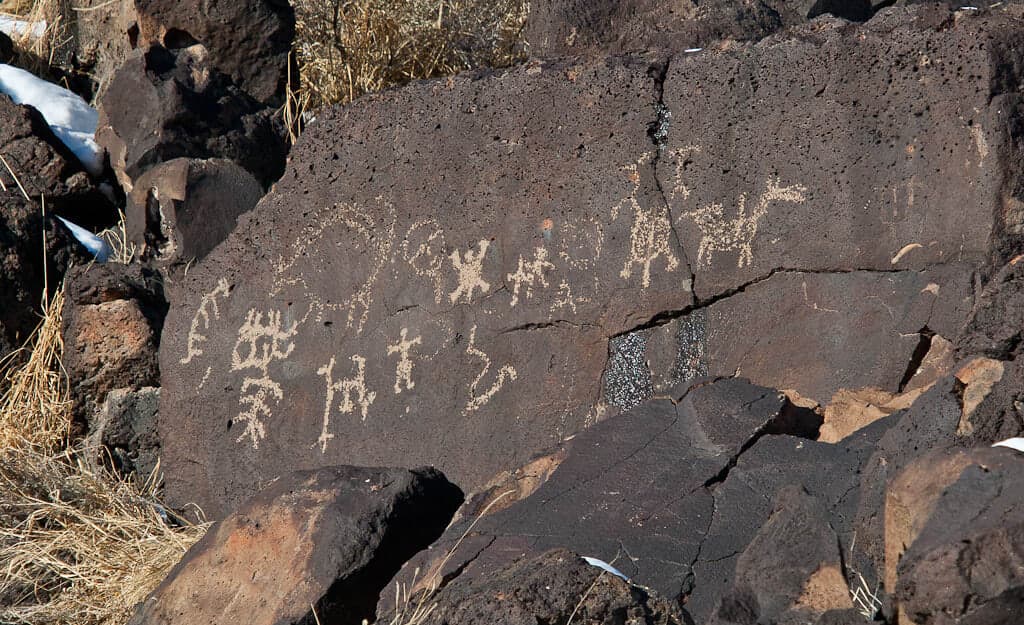
Petroglyphs National Monument
Albuquerque, New Mexico, United States
202.9 km away