Puuhonua o Honaunau National Historical Park, Hawaii
Where kapu breakers once fled for absolution, and where the mana of 23 chiefs still sanctifies the ground
Honaunau, Hawaii, United States
At A Glance
- Coordinates
- 19.4127, -155.9009
- Suggested Duration
- Allow 1-2 hours for a thorough visit. The self-guided walking tour takes approximately one hour. Add time for watching the orientation video at the visitor center. The annual Cultural Festival is a full-day event. Those seeking deeper encounter with the site's spiritual atmosphere may want additional time for quiet reflection.
Pilgrim Tips
- Modest, respectful attire is required. No bikinis, swimwear, or revealing clothing. Practical footwear for uneven lava rock paths. Sun protection (hat, sunscreen) is essential. No specific ceremonial dress is required of visitors.
- Personal photography is generally permitted throughout the park. Be mindful and respectful when photographing sacred areas. Do not photograph Native Hawaiian practitioners during ceremonial activities without permission. Commercial photography and filming require permits.
- Private Native Hawaiian religious ceremonies are not open to visitors. If you encounter a ceremony in progress, step back and give practitioners space. Do not photograph practitioners during ceremonies. The site's openness to visitors does not mean all activities within it are public. Some sacred practices remain protected, as they should.
Overview
On the black lava coast of Hawaii's Big Island, a massive stone wall marks the boundary between ordinary life and sanctuary. For over 700 years, those who broke the sacred kapu laws fled here knowing death waited behind them and forgiveness lay ahead. If they reached this ground before capture, the mana of 23 high chiefs whose bones rested in Hale o Keawe temple made them untouchable. A kahuna would perform absolution, and they could return to their community, forgiven. The sanctuary system ended in 1819, but the mana persists. Native Hawaiian practitioners still conduct ceremonies here. This remains sacred ground.
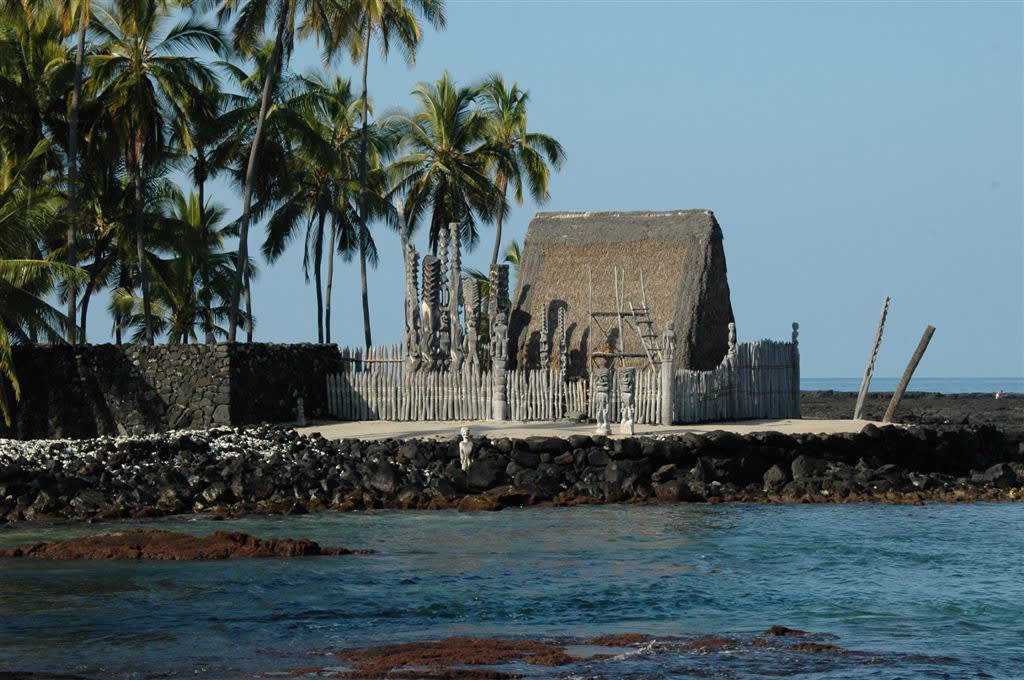
Pu'uhonua o Honaunau occupies a point where black lava meets turquoise water on the Kona coast. Coconut palms sway above white sand paths. Ki'i—carved wooden images of gods and ancestral guardians—stand fierce-faced before a temple. The setting is beautiful in the way only Hawaii can be. But what makes this place sacred is not beauty. It is mercy.
For over 700 years, this was Hawaii's most powerful pu'uhonua—a place of refuge. The kapu system that governed Hawaiian life was absolute. Commoners could not look at chiefs or let their shadow fall upon them. Women could not eat certain foods or dine with men. Breaking any kapu meant death, for Hawaiians believed unpunished violations would bring divine retribution through volcanic eruption, tsunami, or famine. There was no appeal, no argument, no mitigation. There was only death—or the pu'uhonua.
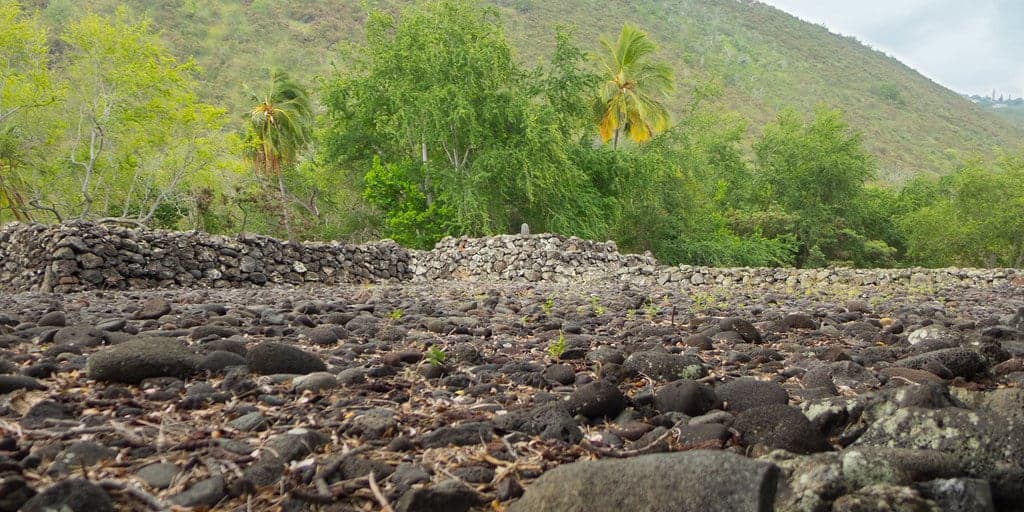
If a kapu breaker could reach this sanctuary before warriors caught them, they were safe. The massive Great Wall—over 1,000 feet long, 12 feet high, 18 feet wide—marked the boundary between the Royal Grounds and the pu'uhonua. Cross that threshold, and the mana radiating from the bones of 23 high chiefs housed in Hale o Keawe temple made the ground inviolable. Warriors could not shed blood here. A kahuna would perform ceremonies of absolution, calling upon the gods to forgive the transgression. Then the person was free to return home, their slate wiped clean.
The kapu system ended in 1819 when King Kamehameha II abolished the traditional Hawaiian religion. The temple fell into disuse. But the site was never abandoned. Today, Pu'uhonua o Honaunau is both a National Historical Park preserving this history and an active religious site where Native Hawaiian lineal descendants continue ceremonial practices. The mana of this place—accumulated through centuries of desperate arrivals and merciful absolutions—remains tangible. Visitors consistently report profound peace, a sense of sanctuary that transcends tourism and touches something essential: the human longing for forgiveness and a second chance.
Context And Lineage
Pu'uhonua o Honaunau has been sacred for over 700 years, serving as both royal residence and sanctuary. The Great Wall was built around 1550; Hale o Keawe temple was constructed around 1650. The kapu system and sanctuary function ended in 1819, but the site's sacred status has never lapsed. It became a National Historical Park in 1961.
Hawaiian oral traditions hold that the gods established the kapu system and the pu'uhonua as part of the divine order governing Hawaiian society. The ali'i who ruled the islands were believed to possess divine mana that gave them the right to govern and required protection through strict protocols—the kapu. The pu'uhonua reflected a complementary understanding: the gods who demanded adherence to sacred law also provided a path to forgiveness.
The site at Honaunau became the most powerful pu'uhonua in the Hawaiian Islands because of its association with the Kona chiefs and eventually the Kamehameha dynasty. When Chief Keawe-i-kekahi-ali'i-o-ka-moku died around 1650, Hale o Keawe was built to house his bones. Over time, the remains of 22 additional high chiefs joined his, concentrating mana so intense that it sanctified the entire pu'uhonua and made it inviolable.
The pu'uhonua was protected not merely by human decree but by divine power. No warrior could shed blood on ground sanctified by such concentrated ancestral mana. This was not simply law—it was spiritual reality.
Pu'uhonua o Honaunau represents the unbroken lineage of Hawaiian spiritual tradition from the time of the ali'i to the present. The site was built and maintained by the chiefs of Kona over many generations. After the kapu system ended, the connection to the Kamehameha dynasty protected Hale o Keawe from destruction. Today, lineal descendants of the area continue to practice traditional Hawaiian religion at the site, maintaining ceremonial traditions that connect contemporary practitioners to their ancestors across centuries. The annual Cultural Festival, co-sponsored by the Hawaii Pacific Parks Association and Na Hoa Aloha o ka Pu'uhonua o Honaunau, brings together practitioners who demonstrate lauhala weaving, kapa beating, lei making, hula kahiko, and other traditions—not as historical reenactment but as living practice passed from generation to generation.
Chief Keawe-i-kekahi-ali'i-o-ka-moku
Powerful chief of Hawaii Island whose bones were the first housed in Hale o Keawe temple around 1650. His mana, and eventually that of 22 other chiefs, sanctified the pu'uhonua.
King Kamehameha II (Liholiho)
The king who abolished the kapu system in 1819 by publicly eating with women. This act ended the pu'uhonua's function as a sanctuary, though the site remained sacred.
The Kahuna of Hale o Keawe
Priests who performed the ceremonies of absolution for kapu breakers who reached the sanctuary. They called upon the gods and the mana of the chiefs' bones to grant forgiveness.
Contemporary Kalai Ki'i Practitioners
Descendants of the area who have preserved the tradition of carving ki'i (sacred wooden images) over many generations. They carved the ki'i visible at the site today, with the last restoration in 2004.
Why This Place Is Sacred
At Pu'uhonua o Honaunau, thinness emerges from the accumulated power of sanctuary—centuries of kapu breakers arriving at the edge of death and finding forgiveness. The mana of 23 high chiefs once physically present here, the boundary marked by the Great Wall, and the ongoing ceremonial use by Native Hawaiians all contribute to a place where ordinary experience gives way to something more.
The thinness of Pu'uhonua o Honaunau derives from function as much as form. For over 700 years, this was the threshold between death and life, condemnation and absolution. Imagine reaching this shore after swimming Honaunau Bay with warriors in pursuit, knowing that if you touched this ground before they caught you, you would live. That desperation, that hope, that relief—repeated hundreds of times over centuries—left something in the stones.
In Hawaiian understanding, mana accumulates in places of power. The bones of chiefs contain their spiritual essence, and when Hale o Keawe held the iwi of 23 high chiefs, their combined mana radiated outward, making the entire pu'uhonua spiritually inviolable. Though the bones were removed in the 19th century, many practitioners and visitors report that the mana persists. Something was established here that does not entirely depend on physical presence.
The Great Wall functions as more than historical architecture. It is a line of demarcation—on one side, the Royal Grounds where the ali'i of Kona lived and governed; on the other, the sanctuary where even the most serious transgressors could find absolution. Crossing that wall meant crossing from one order of existence into another. The boundary still holds meaning, even for visitors with no knowledge of kapu.
The continued ceremonial use matters. This is not a museum of dead religion but a site where Native Hawaiian practitioners maintain living relationship with ancestors and land. The annual Cultural Festival brings traditional practices into public view, but private ceremonies continue throughout the year. When visitors encounter this place, they encounter something actively tended, actively sacred.
Visitors use different language—peace, presence, mana, energy—but the reports are consistent. There is a quality here that exceeds the sum of lava rock and palm trees. Whether understood as the residue of centuries of sanctuary, the continuing spiritual presence of ancestral chiefs, or simply the effect of a place where forgiveness was made structurally possible, the thinness is palpable.
Pu'uhonua o Honaunau served two interrelated purposes. First, it was the Royal Grounds of the Kona ali'i—a residence and center of chiefly power. Second, and more distinctively, the pu'uhonua section provided sanctuary for those who had violated kapu.
The sanctuary system was integral to the kapu structure. A legal code without provision for mercy becomes tyranny. The pu'uhonua allowed the kapu system to maintain its severity while also offering a path to restoration. Those who reached the sanctuary and received absolution from a kahuna could return to their community as though the violation had never occurred. Defeated warriors and non-combatants during warfare could also find protection here.
Hale o Keawe was built around 1650 to house the bones of Chief Keawe-i-kekahi-ali'i-o-ka-moku. Over time, it came to hold the remains of 23 high chiefs, concentrating immense mana in one location. This mana was what made the pu'uhonua effective—warriors could not shed blood on ground so sanctified.
The sanctuary function of Pu'uhonua o Honaunau ended in 1819 when King Kamehameha II (Liholiho) abolished the kapu system. This dramatic act, encouraged by the regent Kaahumanu and the Queen Mother Keopuolani, involved the king publicly eating with women—a clear kapu violation—to demonstrate that the old order had passed. Within months, traditional Hawaiian religion was officially abandoned, and temples across the islands were destroyed or fell into disuse.
Hale o Keawe survived because of its connection to the Kamehameha dynasty—the bones within belonged to their ancestors. But the temple's function as a source of sanctuary power was finished. The bones were eventually removed in the 19th century, their final resting place unknown or undisclosed.
In 1891, the land was deeded to the Bishop Estate Trustees. The County of Hawaii leased it as a public park from 1921 to 1961. Congress authorized establishment as a National Historical Park in 1955, and the park was formally created on July 1, 1961.
The National Park Service worked with the local Hawaiian community to restore the Great Wall and reconstruct Hale o Keawe using archaeological research combined with traditional building methods. The ki'i visible today were carved by descendants of the area who have preserved the tradition of kalai ki'i over many generations, with the last restoration in 2004.
Crucially, the site's transition to National Historical Park did not end its sacred function. Native Hawaiian lineal descendants continue to use Pu'uhonua o Honaunau for religious ceremonies. The park is one of only four places in Hawaii where the Hawaiian flag may fly without the American flag, acknowledging its special cultural status and the unresolved questions of Hawaiian sovereignty.
Traditions And Practice
For 700 years, ceremonies of absolution transformed kapu breakers into forgiven members of society. Today, Native Hawaiian practitioners continue private religious ceremonies at the site. The annual Cultural Festival offers public participation in traditional crafts and practices. Visitors can witness living tradition but should not attempt to participate in Native Hawaiian religious ceremonies.
The traditional practice at Pu'uhonua o Honaunau centered on absolution. Those who violated kapu faced mandatory death, but if they could reach the pu'uhonua before capture—by swimming across Honaunau Bay or crossing the boundary by land—they entered sacred ground where warriors could not shed blood.
Once within the sanctuary, a kahuna would perform ceremonies calling upon the gods housed in Hale o Keawe to forgive the transgression. The exact nature of these rituals has not been preserved in complete detail, but they likely involved prayers, offerings, and ritual purification. The ceremony transformed the violator's status: they were no longer condemned but absolved, and could return to their community as though the violation had never occurred.
The temple Hale o Keawe was the center of religious activity. Kahuna tended to the sacred bones of the 23 chiefs, ensuring their mana continued to radiate outward and sanctify the sanctuary. The ki'i standing guard around the temple embodied the presence of the gods: Kane, Kanaloa, Ku, and Lono, as well as deified chiefs and ancestral guardians.
The 'Ale'ale'a heiau, which predates Hale o Keawe, served as a platform for watching hula performances—a reminder that Hawaiian religion included celebration as well as solemnity.
Native Hawaiian lineal descendants continue to hold private religious ceremonies at Pu'uhonua o Honaunau. These practices are not publicized, and visitors cannot participate. The National Park Service works closely with the Hawaiian community to ensure the site is managed in ways that respect and perpetuate traditional Hawaiian values.
The annual Cultural Festival in late June provides opportunities for public engagement with Hawaiian traditions. Cultural practitioners in traditional dress demonstrate lauhala and coconut frond weaving, kapa beating, lei making, and wood carving. Visitors can take rides in traditional dugout canoes on Honaunau Bay, learn to play Hawaiian games like konane and ulu maika, and watch hula kahiko performances. The hukilau—traditional fishing with net—is demonstrated with practitioners reciting chants before the net is raised. Fish are released back into the bay.
Throughout the year, cultural practitioners demonstrate traditional Hawaiian skills at the site, including canoe building and weaving. Ranger-led programs provide deeper insight into Hawaiian history and culture. The NPS app offers an audio-guided tour.
For visitors, the appropriate practice is witness and respect. Walk the paths slowly, understanding that you walk where kapu breakers once fled. Stand before the ki'i and acknowledge the power they represent. Let the peace of the place affect you without trying to manufacture spiritual experience.
If you visit during the annual Cultural Festival, participate in the activities offered—canoe rides, traditional games, craft demonstrations. These are genuine invitations to engage with Hawaiian culture.
Do not attempt to conduct ceremonies of your own. Do not leave offerings. The site's spiritual power belongs to the Hawaiian tradition that created it, and visitors can receive its gifts without trying to appropriate its practices.
Pu'uhonua Sanctuary Tradition
HistoricalFor over 700 years, the pu'uhonua provided sanctuary for kapu breakers seeking absolution. This tradition embodied the Hawaiian understanding that even a legal and spiritual system demanding strict adherence must include provision for mercy. The sanctuary system ended in 1819 when King Kamehameha II abolished the kapu system.
Those who violated kapu fled to the pu'uhonua by swimming Honaunau Bay or crossing the land boundary. Once within the sanctuary, protected by the mana of the chiefs' bones, they received absolution from a kahuna through ceremonies calling upon the gods. After the ritual, they could return to their community forgiven.
Hale o Keawe Temple and the Mana of the Chiefs
HistoricalHale o Keawe was built around 1650 to house the bones of Chief Keawe-i-kekahi-ali'i-o-ka-moku. Eventually holding the remains of 23 high chiefs, the temple concentrated mana so powerful that it sanctified the entire pu'uhonua and made it inviolable.
Kahuna tended to the sacred bones, performing rituals to honor the deceased chiefs. The bones were wrapped in kapa cloth. Ki'i stood guard representing gods and deified chiefs. The concentrated mana made the ground sacred—warriors could not shed blood there.
Ki'i Akua Carving Tradition
ActiveKi'i are carved images embodying akua (gods) and aumakua (ancestral guardians). The fierce ki'i at Pu'uhonua o Honaunau represent deified chiefs and the primary Hawaiian gods: Kane, Kanaloa, Ku, and Lono. Descendants of the area have preserved the tradition of kalai ki'i over many generations.
Kalai ki'i involves carving sacred images from wood (most commonly 'ohi'a lehua) following traditional protocols and prayers. The ki'i at the park were last restored in 2004 by local Hawaiian carvers. The tradition is taught to younger generations as part of the broader Hawaiian cultural renaissance.
Annual Cultural Festival
ActiveEach year in late June, the park hosts a two-day cultural festival celebrating Hawaiian traditions. Co-sponsored by Hawaii Pacific Parks Association and Na Hoa Aloha o ka Pu'uhonua o Honaunau, the festival brings together cultural practitioners to share traditional knowledge and skills.
Demonstrations include lauhala weaving, coconut frond weaving, kapa beating, lei making, and wood carving. Visitors can take canoe rides, learn Hawaiian games like konane and ulu maika, and watch hula kahiko performances. The hukilau demonstration teaches traditional fishing methods.
Contemporary Native Hawaiian Religious Practice
ActivePu'uhonua o Honaunau remains an active religious site for Native Hawaiians. Lineal descendants conduct private ceremonies, maintaining an unbroken spiritual connection to ancestors and land. The site's mana is still tangible to practitioners and many visitors.
Specific ceremonial practices are not publicized to protect their sacred nature. The National Park Service works closely with the Hawaiian community to ensure management respects traditional Hawaiian values. Private religious observances remain protected while the site is open to respectful visitors.
Experience And Perspectives
Visiting Pu'uhonua o Honaunau means walking where kapu breakers once fled for their lives, standing before the reconstructed temple that once held the bones of 23 chiefs, and encountering ki'i whose fierce faces still guard this sacred ground. The peace visitors report is not mere tranquility—it is the quality of sanctuary, the accumulated effect of centuries of forgiveness.
The drive to Pu'uhonua o Honaunau follows Highway 160 down to the Kona coast, where black lava rock meets the sea. The landscape is distinctly Hawaiian—palm trees against blue sky, rough volcanic stone, the constant presence of the Pacific. When you enter the park, the visitor center offers orientation through film and exhibits. But the experience is in the walking.
The path leads first through the Royal Grounds, where the ali'i of Kona once lived. You pass heiau platforms, fish ponds, and thatched structures reconstructed to show how the site functioned as a center of chiefly power. Then you reach the Great Wall—Pa Pu'uhonua—over 1,000 feet of massive lava rock fitted without mortar, 12 feet high and 18 feet wide. For 700 years, this wall marked the difference between death and life.
Beyond the wall lies the pu'uhonua itself. Here the fierce ki'i stand guard before Hale o Keawe, their carved faces representing gods and deified chiefs who once protected all who reached this ground. The temple is a reconstruction—the original fell into disrepair after 1819—but it was built using traditional methods and stands where the original stood. The bones of 23 chiefs no longer rest within, but their mana, according to Hawaiian understanding, has not departed entirely.
The physical setting contributes to the experience. Black lava contrasts with white sand paths. Turquoise water stretches to the horizon. Coconut palms provide shade and the sound of wind through fronds. It is beautiful—but beauty alone does not account for what visitors report. There is peace here, but it is not emptiness. It is fullness. It is the quality of a place where mercy was structurally possible, where the most desperate arrivals found the thing they sought.
Take time. Walk the paths slowly. Stand before the ki'i and let their fierce protection register. Sit where kapu breakers once sat after swimming the bay, gasping, knowing they would live. The experience is not information but presence—the accumulated weight of centuries of sanctuary.
Allow 1-2 hours for a thorough visit. The self-guided walking tour takes approximately one hour. Watch the orientation video at the visitor center for context before exploring. The grounds are relatively flat but include uneven lava rock surfaces—wear practical footwear. The site is open from 8:15 a.m. to sunset daily. Entry is $20 per vehicle, valid for seven days. The popular 'Two Step' snorkeling area is outside the park boundary, near the park entrance—swimming and snorkeling are not permitted within the park itself.
Pu'uhonua o Honaunau invites understanding from multiple angles: archaeological, historical, spiritual, and living tradition. What distinguishes this site is that it is not merely a subject of interpretation but an active sacred place where Native Hawaiians continue to practice and pray. The scholarly questions and the living tradition both deserve attention.
Historians and archaeologists recognize Pu'uhonua o Honaunau as the best-preserved and most significant pu'uhonua in the Hawaiian Islands. The site provides crucial evidence for understanding both the kapu system that governed Hawaiian society and the sanctuary tradition that complemented it.
The Great Wall, constructed around 1550 using massive lava rocks fitted without mortar, demonstrates sophisticated Hawaiian stonework. At over 1,000 feet long, 12 feet high, and 18 feet wide, it represents a significant engineering achievement. The wall physically and spiritually demarcated the sanctuary from the Royal Grounds.
Hale o Keawe temple, built around 1650, housed the bones of 23 high chiefs. Scholars note that concentrating such powerful ancestors in one location was unusual—most Hawaiian burial practices involved hidden locations to protect the mana of the bones from enemies. The decision to centralize these powerful remains at Honaunau created what may have been the most spiritually charged location in the Hawaiian Islands.
The site's preservation as a National Historical Park since 1961 has enabled extensive archaeological research while also protecting its integrity for continued traditional use—a model for managing sacred sites in partnership with indigenous communities.
For Native Hawaiians, Pu'uhonua o Honaunau remains a wahi pana—a sacred, legendary place—possessing immense mana. The site embodies fundamental Hawaiian values: the authority of the ali'i, the sacred nature of kapu, and equally, the provision for forgiveness and restoration.
The bones of the 23 chiefs, though physically removed in the 19th century, are understood to have sanctified the ground in ways that persist. The mana they established does not depend entirely on their physical presence. Contemporary practitioners report that the site remains powerfully alive.
Lineal descendants maintain ceremonial traditions here, demonstrating an unbroken connection to ancestors and land that spans centuries. The site represents the Hawaiian understanding that spiritual and physical worlds are interconnected, that certain places serve as portals between them, and that the accumulated prayers and ceremonies of generations create lasting spiritual reality.
The designation of Pu'uhonua o Honaunau as one of only four places in Hawaii where the Hawaiian flag may fly alone acknowledges its special status and the ongoing questions of Hawaiian sovereignty and cultural identity.
Some visitors approach Pu'uhonua o Honaunau through New Age or non-traditional spiritual frameworks, speaking of energy vortexes or universal sacred power. While visitors consistently report feeling peace and spiritual presence, these experiences are best understood within, or at least in respectful relationship to, the Hawaiian tradition that gives the site its meaning.
The concept of mana, while sometimes translated as 'spiritual energy,' has specific meanings within Hawaiian cosmology. The sanctuary's power derived from the ancestral bones of specific chiefs and the divine protection of specific gods. Visitors need not adopt Hawaiian beliefs to have meaningful experiences here, but imposing external spiritual frameworks can flatten the site's distinctive character.
The appropriate stance for non-Hawaiian visitors is respectful encounter: receiving what the site offers without claiming to understand it fully, appreciating the tradition without appropriating it.
Certain questions about Pu'uhonua o Honaunau remain unanswered. What specific ceremonies did kahuna perform for those seeking absolution? What became of the bones of the 23 chiefs after they were removed from Hale o Keawe? How did the sanctuary system develop over its 700 years of operation? What was daily life like in the Royal Grounds?
Some knowledge was lost with the disruption of traditional Hawaiian culture in the 19th century. The abolition of the kapu system, the decline of the kahuna priesthood, and the pressures of colonization all disrupted the transmission of traditional knowledge. What survives comes through oral tradition, early ethnographic accounts, and archaeological research.
Native Hawaiian practitioners may hold knowledge that is not available to scholars or the public—knowledge that remains protected because some things are properly known only within the community that holds them sacred. These mysteries are not problems to be solved but boundaries to be respected.
Visit Planning
Pu'uhonua o Honaunau is located approximately 20 miles south of Kailua-Kona on Hawaii's Big Island. The park is open from 8:15 a.m. to sunset daily. Entry is $20 per vehicle, valid for seven days. Allow 1-2 hours for a visit. The annual Cultural Festival in late June offers the richest programming.
Kailua-Kona (20 miles north) offers a full range of lodging from resorts to vacation rentals. Captain Cook (10 miles north) has smaller accommodations with local character. No lodging within the park.
Pu'uhonua o Honaunau is an active sacred site. Dress modestly—no bikinis or swimwear in sacred areas. Stay on designated paths. Do not enter areas marked kapu. Do not remove anything from the park. Treat this as you would any place of deep religious significance.
The National Park Service has established specific rules of conduct to protect the sacred nature of Pu'uhonua o Honaunau. These are not bureaucratic formalities—they emerge from the site's ongoing significance to Native Hawaiian practitioners and from the respect owed to any place of profound spiritual power.
Dress modestly, particularly within the Royal Grounds and sacred areas. Bikinis, swimwear, and revealing clothing are not permitted. This is not a beach—it is a sanctuary. Practical footwear is recommended for the uneven lava rock paths.
Within the Royal Grounds and pu'uhonua: no picnicking, no smoking, no sunbathing, no beach gear, no frisbees or recreational activities. This is a place for quiet, respectful encounter, not casual recreation.
Signs marked 'kapu' indicate forbidden areas. The word means what it meant 700 years ago: prohibited, sacred, off-limits. Do not enter these areas under any circumstances.
Stay on designated paths. Do not touch, climb on, or lean against cultural structures. The ki'i, the heiau platforms, the Great Wall—all are cultural resources that must be preserved.
Do not remove anything from the park: rocks, sand, shells, plant material. Removing items is both illegal and disrespectful to the site's mana. In Hawaiian belief, taking materials from sacred sites can have spiritual consequences.
Swimming and snorkeling are not permitted within park boundaries. The popular 'Two Step' snorkeling spot is located outside the park, near the entrance.
If you encounter Native Hawaiian practitioners, give them space. Do not photograph them without permission. The site remains a functioning religious place, and their practice takes precedence over visitor curiosity.
Modest, respectful attire is required. No bikinis, swimwear, or revealing clothing. Practical footwear for uneven lava rock paths. Sun protection (hat, sunscreen) is essential. No specific ceremonial dress is required of visitors.
Personal photography is generally permitted throughout the park. Be mindful and respectful when photographing sacred areas. Do not photograph Native Hawaiian practitioners during ceremonial activities without permission. Commercial photography and filming require permits.
Do not leave offerings at the site. Pu'uhonua o Honaunau asks visitors to take only photographs and leave only footprints. Do not remove any items from the park. The appropriate offering is your respect and attention.
{"No bikinis or swimwear in sacred areas","No picnicking within Royal Grounds","No smoking anywhere in the park","No sunbathing or recreational activities","No beach gear (frisbees, balls, etc.)","No pets except service animals","No swimming or snorkeling within park boundaries","No commercial filming without permits","Do not enter areas marked 'kapu'","Do not touch or climb on cultural structures","Do not remove any items from the park","Give space to Native Hawaiian practitioners"}
Sacred Cluster
Nearby sacred places create the location cluster described in the growth plan. This block is intentionally crawlable and links into the wider regional graph.