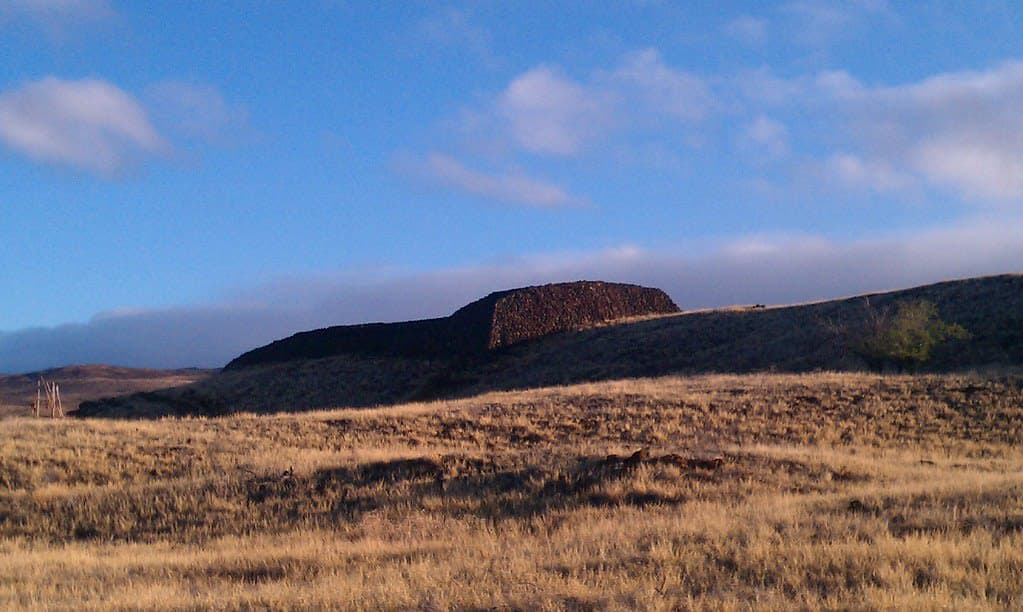
Puukohola Heiau National Historic Site, Hawaii
Where prophecy became stone and a kingdom was born through sacrifice
Kawaihae, Hawaii, United States
At A Glance
- Coordinates
- 20.0277, -155.8212
- Suggested Duration
- Allow 1-2 hours for a thorough visit. This includes time at the visitor center for orientation (exhibits, film, ranger interaction), the walk along the interpretive trail to the heiau viewing area, and contemplation of the site itself. Rushed visits miss the depth that Puukohola offers.
- Access
- Puukohola Heiau National Historic Site is located on the Kohala Coast of Hawaii Island (the Big Island), approximately one mile south of Kawaihae Harbor. From Kona International Airport, take Highway 19 North for approximately 27 miles. Turn left onto Highway 270 (Kawaihae Road) and continue about half a mile to the park entrance on the left. The visitor center is located downhill toward Spencer Beach County Park. Paved trails lead from the visitor center to the heiau viewing area. The site is wheelchair accessible.
Pilgrim Tips
- Puukohola Heiau National Historic Site is located on the Kohala Coast of Hawaii Island (the Big Island), approximately one mile south of Kawaihae Harbor. From Kona International Airport, take Highway 19 North for approximately 27 miles. Turn left onto Highway 270 (Kawaihae Road) and continue about half a mile to the park entrance on the left. The visitor center is located downhill toward Spencer Beach County Park. Paved trails lead from the visitor center to the heiau viewing area. The site is wheelchair accessible.
- No specific dress code applies, but practical attire appropriate to the climate and the significance of the site is recommended. The Kohala Coast is typically warm and sunny; sun protection including hat and sunscreen is advisable. Comfortable walking shoes are necessary for the interpretive trail. Avoid beach or resort attire that might signal a casual attitude toward a sacred site.
- Photography is permitted throughout the site grounds. However, approach photography thoughtfully. The heiau contains human remains, and some Native Hawaiians consider extensive photography of sacred sites problematic. During cultural events, ask permission before photographing participants. Commercial photography and filming require advance permits from the National Park Service.
- Do not attempt to enter the heiau. The prohibition is both legally enforced by the National Park Service and culturally mandated by Native Hawaiian communities. Bones lie within these walls; the ground is kapu. Attempting to enter would be disrespectful to the dead, to living Hawaiians, and to the traditions that give this place meaning. Do not treat the site casually. Taking selfies at the foot of the heiau, joking about sacrifice, or otherwise trivializing what happened here reflects poorly on visitors and disrespects the sacred. The appropriate demeanor is quiet, contemplative, respectful. If visiting during the cultural festival, observe without intruding. Photography of cultural demonstrations is generally permitted but ask before photographing individuals. Do not attempt to participate in ceremonies unless explicitly invited by Hawaiian practitioners.
Overview
On a windswept hill overlooking Kawaihae Bay, the massive walls of Puukohola Heiau stand as testimony to the founding moment of the Hawaiian Kingdom. Kamehameha I built this temple between 1790 and 1791 to fulfill a prophecy: construct a great heiau to the war god Ku, and you will unite all the Hawaiian Islands. The prophecy was sealed with blood. Today, the heiau remains kapu—entry is forbidden—for human remains lie within these walls, including those of the high chief whose sacrifice consecrated the temple.
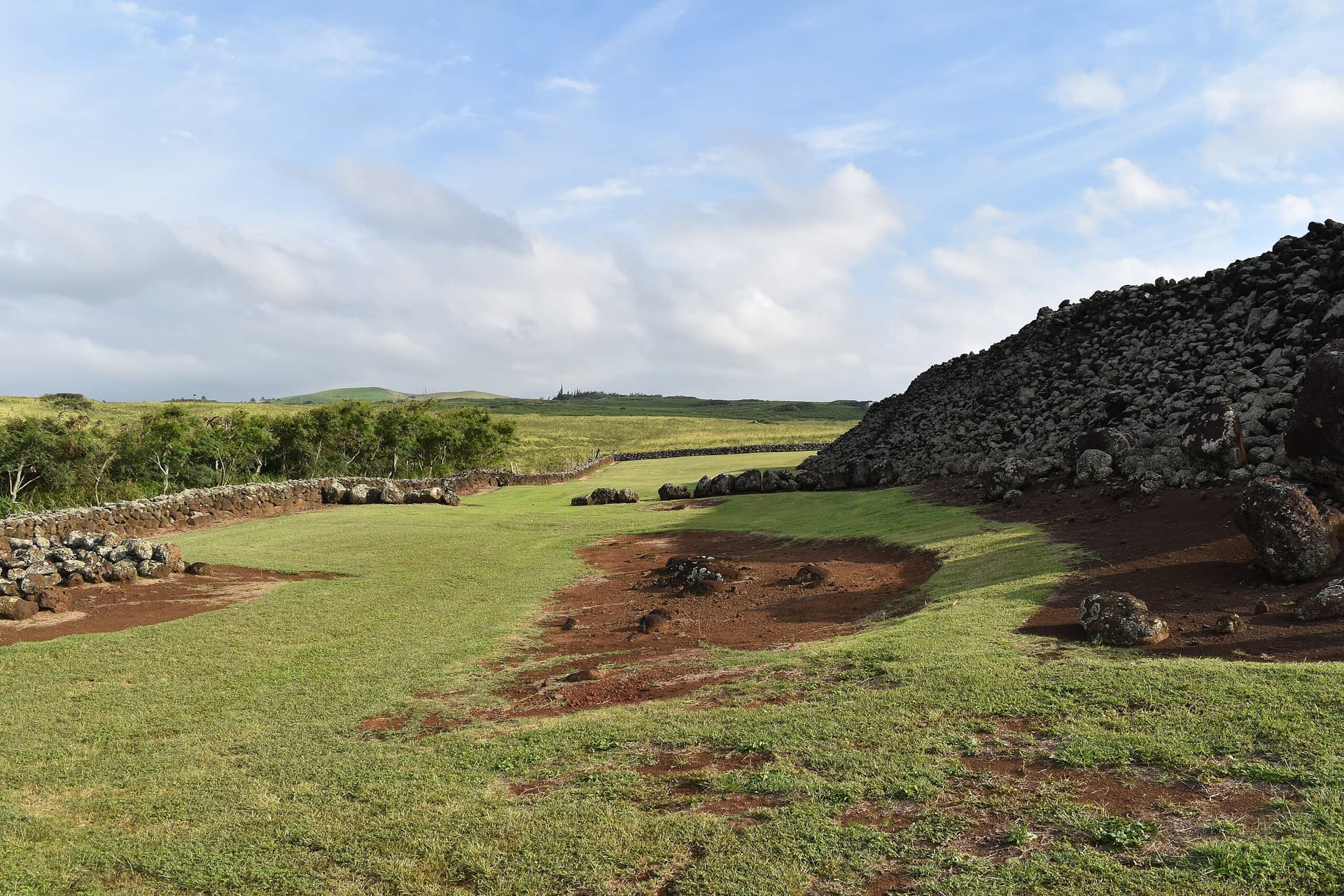
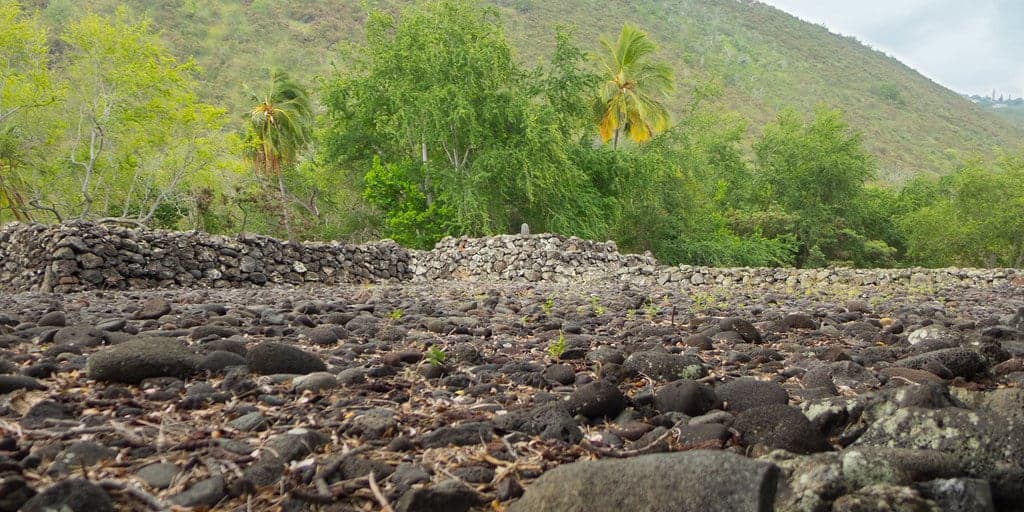
Puukohola Heiau rises from Whale Hill on the Kohala Coast, its dry-stone walls an engineering marvel built without mortar, standing sixteen to twenty feet high and enclosing a platform the size of a football field. A thousand workers passed stones hand to hand from Pololu Valley, twenty miles distant, to construct what would become one of the last and greatest luakini heiau—the most sacred class of Hawaiian temple, where human sacrifice was required.
The story begins with a prophecy. In the late 1780s, Kamehameha was locked in civil war with his cousin Keoua for control of Hawaii Island. Despite Western weapons and advisors, victory remained elusive. A prophet named Kapoukahi delivered counsel: build a heiau to your family's war god Kukailimoku on Puukohola, and you will conquer not just this island but all the Hawaiian Islands. Kamehameha began construction immediately.
By summer 1791, the temple stood complete. Kamehameha then invited Keoua to a peace conference. What happened next remains debated—whether fighting erupted spontaneously or the death was planned—but Keoua was killed as he stepped ashore. His body became the principal offering to Ku, consecrating the temple with the blood of Kamehameha's greatest rival. Within nineteen years, Kamehameha had unified all the Hawaiian Islands under his rule.
Today, visitors walk an interpretive trail to view the heiau from a respectful distance. You may not enter the temple itself—this is sacred ground where bones remain. Looking up at those massive walls, visitors confront the intersection of faith and power, of prophecy and political violence, that shaped Hawaiian history. For Native Hawaiians, Puukohola represents both the achievement of unification and its terrible cost. The annual cultural festival brings practitioners together to honor ancestors and celebrate the living traditions that survived the temple's founding.
Context And Lineage
Puukohola Heiau was built in 1790-1791 by Kamehameha I to fulfill a prophecy that promised him victory over his rivals and unification of all the Hawaiian Islands. The temple was a luakini heiau, the highest class of Hawaiian sacred site, requiring human sacrifice for its consecration. Kamehameha's rival Keoua was killed and offered to the war god Kukailimoku, beginning the chain of events that led to Hawaiian unification by 1810.
The story of Puukohola begins with a prophecy. In the late 1780s, Kamehameha was engaged in civil war with his cousin Keoua Kuahuula for control of Hawaii Island. Despite his alliance with foreign advisors and access to Western weapons, Kamehameha could not defeat his rival. Frustrated, he consulted a famous prophet named Kapoukahi through his aunt.
The prophet's message was specific: construct a great heiau to your family's war god Kukailimoku on Puukohola—Whale Hill—overlooking Kawaihae Bay. If you build this temple and consecrate it properly, you will conquer not only Hawaii Island but all the Hawaiian Islands. The prophecy specified that a great chief must be sacrificed to complete the consecration.
Kamehameha immediately organized construction. Thousands of workers formed human chains to pass stones from Pololu Valley, approximately twenty to twenty-five miles distant. The work proceeded with ritual precision under the direction of kahuna priests. When Kamehameha's brother Kealiimaikaʻi disobeyed instructions and handled the sacred stones, every piece he touched was removed and thrown into the sea to maintain the heiau's purity.
By summer 1791, the massive temple stood complete. Now came the critical moment: consecration. Kamehameha sent an invitation to Keoua for a peace conference at Kawaihae. Whether Keoua suspected his fate remains debated. Some traditions suggest he knew and accepted his destiny; others indicate he had already mutilated himself to defile the sacrifice. When his canoe approached shore, fighting broke out—accidentally or by design—and Keoua and many of his companions were killed.
Keoua's body was prepared at the older Mailekini Heiau and carried up to the altar of Puukohola as the principal offering to Ku. With this sacrifice, the prophecy began its fulfillment. Kamehameha's opposition on Hawaii Island was eliminated. By 1795, he had conquered Maui, Molokai, Lanai, and Oahu. By 1810, Kauai and Niihau submitted peacefully, and the Hawaiian Kingdom was complete.
Puukohola represents the culmination of Hawaiian temple-building tradition and the concentration of religious and political power that enabled state formation. The site connects multiple lineages: the architectural tradition of heiau construction stretching back centuries; the religious tradition of Ku worship and luakini sacrifice; the political lineage that produced the Hawaiian Kingdom; and the genealogical lineage of the Kamehameha dynasty.
The older Mailekini Heiau on the same site dates perhaps to the 1500s, indicating that Puukohola was built in a location already recognized as sacred. The choice to build here was not arbitrary but layered onto existing sacred geography.
The tradition of Puukohola did not continue in its original form. When Liholiho abolished the kapu system in 1819, the religious foundation that gave the heiau meaning was dismantled. No Hawaiian temple has functioned as an active luakini since. But the lineage continues in other ways: in the annual cultural festival that gathers Hawaiian practitioners; in the ongoing relationship between Native Hawaiian communities and the National Park Service; in the cultural memory that keeps Kamehameha, Keoua, and the prophecy alive.
Kamehameha I
Builder of the heiau and founder of the Hawaiian Kingdom
Keoua Kuahuula
Kamehameha's cousin and rival, sacrificed to consecrate the heiau
Kapoukahi
Prophet who delivered the prophecy
John Young (Olohana)
British sailor who became Kamehameha's advisor
Why This Place Is Sacred
The thinness of Puukohola Heiau emerges from the convergence of prophecy, sacrifice, and historical consequence in a single place. The temple was built to bridge the human and divine, to channel the war god's power into political unification. Standing before walls that contain human remains, visitors sense the weight of what was done here and what it set in motion.
Puukohola occupies a position of strategic and spiritual significance. The hill rises above Kawaihae Bay, commanding views across to Maui and the volcanic slopes of Haleakala. Winds sweep constantly off the ocean, carrying salt and the cries of seabirds. The landscape is dry, stark, stripped of the lush vegetation that characterizes wetter parts of Hawaii. Here, everything is exposed to sun and sky.
The temple's construction embodied extraordinary collective intention. Thousands of workers formed human chains to pass stones from Pololu Valley, each stone handled by many hands before reaching its final position. The labor was not merely physical but spiritual—kahuna priests determined the source of the stones and the proper rituals. When Kamehameha's brother disobeyed orders and touched the stones meant only for consecrated hands, every stone he contacted was removed and cast into the sea. Purity mattered. The temple was being built to channel divine power, and contamination could not be tolerated.
What makes Puukohola thin is not merely its age or its architecture but what happened here. The heiau was consecrated with human sacrifice—specifically, with the sacrifice of Keoua, Kamehameha's cousin and rival. The body was prepared at the older Mailekini Heiau below and carried up to the altar as offering to Ku. This was not murder but ritual act, the fulfillment of a prophecy that required a great chief's life to unlock divine favor. The ethics are not ours to judge from outside Hawaiian tradition, but the weight of what occurred saturates the site.
Bones remain within these walls. The heiau has never been fully excavated, and tribal communities have ensured it will not be. Walking the interpretive trail, you look up at walls built to contain the sacred, knowing that beneath the surface lie the remains of those whose deaths sealed the foundation of a kingdom. The boundary between the living and the dead is thin here because the dead are literally present.
For Native Hawaiians, this thinness extends in another direction: Puukohola connects them to ancestors who lived and died in this place, to the mana of the Kamehameha line, to the moment when Hawaii transformed from warring chiefdoms into a unified nation. The spirits of ancestors dwell here. Visiting means entering their presence.
Puukohola was built as a luakini heiau—the highest class of Hawaiian temple, dedicated to the war god Kukailimoku. Only paramount chiefs could construct such temples, and they required human sacrifice for consecration. The heiau served as a place where divine power could be channeled into earthly affairs, where priests communicated with gods, where warriors were blessed before battle. Its specific purpose was to fulfill a prophecy: if Kamehameha built this temple, he would unite all Hawaii under his rule. The temple was, in essence, an instrument for translating religious authority into political power.
The temple's active life was brief. Completed in 1791, it served as a center of worship during Kamehameha's campaigns of unification. But in 1819, just months after Kamehameha's death, his son Liholiho and the powerful regent Kaahumanu abolished the kapu system, ending the traditional religion that gave the heiau meaning. The temple was never formally destroyed but was abandoned as a place of active worship.
For over a century, the ruins stood largely unrecognized by the outside world. In 1928, restoration work began under the direction of territorial historian John Stokes. The heiau was designated a National Historic Landmark in 1962, listed on the National Register of Historic Places in 1966, and established as a National Historic Site in 1972. Today, the National Park Service manages the site in consultation with Native Hawaiian communities.
The annual Puukohola Heiau Cultural Festival, typically held in August, marks the ongoing significance of the site. Hawaiian practitioners gather to demonstrate traditional arts, perform hula and chanting, and conduct ceremonies honoring ancestors. The festival represents the heiau's evolution from active temple to heritage site to living symbol of Hawaiian cultural continuity.
Traditions And Practice
No active worship occurs at Puukohola Heiau; the traditional practices ceased with the abolition of the kapu system in 1819. However, the annual Puukohola Heiau Cultural Festival brings Native Hawaiian practitioners together to honor ancestors through traditional arts, hula, chanting, and cultural demonstrations. The site remains kapu—visitors may view but not enter the heiau.
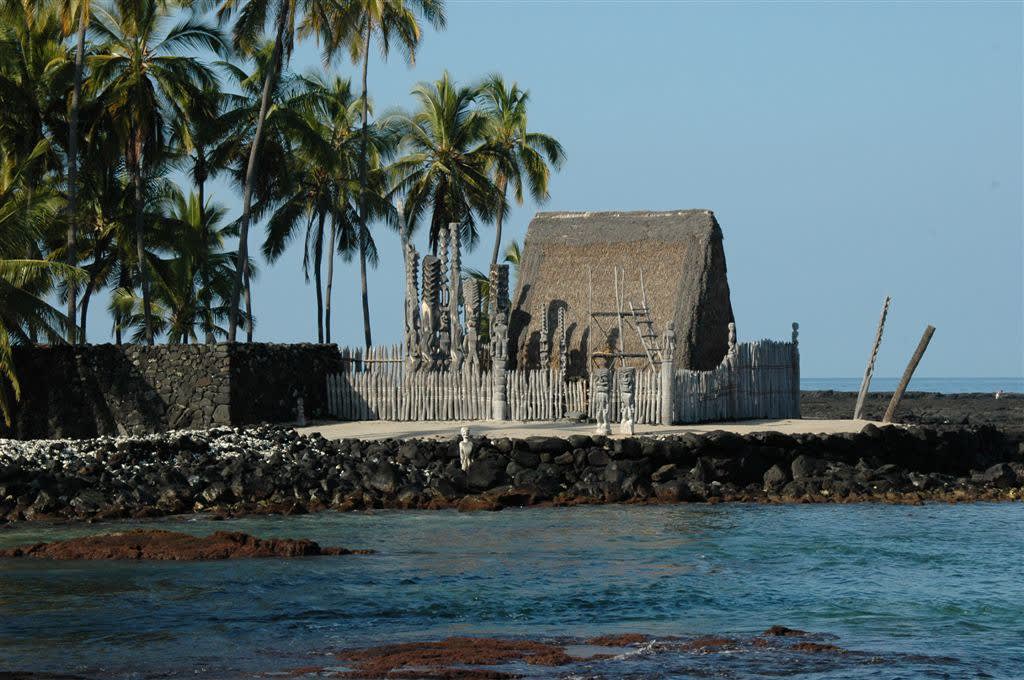
As a luakini heiau, Puukohola was the site of the most elaborate and restricted ceremonies in Hawaiian religion. Human sacrifice was central—the bodies of captured warriors, lawbreakers, or significant enemies were offered to Ku. The consecration of the temple required the sacrifice of a great chief, fulfilled by Keoua's death. Regular ceremonies included prayers (pule), chanting, offerings (hookupu), and rituals conducted by kahuna priests. The heiau contained various structures: an anu'u (oracle tower) where priests received divine messages, lele (offering platforms), and ki'i akua (images of gods).
Strict kapu governed all activities. Only men of appropriate rank could enter certain areas. Women were absolutely forbidden. Violations could result in death. The kapu system was not merely social regulation but cosmic ordering—maintaining proper boundaries between sacred and profane, between ranks and genders, between human and divine.
The war god Kukailimoku, to whom the heiau was dedicated, was embodied in feathered images that were Kamehameha's most sacred possessions. Ceremonies to Ku prepared warriors for battle, seeking divine favor and protection. The god was understood as ferocious, demanding, requiring blood and proper worship to grant victory.
The traditional practices ceased when Liholiho abolished the kapu system in October 1819, months after Kamehameha's death. The temples were abandoned, many were destroyed, and the old religion came to an end. No human sacrifice, no Ku worship, no luakini ceremonies occur at Puukohola today.
What does continue is cultural commemoration. The annual Puukohola Heiau Cultural Festival, typically held in August, gathers Native Hawaiian practitioners to honor ancestors and demonstrate living traditions. The festival includes hula, chanting, craft demonstrations, discussions of Hawaiian history and culture, and ceremonies that recognize the significance of the site without attempting to recreate the original practices. The festival represents Hawaiian cultural resilience—traditions that survived the end of the old religion and continue to evolve.
Native Hawaiian individuals and families may visit for private observances. These visits are not scheduled or publicized. If you encounter people engaged in what appears to be cultural or spiritual practice, maintain respectful distance.
Approach Puukohola as a place of weight and significance, not casual tourism. Begin at the visitor center to understand what you are about to encounter. Watch the film, study the exhibits, speak with rangers if they are available. This preparation transforms sightseeing into pilgrimage.
Walk the interpretive trail slowly. Pause at Mailekini Heiau and the John Young Homestead site. When you reach the viewing area for Puukohola, take time. Sit if seating is available. Look at the walls and try to imagine the labor of their construction—thousands of hands passing stones from twenty miles away. Consider what it means that human remains lie within, that this place was consecrated with blood, that a kingdom was born here.
If you feel moved to acknowledge what you have received, do so quietly and internally. This is not a site where offerings are appropriate or expected. The most respectful response is simply presence—standing witness to what happened here, carrying the memory forward.
Hawaiian Luakini Heiau Tradition
HistoricalPuukohola was one of the last and greatest luakini heiau—the highest class of Hawaiian temple, dedicated to the war god Ku and requiring human sacrifice for consecration. Only paramount chiefs could build such temples. The luakini represented the convergence of religious and political power at its most intense: the chief who could command the labor to build, the spiritual authority to consecrate, and the military power to sacrifice enemies was the chief who would rule. Puukohola represents the culmination of this tradition, built to fulfill a prophecy of unification.
Luakini heiau required elaborate ritual practices conducted by kahuna priests. Human sacrifice was central—the bodies of captured enemies, lawbreakers, or significant rivals were offered to Ku. The consecration of Puukohola required the sacrifice of a great chief, fulfilled by Keoua's death. Regular ceremonies included prayers, chanting, offerings, and rituals to prepare warriors for battle. The heiau contained an oracle tower where priests received divine messages, offering platforms, and images of the war god. Strict kapu governed who could enter and what activities were permitted.
Native Hawaiian Cultural Practice (Contemporary)
ActiveFor contemporary Native Hawaiians, Puukohola Heiau represents both the historical achievement of unification and the ongoing relationship between living Hawaiians and their ancestors. The site is honored as a symbol of Hawaiian identity, sovereignty, and cultural continuity. The annual Puukohola Heiau Cultural Festival gathers practitioners to demonstrate traditional arts, perform hula and chanting, and conduct ceremonies honoring ancestors. This represents not the continuation of luakini practices but the adaptation of Hawaiian tradition to contemporary circumstances.
The annual cultural festival features traditional Hawaiian practices including hula, chanting, craft demonstrations, and discussions of Hawaiian history and culture. Ceremonies honor ancestors and acknowledge the significance of the site without attempting to recreate the original temple practices. Native Hawaiian individuals and families may visit for private observances. Contemporary practitioners approach the site with protocols of respect, recognizing the kapu that continues to govern the heiau itself.
Experience And Perspectives
Visitors report profound awareness of standing at a pivotal moment in Hawaiian history. The massive scale of the walls, built entirely without mortar, inspires awe at the engineering and the human effort required. The prohibition on entering the heiau itself deepens the sense of sacredness. Many describe the site as heavy, weighted with the significance of what occurred here.
The approach to Puukohola prepares you for encounter. The Kohala Coast is dry and golden, a landscape of lava rock and kiawe trees, quite different from the lush Hawaii of tourist imagination. The visitor center provides orientation—exhibits, a short film, rangers who explain the history and cultural protocols. Understanding deepens the experience that follows.
The interpretive trail leads from the visitor center toward the heiau, passing the ruins of the John Young Homestead and approaching the older Mailekini Heiau. Then Puukohola rises before you: walls of dry-stacked stone, fitted without mortar, rising sixteen to twenty feet from the slope of Whale Hill. The scale is startling. This is not a small shrine but a massive construction, roughly 224 feet by 100 feet, enclosing a platform that once held oracle towers, offering stands, and images of gods.
You may walk around the perimeter, viewing from approximately 100 yards. You may not enter. This prohibition is not arbitrary—bones lie within these walls, and the ground remains kapu for Native Hawaiians. The restriction shapes the experience. Standing outside, looking in, you encounter a boundary that cannot be crossed. The sacredness is not decorative but actual.
The view encompasses Kawaihae Bay, where Keoua's canoes landed on the day of his death. On clear days, Maui rises across the channel, Haleakala visible on the horizon. The strategic significance becomes clear: this hilltop commanded sight lines across sea and land, appropriate for a temple dedicated to war. Below, partially submerged, lies Hale o Kapuni, a shark heiau now accessible only to the creatures it honored. Visitors sometimes spot sharks circling in the bay, drawn to the underwater temple's remnants.
Many visitors report that Puukohola feels heavy—not oppressive, but weighted with accumulated significance. The silence is not empty but full. Wind off the ocean provides constant sound, but beneath it, something else. Call it atmosphere, presence, mana. Whatever language you use, the reports are consistent: this place holds something beyond what eyes can see.
The experience completes itself slowly. Visitors who sit with the site, who take time rather than rushing through, often find their responses deepen. The initial facts—this is old, this is big, this is where something happened—give way to subtler awareness. You are standing at the birthplace of the Hawaiian Kingdom, at a place consecrated with human blood, before walls that have stood for over two centuries. The past is not dead here. It is not even past.
Begin at the visitor center for essential context—the exhibits and film explain the historical and cultural significance that deepens the site visit. Allow time to absorb this information. Then follow the interpretive trail toward the heiau, pausing at the John Young Homestead site and Mailekini Heiau along the way. The main viewing area for Puukohola offers panels explaining what you see. Consider returning to the visitor center afterward to process what you experienced. If visiting during the annual cultural festival, arrive early for the best experience of demonstrations and ceremonies.
Puukohola Heiau sits at the intersection of multiple ways of understanding. Historians document the events of 1790-1791 and the subsequent unification of Hawaii. Native Hawaiian communities hold ancestral knowledge about the site's spiritual significance. Archaeologists study the construction and preservation of the temple. These perspectives inform but do not exhaust what Puukohola means.
Historians recognize Puukohola Heiau as the pivotal site in Hawaiian political unification. The construction of the temple and the sacrifice of Keoua in 1791 eliminated the primary challenge to Kamehameha's authority on Hawaii Island and initiated the campaign that would unify all the islands by 1810. The prophecy of Kapoukahi and its fulfillment demonstrates the integration of religious authority and political power in traditional Hawaiian society—the chief who could build the greatest temple and make the proper sacrifices was the chief who would rule.
Archaeologists have documented the construction techniques—dry-stone masonry without mortar, walls sixteen to twenty feet high, a platform approximately 224 by 100 feet. The transportation of stones from Pololu Valley, twenty to twenty-five miles distant, represents a massive mobilization of labor that itself demonstrates Kamehameha's power to command resources and organize collective effort.
The site has not been extensively excavated. Human remains are known to exist within the temple, and at the request of Native Hawaiian communities, archaeological intrusion has been limited. The National Park Service manages the site in consultation with Hawaiian cultural authorities through protocols that balance preservation with respect for ongoing sacred significance.
For Native Hawaiians, Puukohola Heiau is not primarily an archaeological site or a tourist destination but a sacred place where ancestors live. The spirits of those who built the heiau, those who worshipped there, and those who were sacrificed to consecrate it remain present. The continuing kapu on entry reflects not merely legal restriction but living belief—the temple is still sacred, the bones still require protection, the boundary between living and dead remains thin.
The site embodies the mana of the Kamehameha line and the complex legacy of unification. Hawaiian cultural practitioners honor both the achievement and its cost—the kingdom was born through sacrifice, through the blood of Keoua and others. This is not history to be celebrated uncritically but to be held in full complexity, acknowledging both the violence and the vision that created modern Hawaii.
The annual cultural festival represents the continuation of Hawaiian tradition at this site—not the original practices of luakini worship, which ended with the kapu system, but living traditions of hula, chanting, and cultural commemoration that connect contemporary Hawaiians to their ancestors.
Some visitors approach Puukohola seeking energetic or spiritual experiences beyond the documented history. The site's association with the war god Ku, the presence of human remains, and the dramatic events of its consecration attract interest from those who perceive unusual power in certain locations. The massive scale of construction and the human chain that passed stones for twenty miles suggest to some an intensity of collective intention that leaves traces.
These interpretations should be distinguished from both scholarly analysis and Hawaiian traditional knowledge. Whatever energetic properties visitors may perceive, the site's primary significance lies in its documented history and its ongoing sacred status for Native Hawaiians.
Questions remain about Puukohola that may never be definitively answered. What did Keoua know or believe when he accepted Kamehameha's invitation? Some traditions suggest he came knowingly to his death, perhaps even mutilating himself to defile the sacrifice; others indicate he hoped for genuine peace. Was the fighting that killed him planned or spontaneous? Hawaiian traditions offer varying accounts.
The precise nature and extent of ceremonies conducted at the heiau during its active period are not fully documented. The kapu system that governed Hawaiian religion was abolished just twenty-eight years after the temple's dedication, and many details were not recorded before the old practices ended.
What lies beneath the surface of the temple remains largely unknown. Limited archaeological investigation has confirmed the presence of human remains, but the full extent of what was buried or deposited within the heiau has not been determined. Native Hawaiian communities have advocated successfully for leaving these questions unanswered rather than disturbing sacred ground.
Visit Planning
Puukohola Heiau National Historic Site is located on the Kohala Coast of Hawaii Island, one mile south of Kawaihae Harbor. The site is open daily with free admission. A visitor center provides orientation through exhibits and film. The interpretive trail to view the heiau takes approximately 1-2 hours to explore thoroughly. The annual cultural festival in August is the major event.
Puukohola Heiau National Historic Site is located on the Kohala Coast of Hawaii Island (the Big Island), approximately one mile south of Kawaihae Harbor. From Kona International Airport, take Highway 19 North for approximately 27 miles. Turn left onto Highway 270 (Kawaihae Road) and continue about half a mile to the park entrance on the left. The visitor center is located downhill toward Spencer Beach County Park. Paved trails lead from the visitor center to the heiau viewing area. The site is wheelchair accessible.
No accommodations are available within the national historic site. The nearest options are in the Kohala Coast resort areas to the south (Waikoloa, Mauna Lani) or in the towns of Waimea and Kawaihae. Kona, approximately 35 miles south, offers the widest range of accommodations. Spencer Beach County Park, adjacent to the historic site, has camping facilities but requires county permits.
Puukohola Heiau is sacred ground containing human remains. Entry to the heiau is strictly prohibited. Visitors should approach with quiet respect, staying on designated trails, refraining from casual or disrespectful behavior, and acknowledging the profound significance of this site to Native Hawaiians.
The fundamental principle governing behavior at Puukohola is recognition of what this place is. For Native Hawaiians, this is not an archaeological curiosity but a sacred site where ancestors built, sacrificed, and remain present in death. The bones within these walls belong to people—Keoua and others whose lives ended here. Approaching Puukohola means entering the presence of the dead.
The National Park Service enforces strict rules that reflect both cultural protocols and preservation needs. Entry to the heiau platform is absolutely prohibited. This is not negotiable. Do not climb on the walls, do not attempt to enter through any opening, do not approach closer than the designated viewing area. Rangers may be present to enforce these restrictions; their absence does not constitute permission.
Stay on designated trails. The landscape around the heiau contains archaeological resources that are easily damaged. Wandering off-trail risks disturbing artifacts, damaging fragile features, and disrespecting the site.
Quiet behavior is appropriate. This is not a place for loud conversation, music, or recreational energy. Speak softly if you must speak. The appropriate demeanor is contemplative—the same demeanor you would bring to a grave site, which is exactly what Puukohola is.
Photography is permitted on the grounds but should be conducted thoughtfully. Photographing the heiau from the designated viewing area is appropriate. Using the site as backdrop for casual selfies or social media content trivializes its significance. Consider what message your photographs convey about your relationship to this sacred place.
The park gate closes by 4:30 PM, and all vehicles must exit by 5:00 PM. Plan your visit to allow adequate time without rushing at closing.
No specific dress code applies, but practical attire appropriate to the climate and the significance of the site is recommended. The Kohala Coast is typically warm and sunny; sun protection including hat and sunscreen is advisable. Comfortable walking shoes are necessary for the interpretive trail. Avoid beach or resort attire that might signal a casual attitude toward a sacred site.
Photography is permitted throughout the site grounds. However, approach photography thoughtfully. The heiau contains human remains, and some Native Hawaiians consider extensive photography of sacred sites problematic. During cultural events, ask permission before photographing participants. Commercial photography and filming require advance permits from the National Park Service.
Traditional offerings are not expected from visitors. The most appropriate way to honor the site is through respectful behavior—observing the kapu on entry, maintaining quiet demeanor, and carrying awareness of what happened here into your life beyond the visit. Do not leave objects at the site.
Entry to the heiau platform is strictly prohibited. Do not climb on any structures. Stay on designated trails. The park is open daily 8:00 AM to 4:45 PM; gate closes at 4:30 PM. Pets are not permitted beyond the parking area. Drones are prohibited without special permit.
Sacred Cluster
Nearby sacred places create the location cluster described in the growth plan. This block is intentionally crawlable and links into the wider regional graph.