Kilauea
The living home of Pele, where creation rises from fire
Volcano, Hawaii, United States
At A Glance
- Coordinates
- 19.4210, -155.2870
- Suggested Duration
- Full day to include Chain of Craters Road and one or two hikes
Pilgrim Tips
- Sturdy closed-toe shoes essential. Lava rock is sharp and uneven. Layered clothing recommended. The summit is often cooler and wetter than the coast. Sudden rain is common.
- Permitted throughout public areas. Be respectful if encountering Hawaiian practitioners. Ask permission before photographing people making offerings or performing ceremony. Do not disturb offerings.
- Specific ceremonial protocols belong to individual Hawaiian families and should not be imitated without proper training and invitation. Copying Hawaiian practice without understanding is inappropriate and, according to traditional belief, can cause spiritual problems. Do not remove lava rocks. This violates Pele's sacred domain and Hawaiian belief holds that it brings misfortune. The National Park Service receives returned rocks regularly from people who experienced bad luck after taking them.
Overview
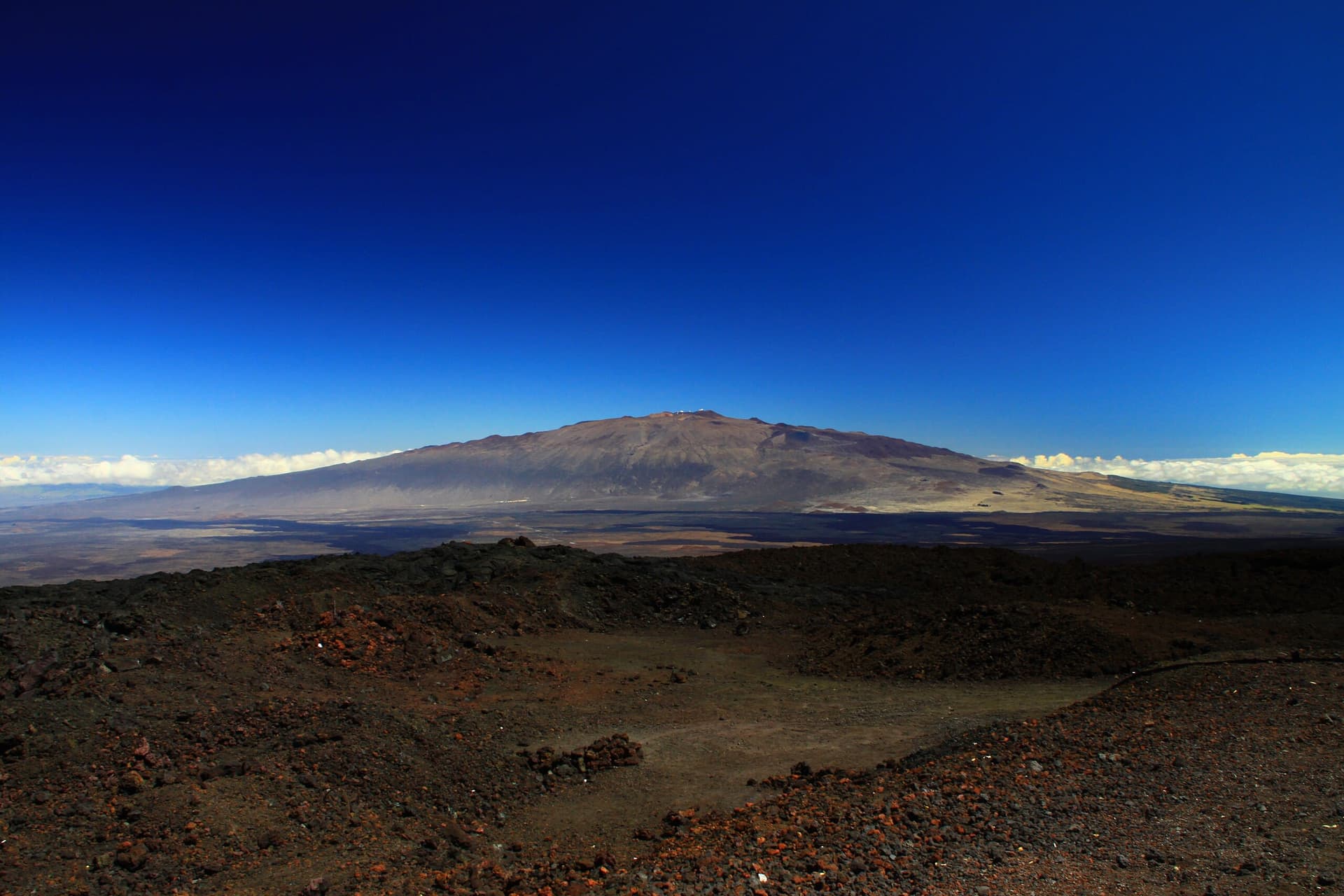
On Hawaii's Big Island, Kilauea volcano rises as the dwelling place of Pele, goddess of fire and creator of the Hawaiian Islands. For Native Hawaiian families, particularly those of the Puna and Ka'u districts, this is not metaphor but lived spiritual reality. Pele is ohana, family. When Kilauea erupts, Hawaiians do not see disaster but divine activity requiring proper relationship and reverence. The volcano offers something rare: the chance to witness land being born, creation in real time, the fundamental process that built these islands continuing before your eyes.
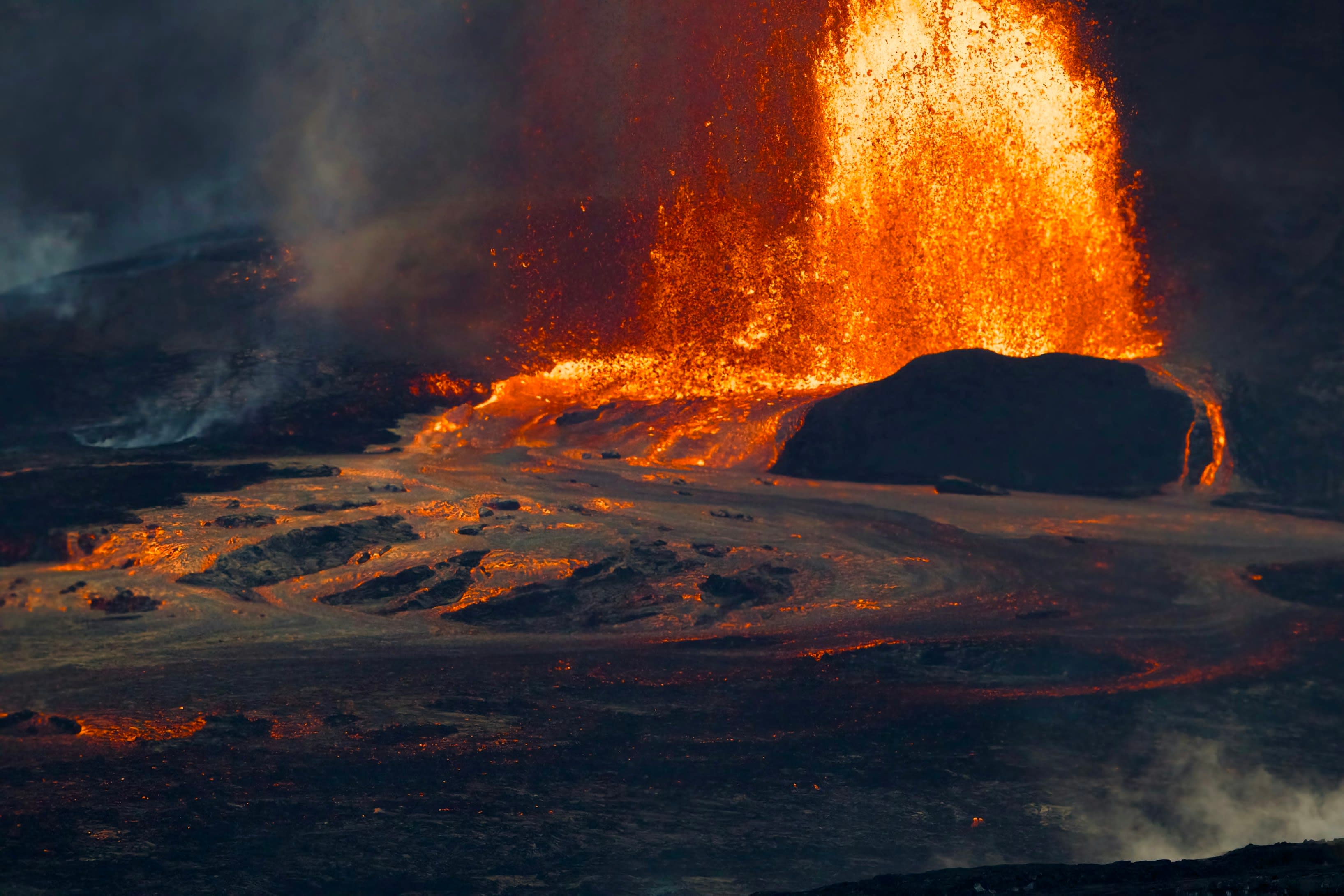
The ground trembles. Sulfur scents the air. At the rim of Halemaumau crater, you stand at the edge of something that defies ordinary comprehension. This is Kilauea, one of the world's most active volcanoes, and for Native Hawaiians, this is home to Pele, goddess of volcanoes and fire, creator of the Hawaiian Islands themselves. There is something here that resists description in secular terms. Kilauea is not merely geologically significant. It is a place where the divine is actively present, where the goddess manifests through eruption and lava flow, where the boundary between human and sacred collapses. For Hawaiian families whose ancestors have lived in Pele's shadow for centuries, this is aumakua territory. Pele is not a distant deity but a family guardian, an ancestor who watches over her descendants. The cult of Pele had its own temples, priests, and rituals before Western contact. Remarkably, belief in Pele continued even after the abolition of the Hawaiian religion in 1819, when other traditions faded. She could not be abolished because she keeps proving herself real. The lava flows. The mountain speaks. The goddess continues her work. Halemaumau crater, whose name translates to House of the Amau Fern, is Pele's sacred dwelling within the larger caldera. Hawaiian mythology tells how Pele traveled from island to island through the chain, seeking a home, driven by her elder sister Namakaokahai, goddess of the sea, whose waters flooded each fire pit Pele dug. Finally reaching the Big Island, Pele found a home her sister's waters could not reach. Here she established herself, and here she remains. When you stand at Kilauea, you stand in the presence of ongoing creation. The Hawaiian Islands were born from volcanic fire, and they continue to be born. New land emerges from eruptions. The fundamental process that created this place has not stopped. For those who come seeking transformation, Kilauea offers something that most sacred sites cannot: the chance to witness creation happening, to see the raw material of earth emerging from fire, to experience firsthand the cycle of destruction and renewal that Hawaiian tradition has always understood.
Context And Lineage
Hawaiian reverence for Kilauea predates written history. Pele worship represents one of the most persistent indigenous traditions in Polynesia, surviving even the abolition of Hawaiian religion in 1819.
Pele was born in Kahiki, the distant homeland of Polynesian gods. Her fiery temperament led to conflict with her elder sister Namakaokahai, goddess of the sea, after Pele seduced her sister's husband. Exiled by her father, Pele traveled through the Hawaiian island chain from northwest to southeast, using her digging stick to create fire pits at each location. At every island, Namakaokahai would follow and flood Pele's home with seawater. Finally reaching the Big Island, Pele dug into Kilauea and found a home her sister's waters could not reach. There she established Halemaumau as her eternal fire pit. In some versions, Namakaokahai eventually caught Pele near Hana on Maui and tore her apart. Her bones formed a hill called Ka-iwi-o-Pele. Upon death, Pele became fully divine and established her eternal home at Kilauea. During her journey, Pele carried her favorite little sister Hiiaka in egg form in her bosom. Hiiaka hatched after they arrived at Kilauea, making her the first of the Pele family born in Hawaii. She became goddess of hula and healing. The sisters' relationship, marked by loyalty, jealousy, and reconciliation, forms the subject of epic Hawaiian chants.
Pele worship represents a distinctive tradition within Hawaiian religion. While other aspects of the old religion declined after the kapu system was abolished in 1819, Pele could not be abolished. She continued to manifest. The volcano continued to erupt. Contemporary Hawaiian practitioners maintain unbroken connection to ancestral traditions, conducting ceremonies, offerings, and hula at Kilauea as their ancestors did. UNESCO World Heritage designation in 1987 recognized the site's outstanding geological and cultural value. The volcanic processes that built these islands continue, and so does the tradition that honors them.
Pele (Pelehonuamea)
Hiiaka-i-ka-poli-o-Pele
Namakaokahai
Ka-moho-alii
Lorrin Thurston
Why This Place Is Sacred
The goddess does not hide here. She manifests through eruption, speaks through tremor, makes herself visible in flowing lava. The veil between human and divine is not merely thin; it is permeable.
What makes a place sacred? At most sites, the answer involves history, architecture, the accumulation of centuries of prayer and practice. Kilauea requires a different kind of answer. Here, the sacred is not constructed but natural. Not historical but ongoing. Not remembered but witnessed. For Native Hawaiians, Kilauea is thin because Pele is present. Not present as memory or symbol, but actually present. The lava that flows is her physical manifestation. The earthquakes are her movement. The sulfur that stings the eyes is the breath of the goddess. When Hawaiian practitioners make offerings at Halemaumau, they are not commemorating Pele. They are feeding her. The relationship is living. Visitors without Hawaiian heritage report their own encounters with the numinous. The experience of standing at Kilauea often exceeds expectation. Something happens here that people struggle to articulate. They use words like awe, humility, presence. They describe feeling small before something incomprehensibly vast, alive, and ancient. They report dreams during or after their visits. Some describe a quality of attention, as if the mountain were aware of them. The phenomenology converges across cultural frameworks: those who come to witness geology and those who come to honor the goddess often report similar experiences of encounter with something beyond ordinary comprehension. Perhaps this is because Kilauea offers something genuinely rare in the modern world. We live surrounded by human construction. Our cities, our technologies, our social systems. Kilauea is a reminder that creation continues. That the earth is alive. That processes far older and more powerful than human civilization continue regardless of our attention. To stand at the edge of the caldera is to feel one's smallness before geological time, volcanic power, the forces that built these islands and will continue shaping them long after we are gone.
Pele's dwelling place within Hawaiian cosmology. The volcano is not sacred because humans made it so; it is sacred because the goddess chose to live here.
Hawaiian veneration of Kilauea predates written history. The cult of Pele was well established before Western contact. Unlike other Hawaiian religious practices, Pele worship survived the abolition of the old religion in 1819 because the goddess continued to prove herself present through eruption. Hawaii Volcanoes National Park was established in 1916, bringing new visitors and new tensions between tourism and traditional practice. UNESCO World Heritage designation in 1987 recognized both natural and cultural significance. Contemporary period sees millions of annual visitors, ongoing Native Hawaiian practice, and persistent questions about how to balance public access with sacred space.
Traditions And Practice
Native Hawaiian religious practice at Kilauea is living tradition, not historical reconstruction. Offerings, chants, and hula continue at Halemaumau. Non-Hawaiian visitors can participate through presence, respect, and appropriate behavior.
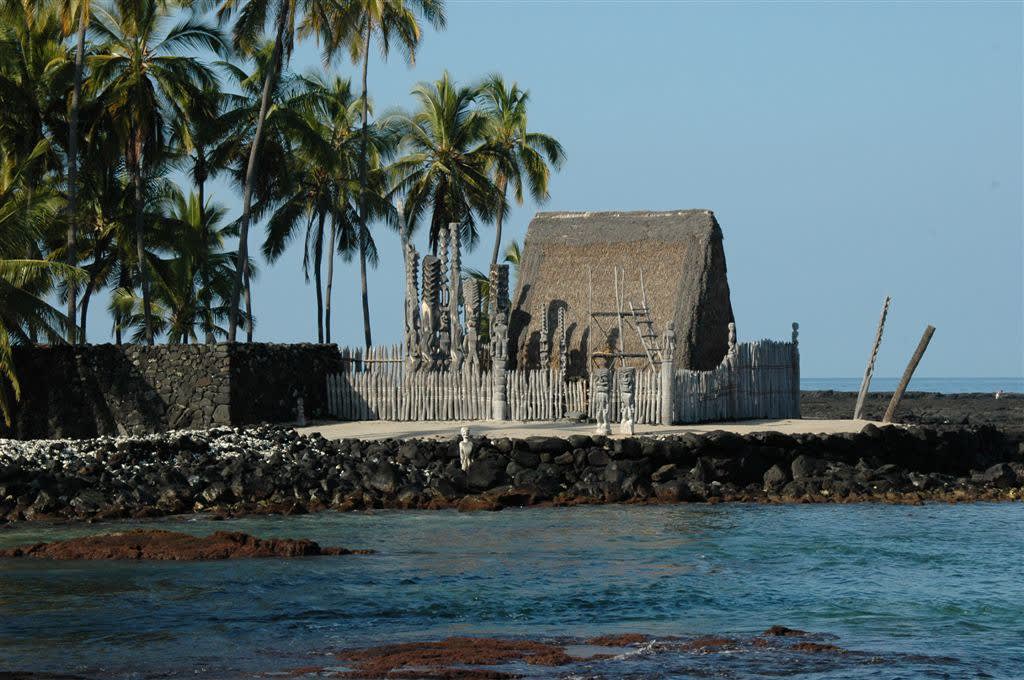
Hookupu offerings to Pele include ohelo berries, ohia lehua blossoms, taro, and ti leaves. Historically, prayers were made before eating ohelo berries, which are sacred to Pele. Hula kahiko, traditional dance, was offered to the goddess at the crater rim, prefaced with prayer and offerings of salt crystals and young taro leaf. Chants invoke Pele through music, believed to soothe her fiery temperament. At Puuloa, Hawaiian fathers brought their newborns' piko to ensure long life, depositing the umbilical cord in small holes carved in the lava. The cult of Pele had dedicated heiau (temples), kahuna (priests), and specific protocols maintained by different families.
Native Hawaiian families continue hookupu offerings, pule (prayer), oli (chants), and hula at Halemaumau. During the 2018 eruption, many Hawaiians placed offerings of flowers and ti leaves in road cracks where lava emerged. Piko rituals continue at Puuloa among some families. The National Park Service facilitates cultural access while protecting sacred sites. Contemporary practitioners melo o Pele, sing and chant to Pele and Kilauea, as their ancestors did.
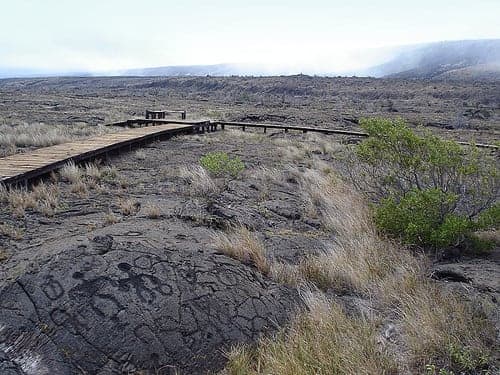
The most appropriate offering any visitor can make requires nothing tangible. It is your aloha, your ha (breath), and your olelo (words): loving the place and speaking a promise to cherish and protect it. Stand at the crater rim with attention and respect. If you encounter Hawaiian practitioners making offerings or performing ceremony, maintain respectful distance. Walk the Puuloa petroglyph trail with awareness that you are moving through a sacred family record. Let the mountain be what it is rather than what you want from it.
Pele Worship (Hawaiian Indigenous Religion)
ActivePele is the goddess of volcanoes, fire, and creator of the Hawaiian Islands. Halemaumau crater is her sacred home. For Hawaiian families in Puna and Ka'u, Pele is aumakua, deified ancestor and family guardian. The tradition had its own temples, priests, rituals, and mythology, and uniquely among Hawaiian traditions, belief in Pele continued after the abolition of the old religion in 1819.
Native Hawaiians honor Pele with hookupu (offerings), personal pule (prayer), oli (chants), and hula kahiko (traditional dance). Traditional offerings include ohelo berries, ohia lehua blossoms, taro, and ti leaves. Specific ceremonial protocols are held by individual families and are not public.
Piko Rituals at Puuloa
ActiveThe Puuloa petroglyph field, whose name carries the meaning hill of long life, has been used for generations by Hawaiian families to ensure long life for their children. The site spiritually binds families across generations.
Hawaiian fathers traditionally brought their newborn's piko (umbilical cord) to Puuloa and deposited it in a small hole in the lava, covering it with a stone. Over 23,000 petroglyphs at the site include many piko puka (holes) representing generations of Hawaiian children.
Hula Pele
ActiveHula dedicated to Pele is a sacred form of worship and communication with the goddess. The performance of hula at Halemaumau connects practitioners to the deity and the volcanic forces she represents.
Traditional hula kahiko is offered to Pele at the crater. Historically, performances were prefaced with prayer and sacrifice, including offerings of salt crystals and young taro leaf. Chants invoke Pele through music, believed to soothe her fiery temperament.
Experience And Perspectives
Kilauea reveals itself through dramatic sensory encounter: the smell of sulfur, the sight of steam rising from vents, the sound of the mountain breathing. During active eruptions, the experience intensifies into something unforgettable.
You smell Kilauea before you fully comprehend it. The sulfur hits first, that distinctive volcanic scent that announces you have arrived somewhere extraordinary. Then the landscape opens: a vast caldera, three miles wide, with steam rising from vents across its floor. This is not scenery. This is a living geological process, happening in front of you. Crater Rim Drive traces the edge of the caldera, offering overlooks where you can stand at the boundary between solid ground and the volcano's active heart. Halemaumau crater, Pele's traditional home, dominates the southwestern portion. During periods of active eruption, the lava lake within glows orange at night, illuminating the plume of volcanic gas that rises continuously. The sight draws visitors from around the world, gathering at overlooks after dark to witness fire emerging from earth. But Kilauea offers more than the caldera. Chain of Craters Road descends eighteen miles toward the coast, passing through lava flows of different ages. The landscape shifts from forest to bare rock, a record of eruptions spanning decades. Each flow tells a story of destruction and creation. In places, you can see where the road itself was buried by lava, rerouted by forces that do not acknowledge human infrastructure. Puuloa, at the end of the coastal section, holds something different. Here, more than 23,000 petroglyphs cover the lava rock. Hawaiian families came here for generations to place their newborns' piko, the umbilical cord, in small holes carved into the stone. The name means hill of long life. Walking the boardwalk through this field of carvings, you move through a record of Hawaiian continuity spanning centuries. Children were blessed here. Families were bound across generations. The tradition continues for some Hawaiian families today. The physical sensations of Kilauea are distinctive: heat radiating from vents, ground that sometimes vibrates beneath your feet, air that tastes of minerals. Rain comes frequently to the summit, sudden and intense, then clears just as quickly. Mist and cloud play across the caldera, now revealing, now concealing. The mountain changes by the hour, by the minute.
Hawaii Volcanoes National Park encompasses 335,259 acres on the Big Island's southeast coast. The main entrance is 30 miles southwest of Hilo on Highway 11. Crater Rim Drive (11-mile loop) circles the summit caldera. Chain of Craters Road descends to the coast. The Kilauea Visitor Center is closed for renovation until 2027; temporary services operate at Kilauea Military Camp.
Kilauea exists at the intersection of geology and theology, scientific observation and indigenous knowledge. Both frameworks recognize something extraordinary here; they describe it differently.
Kilauea is among the world's most active and best-studied volcanoes, with continuous monitoring since 1912 by the Hawaiian Volcano Observatory, now part of the U.S. Geological Survey. Geologically, it represents the shield-building stage of Hawaiian volcanism with both effusive lava flows and occasional explosive phases. The volcano began forming 210,000-280,000 years ago, transitioning to its current phase about 155,000 years ago. Anthropologically, the Pele tradition is recognized as an indigenous religious system that predates and survived the abolition of Hawaiian religion in 1819. UNESCO World Heritage designation acknowledges both geological significance and the inseparable cultural-natural heritage.
For Native Hawaiians, Kilauea is not an object of study but a living relative. Pele is ohana, family. The volcano's activity is not geological process but divine agency. Offerings, chants, and hula are not cultural performance but active religious practice maintaining proper relationship with the goddess. Many Hawaiians express concern about tourism's impact on sacred sites and the commodification of their spiritual traditions. Proper protocol for engaging with Pele belongs to specific families and cannot be generalized or appropriated.
Some contemporary spiritual seekers view Kilauea as an energy vortex or power spot, connecting it to global earth energy grids. While such frameworks exist, they should be clearly distinguished from indigenous Hawaiian beliefs. Hawaiian tradition has its own complex theological understanding developed over centuries that does not require external spiritual frameworks.
The full spiritual protocols of historical Pele worship before Western contact. The meanings of many petroglyphs at Puuloa, held privately by Hawaiian families. The nature of reported spiritual experiences and encounters at the volcano. How the tradition has adapted and will continue to adapt to ongoing volcanic change. The precise timing and nature of future eruptions, which neither science nor prayer can fully predict.
Visit Planning
Hawaii Volcanoes National Park on the Big Island. Open 24 hours. Entrance fee required. Check current eruption status before visiting. Vehicle essential.
Volcano House hotel on crater rim within park. Volcano Village offers B&Bs, vacation rentals, and small inns. Hilo has full range of hotels. Camping available at Namakanipaio Campground in park. Visitor center closed for renovation until 2027; temporary services at Kilauea Military Camp.
Kilauea requires the respect due any active volcano and any living sacred site. Both your safety and appropriate conduct depend on recognizing what this place is.
Kilauea is simultaneously a national park, an active volcano, and a sacred site of living tradition. Each identity carries expectations. As a national park, standard wilderness ethics apply: pack out what you pack in, stay on marked trails, do not disturb wildlife or vegetation. As an active volcano, safety warnings exist for good reason. Volcanic fumes can be dangerous, particularly for those with respiratory conditions, heart problems, or during pregnancy. Areas close due to genuine hazard. As a sacred site, the expectations are less obvious but equally important. For Native Hawaiians, this is Pele's home. You are a guest. Traditional teaching holds that it is customary to ask Pele's permission before traveling through her land. You need not share Hawaiian beliefs to behave as if this place deserves reverence. If you encounter Hawaiian practitioners conducting ceremony, do not intrude. Maintain distance and silence. Do not photograph people at prayer without permission. Do not touch or disturb offerings left by others.
Sturdy closed-toe shoes essential. Lava rock is sharp and uneven. Layered clothing recommended. The summit is often cooler and wetter than the coast. Sudden rain is common.
Permitted throughout public areas. Be respectful if encountering Hawaiian practitioners. Ask permission before photographing people making offerings or performing ceremony. Do not disturb offerings.
Traditional Hawaiian offerings include ohelo berries, ohia lehua flowers, ti leaves, and taro. However, the National Park Service advises visitors that the most appropriate offering is intangible. Leave your aloha, speak your promise to protect the land. Do not leave non-traditional items. Never remove lava rocks, sand, or volcanic material.
Do not cross barriers or enter closed areas. Volcanic fumes and unstable ground are genuinely dangerous. Respect all cultural sites. At Puuloa, stay on the boardwalk to protect the petroglyphs. In Hawaiian tradition, one asks Pele's permission before traveling through her domain.
Sacred Cluster
Nearby sacred places create the location cluster described in the growth plan. This block is intentionally crawlable and links into the wider regional graph.