Puu Loa Petroglyphs, Hawaii
Where Hawaiian families placed their children's umbilical cords to root them in the land and bless them with long life
Volcano, Hawaii, United States
At A Glance
- Coordinates
- 19.2890, -155.1299
- Suggested Duration
- 2-3 hours total, including the 30-35 minute drive from the park entrance, the 45-minute round-trip walk, and time at the viewing area. Allow extra time for contemplation.
Pilgrim Tips
- Practical attire for hiking in an exposed volcanic environment. Sun protection is essential: hat, sunscreen, sunglasses. There is no shade on the trail or at the viewing area. Sturdy closed-toe footwear is required; the pahoehoe is uneven and can be sharp. Light, breathable clothing suits the hot conditions.
- Photography for personal use is permitted from the boardwalk. Commercial photography requires a National Park Service permit. Do not use flash on the petroglyphs. Do not photograph practitioners without permission. Consider the sacred nature of what you are documenting.
- Do not touch, walk on, or make rubbings of the petroglyphs. Do not leave offerings of any kind. Do not stack rocks or create new marks. These actions damage irreplaceable cultural resources and are illegal. Photography is permitted from the boardwalk but should be approached as documentation of a sacred space, not casual tourism.
Overview
On a 550-year-old lava flow in Hawaii Volcanoes National Park, over 23,000 petroglyphs cover a volcanic dome called the Hill of Long Life. For generations, Hawaiian families journeyed here to place their newborns' umbilical cords in small carved depressions, sealing each with a stone and a prayer. The piko buried in rock bound child to land, drawing the mana of this place into a life just beginning. Native Hawaiian families still come to honor these ancestral ties.
The name tells you what this place is for. Pu'u Loa means Long Hill, but beneath that surface translation lies a kaona, a hidden meaning: Hill of Long Life. For centuries, Hawaiian fathers walked across these coastal lava fields carrying their children's dried umbilical cords, the piko that had connected mother to child. They carved small holes in the pahoehoe, placed the piko inside, and covered each with a stone. Prayers rose for long life, for prosperity, for the mana of the land to flow through the child's veins.
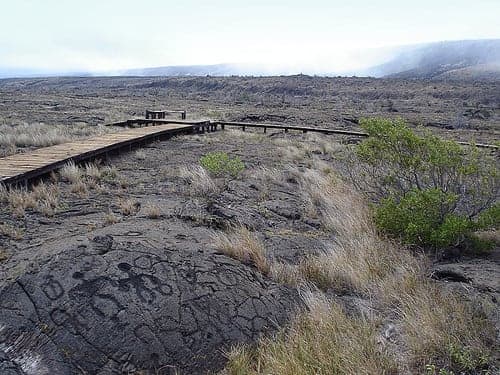
Over 23,000 petroglyphs mark this volcanic dome, making Pu'u Loa the largest petroglyph field in Hawaii and all of Polynesia. Most are small circular depressions, puka, each one a prayer made permanent in stone. Some are marked with additional circles, distinguishing firstborn children, children of chiefs. Others depict human figures, canoe sails, geometric patterns, a visual language carved by people who had no written words but found ways to make meaning last.
Today Pu'u Loa rests within Hawaii Volcanoes National Park, protected by boardwalks that allow viewing while preventing the damage that centuries of foot traffic would cause. Native Hawaiian families, particularly those from the Kalapana region who trace their genealogies to this land, continue to visit for ceremonies and connection. The petroglyphs are not relics of a vanished people. They are ancestors of living families, marks made by hands that also held the hands of children whose descendants walk the earth today. Each small depression in the lava is a birth announcement, a blessing, a hope. Standing here, you stand among thousands of prayers.
Context And Lineage
The petroglyphs at Pu'u Loa were carved primarily between 1200 and 1450 CE, making them centuries old when Europeans first reached Hawaii. The volcanic dome on which they rest formed around 1475 CE. For 500 years, Hawaiian families have come to this place to mark births and bless children. The tradition predates all written records of Hawaii.
No single origin narrative explains why this particular hill became the Hill of Long Life. The practice of piko burial existed across Hawaii, but no other site accumulated such density of marks. What made Pu'u Loa different may have been its location along coastal travel routes, its prominence as a volcanic dome rising from the surrounding flows, or a quality of mana that early visitors perceived and subsequent generations confirmed.
The site's significance fits within the broader Hawaiian worldview where land is not inert resource but living ancestor. The word 'aina, usually translated as land, literally means that which feeds. To place a child's piko in the rock was to feed the child to the land and the land to the child, creating reciprocal relationship. The volcanic origin of the islands, constantly renewed by Pele's fire, added additional meaning: to bury the cord in young lava was to connect human creation to geological creation, child's birth to island's birth.
Pu'u Loa belongs to Native Hawaiian tradition, specifically to the families who used this site for piko ceremonies over centuries. The practice of petroglyph carving was widespread across Hawaii, but this concentration is unmatched. Today the site is managed by the National Park Service in consultation with Native Hawaiian communities. The tradition of ceremonial visitation by families with genealogical ties to the area continues.
The Unknown Families
The petroglyphs at Pu'u Loa were carved by countless Hawaiian families over centuries, each marking the birth of a child. No individual creators are named in historical records. The carvings represent collective tradition, not individual artistry.
Kalapana Region Families
Hawaiian 'ohana from the Kalapana region of the Big Island maintain particular genealogical ties to Pu'u Loa. These families continue to revere the site and visit for ceremonial purposes.
Pele
The goddess of fire and volcanoes is intimately connected to the landscape of which Pu'u Loa is part. The lava flow on which the petroglyphs sit was created by her power. While Pele is not specifically venerated at Pu'u Loa, her presence underlies the entire volcanic environment.
Why This Place Is Sacred
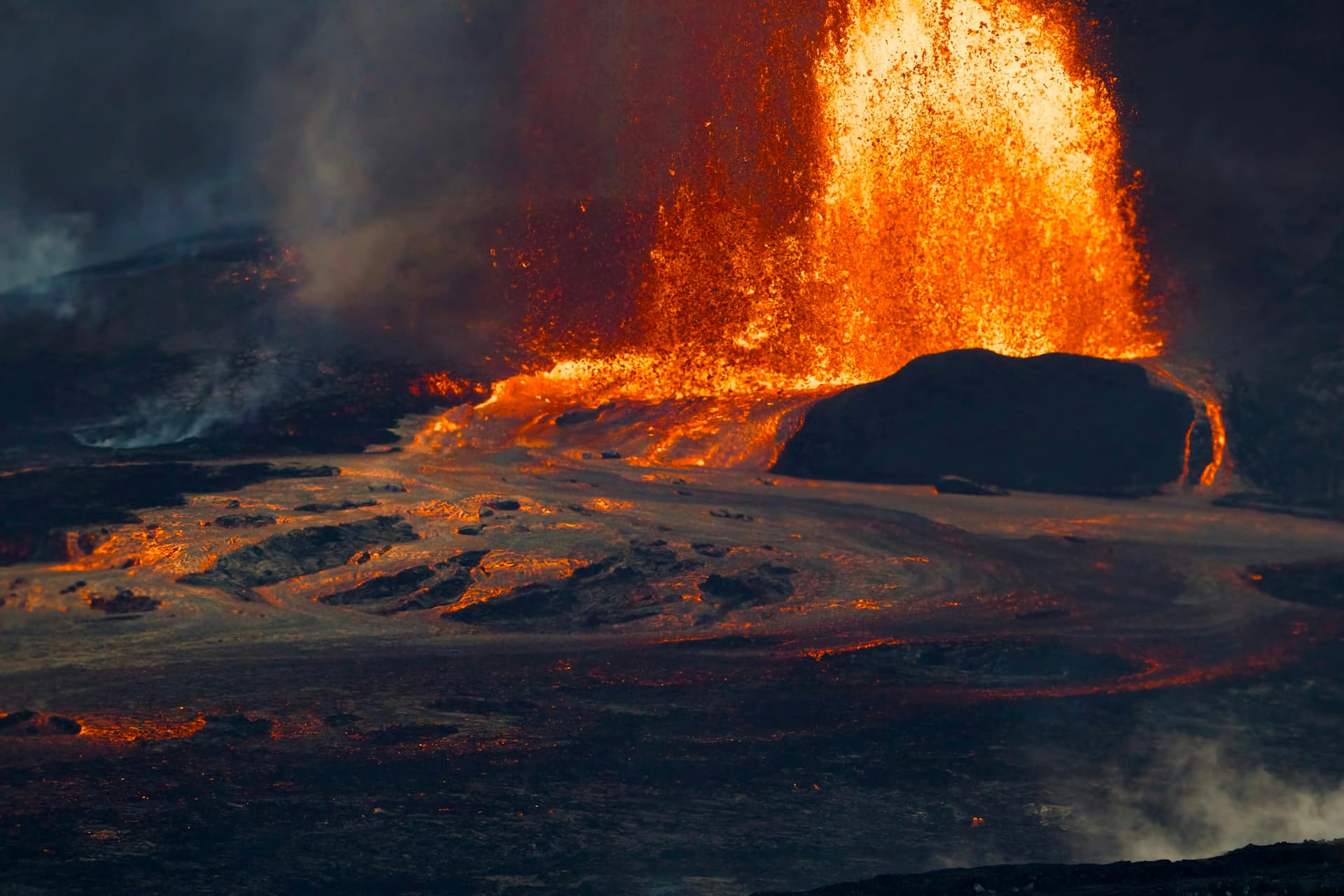
At Pu'u Loa, the veil thins where birth meets earth. The concentration of over 23,000 marks, each representing a prayer for a child's long life, creates a density of sacred intention rare in any landscape. The volcanic rock that received these offerings is itself newborn, shaped by Pele's fire. Here the cycle of creation is made tangible: volcano births land, land receives piko, child grows rooted in place.
The lava flow on which Pu'u Loa sits formed approximately 550 years ago during the eruption of Kane Nui O Hamo. In geological terms, this is young rock, barely cooled. The Hawaiians who first carved here would have walked on stone their grandparents might have witnessed forming. To place a child's umbilical cord in such ground was to participate in creation itself, to add human life to the ongoing birth of the island.
The density of sacred marks creates its own quality. Over 23,000 petroglyphs occupy this single field, more than any other site in Hawaii or Polynesia. Each one required a journey, a carving, a prayer. The cumulative weight of that devotion persists. You cannot see all 23,000 from the boardwalk, but knowing they surround you, stretching across the lava in every direction, each small hole representing a child once cradled in hopeful arms, the place becomes weighted with intention.
The isolation contributes. Reaching Pu'u Loa requires driving 16 miles down Chain of Craters Road, descending from the park's volcanic highlands toward the coast, then walking nearly three-quarters of a mile across exposed lava. The journey itself is a separation from the ordinary world. By the time you reach the boardwalk, you have crossed into a different quality of attention.
For Native Hawaiian families with genealogical ties to this land, the thinness is personal. Their ancestors are here, not metaphorically but physically. The piko of their great-great-grandparents rest in these stones. The boundary between past and present, between those who have died and those who still live, becomes permeable. The petroglyphs are not messages from strangers but letters from family, carved in a language of hope that transcends time.
Pu'u Loa's primary purpose was the piko burial ceremony. When a child was born, the father or a family member would bring the dried umbilical cord to this place, carve a small depression in the lava, place the piko inside, and cover it with a stone. This act literally rooted the child in the land, creating a bond between the newborn and the mana of Pu'u Loa that was meant to ensure long life.
The different petroglyph forms served as a kind of birth register. A simple dot indicated an ordinary child. A dot surrounded by a circle marked a firstborn. A dot with two concentric circles indicated the firstborn of an ali'i, a ruling chief. Beyond the piko-related carvings, petroglyphs also recorded significant events, marked travel routes, commemorated places and people, and may have served as dedications to family gods, the 'aumakua.
In a culture without written language, ki'i pohaku, stone images, were public communication. Placed along well-traveled paths, they served as waypoints and messages. The concentration at Pu'u Loa suggests this was a destination, not merely a stopping point, a place chosen specifically for its mana and its meaning.
The piko tradition at Pu'u Loa continued for centuries before European contact disrupted Hawaiian cultural practices. The site's inclusion within Hawaii Volcanoes National Park, established in 1916, brought protection but also new pressures. As tourism increased through the 20th century, foot traffic threatened the fragile petroglyphs. Visitors walked directly on the carvings, caused erosion, and sometimes added their own marks.
The current management approach balances preservation with access. A boardwalk now elevates visitors above the petroglyph field, allowing viewing while preventing contact. Interpretive signs explain the cultural significance. The National Park Service works with Native Hawaiian communities to ensure respectful management of this wahi pana, sacred place.
For Hawaiian families with genealogical ties to Pu'u Loa, the site remains sacred ground. While the physical practice of burying new umbilical cords has been modified due to preservation requirements, the spiritual connection continues. Families visit for ceremonies, to educate younger generations, and to maintain their relationship with ancestors whose prayers still mark the stone. The tradition has not ended; it has adapted.
Traditions And Practice
The central practice at Pu'u Loa was the piko burial ceremony, in which a child's umbilical cord was placed in a carved depression in the lava and covered with a stone, accompanied by prayers for long life. While new carvings are no longer made, Hawaiian families with ancestral ties continue to visit for ceremony and connection.
The traditional piko ceremony was a family rite of profound significance. After a child was born and the umbilical cord dried and fell off, a family member, traditionally the father, would make the journey to Pu'u Loa. Using a stone tool, they would carve a small depression, a puka, into the pahoehoe lava. The dried piko was placed inside, and a water-worn stone was set over the opening to protect it.
Different symbols marked different children. A simple dot or small cup indicated an ordinary child. A dot surrounded by a circle marked a firstborn. A dot with two concentric circles designated the firstborn of an ali'i, a chief. These distinctions were not merely genealogical but spiritual, indicating the level of mana the child carried.
Prayers accompanied the burial. The specific chants used are not widely documented, having been transmitted orally within families, but the intention was clear: to ask for long life, prosperity, and the continued flow of the land's mana through the child's life. The name Pu'u Loa, Hill of Long Life, was itself a prayer made geographical.
Beyond piko ceremonies, the petroglyphs served other functions. Some recorded battles, voyages, or other significant events. Some marked travel routes, serving as waypoints for those crossing the lava. Some may have represented 'aumakua, family gods, or told stories from Hawaiian legend. The full range of meanings remains incompletely understood.
The physical creation of new petroglyphs is no longer practiced at Pu'u Loa. The site's archaeological significance and its protection within a national park mean that new carvings would be both illegal and inappropriate. The marks that exist are irreplaceable cultural treasures.
However, the spiritual relationship between Hawaiian families and this place continues. 'Ohana with genealogical ties to the Kalapana region still visit for ceremonies, to honor ancestors, and to educate younger generations about their heritage. These visits may include prayers, chanting, and observances that connect living family members to those whose piko rest in the stone.
The National Park Service works with Native Hawaiian communities to manage the site in ways that respect its ongoing sacred significance. Pu'u Loa is understood not as a dead archaeological site but as a living wahi pana, sacred place, where the past remains present.
Visitors to Pu'u Loa participate through respectful witness. The walk to the site, across exposed lava under the Hawaiian sun, has a pilgrim quality. Upon reaching the boardwalk, move slowly. Let the density of petroglyphs become real. Consider that each small circle was once a newborn child, now perhaps twenty generations ago, whose descendants may walk the earth today.
Read the interpretive signs. Learn the difference between a simple puka and the circled marks of firstborns. Notice the human figures, the canoe sails, the patterns that remain enigmatic. Let the accumulated weight of prayer affect you.
Do not attempt to conduct ceremonies of your own. Do not leave offerings. The respect this site deserves is the respect of understanding: learning what this place meant to those who made it, and carrying that knowledge forward.
Native Hawaiian Piko Tradition
ActiveThe piko tradition is central to Pu'u Loa's meaning. For generations, Hawaiian families brought newborns' umbilical cords to this site to be buried in carved depressions in the lava, accompanied by prayers for long life. The practice created a literal connection between child and land, drawing the mana of Pu'u Loa into the child's life. An estimated 16,000-19,000 of the 23,000 petroglyphs are piko-related.
Traditionally, the father or a family member carried the dried umbilical cord to Pu'u Loa, carved a small hole (puka) in the pahoehoe lava, placed the piko inside, and covered it with a water-worn stone. Different symbols indicated the child's status: simple dot for an ordinary child, dot with circle for a firstborn, dot with two circles for the firstborn of an ali'i. Prayers and chants accompanied the burial.
Contemporary Hawaiian Family Practice
ActiveFor Native Hawaiian 'ohana with genealogical ties to Pu'u Loa, particularly those from the Kalapana region, the site remains sacred ground. While the physical practice of burying new umbilical cords has been modified due to preservation requirements, the spiritual connection continues.
Family visits for ceremonial purposes, prayer, chanting, connection with ancestors, and education of younger generations about their heritage and the significance of this wahi pana to their lineage.
Ki'i Pohaku (Petroglyph) Tradition
HistoricalIn pre-contact Hawaii, petroglyphs served as a form of public communication in a culture without written language. The ki'i pohaku at Pu'u Loa recorded births, commemorated events, marked travel routes, and may have honored family gods ('aumakua).
Ancient Hawaiians carved petroglyphs using stone tools, creating images on pahoehoe lava surfaces. The marks were positioned along well-traveled paths to serve as waypoints and messages. Beyond piko-related carvings, the field includes human figures, geometric designs, and depictions of objects.
Experience And Perspectives
Visiting Pu'u Loa means driving deep into volcanic landscape, walking across exposed lava, and arriving at a boardwalk that winds through thousands of ancient carvings. The sun is intense, the silence profound. Each small circle in the stone was once a parent's hope for a child. Standing among them, the weight of that accumulated prayer becomes palpable.
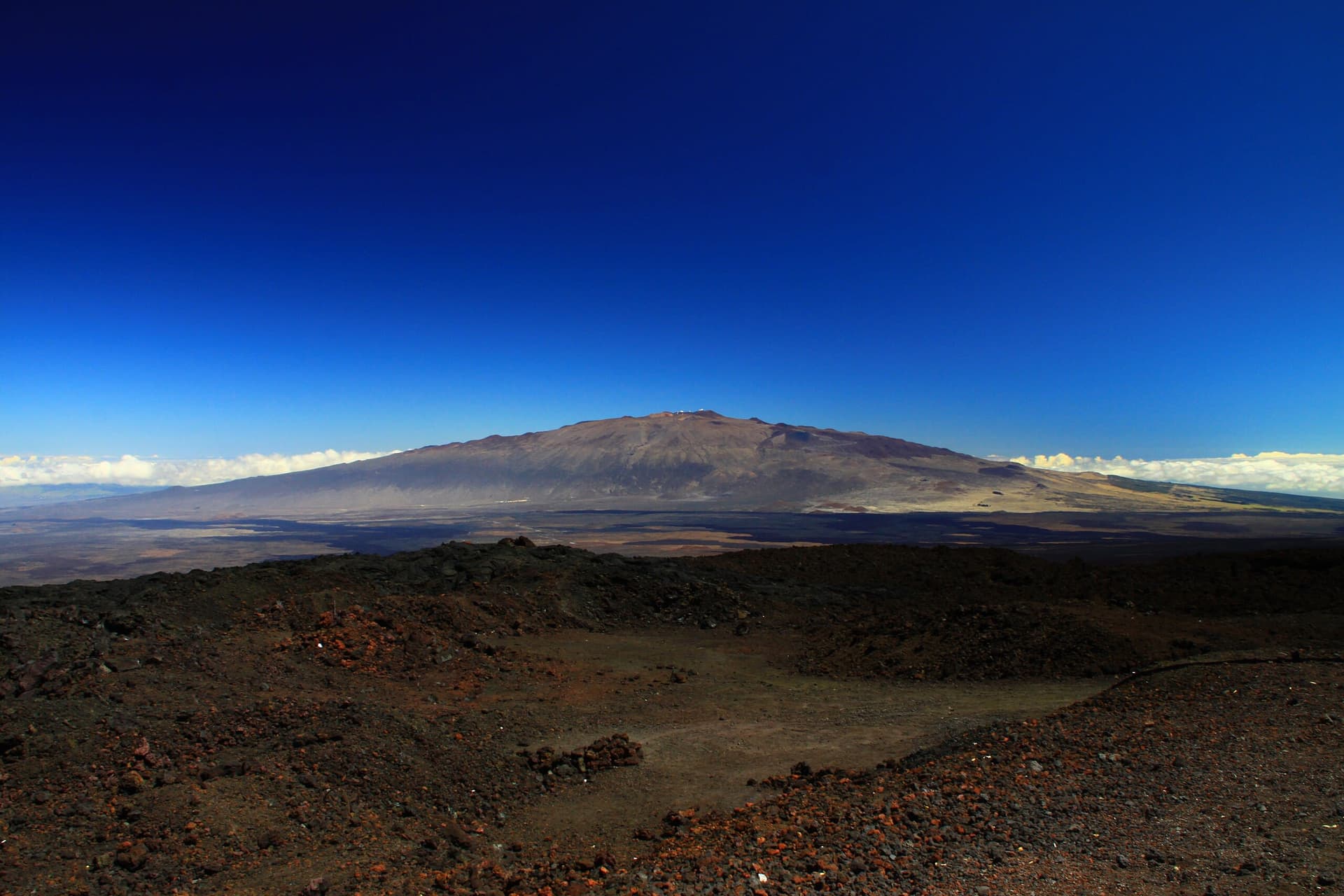
The approach to Pu'u Loa begins at the main entrance of Hawaii Volcanoes National Park, but the petroglyphs are far from the crowds at Kilauea's crater. You drive 16 miles down Chain of Craters Road, a route that descends through different lava flows, each dated by signage, each representing a different eruption. The vegetation changes as you drop toward the coast: first rainforest, then scattered 'ohi'a trees, then bare rock where recent flows have covered everything. By the time you reach the trailhead, 2.5 miles from the road's end at Holei Sea Arch, you are surrounded by lava.
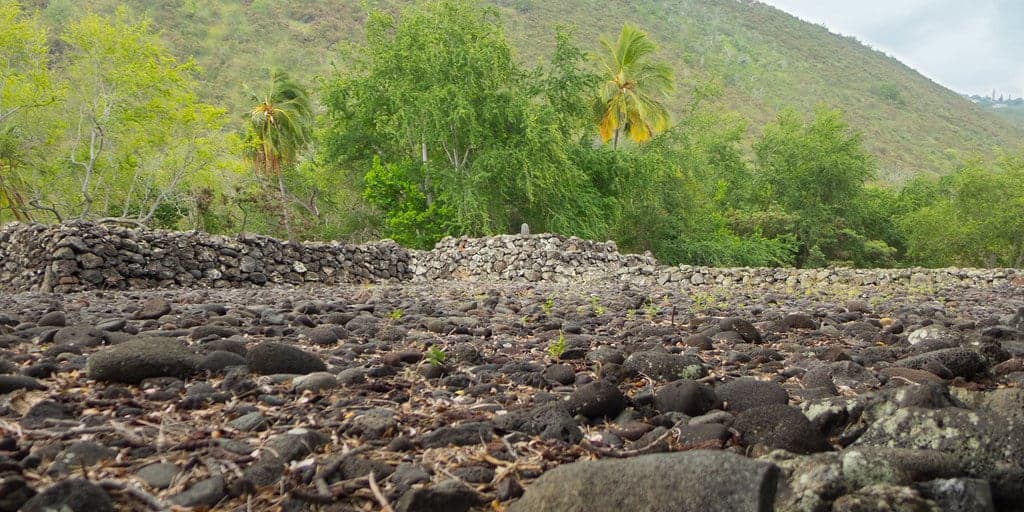
The trail is marked by ahu, rock cairns, that guide you across the pahoehoe. The walk is short, about 0.7 miles each way, but the terrain is uneven, and there is no shade. Bring water. Wear a hat. The Hawaiian sun is not gentle here. As you walk, you leave the modern world behind. No buildings. No trees. Just black rock, blue sky, and the occasional flutter of an 'apapane overhead.
The boardwalk appears almost suddenly, an elevated wooden path that winds through the petroglyph field. Below you, carved into the smoothness of the lava, are thousands of marks. Some are clearly visible from the walkway: circles, dots, human figures, the distinctive shapes that archaeologists have catalogued. Many more extend beyond sight, covering the volcanic dome in patterns that only become apparent from the air.
What strikes most visitors is the sheer density. The petroglyphs are not scattered but concentrated, as if this specific location held something others did not. Which, of course, it did. The name told travelers what they would find here. The Hill of Long Life. A place where prayers took permanent form.
Stand on the boardwalk in the afternoon, when the light angles low enough to cast shadows that make the carvings visible, and let the numbers become real. Each small circle was a child, once. Each was carried here as dried umbilical cord by a father or family member who had walked this same lava, probably barefoot, probably in ceremony. Each stone that covers a piko was placed by hands that also wiped tears from that child's face, held that child when fever came, taught that child to fish or weave or chant. The petroglyphs are not abstract symbols. They are family.
Plan for 2-3 hours total, including the drive from the park entrance, the walk, and time at the site. The trail is 1.4 miles round trip, rated easy to moderate, but the exposed conditions can make it feel longer. There is no shade on the trail or at the viewing area. Bring at least one liter of water per person, wear sun protection, and consider timing your visit for early morning or late afternoon when temperatures are cooler and the low-angle light makes the petroglyphs more visible. The site is open during normal park hours, typically 24 hours, but check for volcanic activity alerts before traveling.
Pu'u Loa has been studied by archaeologists, managed by the National Park Service, and held sacred by Native Hawaiians for generations. These perspectives overlap but do not perfectly align. Understanding the site means holding all three: the scholarly interest in dating and interpretation, the institutional focus on preservation, and the indigenous understanding of living sacred ground.
Archaeologists date the petroglyphs at Pu'u Loa primarily to 1200-1450 CE, based on stylistic analysis and association with dated lava flows. The volcanic dome on which the petroglyphs sit formed around 1475 CE during the Kane Nui O Hamo eruption, though some carvings may have been made on earlier surfaces now covered or destroyed.
Scholars categorize the petroglyphs into several types: the small circular depressions (puka) associated with piko ceremonies, which account for an estimated 16,000-19,000 of the 23,000 total marks; human figures (anthropomorphs) of various styles; geometric designs; and depictions of objects such as canoe sails. The density of piko-related carvings is unmatched elsewhere in Hawaii.
The function of the site as a birth-blessing location is well established in the ethnographic literature. Early 20th century researchers documented the piko tradition through interviews with Hawaiian elders. The National Park Service has incorporated this understanding into site interpretation. Questions remain about the full range of the petroglyphs' meanings and the specific ceremonies that accompanied their creation.
For Native Hawaiians, Pu'u Loa is a wahi pana, a sacred place, where the mana of the land was accessed for blessing. The piko tradition reflects the Hawaiian understanding that humans are not separate from the 'aina but intimately connected to it. Placing a child's umbilical cord in the rock literally roots that child in the land, creating a bond that was meant to sustain them throughout life.
The site holds particular significance for 'ohana from the Kalapana region of the Big Island, whose genealogies trace to this land. For these families, the petroglyphs are not abstract cultural heritage but ancestor marks, traces of specific people in specific lineages. The boundary between past and present becomes permeable at a site where one's own family's piko may rest in the stone.
Contemporary Hawaiian practitioners advocate for respectful treatment of Pu'u Loa and continued recognition of its spiritual significance. The site is not a museum but a living sacred place where ceremony continues.
Some visitors approach Pu'u Loa through New Age or alternative spiritual frameworks, viewing the concentration of birth-related carvings as creating an energetic vortex or power spot. While such visitors may have genuine spiritual experiences, these interpretations should be distinguished from the indigenous Hawaiian understanding of the site.
The concept of mana is specifically Hawaiian and should not be conflated with generic notions of energy. Visitors with alternative spiritual interests are asked to approach with respect for Hawaiian culture, avoiding appropriation of Hawaiian concepts or the imposition of outside frameworks on a site that already has its own meaning.
Many questions about Pu'u Loa remain unanswered. Why did this particular location become the primary piko site on the Big Island? What specific chants and prayers accompanied the ceremonies? What do all the petroglyph forms signify beyond the documented categories? How was knowledge of the site transmitted through generations in a culture without written records? These mysteries are part of what the site holds, a reminder that understanding is never complete.
Visit Planning
Pu'u Loa is located 16 miles down Chain of Craters Road in Hawaii Volcanoes National Park. The trail is 1.4 miles round trip across exposed lava. Bring water, sun protection, and sturdy shoes. Early morning or late afternoon visits avoid the worst heat and provide better lighting for viewing the petroglyphs.
Volcano Village, approximately 30 miles from the trailhead, offers lodging including Volcano House (in the park), bed and breakfasts, and vacation rentals. Hilo (45 miles) and Kailua-Kona (100 miles) have a full range of accommodations.
Pu'u Loa is an active sacred site and a protected archaeological resource. Stay on the boardwalk. Do not touch the petroglyphs. Keep voices low. Take only photographs. The appropriate stance is one of respectful witness, understanding that you walk among thousands of prayers.
The rules at Pu'u Loa exist for two reasons: to protect irreplaceable cultural resources and to honor the ongoing sacred significance of this place for Native Hawaiian families. Both reasons deserve respect.
The boardwalk that winds through the petroglyph field marks the boundary of permitted access. Do not step off the boardwalk onto the lava. The petroglyphs are fragile; foot traffic causes erosion. More importantly, you would be walking on what is, for Hawaiian families, sacred ground, the burial place of their ancestors' piko.
Do not touch the petroglyphs. Oils from human skin accelerate weathering. Rubbings, once common at rock art sites, cause direct damage to carved surfaces. Tracing the lines with fingers, however gently, adds to cumulative wear. The marks have survived for centuries; your restraint helps them survive centuries more.
Keep voices low. You are not merely at a tourist attraction but at a site where families still come to honor their dead. The atmosphere of respect is part of what makes Pu'u Loa different from roadside curiosities.
Do not leave offerings. Unlike some sacred sites that welcome gifts, Pu'u Loa is an archaeological site where added materials interfere with preservation. The most meaningful offering is to learn the site's significance and carry that understanding into how you treat the land.
Photography is permitted for personal use. Photograph the petroglyphs, the landscape, the vast sweep of lava field. If you encounter Native Hawaiian practitioners in ceremony, do not photograph them without explicit permission. Step back, give them space, and wait if necessary.
Practical attire for hiking in an exposed volcanic environment. Sun protection is essential: hat, sunscreen, sunglasses. There is no shade on the trail or at the viewing area. Sturdy closed-toe footwear is required; the pahoehoe is uneven and can be sharp. Light, breathable clothing suits the hot conditions.
Photography for personal use is permitted from the boardwalk. Commercial photography requires a National Park Service permit. Do not use flash on the petroglyphs. Do not photograph practitioners without permission. Consider the sacred nature of what you are documenting.
Do not leave offerings at this site. Unlike sacred sites where offerings are welcomed, Pu'u Loa's archaeological significance means added materials interfere with preservation. The best offering is understanding and respect.
{"Stay on the designated boardwalk and trail at all times","Do not touch, rub, trace, or walk on the petroglyphs","Do not create rubbings or molds","Do not carve, scratch, or add any marks","Do not build rock piles (ahu) in the petroglyph area","Do not remove any rocks or materials","Possession of archaeological artifacts is a federal crime","No drones without National Park Service permit","Pack out all trash","Keep voices low"}
Sacred Cluster
Nearby sacred places create the location cluster described in the growth plan. This block is intentionally crawlable and links into the wider regional graph.