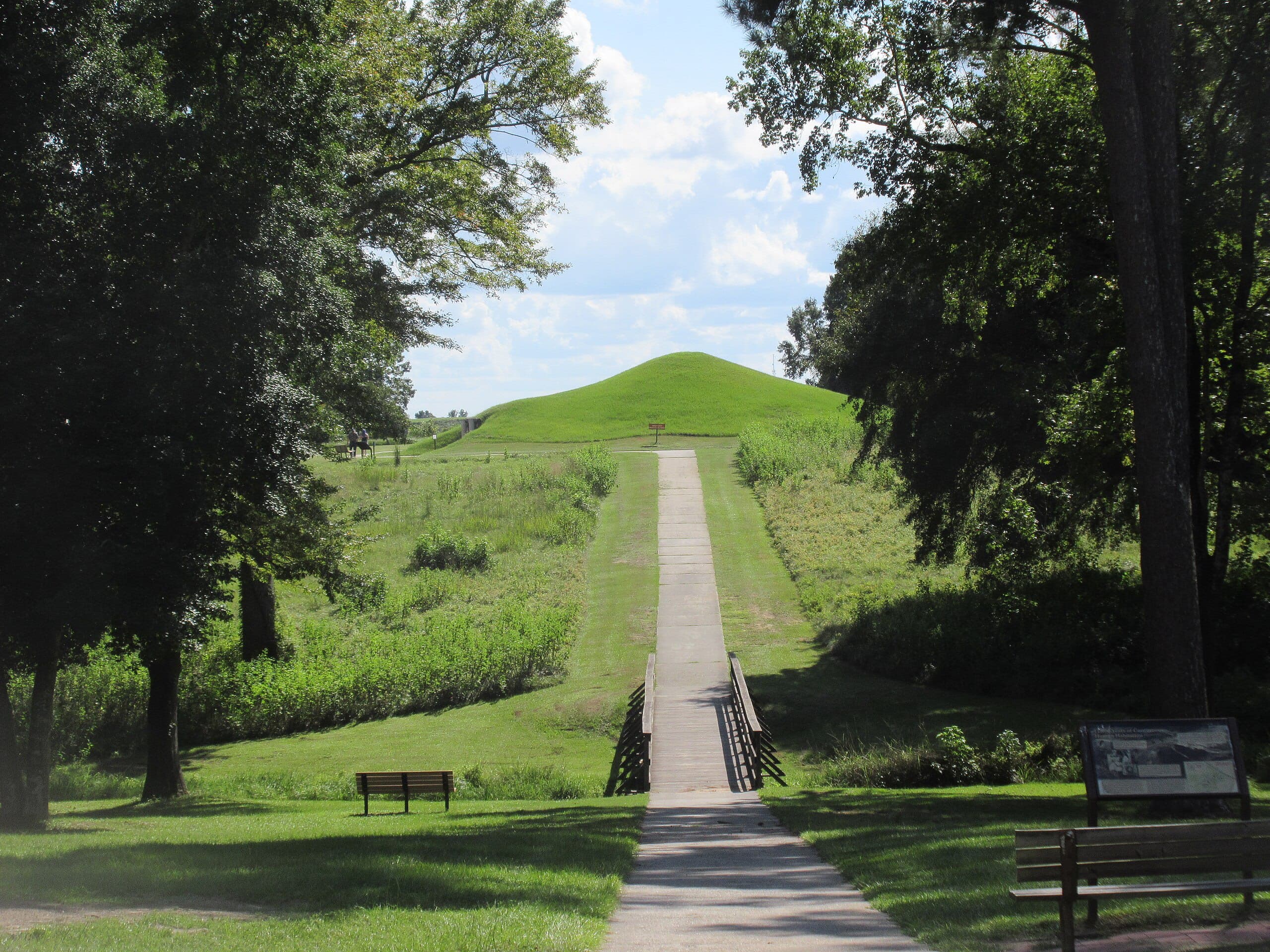
Ocmulgee Mounds, Georgia
Where the Muscogee Nation first sat down and where their sacred fire still burns
Macon, Georgia, United States
At A Glance
- Coordinates
- 32.8382, -83.6022
- Suggested Duration
- 2-4 hours for a comprehensive visit including visitor center, Earth Lodge, Great Temple Mound, and main areas. The full 6.8 miles of trails require additional time. The Lamar Mounds unit (3 miles south) adds further exploration if accessible.
Pilgrim Tips
- Comfortable outdoor attire appropriate for Georgia's subtropical climate. Sturdy walking shoes are essential for trails and mound stairs. Summer is hot and humid; bring water and sun protection. Winter is mild but can be cool.
- Photography is permitted throughout the site for personal use. Flash photography may be restricted inside the Earth Lodge to protect the original floor. During tribal ceremonies or the Indigenous Celebration, follow any restrictions announced. Commercial photography requires advance permission from site management.
- The Funeral Mound contains human remains—ancestral leaders and prominent individuals. Treat this knowledge with appropriate gravity. The site is not merely archaeological but burial ground. The Earth Lodge floor is a 1,000-year-old artifact. Treat it with extreme care. Do not dig, scratch, or disturb the surface. The Indigenous Celebration is a community event. If attending, follow any guidance provided. Not all dances may be open to full participation. Photography during ceremonies should follow stated guidelines—when in doubt, ask. Ocmulgee is sacred to the Muscogee Nation even as it is managed as a public park. These identities coexist. Visitors should recognize both.
Overview
In central Georgia, where the Ocmulgee River bends, earthen mounds rise from a landscape inhabited for 12,000 years. The Mississippians built the Great Temple Mound here around 900 CE, and inside a reconstructed Earth Lodge, their original clay floor remains intact after a millennium. For the Muscogee (Creek) Nation, this is not archaeology but origin—the place where their ancestors first sat down after migration from the West, land so sacred they refused to surrender it in treaties even as they were forced to cede everything else.
Ocmulgee Mounds holds an extraordinary distinction: 12,000 years of continuous human presence, one of the longest recorded habitation spans in North America. Paleo-Indians walked this land when mammoths still roamed. Woodland peoples built here. Then, around 900 CE, the Mississippian culture transformed the site into a ceremonial center overlooking the Ocmulgee River, raising the Great Temple Mound 55 feet above the floodplain and constructing the Earth Lodge where councils gathered by firelight.
What makes Ocmulgee exceptional is what survives. Inside the reconstructed Earth Lodge, visitors can step onto the original clay floor—a 1,000-year-old surface, carbon dated to 1015 CE, preserved where councils once assembled. Forty-seven seats ring the chamber in hierarchical tiers. At the chamber's center rises an eagle effigy platform where the three highest leaders sat, facing a fire pit that once held flames central to Mississippian ceremony.
For the Muscogee (Creek) Nation, Ocmulgee is origin. According to oral tradition, this is 'the place where we first sat down' after their ancestors completed a long migration from the West. The Earth Lodge is described in Creek Migration Legend as a sacred space where warriors gathered 'to fast and purify their bodies.' So sacred was this ground that when forced to cede lands east of the Ocmulgee River in 1805, Creek chiefs specifically retained a 3-by-5-mile reserve around the mounds—exempting it from all treaties until the 1826 Treaty of Washington finally took it. When removed on the Trail of Tears, the Muscogee carried their sacred fire with them to Oklahoma.
Today they return. Each September, for over thirty years, the Muscogee Nation has held the Indigenous Celebration at Ocmulgee, performing Stomp Dance and honoring ancestors on ground their forebears refused to surrender. The effort to establish co-management of the park between the National Park Service and Muscogee Nation would make Ocmulgee the first U.S. national park with such an arrangement—recognition that this is living heritage, not merely preserved past.
Context And Lineage
Ocmulgee was built by Mississippian peoples around 900-1150 CE, though human occupation extends back 12,000 years. The Muscogee (Creek) Nation traces direct ancestry to the builders and considers Ocmulgee their place of origin and spiritual homeland.
The Muscogee (Creek) Nation holds Ocmulgee as their origin point—'the place where we first sat down' after ancestral migration from the West. According to oral tradition, the Earth Lodge was a sacred space where warriors gathered 'to fast and purify their bodies,' with fire central to purification rituals.
This is not merely legend but historical claim. When the U.S. government demanded land cessions in the early 19th century, Creek chiefs specifically retained the Ocmulgee Old Fields Reserve—a 3-by-5-mile area around the sacred mounds. They refused to surrender it even as they ceded surrounding territories. Every treaty exempted this ground until the 1826 Treaty of Washington finally wrested it away. Such persistent refusal across decades of treaty negotiation speaks to the depth of sacred connection.
When the Trail of Tears removed the Muscogee to Oklahoma in the 1830s, they carried their sacred fire with them—the flames that had burned at ceremonial grounds, the fire that connected them to Ocmulgee and to purification rituals performed in the Earth Lodge. In Oklahoma, around new ceremonial fires, they maintained the traditions rooted in Georgia's red clay.
The scholarly record aligns with oral tradition in identifying the Late Mississippian/Lamar peoples (c. 1350-1600 CE) as cultural ancestors of the historic Muscogee. The Lamar period spiral mound, the palisaded village, the material culture—all show continuity with later Creek practices. Ocmulgee is not where Muscogee culture ended but where it began.
The lineage at Ocmulgee spans 12,000 years, though the specific cultural connections shift across this vast span. Paleo-Indian, Archaic, and Woodland peoples left their marks without direct connection to later inhabitants. The Mississippian culture (c. 900-1150 CE) built the major earthworks that define the site today.
The Late Mississippian/Lamar period (c. 1350-1600 CE) represents the critical continuity. Archaeological and anthropological evidence identifies the Lamar peoples as cultural ancestors of the historic Muscogee (Creek). The traditions, the material culture, the relationship to the land show developmental continuity across the centuries.
The Muscogee Confederacy maintained connection to Ocmulgee through the colonial and early American periods, defending the site in treaty negotiations and holding it sacred even as surrounding lands were ceded. The Trail of Tears severed physical presence but not spiritual connection. The sacred fire was carried west.
Today, the Muscogee (Creek) Nation—headquartered in Okmulgee, Oklahoma (named for their Georgia homeland)—actively maintains relationship with Ocmulgee. The annual Indigenous Celebration brings Muscogee citizens back to ancestral ground. Efforts toward co-management would formalize what has never been abandoned: the Muscogee claim to heritage at the place where they first sat down.
The lineage is both broken and continuous—physical removal could not sever spiritual connection. What was carried on the Trail of Tears returns each September when the Stomp Dance is performed on sacred ground.
Mississippian Leaders (unknown names)
The three highest leaders who sat on the eagle effigy platform in the Earth Lodge, conducting councils and ceremonies that governed the ceremonial center. Their specific identities are lost, but their authority was literally built into the architecture.
Creek Chiefs (Treaty Period)
The leaders who insisted on retaining the Ocmulgee Old Fields Reserve in the 1805 treaty and subsequent negotiations, specifically exempting the sacred mounds from land cessions until finally compelled to surrender them in 1826.
Chief William McIntosh
Creek leader who signed the 1825 Treaty of Indian Springs ceding Creek lands without full tribal authorization. He was assassinated by Creek warriors shortly after, reflecting the depth of opposition to surrendering ancestral territory including the Ocmulgee region.
WPA Archaeological Team
The 800 workers who conducted the largest archaeological excavation in American history at Ocmulgee from 1933-1942, recovering over 3 million artifacts and uncovering the remarkably intact Earth Lodge floor.
Muscogee (Creek) Nation
The federally recognized tribe that traces direct ancestry to Ocmulgee's builders. The Nation actively participates in site interpretation, holds annual cultural celebrations, and is working toward co-management of the park with the National Park Service.
Why This Place Is Sacred
Ocmulgee's thinness emerges from remarkable continuity—12,000 years of human presence concentrated at a river bend where worlds have always met. The Earth Lodge floor, undisturbed for a millennium, preserves the exact surface where councils gathered. For the Muscogee, whose ancestors built these mounds, the place holds power as origin point and spiritual homeland.
What makes a place thin? At Ocmulgee, the answer lies in accumulation. For 12,000 years, human beings have returned to this river bend. They hunted here when ice sheets still covered the north. They gathered in seasonal camps during the Archaic period. They built burial mounds during the Woodland era. Then the Mississippians raised the great earthworks that define the site today.
This depth of habitation creates a particular quality. The land has been witnessed. Prayers have been offered here across millennia, under names and in languages long forgotten. The Great Temple Mound rises 55 feet—built basket by basket, an estimated 10 million loads of earth, each carried by human hands. That concentration of effort leaves traces that exceed the physical.
The Earth Lodge amplifies this quality. Step inside and you stand on the original floor—not a reconstruction but the actual clay surface pressed by feet a thousand years ago. The eagle effigy platform where leaders sat remains in place. The fire pit at the chamber's center once held flames that the Creek Migration Legend describes as central to purification ritual. The room is dim, the acoustics close, the sense of enclosure profound. You are inside a sacred space, preserved.
For the Muscogee Nation, Ocmulgee's thinness is not metaphor but literal. This is where the world began for their people—the place where ancestors first sat down after migration, the cradle of the Muscogee Confederacy. When the sacred fire was carried west on the Trail of Tears, spiritual connection to this place went with it. When Muscogee people return for the Indigenous Celebration, they are not visiting a historic site but coming home to origin.
The veil thins where memory persists across generations. At Ocmulgee, memory persists across twelve millennia.
The Mississippian peoples who built Ocmulgee's major earthworks around 900-1150 CE created a ceremonial center that served as axis of religious and political life. The Great Temple Mound was not merely administrative architecture but sacred geography—the residence of the chief and the stage for rituals that connected the community to cosmic order.
The Earth Lodge reveals the nature of Mississippian governance intertwined with ceremony. Forty-seven seats arranged in hierarchical tiers accommodated a council where rank was literally built into the architecture. The three highest leaders sat on the raised eagle effigy platform facing the fire pit. The eagle—sacred symbol of the Southeastern Ceremonial Complex—connected earthly authority to divine power. Fire at the center was not merely practical but ritual, central to purification practices described in later Creek tradition.
The site's location along the Ocmulgee River placed it at a confluence of waterways that served as trade routes throughout the Southeast. Artifacts recovered during the 1930s WPA excavation—the largest archaeological dig in American history, employing 800 workers—revealed trade networks extending across the continent. Copper from the Great Lakes, shells from the Gulf Coast, mica from the Appalachians flowed through Ocmulgee.
The Funeral Mound contained burials of leaders and prominent individuals, accompanied by grave goods that reflected their status and the extent of Mississippian connections. Death was ritualized, burial was ceremony, and the mound itself became sacred ground holding ancestors.
Ocmulgee, in its original purpose, was a place where worlds met: the earthly community, the realm of the dead, and the cosmic order embodied in the eagle and the fire.
Ocmulgee's occupation spans a depth unusual even among North American sacred sites. Paleo-Indians established presence around 10,000 BCE, leaving stone tools as evidence of their passage. Through the Archaic and Woodland periods, peoples continued to use the site, building burial mounds and establishing patterns of seasonal return.
The transformative period began around 900 CE when Mississippian peoples established the ceremonial center. Over the next 250 years, they constructed the Great Temple Mound (55 feet), the Lesser Temple Mound, the Earth Lodge, the Funeral Mound, and additional earthworks. At its peak, the site served as a major religious and political center of the South Appalachian Mississippian culture.
Around 1150 CE, the main Ocmulgee site declined. The reasons remain uncertain—climate stress, political fragmentation, warfare, or shifting trade routes may have contributed. But occupation did not end. The Late Mississippian/Lamar period (c. 1350-1600 CE) saw renewed settlement at a fortified village site three miles south, where peoples built the remarkable spiral mound—the only known example of its kind in Eastern North America.
The Lamar period represents the cultural ancestors of the historic Muscogee. When Europeans arrived, the Creek Confederacy maintained connection to Ocmulgee as sacred homeland. Even as they were forced to cede lands, Creek chiefs specifically retained the Ocmulgee Old Fields Reserve, refusing to surrender the mounds in treaties until finally compelled in 1826. The Trail of Tears removed the Muscogee to Oklahoma, but spiritual connection remained.
Modern preservation began with the 1933-1942 WPA excavation, which uncovered the remarkably intact Earth Lodge floor. The site became Ocmulgee National Monument in 1936, redesignated as National Historical Park in 2019 with expanded boundaries. Today, the Muscogee Nation actively participates in site interpretation, and efforts toward co-management continue—bringing the site's evolution full circle to those whose ancestors built it.
Traditions And Practice
The Mississippians held councils in the Earth Lodge, performed ceremonies on mound summits, and buried leaders in the Funeral Mound. Today, the Muscogee Nation holds annual celebrations with Stomp Dance and traditional ceremonies. Visitors can attend the Indigenous Celebration each September and explore the Earth Lodge year-round.
The Mississippian ceremonial practices at Ocmulgee centered on the Earth Lodge and the mound summits. In the Earth Lodge, councils gathered on the tiered seats, the three highest leaders occupying the eagle effigy platform while firelight flickered at the chamber's center. The Creek Migration Legend describes warriors gathering in such lodges 'to fast and purify their bodies,' with fire central to cleansing both physical and spiritual impurities.
The Great Temple Mound summit held temples where religious ceremonies connected the community to cosmic order. The chief resided here, his elevation literal and symbolic. The Lesser Temple Mound served additional ceremonial functions. The Funeral Mound received burials of leaders and prominent individuals, accompanied by grave goods—copper ornaments, shell gorgets, artifacts reflecting the deceased's status and the extent of Mississippian trade networks.
Agricultural ceremonies tied to maize cultivation governed seasonal rhythms. The Green Corn Ceremony, documented among later Creek peoples, likely has roots in Mississippian practice—a time of renewal, forgiveness, and rekindling of sacred fires. The Southeastern Ceremonial Complex, with its eagle and falcon imagery, connected Ocmulgee to a broader religious tradition spanning the Mississippian world.
Defensive trenches around portions of the site suggest that protection of the ceremonial center was itself a practice—warfare as ritual as much as practical necessity.
The Muscogee (Creek) Nation holds the annual Ocmulgee Indigenous Celebration each September, now in its fourth decade. Muscogee and Yuchi ceremonial ground members perform Stomp Dance—a practice carried from Georgia to Oklahoma on the Trail of Tears and carried back again each autumn. The celebration includes Social, Animal, War, and Spiritual dances, traditional stories and music, Native American crafts and food, and educational programs sharing Muscogee heritage.
The Muscogee Nation is working with the National Park Service to reestablish sacred fire practices on ancestral lands. The effort toward co-management of the park would formalize indigenous involvement in site interpretation and stewardship. This is not merely administrative—it recognizes that the site's meaning cannot be fully understood apart from the people whose ancestors built it.
Muscogee citizens make ceremonial visits throughout the year, not only during the celebration. The Earth Lodge, the mounds, the river—these hold significance that does not require public event to access. Coming home to origin is itself practice.
Visitors can engage with Ocmulgee through several approaches. Entering the Earth Lodge and standing on the 1,000-year-old floor is inherently contemplative—the dim light, close acoustics, and preserved surface create conditions for reflection on what was asked of this space. Sitting quietly allows the chamber's quality to register.
Climbing the Great Temple Mound offers a different practice—physical ascent mirroring the hierarchical significance of elevation. At the summit, views across the floodplain and surrounding mounds invite consideration of the ceremonial landscape as integrated whole.
Walking the trails slowly, allowing 12,000 years of habitation to accumulate in imagination, rewards patience. The river bend, the bottomland forest, the defensive trenches—each marks a different layer of human presence.
Attending the Indigenous Celebration (typically second weekend of September, free admission) offers direct encounter with living tradition. Watch the Stomp Dance, listen to traditional stories, engage with Muscogee culture as practice rather than exhibit. The celebration welcomes visitors while honoring that this is first and foremost Muscogee ground.
Mississippian Culture
HistoricalThe Mississippian culture flourished at Ocmulgee from approximately 900-1150 CE, constructing the major earthworks that define the site today. The Great Temple Mound (55 feet) served as the ceremonial and political center. The Earth Lodge with its eagle effigy platform and hierarchical seating demonstrates the integration of governance and religion. Ocmulgee was part of the broader South Appalachian Mississippian tradition that influenced societies across the Southeast.
Construction of platform mounds as bases for temples and elite residences. Council meetings in the Earth Lodge with hierarchical seating and purification by fire. Agricultural ceremonies tied to maize cultivation. Burial rituals for leaders in the Funeral Mound with elaborate grave goods. Defensive fortifications including trenches. Trade networks spanning from the Great Lakes to the Gulf Coast.
Late Mississippian/Lamar Culture
HistoricalFollowing the decline of the main Ocmulgee site around 1150 CE, the Late Mississippian/Lamar period (c. 1350-1600 CE) saw renewed occupation at a fortified village three miles south. The Lamar peoples built the unique spiral mound—the only known example of its kind in Eastern North America. Archaeological and anthropological evidence identifies the Lamar culture as direct ancestors of the historic Muscogee (Creek) people.
Construction of the unique spiral ramp mound. Palisaded village with rectangular houses featuring thatch roofs and clay-plastered walls. Platform mound construction continuing Mississippian tradition. Cultural practices showing continuity with later Creek traditions.
Muscogee (Creek) Nation Connection
ActiveThe Muscogee (Creek) Nation considers Ocmulgee their origin point and the cradle of the Muscogee Confederacy. According to oral tradition, this is 'the place where we first sat down' after migration from the West. Creek chiefs refused to surrender the Ocmulgee Old Fields in 19th-century treaties until finally compelled in 1826. After forced removal on the Trail of Tears, the Muscogee carried their sacred fire to Oklahoma, maintaining spiritual connection to their homeland. Today, the Muscogee Nation actively participates in site interpretation and is working toward co-management of the park.
Annual Ocmulgee Indigenous Celebration (September) with Stomp Dance performed by Muscogee and Yuchi ceremonial ground members. Social, Animal, War, and Spiritual dances. Traditional stories, music, and crafts. Collaborative site interpretation with the National Park Service. Ceremonial visits to ancestral lands. Preservation advocacy.
Experience And Perspectives
Visiting Ocmulgee means stepping onto a 1,000-year-old floor inside the Earth Lodge, climbing the Great Temple Mound for views across the floodplain, and walking trails that trace 12,000 years of human presence. The museum displays 2,000 artifacts from the largest archaeological dig in American history.
The approach to Ocmulgee reveals nothing of what awaits. The visitor center sits alongside the highway in Macon, Georgia, unremarkable from the road. Inside, the museum orients: 2,000 artifacts displayed from over 3 million recovered during the 1930s WPA excavation. Pottery, stone tools, copper ornaments, shell gorgets—evidence of trade networks spanning from the Great Lakes to the Gulf. A short film introduces the Mississippian culture and Muscogee heritage. Here you learn the scale of what you are about to encounter.
The Earth Lodge transforms understanding. A short walk from the visitor center leads to a reconstructed entrance—the superstructure rebuilt in 1937, but what matters lies beneath. Descend into the chamber and your eyes adjust to dimness. The floor spreading beneath your feet is not reconstruction. It is the original clay surface, carbon dated to 1015 CE, preserved where it was pressed by Mississippian hands a millennium ago. Forty-seven seats ring the walls in tiered arrangement. The eagle effigy platform rises at the chamber's far end, three seats for three leaders, facing the fire pit at the center.
Stand where councils gathered. Feel the close acoustics, the enclosed space, the sense of being inside rather than upon the earth. This is one of the most significant in-place archaeological exhibits in Eastern North America—a sacred space preserved intact.
The Great Temple Mound requires a climb. Stairs ascend the 55-foot earthwork—the residence of chiefs, the axis of ceremonial life. From the summit, views extend across the Ocmulgee River floodplain to the surrounding mounds: the Lesser Temple Mound nearby, the Funeral Mound holding ancestral remains, the Cornfield Mound and others marking what was once a complex ritual landscape.
Trails wind through the site, past defensive trenches, through bottomland forest, along the river where Mississippians traveled by canoe. The 6.8 miles of trails reward slow walking. This is land that has been inhabited for 12,000 years. The layers of presence cannot be rushed.
Plan 2-3 hours for a comprehensive visit. The visitor center museum requires 30-45 minutes for exhibits and film. The Earth Lodge is a 5-minute walk from the visitor center—allow time inside for the experience to settle. The Great Temple Mound climb takes 15-20 minutes with time at the summit. Bring water, especially in Georgia's summer heat. The trails offer extended exploration—the full 6.8-mile network requires additional hours. The Lamar Mounds unit is located three miles south and may have limited access; check with the visitor center. For the annual Indigenous Celebration (second weekend of September), arrive early and expect larger crowds.
Ocmulgee invites multiple interpretations: a major Mississippian ceremonial center, sacred homeland of the Muscogee Nation, a testament to 12,000 years of human habitation, or a preserved window into a world that still claims living descendants. These perspectives coexist and inform each other.
The scholarly consensus recognizes Ocmulgee as one of the most significant archaeological sites in the Southeastern United States. The 1933-1942 WPA excavation—the largest archaeological dig in American history—recovered over 3 million artifacts revealing extensive trade networks and sophisticated Mississippian culture.
The Earth Lodge floor, carbon dated to approximately 1015 CE, is among the most significant in-place archaeological exhibits in Eastern North America. The hierarchical seating arrangement, eagle effigy platform, and fire pit demonstrate the integration of political and religious function in Mississippian governance.
The site's 12,000-year occupation span, from Paleo-Indian through historic periods, provides exceptional depth for understanding cultural development in the Southeast. The Late Mississippian/Lamar period (c. 1350-1600 CE) is particularly significant for establishing cultural continuity between archaeological Mississippians and historic Muscogee peoples.
The spiral mound at the Lamar site—unique in Eastern North America—raises questions about symbolic meaning and cultural innovation. The causes of the main site's decline around 1150 CE remain debated, with climate, warfare, and political factors all proposed.
The Muscogee (Creek) Nation maintains that Ocmulgee is their place of origin—'the place where we first sat down' after ancestral migration. This is not merely historical claim but spiritual foundation. The Earth Lodge is described in Creek Migration Legend as sacred space for fasting and purification.
The Muscogee perspective emphasizes continuity where archaeology sees succession. The people who built the mounds did not vanish—they became the Muscogee. The Trail of Tears severed physical presence but not spiritual connection. The sacred fire was carried to Oklahoma, and each year Muscogee citizens carry it back when they return for the Indigenous Celebration.
The effort toward co-management reflects the Muscogee understanding that the site cannot be fully interpreted apart from those whose ancestors built it. Archaeological knowledge and traditional knowledge are complementary, not competing. The mounds speak differently to descendants than to visitors, and both voices have value.
For the Muscogee, Ocmulgee is not lost civilization but living heritage. The Stomp Dance performed at the Indigenous Celebration is not reenactment but practice—tradition maintained despite removal, returning to origin.
The Earth Lodge's eagle effigy has drawn attention as an expression of the Southeastern Ceremonial Complex—a widespread religious and iconographic system among Mississippian peoples sometimes called the Southern Cult. The spiral mound at Lamar is unique in the region, attracting interest regarding its symbolic meaning.
Some alternative researchers have proposed connections to broader patterns of sacred geometry or astronomical alignments. The scholarly response emphasizes that these features are remarkable on their own terms—sophisticated expressions of Indigenous American spirituality and cosmology that require no external explanation. The tendency to seek exotic origins for indigenous achievements often reflects cultural bias rather than evidence.
The Mississippians built a major ceremonial center, developed complex political organization, maintained extensive trade networks, and created sacred architecture that has lasted a millennium. This is extraordinary enough.
Significant mysteries persist. Why did the main Ocmulgee site decline around 1150 CE? What specific ceremonies were conducted in the Earth Lodge? What is the meaning of the unique spiral ramp on the Lamar mound? These questions remain open.
The exact nature of Mississippian political organization—chiefdom, early state, or something distinct—continues to be debated. The relationship between Ocmulgee and other Mississippian centers is partially understood but incompletely documented.
The Funeral Mound's complete contents and burial practices are not fully publicly available. What grave goods accompanied ancestral leaders? What did burial rituals signify within Mississippian cosmology?
Perhaps most poignant: what oral traditions existed about Ocmulgee before European contact disrupted transmission? What stories did the Mississippians tell about why they built here, what the mounds meant, what the eagle signified? Much was carried forward into Muscogee tradition, but much was also lost in the disruptions of colonization and removal.
Visit Planning
Ocmulgee Mounds is located in Macon, Georgia, easily accessible from Atlanta (85 miles). Visitor center open daily 9am-5pm. Grounds accessible during daylight hours. Free admission. The annual Indigenous Celebration occurs the second weekend of September.
Macon, Georgia (immediately adjacent to the site) offers full hotel and restaurant services. The site is easily accessible as a day trip from Atlanta (85 miles north via I-75). Macon's downtown historic district provides additional cultural attractions.
Treat Ocmulgee as both archaeological site and Muscogee ancestral homeland. Stay on designated paths, climb mounds only via stairs, and do not disturb ground or artifacts. The Earth Lodge floor is a 1,000-year-old artifact requiring extreme care.
Ocmulgee requires the etiquette appropriate to a place that is simultaneously archaeological monument and sacred ancestral land. The Funeral Mound contains human remains. The Earth Lodge preserves a 1,000-year-old ceremonial floor. The site is claimed by the Muscogee Nation as origin point and spiritual homeland. Respect is not optional.
The physical preservation of the site depends on visitor behavior. The mounds are earthen structures that can erode. Climbing on mounds other than the Great Temple Mound (via designated stairs) damages their integrity. The Earth Lodge floor is an archaeological artifact of exceptional significance—treat it as you would any irreplaceable object. Do not dig, probe, or disturb any ground surface. Artifacts found on the surface have meaning only in their context; removing them erases information that can never be recovered.
When Native American ceremonies or the Indigenous Celebration are occurring, visitors should follow any guidance provided. Some events may be open to observers; others may be closed. Photography restrictions may apply. When in doubt, ask. The indigenous community's use of the site takes precedence over visitor curiosity.
The visitor center provides context that deepens the visit. Engaging with the museum exhibits and film before exploring the grounds helps visitors understand what they are seeing.
Comfortable outdoor attire appropriate for Georgia's subtropical climate. Sturdy walking shoes are essential for trails and mound stairs. Summer is hot and humid; bring water and sun protection. Winter is mild but can be cool.
Photography is permitted throughout the site for personal use. Flash photography may be restricted inside the Earth Lodge to protect the original floor. During tribal ceremonies or the Indigenous Celebration, follow any restrictions announced. Commercial photography requires advance permission from site management.
General visitors should not leave offerings at the site. Do not place items on mounds, in the Earth Lodge, or at other locations. Offerings in the context of tribal ceremonies are conducted by community members according to their traditions.
{"Stay on designated paths and trails","Climb mounds only via designated stairs on Great Temple Mound","Treat the Earth Lodge floor with extreme care—it is a 1,000-year-old artifact","Do not dig, probe, or disturb the ground","Do not collect or remove any artifacts, even surface finds","Respect areas closed for archaeological research or ceremonies","Pets must be leashed on trails","Lamar Mounds unit may have limited access—check with visitor center"}
Sacred Cluster
Nearby sacred places create the location cluster described in the growth plan. This block is intentionally crawlable and links into the wider regional graph.
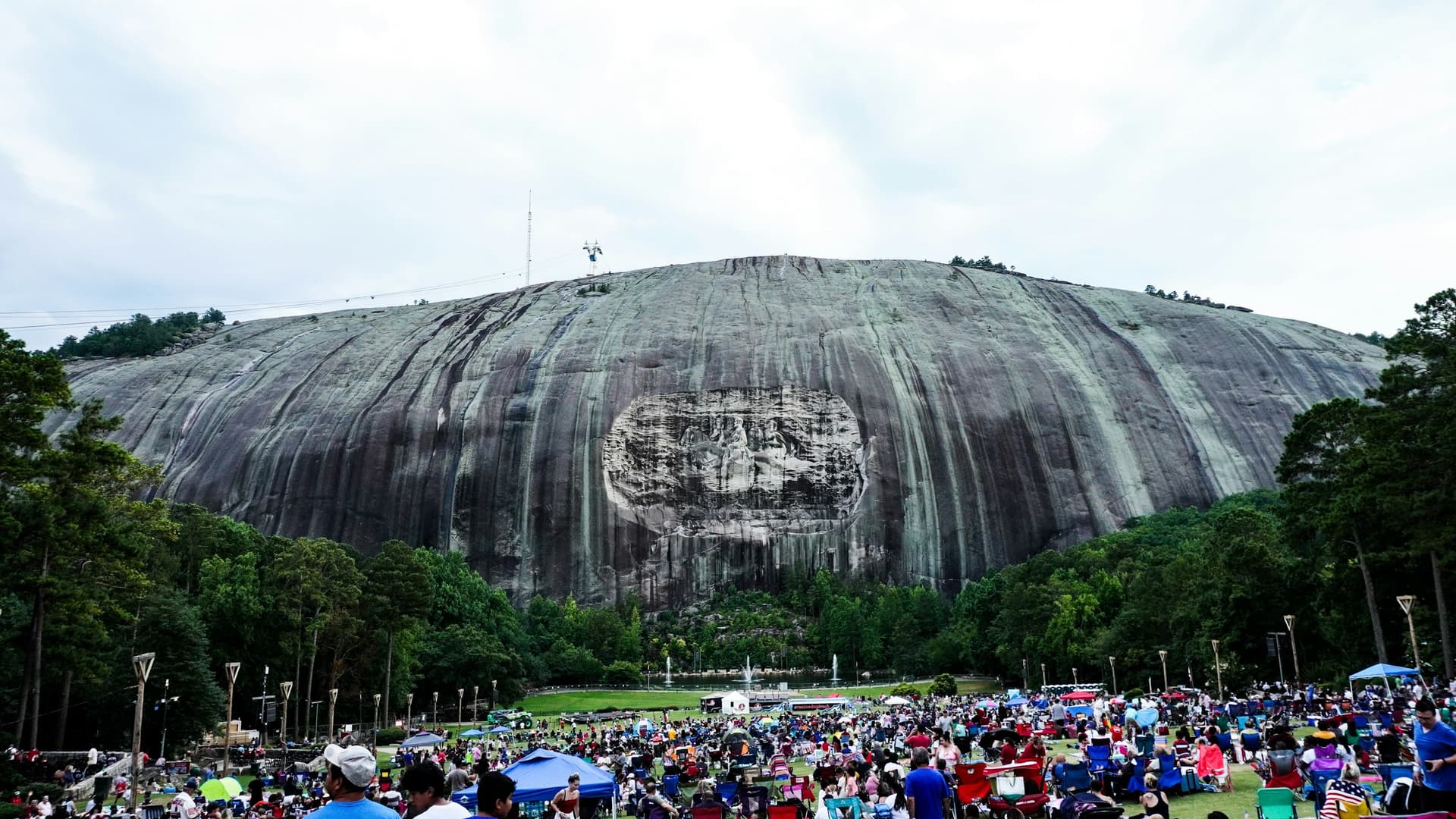
Stone Mountain, Georgia
Stone Mountain, Georgia, United States
118.8 km away
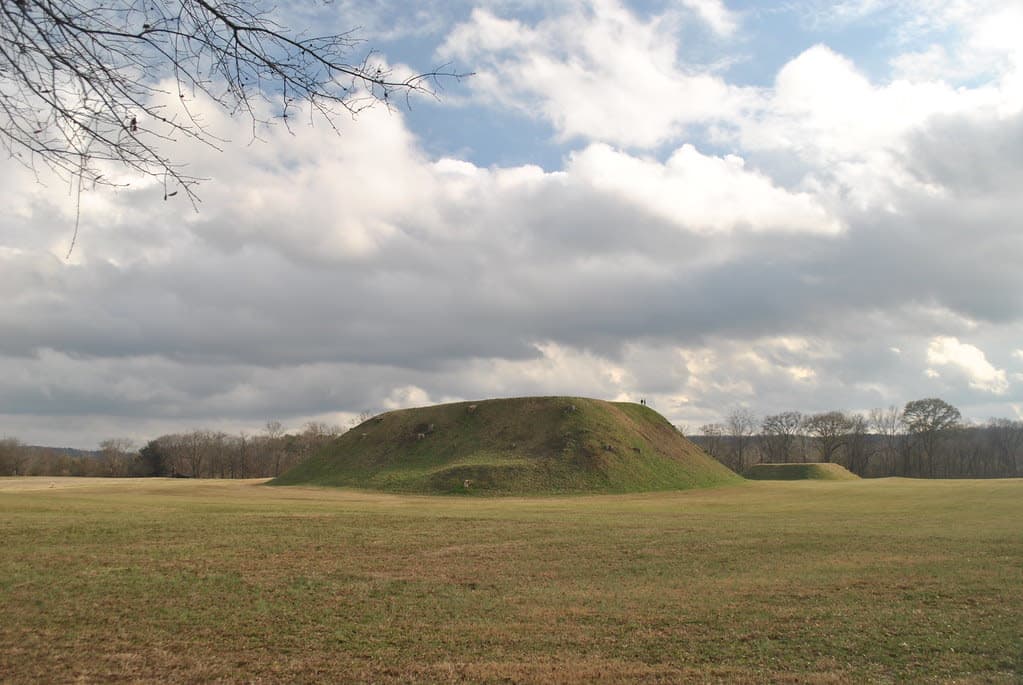
Etowah mounds, Georgia
Cartersville, Georgia, United States
181.8 km away
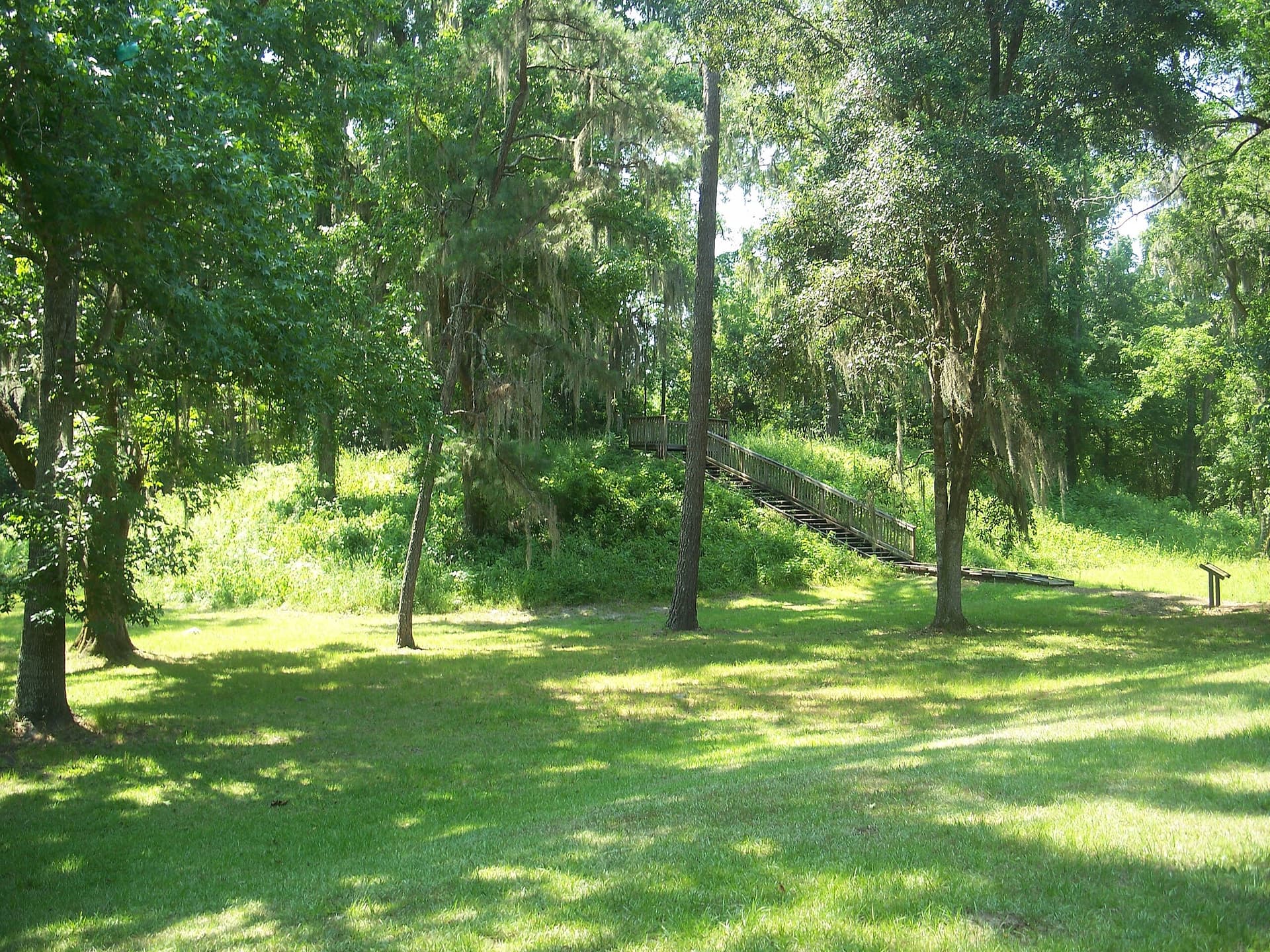
Lake Jackson Mounds, Tallahassee, Florida
Tallahassee, Florida, United States
268.6 km away
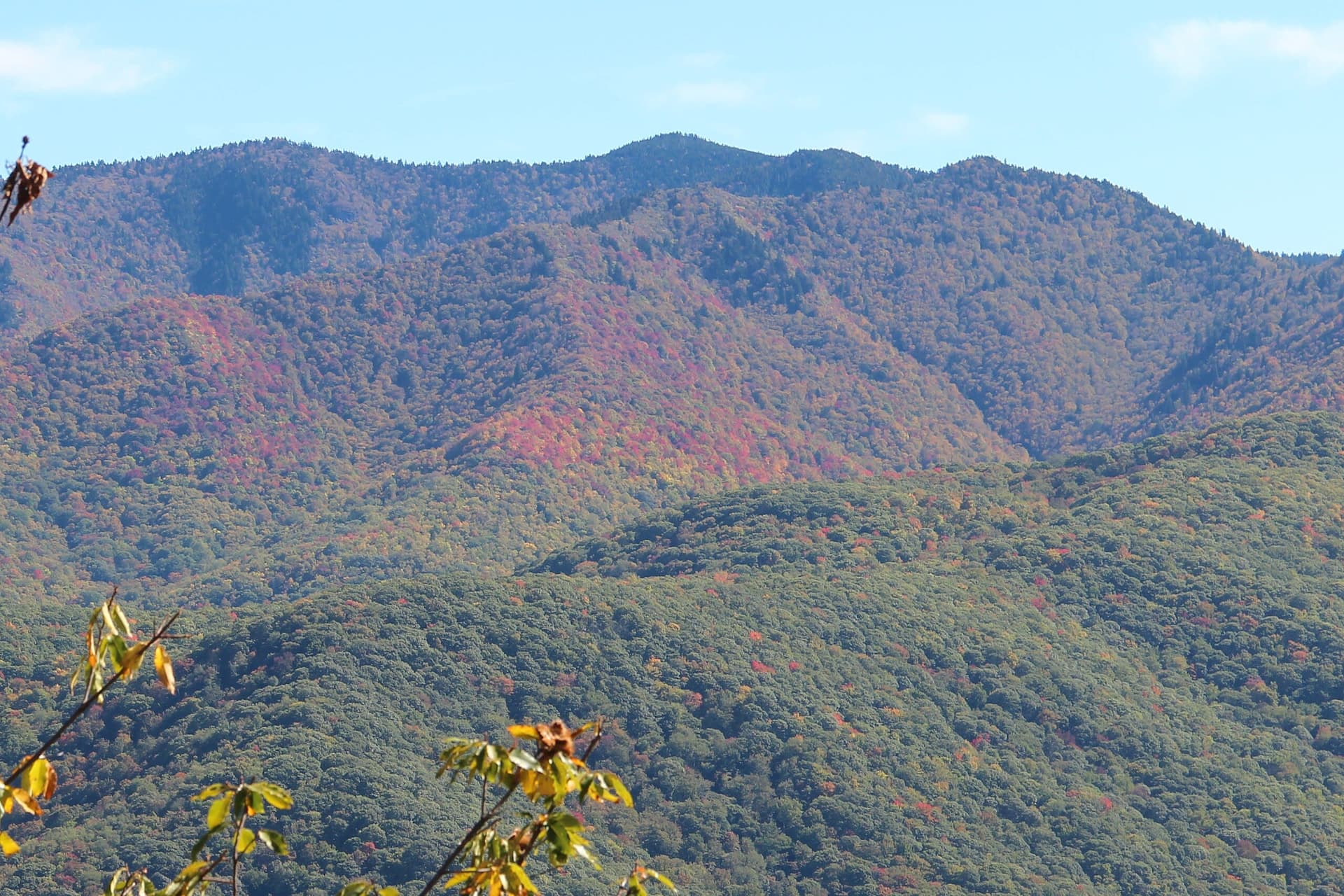
Mt. Richland-Balsam, North Carolina
Near Waynesville, North Carolina, United States
286.8 km away