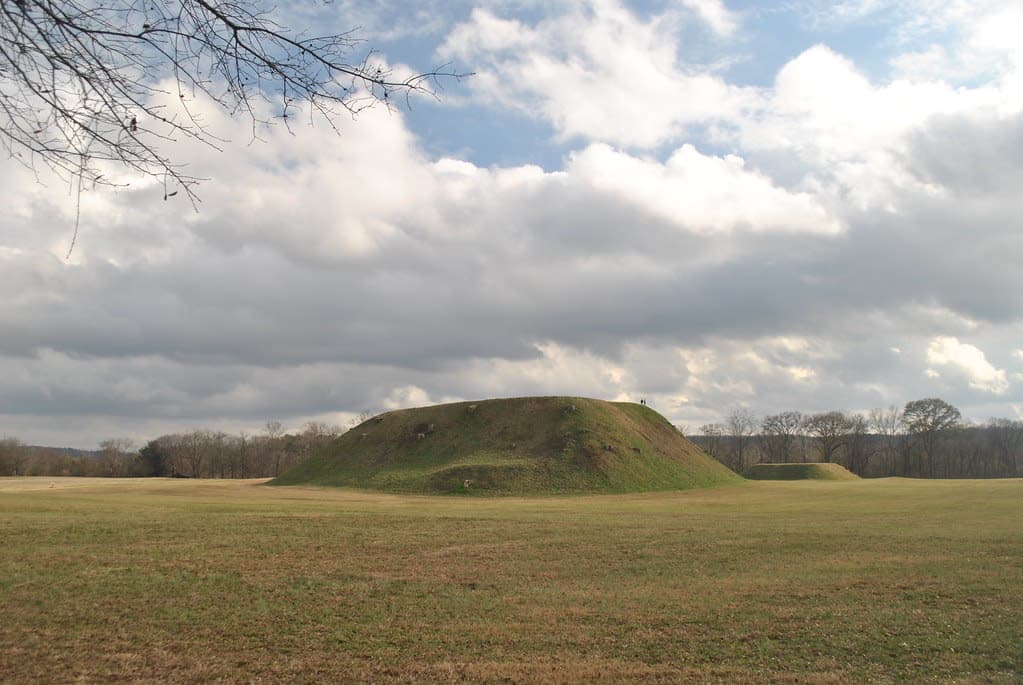
Etowah mounds, Georgia
Where the Eagle Warrior rose from copper and earth in the heart of the Mississippian world
Cartersville, Georgia, United States
At A Glance
- Coordinates
- 34.1278, -84.8067
- Suggested Duration
- 2-3 hours for a comprehensive visit including museum, main mounds, ceremonial plaza, and river trail. Allow additional time for contemplation and photography. The mounds area closes at 4:30 PM regardless of overall site hours.
Pilgrim Tips
- Comfortable outdoor attire appropriate for Georgia weather. Sturdy walking shoes are recommended for trails and mound climbing. Summers can be hot and humid; layers work well in cooler months.
- Photography is permitted throughout the site for personal use. Treat burial-related features with appropriate respect. Commercial photography may require advance permission from site management.
- Etowah contains human remains. Mound C was a burial site for nobility, and the artifacts recovered from it were grave goods meant to accompany the dead. This demands respect. The marble effigies and copper plates are not curiosities but sacred funerary objects. Their original locations are subject to ongoing repatriation discussions. When viewing reproductions in the museum, remember that you are seeing representations of objects with profound religious significance. The site is sacred to the Muscogee Creek and Cherokee peoples. It is not merely archaeological heritage but ancestral homeland. Visitors should recognize this dual identity and conduct themselves accordingly.
Overview
In the rolling hills of northwest Georgia, six earthen mounds rise above the Etowah River where the Mississippian people built one of the most powerful chiefdoms in pre-Columbian North America. For over 500 years, priest-chiefs ruled from the summit of a 63-foot platform mound, their authority sanctified by religious visions now preserved in copper plates depicting the Eagle Warrior. The Muscogee Creek and Cherokee peoples hold this as sacred ancestral ground where their forebears shaped earth into ceremony.
Etowah asks visitors to recalibrate their sense of North American history. Centuries before European contact, a city thrived here along the river that still bears its name. At its peak around 1250-1375 CE, Etowah was the largest and most powerful chiefdom capital in the South Appalachian region, home to several thousand people who built mounds, worked copper into ceremonial objects of startling sophistication, and buried their nobility with grave goods meant to accompany them into the next world.
The site's centerpiece is Mound A, rising 63 feet above the river valley. This was no simple earthwork but a deliberate elevation of sacred space, bringing the priest-chief's residence closer to the sun that the Mississippian people venerated as a deity. Temples stood on Mound B. Nobility were interred in Mound C with the remarkable artifacts that would later redefine scholarly understanding of pre-Columbian North America: the copper Eagle Warrior plates, the painted marble effigies, the shell gorgets and stone axes that speak of a civilization both powerful and deeply religious.
Then, around 1550 CE, before European diseases and armies could reach this inland location, the people departed. The reasons remain debated. What cannot be debated is what they left behind: the most intact Mississippian culture site in the Southeast, a landscape of earthen monuments that challenges assumptions about Indigenous North America.
For the Muscogee Creek Nation, whose ancestors are considered the direct descendants of the Mississippian moundbuilders, Etowah is not archaeological curiosity but ancestral homeland. The Cherokee also hold the site sacred. Georgia has begun repatriation efforts to return artifacts to descendant communities. The mounds endure not as relics of a vanished people but as living connections to those who remember.
Context And Lineage
Etowah was built by the Mississippian culture between approximately 1000-1550 CE. At its peak during the Savannah Phase (1250-1375 CE), it was the most powerful chiefdom in the South Appalachian region. The Muscogee Creek are considered direct descendants of the builders, and both they and the Cherokee hold the site as sacred ancestral ground.
The origins of Etowah's power lie in religion. Around 1250 CE, after a period of abandonment, the site was repopulated with what appears to have been a new religious ideology. Scholars associate this transformation with the Cult-Bringer myth documented among later Muskhogean peoples. According to this tradition, a mythical figure brought copper and brass plates imbued with supernatural power. The elite who controlled these objects claimed special relationship with the divine.
The copper Eagle Warrior plates discovered in Mound C may represent this new religious complex. Depicting a Birdman figure with falcon imagery, the plates were likely worn as breastplates by high-status individuals during ceremonial contexts. Their style connects them to the Southeastern Ceremonial Complex, a shared religious iconography that linked major Mississippian centers from Cahokia to Moundville.
The Muscogee Creek, considered direct descendants of the Mississippian moundbuilders, maintain their own understanding of Etowah as ancestral homeland. Following the demise of the Mississippian period, the Creek inhabited this region and carried forward cultural traditions rooted in moundbuilder ways. For them, Etowah is not mystery but heritage.
What the specific ceremonies involved, what prayers were offered on the mound summits, what the Eagle Warrior imagery meant to those who created it, remains a matter of scholarly interpretation. The moundbuilders left no written records. But the scale of their investment, the sophistication of their art, and the 550-year duration of their presence speak to a vision powerful enough to sustain a civilization.
The name 'Etowah' derives from the Cherokee language, referring to the river and the mounds along it. The Mississippian people who built the site left no written records, and their specific cultural identity continues to be studied through archaeology.
Multiple contemporary tribes claim connection to Etowah. The Muscogee Creek are considered by anthropologists to be direct descendants of the Mississippian culture that built the mounds. Following the end of the Mississippian period, the Creek inhabited this region and maintained cultural continuity with their moundbuilding ancestors. The Cherokee Nation, who occupied this area at various times following the Mississippian period, also holds the site sacred as part of the broader Indigenous heritage of the Southeast.
Etowah's lineage thus runs through descendant peoples who remember, even as the specific culture that built the mounds dispersed and transformed. The Georgia Department of Natural Resources has begun repatriation efforts to return artifacts to descendant communities. Recent museum renovations emphasize Indigenous perspectives rather than treating the site as archaeological curiosity divorced from living peoples. The lineage persists through relationship, advocacy, and ongoing commitment to honoring what ancestors built.
The Marble Effigy Figures
Two 3-foot-tall painted stone statues of a seated man and woman, discovered in Mound C burial context. Rank among the most significant Mississippian artworks. Their identity and role remain unknown, though they likely represented important individuals or deities.
John P. Rogan
Smithsonian Institution archaeologist who conducted the first professional excavations at Etowah in 1883. In 1885, he discovered the famous copper Eagle Warrior plates in Mound C, artifacts that transformed understanding of Mississippian culture.
Warren K. Moorehead
Archaeologist who conducted systematic excavations in 1925, establishing rigorous methodology and recovering significant artifacts. His work established Etowah as a major archaeological site.
Lewis Larson
Archaeologist who discovered the painted marble effigies and wooden tomb burials in the 1950s. His discoveries revealed the sophistication of Mississippian mortuary practices.
Muscogee Creek Nation
Considered direct descendants of the Mississippian moundbuilders. Maintain cultural and spiritual connection to Etowah as sacred ancestral ground. Collaborate on repatriation efforts and site interpretation.
Why This Place Is Sacred
Etowah's thinness emerges from the intensity of 550 years of ceremonial activity concentrated in this river valley. The mounds functioned as axis mundi, elevating rulers toward the sun they worshipped. Mound C holds the remains of nobility buried with objects believed to be imbued with supernatural power. This is ground where the boundary between worlds was deliberately thinned.
What accumulates in a place where people built toward the sky for half a millennium? At Etowah, the answer rises 63 feet above the river valley in the form of Mound A, each basket of earth carried and deposited by hands working in service of a religious vision. The mound was not merely architecture but cosmology made physical, elevating the priest-chief toward the sun, closer to the divine.
The Mississippians understood their world as layered: sky above, earth in the middle, watery underworld below. Platform mounds mediated between these realms. Temples on their summits were stages for rituals that maintained cosmic order. The construction itself was ceremony, an act of reciprocity with the spirits of the place. Generation after generation, the people of Etowah devoted themselves to this work. That concentration of intention leaves traces.
Mound C amplifies the thinness. Here the nobility were buried with objects meant to accompany them into whatever came next. The copper Eagle Warrior plates, depicting a Birdman figure with falcon imagery, were believed to be imbued with supernatural power. The painted marble effigies, representing a seated man and woman, rank among the most significant Mississippian artworks ever discovered. These were not mere grave goods but technologies of transformation, bridges between the living and the dead.
Visitors consistently report something at Etowah that resists easy language. Standing at the summit of Mound A, looking out over the ceremonial plaza where thousands once gathered, the sense of scale and purpose registers beyond intellectual understanding. The site feels attended to, shaped by purpose. The veil between what is and what was thins when the weight of what happened here becomes palpable.
Around 1000 CE, people began building at this bend in the Etowah River. Over the next two centuries, during what archaeologists call the Etowah Phase, they established a settlement with early mound construction. Then, around 1200 CE, the site was apparently abandoned for approximately 50 years.
What happened next transformed Etowah into a regional power. Around 1250 CE, the site was repopulated, seemingly with a new religious ideology. Scholars associate this transformation with a religion related to the later-documented Muskhogean myth of the Cult-Bringer, a mythical figure directly linked to brass and copper plates said to be imbued with supernatural power. The elite of Etowah based their political authority on this new ideology, using it as a mythical charter for their control over society.
During the Savannah Phase that followed (1250-1375 CE), Etowah became the largest and most powerful chiefdom capital in the South Appalachian Mississippian region. Priest-chiefs ruled from Mound A, controlling both religious ceremonies and daily life. They oversaw agricultural festivals tied to maize cultivation, presided over mortuary rites, and distributed food to the community. Their power derived from religious authority, and the mounds they built were the physical expression of that authority.
The construction of mounds was itself the purpose. People devoted themselves to moving earth from one place to another for the good of the community, honoring the spirits and raising their priest-chiefs toward the sun. This could be understood as an act of reciprocity: the people provided a home for spirits, focused spiritual energy for the community's benefit, and then gave back through ritualistic ceremonies.
Etowah's history spans approximately 550 years across three major phases. The Etowah Phase (c. 1000-1200 CE) saw initial settlement and early mound construction. This Early Mississippian period established the site as a significant location along the river.
Around 1200 CE, Etowah was abandoned. The reasons remain unclear, but a gap of approximately 50 years separates the early occupation from what came next. When people returned around 1250 CE, they brought what appears to have been a new religious movement. The Savannah Phase (c. 1250-1375 CE) was Etowah's golden age. The mounds reached their greatest heights. The population swelled. Trade networks extended along the river system. The copper plates depicting the Eagle Warrior were created or acquired during this period, serving as emblems of priestly authority.
Etowah's power may have brought conflict. Some scholars suggest rivalry with Moundville, the great chiefdom center in present-day Alabama. Whether through warfare, political fragmentation, or other factors, Etowah's dominance waned. The Lamar Phase (c. 1375-1550 CE) saw continued occupation but declining influence. The monumental construction that characterized the Savannah Phase ceased.
By 1550 CE, before European contact could reach this inland location, Etowah was abandoned. The people dispersed but did not disappear. The Muscogee Creek are considered direct descendants of the Mississippian culture. Following the demise of the Mississippian period, the Creek inhabited this region and maintained cultural continuity with the moundbuilders. The site became state property in 1953, and recent decades have seen increasing collaboration with descendant communities, including repatriation efforts begun in 2024.
Traditions And Practice
The Mississippians conducted elaborate ceremonies on mound summits, performed Black drink purification rituals, played ceremonial games of chunkey and stickball, and buried their nobility with grave goods intended for the afterlife. Today, the Muscogee Creek and Cherokee maintain spiritual connections to the site as sacred ancestral ground.
Religious practice permeated every aspect of life at Etowah. Priest-chiefs led ceremonies on the platform mound summits where temples stood, their authority deriving from claimed connection to the divine. The sun was venerated as a deity, and the elevation of Mound A brought the ruler closer to this celestial power.
The Black drink figured prominently in ritual purification. Brewed from native holly leaves and stems, this caffeinated beverage was consumed in ceremonial contexts to purify the body and prepare participants for sacred activities. The drink induced vomiting, understood as cleansing, and its consumption marked important occasions.
Chunkey and stickball were played on the ceremonial plaza, holding both recreational and religious significance. Chunkey involved rolling polished stone discs across the ground while players threw spears to mark where the disc would stop. High-stakes matches may have determined important decisions. Stickball, ancestral to modern lacrosse, carried spiritual dimensions that transcended sport.
Mortuary practices reached their greatest elaboration in Mound C, where nobility were interred with grave goods meant to accompany them in the afterlife. The copper Eagle Warrior plates, likely worn as breastplates during ceremonies, were buried with their owners. The painted marble effigies, the shell gorgets, the stone axes, all speak of beliefs in continuity beyond death. The Mississippians held an animistic worldview in which all things were animated by spirits that continued after physical death. These burial practices were technologies of transformation.
While no continuous religious traditions are practiced at Etowah in the manner of its Mississippian period, the site maintains profound significance for descendant communities. The Muscogee Creek and Cherokee peoples hold Etowah as sacred ancestral ground where their forebears worshipped, lived, and were buried.
The Georgia Department of Natural Resources has begun repatriation efforts to return artifacts to descendant communities, acknowledging that objects recovered from burial contexts belong with the peoples from whom they came. Recent museum renovations reflect this shift, focusing less on displaying artifacts and more on honoring the Indigenous peoples who were stewards of this land.
The descendant community perspective transforms how Etowah should be understood. This is not archaeological curiosity but ancestral homeland. The mounds were built by ancestors whose descendants remain. Their continued reverence for the site represents living tradition, even if the specific ceremonies of the Mississippian period cannot be reconstructed.
Visitors can engage with Etowah through attentive presence. The climb to Mound A's summit is inherently contemplative, each step carrying you higher toward where the priest-chief stood. At the summit, sitting in silence allows the scale and purpose of the site to register. The view encompasses the ceremonial plaza, the other mounds, the river beyond.
Walking the river trail offers a different engagement. Here you see how the inhabitants lived in relationship with the land: the fish trap reconstructed in the water, the native plants used for food and medicine. The integration of practical and spiritual life becomes visible.
The museum contextualizes what the mounds cannot speak for themselves. The film provides narrative. The artifacts, even in reproduction, demonstrate sophistication. Taking time with this material before or after walking the grounds deepens understanding.
What Etowah asks of visitors is respect. The burial mound contains human remains. The artifacts were grave goods. The site is sacred to peoples who still remember. Bringing awareness of this weight transforms tourist visit into something closer to pilgrimage.
Mississippian Culture
HistoricalThe Mississippian culture flourished from approximately 800-1600 CE across the Central and Southeastern United States. Etowah was one of its most significant centers, the largest and most powerful chiefdom capital in the South Appalachian region during the Savannah Phase (1250-1375 CE). The tradition was characterized by platform mound construction, priest-chief leadership, intensive maize agriculture, elaborate burial practices, and religious expressions connected to the Southeastern Ceremonial Complex. The copper Eagle Warrior plates from Etowah are among the most important artifacts of this cultural tradition.
Construction of platform mounds as bases for temples and elite residences. Religious ceremonies conducted by priest-chiefs on mound summits. Elaborate burial rituals with grave goods including copper ornaments, shell gorgets, and stone axes. Black drink purification ceremonies using native holly. Chunkey and stickball games on ceremonial plazas. Agricultural ceremonies tied to maize cultivation. Copper and shell working for ceremonial objects. Trade along river networks.
Muscogee Creek Ancestral Connection
ActiveThe Muscogee Creek people are considered by anthropologists and archaeologists to be direct descendants of the Mississippian culture that built Etowah. Following the demise of the Mississippian period, the Creek inhabited this region and maintained cultural continuity with the moundbuilders. Etowah represents sacred ancestral ground where their forebears worshipped, lived, and were buried. Georgia has begun repatriation efforts to return artifacts to the Muscogee Creek and other descendant communities.
Ancestral reverence and cultural preservation. Advocacy for respectful treatment of sacred sites. Collaboration on repatriation efforts. Cultural education and historical interpretation.
Cherokee Cultural Recognition
ActiveThe Cherokee Nation, who occupied this area at various times following the Mississippian period, holds Etowah sacred as part of the broader Indigenous heritage of the Southeast. While the Cherokee are not considered direct descendants of the Mississippian builders, they recognize the site's significance and maintain cultural connections to the land.
Cultural recognition and heritage preservation. Educational engagement with site history. Participation in broader Indigenous advocacy.
Experience And Perspectives
Visiting Etowah means climbing a 63-foot mound to stand where priest-chiefs once stood, walking through a ceremonial plaza where thousands gathered, and encountering in the museum evidence of artistic and religious sophistication that challenges assumptions about pre-Columbian North America. The river trail adds a contemplative dimension, showing how the site's inhabitants lived in relationship with the land.
The drive to Etowah from Atlanta takes about an hour, carrying you from urban sprawl into the piedmont hills of northwest Georgia. The site announces itself quietly: a brown sign, a turn onto Indian Mound Road, a parking lot by the museum. Only when you step outside and see Mound A rising in the middle distance does the scale of what awaits become clear.
The museum provides essential orientation. A video introduces the Mississippian culture and Etowah's place within it. Exhibits display artifacts from the excavations: stone tools, pottery, shell gorgets, and reproductions of the famous copper plates and marble effigies whose originals now reside at other institutions. Recent renovations have shifted the emphasis from objects to the Indigenous peoples who were stewards of this land. Here you learn the temporal scope: 550 years of occupation, a civilization that rose, flourished, and departed while medieval Europe struggled through its own transformations.
But the mounds must be walked to be understood. Mound A dominates the site. The climb is gradual but sustained, each step carrying you higher above the Etowah River valley. At the summit, the platform where temples and the chief's residence once stood, the view extends across the ceremonial plaza to the other mounds and the tree line marking the river. In the silence, the scale registers. This was engineered landscape, every contour deliberate.
Mound B, the temple mound, and Mound C, the burial mound, complete the central complex. The smaller mounds scattered across the 54-acre site remind visitors that this was an entire community, not merely a ceremonial core. The nature trail along the Etowah River adds another dimension, passing a reconstructed fish trap and highlighting how the inhabitants used native plants for food and medicine. Here the spiritual and practical merge, revealing a people who lived in relationship with their environment.
What many visitors report is stillness. Etowah does not perform its significance. It waits for attention. The questions it raises, about what rose here and why it fell, about what the copper plates meant and who carved the marble figures, do not resolve into easy answers. That openness is part of the experience.
Plan 2-3 hours for a comprehensive visit. The museum requires 45-60 minutes for exhibits and film. Walking the main mounds and ceremonial plaza takes another hour. The river trail extends the visit and offers contemplative space along the water. Bring water, particularly in Georgia summers. The climb to Mound A's summit is manageable but sustained. Early morning visits offer quieter contemplation before tour groups arrive. The mounds area closes at 4:30 PM, so arrive with adequate time to explore.
Etowah invites multiple readings: the most intact Mississippian site in the Southeast, a religious center where priest-chiefs claimed divine authority, ancestral homeland for the Muscogee Creek and Cherokee, or an open question about a civilization that flourished and departed before European contact. These perspectives coexist, each illuminating different facets of what endures here.
The scholarly consensus recognizes Etowah as the most intact Mississippian culture site in the Southeast and one of the most significant archaeological sites in North America. At its peak during the Savannah Phase (1250-1375 CE), Etowah was the largest and most powerful chiefdom capital in the South Appalachian region.
The copper Eagle Warrior plates discovered in Mound C were foundational to defining the Southeastern Ceremonial Complex, the shared religious iconography linking major Mississippian centers. Stylistically associated with the Greater Braden Style, the plates may have been manufactured at Cahokia and later became heirloom regalia for Etowah's elite. They depict a Birdman figure with falcon imagery, likely representing a mythical being central to Mississippian religion.
The site experienced cycles of growth and abandonment. A new religious ideology appears to have been introduced around 1250 CE, reinvigorating the settlement after a period of vacancy. Scholars debate whether Etowah and Moundville competed for regional hegemony, with some suggesting conflict between the two chiefdoms.
What remains uncertain includes the specific causes of Etowah's abandonment around 1550 CE, the meaning of the Eagle Warrior iconography, and the nature of political succession among priest-chiefs. The moundbuilders left no written records, and many questions can only be addressed through continued archaeological investigation.
The Muscogee Creek Nation and the Cherokee hold Etowah as sacred ancestral ground. The Muscogee Creek are considered by anthropologists and archaeologists to be direct descendants of the Mississippian culture that built the mounds. Their ancestors lived here, worshipped here, were buried here.
Following the demise of the Mississippian period, the Creek inhabited this region and maintained cultural continuity with the moundbuilders. The Cherokee, who occupied this area at various times after the Mississippian period, also recognize Etowah's significance as part of the broader Indigenous heritage of the Southeast.
The indigenous perspective challenges framings of Etowah as lost civilization or archaeological mystery. The people did not vanish. Their descendants remain, maintaining relationship with ancestral land. Georgia's repatriation efforts, begun in 2024, acknowledge that artifacts and human remains belong with descendant communities, not museums.
Recent museum renovations reflect this shift, focusing less on displaying objects and more on honoring the Indigenous peoples who were stewards of this land. The indigenous perspective insists that Etowah is living heritage, not merely historical curiosity.
Some observers have noted Mesoamerican influences in Etowah's iconography, including the Long Nosed God and Eagle Warrior imagery, prompting questions about cultural connections between Mississippian and Central American civilizations. The sophistication of the copper plates and marble effigies has occasionally attracted attention from those interested in lost civilization theories.
The scholarly consensus holds that while some iconographic similarities exist between Mississippian and Mesoamerican cultures, the Mississippian civilization developed independently as a sophisticated Indigenous North American achievement. The Eagle Warrior imagery, the platform mounds, the hierarchical society, all emerged from regional traditions without requiring external origins.
Etowah's scale and artistic sophistication stand on their own terms. The tendency to seek exotic explanations for Indigenous achievements often reflects cultural bias rather than evidence. What the Mississippian people built here, they built themselves.
Significant mysteries persist at Etowah. The cause of the site's abandonment around 1200 CE, followed by repopulation with apparently new religious ideology around 1250 CE, remains unexplained. What prompted this transformation? What was the nature of the new vision that reinvigorated the site?
The relationship between Etowah and Moundville continues to be debated. Were they rivals competing for regional dominance? Was there conflict between them? The cycles of growth and decline at both sites may be related, but the connections remain unclear.
The specific ceremonies conducted at the mound summit temples cannot be fully reconstructed. Who were the individuals depicted in the marble effigies? What did the Eagle Warrior imagery mean to those who created it? How did political succession work among priest-chiefs? What led to the final abandonment around 1550 CE, before European contact could reach this location?
These questions have no definitive answers. The moundbuilders left no written records. What survives is earth, copper, stone, and the questions they generate. That uncertainty is itself part of Etowah's character, inviting contemplation rather than closure.
Visit Planning
Etowah is located near Cartersville, Georgia, approximately 45 miles northwest of Atlanta. Open daily 9 AM to 5 PM (mounds close 4:30 PM). Admission: $6 adults. Allow 2-3 hours for museum, mounds, and river trail.
Cartersville, Georgia offers hotels and restaurants within minutes of the site. Atlanta is approximately 45 miles south, providing full metropolitan services. Red Top Mountain State Park nearby offers camping and lodge accommodations for those seeking extended stays in nature.
Treat Etowah as both archaeological site and sacred ancestral land. Stay on designated paths, climb mounds only via designated routes, and do not disturb ground or collect artifacts. Photography is permitted. Treat burial mounds with appropriate respect for human remains.
Etowah requires the etiquette appropriate to a place that is simultaneously archaeological monument and sacred ancestral land. Mound C contains human remains of Mississippian nobility. The site is claimed by the Muscogee Creek and Cherokee peoples as sacred ground. Respect is fundamental.
The physical preservation of the site depends on visitor behavior. The mounds are earthen structures that can erode. Staying on designated paths protects their integrity. Digging or probing the ground, even casually, destroys archaeological context. Surface artifacts have meaning only in their location; removing them erases information permanently.
The museum and interpretive materials provide context that deepens the visit. Engaging with this material helps visitors understand what they are seeing and why it matters. The recent renovation emphasizes Indigenous perspectives, framing the site not as lost civilization but as living heritage.
Burial mounds deserve particular respect. People were interred in Mound C with objects meant to accompany them in the afterlife. Standing near this mound, visitors should remember that they are in proximity to the dead. Quiet reverence is appropriate.
Comfortable outdoor attire appropriate for Georgia weather. Sturdy walking shoes are recommended for trails and mound climbing. Summers can be hot and humid; layers work well in cooler months.
Photography is permitted throughout the site for personal use. Treat burial-related features with appropriate respect. Commercial photography may require advance permission from site management.
General visitors should not leave offerings at the site. Do not place items on mounds or along trails.
{"Stay on designated paths and trails","Climb mounds only via designated routes","Do not dig, probe, or disturb the ground","Do not collect or remove any artifacts or natural materials","Leashed pets allowed on trails but not in buildings","Mounds area closes at 4:30 PM","Treat burial mounds with appropriate respect for human remains"}
Sacred Cluster
Nearby sacred places create the location cluster described in the growth plan. This block is intentionally crawlable and links into the wider regional graph.
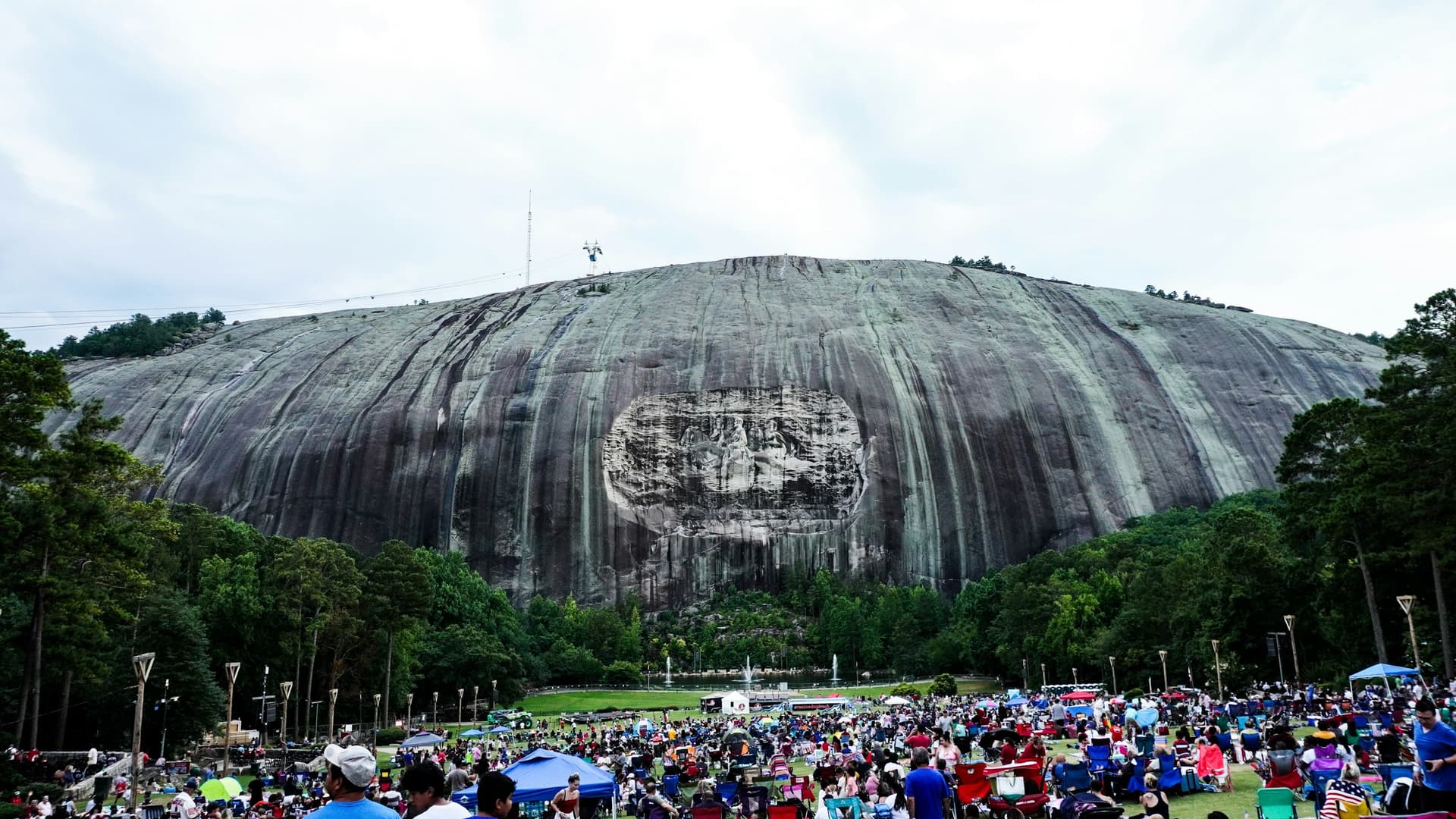
Stone Mountain, Georgia
Stone Mountain, Georgia, United States
70.7 km away
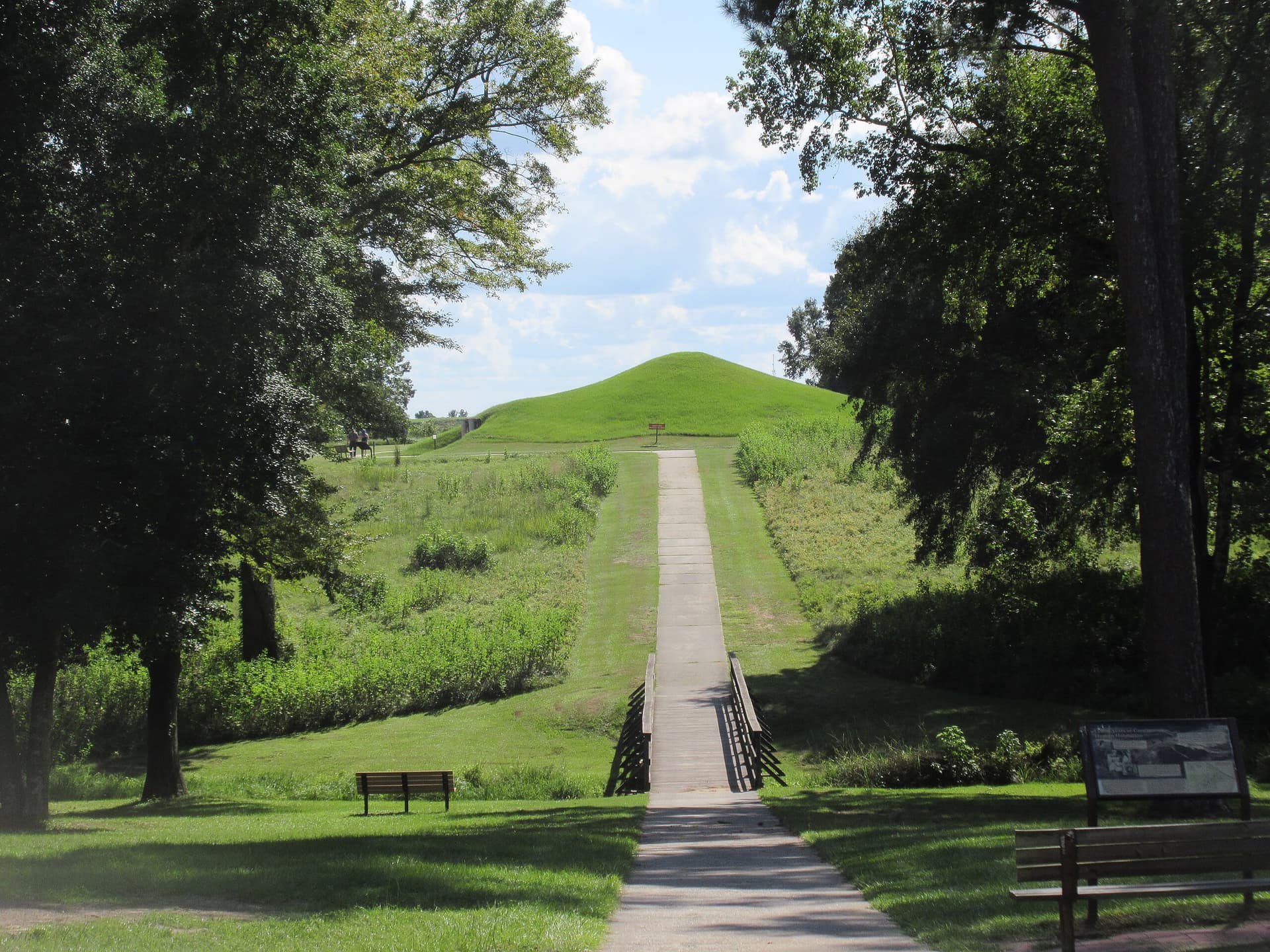
Ocmulgee Mounds, Georgia
Macon, Georgia, United States
181.8 km away

Mt. Richland-Balsam, North Carolina
Near Waynesville, North Carolina, United States
215.7 km away
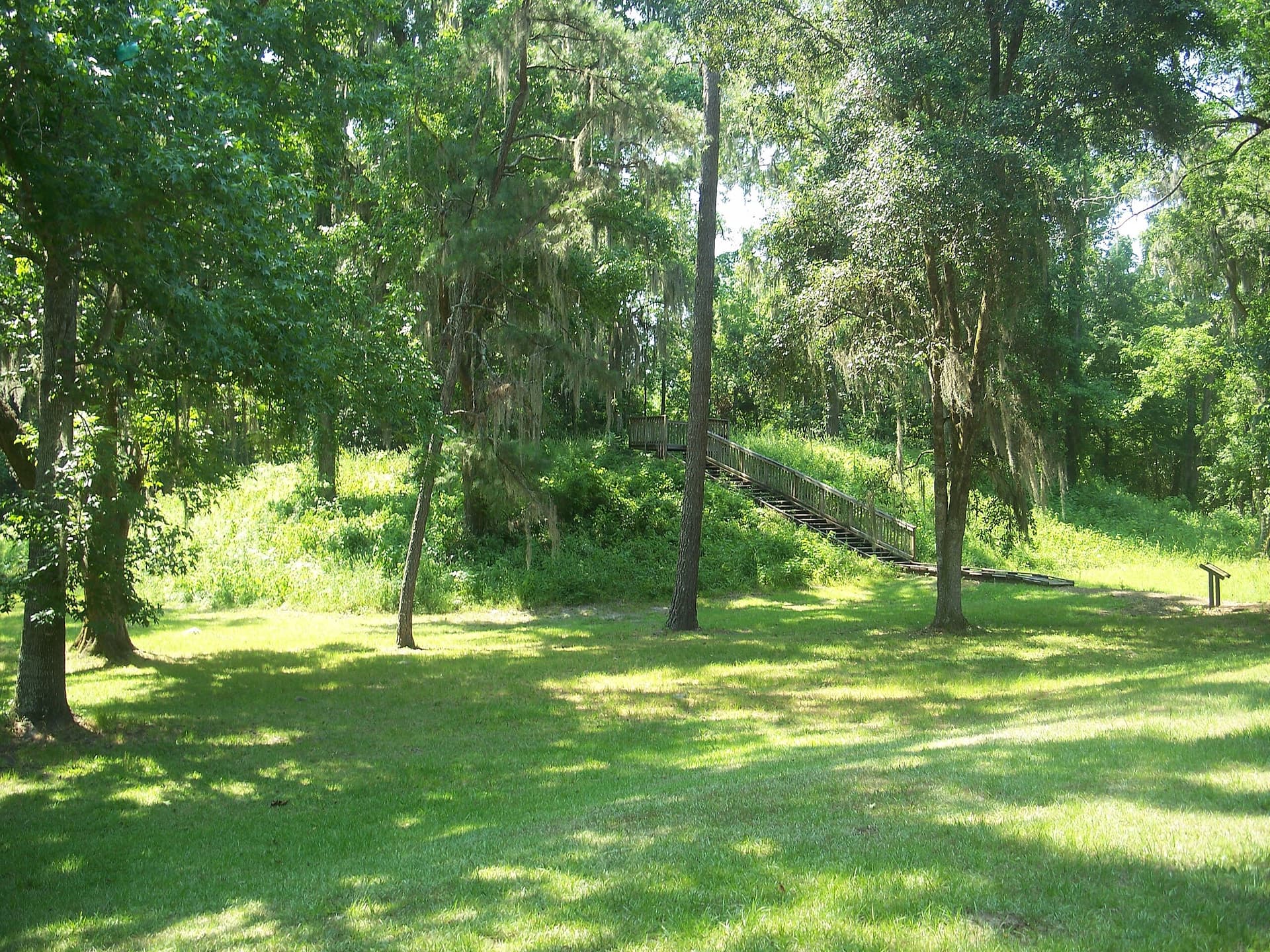
Lake Jackson Mounds, Tallahassee, Florida
Tallahassee, Florida, United States
406.1 km away