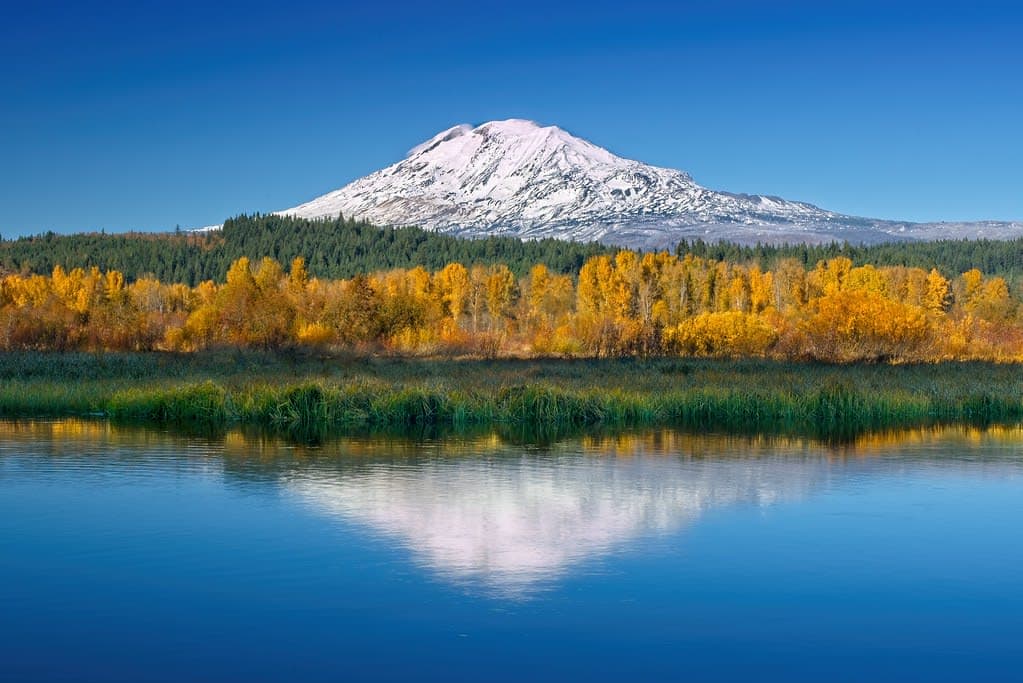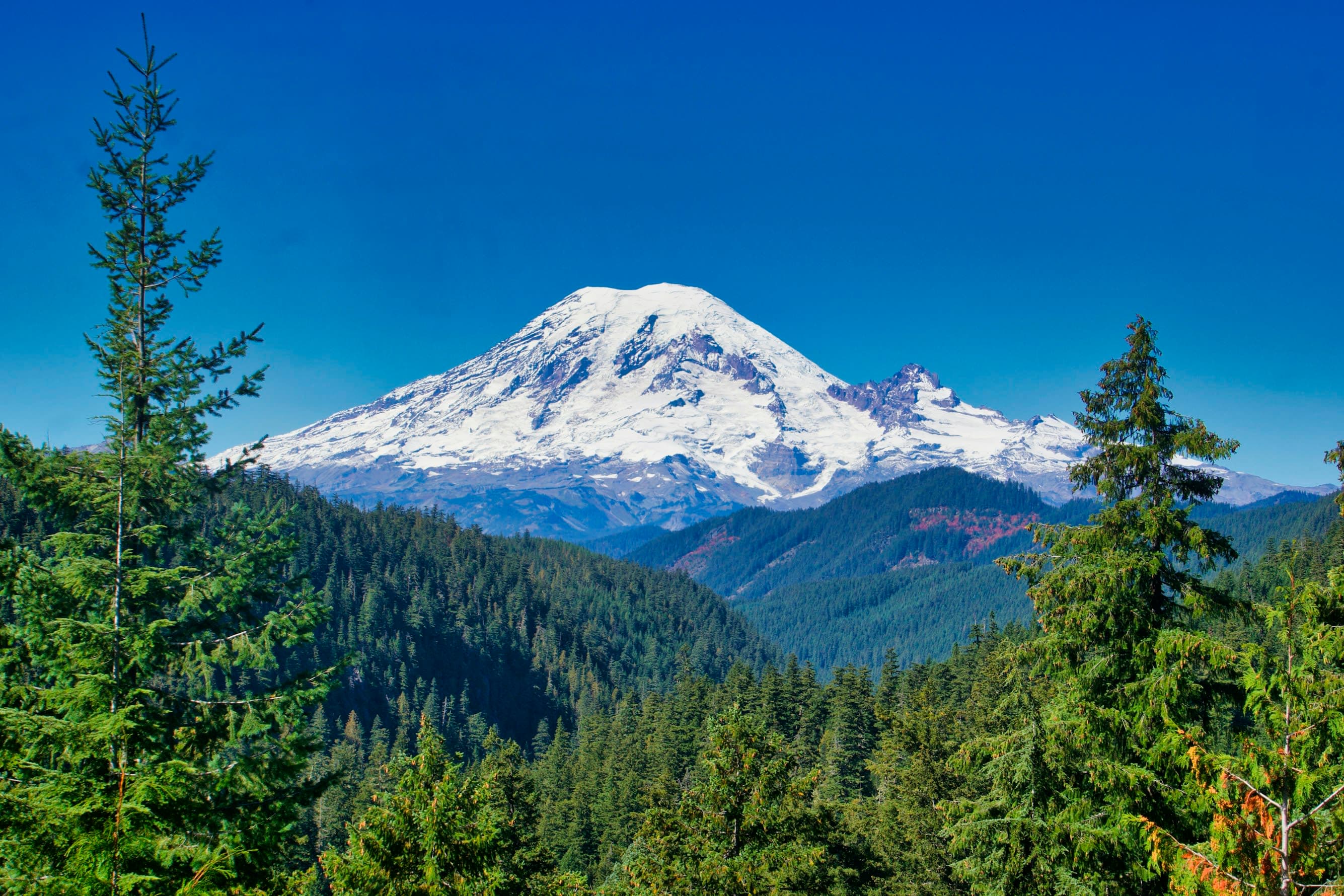
Mt. Rainier, Washington
Grandmother Mountain, source of waters that have nourished Pacific Northwest peoples for nine thousand years
Ashford, Washington, United States
At A Glance
- Coordinates
- 46.8523, -121.7603
- Suggested Duration
- A half-day visit to Paradise provides a basic mountain experience—wildflower meadows, close views of glaciers, and a sense of Tahoma's scale. A full day allows exploration of multiple areas. Those seeking deeper engagement should plan three to five days, allowing time to hike significant trails and develop relationship with the mountain. The Wonderland Trail circumnavigation requires ten to fourteen days.
- Access
- Mount Rainier National Park is located in Pierce and Lewis Counties, Washington State. The summit coordinates are 46.8523° N, 121.7603° W. Seattle-Tacoma International Airport is approximately seventy miles from the Nisqually entrance. No public transit serves the park; visitors need personal vehicles or organized tours. Four main entrance areas provide access: Nisqually (southwest, open year-round), White River/Sunrise (northeast), Stevens Canyon (southeast), and Carbon River (northwest).
Pilgrim Tips
- Mount Rainier National Park is located in Pierce and Lewis Counties, Washington State. The summit coordinates are 46.8523° N, 121.7603° W. Seattle-Tacoma International Airport is approximately seventy miles from the Nisqually entrance. No public transit serves the park; visitors need personal vehicles or organized tours. Four main entrance areas provide access: Nisqually (southwest, open year-round), White River/Sunrise (northeast), Stevens Canyon (southeast), and Carbon River (northwest).
- Dress for rapidly changing mountain weather. Layers are essential, as conditions can shift from warm sun to cold rain or snow within hours. Sturdy hiking boots with good grip are necessary for any trail beyond the paved viewpoints. Sun protection matters at altitude even on cloudy days.
- Personal photography is welcome throughout public areas of the park. Approach any encounters with Indigenous practitioners with utmost respect and do not photograph ceremonies without explicit permission. Consider spending time without your camera, actually experiencing the mountain before framing it for capture.
- Indigenous ceremonies are private tribal matters and are not open to public participation. Do not attempt to replicate practices you have read about or imagine to be 'authentic.' Do not leave offerings at perceived sacred spots. What feels like reverence often creates litter and can disrespect actual sacred sites known only to tribal practitioners. Be wary of guides or practitioners claiming to offer 'Native ceremonies' at Mount Rainier. Legitimate traditional knowledge holders do not sell ceremony to tourists. The mountain's weather is genuinely dangerous. Respect for Tahoma includes respect for her power to harm those who approach carelessly. Prepare appropriately for rapidly changing conditions.
Overview
Rising 14,411 feet above the Pacific Northwest, Tahoma—known to settlers as Mount Rainier—has been sacred to the Puyallup, Nisqually, Muckleshoot, Yakama, and Cowlitz peoples for over nine millennia. The mountain they call 'mother of waters' feeds glacial rivers that sustain all life in the region. Indigenous traditions hold the realm above the snowline as a spirit world where shamans sought visions. Today, tribal members continue ceremonies, plant gathering, and healing journeys to reclaim their relationship with this living grandmother.
Before there was a name for it, before any tradition claimed it, this mountain stood. The largest peak in the Cascade Range, draped in more glacial ice than any other summit in the contiguous United States, visible for hundreds of miles across the Pacific Northwest. The peoples who have lived in its shadow for nine thousand years did not simply admire it. They understood it as alive.
The Puyallup call her Tahoma—Grandmother Mountain, mother of waters. From her glaciers flow the rivers that have sustained their people since time before memory. The Nisqually speak of Tahoma as a fallen warrior whose eternal snows are tears of a grieving spirit. The Yakama knew her as Taxuma and gathered each summer at her meadows for ceremonies, horse racing, and the renewal of kinship. For the Cowlitz, whose ancestral lands encompass the mountain's southeastern slopes, she was təxčʼuma—a place of practical use and deep belonging.
Colonial histories claimed Indigenous peoples feared the mountain and avoided its heights. Archaeology has shattered this myth. More than one hundred sites encircle Tahoma, documenting over nine millennia of camps, tool-making, plant gathering, and ritual activity extending above the permanent snowline. The tribes did not avoid the mountain. They knew her intimately.
Today, that relationship is being reclaimed. Indigenous climbers ascend to the summit as acts of healing and cultural restoration. Tribal programs partner with the National Park Service to gather traditional plants and teach the mountain's true names. Tahoma remains what she has always been: a living presence who feeds her people and asks to be approached with respect.
Context And Lineage
Mount Rainier is a stratovolcano that formed over 500,000 years ago, its most recent eruption occurring approximately 1,000 years ago. Indigenous peoples have maintained relationship with Tahoma for over 9,000 years, as documented by archaeological evidence at more than 100 sites. The 1854-1855 treaties displaced tribes from their traditional lands, and the establishment of Mount Rainier National Park in 1899 further restricted Indigenous access. Today, six tribes maintain formal associations with the park and continue traditional practices.
In the beginning, according to Nisqually and Puyallup tradition, Tahoma once lived with other peaks in the Olympic Mountains. But the others decided there was no room for her there. Sent away along with her son, she reminded him to bring water for the journey. Tahoma carried her son—who became Little Tahoma, the satellite peak visible from the east—on her hip to the place where they sit today. He did indeed remember to bring water, hence the many streams that flow from the mountain.
Another tradition tells of the Great Flood. When Tyhee Sahale became angry with the people, he ordered a medicine man to shoot arrows into the low-hanging clouds over Takhoma. The medicine man shot arrow after arrow until he had made a chain reaching from cloud to earth. He told his family to climb up the arrow trail, and thus they were saved from the great flood that inundated all the lowlands, killing all creatures except the pure ones who climbed to the mountain tops.
The Cowlitz tell of feuds between the mountain wives of Mount St. Helens. Takhoma and Pahto (Mount Adams) quarreled terribly; during the fighting, Takhoma stepped on all of Pahto's children and killed them. Under another version, Rainier and St. Helens fought over who would rule the region, hurling hot rocks, shooting flames, and raining ash until the birds intervened and took Rainier far inland.
These are not quaint myths but encoded geological and ecological knowledge—memories of eruptions, lahars, and volcanic activity transmitted across generations through story.
The tribes associated with Mount Rainier—Cowlitz, Muckleshoot, Nisqually, Puyallup, Squaxin Island, and Yakama—maintain unbroken connection to Tahoma despite the disruptions of colonization. Their ancestors hunted, gathered, held ceremonies, and sought visions on these slopes for nine millennia. The treaties of 1854-1855 forced them onto reservations. The establishment of the national park further restricted access.
But the relationship never ended. Today, tribal programs partner with the National Park Service on cultural preservation, plant gathering, and education. Indigenous climbers ascend to the summit as acts of healing. The movement to restore the name Tahoma grows. The lineage continues not as historical memory but as living practice.
Tahoma / Grandmother Mountain
deity
The mountain herself, understood as a living grandmother who feeds her people through the waters flowing from her glaciers. Not a symbol of the sacred but sacred presence itself.
Sluiskin
historical
A nineteenth-century guide who led early European mountaineers toward the summit and warned them of the spirit dwelling at the peak. His story has been misused to perpetuate myths of Indigenous fear, but properly understood reflects traditional knowledge of the spirit realm above the snowline.
Greg Burtchard
historical
Contemporary archaeologist whose research has documented over 9,000 years of Indigenous presence at Mount Rainier, dispelling colonial myths that Native peoples avoided the mountain.
Why This Place Is Sacred
Tahoma's sacredness emerges from her role as the source of waters sustaining all life in the region, from millennia of Indigenous ceremony and pilgrimage, and from the traditional understanding that the realm above the snowline marks a boundary between the everyday world and a spirit realm where powerful forces reside. The mountain's volcanic aliveness, dramatic presence, and accumulated weight of human relationship make it one of North America's most significant sacred landscapes.
The Puyallup language consultant describes it simply: 'Our sacred Mountain is alive. We continuously honor our Grandmother Mountain. We will always remember that she continually feeds our people.' This is not metaphor. The glaciers that cloak Tahoma's flanks are the sources of the Carbon, White, Puyallup, Nisqually, and Cowlitz rivers. Without her ice, the salmon runs fail. Without the salmon, the people starve. The relationship is reciprocal and material.
But the sacredness extends beyond provision. Traditional Coast Salish understanding holds that the region above the permanent snowline—roughly 7,000 feet elevation—marks a 'spirit line' where the everyday world gives way to something else. Beyond this threshold dwell powerful beings. Shamans seeking visions and guardian spirits climbed into this realm for quests requiring ritual preparation. The knowledge gained above the spirit line could transform a person's life.
Sluiskin, a Yakama guide who led early European mountaineers toward the summit in the nineteenth century, tried to dissuade them from climbing higher. The peak, he explained, housed a lake of fire where a malevolent spirit lived. All the Native peoples knew this, which is why they never climbed above the snowline. When the climbers returned safely, Sluiskin believed them to be ghosts returned from the spirit realm.
This story has been used to perpetuate the myth that Indigenous peoples feared the mountain. But Sluiskin's warning was not about avoidance—it was about respect for powers that require preparation to encounter. The spirit line was not a boundary to be ignored but one to be crossed only with intention.
The mountain's volcanic nature adds another dimension. Tahoma is not dormant but merely sleeping. Her most recent eruption occurred approximately one thousand years ago, within the span of human memory encoded in oral tradition. The lahars and pyroclastic flows that shaped the valleys around her are not abstract geological history but stories the tribes carry. The mountain's power is not past. It is present and potentially future.
For seekers who approach with awareness, something of this accumulated relationship persists. The mountain's dramatic presence—visible from Seattle, Tacoma, and points throughout the Puget Sound—seems to watch over the land. Whether this reflects the landscape's psychological impact, the weight of millennia of prayer and pilgrimage, or something beyond conventional explanation, visitors consistently describe the feeling of being held by something larger than themselves.
Tahoma served multiple sacred functions for the tribes surrounding her. The Yakama gathered at meadows like Me-yah-ah Pah ('Place of the Chief') for summer encampments combining ceremony, horse racing, hunting, and kinship renewal. The realm above the spirit line was a place for guardian spirit quests and shamanic vision-seeking—journeys undertaken with ritual preparation that could grant profound knowledge. The glacial waters flowing from the mountain fed the rivers where salmon returned each year, making Tahoma literally the source of life. The mountain was not a discrete 'sacred site' in the Western sense but the center of a sacred landscape extending in all directions.
The 1854-1855 treaties forced the tribes onto reservations and severed traditional access to Tahoma. When Mount Rainier National Park was established in 1899—the fifth national park in the United States—it further restricted Indigenous use of lands they had inhabited for nine millennia. For decades, official histories perpetuated the myth that Native peoples had avoided the mountain out of fear.
Archaeological work, particularly by researchers like Greg Burtchard, has systematically dispelled this myth. More than one hundred Indigenous sites have been documented within park boundaries, some dating back over nine thousand years. The evidence is unambiguous: the tribes knew this mountain intimately.
Today, tribal nations are reclaiming their relationship with Tahoma. The Muckleshoot and other tribes have organized Indigenous summit climbs as acts of healing and cultural restoration. Tribal plant-gathering programs operate in partnership with the National Park Service. The movement to restore the name Tahoma—replacing the colonial designation honoring a British naval officer who never saw the mountain—represents both cultural reclamation and acknowledgment of who the mountain truly belongs to.
Traditions And Practice
Traditional practices at Tahoma included guardian spirit quests above the snowline, shamanic vision-seeking, seasonal hunting and gathering camps, and communal ceremonies at traditional sites. Contemporary practices include tribal plant-gathering programs, Indigenous summit climbs as healing journeys, cultural education incorporating traditional names and stories, and ongoing spiritual observance by multiple tribes. Visitors can engage respectfully through hiking, learning traditional names, and approaching the mountain as relationship rather than conquest.
The realm above the permanent snowline—approximately 7,000 feet—was considered a threshold between worlds. Guardian spirit quests took seekers into this zone after ritual preparation, where encounters with powerful beings could grant profound knowledge and transformation. Shamans journeyed to specific locations to commune with spirits and receive visions that would guide their people.
At lower elevations, traditional camps served multiple purposes. The Yakama gathered at meadows like Me-yah-ah Pah for summer encampments combining ceremony, horse racing, hunting, and the renewal of kinship ties. Plant gathering for food and medicine occurred throughout the mountain's zones. These practices were not separate from spiritual life but woven through it—practical activity conducted within a cosmology that understood the mountain as kin.
Tribal nations today maintain and reclaim their relationship with Tahoma through multiple practices. Plant-gathering studies conducted in partnership with the National Park Service document traditional knowledge and provide tribal members access to ancestral gathering sites. Cultural education programs teach young people the traditional names for the mountain and the stories that encode relationship with her.
Indigenous summit climbs have emerged as powerful acts of healing and cultural reclamation. When Muckleshoot tribal members reach the summit, they carry nine thousand years of ancestral presence with them. 'We've Always Been Here,' they declare, countering generations of erasure. These climbs are not recreation but ceremony—a healing journey that restores what colonization attempted to sever.
Visitors seeking meaningful engagement with Tahoma can consider these approaches:
Learn and use the name Tahoma. This simple practice honors the peoples who have known this mountain longest and resists the colonial erasure embedded in the name 'Rainier.'
Approach hiking as pilgrimage rather than exercise. Walk slowly. Pause often. Let the mountain's presence work on you rather than rushing to accumulate miles or views.
If you undertake the Wonderland Trail or a summit climb, carry an intention. Sacred mountains have always drawn those in transition. What are you seeking? What might you be ready to release?
Sit in silence at Paradise or Sunrise before the crowds arrive. Let the scale of the mountain quiet your mind. Notice what arises without trying to name it.
Express gratitude before leaving. The form matters less than the sincerity—silent acknowledgment of what you have received from this place.
Puyallup Sacred Tradition
ActiveThe Puyallup call the mountain Tahoma, meaning 'mother of waters.' According to the Puyallup Language Program: 'Our sacred Mountain is alive. We continuously honor our Grandmother Mountain. We will always remember that she continually feeds our people.' The glaciers flowing from Tahoma feed the rivers that sustain the Puyallup people. The mountain is understood as a grandmother figure who provides for her descendants through the waters flowing from her body.
Ongoing spiritual observance. Traditional place names and language preservation through the tribal language program. Cultural education about the mountain's significance. Traditional plant gathering in specific areas in partnership with the National Park Service.
Nisqually Traditional Connection
ActiveThe Nisqually Tribe has inhabited the lands surrounding Mount Rainier for millennia. A Nisqually legend speaks of Tahoma as a fallen warrior whose eternal snows are the tears of a grieving spirit. The mountain is central to Nisqually spiritual beliefs and oral traditions, understood as a source of life through the rivers flowing from her glaciers.
Traditional hunting and gathering. Oral traditions and storytelling that transmit knowledge across generations. Plant-gathering studies conducted in collaboration with the National Park Service. Spiritual pilgrimage to the mountain.
Muckleshoot Cultural Reclamation
ActiveThe Muckleshoot Indian Tribe maintains ancestral ties to Mount Rainier. In recent years, Indigenous climbers from the Muckleshoot and other tribes have undertaken summit ascents as healing journeys and acts of cultural reclamation, asserting their enduring presence and connection to Tahoma after generations of erasure.
Summit climbs framed as cultural healing and reclamation. Youth cultural education about ancestral relationship with the mountain. Collaboration with National Park Service on cultural programs. Assertion of historical presence through archaeology and oral history.
Yakama Nation Ceremonial Tradition
ActiveThe Yakama Nation has ancestral ties to Mount Rainier and considers it a place of spiritual importance incorporated into traditional ceremonies. They call the mountain Taxuma. The Yakamas historically met at meadows on the mountain for generations to race horses, hunt, gather food, and conduct ceremonies. Me-yah-ah Pah ('Place of the Chief') was a traditional summer encampment.
Traditional ceremonies at specific locations. Seasonal gathering. The historical practices of horse racing and communal gatherings at summer encampments. Spiritual connection through traditional place names and stories.
Cowlitz and Taidnapam Tradition
ActiveThe Cowlitz people, including the Taidnapam (Upper Cowlitz), have traditional lands encompassing the southeast areas of Mount Rainier including Ohanapecosh. They call the mountain təxčʼuma or təqʷumen. As Cowlitz tribal member Bill Iyall stated: 'If the government wanted to set aside land, they'd say Indian people never used it. Actually there was a lot of practical use of Mount Rainier—for food and for fun; for family.'
Maintenance of traditional knowledge. Collaboration with the National Park Service on cultural programs. Traditional place-based stories and teachings. Historical guidance for early mountaineers, as with the guide Sluiskin.
Coast Salish Guardian Spirit Tradition (Historical)
HistoricalTraditionally, the region above the permanent snowline—approximately 7,000 feet elevation—was considered a powerful and otherworldly realm. This 'spirit line' marked the boundary between the everyday world and the realm of powerful spirits. Visits to such places were significant, part of guardian spirit quests requiring ritual preparation that could grant profound spirit knowledge.
Guardian spirit quests to high elevation required ritual preparation and were undertaken by those seeking spiritual power and knowledge. Shamanic journeys to commune with spirits and receive visions took seekers above the spirit line. These practices established Mount Rainier as a place where the veil between worlds was thin.
Experience And Perspectives
Visitors to Tahoma commonly report an overwhelming sense of the mountain's presence and power, feelings of reverence that arise unbidden, and a quality of being watched or held by the landscape. Those who approach with awareness of the mountain's sacred significance often describe the experience as transformative, particularly during extended visits or summit climbs.
The first thing visitors notice is the presence. Tahoma dominates. On clear days, the mountain is visible from over one hundred miles distant, rising impossibly above the surrounding landscape. But seeing it from Seattle is different from standing at Paradise or Sunrise, where the scale becomes overwhelming. The glaciers alone cover thirty-five square miles. The summit rises nearly two vertical miles above the visitor centers. The mind struggles to hold it.
Many describe what follows as a quieting—not emptiness, but a kind of listening. The mountain seems to attend to those who attend to it. Indigenous peoples have long understood this quality; contemporary visitors, most arriving without knowledge of the traditional teachings, independently report similar experiences. Some describe it as being watched. Others as being held. The language varies; the phenomenon is remarkably consistent.
The alpine meadows of Paradise, carpeted with wildflowers in late summer, offer accessible encounters with the mountain's beauty. Visitors frequently report unexpected emotional responses here—tears that seem to come from nowhere, a sense of gratitude difficult to articulate. The stillness is not the stillness of absence but of attention.
Those who venture higher report intensified experiences. The Wonderland Trail, ninety-three miles circling the mountain through multiple ecosystems, functions as a kind of pilgrimage—days of walking in the mountain's presence that strip away the mental noise of ordinary life. Summit climbers describe the ascent as transformative, particularly Indigenous climbers who understand themselves as reclaiming ancestral relationship. 'We've Always Been Here,' proclaims the Muckleshoot messenger, and those who climb carry nine thousand years of connection with them.
Weather on Tahoma shifts rapidly and dramatically. Visitors describe the changes as reflecting the mountain's moods—clouds gathering when the mountain withdraws, sudden clearings felt as welcome. Whether this is projection or perception of something real, it shapes how people experience the place.
Tahoma rewards approach as relationship rather than conquest. The mountaineering tradition that developed here in the late nineteenth century framed summit ascent as victory over nature. Indigenous understanding offers a different model: one approaches Grandmother Mountain with respect, seeking relationship rather than dominion.
Consider what you bring to this encounter. The mountain has been receiving human attention for nine thousand years. You are not the first to stand here overwhelmed. Let that continuity hold you.
If you come during a life transition—grief, change, uncertainty—you are in good company. Sacred mountains have always drawn those seeking transformation. You need not believe anything particular about Tahoma's power; you need only approach with genuine openness to what arises.
Learn and use the name Tahoma. This simple act honors the peoples who have known this mountain since ice age glaciers retreated from the valleys. It is a small way of right relationship with the land.
Understanding Tahoma requires holding multiple perspectives without forcing them into false unity. Archaeological and scholarly research documents nine millennia of Indigenous presence and dispels colonial myths. Traditional Indigenous knowledge, held by the tribes themselves, offers understanding that excavation cannot provide. Contemporary seekers bring their own frameworks, which deserve neither dismissal nor elevation above Indigenous voices. The mountain is large enough to hold these perspectives—and humble enough to remind us how much remains unknown.
Archaeological consensus, shaped significantly by Greg Burtchard's research, confirms Indigenous presence at Mount Rainier for over 9,000 years. More than 100 sites have been documented within park boundaries, including hunting camps, plant processing areas, and tool-making locations extending above the permanent snowline. This evidence definitively refutes the colonial-era myth that Native peoples feared and avoided the mountain.
Ethnographic research documents the mountain's central role in the spiritual geography and material culture of multiple tribes. The 1854-1855 treaties (Medicine Creek, Point Elliott, Yakama) forced tribes onto reservations and severed traditional access. The establishment of Mount Rainier National Park in 1899 further restricted Indigenous use. Contemporary scholarship emphasizes the importance of tribal perspectives and collaboration in understanding the mountain's full significance.
For the tribes associated with Mount Rainier, Tahoma is not merely historically significant but actively sacred and alive. The Puyallup describe her as 'Grandmother Mountain' who 'continually feeds our people.' Traditional knowledge holds that the mountain has moods and intentions, that the region above the snowline is a spirit realm, and that proper relationship with the mountain requires respect and reciprocity.
Indigenous voices emphasize continuity rather than revival. 'We've Always Been Here,' declares Muckleshoot messaging. The relationship never ended; it was suppressed by colonization and is now being reclaimed. The movement to restore the name Tahoma represents both cultural reclamation and acknowledgment of who the mountain truly belongs to.
From this perspective, the question is not whether Tahoma is sacred but how to restore right relationship with her after generations of disruption.
Some contemporary spiritual seekers are drawn to Mount Rainier's volcanic and glacial energies, framing it as an energy vortex or ley line convergence point similar to other sacred mountains worldwide. These interpretations often emerge from genuine experiences visitors have at the mountain. The language of 'energy' may be an attempt to describe something real that resists conventional vocabulary.
However, these contemporary esoteric interpretations should not be conflated with or prioritized over the Indigenous traditions that have nine millennia of documented relationship with Tahoma. Seekers approaching the mountain through New Age or similar frameworks would do well to learn from Indigenous understanding rather than replacing it with frameworks developed elsewhere.
Genuine mysteries remain. The full extent of Indigenous sacred sites within the park and their specific ceremonial purposes are not fully documented—and some of this knowledge may be appropriately kept within tribal communities rather than made public. The nature of guardian spirit quest experiences and what practitioners encountered above the spirit line belongs to oral traditions that outsiders cannot fully access.
Whether geomagnetic or other measurable phenomena correlate with reported spiritual experiences remains uninvestigated. The mountain's volcanic future—and how Indigenous prophetic traditions relate to it—poses questions that neither science nor traditional knowledge can fully answer. How traditional ecological knowledge might inform understanding of the mountain's glacial retreat and ecological transformation represents an urgent area where Western and Indigenous knowledge systems might collaborate.
The mountain keeps her own counsel. Nine thousand years of human relationship have not exhausted her mysteries.
Visit Planning
Mount Rainier National Park is accessible year-round, though most high-elevation areas are only snow-free from mid-July through early October. The Paradise area offers the most accessible mountain experience. Timed entry reservations are required for Sunrise in summer. Nearest towns are Ashford, Enumclaw, and Packwood. No public transit reaches the park; personal vehicle or tour is required.
Mount Rainier National Park is located in Pierce and Lewis Counties, Washington State. The summit coordinates are 46.8523° N, 121.7603° W. Seattle-Tacoma International Airport is approximately seventy miles from the Nisqually entrance. No public transit serves the park; visitors need personal vehicles or organized tours. Four main entrance areas provide access: Nisqually (southwest, open year-round), White River/Sunrise (northeast), Stevens Canyon (southeast), and Carbon River (northwest).
Within the park, National Park Inn at Longmire offers year-round lodging. Paradise Inn, a historic lodge, is open seasonally from late May through early October. Multiple campgrounds operate throughout the park on a mix of reservation and first-come basis. Gateway towns of Ashford and Packwood offer lodging at various price points. For those seeking extended pilgrimage experience, camping along the Wonderland Trail provides immersion in the mountain's presence.
Tahoma asks for approach as relationship rather than conquest. Stay on designated trails to protect fragile alpine ecosystems. Obtain required permits for backcountry camping and Sunrise entry. Do not leave offerings or attempt to replicate Indigenous ceremonies. Approach with awareness that this is sacred ground for peoples who have known it for nine thousand years.
The most important principle is relationship. The mountaineering culture that developed here framed summit ascent as conquest—humans triumphing over nature. Indigenous understanding offers a different model: Grandmother Mountain is not to be conquered but approached with respect.
This manifests practically in several ways. Stay on designated trails. The alpine meadows of Paradise and Sunrise are fragile ecosystems that take decades to recover from trampling. When you walk off-trail for a photograph, you damage what you came to see.
Obtain required permits. Wilderness permits for backcountry camping exist to protect both the land and your safety. Timed entry reservations for Sunrise during peak season manage impact on a delicate area. These requirements are not bureaucratic obstacles but expressions of care for the mountain.
Maintain an atmosphere appropriate to the mountain's significance. Tahoma is not a backdrop for social media content. She is a sacred presence who has received human attention for nine millennia. Let your behavior reflect awareness of where you are.
The movement to restore the name Tahoma represents ongoing cultural reclamation. Using the Indigenous name—learning to say it, correcting yourself when you slip—is a small but meaningful practice of right relationship.
Dress for rapidly changing mountain weather. Layers are essential, as conditions can shift from warm sun to cold rain or snow within hours. Sturdy hiking boots with good grip are necessary for any trail beyond the paved viewpoints. Sun protection matters at altitude even on cloudy days.
Personal photography is welcome throughout public areas of the park. Approach any encounters with Indigenous practitioners with utmost respect and do not photograph ceremonies without explicit permission. Consider spending time without your camera, actually experiencing the mountain before framing it for capture.
Traditional offerings are private Indigenous ceremonial matters. Visitors should not leave objects at perceived 'sacred spots'—this creates litter and can disrespect actual sacred sites. If you wish to offer something, make it internal: silent gratitude, a moment of attention, an intention for how you will carry what you receive here.
Timed entry reservations are required for Sunrise area from July through early October. Wilderness permits are required for backcountry camping. Some areas may have restricted access for tribal cultural practices. Climbing above 10,000 feet requires registration. The mountain's glaciers, crevasses, and weather present genuine dangers requiring appropriate preparation and skill.
Sacred Cluster
Nearby sacred places create the location cluster described in the growth plan. This block is intentionally crawlable and links into the wider regional graph.