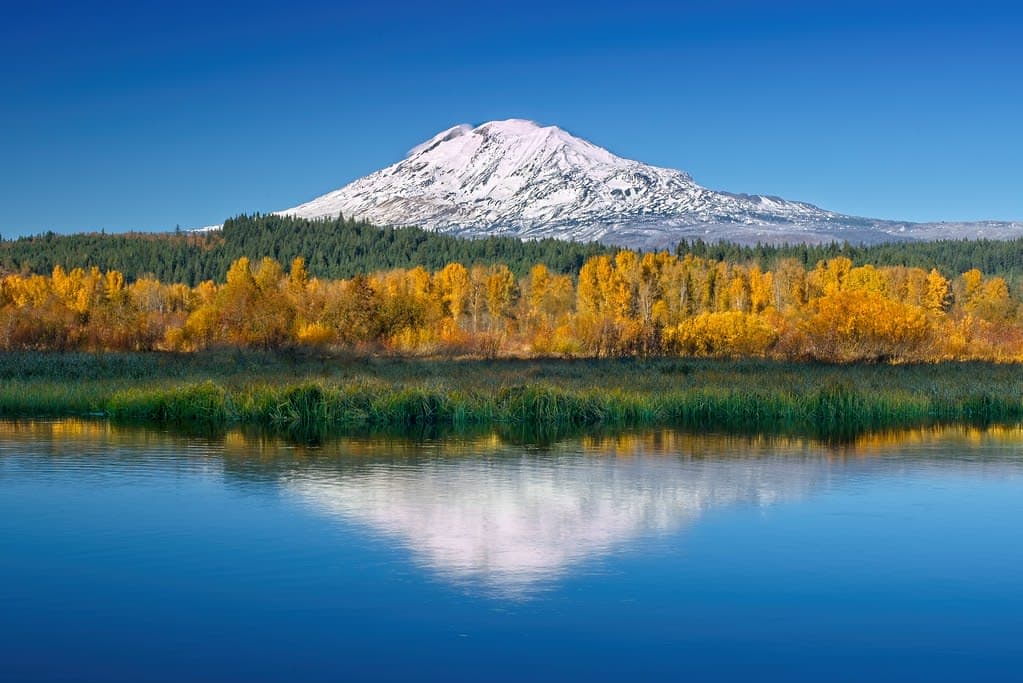
Mount Adams, Washington
A living sacred mountain where the Yakama Nation gathers, honors, and heals
Trout Lake, Washington, United States
At A Glance
- Coordinates
- 46.2024, -121.4909
- Suggested Duration
- Summit attempts typically require 11-12 hours round trip, with most parties starting before dawn from high camp. Day hikes on lower trails range from a few hours to full days. The Pacific Crest Trail passes through, accommodating multi-day backpacking. Those seeking deeper engagement often spend multiple days in the area, combining hiking with time simply present in the mountain's shadow.
- Access
- The primary access point is the South Climb Trailhead, reached via Forest Road 8040/80 from Trout Lake. Coordinates: 46.1359, -121.4976. The town of Trout Lake, approximately 25 miles from the trailhead, offers basic services. The western half of the mountain is managed by the U.S. Forest Service as part of the Mt. Adams Wilderness within Gifford Pinchot National Forest. The eastern half is Yakama Nation territory; access to the Mt. Adams Recreation Area requires tribal permits from Yakama Nation Tribal Forestry. The Adams Climbing Pass, required May 1 through September 30 for travel above 7,000 feet, can be obtained through recreation.gov.
Pilgrim Tips
- The primary access point is the South Climb Trailhead, reached via Forest Road 8040/80 from Trout Lake. Coordinates: 46.1359, -121.4976. The town of Trout Lake, approximately 25 miles from the trailhead, offers basic services. The western half of the mountain is managed by the U.S. Forest Service as part of the Mt. Adams Wilderness within Gifford Pinchot National Forest. The eastern half is Yakama Nation territory; access to the Mt. Adams Recreation Area requires tribal permits from Yakama Nation Tribal Forestry. The Adams Climbing Pass, required May 1 through September 30 for travel above 7,000 feet, can be obtained through recreation.gov.
- Technical alpine gear is essential for summit attempts. Conditions change rapidly; glaciers require crampons and ice axes. For lower-elevation hiking, dress for Pacific Northwest mountain weather: layers, rain protection, sturdy footwear with grip.
- Photography is permitted on Forest Service wilderness lands. On Yakama Nation territory, photography restrictions may apply—check with tribal authorities. Regardless of location, be conscious that this is a sacred site. If you encounter any ceremonial activity, do not photograph without explicit permission. Point your camera at landscape, not people, unless invited.
- Do not attempt to access the eastern slopes without explicit permission from the Yakama Nation. The tribal lands are not a park with inconvenient restrictions; they are sacred ground actively in use. Trespass disrespects not only law but living spiritual practice. Do not bring spiritual tourism expectations—crystals, sage, ceremonies learned from books. These may have meaning in their own contexts, but deploying them on a mountain sacred to people who have not invited such practices is cultural appropriation, however well-intentioned. If you encounter tribal members on the mountain, offer space rather than intrusion. Their relationship with Pahto is not a teaching opportunity for you.
Overview
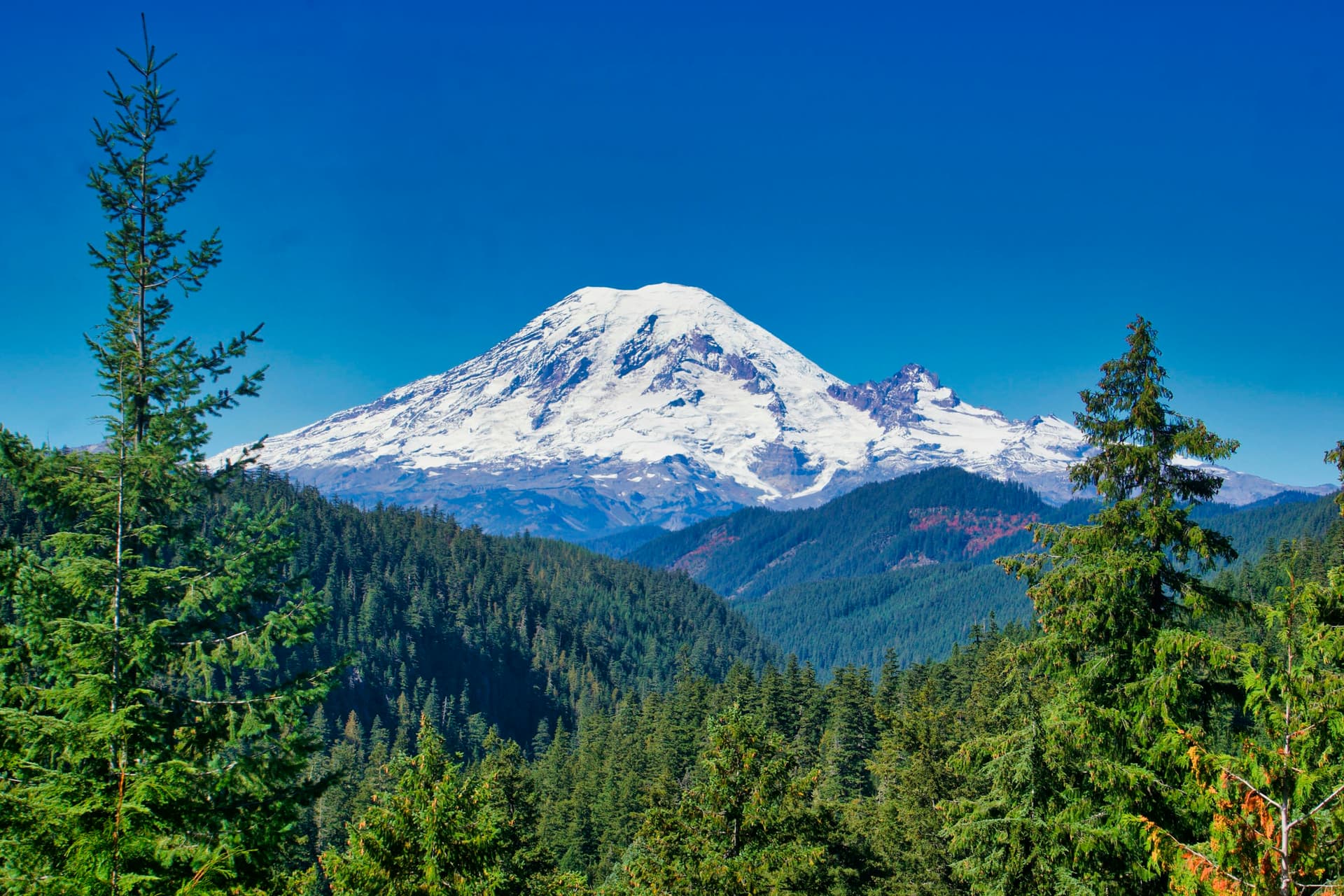
Rising 12,276 feet above the Columbia Plateau, Mount Adams is one of five sacred sister mountains for the Yakama Nation. Called Pahto in the Sahaptin language, this is not a historical relic but a living spiritual site where tribal members camp for months gathering huckleberries, hold First Foods ceremonies, and maintain relationships with a mountain they understand as kin. The eastern slopes, returned to Yakama ownership in 1972, remain largely closed to outsiders.
Before any surveyor named it Adams, this mountain was Pahto. The Yakama people have known it as a living entity for longer than anyone can count—a place of power and healing, one of five sacred sisters whose snowmelt feeds the canyons, forests, and meadows that sustain life below.
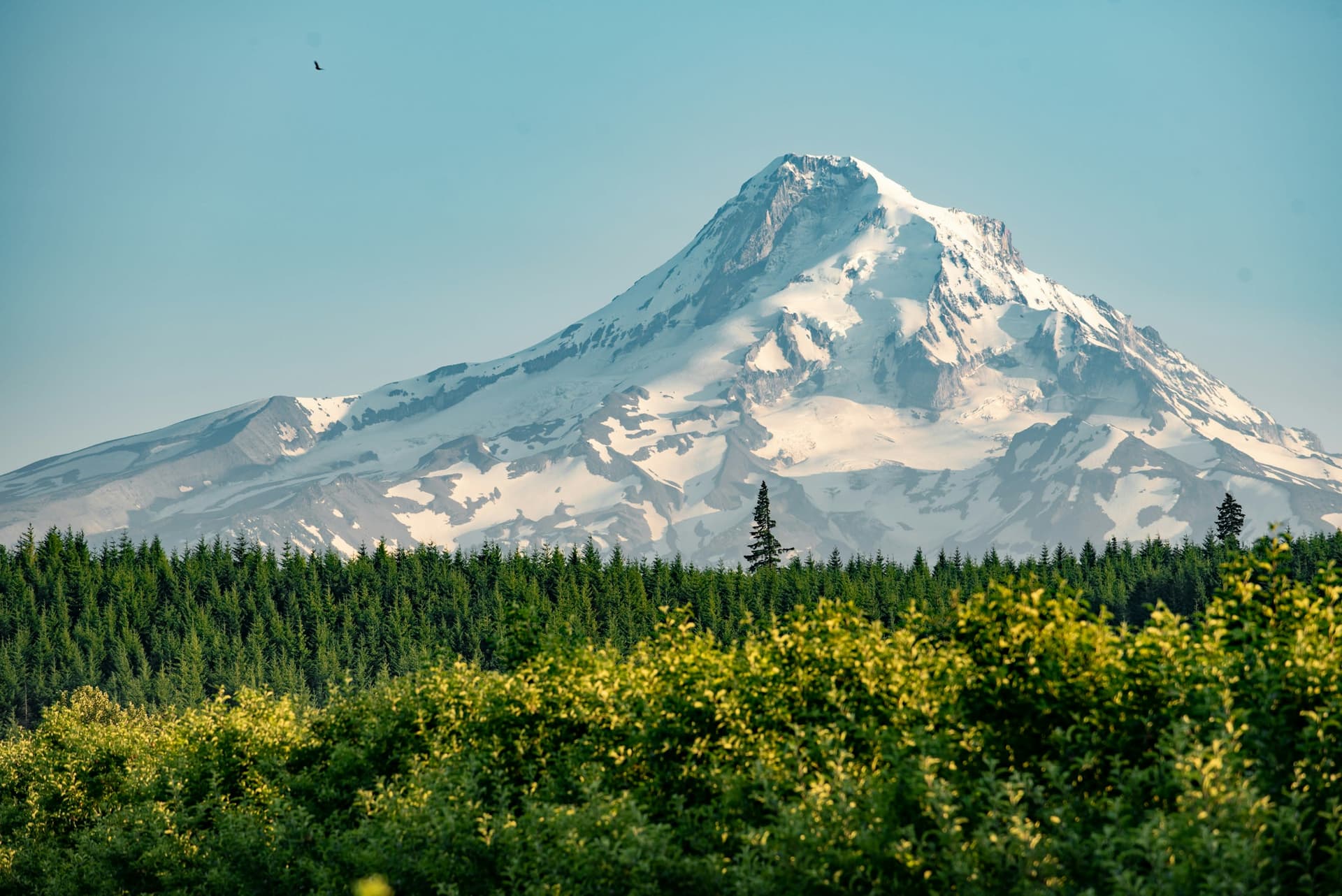
The largest volcano in Washington State by volume, Pahto rises with a presence that feels less like scenery and more like witnessing. The Yakama, Klickitat, and Cowlitz peoples each hold their own names for the mountain, their own legends about how it came to be. In one telling, Pahto and Wy'east (Mount Hood) are brothers who battled for the love of Loowit (Mount St. Helens), hurling fire until the Great Spirit turned them all to stone. In another, Pahto is a wife of the Sun, shaping the landscape through cosmic conflicts.
What distinguishes Pahto from other Cascade peaks is not only its scale but its status: the eastern half of the mountain lies within Yakama Nation lands, returned by presidential order in 1972 after decades of bureaucratic error had separated it from the reservation. This is not merely ancestral territory but actively sacred ground. Each summer, families camp for weeks among the huckleberry fields, gathering berries central to ceremonies, weddings, and memorials. The First Fruits feast is held near the picking grounds, maintaining traditions that predate any national border.
Visitors to the western wilderness may climb toward the summit or walk the Pacific Crest Trail. But to approach Pahto with understanding requires knowing that for many who live in its shadow, this mountain is not a destination. It is family.
Context And Lineage
Mount Adams is a stratovolcano that has been forming for approximately 520,000 years, with its most recent eruption occurring about a thousand years ago. For the Yakama, Klickitat, and Cowlitz peoples, it has been a sacred site for far longer than written history records. The 1855 treaty explicitly included the mountain in Yakama lands, though surveying errors excluded it until President Nixon's 1972 executive order restored tribal ownership of the eastern portion.
The legends vary by tradition, but all speak to a mountain alive with personality and power.
In the best-known story, shared across several tribes, Pahto and Wy'east (Mount Hood) were brothers who both loved Loowit, a beautiful maiden who would become Mount St. Helens. Their battle for her affection was catastrophic—hot rocks and streams of liquid fire devastated the land. The Great Spirit, outraged at his sons, struck all three down, raising mountains where they fell. 'Klickitat, for all his rough ways, had a tender heart,' one version concludes. 'As Mount Adams, he bends his head in sorrow, weeping to see the beautiful maiden Loowit wrapped in snow.'
The Klickitat tell of a thunderbird named Enumtla who lived on Mount Adams and terrorized the land. Speelyi, the coyote god, transformed himself into a feather. When Enumtla picked him up, Speelyi revealed himself and defeated the thunderbird, freeing the people from terror.
Another Klickitat legend explains the caves of Mount Adams: a giant man left his wife for a mouse who had become a woman. The furious first wife began digging for them, creating the mountain's caverns.
These are not children's stories. They encode understanding of volcanic geology, of the relationships between peaks, of the cosmic forces that shape landscape. The Yakama did not need Western science to know they lived among sleeping giants.
Human presence around Mount Adams extends back at least 9,000 years, with evidence of seasonal camps at higher elevations suggesting the mountain's slopes have long drawn people seeking what it provides. The Yakama, Klickitat, Cowlitz, and other Sahaptin-speaking peoples developed distinct relationships with the mountain, each with their own names and stories, all recognizing its sacred status.
The 1855 treaty between Yakama leaders and the federal government explicitly included Mount Adams in Yakama territory. But surveying errors in the early 1900s, compounded by misplaced maps, cut Pahto off from the reservation on paper. For decades, the Yakama protested this administrative theft.
In 1932, a handshake agreement preserved the Sawtooth Berry Fields for tribal use. In 1972, President Nixon signed the executive order restoring 21,000 acres. In 2022, the Supreme Court denied a final challenge. The mountain, legally, came home—though spiritually, it had never left.
Pahto
deity
The mountain itself, understood as a living being. One of five sacred sisters in Yakama cosmology, a brother or wife in various legends, a provider and protector. Not a symbol of sacred power but the power itself, dwelling in stone and ice and snowmelt.
Wy'east
deity
Mount Hood, Pahto's brother in legend, co-combatant in the battle for Loowit's love. The relationship between the mountains is understood as continuing, embodied in their eternal vigil.
Loowit
deity
Mount St. Helens, the beautiful maiden whose suitors became battling mountains. Her 1980 eruption held meaning for those who knew the old stories—the sleeping beauty awakening.
Speelyi
deity
The coyote god, trickster and liberator. Defeated the thunderbird Enumtla who terrorized from Mount Adams, restoring peace to the land.
Why This Place Is Sacred
Pahto's sacredness emerges from its sheer physical presence, its life-giving waters, the abundance of its slopes, and its place within Yakama cosmology as one of five sacred sisters. The Yakama understand it not as a symbol of the sacred but as a living being—a place where spirits reside and healing occurs. Ceremonies continue here today, making this one of the Pacific Northwest's most actively venerated thin places.
The Yakama do not describe Pahto as a thin place in the Celtic sense—they have their own vocabulary. But the quality visitors report aligns with what that term attempts to name: a site where the boundary between ordinary awareness and something larger becomes permeable.
The mountain's presence is undeniable. Its base spans eighteen miles. Its glaciers feed streams that sustain salmon runs, irrigate valleys, and give life to the high meadows where huckleberries grow. In Yakama understanding, this is not metaphor but relationship: the mountain provides, and the people respond with ceremony, gratitude, and care.
According to Yakama tradition, Pahto is one of five sacred sister mountains. Each sister has her role; Pahto represents the ways of the past—the pursuit of game, the gathering of wild plant foods, the snows that make everything possible. Some legends describe the mountain as female, a wife of the Sun. Others speak of Pahto as a brother to Wy'east, locked in eternal grief over their battle for Loowit. The variations do not contradict; they reveal a landscape alive with story, where meaning accrues rather than simplifies.
The huckleberry fields on the lower slopes are among the most sacred spaces. Since time immemorial, families have gathered here during the late summer harvest, camping for weeks while picking berries that will appear in every significant ceremony throughout the year. The 1932 handshake agreement between Yakama Chief William Yallup and Forest Supervisor K.P. Cecil preserved the Sawtooth Berry Fields for tribal use—a recognition, decades before the land return, that some places belong to those who hold them sacred.
Contemporary visitors on the western slopes often report an unusual quality to the silence here, a sense of being in the presence of something attentive. Whether this reflects accumulated human reverence, the geological power of a volcano that last erupted a thousand years ago, or something beyond explanation, the consistency of such reports invites attention.
Pahto has served as a site of spiritual practice for the Sahaptin-speaking peoples for thousands of years. The mountain provides physical sustenance—game, berries, water—but these gifts are understood within a framework of reciprocity. The First Foods ceremonies acknowledge that what is taken must be honored; the protocols around gathering ensure respect for the spirits who make abundance possible. Vision quests, though less documented in public sources, have traditionally brought seekers to the mountain's higher reaches.
The mountain's significance has not evolved so much as endured. European settlement brought new names and surveying errors that, for decades, excluded Pahto from Yakama lands despite explicit treaty protections. The 1972 executive order signed by President Nixon corrected this injustice, returning 21,000 acres including the eastern slopes to tribal ownership. The 2022 Supreme Court decision denying a county challenge finalized this return.
For the Yakama Nation, this was not acquisition of new land but restoration of relationship with a relative who had been administratively kidnapped. The First Foods ceremonies, the huckleberry camps, the understanding of the mountain as living kin—these never stopped. What changed was legal recognition of what had always been true.
Traditions And Practice
The primary spiritual practices on Mount Adams are those of the Yakama Nation and related tribes: First Foods ceremonies, huckleberry gathering as sacred act, and ongoing relationship with the mountain as living kin. These practices are not open to outsiders. Visitors seeking meaningful engagement on the western wilderness must create their own approaches within a framework of respect.
The huckleberry First Fruits feast is among the most significant ceremonies. Before the general harvest begins, select people with special knowledge perform the first gathering. Ceremonial leaders pray and fast to ensure success. When they return, a feast and ritual is held before the rest of the tribe travels to traditional berry fields.
At the ceremony, foods are served in sacred order: water first, then salmon and deer (men's foods), then cous-roots and huckleberry (women's foods). There is dancing—men and women in separate circles, shoulder to shoulder—drumming, bell ringing, and prayers. This is not performance but participation in a cosmic order where humans, plants, animals, and mountains exist in relationship.
Huckleberries themselves appear in nearly every significant Yakama ceremony: name-giving, weddings, memorials, gift-giving. The gathering is not mere food production but spiritual practice. Families camp for weeks or months on the mountain's slopes, maintaining relationships with the land and each other that cannot be separated from the picking itself.
These practices continue today. Yakama longhouse members hold their First Foods feast near the picking area each late summer. Families still camp on the mountain for extended periods. The berries still appear in ceremonies throughout the year. This is not revival or reconstruction but unbroken tradition, carried through colonial disruption, legal challenge, and ongoing pressures.
For tribal members, time on the mountain with family—fishing, hunting, gathering—carries spiritual weight that transcends any individual practice. The relationship is daily, seasonal, generational. It does not require a ceremony to be sacred.
Non-tribal visitors cannot participate in Yakama ceremonies, nor should they attempt to recreate what they cannot understand. But meaningful engagement is possible.
Approach the mountain as you would approach a person you respect but do not know well. Quiet attention rather than performance. Curiosity without demand.
If you hike or climb on the western wilderness, consider beginning with acknowledgment: this is Yakama land, held sacred for millennia, legally restored to tribal ownership on its eastern slopes. You are a guest.
Sit somewhere with a view of the peak and simply attend. Notice what arises without reaching for it. The mountain does not require your practice; it invites your presence.
If you feel drawn to offer something, make it internal—gratitude, intention, release. Leave no trace. What you carry down should be only what you carried up, perhaps with something added that cannot be measured.
Yakama Nation
ActiveMount Adams (Pahto) is one of five sacred sister mountains for the Yakama Nation, embodying resilience, ancestral strength, and the ways of the past. The mountain is understood as a living entity—a place of power and healing where spirits reside. Snowmelt from Pahto feeds the canyons, forests, meadows, and valleys that sustain the Yakama people. The ongoing stewardship of this sacred mountain is central to Yakama cultural identity.
First Foods ceremonies honor the huckleberry harvest, with select ceremonial leaders performing the first gathering after prayer and fasting. The subsequent feast serves foods in sacred order: water, salmon, deer, cous-roots, and huckleberry. Dancing, drumming, and prayer mark the celebration. Tribal families camp on the mountain's slopes for weeks or months during gathering season. Huckleberries are used in name-giving ceremonies, weddings, memorials, and gift-giving throughout the year.
Klickitat (Xw̱aléxw̱aypam)
ActiveThe Klickitat people, who call themselves Xw̱aléxw̱aypam, had villages on the Lewis, White Salmon, and Klickitat rivers in the shadow of the mountain. They are part of the Yakama Nation confederation of 14 tribes and bands. The mountain figured prominently in their legendary stories, including the tale of how Speelyi the coyote god defeated the thunderbird Enumtla who terrorized from Mount Adams.
Huckleberry gathering traditions continue as part of Yakama Nation practices. Legendary storytelling preserves the cultural significance of the mountain and its relationship to the people.
Cowlitz
ActiveThe Cowlitz people, whose name by some accounts means 'spiritual seeker,' call the mountain c'ililèɬ in their language. The Cowlitz territory comprised some 3,750 square miles in interior southwest Washington, with Mount Adams forming part of their sacred landscape alongside Mount Rainier and Mount St. Helens.
Cultural connection to the volcanic landscape through traditional storytelling and ongoing engagement with sacred sites in their traditional territory.
Experience And Perspectives
Visitors to Mount Adams encounter a landscape of unusual scale and solitude. Those who approach the western wilderness often describe a quality of silence that feels attentive, a sense of the mountain's aliveness beyond mere scenery. The challenge of summiting—typically eleven to twelve hours round trip—produces its own form of opening, while even day hikers report clarity and peace that lingers after departure.
Mount Adams offers something increasingly rare among Cascade volcanoes: genuine remoteness. Unlike Rainier, there are no lodges here, no developed visitor centers, no crowds waiting for sunrise at a designated viewpoint. The approach itself requires commitment—forest roads that test vehicles, trailheads that feel like the edge of the world.
This remoteness shapes the experience. Those who climb to the summit describe the effort as purifying, the view from 12,276 feet as earned rather than purchased. The glacier travel, the hours of steady ascent, the moments of genuine doubt—these create conditions where transformation becomes possible. Climbers frequently report unusual clarity about decisions they'd been avoiding, a sense of perspective that renders previous anxieties small.
But summit attempts are not the only path. The wilderness around the mountain holds meadows full of wildflowers in July, ridgelines where the silence is broken only by wind, and viewpoints where Pahto's scale becomes viscerally real. Those who hike here often speak of feeling witnessed, of the mountain's presence as more than backdrop. Whether this reflects the psychological impact of such landscapes, the accumulated weight of millennia of reverence, or something the Yakama understand better than outsiders can, the reports are consistent enough to take seriously.
What visitors cannot access—the eastern slopes, the berry fields, the ceremony grounds—creates its own effect. Knowing that this mountain remains actively sacred, that families are camping on those closed slopes in relationships older than any nation-state, adds a dimension to the experience that mere recreation cannot provide. Pahto asks something of those who approach: not performance of spirituality, but genuine humility before what remains beyond outsider access.
If you come seeking more than exercise, begin by acknowledging whose land this is. The western wilderness is Forest Service territory, but the mountain itself belongs—spiritually, and on its eastern half legally—to the Yakama Nation. You are a guest in a landscape that holds meaning you can approach but not fully understand.
Consider arriving with intention rather than itinerary. What draws you to a sacred mountain? What might you need to release here? These questions need not be answered, only carried.
The summit climb, if you attempt it, will strip away everything nonessential. Twelve hours of effort leaves little room for mental noise. Those who approach it as pilgrimage rather than conquest often find the mountain meets them in unexpected ways.
For those who stay lower—day hikes, wildflower meadows, PCT segments—slowness serves better than ambition. Sit somewhere with a view of the peak. Notice what happens when you stop moving. The silence here has a quality worth attending to, if you can resist filling it.
Mount Adams invites multiple interpretations: geological, anthropological, indigenous, and experiential. A complete picture requires holding these together without forcing resolution. The Yakama understanding of Pahto as living kin is not metaphor to be translated but perspective to be respected. Scientific accounts of volcanic activity do not contradict traditional knowledge but speak to different dimensions of the same mountain.
Geologically, Mount Adams is a stratovolcano and the largest active volcano in Washington State by volume, comprising approximately 300 cubic kilometers of eruptive material deposited over the past million years. The current cone has been building for approximately 520,000 years, with the most recent eruption occurring about 1,000 years ago. The volcano is considered to pose moderate hazard, with lahars (volcanic mudflows) presenting the greatest risk even during non-eruptive periods.
Anthropologically, the mountain holds documented significance for multiple Sahaptin-speaking peoples. Scholars have recorded indigenous names and legends across Yakama, Klickitat, and Cowlitz traditions. The 1972 land return and 2022 Supreme Court affirmation represent significant legal recognition of tribal sovereignty and sacred land claims, marking an unusual case where the federal government acknowledged and corrected a historical injustice regarding indigenous sacred sites.
For the Yakama Nation, Pahto is not merely a landmark but a living entity—a place of power and healing where spirits reside. The mountain is one of five sacred sisters, a provider that gives gifts to the people through snowmelt, berries, and game. The great white mountain represents the ways of the past, holding traditions that connect present generations to ancestors and descendants alike.
Ceremonies including the huckleberry First Fruits feast continue today, representing unbroken tradition protected by the 1855 treaty. The relationship between the Yakama people and Pahto is not historical artifact but living practice: reciprocal, ongoing, and central to cultural identity. When Yakama leaders speak of the mountain, they speak of family.
Some visitors describe Mount Adams as a powerful energy site beyond indigenous frameworks—a place where spiritual experience becomes accessible regardless of tradition. The mountain's volcanic nature, its relative isolation, and its lesser fame compared to Rainier contribute to its perception as a thin place where ordinary boundaries soften.
These interpretations are not endorsed by traditional custodians and should be held lightly. What matters is that something about this place consistently affects visitors in ways that transcend ordinary tourism. Whether this reflects psychological response to sublime landscape, the accumulated weight of millennia of reverence, or something beyond conventional explanation, the pattern is worth noting.
Much remains unknown or undocumented in public sources. The full extent of pre-contact ceremonial practices, the specific meanings of cave and geological features in traditional knowledge, the details of vision quest traditions on the mountain's higher reaches—these lie within Yakama oral tradition and are not fully accessible to outsiders.
How climate change will affect huckleberry harvests and the practices that depend on them remains an open and urgent question. The timing and nature of future volcanic activity cannot be predicted with precision. The mountain continues to evolve, geologically and culturally, in ways that exceed anyone's ability to fully document.
Visit Planning
Mount Adams is accessed primarily from the town of Trout Lake on its southern side. The climbing season runs May through September, with permits required for travel above 7,000 feet. Summit attempts typically require 11-12 hours. Lower-elevation hiking and the Pacific Crest Trail offer alternatives for those not seeking the summit. The eastern Yakama Nation lands have separate access requirements.
The primary access point is the South Climb Trailhead, reached via Forest Road 8040/80 from Trout Lake. Coordinates: 46.1359, -121.4976. The town of Trout Lake, approximately 25 miles from the trailhead, offers basic services. The western half of the mountain is managed by the U.S. Forest Service as part of the Mt. Adams Wilderness within Gifford Pinchot National Forest. The eastern half is Yakama Nation territory; access to the Mt. Adams Recreation Area requires tribal permits from Yakama Nation Tribal Forestry. The Adams Climbing Pass, required May 1 through September 30 for travel above 7,000 feet, can be obtained through recreation.gov.
Trout Lake offers basic lodging, restaurants, and supplies. Gifford Pinchot National Forest maintains several campgrounds in the area. Wilderness camping is permitted in the Mt. Adams Wilderness with appropriate permits. The Yakama Nation Mt. Adams Recreation Area has designated campsites for those with tribal permits. For those seeking lodging with more amenities, Hood River, Oregon (approximately 40 miles south) and the surrounding Columbia River Gorge area offer additional options.
Mount Adams requires different codes for different zones. The eastern slopes are Yakama Nation land—largely closed to outsiders, requiring tribal permits where access exists, and demanding absolute respect for closures. The western wilderness is managed by the Forest Service with standard regulations plus climbing permit requirements. Throughout, awareness that this is actively sacred ground should shape behavior.
Begin with geography. The eastern half of Mount Adams lies within the Yakama Indian Reservation. This is not public land. Winter recreation is prohibited on tribal territory. Seasonal closures apply to various areas. Violating regulations on Pahto disrespects not only rules but religious and cultural beliefs that remain living and central to Yakama identity.
If you wish to access areas of the Yakama Nation Mt. Adams Recreation Area that are open to visitors, obtain permits in advance. Call the Yakama Nation before visiting reservation lands to get permission. Do not assume that unlocked gates or absent signage means access is permitted.
On the western wilderness managed by the Forest Service, standard leave-no-trace principles apply with additional requirements. Human waste must be packed out above 7,000 feet—pack-out bags are required. The Adams Climbing Pass is mandatory May 1 through September 30 for travel above 7,000 feet for anyone age 16 and older.
Throughout, remember context. This mountain is not merely scenic. Families are camping on those closed eastern slopes, engaged in practices older than any boundary you see on a map. Your recreation occurs alongside their ceremony. Let that awareness shape your behavior: quieter, slower, more attentive than you might be on a mountain that carries only geological significance.
Technical alpine gear is essential for summit attempts. Conditions change rapidly; glaciers require crampons and ice axes. For lower-elevation hiking, dress for Pacific Northwest mountain weather: layers, rain protection, sturdy footwear with grip.
Photography is permitted on Forest Service wilderness lands. On Yakama Nation territory, photography restrictions may apply—check with tribal authorities. Regardless of location, be conscious that this is a sacred site. If you encounter any ceremonial activity, do not photograph without explicit permission. Point your camera at landscape, not people, unless invited.
Non-indigenous visitors should not leave physical offerings. What reads as respect may constitute litter—or worse, inappropriate insertion into practices that are not yours. If you wish to offer something, make it internal: gratitude, prayer, intention. Leave no trace applies to offerings as much as to trash.
Eastern slopes: Yakama Reservation lands require permits and fees from Yakama Nation Tribal Forestry; winter recreation is prohibited; some areas are seasonally closed; tribal permission is recommended before visiting any reservation lands. Western wilderness: climbing pass required above 7,000 feet from May 1 through September 30; pack-out waste requirement above 7,000 feet; standard wilderness regulations apply. Contact the Gifford Pinchot National Forest ranger district for current conditions and regulations.
Sacred Cluster
Nearby sacred places create the location cluster described in the growth plan. This block is intentionally crawlable and links into the wider regional graph.