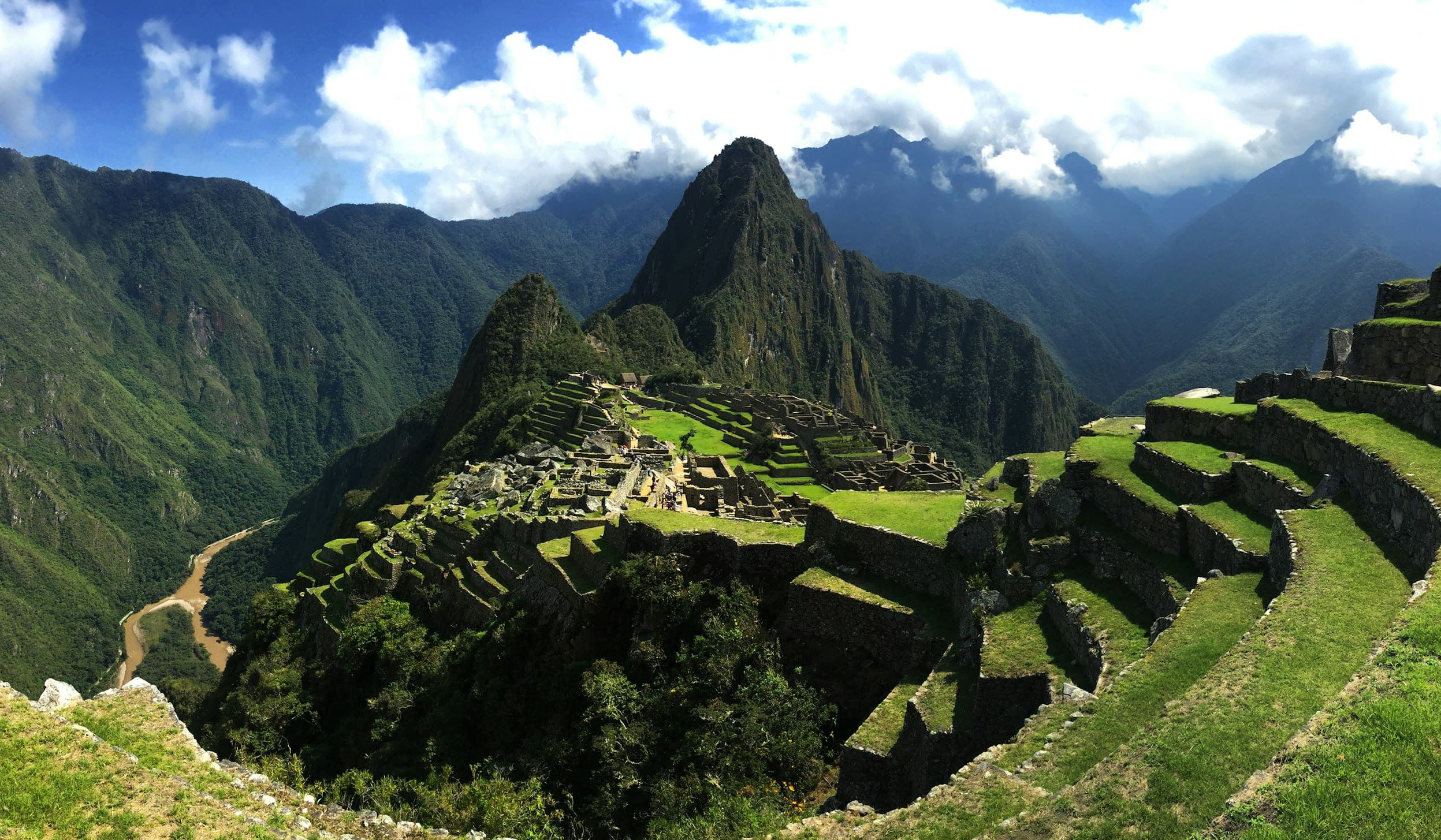
Machu Picchu
The Inca citadel that Spain never found, where mountains are spirits and sun is god
Machupicchu, Cusco, Peru
At A Glance
- Coordinates
- -13.1639, -72.5462
- Suggested Duration
- 4 hours (maximum allowed)
Pilgrim Tips
- Comfortable walking shoes with good grip—the site involves steep, sometimes slippery stone stairs. Weather changes rapidly; bring layers and rain gear. Sun protection essential.
- Permitted for personal use throughout the site. Drones prohibited. Commercial photography requires special permits. Tripods and large equipment may be restricted. Be mindful of photographing other visitors, particularly those engaged in personal spiritual practice.
- Altitude affects some visitors—Machu Picchu is at 2,430m, and most arrive from even higher Cusco. Do not touch ancient structures. Stay on designated paths. Photography of other visitors' spiritual practices without permission is inappropriate.
Overview
For nearly four hundred years, Machu Picchu waited in the cloud forest, abandoned but not destroyed, its stones slowly embraced by jungle while Spanish conquistadors searched for Inca gold elsewhere. When the world finally came in 1911, what they found was a sacred landscape made stone: temples aligned with solstice light, a carved rock that hitched the sun, terraces stepping down mountain slopes like prayers made visible. The Inca built at the center of a geography defined by sacred—apus (mountain spirits) on all sides, the Urubamba River's sacred waters nearly encircling the ridge, astronomical precision connecting earth and sky.
Machu Picchu was never lost; it was never found by those who would have destroyed it. When Spanish conquistadors dismantled the Inca Empire in the 1530s, this citadel in the cloud forest remained hidden—too remote, too difficult, protected by the same geography that made it sacred. For nearly four hundred years it waited, known only to farmers in the valley below, its temples and terraces slowly disappearing beneath vegetation while the colonial world assumed all Inca greatness had been catalogued and conquered. What Hiram Bingham encountered in 1911—led there by a local man, not discoverer but publicist—was something the conquest had failed to erase: an intact sacred landscape, a place where the Inca relationship with mountains, sun, and cosmos remained legible in stone. Emperor Pachacuti built Machu Picchu around 1450, at the height of Inca power. The location was not accidental. Johan Reinhard's research demonstrates that the site sits at the center of a sacred geography: the surrounding peaks are apus, mountain spirits demanding reverence; the Urubamba River, nearly encircling the ridge, flows with sacred water; the orientation of temples catches solstice light with precision that cannot be coincidental. The Intihuatana stone—the 'hitching post of the sun'—rises at the site's highest point, a carved rock where priests conducted ceremonies to ensure the sun's return from its winter journey. On the equinoxes, the stone casts no shadow. This is architecture as cosmology, construction as devotion. The approximately 200 structures include temples, residences, and agricultural terraces that step down precipitous slopes—engineering that fed bodies while the temples fed souls. The Temple of the Sun, its curved wall aligned to capture winter solstice light through a specific window, represents astronomy and religion fused into stone. The Temple of the Three Windows faces the sunrise, its precisely cut openings framing the eastern mountains. The burials found around the site—174 individuals, many accompanied by camelid offerings—confirm what the architecture suggests: this was a place where the sacred and practical were not separate categories. Then the Inca abandoned it. Why remains uncertain—perhaps the collapse of the empire, perhaps disease, perhaps simple impracticality once the state that sustained it fell. The jungle closed in. And the sacred landscape waited until the world was ready to see it again.
Context And Lineage
Built c. 1450 under Pachacuti at the height of Inca power. Abandoned during Spanish conquest. Hidden for four centuries. Brought to world attention in 1911.
Around 1438, a regional conflict transformed Inca history. The Chankas people attacked Cusco; the prince who would become Pachacuti rallied defense and achieved victory. His father had fled; Pachacuti stayed. The victory launched a dynasty and an empire. In the decades that followed, Pachacuti transformed the Inca from a regional power into the largest empire in pre-Columbian America. Among his constructions was Machu Picchu—a royal estate and sacred sanctuary positioned in a landscape of apus and sacred waters. The site served multiple functions that the Inca did not separate as we do: residence for elite, temple for ceremony, observatory for astronomy, agricultural experiment station. Perhaps a thousand people lived here at its height. Then came the Spanish. By the 1530s, the empire was collapsing—civil war, European disease, conquistador violence. Machu Picchu was abandoned. The reasons remain unclear: perhaps the disruption of state support systems, perhaps depopulation, perhaps the routes that sustained it becoming impossible. Whatever the cause, the jungle closed in. For four centuries, only farmers in the valley knew the overgrown ruins existed. In 1911, Hiram Bingham—American academic, explorer, self-promoter—was led to the site by Melchor Arteaga, a local farmer. Others had visited before; Bingham brought the world. His photographs and writings made Machu Picchu an icon. Subsequent archaeology revealed what Bingham had not seen: burials, offerings, astronomical alignments, a sacred landscape made stone.
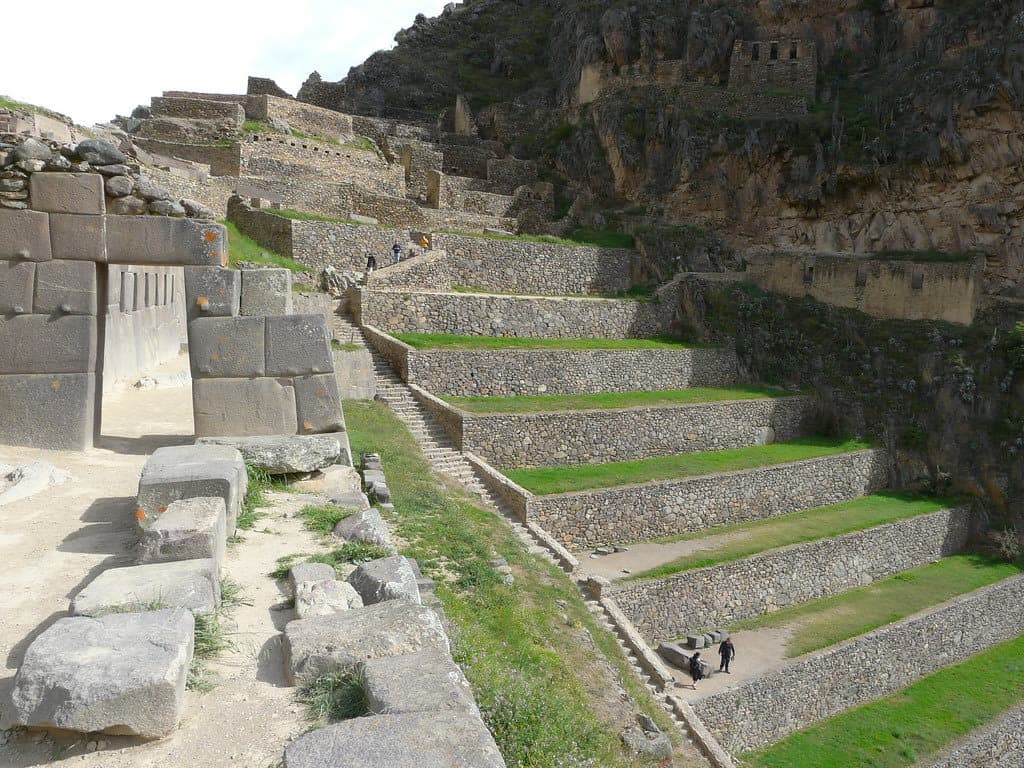
Machu Picchu represents the culmination of Inca architectural and spiritual achievement. It connects to the broader Inca sacred geography that includes Cusco (the empire's navel), Sacsayhuaman (fortress and temple), Ollantaytambo (sacred valley complex), and the network of Inca roads and sites throughout the Andes. The site demonstrates the Inca synthesis of astronomy, religion, agriculture, and statecraft.
Pachacuti Inca Yupanqui
Hiram Bingham III
Johan Reinhard
Melchor Arteaga
Why This Place Is Sacred
The site survives because it was sacred enough to build in an impossible location but remote enough that destroyers never found it—a paradox that preserved what conquest elsewhere erased.
What makes Machu Picchu feel sacred? The question has multiple answers, each incomplete alone. The setting contributes: cloud forest at 2,430 meters, peaks rising on all sides, the Urubamba carving its canyon far below, mist appearing and disappearing to reveal and conceal. This is landscape that feels intentional, as if arranged for effect. The Inca recognized this. They built not on the highest peak but on a ridge between peaks, nestled into geography rather than dominating it. The apus—mountain spirits—stood guard; the sacred river provided boundary and blessing. The architecture amplifies what the landscape provides. Those stone walls, fitted without mortar to tolerances that make modern engineers wonder, represent something beyond utility. The precision with which the Temple of the Sun catches winter solstice light, the way the Intihuatana stone marks equinox with shadowless noon—these are not accidents but intentions encoded in granite. The Inca were building a machine for connecting worlds: Hanan Pacha above, Kay Pacha here, Ukhu Pacha below. The survival adds another layer. Every other major Inca site was found by Spanish, their gold melted, their stones repurposed, their meaning erased. Machu Picchu alone remained. The jungle protected it; remoteness concealed it; the sacred geography that made it worth building also made it invisible to destroyers. When the world finally came, it found not ruins but presence—a site that felt inhabited even in abandonment. The response of visitors suggests something real. Machu Picchu affects people in ways that exceed historical interest or scenic beauty. Those who trek the Inca Trail and arrive at the Sun Gate at dawn report experiences that border on the transformative. Something in the place communicates, even if what it communicates cannot be precisely articulated. The Inca would have understood this. They built here because the place already spoke to them; they gave it forms to speak more clearly.
Sacred center within a landscape defined by mountain spirits, sacred water, and astronomical alignments.
Built c. 1450 under Pachacuti. Occupied for approximately 80-100 years. Abandoned during Spanish conquest period. Jungle encroachment over four centuries. Local knowledge maintained. Brought to international attention 1911. Archaeological investigation ongoing. UNESCO inscription 1983. Visitor management increasingly strict to prevent degradation.
Traditions And Practice
No active ceremonies continue. The site functions as heritage and tourism destination. Some visitors report spiritual experiences; formal rituals are not permitted.
Inca priests conducted ceremonies at the Intihuatana stone during solstices and equinoxes, honoring Inti (the sun god) and ensuring astronomical cycles continued. Animal offerings—particularly llamas and alpacas—were made at the Temple of the Condor and in the caves below. The Temple of the Sun received light through specific windows at winter solstice, likely marking the year's turning. The entire site functioned as sacred calendar and cosmic anchor.
The site is managed as archaeological heritage. No formal religious ceremonies are conducted. Inti Raymi (sun festival) is celebrated in Cusco at winter solstice, not at Machu Picchu. Some Peruvian spiritual practitioners and New Age visitors conduct personal observances, though formal rituals are prohibited. The site's primary contemporary function is tourism and heritage preservation.
Arrive at first entry if possible—fewer crowds, possibility of mist clearing to reveal the site. Take time at the Intihuatana stone, even though you cannot touch it; this was the spiritual center. Watch the light on the Temple of the Sun. Notice how structures frame specific views of mountains—the apus the Inca honored. If physically able, climb Huayna Picchu (separate ticket, limited availability) for perspective on the entire site. Move slowly; four hours is the limit, but depth matters more than coverage.
Inca state religion
HistoricalThe Inca state religion centered on Inti (the sun god), with the emperor as divine intermediary. Machu Picchu's temples, astronomical alignments, and Intihuatana stone served this religion. Animal sacrifices, particularly camelids, accompanied ceremonies. The religion was suppressed following Spanish conquest.
Solstice and equinox ceremonies at the Intihuatana. Offerings at temples. Agricultural rituals connected to astronomical calendar. Ancestor veneration. These practices ended with the conquest.
Andean cosmology and apu veneration
ActiveThe Andean worldview recognizes apus (mountain spirits), sacred waters, and the interconnection of Hanan Pacha (upper world), Kay Pacha (this world), and Ukhu Pacha (underworld). This worldview persists among Quechua communities and informs their relationship to places like Machu Picchu.
Offerings to apus. Recognition of sacred geography. Maintenance of relationships with landscape features. Some practices continue in traditional communities; others have been adapted to modern contexts.
Experience And Perspectives
The approach defines the experience—whether by train through canyon, by bus up switchbacks, or by days of walking the Inca Trail to emerge at the Sun Gate as dawn breaks over the citadel.
How you arrive shapes what you find. The Inca Trail requires four days of walking—through passes at 4,200 meters, past other ruins, camping at altitudes that steal breath—to arrive finally at Inti Punku, the Sun Gate, as dawn light falls on Machu Picchu below. Those who make this approach arrive already transformed by the journey; what they see completes something already begun. The train and bus route is different: comfortable seats through the canyon, fifteen minutes of switchbacks up the mountain, then suddenly the site. This approach emphasizes the citadel's isolation, its improbable perch between peaks. Either way, you enter through turnstiles, join designated circuits, follow guides through structures whose purposes scholars debate. However you arrive, the first full view produces a response that photographs cannot prepare you for. The scale is grander, the setting more dramatic, the preservation more complete than images suggest. You understand, viscerally, why people built here despite the difficulty. The site unfolds in sections. The agricultural terraces—andenes—step down the mountain, engineering that produced food while preventing erosion. The urban sector climbs toward the sacred: first residential areas, then the Temple of the Three Windows with its views of sunrise mountains, then the Principal Temple and the Temple of the Sun with its curved wall and solstice alignment. At the highest point, the Intihuatana stone rises—now roped off after past damage, but still the focal point that draws the eye upward. Here the Inca hitched the sun, held time in stone, connected the worlds that met at this ridge. The Temple of the Condor lies lower, its natural rock formations carved to suggest the bird's outstretched wings, caves behind it dark with evidence of offering and burial. Throughout, the stonework arrests attention. These walls fit so precisely that paper cannot be inserted between blocks. No mortar holds them; only gravity and craft. The Inca shaped granite with tools of bronze and stone, achieved tolerances that modern technology respects. The how of this construction contributes to the why—people do not invest such effort in the merely practical. Four hours is the maximum allowed now, and it is not enough. But perhaps no time would be enough. The site communicates more than can be received in any single visit.
Enter through the main gate. Agricultural terraces to your left, urban/sacred sectors ahead and right. The Temple of the Sun with its curved wall is a key landmark. The Intihuatana stone marks the sacred sector's highest point. The Temple of the Condor is in the eastern section, lower elevation. Huayna Picchu (separate ticket) rises at the north end. Designated circuits now restrict movement; follow guide instructions.
Machu Picchu exists at the intersection of Inca imperial ambition, Andean sacred geography, colonial survival, modern tourism, and ongoing indigenous connection.
Archaeological consensus holds that Machu Picchu was constructed c. 1450 during Pachacuti's reign as a royal estate with integrated sacred functions. Johan Reinhard's sacred landscape research demonstrates deliberate positioning within geography defined by apus and sacred water. The site's multiple functions—residential, ceremonial, astronomical, agricultural—reflect Inca integration of categories that Western thought separates. Continuing research investigates construction techniques, astronomical alignments, and regional context.
For Quechua communities, descendants of the Inca, Machu Picchu represents ancestral achievement and ongoing connection. The surrounding apus remain sacred spirits requiring respect. Concerns exist about commercial tourism's impact on sacred sites and about the representation of indigenous voices in site interpretation. Some advocate for greater indigenous involvement in management and narrative.
Various alternative theories propose extraterrestrial involvement, connections to Atlantis or Lemuria, or special energy vortex properties. These are not supported by archaeological evidence. The site attracts those drawn to ancient mystery and perceived spiritual energy. Some New Age practitioners incorporate Machu Picchu into eclectic spiritual frameworks.
Much about Machu Picchu remains uncertain: the precise ceremonial calendar, the meaning of specific architectural features, why this particular location was chosen, the relationship to other sites, details of abandonment. The Spanish conquest destroyed the knowledge systems that could have explained what the stones mean. Archaeology recovers artifacts; meaning is harder to retrieve.
Visit Planning
Tickets must be purchased in advance—often months for peak season. Access via train to Aguas Calientes then bus, or by multi-day trek. Four-hour maximum visit. Guide required.
Aguas Calientes offers range from hostels to luxury hotels. Sanctuary Lodge at site entrance is the only accommodation at Machu Picchu itself (expensive, convenient for early entry). Most visitors base in Cusco or Sacred Valley and day-trip.
UNESCO World Heritage Site with strict regulations. Guide required. Maximum 4-hour visit. Designated circuits must be followed. Respect the site and other visitors.
Machu Picchu is managed to prevent the degradation that overcrowded heritage sites experience worldwide. Accept the regulations as protection rather than inconvenience. The structures survived five centuries; your visit should not hasten their decline. Guide requirement ensures both interpretation and compliance. The four-hour limit and circuit restrictions distribute visitors through the site and reduce wear on fragile areas. These constraints are recent; earlier visitors wandered freely and damage accumulated. The Intihuatana stone was chipped by a falling crane during a beer commercial in 2000—a reminder that careless modern contact destroys what centuries of jungle growth preserved.
Comfortable walking shoes with good grip—the site involves steep, sometimes slippery stone stairs. Weather changes rapidly; bring layers and rain gear. Sun protection essential.
Permitted for personal use throughout the site. Drones prohibited. Commercial photography requires special permits. Tripods and large equipment may be restricted. Be mindful of photographing other visitors, particularly those engaged in personal spiritual practice.
Not practiced or permitted. Leave nothing; take nothing.
Guide required for all visitors. Four-hour maximum. Single entry—once you exit, you cannot re-enter with the same ticket. Designated circuits must be followed. No touching the Intihuatana stone. No food consumption in archaeological area. No umbrellas (walking sticks acceptable). No megaphones.
Sacred Cluster
Nearby sacred places create the location cluster described in the growth plan. This block is intentionally crawlable and links into the wider regional graph.