Killarumiyoq
Where the Inca carved a crescent moon into stone, and women still seek the goddess's blessing
Ancahuasi, Cusco, Peru
At A Glance
- Coordinates
- -13.4456, -72.3109
- Suggested Duration
- Three to four hours provides time for thorough exploration and contemplation without rushing.
Pilgrim Tips
- Practical, comfortable clothing suits the site. Walking shoes with good grip are essential for uneven terrain. Layers accommodate the highland climate, which can shift quickly between sun and chill. There are no formal dress requirements, but clothing appropriate for visiting a sacred site shows respect for the space and those who consider it holy.
- Personal photography is permitted. Professional or commercial photography may require coordination with local authorities. No photographs should interfere with others' experience or with any ceremonies taking place. The moon carving is photogenic, but consider seeing it with your eyes before seeing it through a lens.
- Respect the carved stones and archaeological features. Do not touch, climb on, or damage the moon carving or other structures. Though the site lacks formal enforcement, it remains a protected cultural heritage site. Some areas may be inaccessible due to avalanche damage. Do not attempt to enter blocked or unstable sections. If you encounter local women engaged in private practice, maintain respectful distance. Their presence here predates and supersedes tourist interest.
Overview
Hidden in the hills above Cusco, Killarumiyoq preserves the Inca's most elaborate dedication to Mama Quilla, the Moon Goddess. While the empire's ceremonial practices have fallen silent, the site remains alive through annual festivals and women who still visit for fertility rituals, maintaining a five-century connection between the feminine and the lunar.
Most visitors to the Sacred Valley seek the sun. The Inca's solar temples at Machu Picchu and Sacsayhuaman draw millions. But the Inca understood the cosmos as balance, and for every sun there must be a moon. Killarumiyoq was her temple.
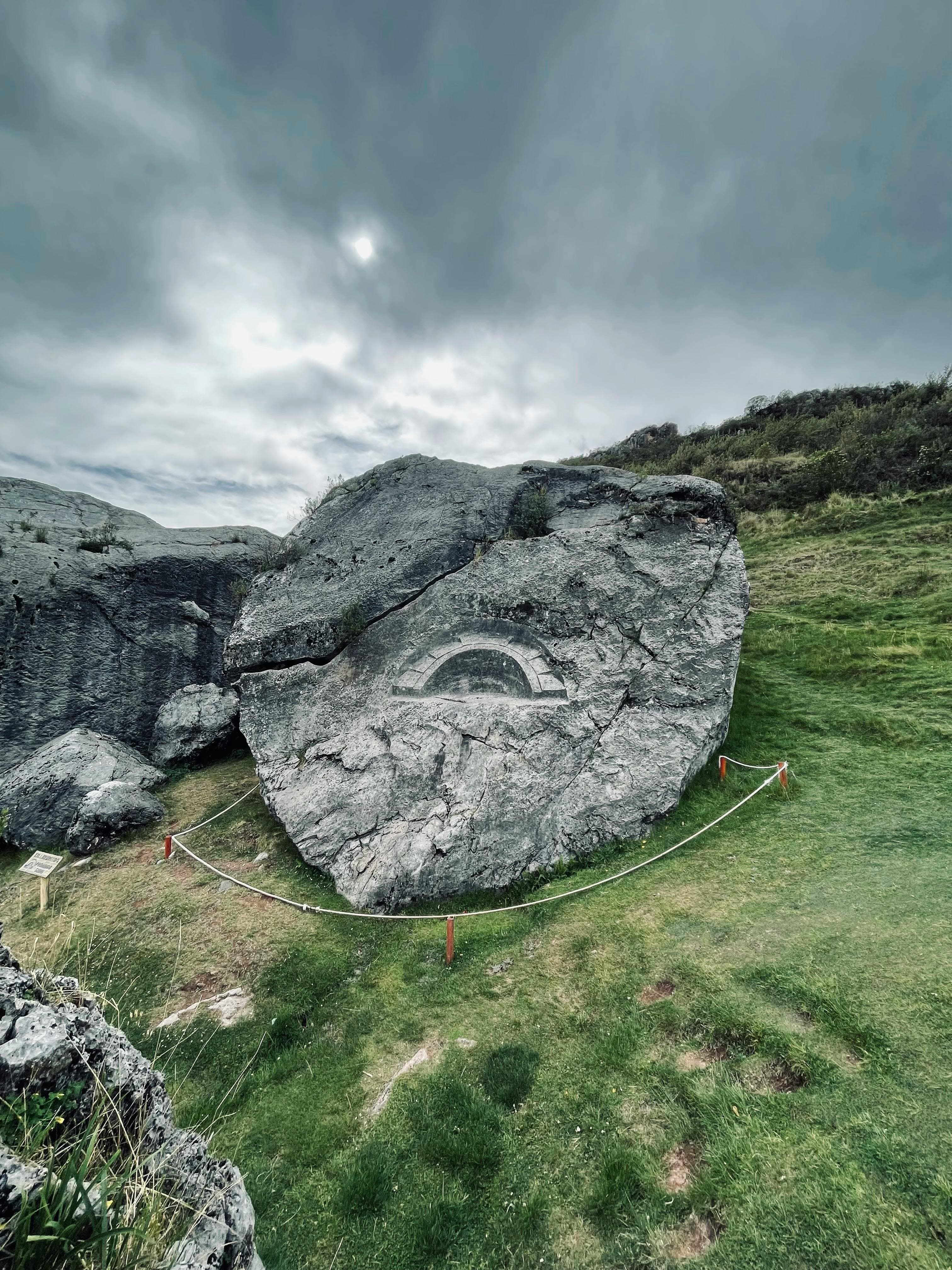
The centerpiece is a massive limestone boulder into which Inca artisans carved a crescent moon in bas-relief. Seven steps ascend along the circumference, their meaning lost but their precision unmistakable. From a distance, the rock itself forms the profile of a puma, with the crescent serving as the eye. In Inca symbolism, the puma represented the earthly realm, while the moon connected to celestial and feminine powers. Here, both are held in a single stone.
This was the domain of Mama Quilla, sister-wife of Inti the Sun God, protector of women, goddess of marriage and menstrual cycles. Her influence extended to tides, plant growth, and human fertility. While the conquest silenced the Inca priesthood, it could not sever the bond between women and the moon.
Local women still visit Killarumiyoq for fertility rituals. Each August, the Killa Raymi festival draws celebrants in traditional dress, honoring the moon with ceremony and dance. This is not reconstruction or performance. This is continuity, thin but unbroken, threading through five centuries of change.
Context And Lineage
Killarumiyoq was constructed during the Inca Empire as a ceremonial center dedicated to Mama Quilla, the Moon Goddess. The site features elaborate stone terraces comparable to major Inca constructions, a cave with petroglyphs that may predate Inca occupation, and the remarkable crescent moon carving that remains its centerpiece. Declared Peruvian Cultural Heritage in 2003, the site continues to host traditional celebrations including the annual Killa Raymi festival.
In Inca understanding, Mama Quilla was sister-wife of Inti, the Sun God. Together they maintained the cosmic balance that made life possible. While Inti received the most famous temples and the emperor's primary attention, Mama Quilla held sway over domains essential to survival. She influenced the tides, the growth of plants, the fertility of women and animals. Her cycles measured time itself.
The Inca established Killarumiyoq to honor this power. The massive limestone boulder, perhaps already recognized as a huaca by earlier peoples, received the crescent carving that transformed it into an altar. The seven steps, whatever their precise meaning, suggest a progression, a path to be climbed. Around this sacred stone, the builders constructed terraces in the style of their greatest works, channeling water with evident care, creating a landscape shaped for ceremony.
The cave sector may tell an older story. Some researchers believe the petroglyphs predate Inca presence, suggesting this ridge was recognized as sacred long before the empire formalized its worship. The Inca were not above incorporating sacred sites from peoples they conquered. Killarumiyoq may represent layer upon layer of human recognition, each generation adding to what those before had begun.
For perhaps a century, Inca priests and priestesses conducted ceremonies at this site, marking lunar phases, performing fertility rituals, maintaining the reciprocal relationships the empire depended upon. Women came seeking children. Farmers came seeking guidance on planting times. The moon watched over them all.
The conquest did not entirely break this lineage. Where solar worship attracted missionary opposition, lunar practices persisted in quieter forms. Women continued to observe the moon, to time their activities by its phases, to seek its blessing for matters the church could not govern.
The Killa Raymi festival represents contemporary continuity. Each August, communities gather at Killarumiyoq for what their ancestors might recognize as proper honoring of the moon. The costumes are vivid, the music traditional, the intention genuine. This is not tourism. This is inheritance.
Mama Quilla
deity
The Moon Goddess, sister-wife of Inti the Sun God, protector of women and goddess of marriage and menstrual cycles. She influenced tides, plant growth, and fertility. The crescent carving at Killarumiyoq served as her altar, receiving offerings and prayers from devotees seeking her blessing.
Why This Place Is Sacred
Killarumiyoq's sacredness emerges from its dedication to Mama Quilla, the precision of its moon carving, the cave with ancient petroglyphs, and the continuing practices that connect living communities to lunar cycles. The site's relative obscurity has preserved an atmosphere of genuine encounter that more famous ruins have lost to crowds.
The Inca chose this location with characteristic intentionality. The site sits within view of Apu Soqomarka, one of the sacred mountains that anchor the spiritual geography of the Andes. Springs emerge nearby, and the stone formations carry the quality Andean peoples recognized as huaca, places where the sacred becomes accessible.
The moon carving itself is unlike anything else that survives from Inca civilization. Most archaeological attention has focused on solar temples, but this crescent moon, with its seven mysterious steps, represents the feminine complement to solar worship. The number seven carries significance across many traditions, and scholars have suggested connections to visible celestial bodies, lunar phases, or stages of spiritual ascent. No consensus has emerged, and the mystery itself contributes to the site's power.
Beneath the main carving lies a cave sector called Tankarqaqa, where petroglyphs of uncertain age mark the walls. Some researchers believe these predate the Inca, suggesting the site was recognized as sacred long before the empire formalized its worship. This layering of human recognition, stretching perhaps thousands of years, adds depth to what visitors encounter.
The relative absence of tourism infrastructure has preserved something essential. Where major sites have become crowded spectacles, Killarumiyoq offers solitude. The silence here is not emptiness but presence. Visitors describe feeling observed by the landscape itself, as though arriving for an appointment rather than a tour.
Killarumiyoq functioned as a ceremonial center dedicated to Mama Quilla, the Moon Goddess. In Inca cosmology, the moon represented the feminine principle, influencing fertility, agricultural cycles, and the rhythms of life itself. The carved crescent served as a huaca, a sacred object that could receive offerings and prayers. The elaborate terraces surrounding the site, built in the style of major Inca constructions like Sacsayhuaman and Ollantaytambo, suggest significant resources were invested here. The site also occupied a strategic position on the Inca road network, combining ceremonial function with practical control.
The Spanish conquest ended formal Inca ceremony at Killarumiyoq, but the site's connection to women and the moon proved more resilient than priestly ritual. Where solar worship was explicitly targeted by missionaries, lunar practices remained closer to the domestic sphere, harder to suppress.
Over centuries, the ruins were partially buried by an avalanche, their scale diminished but not erased. Local communities maintained awareness of the site's significance. In 2003, Peru officially designated Killarumiyoq as Cultural Heritage of the Nation, recognizing both its archaeological importance and its continuing cultural meaning.
The annual Killa Raymi festival, revived as the feminine counterpart to Cusco's famous Inti Raymi, brings the site back to ceremonial life each August. And throughout the year, women visit for purposes older than tourism. The lunar connection persists.
Traditions And Practice
While formal Inca ceremony has not been practiced for centuries, Killarumiyoq remains a site of active tradition. The annual Killa Raymi festival revives lunar worship through ceremonial reenactment and traditional celebration. Some local women continue to visit for fertility-related practices. Visitors are welcome to observe festivals and engage in personal contemplation.
Inca priests and priestesses conducted ceremonies at the carved moon altar during lunar phases, particularly full moons. The site served as a center for fertility rituals, with women seeking Mama Quilla's blessing for conception and safe childbirth. Agricultural ceremonies marked planting and harvest cycles according to the lunar calendar. Offerings to the goddess would have included textiles, coca leaves, and chicha. The Throne of the Moon, a finely carved stone altar at the site, likely served as a ceremonial seat for important rituals. The specific details of these practices are largely inference from comparative study and architectural evidence.
The Killa Raymi festival takes place each year on the last Sunday of August. Participants gather in traditional Andean dress. An actor portraying the Inca performs rituals paying homage to the moon. Traditional music fills the site. The festival represents the feminine complement to Cusco's famous Inti Raymi, restoring balance to the ceremonial calendar.
Outside festival time, some local women continue to visit Killarumiyoq for practices connected to the moon's influence on fertility. These visits are personal rather than public, maintaining private relationship with powers their grandmothers and great-grandmothers also honored.
The site welcomes visitors for quiet contemplation. Without the infrastructure of major ruins, there are no roped paths or timed entries. The space is available for whatever engagement visitors bring.
If you seek meaningful engagement with Killarumiyoq, consider these approaches.
Time your visit with lunar phases. A full moon visit, whether by day or evening, aligns with the cycles the Inca honored here. Notice how moonlight might fall on the crescent carving and whether your own perception shifts.
Sit with the seven steps. Their meaning is unknown, but the Inca did not carve without purpose. Let your eyes trace the progression. What do seven steps suggest to you? Where might they lead?
If you carry questions about fertility, creativity, or cycles of any kind, bring them here. The moon governs all things that wax and wane. Speak your question silently to the carved crescent. Listen for what arises in response.
Attending Killa Raymi offers something rarer than solitary contemplation: witnessing a living tradition that has survived conquest and centuries. If you can arrange your visit for the last Sunday of August, you will see this site as its communities intend it to be seen.
Mama Quilla (Moon Goddess) worship
HistoricalKillarumiyoq was a major ceremonial center dedicated to Mama Quilla, one of the most important Inca deities. As sister-wife of Inti the Sun God, Mama Quilla represented feminine energy, influenced the tides, plant growth, and fertilization. She was the protector of women and goddess of marriage and the menstrual cycle. The elaborate moon carving served as a huaca, a sacred object receiving offerings and prayers to the goddess.
Inca priests and priestesses conducted ceremonies during lunar phases. Fertility rituals served women seeking children. Agricultural ceremonies marked planting and harvest cycles tied to the lunar calendar. The Throne of the Moon served as a ceremonial seat or altar for important rituals. Offerings included textiles, coca leaves, and chicha.
Killa Raymi festival
ActiveA contemporary festival honoring the moon, held annually on the last Sunday of August at Killarumiyoq. This is the feminine counterpart to the famous Inti Raymi sun festival held in Cusco in June. The festival represents living continuity of Andean lunar worship, adapted but unbroken.
Celebrants gather in traditional Andean costume. An actor portraying the Inca performs rituals paying homage to the moon. Traditional music and dance animate the site. The festival combines ceremonial reenactment with genuine community celebration, maintaining relationship with lunar powers across generations.
Women's fertility traditions
ActiveThe site maintains its connection to feminine energy and the moon's influence on women. Some local women continue traditional practices at Killarumiyoq, honoring beliefs that survived the conquest through domestic and personal practice.
Some local women visit the site for fertility-related ceremonies, continuing the ancient connection between the moon, women, and the cycles of life. These practices are personal rather than public, maintained across generations through family and community transmission.
Experience And Perspectives
Visitors to Killarumiyoq frequently describe a sense of discovery, encountering something hidden and genuine rather than managed for consumption. The precision of the moon carving inspires quiet awe. The feminine quality of the site, its connection to cycles and fertility, creates a different atmosphere than solar-oriented ruins. Those who time their visit with Killa Raymi witness living tradition.
The journey to Killarumiyoq itself prepares visitors for a different quality of encounter. The site appears on few itineraries. There are no crowds to navigate, no ropes channeling movement through designated paths. Arriving here requires intention.
The first sight of the moon carving produces a pause. The precision is startling, the crescent edge sharp after five centuries, the seven steps ascending with geometric clarity. Visitors often reach toward the stone before catching themselves. Something about the carving invites touch. The puma profile, visible from a distance, rewards those who step back and look with fresh eyes.
The atmosphere differs from sun temples. Visitors describe a quality of receptivity rather than projection, of drawing in rather than radiating out. The feminine dimension is felt before it is understood. Women, particularly, report a sense of recognition, of encountering something that acknowledges their existence in a way other sites do not.
The cave petroglyphs add layers of mystery. Their age is uncertain, their meaning debated. Standing before these marks, visitors confront the depth of human attention to this place, centuries of seekers who stood where they now stand, looking for something beyond ordinary seeing.
Those who visit during Killa Raymi experience the site transformed. Traditional costumes fill the space. An actor portraying the Inca performs rituals paying homage to the moon. Music and dance animate the stones. This is not reenactment but renewal, communities maintaining relationship with powers their ancestors recognized.
Killarumiyoq rewards those who arrive without agenda. The site is compact enough to see in an hour, but rushing misses the point. Consider sitting with the moon carving before exploring further. Let your eyes trace the seven steps. Notice what thoughts arise.
The feminine quality of the site may speak differently to different visitors. Women have reported feeling welcomed, even expected. Men have described a sense of witnessing something not primarily addressed to them, yet available to witness. Neither response is wrong.
If you carry questions about fertility, creativity, cycles, endings and beginnings, this may be a place to hold them. The Inca understood the moon as influencing all things that grow and change. What in you is growing? What is changing?
The relative solitude here invites practices difficult at crowded sites. Meditation is possible. Silence is natural. If you have time, visit the cave sector and sit with the petroglyphs. They have waited centuries for you to notice them. They can wait while you actually see.
Killarumiyoq invites interpretation from multiple angles. Archaeological study reveals its construction and probable function. Traditional understanding holds it as a place of feminine power still accessible. Contemporary seekers find their own meaning in the moon carving and the site's atmosphere. Each perspective illuminates something genuine, and none exhausts what the site contains.
Archaeological consensus identifies Killarumiyoq as an Inca ceremonial center dedicated to lunar worship and the goddess Mama Quilla. The elaborate moon carving functioned as a huaca, a sacred object receiving offerings and prayers. The site's architecture, built in the style of major Inca constructions, suggests significant resources were invested here. The terraces and water channels demonstrate sophisticated engineering applied to ceremonial purpose.
The site also occupied strategic position on the Inca road network, suggesting dual function as both religious center and administrative control point. This combination was typical of Inca planning, which did not separate the sacred from the practical.
The cave petroglyphs raise questions about pre-Inca use of the site. Some researchers suggest earlier cultures recognized this location as sacred, with the Inca later formalizing and elaborating existing tradition. The evidence remains inconclusive, but the possibility adds depth to the site's history.
Peru's designation of Killarumiyoq as Cultural Heritage in 2003 reflects official recognition of both archaeological significance and continuing cultural meaning.
For descendants of the Inca and contemporary Andean communities, Killarumiyoq remains a place of feminine sacred power. The annual Killa Raymi festival maintains living connection to moon worship traditions that survived the conquest. Women who visit for fertility-related practices honor beliefs their ancestors held: that the moon influences conception and birth, that Mama Quilla still hears prayers, that the relationship between women and the lunar goddess persists across centuries.
From this perspective, Killarumiyoq is not archaeological ruin but living shrine. The moon carving is not historical artifact but present altar. The distinction between past and present collapses in the face of continuing practice.
The site represents an important aspect of Andean cosmology where feminine and masculine celestial powers exist in complementary balance. Sun temples receive most attention, but the moon temples complete the picture. Without Mama Quilla, Inti stands alone. Killarumiyoq restores balance.
Some researchers have proposed that the seven steps in the moon carving represent the seven visible celestial bodies known to ancient astronomers, or significant stars in Andean astronomical tradition. The site has been described as a lunar calendar or moon clock, suggesting astronomical observation functions beyond or alongside religious ceremony.
The puma profile visible in the rock formation connects to theories about Andean sacred geography and animal symbolism. In Inca cosmology, the puma represented Kay Pacha, the earthly realm. The combination of puma form and moon carving in a single stone suggests layered symbolism that may encode cosmological understanding we no longer fully grasp.
These interpretations lack definitive proof but emerge from genuine engagement with the site's features. The precision of the carving invites explanation. The number seven recurs across traditions with various meanings. Something is being communicated, even if we cannot fully decode the message.
Genuine mysteries persist at Killarumiyoq. The precise meaning of the seven steps in the moon carving remains debated. Scholars offer various theories, but no consensus has emerged. The steps are clearly intentional, clearly significant, and clearly beyond our current understanding.
Whether the site predates Inca occupation is unknown. The cave petroglyphs suggest possible earlier use, but dating is inconclusive. If pre-Inca peoples recognized this place as sacred, we know nothing of their understanding or practices.
The specific ceremonies conducted here are largely inference. No written accounts survive from the Inca perspective. We know the site was dedicated to Mama Quilla. We can infer fertility rituals from the goddess's associations. But the actual prayers spoken, offerings made, and experiences sought remain beyond historical recovery.
The relationship between the puma profile and the moon carving is unclear. Did the Inca choose this rock because it already resembled a puma? Did they see the moon as the puma's eye and carve accordingly? Or is the resemblance coincidental, something we impose on natural form?
The extent of the site before avalanche damage is unknown. What lies buried may add significantly to what is visible. Future archaeology may reveal what current knowledge cannot.
Visit Planning
Killarumiyoq lies about an hour from Cusco in the Anta Province. The site has no formal entrance system or infrastructure. Most visitors hire transport from Cusco or combine the visit with other Sacred Valley sites. The dry season offers the most reliable conditions. The Killa Raymi festival in late August provides unique opportunity to witness living tradition.
Most visitors stay in Cusco and visit Killarumiyoq as a day trip. Basic accommodations are available in Ancahuasi for those wanting to stay closer. The Sacred Valley offers a full range of options from budget hostels to luxury retreats. For those seeking spiritual context, retreat centers throughout the Sacred Valley offer programs combining site visits with contemplative practice.
Killarumiyoq is both archaeological site and continuing sacred space. Respectful behavior honors both dimensions. Do not touch or damage structures. Maintain appropriate quiet, particularly if others are present in contemplation or ceremony. During Killa Raymi, visitors are observers of tradition, not participants unless invited.
The absence of formal ticket systems and security guards places responsibility directly on visitors. No one will stop you from touching the moon carving, but the stone has survived five centuries and deserves to survive five more. The oils and pressure of hands cause cumulative damage. Look without touching. Photograph without posing on structures.
Maintain an atmosphere appropriate to the site's meaning. This is not a playground or a photo backdrop. Speaking quietly honors both the archaeological significance and any others who have come seeking something beyond tourism.
During Killa Raymi, visitors occupy a different position. The festival belongs to communities maintaining ancestral tradition. You are welcome to witness but should not assume participation unless explicitly invited. Keep photography unobtrusive. Do not interrupt ceremony with questions. If you wish to learn, observe first. Questions can come after.
If you encounter women engaged in private fertility practices, offer the same respect you would want for your own sacred moments. Acknowledge with a nod if eye contact occurs, then continue on your way. Their presence here carries meaning you are not obligated to understand but are obligated to respect.
Practical, comfortable clothing suits the site. Walking shoes with good grip are essential for uneven terrain. Layers accommodate the highland climate, which can shift quickly between sun and chill. There are no formal dress requirements, but clothing appropriate for visiting a sacred site shows respect for the space and those who consider it holy.
Personal photography is permitted. Professional or commercial photography may require coordination with local authorities. No photographs should interfere with others' experience or with any ceremonies taking place. The moon carving is photogenic, but consider seeing it with your eyes before seeing it through a lens.
Traditional offerings may be left respectfully at the site. If you wish to offer coca leaves or flowers, do so simply and without disrupting the space. Internal offerings, silent prayers, spoken intentions, carry meaning without material trace. If you are uncertain about appropriate offerings, an internal gesture is always appropriate.
Do not touch, climb on, or damage any carved or constructed features. Do not remove anything from the site. Some areas may be closed due to avalanche damage or preservation concerns. The site has no formal operating hours but is best visited during daylight.
Sacred Cluster
Nearby sacred places create the location cluster described in the growth plan. This block is intentionally crawlable and links into the wider regional graph.