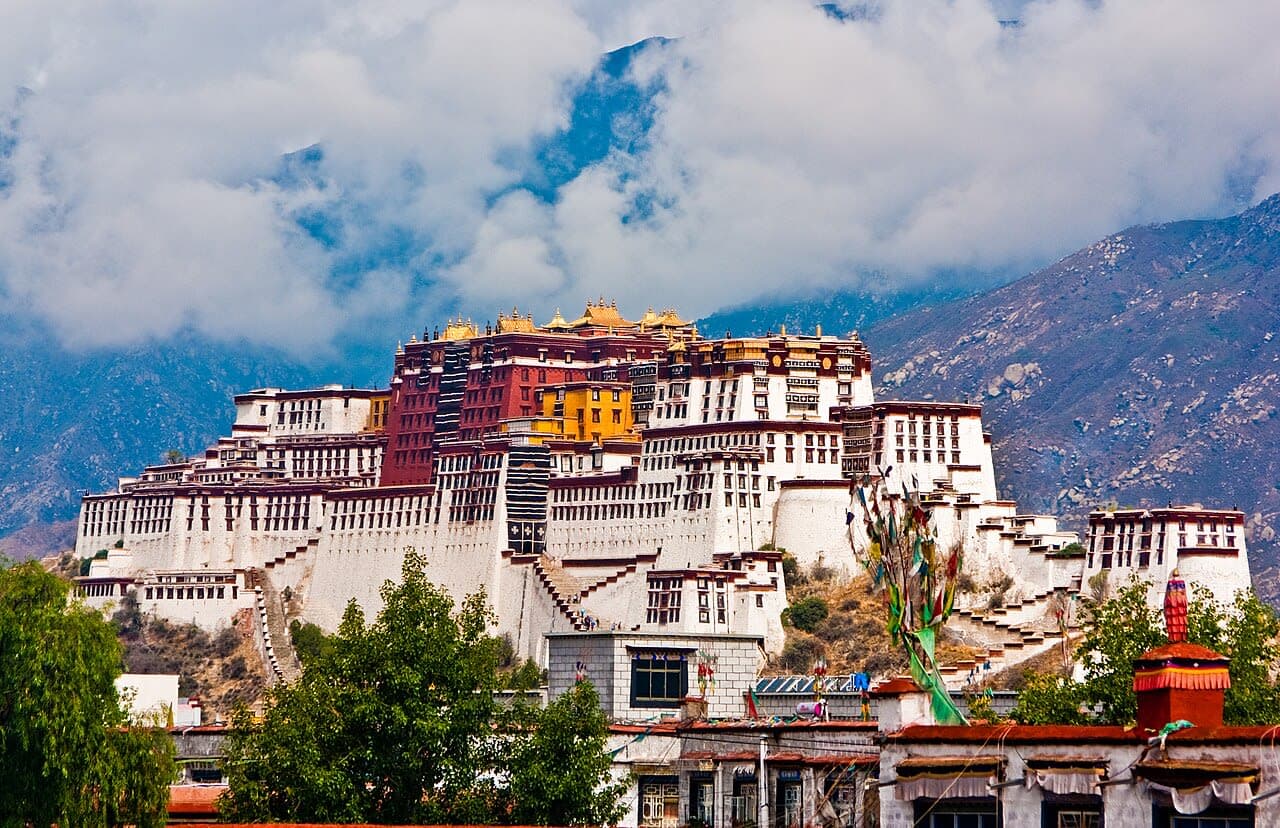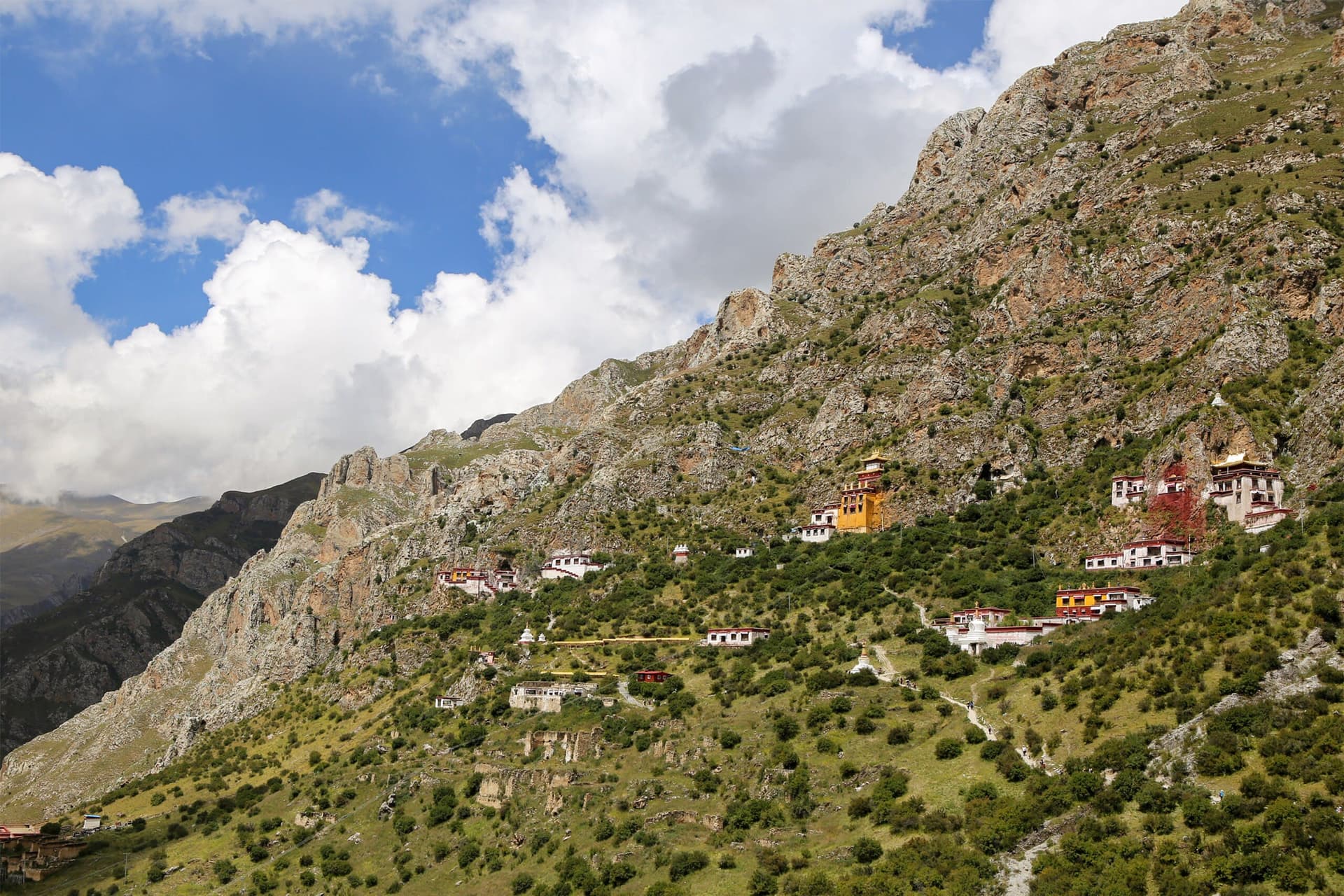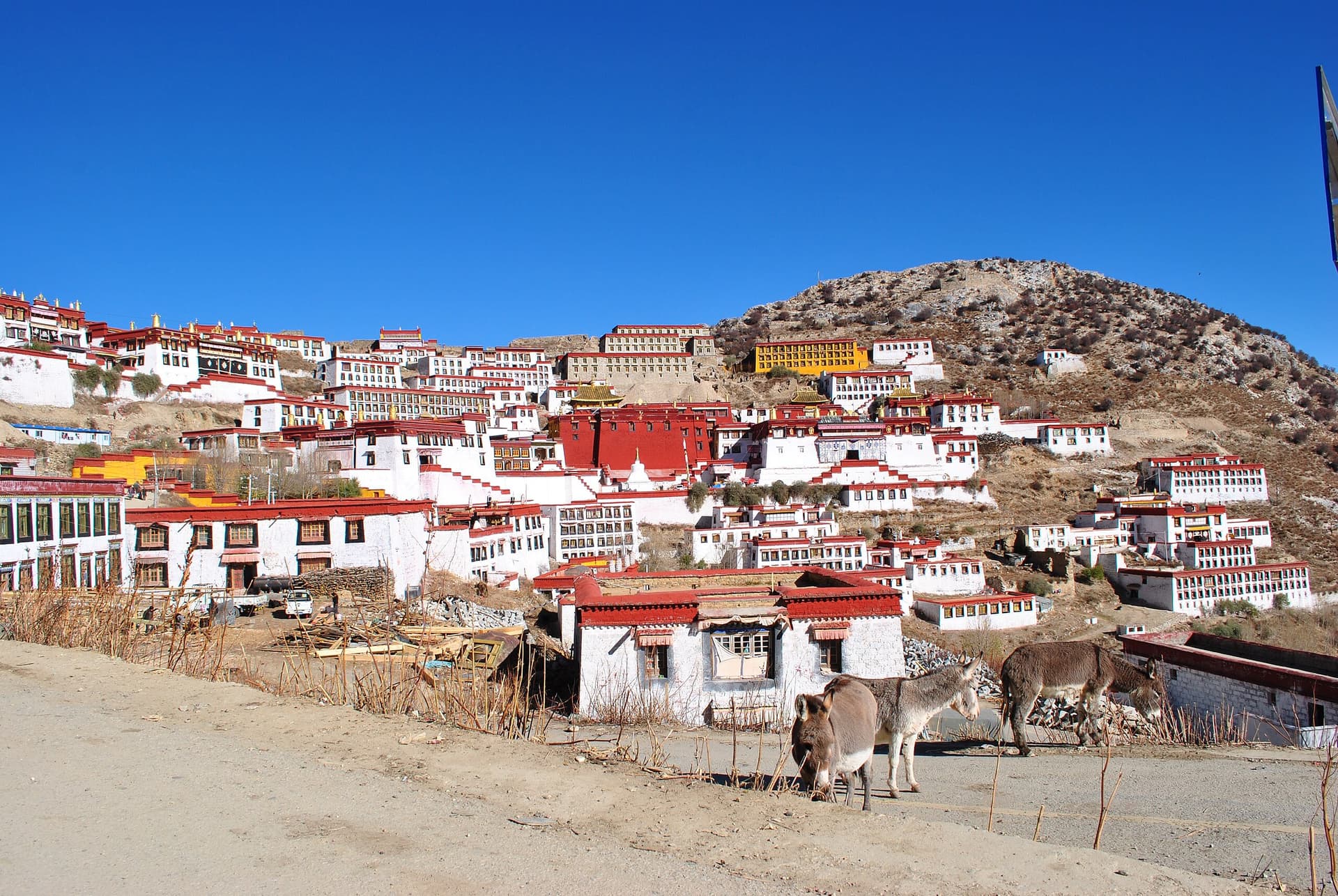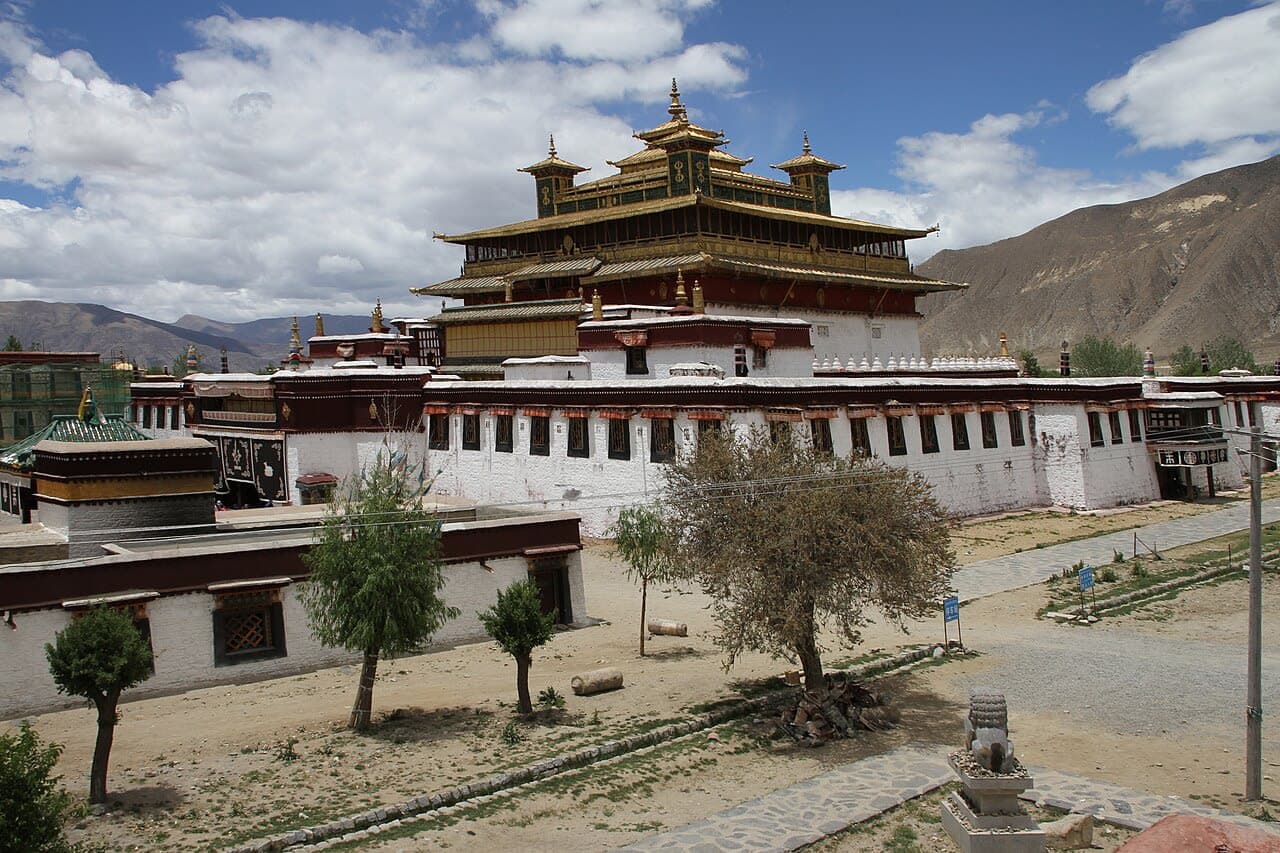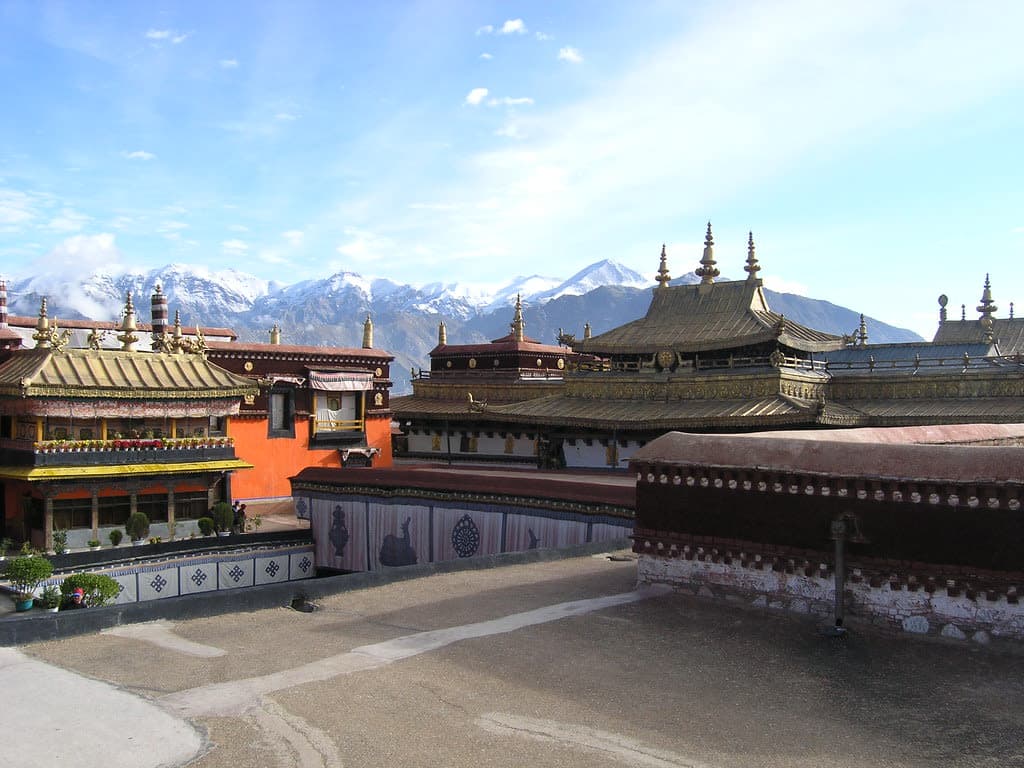
Jokhang Temple
The spiritual heart of Tibet, where pilgrims prostrate on stones worn smooth by centuries of devotion
Chengguan District, Tibet, China
At A Glance
- Coordinates
- 29.6502, 91.1338
- Suggested Duration
- Allow 1.5 to 2.5 hours for the temple interior and Barkhor circuit. Additional time is needed to observe pilgrim activities in Barkhor Square, especially in early morning. Those seeking deeper engagement should plan multiple visits, including early mornings to witness prostrations and evenings when the Barkhor takes on a different quality.
- Access
- Jokhang Temple is located in Barkhor Square, Chengguan District, central Lhasa, Tibet Autonomous Region, China (postal code 850000). The temple sits approximately 1,000 meters east of Potala Palace. Foreign visitors require a Tibet Travel Permit, which must be arranged through an authorized tour operator. Individual travel is not permitted for non-Chinese nationals; all travel must be with a licensed guide through an organized group. This process requires advance planning of at least two to three weeks. Lhasa Gonggar Airport is approximately 60 kilometers from the city. Within Lhasa, the temple is accessible by taxi, walking, or tour vehicle. The high altitude of 3,650 meters (11,975 feet) requires acclimatization. Plan to spend one to two days in Lhasa before rigorous sightseeing to reduce the risk of altitude sickness. Temple hours are approximately 8:30 AM to 6:00 PM in summer and 9:00 AM to 5:30 PM in winter. Morning worship hours (8:00-11:30 AM) restrict tour groups. Entry requires a ticket (approximately 85 Yuan) with advance reservation.
Pilgrim Tips
- Jokhang Temple is located in Barkhor Square, Chengguan District, central Lhasa, Tibet Autonomous Region, China (postal code 850000). The temple sits approximately 1,000 meters east of Potala Palace. Foreign visitors require a Tibet Travel Permit, which must be arranged through an authorized tour operator. Individual travel is not permitted for non-Chinese nationals; all travel must be with a licensed guide through an organized group. This process requires advance planning of at least two to three weeks. Lhasa Gonggar Airport is approximately 60 kilometers from the city. Within Lhasa, the temple is accessible by taxi, walking, or tour vehicle. The high altitude of 3,650 meters (11,975 feet) requires acclimatization. Plan to spend one to two days in Lhasa before rigorous sightseeing to reduce the risk of altitude sickness. Temple hours are approximately 8:30 AM to 6:00 PM in summer and 9:00 AM to 5:30 PM in winter. Morning worship hours (8:00-11:30 AM) restrict tour groups. Entry requires a ticket (approximately 85 Yuan) with advance reservation.
- Dress modestly. Shoulders and knees must be covered. Remove hats and sunglasses before entering the temple as a sign of respect. Clothing should be respectful rather than attention-seeking.
- Photography is strictly prohibited inside the temple halls and chapels. This applies especially to the Jowo Rinpoche. Photography passes costing approximately 90 Yuan may permit some interior photography in designated areas, but these do not extend to the most sacred spaces. Exterior photography in Barkhor Square is generally permitted. Do not photograph pilgrims without explicit consent. Do not photograph security personnel or surveillance equipment.
- This is an active site of worship. Your presence is a privilege extended by those who are here for prayer, not tourism. Do not take photographs inside the temple halls or of the Jowo Rinpoche. This restriction is strictly enforced and deeply felt by practitioners. Do not touch Buddha statues. Do not interrupt pilgrims in their practice or block their movement. Do not engage in loud conversation or behavior that treats the space as a tourist attraction. Be aware of the political sensitivity. Do not discuss the Dalai Lama in positive terms within earshot of officials or guides. Do not photograph security personnel or surveillance equipment. These realities are part of the contemporary experience at Jokhang, uncomfortable as they may be. Morning hours before 11:30 are reserved for Buddhist worship; tour groups over ten people are not permitted during this time. Respect this boundary. The practitioners have been here far longer than any visitor.
Overview
For nearly fourteen hundred years, Jokhang Temple has stood at the center of Tibetan Buddhism, housing what is believed to be the most sacred Buddha image in existence. Pilgrims still traverse Tibet to reach this place, measuring their devotion in full-body prostrations, their foreheads touching ground that millions have touched before. Despite political tensions and modern restrictions, the temple remains what it has always been: the place where Tibet meets the Buddha.
There is a quality of devotion at Jokhang Temple that stops visitors mid-step. In the pre-dawn darkness, pilgrims are already prostrating on the flagstones before the entrance, their bodies rising and falling in rhythms learned from grandparents, their lips moving through mantras that have been whispered here since the seventh century.
The temple's name gives Lhasa its name. Lha means Buddha; Sa means land. This is the Land of the Buddha because this temple is here, because it houses the Jowo Rinpoche, believed to be a life-size portrait of Shakyamuni Buddha created during his own lifetime. For Tibetan Buddhists, this is not metaphor or legend but direct connection, an unbroken thread from the historical Buddha to this moment, to this place, to the worn stones where you now stand.
King Songtsen Gampo built the temple in the seventh century to house sacred images brought by his Buddhist queens from Nepal and China. According to tradition, the site was chosen to pin down the heart of a demoness whose body stretched across Tibet, transforming the wild landscape for the dharma. Temples radiate outward from Jokhang like spokes from a wheel's hub, and Tibetans understand their entire nation as organized around this center.
Today, that center holds complex realities. The prayers continue. The pilgrims still come, some having spent months or years prostrating their way across the plateau. But they practice under observation, their traditions constrained by regulations that have tightened in recent years. What visitors encounter at Jokhang is both an unbroken thread of devotion and a living example of what it means to practice faith under pressure.
Context And Lineage
King Songtsen Gampo built Jokhang in the seventh century to house Buddha images brought by his two Buddhist queens, marking Tibet's official turn toward Buddhism. The site was chosen according to geomantic principles, positioned to pin down the heart of a demoness whose body stretched across the plateau. For nearly fourteen hundred years, the temple has served as Tibetan Buddhism's spiritual center, surviving invasions, the Cultural Revolution, and continuing political pressures.
The story of Jokhang begins with a ring thrown into a lake. King Songtsen Gampo, the thirty-third king of Tibet and the ruler who would bring Buddhism to his nation, had promised his Nepalese queen Bhrikuti that he would build a temple. When he cast his ring to determine the location, it fell into a lake that some sources say was at the heart of a supine demoness lying beneath Tibet. The lake suddenly revealed a nine-story white pagoda rising from its depths. Songtsen Gampo ordered the lake filled, using soil carried by a thousand white goats, and construction took three years to complete.
The demoness narrative is central to understanding the temple's significance. In traditional Tibetan geography, the land before Buddhism was wild, its energy resistant to the dharma. The demoness represented this resistance. Jokhang, built at her heart, transformed that chaotic power into protection for the Buddhist teachings. Twelve other temples were constructed at her joints and extremities, creating a network of sacred architecture that subdued and converted the entire landscape. Tibetan sacred geography radiates from Jokhang as its center.
The Jowo Rinpoche itself has its own origin narrative. According to traditional accounts, the statue was created during the historical Buddha's lifetime by the celestial architect Viswakarma, working from a life portrait. It traveled from India to China before Princess Wencheng brought it to Tibet as part of her dowry when she married Songtsen Gampo around 640 CE. Whether or not one accepts this chronology, the statue has been venerated at Jokhang for over thirteen centuries, accruing layers of gold, jewels, and the intentions of countless pilgrims.
From the seventh century onward, Jokhang has served as the spiritual center toward which Tibetan Buddhism orients itself. All four major schools, Gelug, Kagyu, Sakya, and Nyingma, revere the temple equally. Monks have resided here continuously, though their numbers and freedoms have varied with political circumstances. The Great Prayer Festival, established by Tsongkhapa in 1409, transformed Jokhang into the annual gathering point for tens of thousands of monks, a tradition that continues in modified form.
The lineage is not only monastic but popular. Ordinary Tibetans have made pilgrimage to Jokhang for nearly fourteen centuries, regardless of which school they follow or what political power held sway. This popular devotion proved resilient even during the Cultural Revolution, when much of Tibetan religious infrastructure was destroyed. That the temple survived at all, and that pilgrims returned as soon as they were permitted, speaks to its central position in Tibetan identity.
Today, the lineage continues under constraints. Government regulations require oversight of religious activities. Some traditional practices have been banned. Yet the morning prostrations continue. The Barkhor circuit still flows with pilgrims. The Jowo Rinpoche still receives devotees who have spent years reaching this moment. The thread has not broken.
Songtsen Gampo
historical
The thirty-third king of Tibet (617-649 CE), credited with introducing Buddhism to Tibet and unifying the Tibetan empire. Tibetans venerate him as an emanation of Avalokiteshvara, the bodhisattva of compassion. He commissioned Jokhang Temple to house the sacred Buddha images brought by his queens.
Princess Wencheng
historical
Tang Dynasty princess who married King Songtsen Gampo around 640 CE. She brought the Jowo Rinpoche statue to Tibet as part of her dowry, establishing the temple's most sacred treasure.
Princess Bhrikuti
historical
Nepalese princess, also a queen of Songtsen Gampo, who brought a statue of Akshobhya Buddha to Tibet and inspired the construction of Jokhang. She is credited with bringing Nepalese craftsmen who designed the temple. Tibetans venerate her as an emanation of the goddess Tara.
Jowo Rinpoche
deity
The life-size gilded bronze statue of Shakyamuni Buddha at age twelve, housed in Jokhang's central chapel. Believed by Tibetans to be the most sacred Buddha image in existence, traditionally held to have been created during Buddha's lifetime. Pilgrims travel immense distances to stand before it, even briefly.
Tsongkhapa
historical
The fourteenth-century founder of the Gelug school who established the Great Prayer Festival (Monlam) at Jokhang in 1409. The festival continues to regard Jokhang as its spiritual heart, drawing tens of thousands of monks for prayers, debates, and ceremonies.
Why This Place Is Sacred
Jokhang's sacredness emerges from multiple convergences: its housing of the Jowo Rinpoche, understood as Buddha's authentic likeness; its founding by King Songtsen Gampo at the moment Buddhism took root in Tibet; its position at what tradition calls the heart of a supine demoness whose pinning transformed the land; and the accumulated weight of nearly fourteen centuries of unbroken pilgrimage. Tibetans call it the 'Vajrasana of Tibet,' equating it with Bodh Gaya where Buddha achieved enlightenment.
The Jowo Rinpoche is not merely a statue. In Tibetan understanding, it is the closest thing on earth to the Buddha's physical presence. Traditional accounts hold that the divine architect Viswakarma created it during Shakyamuni's lifetime, working from a life portrait to produce a likeness that could serve as the Buddha's proxy after his passing. The eleventh-century Vase-Shaped Pillar Testament records this tradition. Whether or not one accepts the historical claim, the devotional reality is unmistakable: this gilded bronze image, seated in the central chapel behind heavy curtains, receives the concentrated faith of an entire civilization.
The temple's position in sacred geography amplifies its significance. According to founding narratives, Tibet before Buddhism was troubled by a vast demoness whose body stretched across the plateau. King Songtsen Gampo ordered temples built at specific points corresponding to her joints and vital organs, transforming demonic resistance into Buddhist protection. Jokhang sits at her heart. The image is powerful: the entire Buddhist order of Tibet radiates from this central point of transformation, this place where chaos became dharma.
Physical elements reinforce the spiritual intensity. The temple faces west toward Nepal, honoring Princess Bhrikuti who helped inspire its construction. Original seventh-century wooden beams and Nepalese doorframes survive, their carvings depicting mythical beings that have witnessed fourteen centuries of worship. Thousands of butter lamps flicker in the darkness, their light accumulated offerings from generations of pilgrims. The air is thick with incense and the murmur of mantras that never quite cease.
Visitors consistently describe a density of devotion here unlike anywhere else. The stones before the entrance bear grooves worn by prostrating bodies, physical evidence of faith measured in millions of repetitions. The Barkhor circuit, encircling the temple, moves with a continuous flow of pilgrims spinning prayer wheels, their circumambulations adding to a practice that has not stopped for thirteen centuries. Whether one interprets this as energy, accumulated intention, or simply the psychological weight of witnessing such concentrated practice, the effect is tangible.
King Songtsen Gampo commissioned Jokhang to house sacred Buddha images brought as dowries by his two Buddhist queens: Princess Bhrikuti of Nepal and Princess Wencheng of Tang Dynasty China. The temple served both as sacred repository and as statement of intent, announcing Tibet's turn toward Buddhism. Nepalese and Indian craftsmen from the Kathmandu Valley designed and built the structure, blending Indian vihara patterns with Tang Chinese and Tibetan elements. The architecture itself embodied the cultural transformation it was meant to catalyze.
The Jowo Rinpoche's presence at Jokhang was not immediate. Princess Wencheng brought the statue to Tibet around 640 CE, but it was initially installed at Ramoche Temple. During the reign of Mangsong Mangtsen, fears of Tang Chinese invasion led to the statue being hidden. Only after 710 CE was the Jowo Rinpoche moved to Jokhang's central chapel, where it has remained ever since.
The temple survived centuries of political change, invasions, and internal conflict. It did not survive the Cultural Revolution unscathed. From 1966 to 1976, the temple suffered significant damage, though the extent was less catastrophic than at many Tibetan monasteries. The Jowo Rinpoche itself required restoration afterward. Since then, the temple has been reopened and continues to function, though under increasing government oversight. Traditional practices like public smoke offerings were banned in 2020. A fire in February 2018 damaged a portion of the structure, though limited government transparency makes the extent of damage difficult to assess. Through all this, pilgrims continue to come. The devotion persists.
Traditions And Practice
Traditional practices at Jokhang include prostration before the temple, circumambulation of the Barkhor circuit, butter lamp offerings, khata presentations, and gilding the Jowo Rinpoche. The Great Prayer Festival brings monks for extended sutra recitation and philosophical debate. Some practices, like public smoke offerings, have been restricted in recent years. Visitors may participate in circumambulation and quiet observation but should approach as respectful witnesses to active worship.
Prostration is the foundational practice. Pilgrims perform full-body prostrations on the flagstones before the temple entrance, a practice that has worn grooves into the stone over centuries. The form is precise: hands joined at crown, throat, and heart, then complete extension on the ground with forehead touching stone, before sliding forward and rising to repeat. Some pilgrims measure the entire journey from their home village to Lhasa in prostrations, a practice that can take months or years.
Circumambulation, or kora, follows the Barkhor circuit clockwise around the temple. Pilgrims spin prayer wheels as they walk, reciting mantras, adding their circuits to the millions that have preceded them. The path is lined with vendors and shops, but the practice remains distinctly devotional. Some pilgrims circumambulate while prostrating, measuring the entire circuit in body lengths.
Within the temple, offerings take multiple forms. Butter sustains the ever-burning lamps that illuminate the chapels. White khata scarves are presented at shrines. Devotees apply gold powder to the Jowo Rinpoche, adding to the gilding accumulated over centuries. Each offering represents reciprocity with the sacred, an exchange that maintains the relationship between devotee and Buddha.
Current practices continue the traditional forms within a changed context. The Great Prayer Festival, Monlam, still takes place in the first Tibetan month, drawing monks from across Tibet for sutra recitation, philosophical debate, Geshe examinations, and butter lamp ceremonies. The Saga Dawa Festival in May or June brings countless pilgrims for circumambulation and prostration. The Palden Lhamo Festival features ceremonial processions. Tsongkhapa Butter Lamp Festival illuminates the temple with thousands of lights.
However, some practices have been restricted. Since 2020, traditional smoke offerings of burnt juniper, Sang Sol, have been banned outside the temple, officially for air quality reasons. Government oversight of religious activities has increased, with cameras monitoring the premises and regulations limiting certain gatherings. Monks reside at the temple and ceremonies continue, but under observation that previous generations did not face.
Despite these constraints, the essential practices persist. Pilgrims still prostrate at dawn. The Barkhor still flows with circumambulating devotees. The queue to see the Jowo Rinpoche still forms daily. What visitors witness is tradition adapting to survive, devotion finding ways to continue.
Visitors are not expected to adopt practices that are not their own, but certain ways of engaging are both respectful and potentially meaningful.
Walk the Barkhor circuit clockwise, joining the flow of pilgrims. Spin the prayer wheels if you wish, or simply walk with awareness. Notice the quality of attention around you: these are not tourists but practitioners engaged in devotion. Let their presence inform yours.
Inside the temple, move slowly. The darkness and butter lamp light create an atmosphere that rewards patience. If you reach the Jowo Rinpoche, whether or not you share the belief that this is Buddha's authentic likeness, consider what it means that others do share it, that their grandparents did, that this faith stretches back unbroken for thirteen centuries.
Before leaving, find a quiet moment to offer silent gratitude. To whom or what you direct it is yours to determine. The form matters less than the sincerity.
Tibetan Buddhism
ActiveJokhang Temple is universally revered as the holiest temple in Tibetan Buddhism, sacred to all schools: Gelug, Kagyu, Sakya, and Nyingma. The temple houses the Jowo Rinpoche, considered the most sacred Buddha image in existence, believed to have been created during the Buddha's lifetime. Tibetans call Jokhang the 'Vajrasana of Tibet,' equating it with Bodh Gaya where Buddha achieved enlightenment. The name Lhasa itself derives from the temple: Lha means Buddha, Sa means land. The annual Great Prayer Festival, founded at Jokhang in 1409 by Tsongkhapa, continues to regard the temple as its spiritual heart.
Traditional practices include full-body prostrations before the temple entrance, performed on stones worn smooth by centuries of repetition. Circumambulation (kora) around the temple follows the Barkhor circuit, with pilgrims spinning prayer wheels and reciting mantras. Butter lamp offerings sustain the ever-burning lamps that illuminate the chapels. White khata scarves are presented at shrines. Devotees apply gold powder to the Jowo Rinpoche, adding to gilding accumulated over centuries. The Monlam prayer festival brings tens of thousands of monks for sutra recitation, philosophical debates, Geshe examinations, and butter lamp ceremonies.
Experience And Perspectives
Visitors at Jokhang encounter devotion at its most concentrated. The sensory environment overwhelms: butter lamp smoke, incense, chanting, the sound of prostrating bodies. Pilgrims who have traveled for months queue for moments before the Jowo Rinpoche. The contrast between ancient practice and modern surveillance creates complex emotional responses. Those who stay with the experience report a sense of witnessing something that has outlasted empires.
The experience begins before you enter the temple. In Barkhor Square, pilgrims prostrate on flagstones polished smooth by centuries of repetition. Their movements follow a precise form: hands together at crown, throat, and heart, then full extension on the ground, forehead touching stone, sliding forward before rising to repeat. Some have been doing this for hours. Some have been doing it for months, measuring the entire journey from their village to Lhasa in body lengths.
The air carries juniper smoke where tradition still permits it, mixed with incense drifting from the temple entrance. Prayer wheels spin as pilgrims circumambulate, their hands never leaving the worn bronze cylinders as they walk the Barkhor circuit. Mantras murmur beneath the other sounds, a constant undertone that visitors notice only when they stop to listen.
Inside, the temple becomes a labyrinth. Corridors turn between chapels lit only by butter lamps, thousands of flames flickering in the darkness. The smell is distinctive: burning butter, old wood, the press of many bodies. Devotees queue through narrow passages to reach specific shrines, pressing their foreheads to door frames, touching sacred objects with reverence that makes their movements slow and deliberate.
The central encounter is with the Jowo Rinpoche itself. Pilgrims who have waited years for this moment queue for hours more. When they finally reach the inner sanctum, they have perhaps a few seconds before the image. Some weep. Some offer white khata scarves. Some apply gold powder to the statue's surface, adding to the gilding that has accumulated since the seventh century. Then they are moved along, and the next pilgrim takes their place.
What strikes many visitors is the contrast. Ancient devotion continues under modern surveillance cameras. Prayers rise in a space where political speech is monitored. The complex reality of contemporary Tibet becomes viscerally present here, where faith persists despite restrictions, where tradition adapts to survive. This is not comfortable. It is not meant to be. What visitors witness at Jokhang is what it looks like when something essential insists on continuing.
Jokhang rewards those who approach it as pilgrims rather than tourists. This does not require adopting beliefs that are not yours. It requires slowness, attention, and respect for the fact that you are entering a space that is the holiest ground on earth for those who practice around you.
Consider arriving early, before the tour groups that appear after morning worship hours end. Watch the pilgrims before entering the temple itself. Their practice teaches what cannot be explained: the quality of attention that Jokhang has cultivated for nearly fourteen hundred years.
Inside, move slowly. The corridors are not a museum exhibit but a living sacred space. Chapels hold images that devotees have traveled immense distances to see. Your presence is permitted, not owed. Let the butter lamp darkness work on you. Let the scale of accumulated devotion become real. You are walking through the concentrated faith of a civilization.
Before the Jowo Rinpoche, if you reach it, notice what arises in you. You need not believe the statue was created during Buddha's lifetime. You only need to understand that those around you believe this, that their grandparents believed it, that the thread of devotion stretches back to the seventh century and has not broken. What does it mean to witness something like that? What does it ask of you?
Jokhang Temple invites multiple interpretations, each illuminating different dimensions of its significance. Scholars, traditional practitioners, and seekers from various backgrounds each find meaning here. The temple is large enough to hold these perspectives without forcing resolution.
Art historians and religious scholars recognize Jokhang as one of the most important Buddhist pilgrimage sites in Asia and the spiritual center of Tibetan Buddhism for nearly fourteen hundred years. The temple preserves rare seventh- and eighth-century Nepalese woodwork, including original doorframes, columns, and finials created by Kathmandu Valley craftsmen. The architecture represents a distinctive fusion of Indian vihara design, Tang Dynasty Chinese elements, and Tibetan innovation.
The Jowo Rinpoche's actual origins remain a matter of scholarly investigation. Traditional accounts placing its creation during the Buddha's lifetime lack corroborating evidence, though the statue's antiquity is not in doubt. What is clear is that this image has functioned as the most sacred object in Tibetan Buddhism for over thirteen centuries, with the temple's significance deriving substantially from housing it.
UNESCO's inscription of Jokhang as part of the Historic Ensemble of the Potala Palace recognizes it as embodying 'the religious and symbolic functions of the Tibetan theocratic government.' This framing captures the integration of spiritual and political dimensions that characterizes Tibetan Buddhist civilization.
For Tibetan Buddhists, Jokhang Temple is the holiest place on earth, the center from which their civilization radiates. The Jowo Rinpoche is not merely a representation of Buddha but is understood as his living presence, an authentic portrait created during his lifetime that serves as his proxy. Pilgrimage to Jokhang is considered the culmination of a devout life. Some pilgrims spend months or years prostrating their way across the plateau to reach this site, measuring their devotion in body lengths.
The temple's founding narrative situates it as the pivot point in Tibet's conversion to Buddhism. Built at the heart of the supine demoness, it transformed the landscape from resistance to protection. The name Lhasa, Land of the Buddha, derives from the temple's presence. In this understanding, all of Tibet is organized around Jokhang as its spiritual and symbolic center.
This perspective does not conflict with historical analysis but adds dimensions that scholarship cannot measure. For those who hold this view, Jokhang's power is not historical artifact but present reality, renewed each moment by the faith of those who practice there.
Some seekers are drawn to Jokhang's position in sacred geography. The temple sits at what tradition identifies as the heart of a supine demoness, part of a geomantic network of temples placed across Tibet to transform chaotic forces into Buddhist protection. The concentration of devotion for nearly fourteen centuries is understood by some to have created a powerful energetic field, a thin place where the boundary between ordinary consciousness and something larger becomes permeable.
The notion of Jokhang as a portal or power point resonates with those who approach sacred sites through the lens of energy work or earth-based spirituality. These interpretations typically lack traditional textual basis but often emerge from genuine experiences visitors report at the site.
Genuine mysteries remain at Jokhang. What precisely was the origin of the Jowo Rinpoche before it arrived in China? What pre-Buddhist significance did the lake site hold for the people who lived here before the seventh century? How extensive was the damage from the 2018 fire, given the limited transparency surrounding the incident? What original seventh-century elements survive beneath later restorations and adornments?
Perhaps most significant: how has the temple survived when so many Tibetan monasteries were destroyed during the Cultural Revolution? Whether through protective intervention, pragmatic calculation by authorities, or some combination, Jokhang's survival through the twentieth century's upheavals remains incompletely explained.
These uncertainties are worth preserving. They keep the site alive to questioning rather than pinned down by false certainty.
Visit Planning
Visiting Jokhang requires advance planning. Foreign visitors must obtain a Tibet Travel Permit and travel with a licensed guide. Entry is by ticket with advance reservation required. Morning hours are reserved for worship. The high altitude of Lhasa (3,650 meters) requires acclimatization. Optimal weather is April through June and September through October, with major festivals offering deeper immersion alongside larger crowds.
Jokhang Temple is located in Barkhor Square, Chengguan District, central Lhasa, Tibet Autonomous Region, China (postal code 850000). The temple sits approximately 1,000 meters east of Potala Palace.
Foreign visitors require a Tibet Travel Permit, which must be arranged through an authorized tour operator. Individual travel is not permitted for non-Chinese nationals; all travel must be with a licensed guide through an organized group. This process requires advance planning of at least two to three weeks.
Lhasa Gonggar Airport is approximately 60 kilometers from the city. Within Lhasa, the temple is accessible by taxi, walking, or tour vehicle.
The high altitude of 3,650 meters (11,975 feet) requires acclimatization. Plan to spend one to two days in Lhasa before rigorous sightseeing to reduce the risk of altitude sickness.
Temple hours are approximately 8:30 AM to 6:00 PM in summer and 9:00 AM to 5:30 PM in winter. Morning worship hours (8:00-11:30 AM) restrict tour groups. Entry requires a ticket (approximately 85 Yuan) with advance reservation.
Accommodation in Lhasa ranges from simple guesthouses to international hotels. The Barkhor area offers lodging within walking distance of Jokhang. Given altitude considerations, choosing comfortable accommodation that allows rest and acclimatization is advisable. All arrangements for foreign visitors must be made through authorized tour operators who will typically arrange accommodation as part of the required tour package.
Jokhang requires exceptional respect as the holiest site in Tibetan Buddhism. Photography is prohibited inside. Movement is clockwise only. Modest dress is expected. Morning hours are reserved for worship with restrictions on tour groups. The space is under active surveillance, adding political sensitivity to the religious context. Approach as a guest in someone else's sacred space.
The most fundamental principle is that you are entering the holiest ground in Tibetan Buddhism. Those around you are not performers or historical reenactors; they are practitioners whose devotion connects them to generations before them and to what they hold most sacred. Your behavior directly affects their experience.
Movement within and around the temple must be clockwise. This is not preference but religious requirement. Counterclockwise movement is associated with Bon practice and is considered disrespectful in Buddhist context. Follow the flow. Do not cut across or reverse direction.
Silence or quiet speech is expected. The atmosphere is contemplative, punctuated by chanting and the murmur of mantras, not by tourist conversation. Maintain a quality of attention appropriate to the space. No loud sounds, no performative behavior, no treating the temple as a backdrop for social media.
Physical contact with sacred objects is prohibited. Do not touch Buddha statues. Do not lean against temple structures. The Jowo Rinpoche, in particular, must not be touched by visitors. These are not museum conservation rules but religious boundaries.
The political dimension adds complexity. Surveillance cameras monitor the premises. Government regulations constrain religious practice. The Dalai Lama cannot be mentioned positively without risk. These are uncomfortable realities that visitors must navigate with discretion. Taking photographs of security personnel or surveillance equipment is inadvisable.
Dress modestly. Shoulders and knees must be covered. Remove hats and sunglasses before entering the temple as a sign of respect. Clothing should be respectful rather than attention-seeking.
Photography is strictly prohibited inside the temple halls and chapels. This applies especially to the Jowo Rinpoche. Photography passes costing approximately 90 Yuan may permit some interior photography in designated areas, but these do not extend to the most sacred spaces. Exterior photography in Barkhor Square is generally permitted. Do not photograph pilgrims without explicit consent. Do not photograph security personnel or surveillance equipment.
Traditional offerings include butter for lamps and white khata scarves. These can be purchased in the Barkhor area. Pilgrims sometimes gild the Buddha statue with gold powder. Visitors wishing to make offerings should do so with sincere respect, not as tourist activity.
Morning worship hours (8:00-11:30 AM) are reserved for Buddhist practice. Tour groups of more than ten people are not permitted during this time. The temple occasionally closes during politically sensitive dates. Foreign visitors require a Tibet Travel Permit and must travel with a licensed guide; individual travel is not permitted for non-Chinese nationals. Photography inside is prohibited. Large bags are not permitted and must be stored. Female visitors should not touch monks.
Sacred Cluster
Nearby sacred places create the location cluster described in the growth plan. This block is intentionally crawlable and links into the wider regional graph.