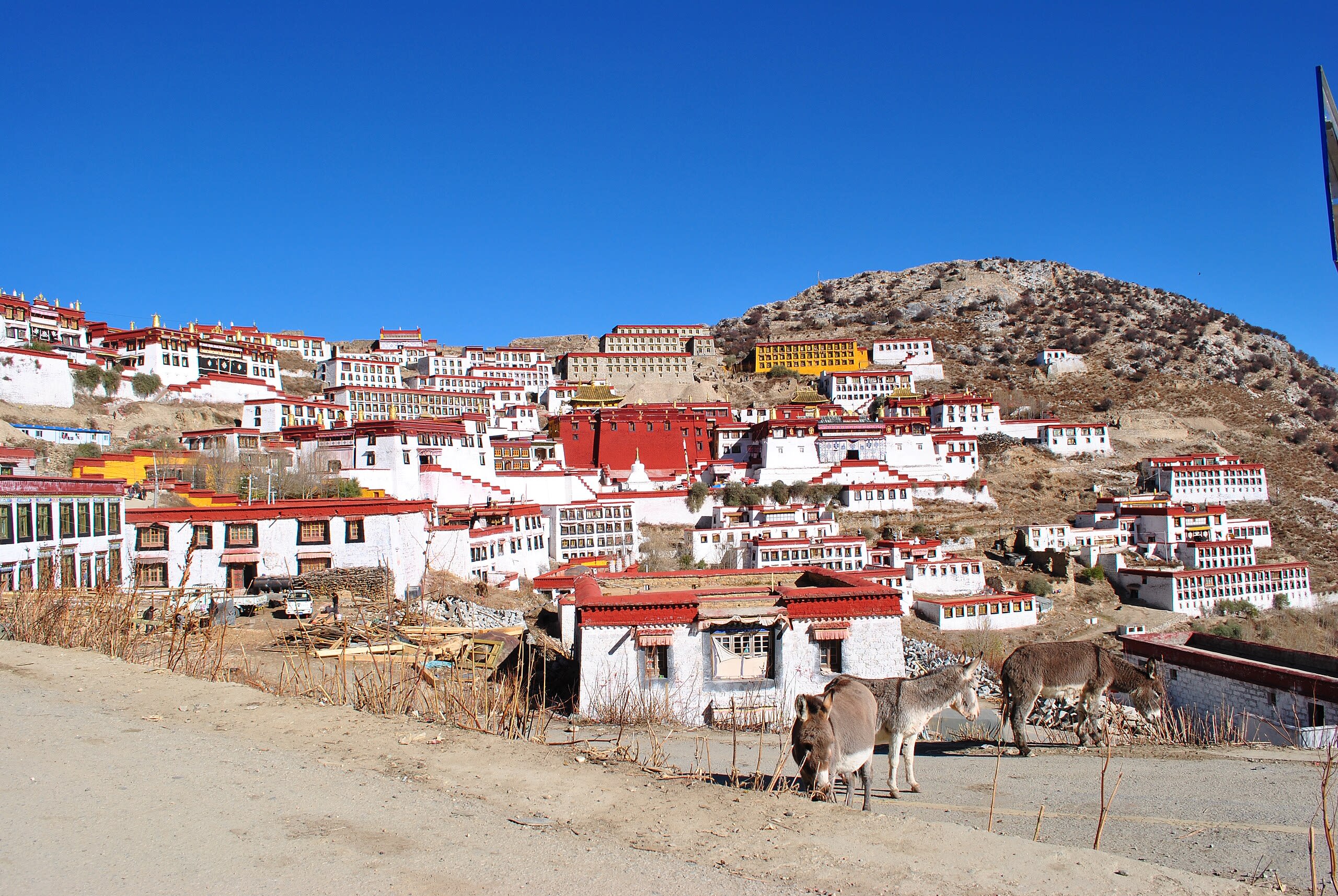
"The birthplace of the Gelug school, destroyed and rebuilt on a mountaintop above Lhasa"
Ganden Monastery
Lhasa, Tibet, China
Ganden Monastery, founded by Tsongkhapa in 1409 on a mountain ridge east of Lhasa, is the mother monastery of the Gelug school — the largest institution in Tibetan Buddhism. Almost completely destroyed during the Cultural Revolution, it has been rebuilt stone by stone since the 1980s. Several hundred monks have returned. The monastery's name means 'Joyful,' a reference to the celestial realm of the future Buddha, and its history of destruction and resurrection makes it a living teaching on impermanence.
Weather & Best Time
Plan Your Visit
Save this site and start planning your journey.
Quick Facts
Location
Lhasa, Tibet, China
Tradition
Site Type
Year Built
1409, 1959, 1966
Coordinates
29.7587, 91.4762
Last Updated
Mar 29, 2026
Learn More
Tsongkhapa founded Ganden in 1409 as the institutional base for his reform of Tibetan Buddhism, establishing the Gelug school that would become the dominant religious and political force in Tibet.
Origin Story
Tsongkhapa chose the site after receiving a vision indicating this mountain. In 1409, at age fifty-two, he led a group of disciples to the ridge and established the monastery. He had already transformed the religious landscape of Tibet through the Great Prayer Festival in Lhasa and through his writings on the gradual path. At Ganden, he created the institutional model that the Gelug school would replicate across Tibet: rigorous monastic discipline, systematic philosophical education through debate, and an emphasis on ethical conduct as the foundation of spiritual progress.
He composed many of his most important works at Ganden, including teachings on the middle way philosophy and tantric practice. He trained the disciples who would establish Drepung and Sera monasteries, completing the trio of great Gelug institutions around Lhasa. When Tsongkhapa died at Ganden in 1419, his body was said to have displayed signs of high realization — shrinking, emitting light, and remaining in a meditative posture. His stupa, enshrined in the Serdung Lhakhang, became the Gelug school's most sacred relic.
Key Figures
Je Tsongkhapa (1357-1419)
Founder of the Gelug school and of Ganden Monastery. One of the most influential figures in Tibetan Buddhist history, he systematized the gradual path to enlightenment, revitalized monastic discipline, and established the institutional framework that shaped Tibetan Buddhism for six centuries. Considered an emanation of the bodhisattva Manjushri.
Ganden Tripa (Throne Holder of Ganden)
The spiritual head of the Gelug school, a position that rotates among senior scholars rather than passing through reincarnation. The Ganden Tripa's role is formally more important within the school's internal hierarchy than the Dalai Lama's, though the Dalai Lama holds greater public and political visibility.
Spiritual Lineage
Ganden is the mother monastery of the Gelug school, the youngest of the four major schools of Tibetan Buddhism but now the most widespread. The Gelug lineage traces through Tsongkhapa to Atisha's Kadampa tradition, which itself drew on the Indian Buddhist philosophical schools. From Ganden, Tsongkhapa's disciples established Drepung (1416) and Sera (1419), creating the institutional infrastructure that would, through the institution of the Dalai Lama, come to dominate Tibetan religious and political life from the seventeenth century onward.
Know a Sacred Site We Should Include?
Help us expand our collection of sacred sites. Share your knowledge and contribute to preserving the world's spiritual heritage.