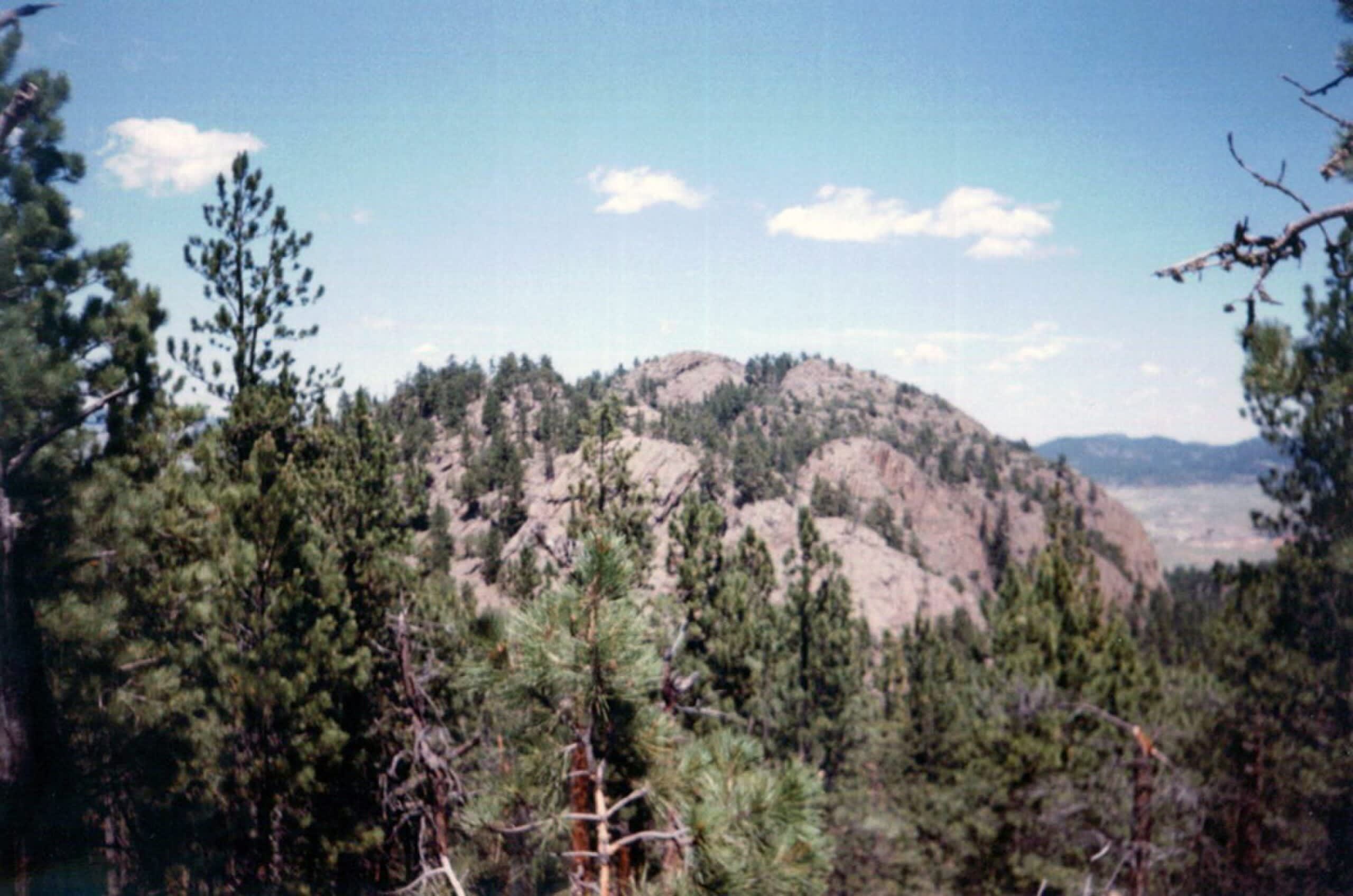
Inyan Kara Mountain, Wyoming
Where the horns of the sacred Buffalo rise from the plains
Sundance, Wyoming, United States
At A Glance
- Coordinates
- 44.2125, -104.3440
- Suggested Duration
- Half day, allowing time for the approach, summit contemplation, and unhurried return
Pilgrim Tips
- Appropriate hiking attire for rough, unmarked terrain. No specific ceremonial dress requirements for general visitors.
- Exercise discretion. Do not photograph any cultural or ceremonial items, including prayer ties or offerings. The Custer inscription may be photographed but should be treated with awareness of what it represents. General landscape photography is appropriate.
- Visitors should not disturb any cultural artifacts, prayer ties, or offerings they may encounter. The Custer inscription on the summit, while marking a history of dispossession, is protected and should not be damaged. Rattlesnakes are present, particularly in warmer months, and appropriate caution should be maintained throughout the hike. The terrain is unmarked and requires navigation skills.
Overview
Rising from the Wyoming plains at the western edge of the Black Hills, Inyan Kara Mountain holds profound significance for the Lakota people as part of an interconnected sacred geography. The mountain is particularly revered for its connection to childbirth and forms one horn of a great Buffalo's Head that includes Devils Tower and Bear Butte. For over 10,000 years, indigenous peoples have gathered quartzite here, their footsteps tracing paths across contested sacred ground.
There is something that draws people across great distances to stand on contested ground. Inyan Kara Mountain rises in isolation from the Wyoming plains, visible for miles in every direction, its summit carrying the weight of 10,000 years of indigenous presence and a more recent history that marks the fracturing of treaties and the dispossession of sacred land.
For the Lakota, this peak is not an isolated landmark but a node in a living ceremonial landscape. When spring arrives and the sun traces its path along the ecliptic, Inyan Kara becomes one horn of a great Buffalo's Head, spiritually linked with Devils Tower to the north and Bear Butte to the east. The formation comes alive, remaining so until the Sun Dance ceremonies of midsummer.
The mountain holds particular significance for mothers in childbirth, though the specific ceremonies associated with this connection remain within traditional knowledge. Its Lakota name, Inyan Kaga, translates as 'Rock Gatherer' or 'the peak which makes stone,' referring to the quartzite that indigenous peoples gathered here for millennia, knapping it into the projectile points and tools essential to life on the plains.
Today Inyan Kara stands on federal land surrounded by private property, requiring permissions to access. It remains one of the least-visited sites in the Black Hills, its isolation preserving something of the quality that drew seekers here long before Custer's expedition carved an inscription into its summit rocks. The Lakota have refused over $105 million in compensation for the Black Hills, continuing to demand the return of their sacred territory. To visit Inyan Kara is to walk on ground where that refusal takes physical form.
Context And Lineage
Inyan Kara's history spans from at least 10,000 years of indigenous presence through the treaty violations of the nineteenth century to ongoing Lakota demands for the return of the Black Hills. The mountain has been sacred ground, contested territory, and site of some of the most consequential events in the history of indigenous dispossession.
The Cheyenne, who inhabited the Black Hills from 1670 to 1876, associated Inyan Kara with the Great Race, a creation narrative that established the cosmic order between humans and animals. According to traditional accounts, buffalo and humans raced around the Black Hills to determine who would eat whom. The outcome established that humans would eat buffalo rather than the reverse, resolving the tension between revering animals as divine and needing them as food. This race, in some versions, took place at Inyan Kara itself.
The Lakota, who came to dominate the Black Hills region, incorporated the mountain into their own sacred geography. A 1940s Lakota map, studied by scholars, shows this geography adjusted to conform with views of the cosmos found throughout Native America, with a sacred center and peaks at each of the four semi-cardinal directions. Inyan Kara takes its place within this network as a site particularly associated with childbirth and as one horn of the Buffalo's Head formation that becomes spiritually alive each spring.
The indigenous connection to Inyan Kara extends back at least 10,000 years, evidenced by archaeological sites at the mountain's base where quartzite was gathered and knapped into tools. The Cheyenne and Suhtai peoples inhabited the Black Hills from approximately 1670 to 1876, followed by the Lakota, who continue to consider the region their sacred territory. The 1868 Treaty of Fort Laramie formally recognized the Black Hills as part of the Great Sioux Reservation, but violations following the discovery of gold led to military conflict and dispossession. The Lakota's refusal to accept financial compensation for lands taken represents a continuity of claim spanning over 150 years since the treaty's violation.
Lt. G.K. Warren
Led an 1857 expedition that documented the mountain but heeded Lakota warnings not to enter the Black Hills, respecting its sacred status.
Lt. Col. George Armstrong Custer
Climbed to the summit during the 1874 Black Hills Expedition and left the inscription 'G CUSTER 74.' This expedition, searching for gold, precipitated the violation of the 1868 Treaty of Fort Laramie.
Dr. Valentine McGillicuddy
Recorded observations during the 1875 geological survey by Newton and Jenney, documenting the mountain's features and phenomena.
Why This Place Is Sacred
Inyan Kara possesses the qualities that mark thin places across cultures: dramatic isolation rising from surrounding plains, inexplicable phenomena including magnetic anomalies and historical rumbling sounds, and millennia of continuous indigenous presence creating what some describe as accumulated spiritual weight.
The geography itself suggests liminality. Inyan Kara rises abruptly from the plains, a laccolith formed when volcanic magma pushed upward through sedimentary rock but cooled before breaking the surface. The mountain is visible from tremendous distances, a natural landmark that has oriented travelers for thousands of years.
Early accounts document phenomena that defy easy explanation. Native Americans and early explorers reported mysterious rumbling sounds on quiet days, a phenomenon that ceased after 1833. Conventional explanation attributes these to gas escaping from burning coal seams, though the timing of their cessation remains unexplained. More persistently, the mountain exhibits what early surveyors called 'great local magnetic disturbances,' rocks capable of deflecting compass needles entirely. Whether the Lakota chose this site because of such phenomena or attributed meaning to what they found here, the mountain has long been recognized as a place where ordinary rules bend.
The thinness of Inyan Kara is inseparable from its position within a larger sacred geography. In Lakota cosmology, the Black Hills represent a sacred center, with peaks at each of the semi-cardinal directions. Inyan Kara does not stand alone; it participates in a network of sites that together form a living ceremonial landscape, each location deriving meaning from its relationship to the others.
For the Lakota and earlier Cheyenne peoples, Inyan Kara served multiple interconnected purposes. The mountain was a quartzite source essential for tool-making, a ceremonial site connected to childbirth, and a node in the annual ceremonial journey through the Black Hills synchronized with solar movements. In spring, it formed part of the Buffalo's Head formation that became spiritually alive until the midsummer Sun Dance. The Cheyenne associated the mountain with the Great Race creation narrative that established the cosmic order between humans and buffalo.
The mountain's ceremonial role was disrupted by the violation of the 1868 Treaty of Fort Laramie and subsequent dispossession of the Black Hills. The Custer expedition of 1874 left a physical mark still visible on the summit, and the geological surveys that followed opened the region to settlement. Today the site is listed on the National Register of Historic Places, recognized for its significance both as a Native American sacred site and as a location in the history of westward expansion. The Lakota continue to consider the Black Hills, including Inyan Kara, their rightful territory, refusing financial settlement and maintaining the site's place within their sacred geography.
Traditions And Practice
Traditional practices at Inyan Kara include ceremonial observances linked to the annual solar cycle, rituals associated with childbirth, and the millennia-long gathering of quartzite for tool-making. Contemporary ceremonial use is not well documented in publicly available sources, though the site remains significant within Lakota sacred geography.
The ceremonial calendar of the Lakota involved a journey through the Black Hills synchronized with the sun's movement along the ecliptic. Devoted band members traveled from site to site, holding ceremonies at locations correlated with constellations before arriving at Devils Tower for the midsummer Sun Dance. Inyan Kara held its place within this cycle, becoming one horn of the Buffalo's Head formation in mid-May, spiritually linked with Devils Tower and Bear Butte until after the Sun Dance.
The mountain carried particular significance for mothers in childbirth, though the specific rituals associated with this connection are not described in publicly available sources. This absence of detail itself warrants respect; some knowledge is held rather than published.
The gathering of quartzite from the mountain's base represented a practice spanning over 10,000 years. This was not merely practical but carried spiritual dimensions, the material of the mountain itself entering into the tools that sustained life on the plains.
Contemporary ceremonial use of Inyan Kara by Lakota practitioners is not well documented in available sources. The site remains part of the broader Black Hills sacred geography that the Lakota continue to claim as their rightful territory. Access restrictions and the mountain's location within a contested landscape shape how traditional practices can be maintained.
The path to Inyan Kara does not invite casual visitation. Those who obtain permission and make the trek might consider sitting in extended silence on the summit, taking time to recognize where they are and whose land this remains in dispute. Walking slowly rather than racing to the peak honors a different relationship with the landscape. Some visitors carry an intention or question, allowing the isolation and the accumulated presence of the place to work on what they've brought.
There are no prescribed rituals for outsiders here. What Inyan Kara asks is awareness: of the treaty violated, of the compensation refused, of the sacred geography that persists despite dispossession. To visit with this awareness is itself a practice.
Lakota Sioux
ActiveInyan Kara forms a critical node in the sacred geography of the Black Hills, known to the Lakota as He Sapa. The mountain is particularly sacred for mothers in childbirth and participates in the annual ceremonial calendar through its role in the Buffalo's Head formation. Each spring, in mid-May, Inyan Kara becomes one horn of a great Buffalo's Head, spiritually linked with Devils Tower as the other horn and Bear Butte as the nose. This formation becomes spiritually alive and remains so until after the midsummer Sun Dance ceremonies.
Traditional practices include participation in the annual ceremonial journey through the Black Hills synchronized with solar movements, ceremonies associated with childbirth, and the gathering of quartzite for tool-making spanning over 10,000 years. The mountain connects to vision quest traditions in the broader Black Hills region, though Bear Butte serves as the primary vision quest site.
Cheyenne
HistoricalThe Cheyenne and Suhtai peoples, who inhabited the Black Hills from approximately 1670 to 1876, associated Inyan Kara with the Great Race creation narrative. This foundational story tells how buffalo and humans raced around the Black Hills to determine the cosmic order, specifically whether humans would eat buffalo or the reverse. The race's outcome established the relationship that allowed humans to hunt buffalo while still honoring their divine nature.
The Great Race narrative and associated ceremonial acknowledgment of the mountain's role in that cosmic event formed central elements of Cheyenne practice at the site. The mountain was part of the broader Black Hills sacred territory.
Experience And Perspectives
Reaching Inyan Kara requires intention and effort. There are no marked trails, no facilities, and no crowds. Visitors report a sense of profound isolation, expansive views across the plains and Black Hills, and the weight of walking ground where indigenous presence spans millennia and where contested history is inscribed in the very rock.
The approach to Inyan Kara is an exercise in navigation and permission-seeking. The mountain sits within Black Hills National Forest boundaries but is surrounded by private property, requiring contact with both the Forest Service and local landowners before a visit. This barrier is itself instructive, separating the casually curious from those willing to plan and request access.
Once underway, visitors traverse approximately five and a half miles round trip without benefit of marked trails. The terrain varies, rising through grassland toward the horseshoe-shaped ridgelines that frame the central summit peak. Rattlesnakes inhabit this landscape, particularly during warmer months, adding an element of alertness to the ascent.
Those who reach the summit describe panoramic views extending across the plains to the Black Hills proper. The isolation is striking; Inyan Kara receives a fraction of the visitors drawn to nearby Devils Tower, and evidence of this solitude appears in the perfect condition of 1912 survey markers found undisturbed on the summit. Here too is the protected Custer inscription, 'G CUSTER 74,' a marker of the expedition that precipitated the violation of treaty and the dispossession of this land.
Visitors seeking more than physical exercise often report sitting in extended silence on the summit, aware of looking out from ground that has held ceremonial significance for 10,000 years. Whether this awareness is purely cognitive or involves something more felt than thought varies by account. What remains consistent is the recognition that Inyan Kara is not simply landscape to be consumed but territory that carries unresolved claims.
The seeker who comes to Inyan Kara enters contested sacred space. The mountain's significance to the Lakota persists, not as historical artifact but as living claim. The annual ceremonial journey may no longer follow its traditional pattern freely, but the sacred geography has not been erased. Visitors arrive not as neutral observers but as participants in a larger story still being written, walking ground that the Lakota have refused to sell and continue to seek the return of. To approach with awareness of this context is to move from tourism toward something that might more honestly be called witness.
Inyan Kara sits at the intersection of multiple ways of knowing: indigenous sacred geography, archaeological science, the history of westward expansion, and ongoing political contestation. How one understands this mountain depends on the lens through which it is viewed, and no single perspective captures the whole.
Academic study recognizes Inyan Kara as part of a sophisticated Lakota sacred geography that integrates astronomical observation, seasonal ceremonies, and spiritual practice. Archaeological evidence confirms at least 10,000 years of indigenous presence at the site, with quartzite-knapping areas at the mountain's base documenting continuous use across millennia. The mountain's role in the Buffalo's Head formation and annual ceremonial journey demonstrates complex spatial-temporal ritual knowledge that structured Lakota life across the Black Hills region. Geologically, Inyan Kara is classified as a laccolith or pluton, an igneous intrusion formed when volcanic magma was forced upward into surrounding sedimentary rock but cooled before breaking the surface, similar in formation to Devils Tower.
For the Lakota, Inyan Kara cannot be separated from the sacred landscape of He Sapa, the Black Hills. The mountain holds specific significance for childbirth and forms part of a living ceremonial geography that activates seasonally as the Buffalo's Head formation connects Inyan Kara, Devils Tower, and Bear Butte. The Lakota have refused over $105 million in financial settlement for the Black Hills, a refusal spanning more than four decades, demanding instead the return of their sacred territory. This is not historical sentiment but present claim: the Black Hills, including Inyan Kara, remain Lakota land in Lakota understanding, held illegally since the violation of the 1868 Treaty of Fort Laramie.
The mountain's documented magnetic anomalies and historical accounts of mysterious rumbling sounds have drawn interest from those investigating earth energies and geological phenomena at sacred sites. Some visitors frame their experience at Inyan Kara within contemporary spiritual frameworks emphasizing energetic qualities of the land. These interpretations exist alongside, rather than within, traditional Lakota understanding of the site.
Several aspects of Inyan Kara resist easy explanation. The source of the rumbling sounds reported before 1833, conventionally attributed to gas escaping from burning coal seams, and the reason for their cessation remain unexplained. The specific nature of childbirth ceremonies associated with the mountain exists within traditional knowledge but is not publicly documented. The relationship between the mountain's magnetic anomalies and its selection as a sacred site, whether the Lakota were drawn here because of such phenomena or attributed meaning after the fact, remains open. These gaps in understanding are not flaws in research but honest acknowledgment of what lies beyond current access.
Visit Planning
Reaching Inyan Kara requires advance planning, including securing permission from the Forest Service and private landowners. The nearest town is Sundance, Wyoming, approximately 13 miles north. Expect a 5.5-mile round-trip hike without marked trails, taking at least half a day for the full experience.
Sundance, Wyoming offers basic lodging options. For those seeking proximity to the broader sacred landscape, accommodations near Devils Tower National Monument provide another option. The area is rural; plan accordingly for limited services.
Access requires permission from the Bearlodge District Ranger Office and private landowners. Visitors should approach with awareness that they are entering sacred ground that remains culturally significant to the Lakota and that they are walking on disputed treaty territory.
Inyan Kara is not an open-access site. The mountain sits within Black Hills National Forest but is surrounded by private property, creating a requirement for multiple permissions before visiting. Contact the Bearlodge District Ranger Office in Sundance, Wyoming, and secure permission from landowners, typically the Hunter Ranch, before planning a trip. This process is not bureaucratic obstacle but appropriate gateway to sacred ground.
The site carries cultural significance that persists, not as historical memory but as present claim. The Lakota have refused over $105 million in settlement for the Black Hills, continuing to demand the return of their territory. Visitors arrive not as neutral parties but as participants in a contested history. Approaching with this awareness shapes everything that follows.
If you encounter prayer ties, offerings, or any evidence of ceremonial use, do not disturb or photograph these items. Their presence indicates ongoing spiritual connection to the site. The Custer inscription on the summit represents a different kind of presence, one marked by dispossession, but it too is protected and should not be altered.
Practical considerations matter as well. The hike involves rough terrain without marked trails, and rattlesnakes are present during warmer months. Bring appropriate footwear, water, and navigation tools. Leave no trace of your passage.
Appropriate hiking attire for rough, unmarked terrain. No specific ceremonial dress requirements for general visitors.
Exercise discretion. Do not photograph any cultural or ceremonial items, including prayer ties or offerings. The Custer inscription may be photographed but should be treated with awareness of what it represents. General landscape photography is appropriate.
If you choose to leave an offering, follow appropriate protocols. Do not disturb any existing prayer ties or offerings you may encounter.
Permission required from Bearlodge District Ranger Office and private landowners before visiting. Respect for the site's sacred nature to the Lakota people is essential. Do not remove any archaeological materials, disturb cultural items, or damage the Custer inscription. Be aware of rattlesnakes and other wildlife. Leave no trace.
Sacred Cluster
Nearby sacred places create the location cluster described in the growth plan. This block is intentionally crawlable and links into the wider regional graph.
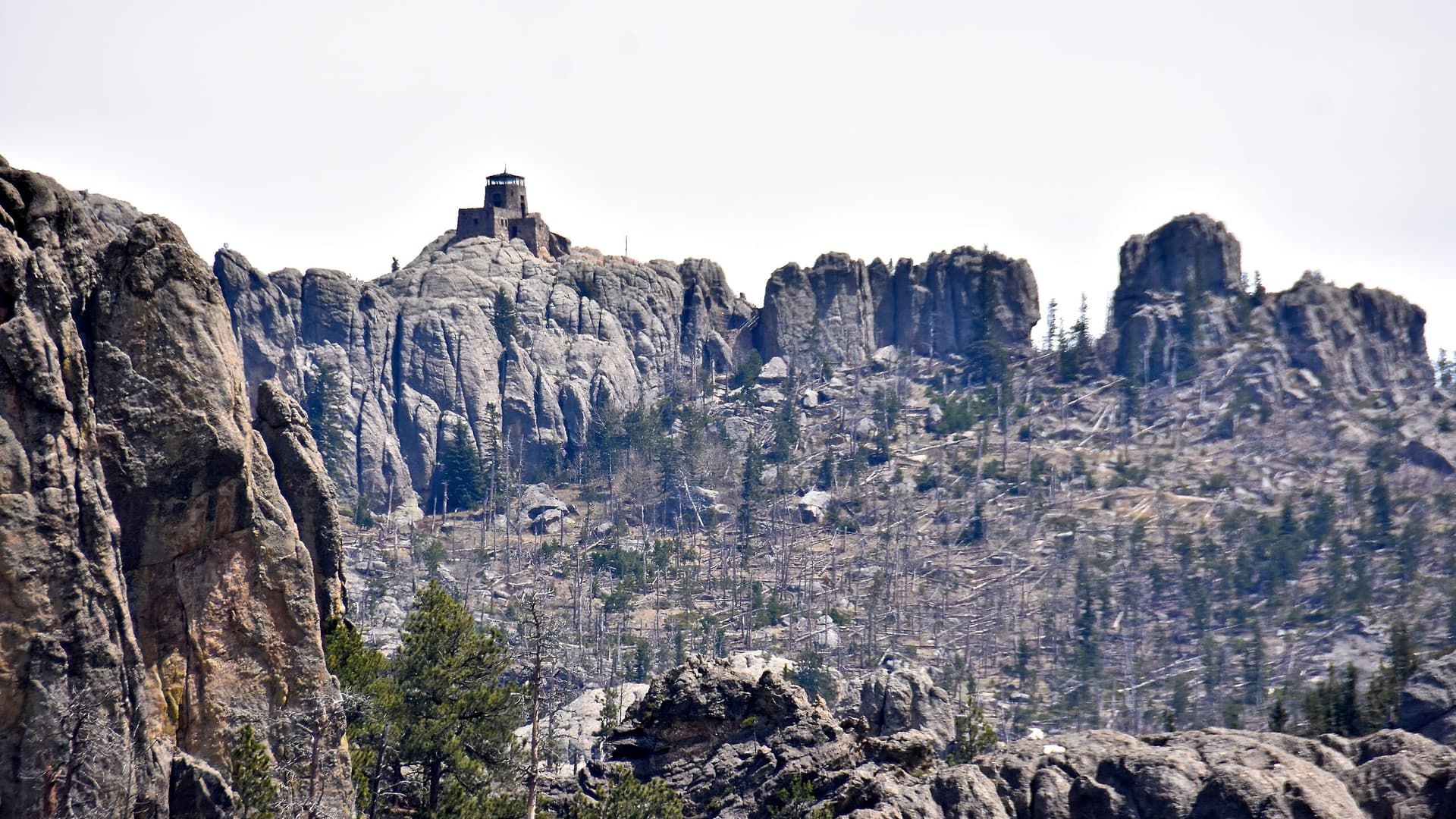
Black Elk Peak, South Dakota
Custer, South Dakota, United States
75.5 km away
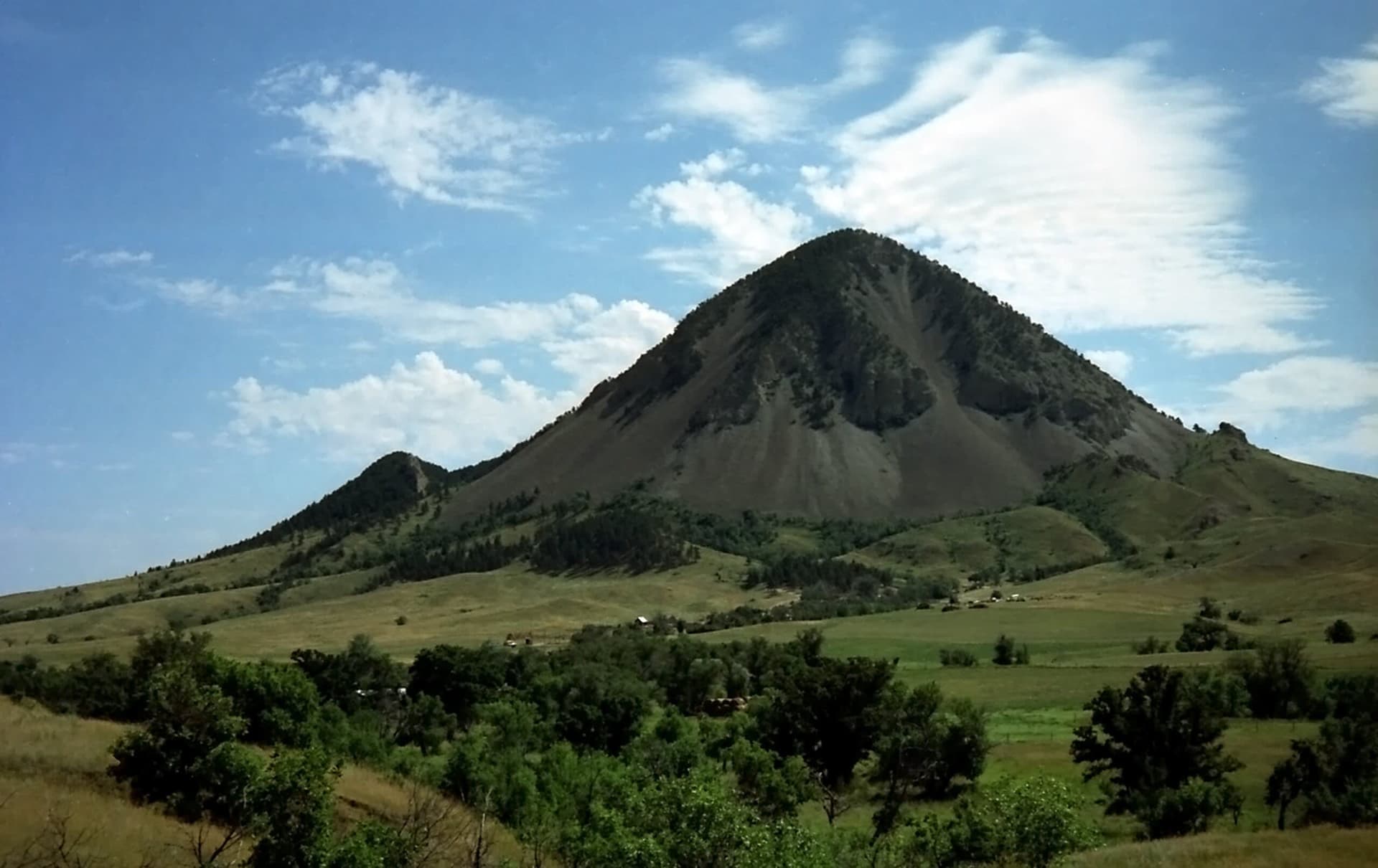
Bear Butte, South Dakota
Sturgis, South Dakota, United States
78.6 km away
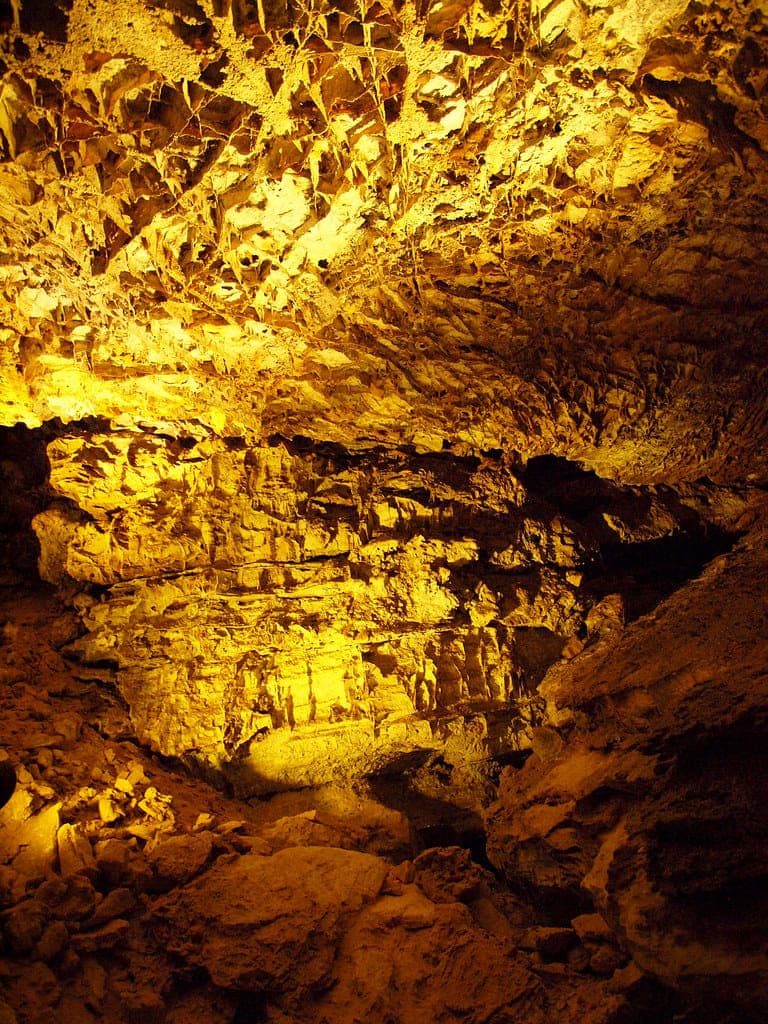
Wind Cave, South Dakota
Hot Springs, South Dakota, United States
101.0 km away
Big Horn Medicine Wheel, Wyoming
Big Horn County, Wyoming, United States
291.7 km away