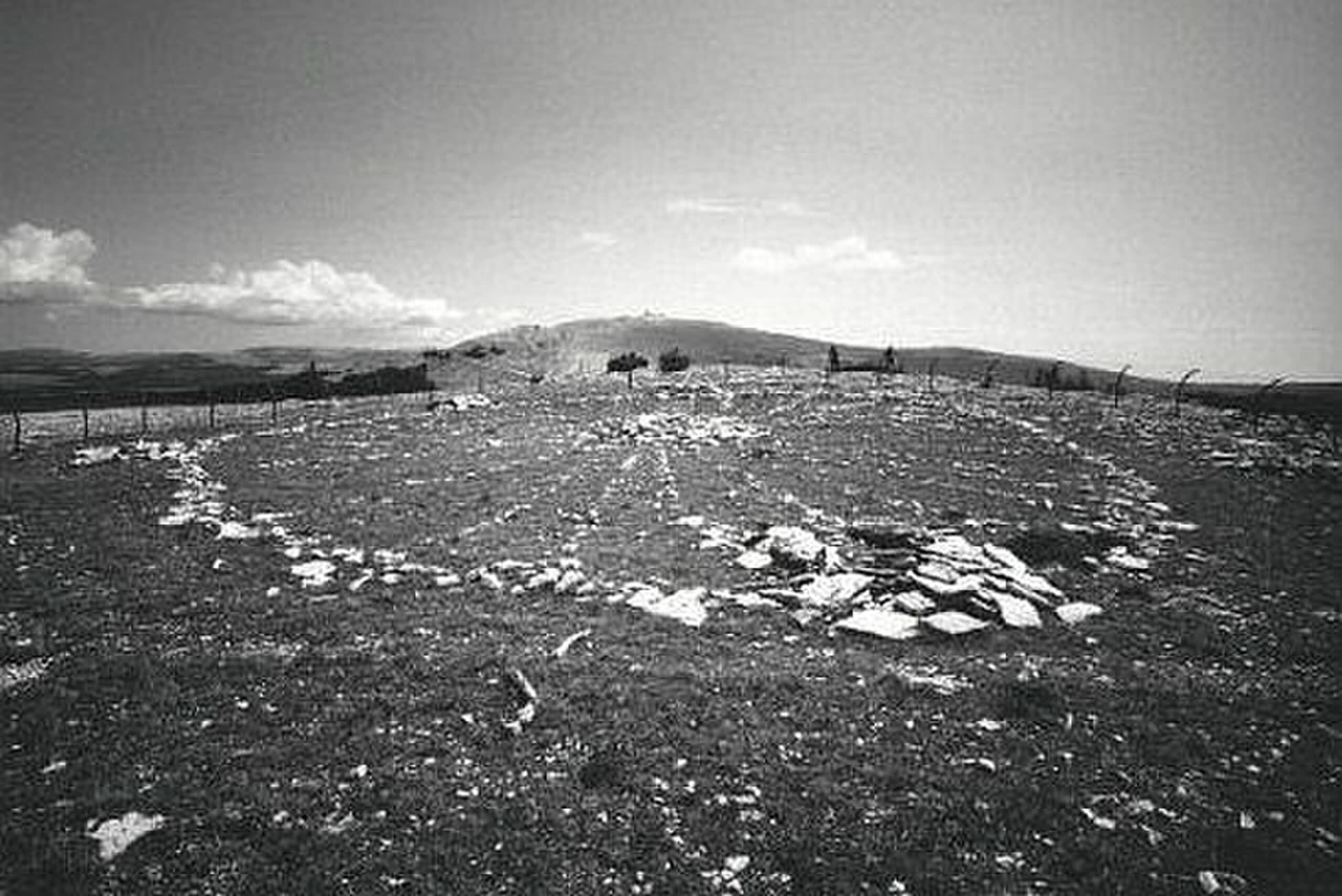
Big Horn Medicine Wheel, Wyoming
A mountaintop altar where 81 tribes still gather to pray, fast, and leave offerings to the sky
Big Horn County, Wyoming, United States
At A Glance
- Coordinates
- 44.8259, -107.9215
- Suggested Duration
- 2-3 hours including the 3-mile round-trip walk and time at the site. Add time if you encounter a ceremony in progress and need to wait.
Pilgrim Tips
- Dress for mountain conditions at 10,000 feet. Layers are essential; weather changes rapidly. Sturdy footwear for the 1.5-mile walk. Sun protection. Rain gear. No specific ceremonial attire is required of visitors.
- Photographs of the Wheel are permitted for personal use. Do not photograph ceremonies or practitioners without explicit permission. Video for personal use is permitted. Drones are prohibited throughout the National Historic Landmark.
- Do not leave offerings unless you are a Native American practitioner participating in traditional practice. Do not touch or disturb offerings left by others. Do not attempt to conduct ceremonies of your own devising. The site's openness to 'All People' means respect, not appropriation. If you are uncertain whether an action is appropriate, ask the on-site interpreter—or simply refrain.
Overview
At nearly 10,000 feet in Wyoming's Bighorn Mountains, stones form a wheel 80 feet across, with 28 spokes radiating toward the sky. No one knows who built it. The Crow say it was already ancient when they arrived, calling it the Sun's Lodge. Today, practitioners from 81 tribes come here to fast, to pray, to seek visions. Prayer cloths flutter from the fence. This is not a relic—it is an altar in use.
The Bighorn Medicine Wheel sits at the threshold between earth and sky, a stone circle near the summit of Medicine Mountain where the air thins and the view opens for a hundred miles in every direction. Eighty feet across, with 28 spokes radiating from a central cairn and six enclosures marking the perimeter, the Wheel was built by people whose identity remains unknown. No tribe claims construction. The Crow say it was already present when they arrived, very ancient, a place where many of their people went to fast.
What is certain is that the Medicine Wheel remains in active ceremonial use. Representatives of 81 tribes have conducted ceremonies here. In 2001, members of 70 tribes gathered at the site. Some traditional practitioners prepare for over a year before making the journey. They come to seek visions, to leave offerings, to pray for healing and give thanks for creation. The prayer cloths tied to the fence surrounding the Wheel are not decorative—they are evidence of prayers made this week, this season, this morning.
For non-Native visitors, the Medicine Wheel offers something rare: an encounter with living sacred practice at a site that predates all written records. The 1.5-mile walk from the parking lot becomes a pilgrimage of its own, ascending toward an altar that has held ceremony for centuries and holds it still. The appropriate stance is not participation but witness—quiet, respectful, grateful for the privilege of being allowed to approach.
Context And Lineage
The Medicine Wheel's builders remain unknown. The Crow say it was already ancient when they arrived. Archaeologists estimate construction 300-800 years ago, but human use of Medicine Mountain extends back nearly 10,000 years. What is certain is that the site has served as an altar, oriented like a Plains Sun Dance Lodge, for centuries of ceremony.
No origin story claims the building of the Bighorn Medicine Wheel. This absence is itself significant. The Crow, who have used the site for centuries for vision quests and fasting, say the Wheel was already present when they arrived—very ancient, already sacred. Tom Yellowtail (Crow) told the story of Burnt Face, who built a medicine wheel in the Bighorns after the Little People healed his disfigured face; but that story refers to the Fort Smith Wheel on the Crow Reservation, not the Bighorn Wheel itself.
What the oral traditions do convey is the Wheel's function. Crow informant Flat-Dog told anthropologist Robert Lowie that it was the 'Sun's Lodge,' a place where many Crow went to fast. The horseshoe-shaped enclosures around the perimeter are associated with vision quest rituals. Whatever else the Wheel may be, it is—and has been—a place where people come to pray.
The Medicine Wheel belongs to no single tribe. Eighty-one different tribes have conducted ceremonies here. Traditional practitioners include Arapaho, Bannock, Blackfeet, Cheyenne, Crow, Kootenai-Salish, Lakota, Dakota, Plains Cree, Shoshone, Sioux, and Southern Ute, among others. The site sits at a crossroads of Northern Plains cultures, a convergence point where traditions meet. This pan-tribal significance is precisely what the 1996 Historic Preservation Plan sought to protect—not one tradition but many, not one tribe's altar but a shared sacred geography.
The Unknown Builders
Whoever constructed the Medicine Wheel left no claim and no name. Archaeologists estimate construction 300-800 years ago. No tribe claims to have built it. This mystery is part of the site's power.
Flat-Dog (Crow)
Crow informant who told anthropologist Robert Lowie that the Wheel was the 'Sun's Lodge,' very ancient, a place where many Crow went to fast. His account established the Wheel's significance in Crow tradition.
John Eddy
Astronomer who documented the Wheel's astronomical alignments in 1972-74, publishing his findings in Science. His work proposed that the cairns align with summer solstice sunrise/sunset and the heliacal risings of Sirius, Aldebaran, and Rigel.
The Consulting Tribes
Representatives of 16 tribes who negotiated the 1996 Historic Preservation Plan, establishing traditional cultural use as the management priority and creating a model for sacred site protection.
Why This Place Is Sacred
At the Medicine Wheel, thinness emerges not from mystery alone but from active presence. The site connects earth to sky through its mountaintop location, human time to cosmic time through its astronomical alignments, and individual seekers to ancestral traditions through ceremonies that continue unbroken. The veil thins where prayer accumulates.
Something happens at nearly 10,000 feet. The air rarifies. The horizon extends beyond ordinary sight. The physical act of ascending—whether by the 1.5-mile walk from the parking lot or by driving the winding mountain roads—creates a separation from the world below. By the time visitors reach the Medicine Wheel, they have already crossed a threshold.
But the Wheel's thinness does not come from altitude alone. It comes from what has happened here. For centuries, young people have come to these enclosures to fast, to pray, to seek visions that would guide their lives. They have placed buffalo skulls on the central cairn, scattered tobacco on the stones, tied prayer cloths to the fence that now surrounds the Wheel. Each act of devotion adds to what the site holds. The thinness accumulates.
The astronomical alignments, whether intentional or coincidental, reinforce this quality. Astronomer John Eddy documented in 1974 that cairns align with summer solstice sunrise and sunset, and possibly with the heliacal risings of Sirius, Aldebaran, and Rigel. Other scholars dispute the stellar alignments, but the solstice connection is undeniable. At midsummer, when the sun reaches its northern extreme, the Wheel marks the moment. Human ceremony and cosmic event coincide.
The 28 spokes have been interpreted as representing the lunar month or the female menstrual cycle—the rhythms of time as experienced by bodies, not merely calculated by minds. Whatever the original intention, the Wheel speaks to cycles: of seasons, of generations, of the ongoing relationship between those who pray and the forces they address.
For visitors who arrive during or shortly after ceremony, the thinness is palpable. The prayer cloths move in the wind. Tobacco grains catch light between the stones. Someone has been here, praying, perhaps hours before. The site does not feel empty because it is not empty—it is in use.
The original purpose of the Medicine Wheel remains unknown. No tribe claims to have built it. The Crow stated during negotiations for National Historic Landmark status that the Wheel was already present when they came into the area. Archaeologists estimate construction between 300 and 800 years ago, though a wood fragment from the structure dated to around 1760 and charcoal fragments nearby dated to 4529 BCE, suggesting the landscape has been in ceremonial use for millennia.
The horseshoe-shaped enclosures around the Wheel's perimeter have been associated with Crow vision quest rituals. Elderly Cheyenne man Elk River compared the Wheel's structure to a Cheyenne Sun Dance Lodge. Native American ethnographic accounts call the Wheel the 'altar' for the Medicine Mountain complex, oriented cosmologically like the Plains Sun Dance Lodge. It appears the site was built for ceremony—but which ceremony, by which people, remains an open question.
The Wheel's history is one of continuous use despite unknown origins. However that continuity faced threat in the 20th century. Increasing tourism after the site's designation as National Historic Landmark in 1970 brought damage and disruption. Traditional practitioners found it difficult to conduct ceremonies amid busloads of tourists. Vandalism occurred.
The response was one of the most significant tribal consultation processes in American cultural resource management. Over 20 years of difficult negotiations between federal agencies, state government, and representatives of 16 tribes culminated in the 1996 Historic Preservation Plan. This document established an 18,000-acre 'area of consultation' and, crucially, prioritized traditional cultural use over tourism. The plan provides for both scheduled and impromptu ceremonial use, with the site closing temporarily when privacy is needed.
In 2001, a federal court upheld the plan against a legal challenge from a logging company. In 2011, the Landmark boundaries expanded from 110 to 4,080 acres, recognizing the broader sacred landscape. The Medicine Wheel now represents a model for how sacred sites can be managed in partnership with the communities who hold them sacred.
Traditions And Practice
Vision quests, fasting, prayer, and offerings have taken place at the Medicine Wheel for centuries. Today, practitioners from 81 tribes continue these traditions. Some prepare for over a year before making the journey. Non-Native visitors are welcome but may not participate in ceremonies; the appropriate stance is respectful witness.
The Medicine Wheel's traditional practices center on vision questing and fasting. The horseshoe-shaped enclosures around the Wheel's perimeter are associated with Crow fasting rituals, where individuals would spend days in prayer, seeking visions that would guide their lives. Buffalo skulls were placed on the central cairn as offerings. Tobacco was scattered on the stones. Prayer and atonement were offered for harm done to others and to Mother Earth.
The Wheel functions cosmologically like the Plains Sun Dance Lodge, with the functional aspects of sacred structures oriented in the same way. Interviews conducted during the Historic Preservation process drew connections between the Medicine Wheel and Sun Dance tradition. The site served as an altar for the broader Medicine Mountain complex, the central sacred place in a landscape that includes camping areas, plant gathering sites, and other ceremonial locations.
Contemporary practice at the Medicine Wheel continues the traditional forms. Representatives of 81 tribes have conducted ceremonies here. In 2001, members of 70 tribes gathered at the site. Regular use includes prayer, meditation, vision quests, the placement of offerings (prayer cloths, tobacco, eagle feathers, beads), and solstice observances. Some traditional practitioners prepare for over a year before making the journey, following protocols passed down through generations.
The 1996 Historic Preservation Plan explicitly provides for both scheduled and impromptu ceremonial use. When practitioners need privacy, on-site interpreters may close the site temporarily to other visitors, usually for 45 to 60 minutes. This mechanism allows living ceremony to continue at a site that also receives thousands of visitors each summer.
The phrase heard repeatedly at the Medicine Wheel is that it is 'for All People.' This reflects Native openness to respectful visitors—not invitation to impose outside frameworks, but acknowledgment that the sacred can be encountered across traditions. International visitors have come from as far as New Zealand and Tibet to pay respects.
Non-Native visitors cannot participate in ceremonies at the Medicine Wheel. What visitors can do is approach with respect. Walk the 1.5-mile path as a form of pilgrimage. Upon reaching the Wheel, move clockwise—the direction of the sun. Stand at a respectful distance. Observe the prayer cloths, the tobacco, the eagle feathers left by those who came before you. Let the presence of ongoing ceremony affect you. If a ceremony is occurring when you arrive, step back and wait quietly. Do not photograph practitioners.
The practice available to visitors is witness—seeing and being affected by what has happened here and continues to happen. For those who approach with openness, this can be profoundly affecting. The offerings on the fence are not your prayers, but their presence speaks to the reality of prayer itself.
Crow (Apsáalooke) Tradition
ActiveThe Crow have used the Medicine Wheel for centuries for fasting and vision quests. Crow informant Flat-Dog told anthropologist Robert Lowie that the Wheel was the 'Sun's Lodge,' very ancient, a place where many Crow went to fast. The horseshoe-shaped enclosures are associated with Crow vision quest rituals.
Vision quests, fasting, prayer, buffalo skull offerings on the center cairn, solstice observances. Young Crow people traditionally came here to fast and seek visions that would guide their lives.
Cheyenne Tradition
ActiveThe Cheyenne maintain a strong connection to the Medicine Wheel. Elderly Cheyenne man Elk River compared the Wheel to a Cheyenne Sun Dance Lodge in 1921. Some scholars suggest the Wheel expresses star alignments associated with Cheyenne ritual use.
Connection to Sun Dance tradition, ceremonial gatherings, star observations tied to ritual. The Wheel's structure echoes the cosmological orientation of Cheyenne ceremonial architecture.
Pan-Tribal Sacred Site
ActiveRepresentatives of 81 different tribes have conducted ceremonies at the Medicine Wheel. The site is venerated by Arapaho, Bannock, Blackfeet, Crow, Kootenai-Salish, Lakota, Dakota, Plains Cree, Shoshone, Sioux, Southern Ute, and many others. In 2001, members of 70 tribes held ceremonies here.
Prayer, vision quests, fasting, sweat lodges, plant gathering, offerings (prayer cloths, tobacco, eagle feathers, beads). Some practitioners prepare for over a year before making the journey.
Astronomical Observation
HistoricalAstronomer John Eddy documented in 1974 that cairns align with summer solstice sunrise and sunset, and possibly with the heliacal risings of Sirius, Aldebaran, and Rigel. These alignments would have allowed precise calendar-keeping. Other scholars dispute the stellar alignments.
Solar and stellar observation tied to ceremonial timing. The 28 spokes may represent the lunar month. Aldebaran rises before solstice, Rigel 28 days later, Sirius 28 days after that—intervals matching the spokes.
Experience And Perspectives
Visiting the Medicine Wheel means walking 1.5 miles uphill through alpine meadow to a mountaintop altar surrounded by prayer offerings. You may encounter Native practitioners in ceremony. The experience requires patience, respect, and willingness to step back when asked. What you find is a circle of stones that has held prayer for centuries—and holds it still.
The journey to the Medicine Wheel begins with a drive—winding mountain roads that climb into the Bighorn Range, leaving the ordinary world behind. From U.S. Highway 14A, Forest Road 12 leads three miles to a parking area at the edge of the alpine zone. The visitor center and restrooms are here. So is the beginning of the path.
The walk is 1.5 miles each way, climbing gradually through fragile tundra toward the summit ridge where the Wheel sits. At nearly 10,000 feet, the air is thin; take your time. Wildflowers bloom in summer. The sky opens in every direction. On clear days, you can see for a hundred miles. The walk itself is a transition—a leaving behind of roads and engines and the world below.
As you approach, the Wheel comes into view: stones arranged in a circle 80 feet across, with 28 spokes radiating from a central cairn and smaller enclosures around the perimeter. A fence surrounds the structure, and on this fence, prayer cloths flutter in the mountain wind. Tobacco offerings rest between stones. Eagle feathers catch light. These are not artifacts. They are evidence of prayers offered days ago, hours ago, perhaps while you were making your own approach.
The appropriate movement is clockwise around the Wheel, following the direction of the sun. On-site interpreters, when present, can answer questions and provide context. They can also close the site temporarily—usually 45 to 60 minutes—when Native American practitioners need privacy for ceremony. If you arrive during a closure, wait. This is the etiquette of approaching sacred ground in use.
What visitors report is not spectacle but presence. The setting is dramatic—mountaintop, vast sky, distant ranges—but the Wheel itself is modest: stones, the height of a loaf of bread, arranged on the ground. Its power comes not from scale but from what it holds. People have been praying here for centuries. Some are praying here today. You stand where they stand, see what they see, and for a moment, the veil between observer and participant thins.
Plan for 2-3 hours including the walk and time at the site. The trail is moderate but the altitude affects exertion. Bring water, sun protection, and layers—weather changes quickly at 10,000 feet. The site is open mid-June through September, 8am-5pm, weather permitting. Check conditions before traveling; snow can close the road unexpectedly. If a ceremony is in progress when you arrive, step back, wait quietly, and do not photograph.
The Medicine Wheel invites multiple interpretations: archaeological, astronomical, spiritual, and traditional. What makes the site distinctive is that for those who hold it sacred, it is not an artifact to interpret but a living altar. The scholarly questions remain open; the ceremonial use is certain.
Archaeologists date the Wheel to approximately 300-800 years ago, with evidence of human use of the broader landscape extending back nearly 10,000 years. The Wheel consists of a central cairn, 28 spokes, and six peripheral enclosures, constructed from limestone boulders gathered from the surrounding area.
Astronomer John Eddy's 1974 Science paper proposed that the cairns align with summer solstice sunrise and sunset, and with the heliacal risings of Sirius, Aldebaran, and Rigel. These alignments would have allowed precise calendar-keeping. However, astronomer Bradley Schaefer found 'no statistical evidence for stellar alignments,' and debate continues. Some archaeologists interpret the peripheral enclosures as vision quest shelters rather than astronomical sighting positions.
The Wheel's relationship to Cheyenne Sun Dance Lodge architecture has been noted by scholars. Elderly Cheyenne man Elk River compared the Wheel to a Cheyenne lodge when interviewed in 1921. Whether the Wheel was a model for the lodge, or vice versa, remains unclear. No single archaeological theory fully explains purpose, builders, or original use.
For Native American practitioners, the Medicine Wheel is 'religious architecture, not anthropological data.' It is the 'altar' for the Medicine Mountain complex, oriented cosmologically like the Plains Sun Dance Lodge. The Crow call it the Sun's Lodge and have used it for vision quests for centuries. The Cheyenne draw connections to their own ceremonial traditions.
No tribe claims to have built the Wheel—the Crow say it was already present when they arrived—but many tribes claim it as sacred ground. This pan-tribal significance is reflected in the 81 tribes who have conducted ceremonies here. The 1996 Historic Preservation Plan, negotiated over 20 years with 16 tribes, established traditional cultural use as the management priority.
The offerings visible on the fence are evidence of this ongoing use. Prayer cloths, tobacco, eagle feathers, beads—each item represents a prayer, a journey, a relationship with the sacred that continues regardless of what archaeologists or astronomers conclude about origins.
The Medicine Wheel attracts some New Age and esoteric interest, particularly around the astronomical alignments and the mountaintop setting. However, the site's management explicitly prioritizes traditional Native American use over external appropriation. The phrase 'for All People' reflects Native openness to respectful visitors, not invitation for outsiders to conduct their own ceremonies or impose their own frameworks.
Visitors seeking esoteric experience at the Medicine Wheel are asked to recognize the difference between indigenous practice—rooted in specific cultural traditions, passed through generations, and accountable to community—and external projection. The former is welcomed. The latter is not.
Who built the Medicine Wheel remains unknown. No tribe claims construction. Dating evidence is contradictory: wood from the structure dated to c. 1760, but charcoal nearby dated to 4529 BCE. Whether the astronomical alignments were intentional or coincidental remains debated. The meaning of the 28 spokes—lunar month, menstrual cycle, something else—is uncertain. The purpose of each cairn and enclosure is not fully understood. These mysteries are part of what the Wheel holds.
Visit Planning
The Medicine Wheel is accessible mid-June through September, when the road opens. The 1.5-mile walk from the parking lot takes about 45 minutes each way. Entry is free. The site may close temporarily for ceremonies. At nearly 10,000 feet, weather is unpredictable; come prepared.
Lovell, Wyoming (25 miles west) and Sheridan, Wyoming (46 miles east) offer lodging. Bighorn National Forest has campgrounds, some near the Medicine Wheel access road. Facilities at the site are limited to restrooms at the parking area and near the Wheel.
This is an active sacred site. Walk clockwise. Do not touch offerings. Photograph the Wheel but never ceremonies or practitioners. If the site closes temporarily for ceremony, wait patiently. Give practitioners space. Your presence is permitted but not prioritized over the prayers of those who hold this place sacred.
The Medicine Wheel is managed under a Historic Preservation Plan that explicitly prioritizes traditional cultural use over tourism. What this means in practice is that your visit is welcome but conditional. You are a guest at an altar in use, and the needs of those who come to pray take precedence.
When you approach the Wheel, walk clockwise around it—the direction of the sun, the direction ceremony moves. Stay on established paths to protect the fragile alpine vegetation and the archaeological resources beneath your feet. The fence surrounding the Wheel marks a boundary; you may observe from outside it but not enter.
The offerings on the fence—prayer cloths, tobacco ties, eagle feathers, beads—are not decorative objects. They are prayers, left by practitioners who may have traveled hundreds of miles and prepared for months to be here. Do not touch them. Do not photograph them as curiosities. They are as sacred as the stones of the Wheel itself.
If you arrive and a ceremony is in progress, step back. Wait quietly at a distance. The site may close temporarily for private ceremonies, usually 45 to 60 minutes. This is not inconvenience but proper protocol—the ceremony must complete before the site reopens. If asked to leave, leave.
Photography of the Wheel itself is permitted for personal use. Photography during ceremonies is not permitted. Photographing practitioners without permission is disrespectful. Drones are prohibited throughout the National Historic Landmark. Dogs must be leashed and are not allowed on the path immediately surrounding the Wheel.
The phrase you will hear is that the Medicine Wheel is 'for All People.' This means you are welcome to witness—but not to impose, not to appropriate, not to treat the site as backdrop for your own spiritual performance. Witness is enough.
Dress for mountain conditions at 10,000 feet. Layers are essential; weather changes rapidly. Sturdy footwear for the 1.5-mile walk. Sun protection. Rain gear. No specific ceremonial attire is required of visitors.
Photographs of the Wheel are permitted for personal use. Do not photograph ceremonies or practitioners without explicit permission. Video for personal use is permitted. Drones are prohibited throughout the National Historic Landmark.
Do not leave offerings unless you are a Native American practitioner engaged in traditional practice. Do not touch offerings left by others. The prayer cloths, tobacco, feathers, and other items on the fence are sacred; treat them as such.
{"Walk clockwise around the Wheel","Stay on established paths","Do not touch offerings","No photography during ceremonies","Dogs must be leashed; not allowed on immediate path around Wheel","No drones","Give space to practitioners","Site may close temporarily (45-60 minutes) for ceremonies","Do not leave offerings unless you are a Native practitioner"}
Sacred Cluster
Nearby sacred places create the location cluster described in the growth plan. This block is intentionally crawlable and links into the wider regional graph.