Holy Monastery of Saint John the Theologian, Patmos
Where John received the Apocalypse, and Byzantine prayer continues unbroken for a millennium
Patmos, Aegean, Greece
At A Glance
- Coordinates
- 37.3091, 26.5476
- Suggested Duration
- Cave of the Apocalypse: 30-60 minutes. Monastery: 1-2 hours minimum for church, courtyard, and treasury. Combined with walking through Chora: half to full day. For pilgrims attending services: 1-2 full days recommended.
- Access
- Patmos is accessible only by ferry. Ferries from Piraeus (Athens) approximately 8 hours overnight. Ferries from Kos (3 hours), Rhodes, Samos, and Leros. Nearest airports: Leros (domestic), Kos (international). From Skala port, the monastery is 4 km uphill: walk (40-60 minutes), local bus, taxi, or rental vehicle. The walk from Skala through Chora is the traditional pilgrimage route.
Pilgrim Tips
- Patmos is accessible only by ferry. Ferries from Piraeus (Athens) approximately 8 hours overnight. Ferries from Kos (3 hours), Rhodes, Samos, and Leros. Nearest airports: Leros (domestic), Kos (international). From Skala port, the monastery is 4 km uphill: walk (40-60 minutes), local bus, taxi, or rental vehicle. The walk from Skala through Chora is the traditional pilgrimage route.
- Modest dress required. Cover shoulders and knees. Women: long skirts preferred, may need head covering in some areas. Men: long trousers. No revealing, tight, or beach attire.
- Forbidden in many areas, especially during worship. No flash anywhere. Ask permission before photographing monks. Follow signage and staff guidance.
- Visitors may attend services from designated areas, typically the narthex for non-Orthodox visitors. Do not attempt to enter areas reserved for monastics or clergy. Photography is prohibited in many areas, particularly during services. Follow signage and staff guidance. Do not interrupt monks at prayer. Maintain silence or quiet speaking throughout the monastery. Cell phones should be silenced or turned off.
Overview
The Monastery of Saint John the Theologian crowns the island of Patmos, built above the cave where Saint John received the visions recorded in the Book of Revelation. For nearly a thousand years, monks have maintained continuous prayer at this site, preserving Byzantine liturgical traditions and guarding a library of irreplaceable manuscripts. Greece formally declared Patmos a 'Holy Island,' and UNESCO inscribed the site in 1999.
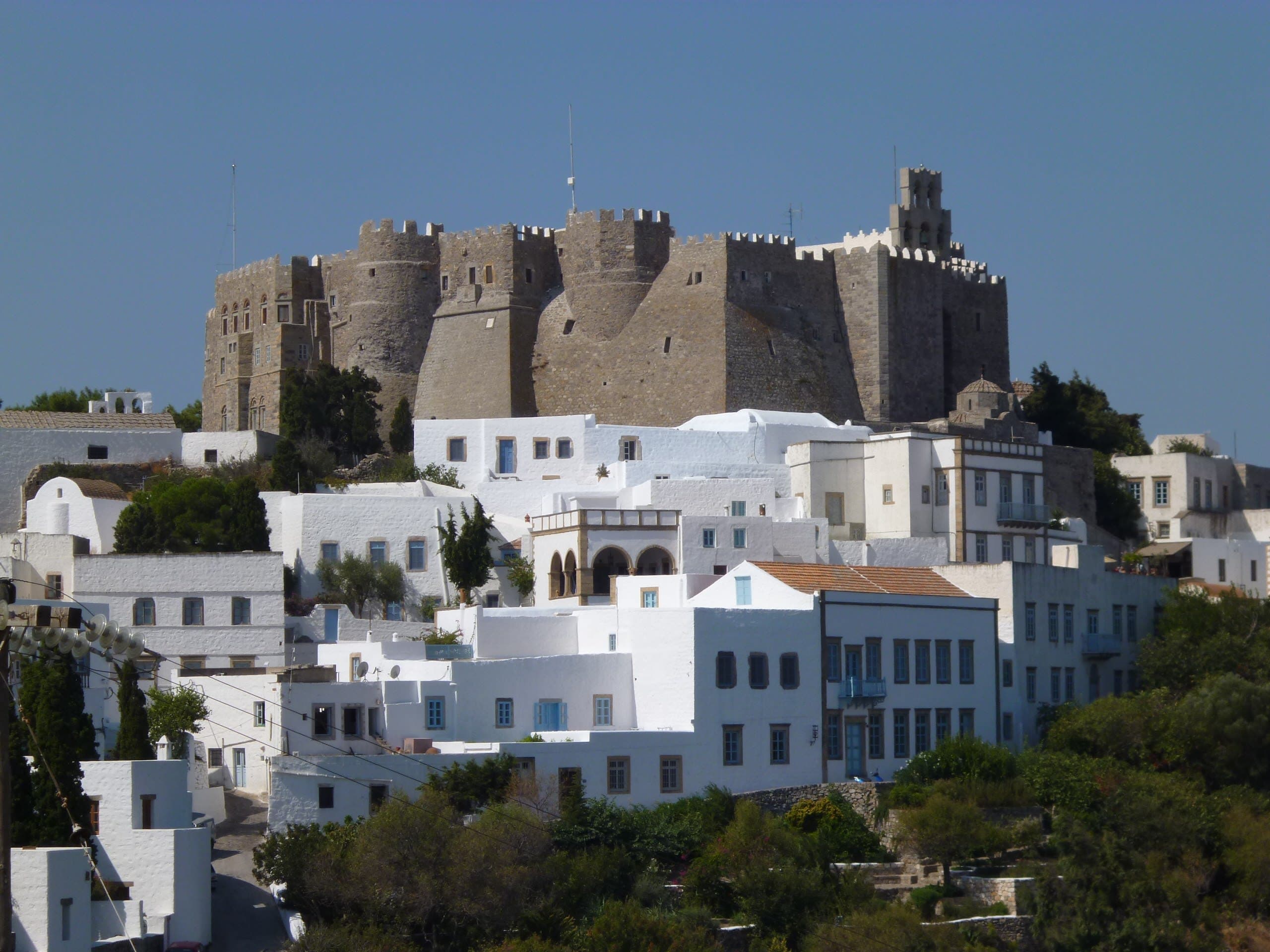
The fortress monastery rises from the hilltop like a vision itself, grey stone walls and Byzantine domes commanding the island below. From the port at Skala, the climb through whitewashed Chora leads past the Cave of the Apocalypse, where tradition says John the Apostle, exiled to Patmos around 95 CE, received divine visions of the end times. The Book of Revelation, Christianity's most mysterious text, was written here.
In 1088, Saint Christodoulos built the monastery above this cave, creating a fortress of the spirit that has never fallen. For nearly a thousand years, monks have maintained the cycle of prayer: Matins at dawn, Divine Liturgy in the morning, Vespers as the sun sets over the Aegean, Compline before sleep. The Byzantine traditions preserved here have changed so little that attending a service transports visitors across centuries to the origins of Orthodox Christianity.
The library holds over 900 manuscripts and 13,000 documents, including the Purple Codex from the 6th century. The treasury displays icons, vestments, and relics that span a millennium of devotion. The skull of Saint Thomas the Apostle rests here, along with pieces of the True Cross. These are not museum pieces but living elements of ongoing worship, brought out for liturgical use at appropriate times.
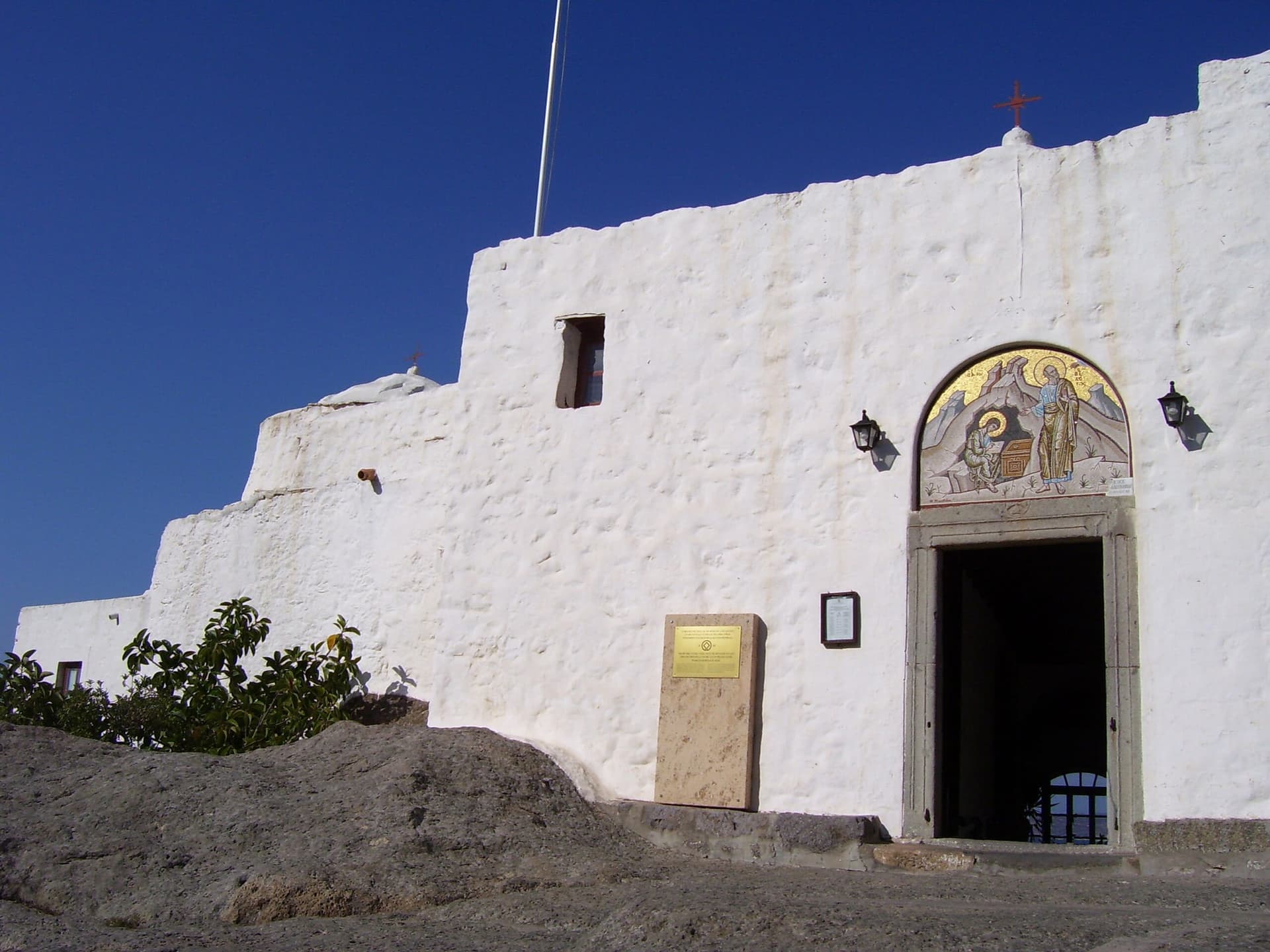
The Cave of the Apocalypse, halfway up the hill, marks the specific site of John's visions. Tradition identifies a triple fissure in the rock as the place through which God spoke, the shape symbolizing the Trinity. Silver rings mark where John rested his head and placed his hand. The stone ledge where he sat while dictating to his sciple Prochorus is now a pilgrimage destination for Christians from around the world.
Greece declared Patmos a Holy Island in the early 1980s, recognizing what pilgrims had known for centuries: this small Aegean island holds significance for Christianity comparable to Jerusalem or Rome. The UNESCO inscription in 1999 acknowledged not merely historical importance but ongoing sacred function, the continuous transmission of Orthodox tradition in an unbroken line from the Byzantine Empire to today.
Context And Lineage
Around 95 CE, Saint John the Apostle was exiled to Patmos, where he received the visions recorded in the Book of Revelation. In 1088, Saint Christodoulos built the monastery above the cave of this revelation. The site has maintained continuous monastic community since, preserving Byzantine traditions and irreplaceable manuscripts.
Around 95 CE, during the reign of Emperor Domitian, the Apostle John was exiled to the small island of Patmos in the Aegean Sea. Romans used the island for political exiles, and John's Christian prophecy was considered politically subversive.
According to tradition, John was praying in a cave on the hillside when the rocks split into three fissures, symbolic of the Holy Trinity. Through these fissures, God revealed to John visions of the end times: the fall of Babylon, the final judgment, the new Jerusalem descending from heaven. John dictated these visions to his disciple Prochorus, and they became the Book of Revelation, the Apocalypse, the final book of the New Testament.
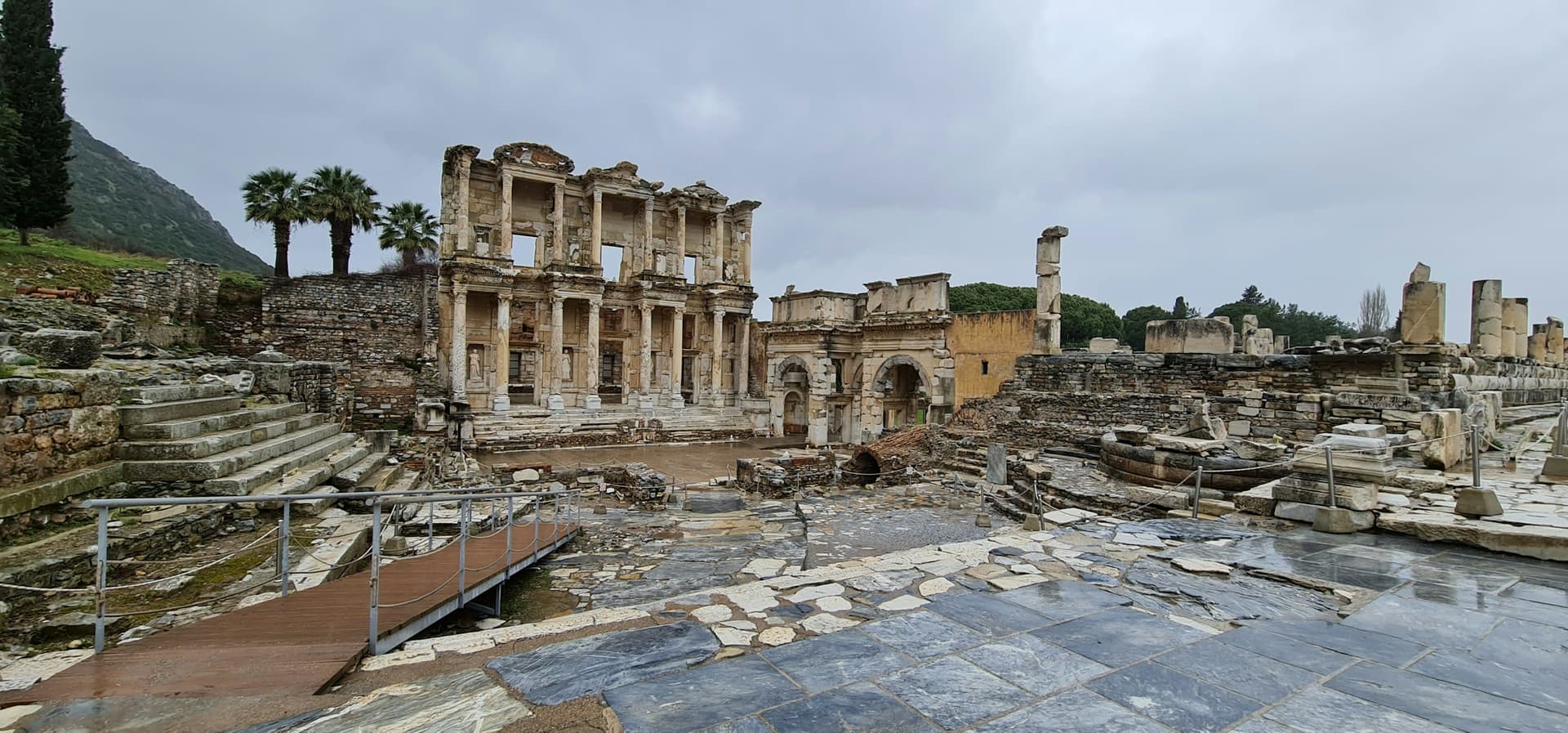
After Domitian's death, John was released and returned to Ephesus, where tradition says he died of old age, the only apostle not martyred. But the cave on Patmos remained a pilgrimage site, remembered as the place where heaven had opened.
Nearly a thousand years later, in 1088, the monk Christodoulos traveled to Constantinople and presented Emperor Alexios I Komnenos with a proposal: grant him the island of Patmos, and he would build a monastery to honor Saint John and guard the sacred cave. The emperor agreed, issuing a chrysobull that gave Christodoulos sovereignty over the entire island. Christodoulos returned with craftsmen and began construction. Within three years, the greater part of the monastery was complete.
The monastery follows the Byzantine liturgical tradition and operates under the jurisdiction of the Ecumenical Patriarchate as a Patriarchal exarchate with special privileges. The monastic community has maintained continuous presence since 1088, despite raids, political changes, and the challenges of island life.
Approximately 40 monks resided at the monastery as of 2012. They follow the cenobitic (communal) tradition, sharing life and worship according to the rule established by Christodoulos.
Saint John the Theologian
spiritual founder
The Apostle traditionally identified as author of the Gospel of John and the Book of Revelation. Exiled to Patmos around 95 CE, where he received apocalyptic visions in a cave.
Saint Christodoulos
founder
Byzantine monk who founded the monastery in 1088 after receiving imperial grant of the entire island. His incorrupt relics remain in the monastery.
Emperor Alexios I Komnenos
patron
The Byzantine emperor who granted Patmos to Christodoulos through the chrysobull of 1088, enabling the monastery's construction.
Why This Place Is Sacred
Patmos possesses the quality of thinness through the Cave of the Apocalypse where divine revelation occurred, nearly 1,000 years of continuous monastic prayer, the preservation of Byzantine liturgical traditions unchanged for centuries, relics of multiple saints, and the dramatic hilltop setting overlooking the Aegean.
The Cave of the Apocalypse marks a site where, according to Christian tradition, the veil between heaven and earth tore open. Around 95 CE, John the Apostle, exiled by Emperor Domitian, was praying in this grotto when the rocks split into three fissures, symbolic of the Trinity, and through them God revealed visions of the end times. The resulting text, the Book of Revelation, has shaped Western imagination of apocalypse, judgment, and ultimate hope for two millennia.
The monastery above represents nearly a thousand years of response to that revelation. Christodoulos did not build randomly but above the cave, creating vertical relationship between the site of vision and the place of prayer. The monastery was constructed over the ruins of an ancient temple to Artemis and an earlier Christian basilica, layer upon layer of sacred geography.
The liturgical traditions preserved here create temporal thinness. The Byzantine Niptir ceremony, performed on Wednesday of Holy Week, reenacts Christ washing the disciples' feet in forms essentially unchanged since the monastery's founding. The chants, the vestments, the ritual movements: all connect contemporary practitioners to the 11th century and through it to the early Church. Attending these services is not historical tourism but participation in living tradition.
The relics intensify the sense of connection across time. The incorrupt body of Saint Christodoulos lies in his chapel. The skull of Thomas the Apostle, the doubter who came to believe, is present. Fragments of the True Cross carry the memory of Christ's crucifixion itself. For Orthodox Christians, relics are not merely historical artifacts but the continuing presence of the communion of saints.
The setting adds another dimension. The monastery commands the highest point of the island, looking out over the wine-dark sea that Homer sang. The dramatic position, the isolation from mainland concerns, the sense of being set apart: all contribute to the recognition that pilgrims have long reported, that coming to Patmos is coming to a place where ordinary and sacred meet.
The Cave of the Apocalypse was already a site of pilgrimage when Christodoulos arrived. The monastery was built to house a community of prayer above this sacred cave, creating a monastic center that could preserve Orthodox tradition and resist the raids and invasions that threatened Byzantine Christianity. The fortress architecture reflects both spiritual and military purpose.
The monastery survived raids by Emir Tzachas in 1093, which forced the monks temporarily to Euboea. When they returned, they brought Christodoulos's relics and continued his vision. The monastery expanded through the medieval period, accumulating the library and treasury that make it one of the most important centers of Orthodox heritage.
The site passed through various political dispensations, from Byzantine to Venetian influence to Ottoman rule to modern Greek sovereignty, but the monastic community maintained continuity throughout. The designation as Holy Island and the UNESCO inscription represent contemporary recognition of what has been preserved.
Traditions And Practice
The monastery maintains the full cycle of Byzantine liturgical worship with daily services. The Byzantine Niptir ceremony on Wednesday of Holy Week is particularly significant. Major feast days feature all-night vigils. Visitors may attend services from designated areas.
The Byzantine Niptir (foot-washing) ceremony has been performed at Patmos since at least the monastery's founding. This Holy Week ritual reenacts Christ washing the disciples' feet, divided into three parts: the conversation about service over authority, the humiliation where Christ washes feet, and the agony at Gethsemane. After Morning Mass, a procession moves from the monastery to Chora's central square, where twelve priests sit as the disciples and the abbot arrives last as Christ, washing their feet as the Gospel narrative is read.
The monastic community maintains daily services including Matins (Orthros), Divine Liturgy, Vespers, and Compline. Major feast days, particularly Saint John the Theologian on May 8 and September 26, feature all-night vigils beginning at 5 PM and continuing until 6 AM, followed by special liturgies and processions.
The Dormition of the Virgin Mary (August 15) is celebrated with particular devotion, including processions through Chora. The Festival of Religious Music, established in 2001, brings international sacred music to the island each August-September.
If liturgical encounter draws you, plan to attend services. The experience of Byzantine worship in this setting cannot be replicated elsewhere. Arrive early, dress appropriately, and prepare to stay throughout rather than entering and leaving.
The feast days of Saint John (May 8 and September 26) offer the deepest immersion, though the all-night vigil demands genuine commitment. Those able to attend experience Orthodox tradition at its fullest expression.
For those unable to attend services, the monastery museum provides encounter with the artifacts of devotion: icons, manuscripts, vestments. Approach these not as aesthetic objects but as tools of prayer that have been used for centuries.
The Cave of the Apocalypse invites personal reflection regardless of religious background. What does it mean that visions of ending and renewal emerged here? What do we make of apocalypse, as fear, as hope, as transformation?
Eastern Orthodox Christianity
ActiveThe Monastery of Saint John is one of the most significant Orthodox monasteries in the world, commemorating the saint traditionally identified as author of the Gospel of John and the Book of Revelation. The site is particularly sacred because John is believed to have received his visions here during exile around 95 CE. For Orthodox Christians, Patmos is the 'Jerusalem of the Aegean.'
The monastic community follows Byzantine liturgical tradition with daily services. The Byzantine Niptir ceremony on Wednesday of Holy Week, performed since at least the 11th century, reenacts Christ washing the disciples' feet. Major feast days feature all-night vigils and processions.
Experience And Perspectives
Visitors to Patmos consistently describe profound sense of stepping back into Byzantine times, awe at the fortress-like architecture, moving experience at the Cave of the Apocalypse, and the extraordinary treasury museum. The pilgrimage walk from Skala through Chora to the monastery prepares body and spirit for encounter.
The approach itself is practice. From the ferry port at Skala, the traditional pilgrimage route climbs through Chora to the monastery, passing the Cave of the Apocalypse along the way. This walk, forty to sixty minutes depending on pace, allows transition from the concerns of travel to the attention the site deserves. Those who take a bus miss something essential.
The Cave of the Apocalypse, halfway up the hill, invites the first pause. The grotto where John received his visions is now enclosed within a chapel, but the essential features remain: the triple fissure in the rock, the silver ring marking where John rested his head, another where he placed his hand while rising, the stone ledge used by his scribe Prochorus. To stand where Christianity's most mysterious text was received is to encounter the tangibility of tradition.
The monastery above commands attention through scale and position. The fortress walls, the towers, the domes rising against Aegean blue: all suggest spiritual and temporal power maintained across centuries. Entering through the narrow gate, visitors find courtyards, chapels, and passages that accumulate around the central church.
The treasury museum displays what the monastery has preserved: icons spanning centuries, vestments of extraordinary craftsmanship, manuscripts including the 6th-century Purple Codex. These are not merely beautiful objects but witnesses to continuous devotion. Each icon was painted for prayer. Each vestment was worn for liturgy. The connection between aesthetic beauty and sacred function distinguishes these artifacts from museum pieces elsewhere.
Those who time their visit to attend services encounter the monastery's deepest purpose. The Byzantine liturgy, sung in Greek according to forms that have changed little since the monastery's founding, creates an experience of worship that most Western visitors have never encountered. The chanting, the incense, the movement of priests in vestments that themselves are centuries old: all transport participants to the roots of Christian tradition.
The Holy Week services, particularly the Byzantine Niptir on Wednesday, offer especially profound encounter. The abbot, representing Christ, washes the feet of twelve priests representing the disciples. The ceremony moves from the monastery to the central square of Chora, making the town itself a stage for sacred drama.
Approach Patmos as pilgrimage rather than sightseeing. The walk from Skala to the monastery, though a bus is available, prepares body and spirit in ways that riding cannot. Allow the effort of climbing to become part of the encounter.
Visit the Cave of the Apocalypse before the monastery. The progression from the site of revelation to the community built in response to it follows the natural order of cause and effect.
If attending services, plan to arrive early and stay throughout. Orthodox liturgy unfolds over time in ways that Western services typically do not. The experience is cumulative, building through chant and movement and silence.
The feast days of Saint John (May 8 and September 26) feature all-night vigils beginning at 5 PM and continuing until 6 AM. These extraordinary services offer deep immersion in Byzantine tradition, though the demands are not small.
Dress modestly throughout. This is an active monastery, not a museum. The monks you encounter are not performers but practitioners.
Patmos invites interpretation from Orthodox theological, scholarly historical, and alternative perspectives. Each illuminates aspects of why this small Aegean island holds significance comparable to Jerusalem or Rome.
Historians recognize the Monastery of Saint John as one of the most important surviving Byzantine monastic complexes. The library, with over 900 manuscripts and 13,000 documents from the 11th century, is invaluable for Byzantine and biblical studies. The Purple Codex and other manuscripts are crucial for textual criticism of the New Testament. UNESCO inscription recognizes the site's outstanding universal value.
Scholarly debate continues regarding the authorship of Revelation: whether John of Patmos is identical with John the Apostle or a separate figure. The site's historical significance as the traditional location of the text's composition is undisputed regardless of this question.
For Orthodox Christians, Patmos is one of Christianity's most sacred sites, the 'Jerusalem of the Aegean.' The island itself is holy ground where God spoke to humanity through Saint John. The Book of Revelation, written in the cave, reveals the ultimate triumph of God's kingdom.
The monastery and its monastic community represent nearly a millennium of faithful response to that revelation. The relics, icons, and liturgies maintain continuity with the early Church. Byzantine traditions preserved here connect contemporary Orthodox Christians to their roots.
Some approach Patmos as sacred geography, a meeting point of heaven and earth where divine communication occurred. The imagery of Revelation, with its symbols of transformation, cosmic struggle, and renewal, resonates with those exploring archetypal psychology and symbolic interpretation. The monastery's continuous prayer over nearly a millennium is sometimes interpreted as creating accumulated spiritual energy at the site.
Questions remain. What was the exact nature of John's visionary experience? How should Revelation's symbolic imagery be interpreted: as literal prophecy, symbolic theology, political resistance to Rome, or mystical vision? How has the monastery maintained spiritual vitality through nearly a millennium of political change? What treasures remain in the library yet to be fully studied?
Visit Planning
Patmos is accessible only by ferry from Piraeus or nearby islands. The monastery is 4 km uphill from Skala port. May through October offers best weather; Holy Week provides deepest liturgical experience. Allow 1-2 hours minimum for the monastery, more for services.
Patmos is accessible only by ferry. Ferries from Piraeus (Athens) approximately 8 hours overnight. Ferries from Kos (3 hours), Rhodes, Samos, and Leros. Nearest airports: Leros (domestic), Kos (international). From Skala port, the monastery is 4 km uphill: walk (40-60 minutes), local bus, taxi, or rental vehicle. The walk from Skala through Chora is the traditional pilgrimage route.
Skala port has hotels and guesthouses. Chora offers more intimate options close to the monastery. Book well in advance for Holy Week and summer peak season.
The monastery requires modest dress (covered shoulders and knees), quiet behavior, and respect for the active monastic community. Photography is restricted in many areas. Visitors attend services from designated areas.
Dress modestly. Shoulders and knees must be covered for both men and women. Women should wear long skirts rather than pants in some areas and may be asked to cover their head with a scarf. Men should wear long trousers. Tight-fitting, revealing, or casual beach attire is inappropriate. Wraps may be available at entrances, but bringing appropriate clothing is recommended.
Maintain silence or quiet speaking throughout. This is an active monastery, not a museum. Cell phones should be silenced or turned off, especially during services.
Photography is forbidden in several areas, particularly chapels and areas of active worship. Flash photography is prohibited throughout. Always ask permission before photographing monks. The museum has specific restrictions. When in doubt, do not photograph.
Do not enter areas marked as restricted or reserved for monastics. Women may face additional restrictions in certain areas. Do not interrupt monks at prayer. Remove hats when entering chapels.
Candles may be purchased and lit at designated areas. Donations are welcomed but not required.
Modest dress required. Cover shoulders and knees. Women: long skirts preferred, may need head covering in some areas. Men: long trousers. No revealing, tight, or beach attire.
Forbidden in many areas, especially during worship. No flash anywhere. Ask permission before photographing monks. Follow signage and staff guidance.
Candles may be lit at designated areas. Donations welcomed. Personal prayers and written prayer requests appropriate.
No entry to restricted monastic areas. Silence expected. Cell phones off during services. No interrupting monks at prayer. Remove hats in chapels.
Sacred Cluster
Nearby sacred places create the location cluster described in the growth plan. This block is intentionally crawlable and links into the wider regional graph.