Goshono Site
Eight hundred years of Jomon fire ceremonies at the place where earthen-roof dwellings were first proven
Ichinohe, Iwate Prefecture, Japan
At A Glance
- Coordinates
- 40.1979, 141.3066
- Suggested Duration
- 2-3 hours to explore both the outdoor park with reconstructed dwellings and the Goshono Jomon Museum.
- Access
- By car: 5 minutes from Ichinohe IC on the Tohoku Expressway, then via Route 4 toward the site. By train: From JR Ninohe Station (Tohoku Shinkansen), taxi or car approximately 15 minutes. From IGR Ichinohe Station, taxi approximately 5 minutes. The Goshono Jomon Museum serves as the main visitor facility with exhibits, restrooms, and shop. Interpretive trails connect the museum to the reconstructed settlement.
Pilgrim Tips
- By car: 5 minutes from Ichinohe IC on the Tohoku Expressway, then via Route 4 toward the site. By train: From JR Ninohe Station (Tohoku Shinkansen), taxi or car approximately 15 minutes. From IGR Ichinohe Station, taxi approximately 5 minutes. The Goshono Jomon Museum serves as the main visitor facility with exhibits, restrooms, and shop. Interpretive trails connect the museum to the reconstructed settlement.
- No specific requirements. Comfortable walking shoes are recommended for exploring the park and entering the reconstructed dwellings.
- Photography is permitted throughout the park and in the reconstructed dwellings.
- Respect the reconstructed dwellings and archaeological features. The site's preservation depends on careful treatment.
Overview
For forty generations, Jomon communities gathered at this river terrace to tend their dead and feed their fires. The earthen mounds along the settlement's southern edge hold evidence of repeated ceremonies: burned animal bones, charred nuts, clay figurines—offerings made across eight centuries. At the center of the village, two stone-outlined burial grounds marked where the living gathered to honor ancestors. Today, reconstructed earthen-roof dwellings bring the settlement back to life.
Something persisted at Goshono for eight hundred years. From approximately 3000 BCE to 2200 BCE, Jomon communities returned to this river terrace in what is now Iwate Prefecture, burying their dead in stone-outlined grounds at the village center and conducting fire ceremonies whose evidence accumulated in earthen mounds over centuries.
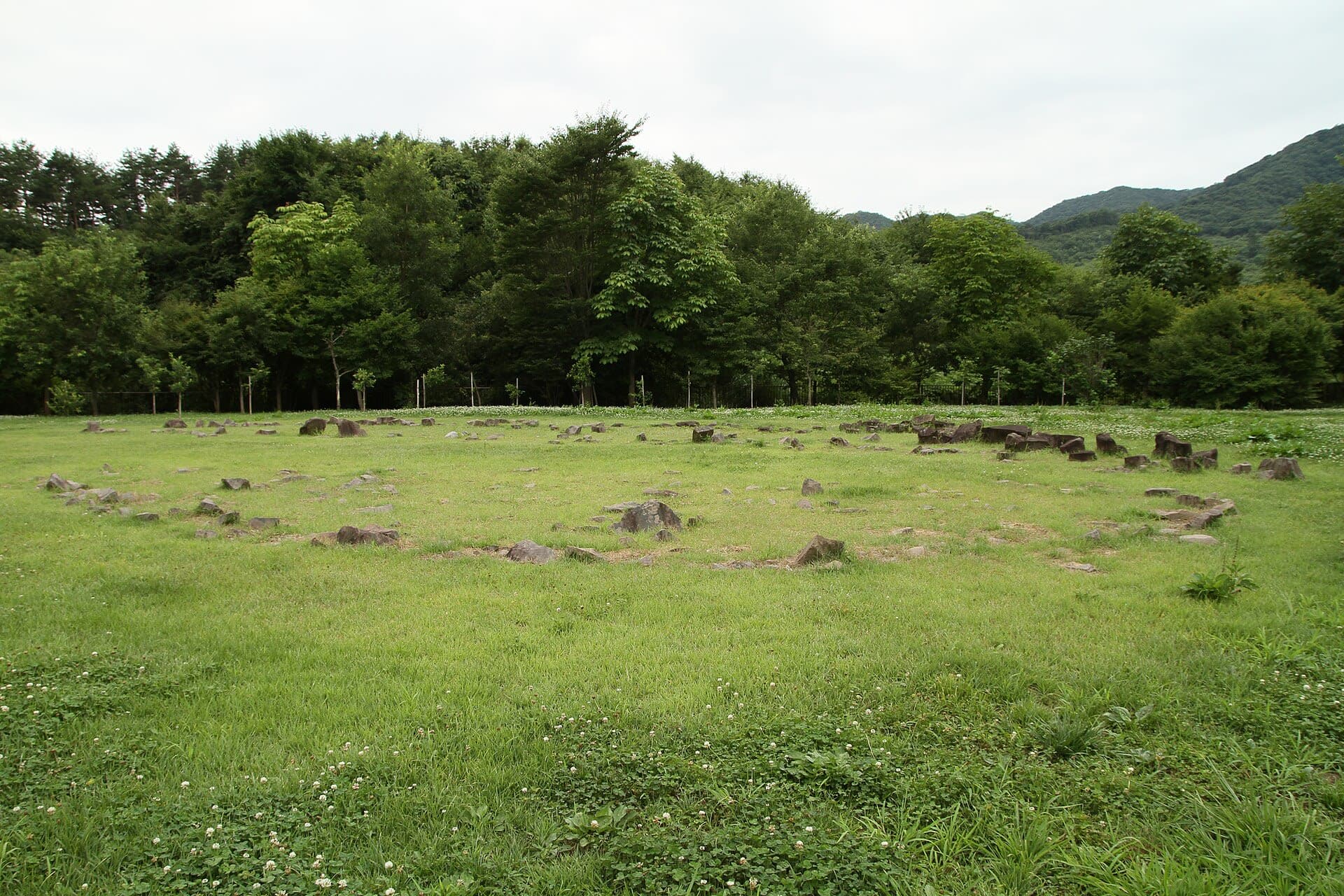
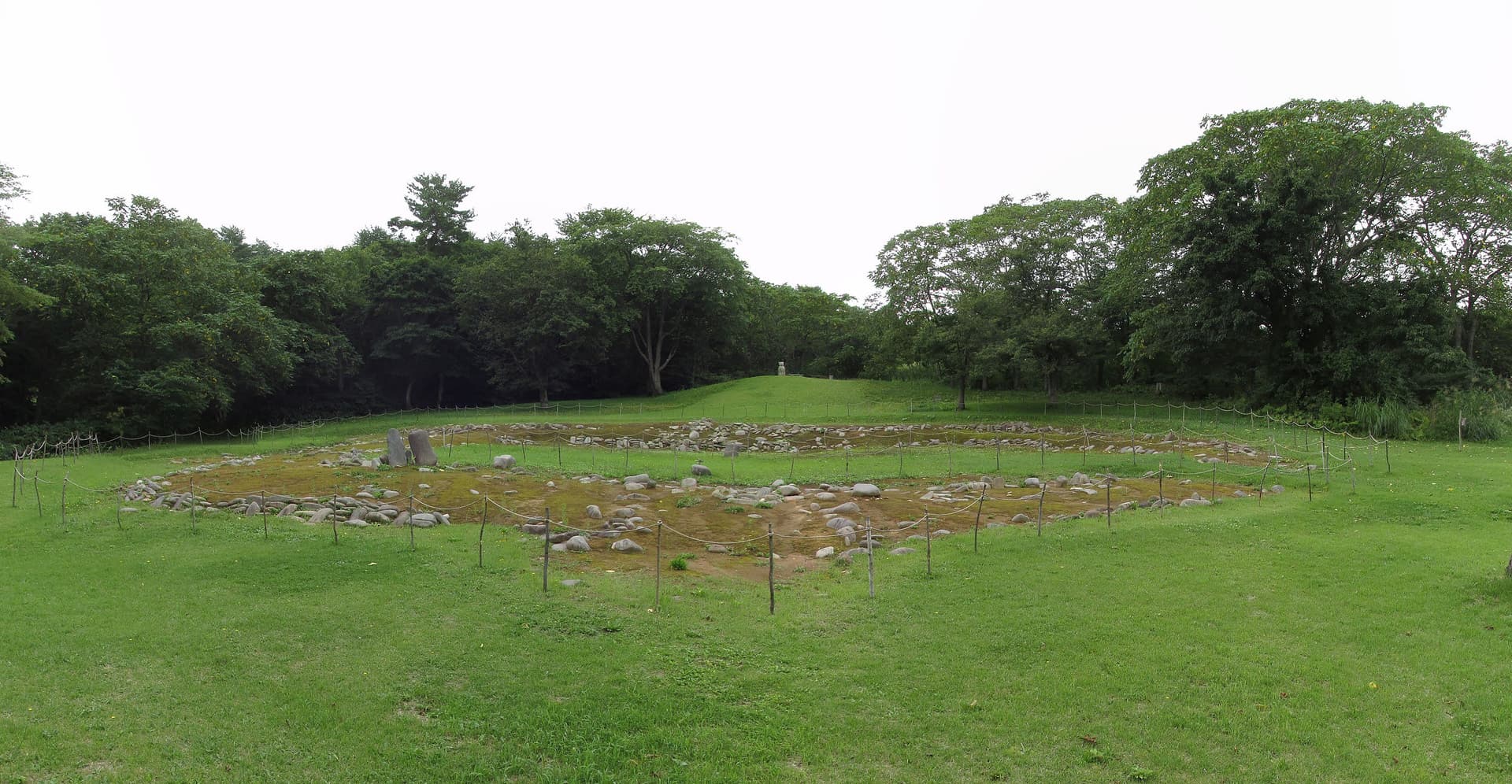
The settlement's layout reveals its organizing principle. Residential areas spread east and west; between them, a central zone held what mattered most—two elliptical stone arrangements (35 by 25 meters, and 25 by 20 meters) dense with burial pits. This was sacred ground, where daily life paused at the threshold of death.
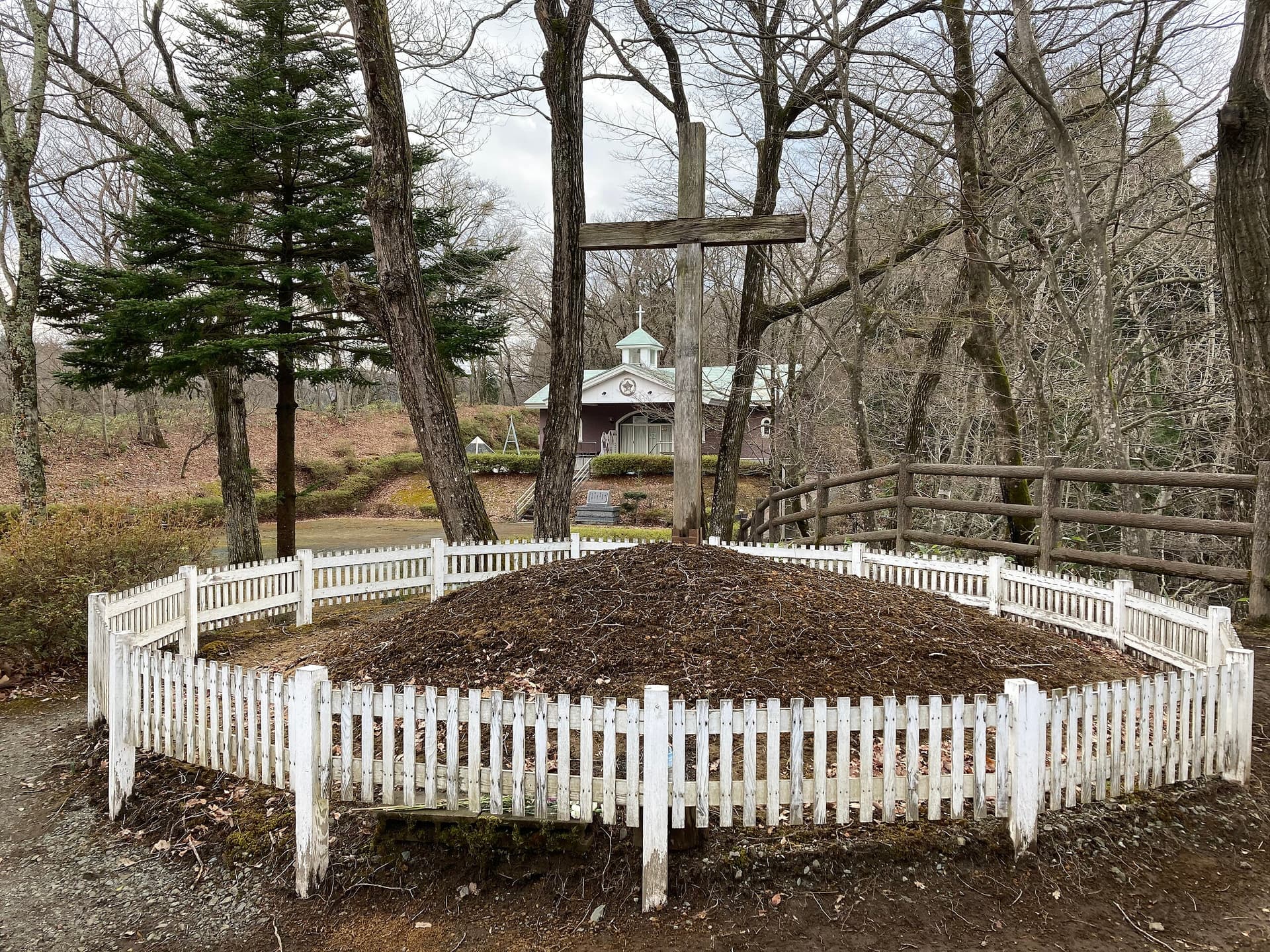
Along the southern edge of the central plaza rose earthen mounds whose contents archaeologists would later examine with care. Burned deer and wild boar bones. Charred chestnuts and walnuts. Clay figurines and ritual objects. These were not casual deposits but repeated offerings—fire ceremonies conducted generation after generation, the residue of each adding to what previous generations had left.
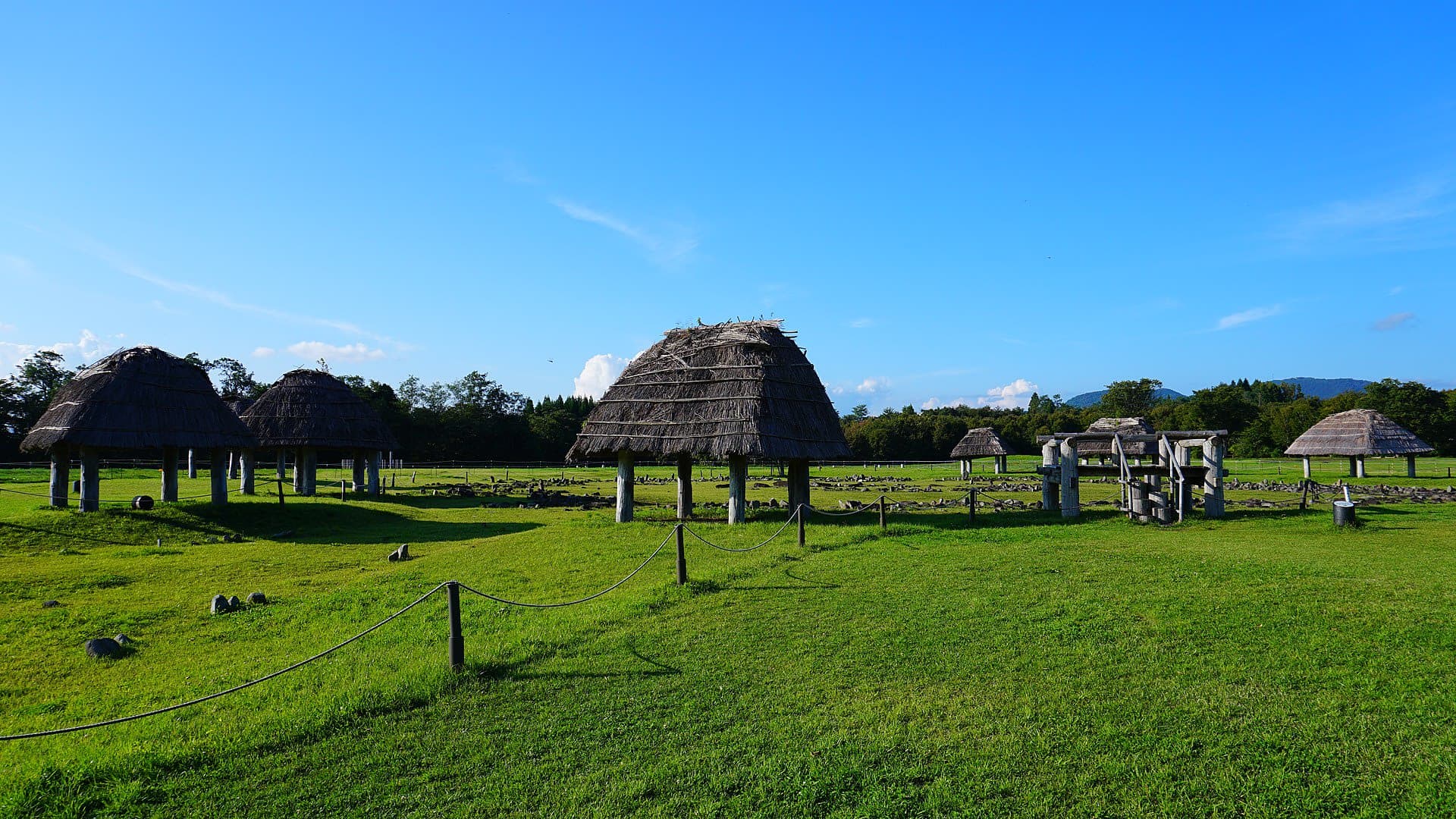
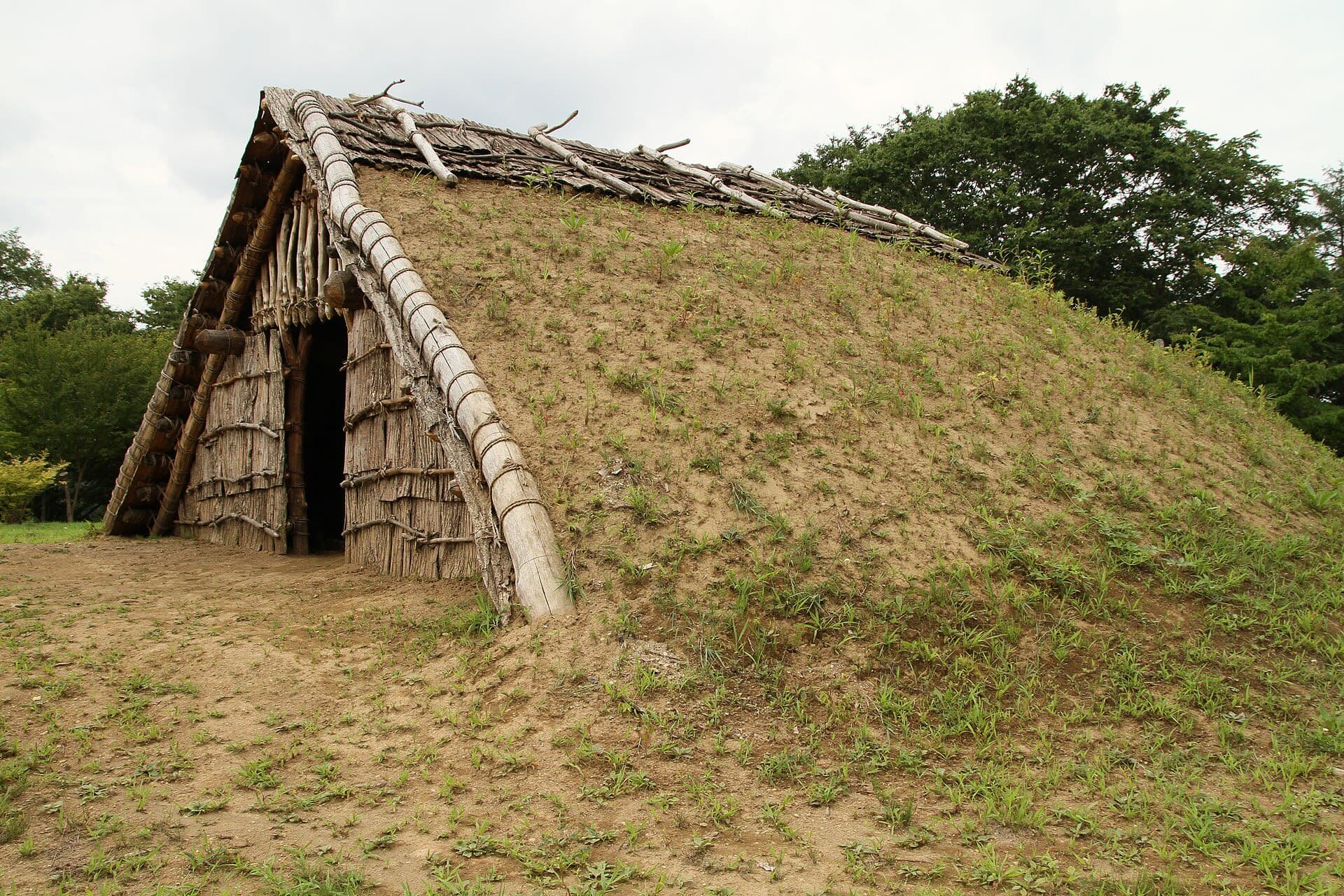
Goshono made archaeological history through its dwellings. Excavation here first proved that Jomon pit houses had earthen roofs—a discovery that reshaped understanding of how these people lived. The reconstructed dwellings now standing at the site reproduce this architecture, allowing visitors to enter structures that approximate what stood here five millennia ago.
Designated a UNESCO World Heritage site in 2021 as part of the 'Jomon Prehistoric Sites in Northern Japan,' Goshono offers one of the most complete pictures available of how Middle Jomon communities organized their lives around their dead and their ceremonies.
Context And Lineage
Goshono emerged during the Middle Jomon period (approximately 3000-2200 BCE) as a settlement deliberately organized around central burial grounds and fire ceremony areas. Its 800 years of continuous use represent one of the longest sustained occupations known from the Jomon period.
The Jomon period left no written records, and Goshono preserves no founding narrative. What archaeology reveals is a community that chose this river terrace and organized their settlement around principles that endured eight centuries.
The Mabechi River provided sustenance. Salmon and trout migrating upstream offered reliable seasonal food sources. The terrace elevation protected against flooding while maintaining access to the valley below. Practical considerations supported initial settlement.
But what made the site persist? Other locations might have served practical needs equally well. The 800 years of continuous occupation suggest that Goshono accrued significance beyond utility—that the buried dead, the accumulated ceremonies, the fire-offerings deposited generation after generation created a sacred geography that anchored the community to this place.
No continuous lineage connects Goshono to contemporary practice. The ceremonies that animated this site fell silent over four thousand years ago.
Yet the patterns visible here—fire offerings, ancestor burial at the community's center, ritual objects including clay figurines—find echoes in later Japanese spiritual traditions. The integration of death into community space rather than segregation to distant grounds, the use of fire to transform offerings, the creation of special objects for ceremonial use—these themes persist in Japanese religion even where specific practices differ.
The forty generations who sustained this site could not have known they were establishing patterns that would resonate across millennia. What they knew was that this place mattered, that their dead belonged here, that fire ceremonies at the earthen mounds served purposes important enough to continue year after year, generation after generation.
Why This Place Is Sacred
Goshono was organized around a threshold. The living dwelt on either side; the dead rested in the center; fire ceremonies at the earthen mounds mediated between them. Eight hundred years of continuous use suggests this particular place held significance that kept communities returning.
What made this river terrace thin—permeable to dimensions beyond ordinary life? At Goshono, the evidence points to deliberate spatial organization that placed death and ceremony at the community's heart.
The settlement's layout tells the story. East and west, pit dwellings clustered where families lived, cooked, slept, and carried on daily existence. Between these residential zones, a central open space held the stone-outlined burial grounds where the dead accumulated over eight centuries. This was not peripheral disposal but central placement—the ancestors dwelt among the living, or rather, the living arranged themselves around their dead.
The earthen mounds along the southern edge of this central space mark where fire transformed offerings. Excavation revealed layers of burned material: deer and wild boar bones reduced to char, chestnuts and walnuts scorched, clay figurines and ritual objects mixed among the remains. These deposits accumulated over centuries—not a single ceremony but a tradition sustained across forty generations.
The fire itself likely served as mediator. Fire transforms matter, releasing what had been solid into smoke that rises and disperses. Whether Jomon peoples understood fire as carrying offerings to ancestral spirits, to nature powers, or to presences we cannot name, the repeated practice indicates fire ceremonies were central to community life here.
The duration matters. Eight hundred years of continuous settlement and ceremony at a single location suggests this river terrace held significance that outlasted any individual or generation. Whatever made Goshono sacred persisted long enough to anchor a tradition across deep time.
Archaeological evidence indicates Goshono was a settlement integrated with ceremonial and burial functions from its founding. The careful organization of space—residential areas flanking a central ceremonial zone—appears to have been intentional rather than gradual. The site served simultaneously as village, cemetery, and sacred ground.
The settlement was used from approximately 3000 to 2200 BCE, spanning the Middle Jomon period. Discovery came in 1989 during construction for an industrial park. Systematic excavation followed, and in 1993 the site was designated a National Historic Site of Japan. The 1999 experimental burn of a reconstructed dwelling proved the earthen-roof construction technique. The Goshono Jomon Park opened in 2002 with reconstructed dwellings and museum. UNESCO inscription in 2021 confirmed the site's international significance.
Traditions And Practice
The fire ceremonies, burial rituals, and communal gatherings that animated Goshono for eight centuries have ceased. Today no active practice continues. Visitors engage through the reconstructed settlement, museum exhibits, and contemplation of the central burial grounds.
Archaeological evidence reveals repeated patterns of Jomon ceremonial activity at Goshono. Fire ceremonies at the earthen mounds involved burning animal bones (deer and wild boar) and plant materials (chestnuts and walnuts). The accumulation of these deposits over centuries indicates this was ongoing practice, not isolated events.
Clay figurines (dogu) found at the site suggest ritual use of crafted objects. The specific purpose of these figurines—whether representing spirits, ancestors, deities, or aspects of human experience—remains debated, but their presence in ceremonial contexts indicates they served purposes beyond decoration.
Burial practices centered on the stone-outlined areas in the settlement's heart. The integration of burial grounds with living space suggests the dead remained part of community life—not abandoned but continuously present, their resting place marked by the stone arrangements and surrounded by the activities of daily existence.
Seasonal gatherings likely occurred, given the site's scale. The central plaza could have accommodated ceremonies drawing participation from across the settlement. The timing of such gatherings—whether tied to salmon runs, harvests of nuts, solstices, or other markers—cannot be determined from archaeological evidence alone.
No religious practice continues at Goshono. The site serves educational and heritage preservation purposes through the Jomon Park and museum.
Without living tradition to guide practice, visitors must find their own modes of engagement. Some approaches:
Enter the reconstructed dwellings. Feel the earthen insulation, the dim interior light, the scale of the hearth pit. These structures housed families across eight centuries of community life.
Stand at the central burial grounds. The stones outline areas where the dead of forty generations accumulated. Consider that these were not strangers but members of a community that persisted here for eight hundred years—parents and children, elders and infants, all eventually joining the ancestors in this central ground.
Contemplate the earthen mounds. The fire ceremonies conducted here generation after generation produced the residue archaeologists later examined. What mattered enough to sustain this practice across centuries?
Silence serves this site. The voices of those who lived and worshipped here have been quiet for four millennia. Meeting that silence creates space for reflection.
Jomon spirituality
HistoricalGoshono provides one of the most complete pictures of Middle Jomon ceremonial life available. The site demonstrates that by approximately 3000 BCE, Jomon communities had developed sophisticated practices for honoring the dead, conducting fire ceremonies, and organizing settlement space around sacred functions. The 800 years of continuous use indicates these were not innovations but inherited traditions, transmitted across forty generations.
Fire ceremonies at earthen mounds involving burning of deer and wild boar bones, chestnuts, walnuts, and other offerings. Burial rituals at stone-outlined central areas. Creation and use of clay figurines (dogu) and other ritual objects. Communal gatherings at the central plaza for ceremonies whose timing and specific nature cannot be precisely reconstructed.
Experience And Perspectives
Visitors walk among reconstructed earthen-roof dwellings that bring the Jomon settlement to life, then stand at the central stone arrangements where eight centuries of burials accumulated. The on-site museum provides context through artifacts and exhibits on 'Fire and Festivals' in Jomon society.
The experience of Goshono is unusually tangible for a site this ancient.
The reconstructed pit dwellings allow entry into structures that approximate where Jomon families lived. The earthen roofs—thick layers of soil over timber frames—proved revolutionary when evidence at Goshono established this as authentic Jomon architecture. Stepping inside, you encounter the dim interior, the central hearth pit, the earth-insulated walls. This is not distant prehistory but a space you can occupy with your body.
The central ceremonial zone stretches between the residential reconstructions. Here the two stone-outlined burial areas mark where the community's dead accumulated over eight centuries. Walking among these outlines, visitors traverse ground that held profound significance for the people who lived here—the place where ancestors remained present, where living and dead shared space.
The earthen mounds along the southern edge are less visually dramatic but archaeologically crucial. These contained the residue of fire ceremonies conducted generation after generation: burned bones, charred offerings, ritual objects. The museum provides context for what these deposits reveal about Jomon ceremonial life.
The Goshono Jomon Museum offers essential preparation for understanding the site. Exhibits display artifacts from the excavation, including the clay figurines and ritual objects found in the earthen mounds. A special exhibition on 'Fire and Festivals' explores evidence for Jomon ceremonial practice. The museum also explains the earthen-roof discovery that made Goshono significant beyond its local history.
The landscape itself frames the experience. The Mabechi River valley supported the salmon and trout runs that fed this community. The forested hills surrounding the site approximate the environment Jomon peoples knew. Standing here, you perceive why this river terrace sustained a community for forty generations.
Begin at the Goshono Jomon Museum to understand what you will encounter. The exhibits prepare you to recognize the significance of features that might otherwise appear as simple mounds and stone outlines. Then walk among the reconstructed dwellings, entering them to experience the interior spaces. Approach the central burial grounds with awareness that this was the sacred heart of the settlement. Consider that the bones beneath your feet were tended by communities who returned here across eight centuries.
Goshono can be approached as an archaeological site documenting Middle Jomon settlement and ceremony, as evidence of sophisticated spiritual practices centered on fire and ancestor veneration, or as a place where human responses to death found sustained expression across eight centuries.
Archaeological consensus recognizes Goshono as providing crucial evidence for understanding Middle Jomon settlement organization and ceremonial practice. The clear spatial differentiation between residential areas and the central ceremonial/burial zone reveals how Jomon communities structured their relationship between living and dead.
The site's most significant contribution to archaeological knowledge was the definitive proof that Jomon pit dwellings had earthen roofs. An experimental burn of a reconstructed dwelling in 1999 produced archaeological residue matching what excavation had revealed, confirming this architectural technique.
The 800 years of continuous occupation—spanning approximately forty generations—represents one of the longest sustained settlements known from the Jomon period. This duration indicates social stability and the transmission of cultural practices across deep time.
UNESCO inscription in 2021 confirms international recognition of Goshono's Outstanding Universal Value as part of the Jomon cultural complex demonstrating sophisticated social organization among pre-agricultural peoples.
The Jomon period predates written records and any living tradition by millennia. No lineage claims Goshono or can explain its practices from within.
Yet the patterns visible here echo across Japanese spiritual history. Fire offerings persisted into later traditions—the goma fire ceremonies of Shingon Buddhism, though arising from different sources, employ fire to transform offerings in ways that rhyme with the earthen mound deposits. The integration of ancestor burial within community space rather than distant segregation anticipates practices that continued in various forms.
These are resonances rather than direct connections. But they suggest that certain human intuitions about death, fire, and community found expression at Goshono that would find different expression in later traditions.
The specific beliefs motivating eight centuries of fire ceremonies cannot be recovered. Why chestnuts and walnuts were burned alongside animal bones, what words or songs accompanied the burning, what experiences participants sought or received—all this lies beyond the reach of archaeological evidence.
The meaning of the clay figurines (dogu) remains debated. Whether they represented spirits, ancestors, deities, fertility, or concepts we have no framework to name cannot be determined.
Why this particular river terrace sustained a community for forty generations, through climate changes and presumably social upheavals, is not fully understood. Something about this place—practical, spiritual, or both—kept people returning.
Visit Planning
Goshono Jomon Park is located in Ichinohe Town, Iwate Prefecture, accessible by car from the Tohoku Expressway or by taxi from JR/IGR rail stations. The park includes reconstructed dwellings and a museum with exhibits on Jomon life and fire ceremonies.
By car: 5 minutes from Ichinohe IC on the Tohoku Expressway, then via Route 4 toward the site.
By train: From JR Ninohe Station (Tohoku Shinkansen), taxi or car approximately 15 minutes. From IGR Ichinohe Station, taxi approximately 5 minutes.
The Goshono Jomon Museum serves as the main visitor facility with exhibits, restrooms, and shop. Interpretive trails connect the museum to the reconstructed settlement.
Accommodations are available in nearby Ninohe City and along the Tohoku Expressway corridor. The region offers a range of options from business hotels to traditional inns.
No active worship requires religious protocol. Standard respectful behavior at archaeological and heritage sites applies. The reconstructed dwellings may be entered according to posted guidelines.
Goshono is an archaeological site preserved as a heritage park, not an active place of worship. No religious community claims authority here; no ceremonies occur that visitors might interrupt.
The reconstructed dwellings are designed for entry, allowing visitors to experience the interior spaces of Jomon pit houses. Respect the structures by following posted guidelines for entry and behavior inside.
The burial grounds at the settlement's center deserve the same respect accorded any cemetery. While no specific religious observance is required, awareness that this was sacred ground for eight centuries of Jomon community life adds weight to the experience.
No specific requirements. Comfortable walking shoes are recommended for exploring the park and entering the reconstructed dwellings.
Photography is permitted throughout the park and in the reconstructed dwellings.
No tradition governs offerings at this archaeological site.
Respect reconstructed structures and archaeological features. Stay on designated paths in areas where access is marked.
Sacred Cluster
Nearby sacred places create the location cluster described in the growth plan. This block is intentionally crawlable and links into the wider regional graph.