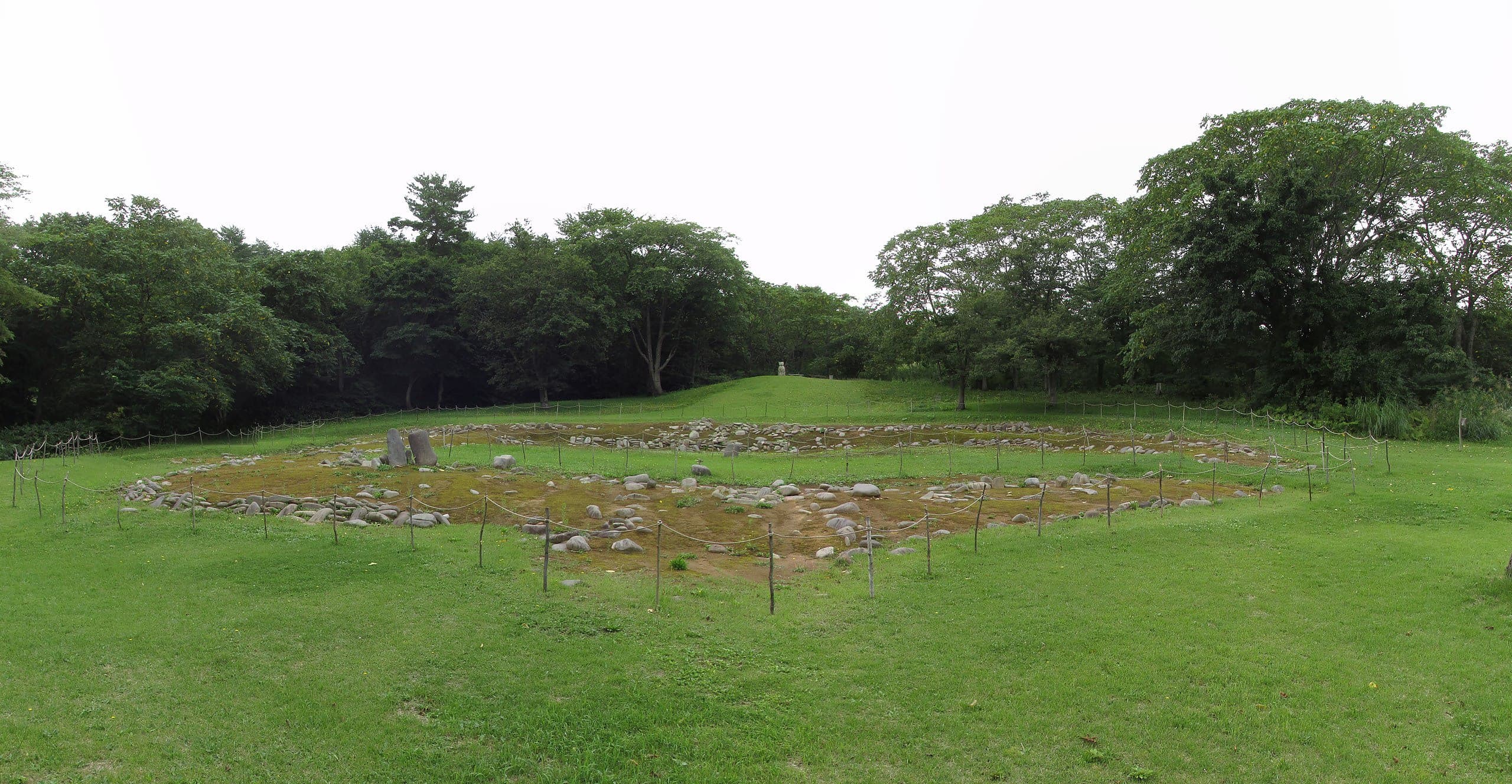
Komakino Stone Circle
Where Jomon ancestors arranged 2,900 stones in a pattern found nowhere else on earth
Aomori, Aomori Prefecture, Japan
At A Glance
- Coordinates
- 40.7376, 140.7278
- Suggested Duration
- Allow 1-2 hours for the stone circle site. Add another hour for the Komakino Museum. The museum is located 1.5 kilometers from the stone circles—approximately 5 minutes by car or 20 minutes on foot.
- Access
- By car: 30 minutes from JR Aomori Station, 15 minutes from Aomori Airport, 20 minutes from Aomori Chuo IC on the Tohoku Expressway. By bus: From Furukawa bus stop #3 (5 minutes walk from Aomori Station), take Aomori City Bus toward Nozawa. Alight at 'Nozawa' stop (approximately 25 minutes). From there, walk 30 minutes to the stone circle site or 15 minutes to the museum. The Komakino Museum (Jomon no Manabiya Komakino-kan) is the main visitor facility with free admission, exhibits, and restrooms. The 'Donguri no Ie' visitor center near the stone circle site is also available during the open season.
Pilgrim Tips
- By car: 30 minutes from JR Aomori Station, 15 minutes from Aomori Airport, 20 minutes from Aomori Chuo IC on the Tohoku Expressway. By bus: From Furukawa bus stop #3 (5 minutes walk from Aomori Station), take Aomori City Bus toward Nozawa. Alight at 'Nozawa' stop (approximately 25 minutes). From there, walk 30 minutes to the stone circle site or 15 minutes to the museum. The Komakino Museum (Jomon no Manabiya Komakino-kan) is the main visitor facility with free admission, exhibits, and restrooms. The 'Donguri no Ie' visitor center near the stone circle site is also available during the open season.
- No specific requirements. Comfortable walking shoes are recommended for the uneven terrain of the stone circle site and the path from the museum.
- Photography is permitted throughout the site.
- The stone arrangements have been reconstructed for educational purposes. While they can be walked among, visitors should not touch or climb on the stones. The burial grounds beneath the surface require the same respect accorded any cemetery.
Overview
Four thousand years ago, Jomon communities leveled a hilltop and arranged nearly three thousand stones in a configuration so distinctive that archaeologists named it the 'Komakino style'—a vertical arrangement with flanking flat stones found at no other site in Japan. More than a hundred burial pits lie beneath the circles, marking this ridge as a threshold between worlds where the living gathered to honor their dead.
On a tongue-shaped plateau overlooking Aomori Plain, the Jomon people built something they would maintain for centuries: a ceremonial ground where the arrangement of stones spoke a language we can observe but not fully translate.
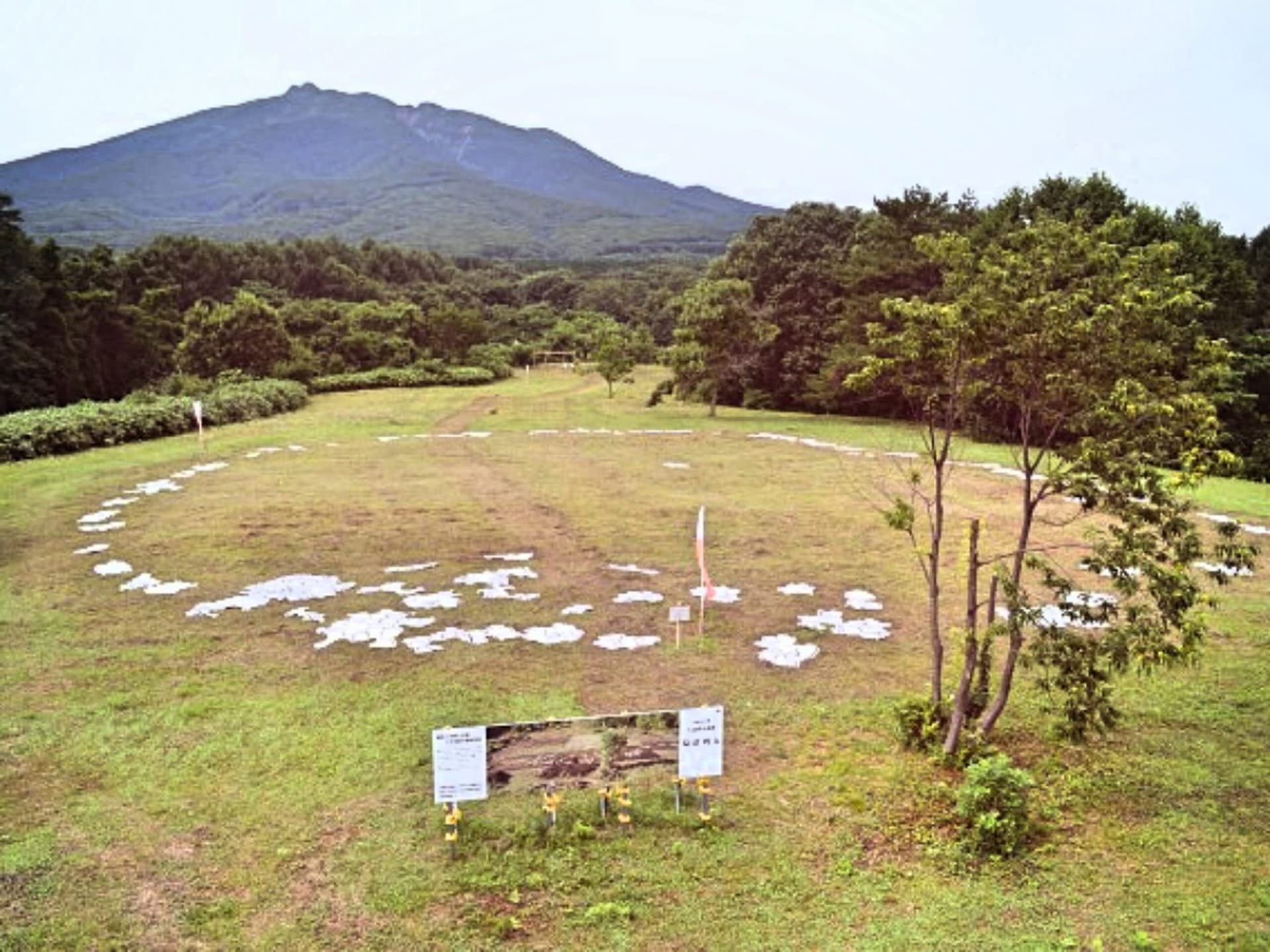
Approximately 2,900 stones, weighing over 31 tons collectively, were carried from the Arakawa River more than a kilometer away. But it was not the quantity that distinguished Komakino—it was the arrangement. Here, stones were set vertically with flat stones flanking them on either side, creating three-dimensional structures unlike anything found elsewhere in Japan. This 'Komakino style' represents either the innovation of this particular community or knowledge now lost from all other sites.
Beneath and around these stone arrangements, archaeologists discovered over 100 burial pits. Some contained pottery jars holding the remains of secondary burials—bones that had been exhumed, cleaned, and reinterred in vessels crafted for this purpose. The dead were not merely disposed of here; they were tended across time.
Today Komakino stands as one of seventeen UNESCO World Heritage Jomon sites in northern Japan. The reconstructed stone circles allow visitors to walk where four millennia of weather and silence have passed since the last ceremonies fell quiet. The Komakino Museum nearby houses artifacts including over 400 triangular stones whose purpose remains unexplained—ritual objects from a tradition that left no interpreter.
Context And Lineage
Komakino emerged during the Late Jomon period (approximately 2000-1500 BCE) as a specialized ceremonial and burial site serving communities across the Aomori region. Its unique stone arrangement style and the scale of construction indicate it held regional significance beyond any single settlement.
The Jomon period left no written records, and Komakino offers no founding narrative in the conventional sense. What archaeology reveals is intentionality: the ground was deliberately leveled before construction, indicating this was a planned ceremonial site rather than an organic development from settlement activity.
The selection of this location appears significant. The plateau sits at 80-160 meters elevation on a tongue of land between the Arakawa and Nyunai Rivers, offering commanding views of the plain below. Whether Jomon peoples were drawn by the elevation, the proximity to water, the configuration of the landform, or factors we cannot perceive, they chose this spot for activities too important for the valley floor.
Over subsequent centuries, approximately 2,900 stones were transported from the Arakawa River and arranged in the distinctive Komakino style. More than 100 burials accumulated. The site became—and for generations remained—a place where Jomon communities brought their dead and conducted whatever ceremonies attended that transition.
No continuous lineage connects Komakino to contemporary practice. The site fell silent sometime after 1500 BCE, and no evidence suggests later peoples used or recognized its sacred function.
Yet the themes visible at Komakino—reverence for ancestors, the integration of burial with ceremony, the orientation of sacred sites toward significant landscape features—persist in Japanese spiritual traditions. Some scholars see in Jomon sites like Komakino the deep roots of concepts later formalized in Shinto: the veneration of ancestral spirits, the recognition of particular places as spiritually charged, the practice of communal ceremony at threshold moments like death.
This interpretation remains scholarly rather than traditional. No living tradition claims Komakino. But the continuities invite reflection on how long certain human intuitions about death, ancestors, and sacred landscape have persisted in this region.
Why This Place Is Sacred
Komakino was built as a threshold between the living and the dead. The integration of burial grounds with ceremonial space, the unique stone arrangements found nowhere else, and the evidence of secondary burial practices all indicate this ridge was understood as a place where ancestors remained accessible to the community.
What makes a place thin—permeable to dimensions beyond the everyday? At Komakino, several factors converged to mark this hilltop as significant across centuries of Jomon ceremony.
The burial function was primary. Over 100 interments have been identified, including both primary burials and the distinctive secondary burials where remains were later exhumed and placed in pottery vessels. This practice suggests the dead were not abandoned to the earth but maintained in relationship with the living—their bones handled, their resting places revisited, their presence preserved within the ceremonial landscape.
The stones themselves carried meaning. The 'Komakino style'—vertical stones flanked by flat supporting stones—created structures quite different from the simple stone circles found at other Jomon sites. Whether this arrangement encoded specific beliefs about the cosmos, marked particular graves as significant, or served purposes we cannot reconstruct, its uniqueness suggests specialized knowledge developed and maintained here.
The more than 400 triangular stones found at the site present an enduring mystery. These objects appear to have been deliberately shaped and distributed throughout the ceremonial area, yet their function remains unknown. Ritual tools? Markers? Offerings? Each possibility opens questions archaeologists cannot definitively answer.
The landscape itself may have mattered. Komakino sits on an elevated plateau between two rivers, overlooking the plain where Jomon communities lived and hunted. To bury one's dead in such a location—visible, exposed, between waters—suggests the plateau held significance beyond its practical suitability.
Archaeological evidence indicates Komakino was purpose-built as a ceremonial and burial site. The ground was artificially leveled before construction began, indicating deliberate planning rather than gradual accumulation. No evidence of permanent dwellings has been found—this was a place visited for specific purposes rather than continuously inhabited.
The site was used intensively during the Late Jomon period, roughly 2000-1500 BCE. After falling out of use, it remained undisturbed until 1989, when the archaeology club of Aomori Yamada High School conducted initial excavations. Systematic archaeological work began in 1990 and continues to refine understanding of the site. In 1995, Komakino was designated a National Historic Site of Japan, and in 2021, it was inscribed as part of the UNESCO World Heritage 'Jomon Prehistoric Sites in Northern Japan.'
Traditions And Practice
The funeral ceremonies, secondary burial rituals, and communal gatherings that animated Komakino ceased millennia ago. Today no active practice continues. Visitors engage through contemplation, museum study, and respectful walking among the reconstructed stone arrangements.
Archaeological evidence allows partial reconstruction of Jomon practices at Komakino. Burial was the central function. Primary interments placed the dead directly in earth pits. Later, some remains were exhumed, the bones cleaned or processed, and reinterred in pottery vessels—a practice suggesting ongoing relationship between living community and dead ancestors.
The distinctive stone arrangements appear to have marked or accompanied burials, though the precise relationship between specific stone configurations and individual graves remains unclear. Over 400 triangular stones found throughout the site likely served ritual purposes, though their exact function cannot be determined.
Miniature pottery vessels and clay figurines found at the site suggest offerings—perhaps to ancestors, perhaps to spirits, perhaps to presences we cannot name without access to Jomon cosmology. The absence of dwelling structures indicates this was a place visited for ceremonial purposes rather than continuously inhabited.
Seasonal gatherings seem likely given the site's scale, though their timing cannot be established. The communal effort required to transport and arrange nearly 3,000 stones suggests ceremonies that brought people together from across the region.
No religious practice continues at Komakino. The site serves educational and heritage preservation purposes.
Without living tradition to guide engagement, visitors must find their own modes of approach. Some possibilities:
At the museum, attend to the burial pottery—vessels crafted to hold the remains of the dead for secondary interment. Consider the hands that made them, the ceremonies they served, the bones they once contained.
At the stone circles, walk slowly. The 'Komakino style' arrangement is unlike anything you will see elsewhere. Notice how the vertical stones stand between their flanking companions. Consider the effort required to transport and position them.
Remember the dead. Over 100 individuals lie beneath this ground. They were not strangers to each other or to the communities who interred them. They were fathers, mothers, children, elders—people whose deaths warranted the labor of this place and the attention of these ceremonies.
Silence suits this site. The voices that once accompanied these burials have been quiet for four thousand years. Meeting that silence with your own creates space for whatever remains.
Jomon spirituality
HistoricalKomakino represents one of the most elaborate expressions of Jomon ceremonial practice centered on death and ancestor veneration. The site demonstrates that by the Late Jomon period (approximately 2000-1500 BCE), communities were investing enormous collective effort in constructing and maintaining places where the dead could be properly tended. The unique 'Komakino style' stone arrangement—found nowhere else in Japan—indicates specialized ritual knowledge developed and preserved at this site across generations.
Funeral ceremonies with burial in earth pit tombs. Secondary burial practices in which bones were exhumed, processed, and reinterred in pottery vessels. Ritual use of over 400 triangular stones of unknown purpose. Offerings of miniature pottery and clay figurines. Communal gatherings at the stone circle, likely for ceremonies whose timing and nature cannot be precisely reconstructed.
Experience And Perspectives
Walking among the reconstructed stone circles, visitors encounter both the visible arrangement of stones and the invisible presence of ancestors buried beneath. The hilltop setting offers views across Aomori Plain, contextualizing why Jomon peoples chose this elevation for their most sacred activities.
The experience of Komakino unfolds in two registers: what can be seen and what must be imagined.
The visible elements are substantial. The stone circles have been reconstructed based on archaeological evidence, allowing visitors to perceive the spatial logic of the original arrangement. The 'Komakino style' is immediately distinctive—these are not flat circles but three-dimensional structures where vertical stones rise between flanking supporters. Walking among them, you encounter stones that were carried considerable distances by people who believed this arrangement mattered enough to warrant the effort.
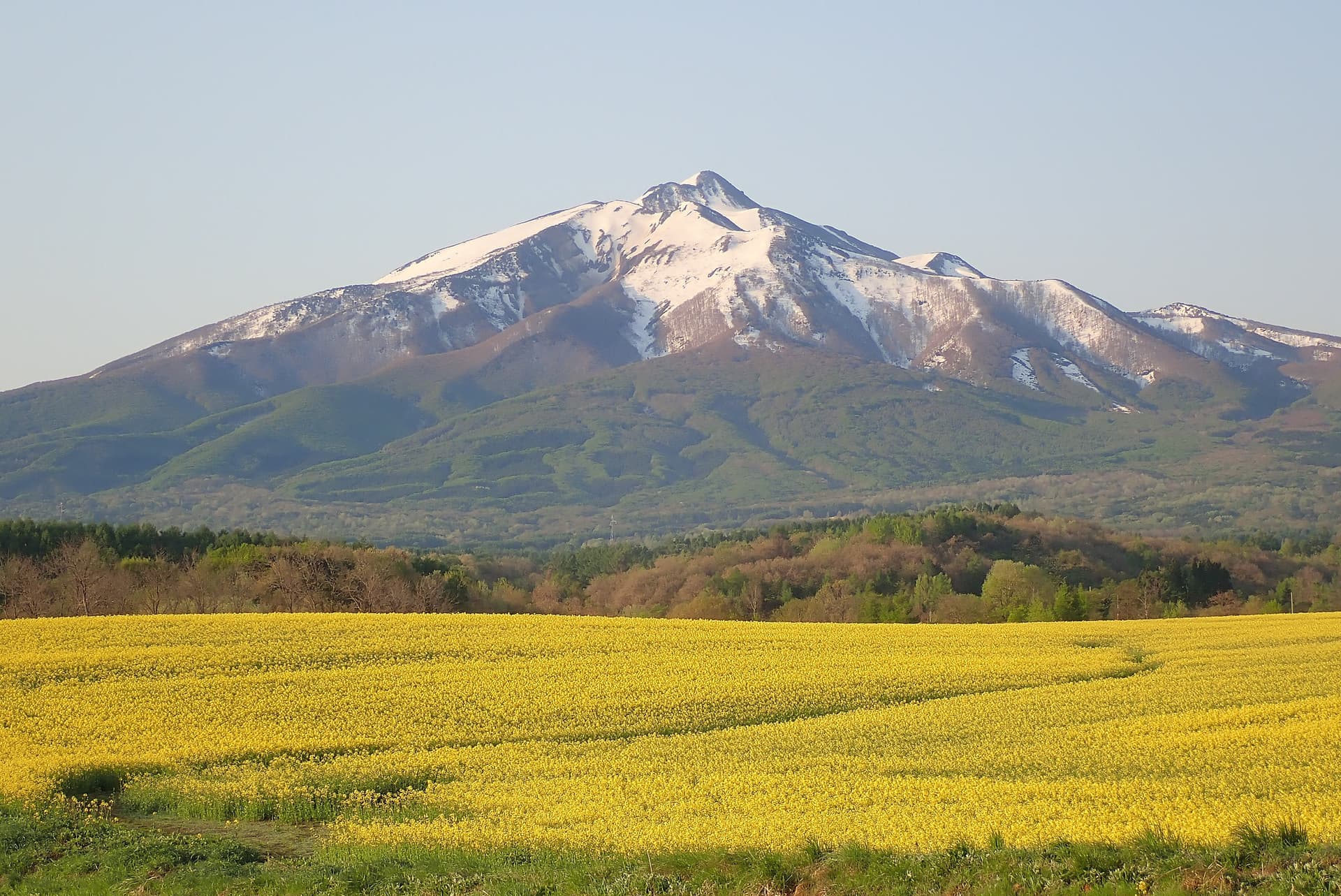
The hilltop location places visitors in relationship with the broader landscape. Aomori Plain spreads below; the forested slopes of the Hakkoda foothills rise behind. The Arakawa River, source of the stones, flows in the middle distance. Standing here, you understand the choice of this particular place—elevated, commanding, set apart from daily habitation.
What cannot be seen remains equally present in awareness. Over 100 burials lie beneath the stones. The bones of secondary burials were once held in human hands, cleaned and placed in pottery vessels by family members who could not or would not simply abandon their dead. This knowledge transforms the stone circles from archaeological curiosity to ancestral ground.
The adjacent Komakino Preservation Museum (Jomon no Manabiya Komakino-kan) provides context that deepens the on-site experience. Exhibits detail the excavation findings, display artifacts including ritual objects and burial pottery, and explain the significance of the site within broader Jomon culture. The museum's mascot, Komakku—a bear-shaped figure inspired by artifacts found at the site—offers a gentler entry point for younger visitors.
Begin at the Komakino Museum to establish context. The exhibits prepare you to understand what you will encounter at the stone circles, located 1.5 kilometers away. At the site itself, walk slowly among the reconstructed arrangements. Notice the distinctive vertical-and-flanking configuration. Consider that beneath your feet, over 100 individuals were interred by communities who returned here across generations. Face the plain below and imagine the settlements whose dead were carried up this hillside. Allow time for the site to register beyond its archaeological interest.
Komakino can be approached as an archaeological site documenting prehistoric Japan, as evidence of early spiritual practice centered on ancestor veneration, or as a landscape where human responses to death found expression across centuries. Each perspective illuminates different aspects of what remains.
Archaeological consensus recognizes Komakino as one of Japan's largest and most significant stone circles, distinguished by its unique 'Komakino style' arrangement found at no other site. The scale of construction—nearly 2,900 stones transported from a considerable distance—indicates social organization capable of sustained communal effort.
The integration of burial function with stone circle construction provides important evidence for understanding Jomon ceremonial practice. The secondary burial tradition, in which remains were exhumed and reinterred in pottery vessels, suggests beliefs about death and ancestors more complex than simple disposal of the dead.
The 2021 UNESCO World Heritage inscription confirms international recognition of Komakino's Outstanding Universal Value as part of the Jomon cultural complex. The inscription particularly notes the sophistication of Jomon society as a pre-agricultural sedentary culture—a relatively rare pattern in human history.
The Jomon period predates written records and any living tradition by millennia. No indigenous lineage claims Komakino or can explain its practices from within.
Yet the ceremonial patterns visible here—ancestor veneration, communal gathering at burial grounds, the marking of threshold places with massive construction effort—find echoes in later Japanese spiritual traditions. Some scholars interpret sites like Komakino as early expressions of sensibilities that would eventually formalize in Shinto: reverence for ancestral spirits, recognition of particular landscapes as spiritually charged, the practice of ceremony at transitional moments.
This interpretation remains scholarly inference rather than traditional teaching. No one living can tell you what Komakino meant to those who built it. But the continuities across four thousand years of Japanese spiritual life invite reflection.
Some writers draw connections between Japanese stone circles and megalithic monuments elsewhere in the world—European sites like Stonehenge, or stone circles in other Asian contexts. The pattern of prehistoric peoples arranging large stones in circular formations appears across many cultures, suggesting either contact, shared human tendencies, or independent discovery of similar expressions.
Others frame Jomon sites like Komakino as evidence of sophisticated knowledge systems—astronomical, cosmological, spiritual—that challenge assumptions about 'primitive' prehistoric societies.
Fundamental questions about Komakino remain unanswerable with current evidence. The exact purpose of the distinctive 'Komakino style' arrangement and why it developed here alone among all Jomon sites is unknown. The function of the more than 400 triangular stones cannot be determined. Whether the stone circles had astronomical alignments has not been conclusively established.
The specific ceremonies conducted here—the words spoken, the movements performed, the experiences sought—cannot be recovered. We have the material traces; the meaning that animated them is silent.
Visit Planning
Komakino is accessible by car or bus from Aomori City. The site is open May through mid-November; winter closure protects the site from snow damage. The nearby Komakino Museum provides essential context and can be visited year-round.
By car: 30 minutes from JR Aomori Station, 15 minutes from Aomori Airport, 20 minutes from Aomori Chuo IC on the Tohoku Expressway.
By bus: From Furukawa bus stop #3 (5 minutes walk from Aomori Station), take Aomori City Bus toward Nozawa. Alight at 'Nozawa' stop (approximately 25 minutes). From there, walk 30 minutes to the stone circle site or 15 minutes to the museum.
The Komakino Museum (Jomon no Manabiya Komakino-kan) is the main visitor facility with free admission, exhibits, and restrooms. The 'Donguri no Ie' visitor center near the stone circle site is also available during the open season.
Accommodations are available in Aomori City, approximately 30 minutes from the site. Options range from business hotels near the station to traditional ryokan.
No active worship requires religious protocol. The primary etiquette concerns respect for the burial grounds that underlie the site and preservation of the reconstructed stone arrangements.
Komakino is an archaeological site and World Heritage property, not an active place of worship. No religious community claims authority here; no ceremonies occur that visitors might interrupt. The etiquette concerns relationship with both the ancient dead and the preserved remains they left.
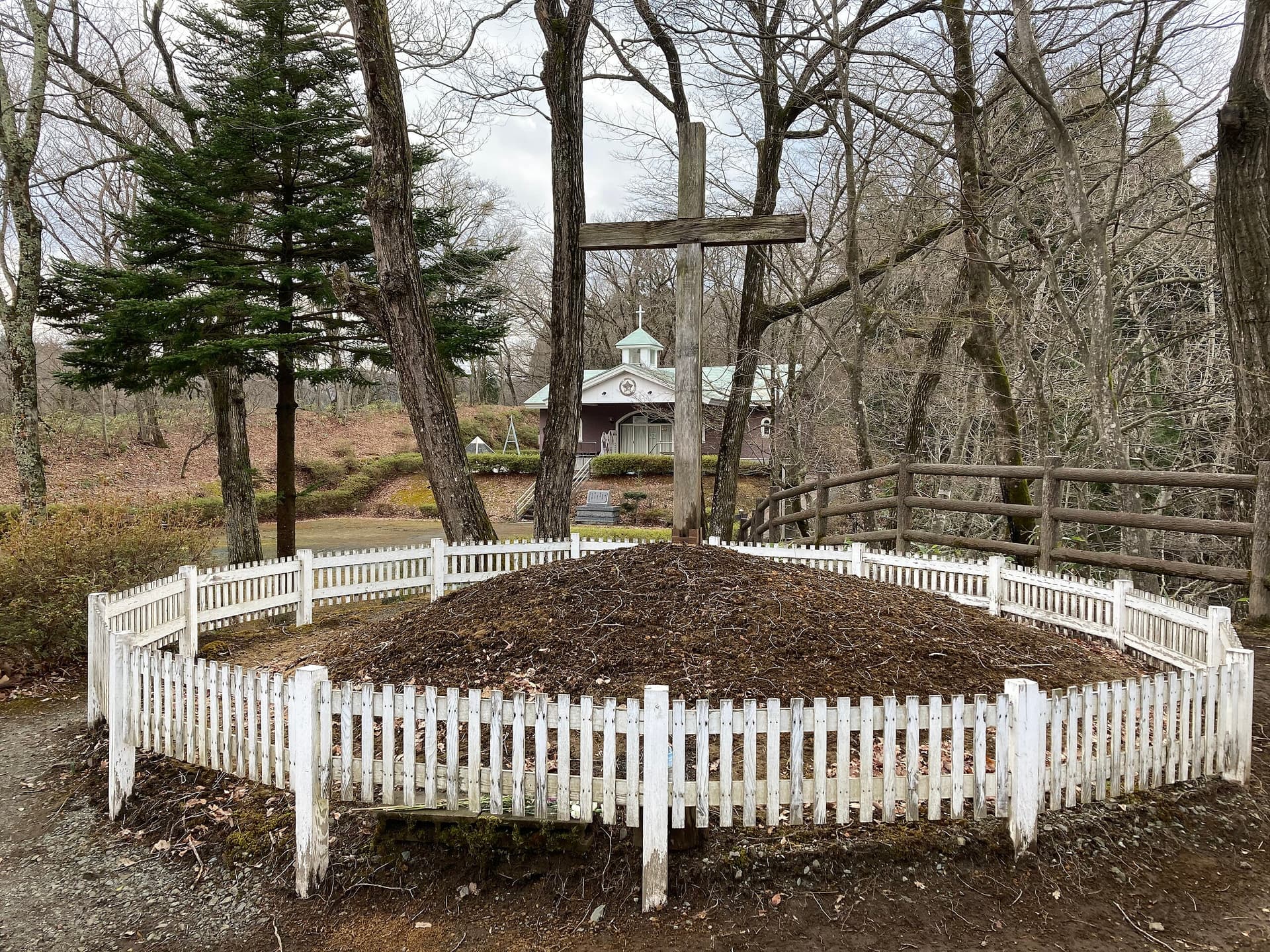
The burial grounds beneath the stone circles deserve the same respect accorded any cemetery. Over 100 individuals lie here—not abstractions but people who lived, died, and were mourned by communities who built this place to honor them. Walking above these burials, visitors participate in a long tradition of coming to this hilltop to acknowledge the dead.
The reconstructed stone arrangements represent careful archaeological work to approximate the original configuration. They should not be touched, climbed upon, or disturbed. Preservation of the site depends on visitors treating it with care.
No specific requirements. Comfortable walking shoes are recommended for the uneven terrain of the stone circle site and the path from the museum.
Photography is permitted throughout the site.
No active tradition governs offerings. The site is preserved as an archaeological and heritage property; leaving offerings is neither expected nor prohibited but should be done in ways that do not disturb the site.
The site is closed from November 16 through April 30 due to winter weather. During the open season (May 1 - November 15), visitors should stay on designated paths and not disturb the stone arrangements or grounds.
Sacred Cluster
Nearby sacred places create the location cluster described in the growth plan. This block is intentionally crawlable and links into the wider regional graph.