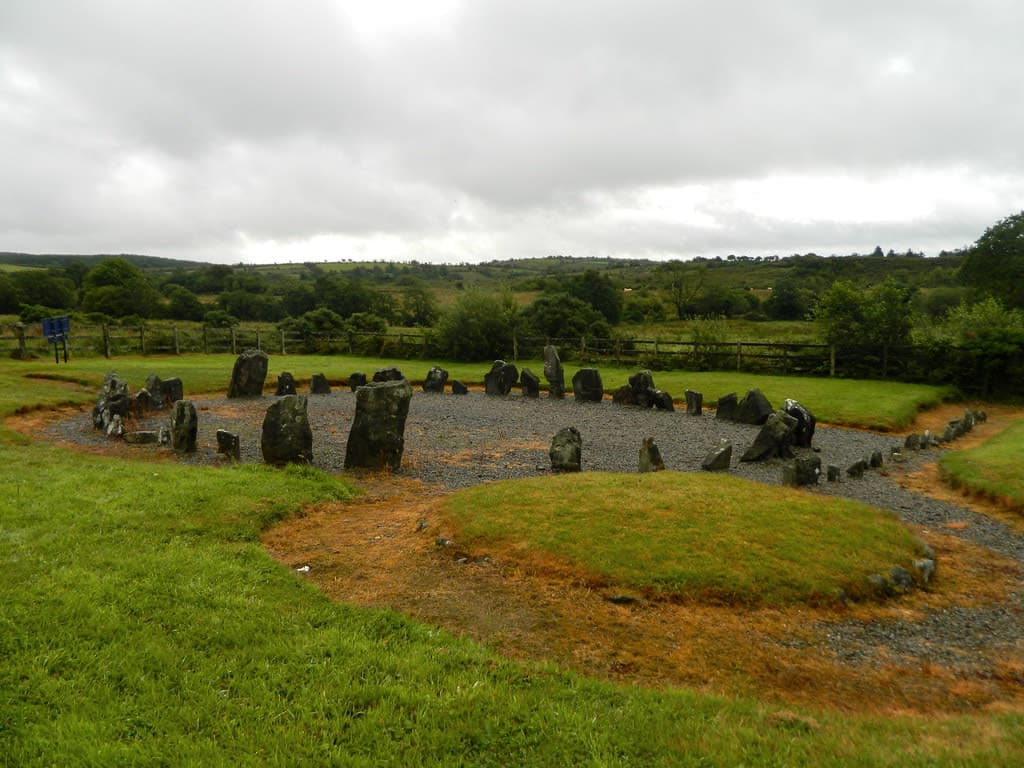
Drumskinny Stone Circle, Drumskinny, Ireland
Where Bronze Age builders arranged stones to mark the meeting of earth and sky
County Fermanagh, Northern Ireland, United Kingdom
At A Glance
- Coordinates
- 54.5844, -7.6901
- Suggested Duration
- A quick viewing takes fifteen to thirty minutes. A meaningful visit allowing time to walk the circle, observe the cairn and alignment, and sit in contemplation requires thirty to sixty minutes or more. There is no upper limit if the weather cooperates and your schedule permits.
Pilgrim Tips
- No formal requirements apply. Practical considerations matter more: the ground can be wet and uneven despite gravel paths, so footwear with grip is advisable. The site is exposed to weather, so layers and rain gear serve visitors well during Ireland's frequent showers.
- Photography is permitted and encouraged. No restrictions on personal photography apply. The site's relative obscurity means you are unlikely to encounter other photographers competing for angles. Dawn and late afternoon offer the most atmospheric lighting, though overcast conditions produce their own mood.
- Drumskinny is a protected monument. Do not touch, climb on, or move any stones. Do not leave offerings that would require removal. If you wish to make an offering, make it internal: a moment of gratitude, a silent intention, attention itself. The site can be boggy in wet weather despite drainage. Appropriate footwear matters more than spiritual preparation. No guides or tour operators offer services at Drumskinny. This is not a gap to fill but a feature to appreciate. You are responsible for your own experience here.
Overview
Rising from drained bogland in County Fermanagh, Drumskinny preserves a complete Bronze Age ceremonial landscape: stone circle, kerbed cairn, and alignment, arranged with intention we can observe but not fully recover. This intimate complex offers what larger monuments often cannot: solitude, stillness, and unmediated encounter with four millennia of human seeking.
Drumskinny was lost for centuries. The peat bog crept over it slowly, burying thirty-nine stones, a carefully constructed cairn, and a row of markers pointing toward purposes we may never understand. When excavators drained the site in 1962, they uncovered a complete Bronze Age ceremonial landscape, preserved by the very earth that had hidden it.
What remains is modest in scale but complete in conception. The stone circle measures barely thirteen meters across, its stones never reaching higher than a tall person. Yet the arrangement speaks of deliberate planning: entrances at cardinal points, the tallest stones positioned to the south-southeast, a cairn placed precisely northwest of the circle, and an alignment of small stones extending southward from cairn to circle as if connecting two ideas.
No one knows what ceremonies took place here. The cairn, despite its funerary-style construction, contained no burial. The alignment points toward something, but toward what? The builders possessed knowledge of astronomy and stone-working that allowed them to create sites like this across mid-Ulster. They left their work but not their words.
Today Drumskinny stands in quiet farmland, visited by those who find their way here. No crowds. No interpretation centers. Just the stones, the sky, and whatever meaning a visitor brings or discovers.
Context And Lineage
Drumskinny was constructed during the late Neolithic or early Bronze Age, around 2250-2000 BCE, as part of a distinctive tradition of stone circles concentrated in mid-Ulster. The site remained in use for an unknown period before being gradually covered by encroaching peat bog. Discovered in 1934 and excavated in 1962, it is now a State Care Historic Monument maintained by Northern Ireland's Department for Communities.
No founding narrative survives for Drumskinny. The builders left no written records, and later Irish tradition, though rich in stone circle folklore, attached no specific legends to this site. What we know comes from the stones themselves and from comparison with similar monuments across mid-Ulster.
The Mid-Ulster stone circle tradition produced over one hundred circles across Tyrone, Fermanagh, and Derry. These circles share distinctive features: numerous small stones rather than a few massive ones, frequent association with cairns and alignments, and consistent astronomical orientations. Drumskinny belongs to this tradition, its construction reflecting knowledge and practices shared across communities separated by miles but connected by culture.
Why this specific location? The presence of at least four other stone circles within a few kilometers suggests the area held regional significance. Perhaps a spring, a sightline, or some quality of the land now invisible guided the choice. The builders knew what they were doing; we can only observe the result.
The builders of Drumskinny were part of communities who inhabited Ireland for at least two thousand years before the arrival of Celtic peoples. Their monuments dot the landscape: wedge tombs, court tombs, passage graves, and the distinctive stone circles of mid-Ulster. They possessed astronomical knowledge, organized labor for monumental construction, and maintained ceremonial traditions across generations.
What happened to them remains unclear. They did not write; they left only stones and pottery. Later Celtic and then Christian cultures built their own sacred sites, sometimes incorporating older monuments, sometimes ignoring them. The continuity between Bronze Age builders and later Irish tradition is a matter of scholarly debate.
Today, Drumskinny exists outside any living religious tradition. It is cared for by the state, visited by tourists and seekers, and studied by archaeologists. The lineage of attention continues, even as the lineage of practice has long ended.
The Builders
historical
Anonymous prehistoric communities of the Mid-Ulster region who constructed Drumskinny and the cluster of nearby stone circles. They possessed sophisticated knowledge of stone-working, celestial observation, and ritual landscape design. Their beliefs and social organization remain matters of archaeological inference.
D.M. Waterman
historical
The archaeologist who excavated Drumskinny in 1962 on behalf of the Ancient Monuments Branch. His work drained the site, documented its arrangement, and preserved it for future generations. Stones replaced during excavation bear 'MOF' markings indicating Ministry of Finance involvement.
Why This Place Is Sacred
Drumskinny's sacredness emerges from its completeness as a Bronze Age ceremonial complex, its preservation through millennia of burial beneath peat, and its position within a landscape where prehistoric communities built at least five stone circles in close proximity. The combination of circle, cairn, and alignment suggests this was a place designed for encounter between worlds: earth and sky, living and ancestors, human and cosmic time.
The builders of Drumskinny chose this location with intention. They placed their circle on upland terrain east of Lower Lough Erne, within sight of other circles, within a landscape that clearly held significance for communities across generations. At least five stone circles stand within a few kilometers of each other here, suggesting this entire area carried special meaning.
What distinguishes Drumskinny is the completeness of its ceremonial arrangement. Most stone circles stand alone or survive only partially. Here, the full constellation of elements remains: the circle itself with its multiple potential entrances, the kerbed cairn with its mysterious ellipse of small standing stones at the center, and the stone alignment extending between them. Whatever the builders intended, this was not casual construction.
The site's burial beneath peat paradoxically preserved what might otherwise have been dismantled or scattered. When excavation revealed the complex in 1962, stones that had been placed four thousand years ago remained largely in position. The conservators who reset fallen stones marked them, distinguishing original placement from reconstruction. The honesty of this approach adds rather than detracts from the site's power.
In Irish folk tradition, stone circles are understood as liminal spaces where the boundary between worlds grows thin. The Tuatha De Danann, the Aos Si, the old powers of the land are associated with such places. While no specific legends attach to Drumskinny, it participates in this broader understanding. The gap between what the Bronze Age builders intended and what later Irish tradition intuited about such sites is itself worth contemplating. Something about these arrangements of stone continues to signal to human beings across vast stretches of time.
Archaeological analysis places Drumskinny within the Mid-Ulster tradition of stone circles: sites characterized by numerous small stones, often associated with cairns and alignments, and probably serving religious, astronomical, and calendrical functions. The absence of burial evidence in the cairn distinguishes it from monuments primarily concerned with the dead. The combination of elements suggests a ceremonial space where communities gathered to observe celestial events, mark significant times in the agricultural year, and perhaps perform rituals connecting the living with larger cosmic patterns. The precise purpose remains unknown, but the sophistication of arrangement argues against casual use.
Drumskinny passed through three distinct phases. For perhaps a thousand years or more, it served whatever purpose its builders intended. Then the bog began to grow, slowly swallowing the stones over centuries until the entire complex lay hidden beneath peat. The site entered a long dormancy, unknown to the wider world though perhaps remembered in fragmentary local knowledge.
Discovery came in 1934, though systematic excavation waited until 1962. D.M. Waterman and the Ancient Monuments Branch drained the site, documented its arrangement, and replaced fallen stones with careful notation. The site was taken into State Care, paths were laid over the drained bog, and Drumskinny reentered human encounter. Today it functions as an open heritage site, visited by those interested in prehistory, sacred landscapes, or simply the quietude of standing among stones arranged by hands that worked four millennia ago.
Traditions And Practice
No formal ceremonies take place at Drumskinny today, and the original rituals performed here remain unknown. The site functions as a heritage monument open to visitors who engage through quiet contemplation, archaeological interest, and personal spiritual practice. While no organized modern pagan ceremonies are documented here specifically, some visitors approach the site with ceremonial intention.
The specific rituals performed at Drumskinny during its active period are lost. Archaeological analysis suggests the site served astronomical and calendrical purposes: tracking celestial bodies, marking significant dates, gathering communities for ceremonies timed to cosmic events. The cairn's funerary-style construction hints at ancestor connection, though its empty center complicates this interpretation.
Comparison with better-documented sites suggests possible practices: observation of solstice or equinox alignments, offerings to earth or sky powers, ceremonies marking agricultural transitions. The Mid-Ulster circles as a group show consistent orientations suggesting shared astronomical knowledge. But specifics remain inference, not documentation.
Modern visitors engage Drumskinny through heritage tourism and personal contemplation. No organized ceremonies are documented at this specific site, though modern pagan and druidic movements incorporate Irish stone circles more broadly into their practice.
Visitors seeking spiritual engagement typically practice quiet meditation, photography as contemplative attention, walking the circle's perimeter, and sitting with the stones in silence. Some bring personal intentions or questions, approaching the site as a place for reflection on life transitions. The absence of crowds and commercial infrastructure supports these practices.
Drumskinny asks little but offers much to those who approach with patience.
Arriving without agenda serves better than arriving with expectations. The site has no power switch to flip, no guaranteed experience to deliver. What it offers is a complete Bronze Age ceremonial complex, undisturbed for millennia, now quietly present in rural farmland. That is enough.
Walking the circle slowly, noticing variations in stone height and placement, allows the arrangement's intention to become visible even when its meaning remains opaque. Sitting near the cairn and observing its relationship to circle and alignment invites questions about what connected what.
If you come with something weighing on you, bring it honestly. Not as performance, but as presence. The stones have held heavier things than your concerns.
Neolithic/Bronze Age Ceremonial Tradition
HistoricalDrumskinny represents the ceremonial practices of prehistoric communities in mid-Ulster during the late Neolithic to early Bronze Age period. The site is part of a regional tradition that produced over one hundred stone circles across Tyrone, Fermanagh, and Derry. These communities possessed sophisticated knowledge of astronomy, stone-working, and ritual landscape design. Their construction of circle, cairn, and alignment as a unified complex suggests ceremonial practices that connected earth, sky, community, and perhaps ancestors in ways we can observe but not fully recover.
Traditional practices are inferred rather than documented. They likely included astronomical observation and tracking of celestial events, calendrical ceremonies marking solstices, equinoxes, or other significant dates, community gatherings for religious purposes, and construction itself as devotional activity. The absence of burial evidence at Drumskinny distinguishes it from funerary-focused monuments, though ancestor veneration may still have played a role.
Irish Folk Tradition
HistoricalIrish folklore associates stone circles with the Tuatha De Danann, the Aos Si, and druidic practices. Circles are understood as liminal spaces where worlds meet, places where the veil is thin, sites of ancient power. While these interpretations postdate the Bronze Age builders by millennia and no specific legends attach to Drumskinny, they represent ongoing human recognition that such places carry significance. The folklore may preserve, however transformed, something of the original understanding.
Traditional Irish approaches to stone circles included treating them with respect, avoiding disturbance, and recognizing them as places of power not to be trifled with. Specific practices at Drumskinny are not documented, but the broader tradition would have counseled caution and reverence.
Modern Contemplative Visiting
ActiveContemporary visitors come to Drumskinny for heritage tourism, archaeological interest, and personal spiritual practice. While no organized ceremonies or formal spiritual communities center on this specific site, individuals seeking connection with ancient sacred landscapes include it in pilgrimages through prehistoric Ireland. The site's peacefulness and lack of crowds make it attractive to those seeking contemplative encounter rather than tourist experience.
Modern practices include meditation and quiet contemplation, photography as form of attention, walking the circle and observing its arrangement, and bringing personal questions or intentions to sit with among the stones. Some visitors with pagan or druidic orientations may perform personal rituals, though no organized group ceremonies are documented.
Experience And Perspectives
Visitors to Drumskinny consistently describe the site's peaceful, contemplative atmosphere and the pleasure of encountering a complete prehistoric complex without crowds. The intimate scale allows close observation of stone arrangements, while the rural setting provides the silence many seek at sacred sites but rarely find at famous monuments.
What draws visitors to Drumskinny is often what is absent. No admission fee. No timed entry. No tour groups speaking in amplified voices. Just a small car park, a gravel path, and the stones.
The scale surprises first-time visitors expecting something monumental. This is not Stonehenge or even nearby Beaghmore. The circle measures barely thirteen meters across. A person of average height can look over most of the stones. Yet this intimacy becomes the site's gift. You can walk among these stones, observe the variations in their heights and positions, study the cairn's construction, follow the alignment's southward reach. The site does not overwhelm; it invites attention.
Visitors speak of tranquility. The rural County Fermanagh setting contributes: rolling farmland, distant hills, no road noise. But something beyond landscape creates the effect. Perhaps it is the sense of completeness, of encountering a ceremonial complex that survives whole rather than in fragments. Perhaps it is the quality of attention the site demands: without interpretation panels explaining what you should feel, you must discover your own response.
Those who come seeking connection with ancient spirituality report mixed experiences. The site offers no dramatic revelations, no sudden visions. What it offers is time. Time to sit with uncertainty about what these stones meant. Time to wonder at the sophistication of Bronze Age builders. Time to feel the continuity between their seeking and your own.
Drumskinny rewards patience more than preparation. The site takes perhaps fifteen minutes to walk if you are merely recording coordinates. It offers an hour or more if you are willing to sit, observe, and let questions form.
Consider approaching the site as you would a meeting rather than a tour. The stones have been here four thousand years. They are not performing for you. Sit near the cairn and observe how the alignment seems to connect it to the circle. Walk the circle's perimeter and note where the tallest stones stand. Wonder about the entrances at northwest, northeast, and southwest: who entered through which, and why?
Bring no expectations of spiritual fireworks. Bring instead genuine curiosity about what it meant to build such a thing, and what it means that we still come to see it.
Drumskinny invites interpretation from multiple angles, none of which fully exhaust its meaning. Archaeological analysis, Irish folk tradition, and contemporary spiritual seeking each illuminate aspects of the site while leaving others in shadow. The honest response holds these perspectives together without forcing resolution.
Archaeological consensus places Drumskinny within the Mid-Ulster stone circle tradition of the late Neolithic to early Bronze Age, roughly 2250-2000 BCE. The site's combination of circle, kerbed cairn, and alignment reflects a pattern seen across the region, suggesting shared ceremonial practices among prehistoric communities.
The absence of burial evidence in the cairn distinguishes Drumskinny from monuments primarily concerned with the dead. Scholars interpret the site as serving astronomical and calendrical functions: tracking celestial events, marking significant dates, and possibly hosting ceremonies timed to cosmic rhythms. The three potential entrances in the circle may have oriented toward specific celestial positions.
Dating remains somewhat uncertain. A sherd of Western Neolithic pottery found during excavation suggests activity or construction possibly earlier than the Bronze Age attribution typically assigned to such circles. The relationship between Drumskinny and the four other stone circles nearby remains an open question: were they contemporary, sequential, or serving different functions within a shared ceremonial landscape?
Irish folk tradition associates stone circles broadly with the Tuatha De Danann, the pre-Celtic supernatural beings of Irish mythology, and with the Aos Si, the fairy folk who inhabit liminal spaces. Circles are understood as places where the boundary between worlds grows thin, where the ordinary and the otherworldly might meet.
No specific legends attach to Drumskinny itself, but it participates in this broader understanding. Stone circles are sometimes described in folklore as petrified dancers or places where ancient rites were performed by druids. While these attributions postdate the Bronze Age by millennia, they reflect continuing human intuition that such sites carry significance beyond their physical arrangement.
The gap between what Bronze Age builders intended and what later Celtic and Christian cultures made of these monuments is itself significant. Something about the arrangement of stones in circles continues to signal to human beings that attention is required here.
Some contemporary visitors approach Drumskinny from esoteric perspectives, understanding it as a place of 'earth energy' or a node on ley lines connecting sacred sites across the landscape. Neo-pagan and druidic movements incorporate Irish stone circles into practices that blend archaeological information with spiritual intuition.
These interpretations lack archaeological support but often emerge from genuine experiences at such sites. The language of 'energy' may represent an attempt to articulate something real that resists conventional vocabulary. What can be said is that visitors across worldviews report finding Drumskinny a peaceful and contemplative space. Whether this reflects psychology, landscape, accumulated human intention, or something else entirely remains open.
Genuine mysteries remain at Drumskinny and may never be resolved. The cairn's empty center presents a puzzle: why build in funerary style but leave no burial? What did the stone alignment point toward, and what practices occurred along its length? Were specific celestial alignments built into the monument, and if so, which?
The relationship between Drumskinny and the cluster of nearby circles remains uncertain. Were they built by the same community across time, by different groups in dialogue, or for differentiated purposes within a shared ceremonial landscape? The five circles together suggest an area of concentrated significance, but the logic of their distribution is lost.
Most fundamentally, we do not know what the builders believed. Their cosmology, their gods or spirits, their understanding of death and time and the relationship between earth and sky: all remain inference rather than record. The stones speak, but we have lost the language.
Visit Planning
Drumskinny Stone Circle is freely accessible year-round, located off Drumskinney Road in County Fermanagh. The nearest town is Kesh, approximately five to six kilometers away. No public transport serves the site; private vehicle is essential. Allow thirty to sixty minutes for a meaningful visit. The site has no facilities.
Kesh village offers limited accommodation including B&Bs and guesthouses. The larger town of Enniskillen, approximately twenty kilometers south, provides a fuller range of hotels and services. The area caters primarily to visitors interested in fishing, walking, and rural tourism rather than pilgrimage-specific accommodation.
Drumskinny requires the respectful behavior appropriate to a protected ancient monument. Do not touch or disturb the stones, remain within the site boundaries, and leave no trace of your visit. The site's openness and lack of supervision place responsibility directly on visitors.
The most important principle at Drumskinny is preservation. These stones have survived four thousand years, but they are not invulnerable. Climbing, leaning, touching, or any contact that transfers oils, pressure, or weight threatens what millennia of peat burial protected. The stones marked 'MOF' from the 1962 excavation remind us that even careful conservation requires intervention; our role is to require less.
The site is freely accessible at all hours, with no staff presence. This openness trusts visitors to behave as custodians rather than consumers. Honor that trust. Take nothing. Leave nothing. Disturb nothing.
If others are present, allow them the silence the site deserves. Drumskinny's gift is solitude and contemplation; loud conversation, music, or performative behavior diminishes that gift for everyone.
Dogs should be kept under control and on lead. The surrounding farmland contains livestock, and the site itself requires protection from digging or disturbance.
No formal requirements apply. Practical considerations matter more: the ground can be wet and uneven despite gravel paths, so footwear with grip is advisable. The site is exposed to weather, so layers and rain gear serve visitors well during Ireland's frequent showers.
Photography is permitted and encouraged. No restrictions on personal photography apply. The site's relative obscurity means you are unlikely to encounter other photographers competing for angles. Dawn and late afternoon offer the most atmospheric lighting, though overcast conditions produce their own mood.
No traditional offering practices are documented for Drumskinny. If you wish to leave something, leave only biodegradable materials that will disappear quickly without trace. Better yet, make your offering internal: attention, gratitude, presence. The site requires no objects from you.
Do not disturb or remove any stones or artifacts. Stay within the designated site area. Access may occasionally be restricted for maintenance, though this is rare. The site has no facilities: no toilets, no water, no shelter. Plan accordingly.
Sacred Cluster
Nearby sacred places create the location cluster described in the growth plan. This block is intentionally crawlable and links into the wider regional graph.
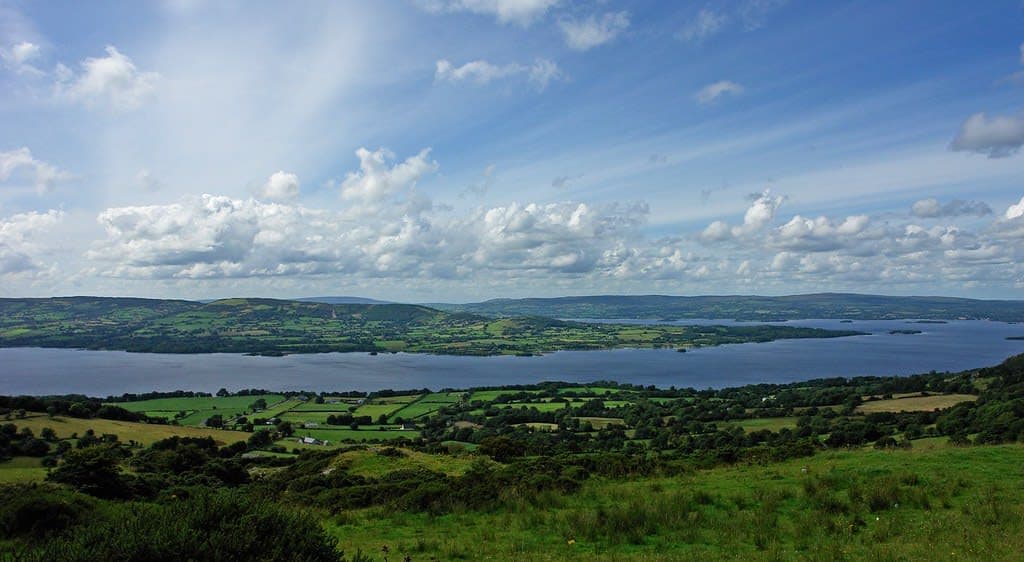
Lough Dergh
County Donegal, Donegal Municipal District, Ireland
12.0 km away
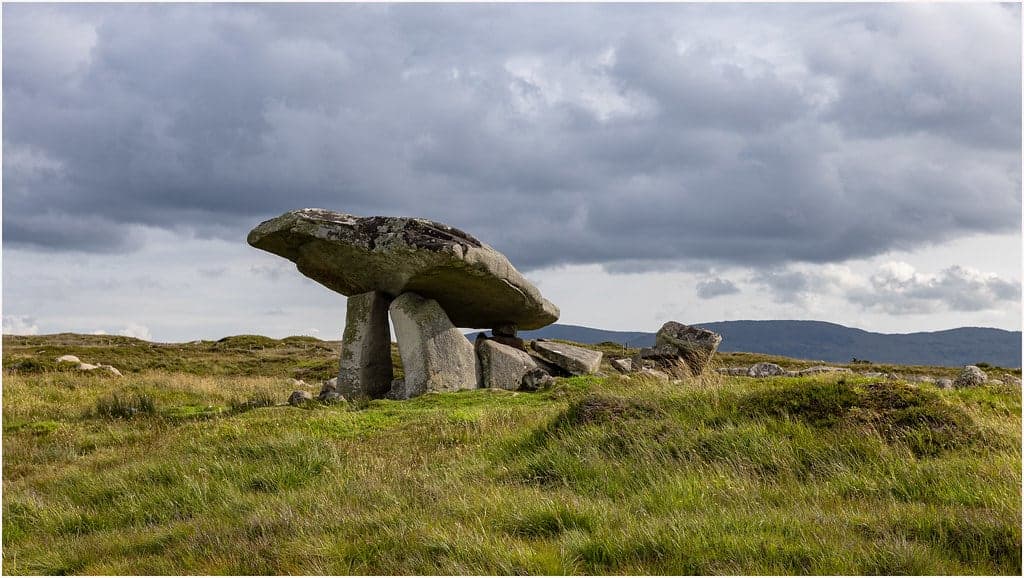
Kilclooney Dolmen, Ardara, Ireland
County Donegal, Glenties Municipal District, Ireland
54.3 km away
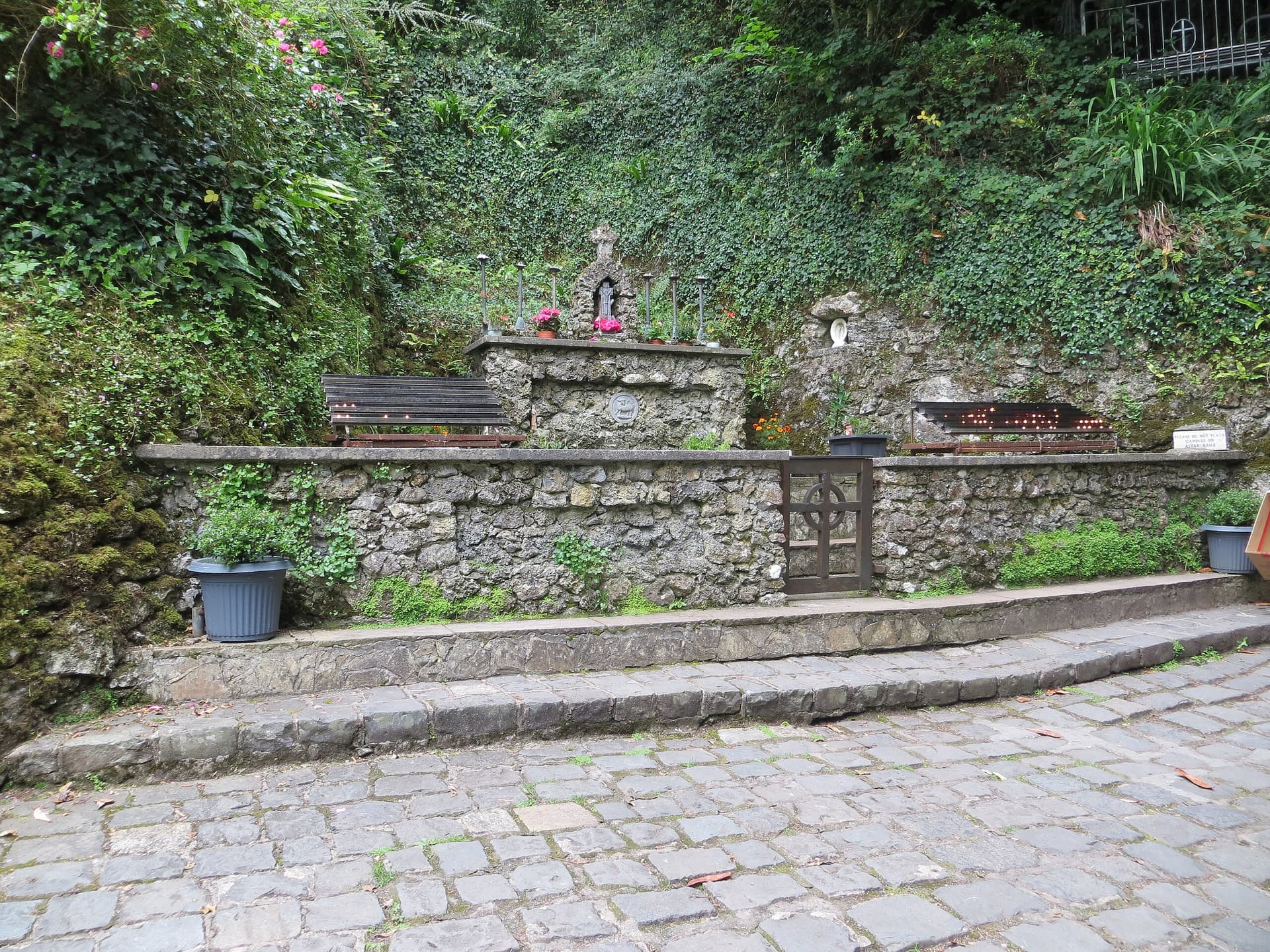
Tobar Nalt
County Sligo, Sligo Municipal Borough District, Ireland
61.9 km away
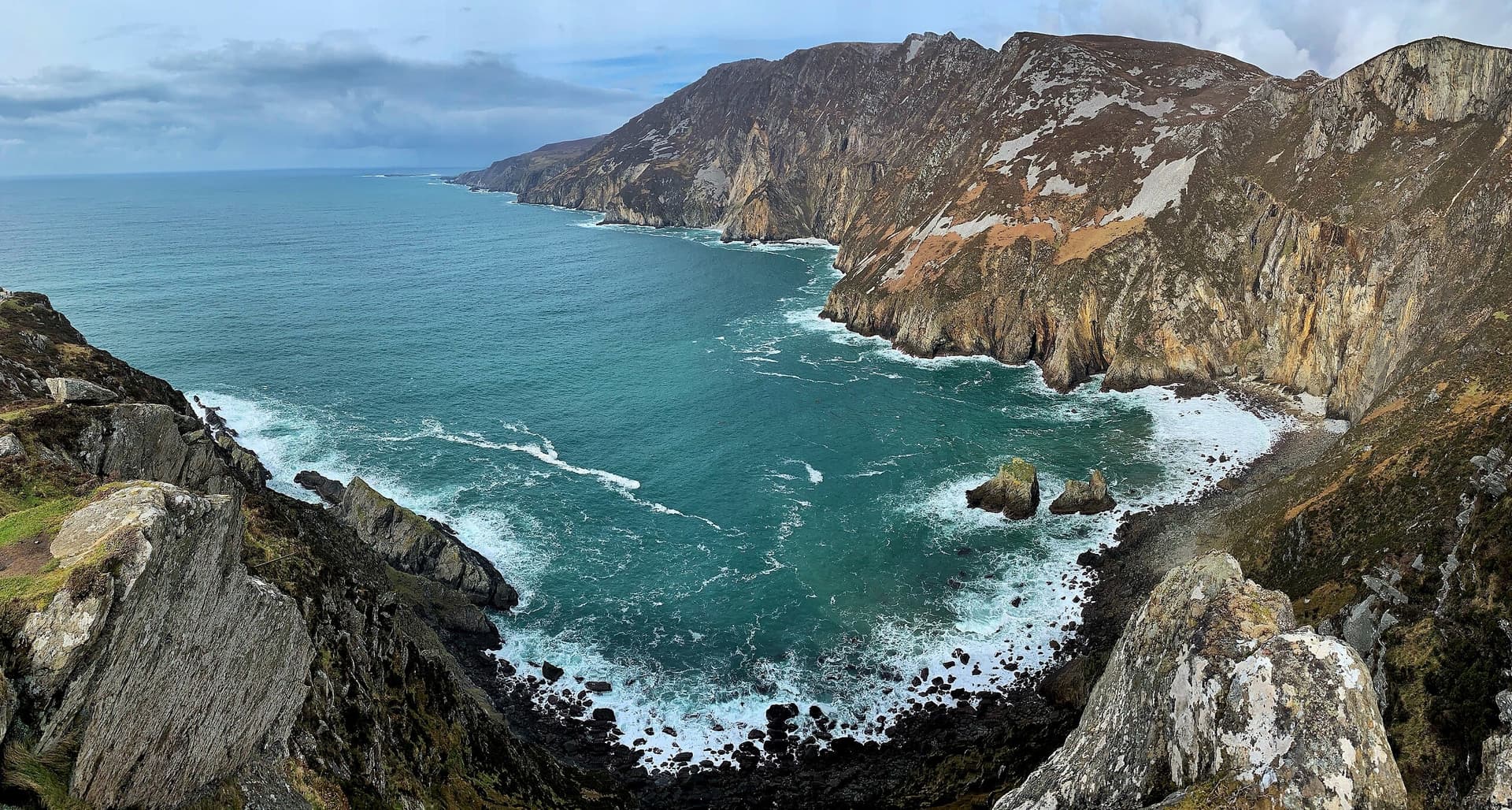
Slieve League, County Donegal, Ireland
County Donegal, Donegal Municipal District, Ireland
64.2 km away