
Kilclooney Dolmen, Ardara, Ireland
Twin portal tombs on a Donegal hillside, where a massive capstone has balanced between worlds for five millennia
County Donegal, Glenties Municipal District, Ireland
At A Glance
- Coordinates
- 54.8176, -8.4331
- Suggested Duration
- Allow 30 to 60 minutes including the walk from the road and time to explore both dolmens and the surrounding landscape.
- Access
- Take the R261 from Ardara toward Portnoo and Narin. After about 5 km, look for a bend in the road where St. Conal's Church is on the right and the Dolmen Centre faces you. Park in the Dolmen Centre car park. The laneway to the dolmen is beside the farmhouse to the left of the church. Walk along the right side of the farmhouse nearest the churchyard wall. The walk is approximately a quarter mile, gently sloping. Free entry. Mobile phone signal may be limited in this rural area; confirm directions before leaving Ardara. No public transport serves the site directly. Emergency access note: the nearest settlement with reliable services is Ardara, approximately 5 km back on the R261.
Pilgrim Tips
- Take the R261 from Ardara toward Portnoo and Narin. After about 5 km, look for a bend in the road where St. Conal's Church is on the right and the Dolmen Centre faces you. Park in the Dolmen Centre car park. The laneway to the dolmen is beside the farmhouse to the left of the church. Walk along the right side of the farmhouse nearest the churchyard wall. The walk is approximately a quarter mile, gently sloping. Free entry. Mobile phone signal may be limited in this rural area; confirm directions before leaving Ardara. No public transport serves the site directly. Emergency access note: the nearest settlement with reliable services is Ardara, approximately 5 km back on the R261.
- Wellington boots or sturdy waterproof shoes are essential. The path to the dolmen crosses boggy ground that can be very wet, particularly after rain. Warm, wind-resistant clothing is advisable for the exposed hillside.
- Photography is permitted and the site is exceptionally photogenic. The capstone silhouetted against the sky is the iconic image. Do not climb on or disturb the stones for photographs.
- The dolmen is on private farmland. Permission should be sought from the landowner before visiting. Do not bring dogs due to sheep on the working farm. Close all gates behind you. Do not walk through the farmhouse garden; keep to the right side along the wall nearest the churchyard. Do not climb on the stones under any circumstances. Leave everything as you find it.
Overview
On a working farm near Ardara in County Donegal, two Neolithic portal tombs stand within sight of each other, the larger crowned by a massive capstone that has balanced on its portal stones for over five thousand years. Kilclooney Dolmen is one of the finest examples of its type in Ireland, a threshold monument built to mark the boundary between the living and the dead.
The walk to Kilclooney Dolmen begins beside a farmhouse and crosses a field where sheep graze among gorse and heather. There is no visitor center, no interpretive display to prepare you. When the dolmen appears on the hillside, the effect is immediate and physical: a massive slab of stone, roughly four meters long and nearly as wide, balanced on slender uprights against the Donegal sky.
A portal tomb, built approximately 3500 to 3000 BC by farming communities who were clearing the woodlands of northwest Ireland. The architecture is elemental: two tall portal stones at the front create a doorway, a lower closing stone seals the back, and the capstone rests across the top, tilting upward toward the entrance like a wave frozen mid-break. The smaller of the two dolmens stands nearby, its structure partially collapsed but still recognizable.
The pairing of two portal tombs at a single site is rare in Ireland. The twin arrangement, combined with pottery fragments belonging to the Lyles Hill tradition (approximately 3800 to 3500 BC), suggests that Kilclooney served as a significant communal burial and ceremonial center over an extended period. The Harvard Archaeological Expedition recovered pottery here in 1937, and small sherds were acquired by the National Museum of Ireland in 1958.
In Irish folk tradition, dolmens across the country are known as 'Leaba Dhiarmada agus Ghrainne,' the Bed of Diarmuid and Grainne, connecting them to the Fenian Cycle legend of doomed lovers fleeing across Ireland. The original Neolithic associations have been lost to time, but the folk tradition testifies to the enduring sense that these structures belong to a world beyond the ordinary.
Standing beneath the capstone, you confront a fact that resists easy assimilation: people without metal tools, without wheels, without written language, engineered this structure to last five millennia. They succeeded. The portal they built still stands open, still frames the sky, still asks to be walked through.
Context And Lineage
Kilclooney Dolmen dates to approximately 3500 to 3000 BC and was built by Neolithic farming communities in northwest Ireland. The twin-tomb arrangement is rare in Ireland, and the site has yielded pottery of the Lyles Hill tradition. No comprehensive formal excavation has been conducted.
No origin narrative survives from the Neolithic builders. The twin portal tombs emerged from communities who were transforming the landscape through agriculture, clearing the ancient woodlands and building monuments that gave permanent form to their relationship with the dead. Archaeobotanical studies of the wider region indicate that construction coincided with this period of woodland clearance and agricultural development.
In later centuries, the dolmen was absorbed into the mythology of the Fenian Cycle. Portal tombs across Ireland became known as 'Leaba Dhiarmada agus Ghrainne,' the beds where the legendary lovers Diarmuid and Grainne sheltered as they fled the wrath of Fionn mac Cumhaill and his Fianna warriors. The folk tradition, while not reflecting the original purpose, preserved the sense that the dolmen belongs to a narrative larger than ordinary life.
The lineage of Kilclooney Dolmen runs from Neolithic farming communities who built in stone to honor their dead, through thousands of years of folk reinterpretation that preserved the site's numinous character under new narratives, to the present day when the dolmen is recognized as a National Monument and draws visitors seeking connection with Ireland's deepest past.
Neolithic Builders
historical
The farming communities of northwest Ireland who built the twin portal tombs without metal tools, positioning a capstone of several tons on slender uprights with engineering skill whose specific methods remain debated.
Harvard Archaeological Expedition
historical
The expedition that recovered pottery fragments from the site in 1937, providing the key evidence for dating and cultural association through the Lyles Hill pottery tradition.
Arthur ApSimon
historical
Archaeologist who provided the dating estimate of 3780 to 3030 BC for portal tombs of this type, placing Kilclooney within the broader chronology of Irish megalithic construction.
Diarmuid and Grainne
mythological
The legendary lovers of the Fenian Cycle whose flight across Ireland gave folk names to dolmens throughout the country. Their story replaced the original Neolithic associations over thousands of years.
Why This Place Is Sacred
Kilclooney Dolmen occupies a prominent position between earth and sky on a Donegal hillside, creating a natural threshold where the massive capstone balanced on its portal stones produces an uncanny sense of arrested motion. The extreme age of the monument and the walk through working farmland to reach it create a pilgrimage-like approach.
Portal tombs are threshold architecture. The paired uprights at the entrance create a doorway, and doorways carry universal symbolic weight: passage, transition, the point where one state ends and another begins. At Kilclooney, this symbolism is amplified by the capstone's dramatic tilt, rising toward the entrance as though inviting approach while simultaneously marking a boundary.
The site occupies a hillside with views across the Donegal landscape of bog, mountain, and coast. The exposure to weather, to shifting light, to the vastness of the Atlantic sky gives the dolmen a quality of elemental confrontation. There is no shelter here, no enclosure. The monument stands in the open, subject to the same wind and rain that has worked its surfaces for five thousand years.
The twin-tomb arrangement adds a dimension of relationship. Two structures, built by the same community or successive generations, stand within sight of each other, suggesting that the site served as a focal point for repeated acts of burial or ceremony over an extended period. The social bonds that produced this pairing, the specific losses that required it, are irrecoverable. But the physical evidence of communal commitment to honoring the dead persists.
The walk from the road, through the farmyard, across the field, is itself part of the experience. Unlike sites with car parks and turnstiles, Kilclooney requires visitors to cross a working landscape, to navigate gates and sheep, before the monument reveals itself. This informal approach strips away the institutional framing that can insulate visitors from direct encounter.
Portal tombs served as collective burial chambers for early Neolithic farming communities. The twin-tomb arrangement at Kilclooney suggests the site held exceptional communal or ritual importance, possibly serving multiple family groups or generations. The monuments were originally covered by cairns of loose stone, making them prominent landmarks visible across the landscape. The portal architecture, with its clear entrance orientation, suggests the tombs were designed to be approached from a specific direction, likely carrying symbolic significance related to the passage between the world of the living and the dead.
Over millennia, the cairns that originally covered the tombs eroded or were removed, exposing the skeletal stone structures visible today. The original Neolithic funerary associations gave way to folklore, with the dolmen becoming known as one of many 'Beds of Diarmuid and Grainne' across Ireland, linking it to the Fenian Cycle legend of the pursued lovers. This folk reinterpretation, while historically inaccurate, demonstrates the continuous recognition that the stones carry significance beyond the mundane. Today, the dolmen is a National Monument and a destination for those drawn to Ireland's megalithic heritage.
Traditions And Practice
No organized ceremonies or rituals are held at Kilclooney Dolmen. The site invites contemplative engagement through its age, its engineering, and its setting on a quiet Donegal hillside.
In the Neolithic period, the portal tombs served as collective burial sites. Pottery fragments found in the larger chamber suggest funerary offerings. The forecourt areas of related portal and court tombs in Ireland indicate communal ceremonial gatherings that may have involved feasting, offerings, and rituals led by social or spiritual specialists. The cairns that originally covered the tombs would have been visible landmarks, marking the burial site across the landscape and perhaps serving as focal points for ongoing ancestor veneration.
Approach through the farmland slowly, attending to the transition from the modern world of the road and the Dolmen Centre into the older world of the hillside. The walk is itself a form of preparation.
At the larger dolmen, stand facing the entrance portal. The two tall stones create a doorway that was never meant for casual passage. Whatever the builders intended, entering or approaching this threshold was an act of significance. Notice the capstone above you, its weight, its tilt. Notice how the structure channels your attention forward and upward simultaneously.
Circle the dolmen at a distance that allows you to see the full silhouette against the sky. The monument reads differently from each angle: monumental from below, surprisingly delicate in profile, massive from directly in front.
Visit the smaller dolmen as well. Stand between the two and consider the community that built them: the decisions made, the labor organized, the losses that required commemoration on this scale. The twin arrangement is rare. These people returned to this hillside more than once.
The silence of the site invites extended stays. Bring something to sit on if the ground is dry. The dolmen rewards time more than information.
The summer solstice is noteworthy given documented alignments of the dolmen and its southern enclosure. Late afternoon light creates the most dramatic silhouette of the capstone against the western sky. Early morning visits offer the quietest conditions. If visiting between May and September, the longer daylight allows for unhurried exploration.
Neolithic Funerary and Ancestor Veneration
HistoricalThe twin portal tombs served as collective burial chambers for early Neolithic farming communities in northwest Ireland, dating to approximately 3500 to 3000 BC. The rare pairing of two dolmens at one site suggests exceptional communal or ritual importance, possibly serving multiple family groups or successive generations over an extended period.
Collective burial of the dead in stone chambers, likely accompanied by ritual offerings of pottery. The forecourt areas of related portal tombs suggest communal ceremonial gatherings. The monuments were originally covered by cairns, making them prominent landmarks in the landscape.
Irish Folklore (Fenian Cycle)
HistoricalThe dolmen became associated with the legend of Diarmuid and Grainne in folk tradition, part of the widespread practice of attributing megalithic monuments to mythological figures of the Fenian Cycle. This reinterpretation replaced the original Neolithic associations over millennia but preserved the sense that the stones belong to an extraordinary narrative.
Storytelling traditions connecting the dolmen to the flight of Diarmuid and Grainne across Ireland, with the capstone serving as their 'bed' for a night's shelter. The folk memory gave the ancient stones new mythological significance, integrating them into the living narrative tradition of the region.
Archaeological Scholarship
ActiveKilclooney has been studied since the Harvard Archaeological Expedition of 1937, which recovered pottery from the site. Ongoing scholarly analysis contributes to understanding Ireland's Neolithic period and the megalithic building tradition.
Archaeological survey, ceramic analysis (Lyles Hill tradition pottery), comparative dating studies, and archaeobotanical research into the landscape context of the monument's construction. No comprehensive formal excavation has been conducted.
Experience And Perspectives
Visitors to Kilclooney Dolmen consistently report awe at the engineering achievement and a profound sense of connection to deep human history. The walk through farmland, the dramatic capstone silhouetted against the sky, and the quiet isolation of the site create a contemplative experience.
The farmland approach establishes the terms of the encounter. You park at the Dolmen Centre, walk past a church, follow a lane beside a farmhouse, and cross a field. The ground may be boggy. Sheep observe your passage with mild interest. There is no sense of arriving at a curated attraction.
When the larger dolmen comes into view, the capstone is the first thing you register: a flat slab of stone roughly four meters by four meters, tilted upward on its portal supports, looking simultaneously precarious and absolutely stable. The contradiction between the capstone's apparent fragility, balanced as it is on relatively slender stones, and its demonstrated permanence over fifty centuries produces a cognitive dissonance that many visitors describe as awe.
Walk around the structure. Notice how the portal stones at the entrance are taller than the closing stone at the back, creating the characteristic tilt. Notice the gap between the capstone and the supports, the air and light that pass through spaces the builders carefully calibrated. From certain angles, the dolmen frames the Donegal sky as though the portal opens not into a burial chamber but into the atmosphere itself.
The smaller dolmen, partially collapsed, rewards attention as well. The two structures together speak of sustained use, of a community returning to this hillside over generations to commit their dead to the earth and mark the act with permanent stone.
The silence of the site is consistent. Traffic from the R261 is audible as a distant hum, but the wind, the birdsong, and the sound of your own footsteps dominate. Many visitors find that the isolation and the age of the monument invite a reflective stillness that arrives without effort.
Approach through the farmyard with respect for the working landscape. Close all gates behind you. Follow the path to the right of the farmhouse along the wall nearest the churchyard. When you reach the dolmen, resist the impulse to photograph immediately. Stand at the entrance portal and look through the structure toward the hills beyond. Notice the weight of the capstone, the precision of its balance. Walk a full circle around the monument before approaching the smaller dolmen nearby. The two structures are in dialogue; seeing them in sequence reveals the scope of what the builders created.
Kilclooney Dolmen invites interpretation across multiple dimensions: as an engineering achievement, as a funerary monument, as a portal between worlds, and as evidence of social organization among Ireland's earliest farming communities. Each perspective illuminates different aspects of what the builders created.
Archaeologists classify Kilclooney More as a Neolithic portal tomb dating to approximately 3500 to 3000 BC, widely considered one of the finest examples of its type in Ireland. The twin-tomb arrangement is rare and suggests exceptional communal importance. Pottery fragments belong to the Lyles Hill tradition (approximately 3800 to 3500 BC), providing the primary evidence for cultural association. Arthur ApSimon's dating estimate of 3780 to 3030 BC for portal tombs of this type places Kilclooney within the earliest phase of Irish megalithic construction. Archaeobotanical studies indicate that construction coincided with woodland clearance and the development of agriculture. No comprehensive formal excavation has been conducted, and no radiocarbon dates are available for any Irish portal tomb.
In Irish folk tradition, dolmens are known as 'Leaba Dhiarmada agus Ghrainne,' connecting them to the Fenian Cycle legend of Diarmuid and Grainne who fled across Ireland from Fionn mac Cumhaill, sheltering beneath dolmen capstones each night. This folk interpretation replaced the original Neolithic associations over thousands of years, but it preserved the essential recognition that portal tombs are places of extraordinary significance, connected to forces larger than ordinary life.
Some alternative researchers, notably the Matrix of Creation project, propose that the dolmen incorporates precise megalithic measurements related to lunar nodal cycles, citing the distance between specific stones as encoding the 6,800-day nodal period. The site is seen as evidence of sophisticated astronomical knowledge among Neolithic builders. These interpretations, while mathematically interesting, are not supported by mainstream archaeological evidence.
No radiocarbon dates exist for Kilclooney or any Irish portal tomb, making precise dating uncertain. The purpose of the twin-tomb arrangement remains debated. Whether the portal architecture was purely functional, providing structural support for the capstone, or carried symbolic meaning as a gateway between worlds has not been resolved. The original extent of the cairns that once covered the tombs, and whether they formed a single mound over both dolmens, remains uncertain. The identity and social structure of the communities who built here, their relationship to other megalithic builders in Ireland, and the specific rituals they performed are lost to time.
Visit Planning
Kilclooney Dolmen is located approximately 5 km from Ardara on the R261 toward Portnoo and Narin in County Donegal. Access is across private farmland on foot. Entry is free. Sturdy waterproof footwear is essential.
Take the R261 from Ardara toward Portnoo and Narin. After about 5 km, look for a bend in the road where St. Conal's Church is on the right and the Dolmen Centre faces you. Park in the Dolmen Centre car park. The laneway to the dolmen is beside the farmhouse to the left of the church. Walk along the right side of the farmhouse nearest the churchyard wall. The walk is approximately a quarter mile, gently sloping. Free entry. Mobile phone signal may be limited in this rural area; confirm directions before leaving Ardara. No public transport serves the site directly. Emergency access note: the nearest settlement with reliable services is Ardara, approximately 5 km back on the R261.
Ardara is a small town with guesthouses, B&Bs, and a few hotels. It serves as a natural base for exploring the rich megalithic and early Christian heritage of southwest Donegal.
Kilclooney Dolmen is a National Monument on private farmland. Visitors must respect the landowner's property, the livestock, and the five-thousand-year-old monument. No dogs are permitted, all gates must be closed, and the stones must not be touched or climbed.
Access to Kilclooney Dolmen depends on the goodwill of the landowner whose working farm surrounds it. This is not a public park but a private landscape that happens to contain one of Ireland's most significant Neolithic monuments. The landowner's hospitality in allowing access should be honored through careful behavior.
Keep to the designated path. Walk to the right of the farmhouse along the wall nearest the churchyard, not through the garden. The path crosses a field where sheep graze, and the presence of visitors can disturb both animals and agricultural activity. Close every gate behind you. Do not bring dogs.
The dolmen itself is over five thousand years old and is a protected National Monument. Do not climb on, lean against, or touch the stones. Do not attempt to move stones, leave objects, or alter the site in any way. Photographs should be taken without physical contact with the monument.
Wellington boots or sturdy waterproof shoes are essential. The path to the dolmen crosses boggy ground that can be very wet, particularly after rain. Warm, wind-resistant clothing is advisable for the exposed hillside.
Photography is permitted and the site is exceptionally photogenic. The capstone silhouetted against the sky is the iconic image. Do not climb on or disturb the stones for photographs.
No offering traditions exist at this site. Do not leave objects of any kind at the dolmen. Carry out everything you bring in.
Located on private farmland; seek permission from the landowner. No dogs due to livestock. Close all gates. Do not walk through the farmhouse garden. Do not climb on or touch the stones. Leave everything as found. Do not disturb livestock.
Sacred Cluster
Nearby sacred places create the location cluster described in the growth plan. This block is intentionally crawlable and links into the wider regional graph.
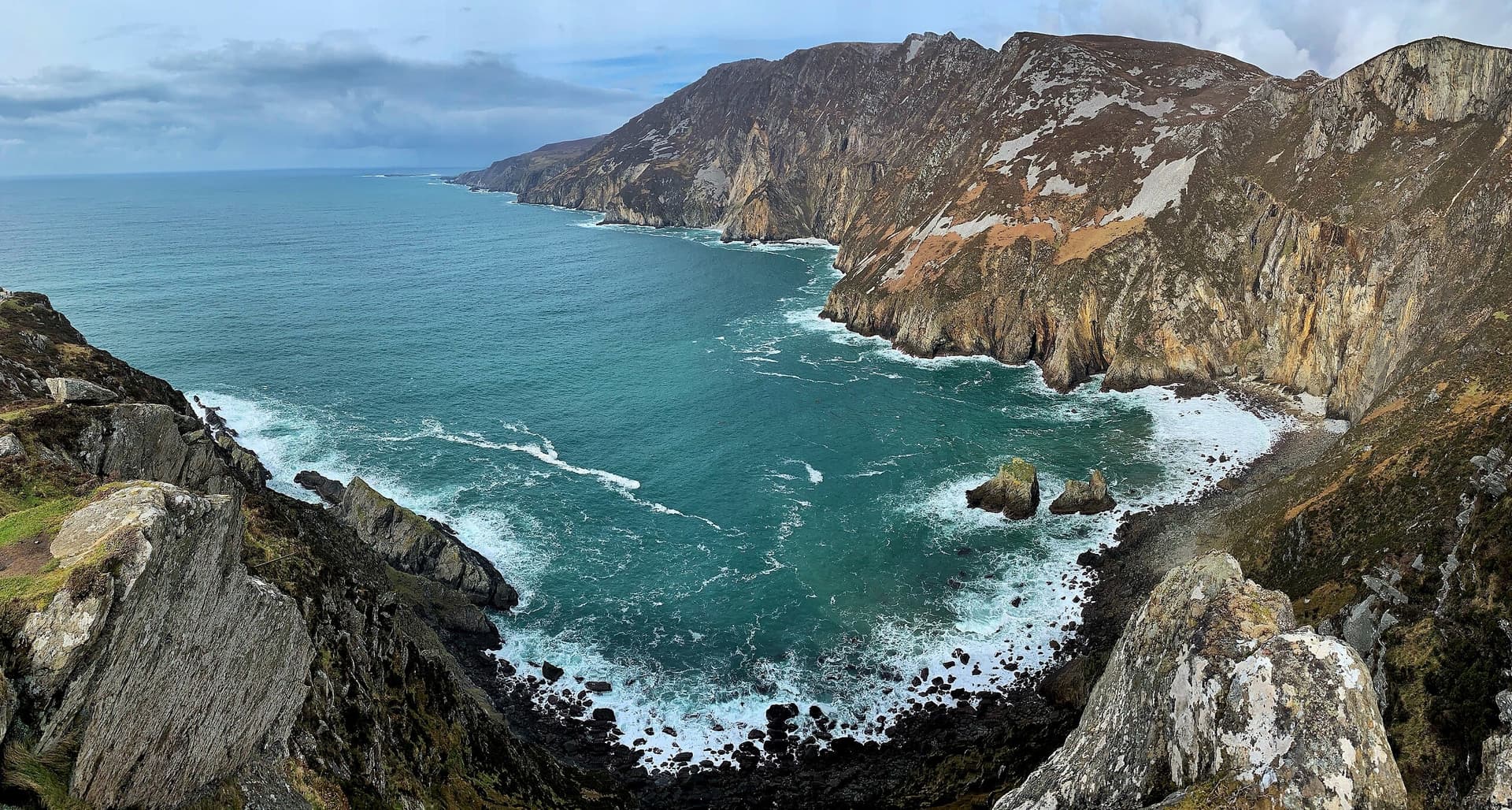
Slieve League, County Donegal, Ireland
County Donegal, Donegal Municipal District, Ireland
25.4 km away
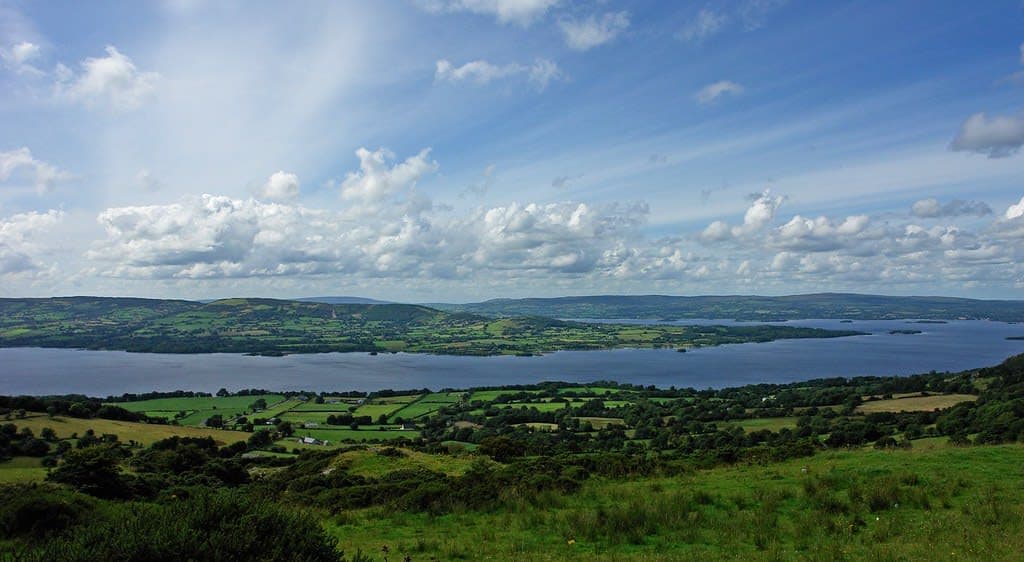
Lough Dergh
County Donegal, Donegal Municipal District, Ireland
42.9 km away
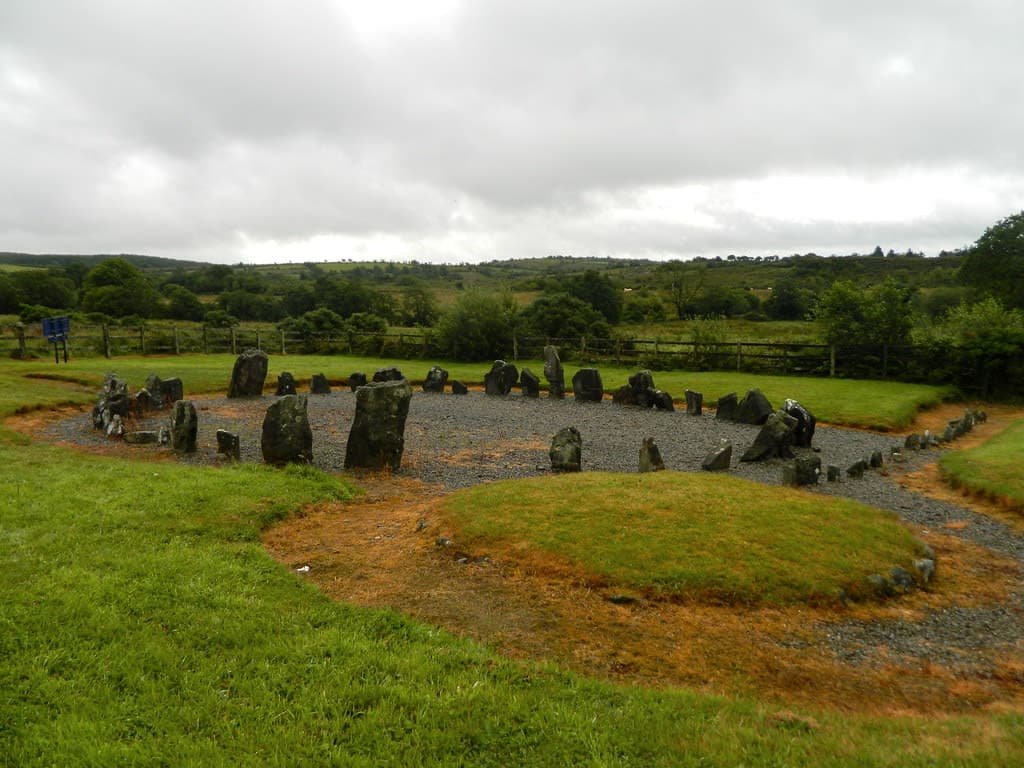
Drumskinny Stone Circle, Drumskinny, Ireland
County Fermanagh, Northern Ireland, United Kingdom
54.3 km away
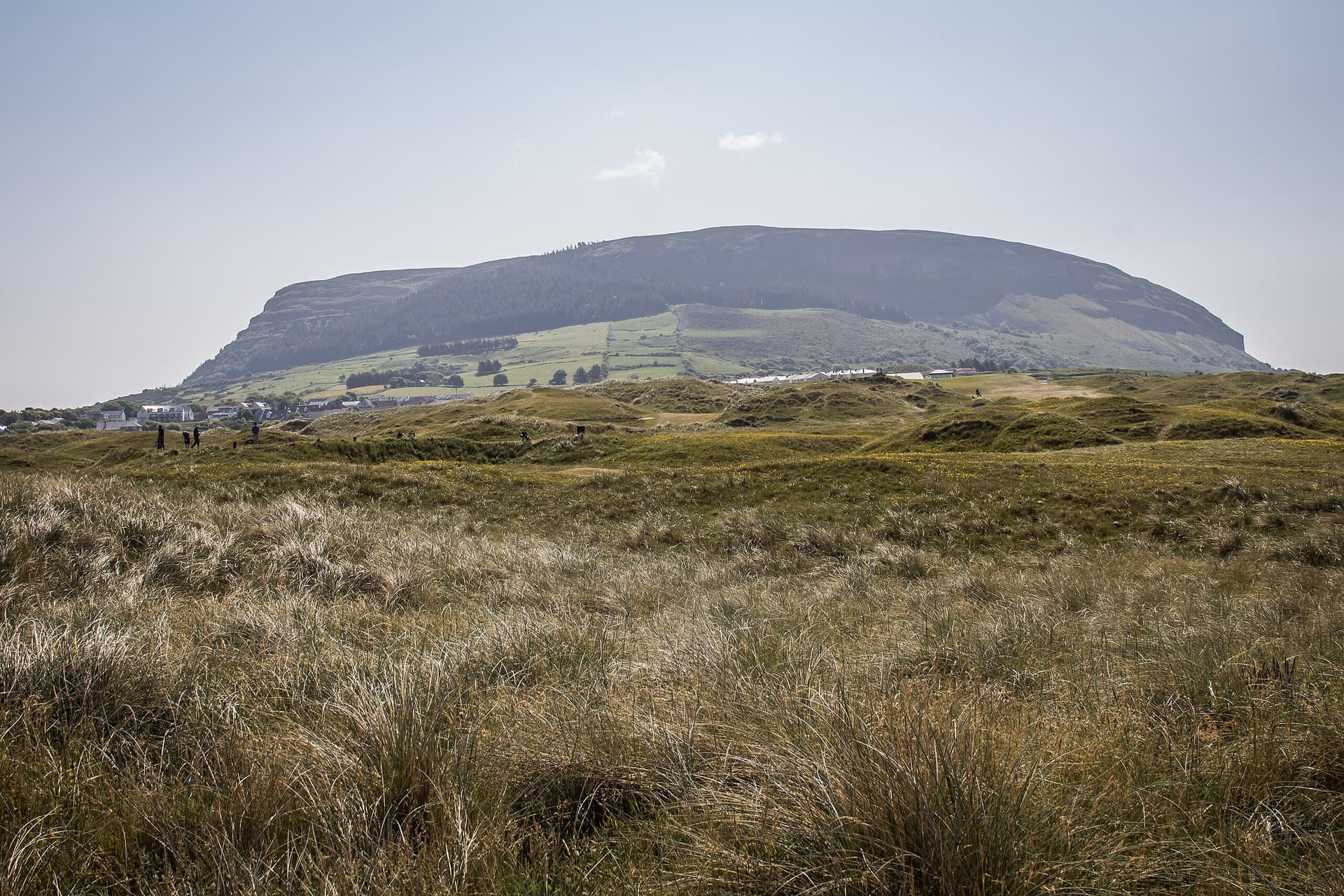
Knocknarea megalthic site, Sligo, Ireland
County Sligo, Sligo Municipal Borough District, Ireland
62.8 km away