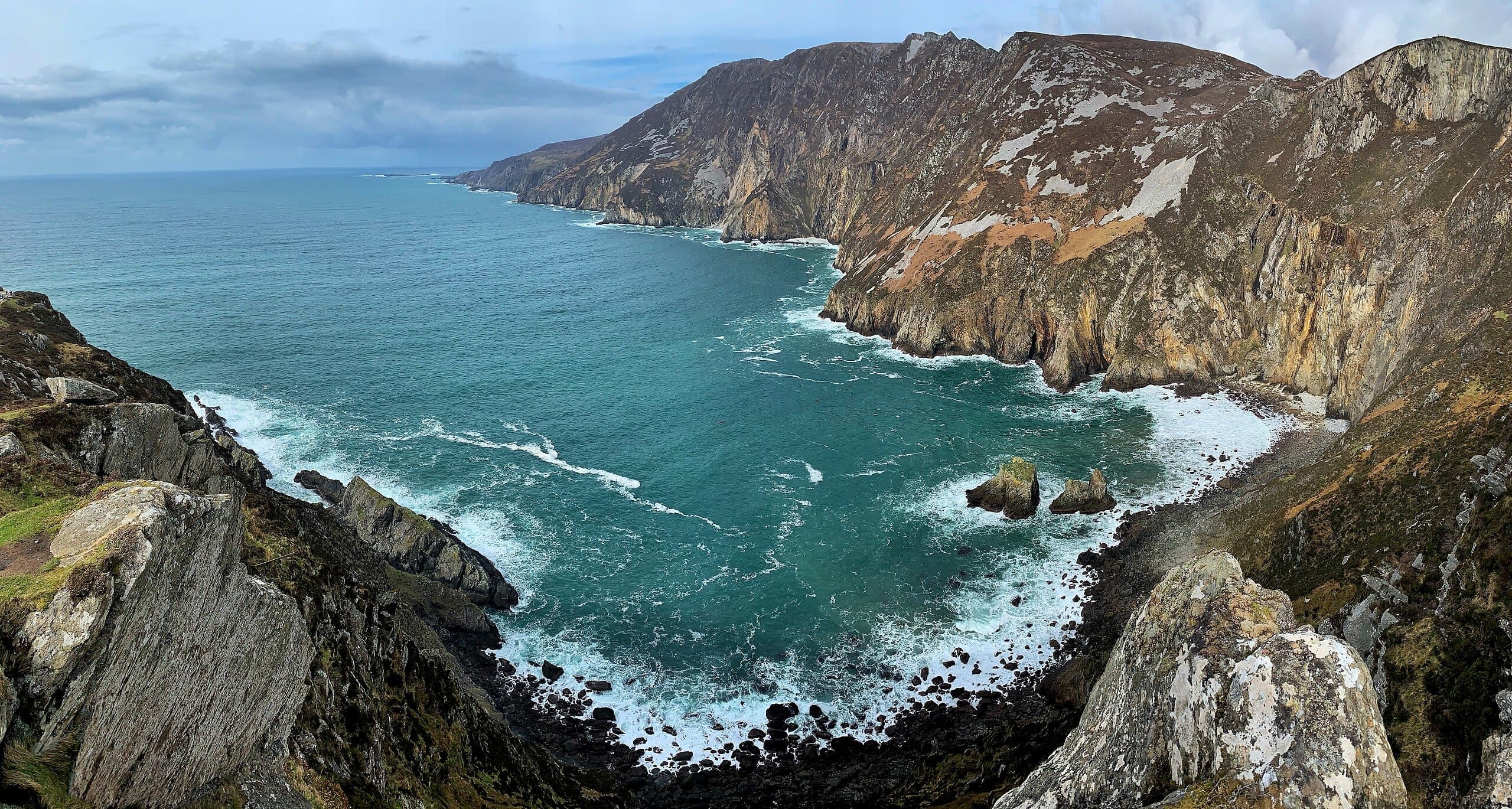
Slieve League, County Donegal, Ireland
Where Europe's highest accessible sea cliffs hold the ruins of monks who prayed on the edge of the Atlantic
County Donegal, Donegal Municipal District, Ireland
At A Glance
- Coordinates
- 54.6401, -8.6822
- Suggested Duration
- 3.5 hours for the Pilgrim's Path (3.5 km)
Pilgrim Tips
- Sturdy hiking boots are essential. Layered, windproof, waterproof clothing is required; conditions on the mountain change rapidly and dangerously. No formal dress code beyond what safety demands.
- Photography is freely permitted and the site is exceptionally photogenic. Exercise extreme caution near cliff edges when using a camera. Respect other walkers' space and contemplative experience.
- One Man's Pass is genuinely dangerous in poor weather, high wind, or for inexperienced walkers. Cliff edges are unfenced. Weather on the mountain can change rapidly. Sturdy hiking boots, waterproof layers, and wind protection are essential, not optional. Dogs must be kept under control as the area is sheep farming country.
Overview
On the southwest coast of County Donegal, Slieve League rises 601 metres from the Atlantic Ocean in a near-vertical wall of Dalradian metamorphic rock. Among the highest accessible sea cliffs in Europe, the mountain holds more than geological drama. Atop the cliffs, the remains of Aedh Mac Bric's chapel, holy well, and beehive huts testify to a monastic community that chose this extreme perch for prayer. The Pilgrim's Path, walked for over a thousand years, climbs the mountain as an act of devotion that the body remembers long after the mind has moved on.
The scale announces itself gradually. The walk from the car park begins in unremarkable Donegal hillside, boggy and wind-scoured, the Atlantic visible but distant. Then the ground falls away. The cliff edge reveals itself not as a line but as an absence, a sudden void where solid earth should be. Six hundred metres below, the sea works against rock that has resisted it for four hundred million years. The Dalradian metamorphic formations that compose these cliffs predate animal life on Earth. They have been folded, compressed, and shaped by forces that make human timescales irrelevant. The monks understood this. Aedh Mac Bric and his community chose to build their chapel and beehive huts at the summit of these cliffs, where the Atlantic occupies three-quarters of the visible world. Their choice follows the same logic that drove monks to Skellig Michael and Mount Brandon: that God is found at the extremes, where comfort gives way to exposure and the human self becomes small against the scale of creation. The Pilgrim's Path they walked still climbs the mountain, one of Ireland's recognized Pilgrim Paths, maintained by centuries of feet. Walking it today, you retrace a route that pilgrims have followed for over a thousand years. The ascent is not gentle. The wind is not gentle. The cliff edge, unfenced and unforgiving, does not accommodate error. One Man's Pass, a narrow ridge with drops on both sides, earns its name through the visceral reality of exposure. Those who cross it report that the experience rearranges their sense of what matters. Beyond the drama, Slieve League belongs to a living landscape. The village of Teelin below preserves Irish language and traditional music. The Donegal Gaeltacht maintains cultural continuity with the people who first named this mountain Sliabh Liag. The cliffs are not a spectacle separate from the community; they are the community's horizon, visible from every window, shaping every day.
Context And Lineage
A sacred mountain with early Christian monastic remains, a thousand-year pilgrimage tradition, and cliffs composed of rock older than animal life on Earth.
The mountain Sliabh Liag, 'Mountain of the Flagstones,' drew sacred attention long before it entered the historical record. The name itself suggests ancient stone features that may have held ritual significance in pre-Christian times, though archaeological evidence for this period is limited. In the sixth century, the hermit monk Aedh Mac Bric established a monastic settlement at the summit, building a chapel, holy well, and beehive huts in the Celtic tradition of extreme ascetic isolation. His choice of location parallels other Irish cliff-top and island monasteries, including Skellig Michael and Mount Brandon, where proximity to the divine was sought through exposure to the elements and distance from the comforts of the lowland world. The Pilgrim's Path that ascends the mountain formalized the devotional tradition. For over a thousand years, pilgrims have climbed Slieve League as an act of faith, penance, or spiritual seeking, joining the broader Irish tradition of penitential mountain pilgrimages. Local legend adds earlier layers. The cliffs are said to have been formed when a warrior threw a giant flagstone into the sea. The Giant's Desk and Chair formation at the cliff base carries its own folklore. These stories, older than the monastic settlement, suggest the mountain held significance in the imagination of the Donegal people long before the first monk climbed it to pray.
Slieve League belongs to the Irish tradition of sacred mountains, alongside Croagh Patrick, Mount Brandon, and the pilgrimage mountain at Lough Derg. Its monastic settlement connects to the broader pattern of Celtic cliff-top and island hermitages. The nearby village of Teelin and the Glencolumbkille pilgrimage stations place Slieve League within a dense sacred landscape of southwest Donegal.
Aedh Mac Bric (Aed Mac Bric)
St Columba (Colm Cille)
Pilgrim Paths of Ireland
Why This Place Is Sacred
Where four-hundred-million-year-old rock meets the Atlantic at a height that forces the body to reckon with its own smallness.
The thinness of Slieve League is primarily vertical. The cliff face drops 601 metres to the sea, and at the edge, the boundary between solid ground and void becomes the most immediate thing in the world. The mind, accustomed to the horizontal, must recalibrate. Everything narrows to the present moment. This is not a metaphor for spiritual experience; for many visitors, it is spiritual experience, the body's own recognition that it stands at a threshold. The geological time embedded in the cliffs adds depth to the encounter. The Dalradian metamorphic rocks were formed 475 to 385 million years ago, compressed and folded by the Caledonian orogeny, then sculpted by Pleistocene glaciation over the past hundred thousand years. To stand on Slieve League is to stand on a record of planetary transformation that predates consciousness itself. The monks who settled at the summit inscribed a human layer onto this geological one. Their chapel, well, and beehive huts represent a conscious decision to inhabit the extreme, to make a home at the edge. The ruins they left behind are modest in scale but immense in implication: that human beings have consistently sought out the places where the earth falls away, and have found something there worth staying for. The Pilgrim's Path formalizes this seeking. Walking upward, away from the village and toward the summit, the landscape strips away distractions. The wind increases. The view expands. The ruins, when you reach them, are not a destination but a confirmation that others have made this same ascent, with the same questions, for over a thousand years.
The monastic settlement at the summit was established by hermit monks in the Celtic tradition, likely in the sixth century, as a site for solitary prayer and contemplation in the most extreme landscape available. The Pilgrim's Path formalized the ascent as an act of devotion.
From early Christian hermitage to medieval pilgrimage site, through centuries of continuous devotional use, to its current status as both a recognized Pilgrim Path of Ireland and a Wild Atlantic Way discovery point. The Slieve League Cliffs Centre in Teelin provides cultural interpretation. The site attracts hikers, pilgrims, and spiritual seekers in roughly equal measure.
Traditions And Practice
Walk the Pilgrim's Path as pilgrims have for a thousand years. Visit the summit ruins. Sit where monks sat with the Atlantic below.
Medieval Christian pilgrimage up the mountain served as a penitential act, comparable to the ascent of Croagh Patrick. Devotional visits to Aedh Mac Bric's chapel and holy well at the summit. The climb itself was the central ritual, undertaken as an act of faith, penance, or devotion.
The Pilgrim's Path is maintained as one of Ireland's recognized Pilgrim Paths and is walked by spiritual pilgrims and recreational hikers alike. The Slieve League Cliffs Centre in Teelin provides cultural interpretation. Organized spiritual tours and Celtic spirituality retreats include the site. Individual prayer and meditation at the summit ruins continue. The nearby Glencolumbkille pilgrimage to St Columba's stations is part of the same sacred landscape.
Choose the Pilgrim's Path over the cliff-edge shortcut. The longer approach builds the experience in a way that arriving at a viewpoint cannot. Walk in silence if possible, or at least in stretches of silence. At the summit, find Aedh Mac Bric's well and sit beside it. Let the wind be the only sound. If you are drawn to One Man's Pass, attempt it only in clear, calm weather, and only if you are confident with exposure. The pass is not the point; the summit ruins are.
Early Christian Monasticism
HistoricalThe hermit monk Aedh Mac Bric established a monastic settlement at the summit in the sixth century, building a chapel, holy well, and beehive huts in one of Ireland's most extreme locations. The settlement exemplifies the Celtic monastic tradition of seeking God through isolation and exposure.
Solitary prayer, contemplation, fasting, and ascetic practice. Celebration of the liturgy in the small oratory chapel. Use of the holy well for ritual purposes.
Christian Pilgrimage
ActiveFor over a thousand years, Slieve League has served as a pilgrimage mountain. The Pilgrim's Path is one of Ireland's recognized Pilgrim Paths, continuing the tradition of ascending the sacred mountain on foot as an act of devotion.
Walking the Pilgrim's Path as a devotional act, visiting the summit monastic remains, praying at Aedh Mac Bric's well. The pilgrimage connects to the broader tradition of penitential mountain pilgrimages in Ireland.
Celtic Spirituality (Contemporary)
ActiveModern spiritual seekers regard Slieve League as a thin place of particular power. Organized spiritual tours and retreats include the mountain as a key site in the Donegal sacred landscape.
Contemplative walking, meditation at the summit ruins, spiritual engagement with the landscape, attendance at organized retreats and Celtic spirituality programs.
Donegal Gaeltacht Culture
ActiveThe area surrounding Slieve League is part of the Donegal Gaeltacht, where Irish language and traditional culture are preserved as a living heritage. The village of Teelin maintains traditional music, storytelling, and community practices rooted in the landscape.
Irish language, traditional music sessions, storytelling, and cultural events that maintain the living connection between community and mountain.
Experience And Perspectives
Walk the Pilgrim's Path upward from the lower slopes. Let the scale build. Reach the summit ruins where monks once prayed with the Atlantic on three sides.
Three approaches exist, and each shapes the experience differently. The Cliff Path Walk begins at the upper car park near Bunglass Point and follows the cliff edge for 2.5 kilometres, offering the most dramatic views with the least climbing. The Pilgrim's Path starts lower, from the old road, and climbs 3.5 kilometres to the summit through a landscape that opens progressively. The full Loop Walk covers 13 kilometres and takes four to five hours, descending via a different route. The Pilgrim's Path is the contemplative choice. Starting in the lowland, the path rises through bog and heath, the sea visible but not yet dominant. As altitude increases, the vegetation thins, the wind sharpens, and the cliffs begin to assert themselves. The approach is gradual enough to let the body adjust and the mind quiet. By the time the summit ruins appear, the walker has earned them in a way that driving to a viewpoint cannot replicate. At the summit, the remains of Aedh Mac Bric's chapel and holy well sit among scattered beehive hut foundations. The structures are modest, their stone walls barely rising above ground level. Aedh Mac Bric's well still holds water. The ruins face west over the Atlantic, and on clear days the horizon is an unbroken line between ocean and sky. The wind is constant. Sitting among the ruins, you understand why someone chose to pray here. One Man's Pass lies along the ridge beyond the summit for those who continue east. The name is not dramatic license. The path narrows to a spine of rock with steep drops on both sides, and in poor conditions or high wind, it is genuinely dangerous. Those who cross it in good weather describe a heightened awareness, the body's full attention recruited by the terrain, that stays with them long afterward.
Slieve League is located on the southwest coast of County Donegal, near the village of Teelin. The Slieve League Cliffs Centre provides cultural context and visitor information. Parking options include the visitor centre (4 km from cliffs, free) and the ranger station (2 km from cliffs, paid). The Pilgrim's Path and Cliff Path Walk both reach the summit monastic remains.
Slieve League speaks through geology, monasticism, living pilgrimage, and the unresolved questions that its remote summit still holds.
Archaeologists recognize the summit monastic remains as significant examples of early Christian hermitic monasticism, consistent with the broader pattern of Irish monks seeking extreme locations for spiritual practice. The geological significance of the Dalradian metamorphic rock formation, 475 to 385 million years old, is well-established. The pilgrimage tradition is documented but less extensively studied than comparable sites like Croagh Patrick. The pre-Christian sacred use of the mountain is inferred from the general pattern of Christian adoption of existing sacred sites but lacks specific archaeological evidence.
In local Irish-speaking tradition, the mountain has always been regarded as sacred and powerful. The Pilgrim's Path reflects a living tradition of devotional ascent. The nearby village of Teelin preserves Irish language, traditional music, and cultural practices that maintain a deep connection to the landscape. Local legends about giants and mythical warriors reflect an older layer of engagement with the dramatic natural features.
Spiritual seekers and Celtic spirituality practitioners regard Slieve League as a thin place where the boundary between the physical and spiritual worlds is especially permeable. The mountain's position on the Wild Atlantic Way and its meeting of land, sea, and sky are interpreted through the lens of elemental spirituality. Organized spiritual tours position the mountain within a sacred geography connecting other Irish pilgrimage sites.
The specific nature of pre-Christian sacred use remains undocumented. Aedh Mac Bric is a poorly documented figure, and the precise dates, community, and extent of his monastic settlement are not well established. Whether the monastic community had connections to the nearby Columban foundations at Glencolumbkille is unclear. The full extent of archaeological remains on and around the mountain has not been comprehensively surveyed.
Visit Planning
Accessible year-round from the village of Teelin in southwest Donegal. Car essential. Allow 3 to 5 hours depending on route chosen.
Accommodation available in Carrick, Killybegs, and Donegal Town. Limited options in Teelin village. Book in advance during summer months.
Respect the archaeological remains, the mountain ecology, and the farming community whose land this is.
Slieve League is simultaneously a protected archaeological site, a recognized Pilgrim Path, a wild natural environment, and farming country. The summit ruins are National Monuments; do not disturb or remove stones, and do not add stones to cairns that may be archaeological features. Stay on marked paths to protect the fragile mountain ecology. Close gates behind you, as the surrounding land is used for sheep farming. If you encounter someone in prayer or meditation at the summit, offer them space and quiet. The cliff edges are not a performance space; do not pose on edges or encourage others to do so.
Sturdy hiking boots are essential. Layered, windproof, waterproof clothing is required; conditions on the mountain change rapidly and dangerously. No formal dress code beyond what safety demands.
Photography is freely permitted and the site is exceptionally photogenic. Exercise extreme caution near cliff edges when using a camera. Respect other walkers' space and contemplative experience.
No formal offering tradition. Do not leave items at the archaeological sites. Leave-no-trace principles apply.
Do not attempt One Man's Pass in poor weather, high winds, or if inexperienced. Stay on marked paths. Do not disturb or remove stones from archaeological features. Cliff edges are unfenced; exercise extreme caution. Dogs must be kept under control. Leave no trace.
Sacred Cluster
Nearby sacred places create the location cluster described in the growth plan. This block is intentionally crawlable and links into the wider regional graph.
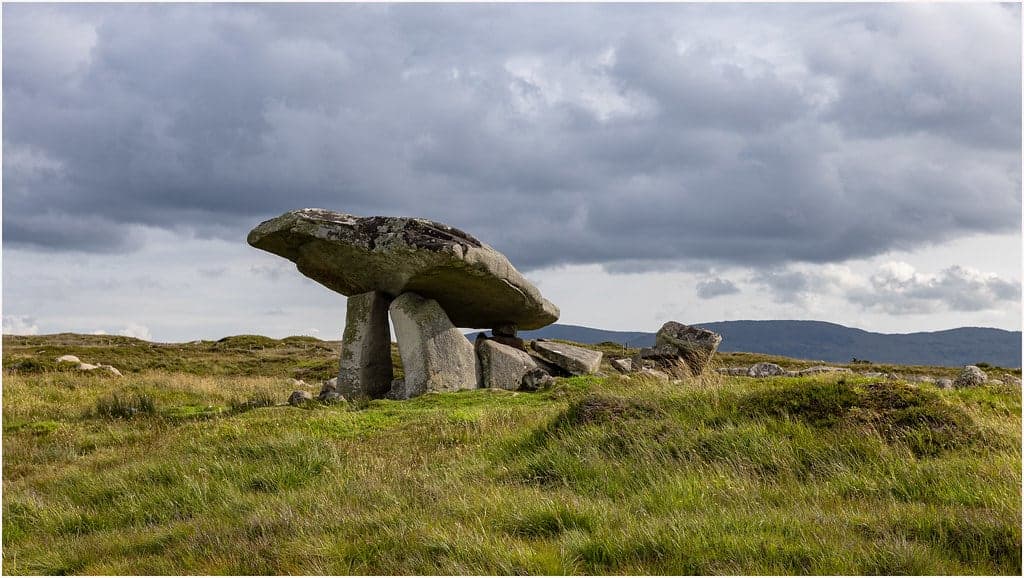
Kilclooney Dolmen, Ardara, Ireland
County Donegal, Glenties Municipal District, Ireland
25.4 km away
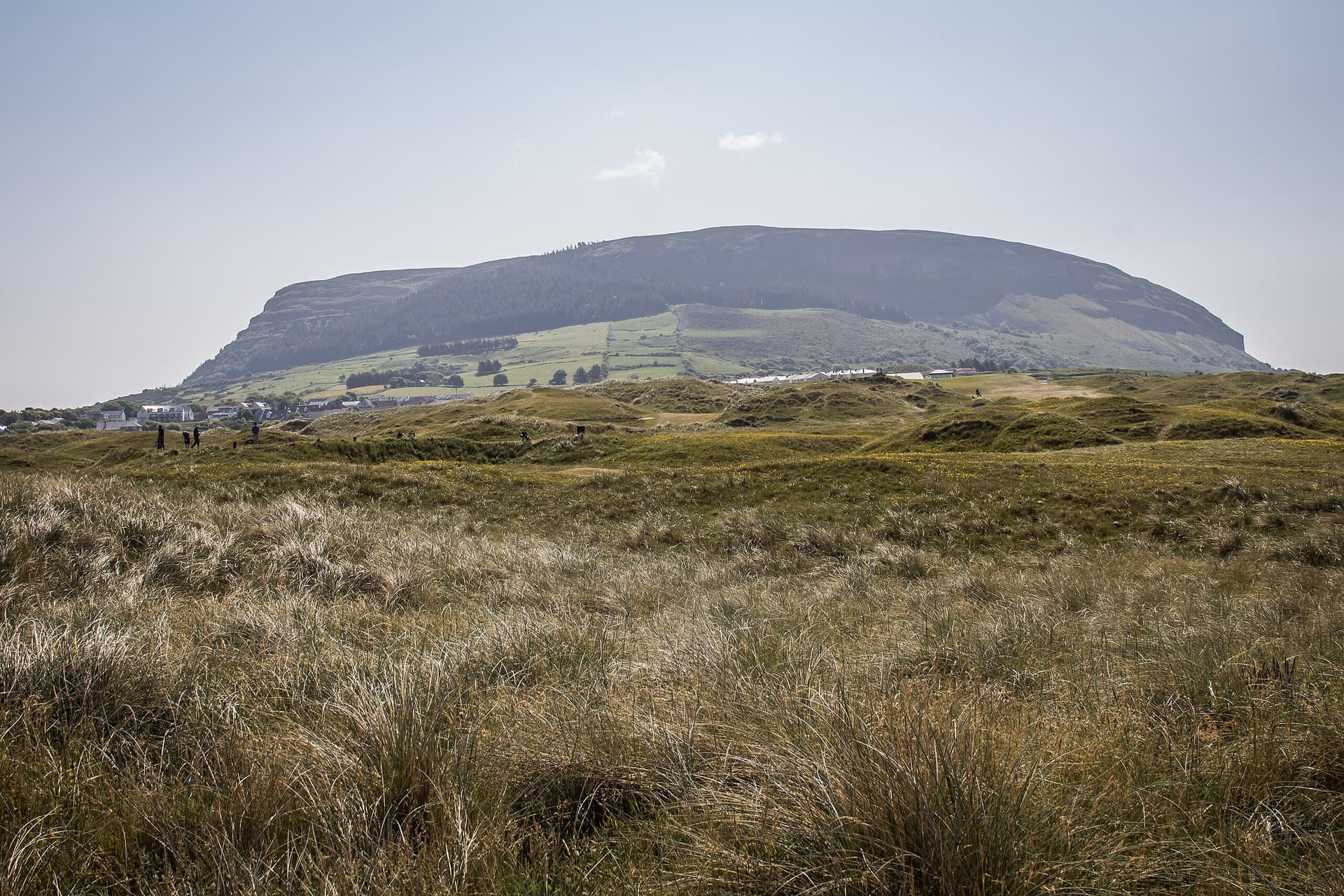
Knocknarea megalthic site, Sligo, Ireland
County Sligo, Sligo Municipal Borough District, Ireland
43.0 km away
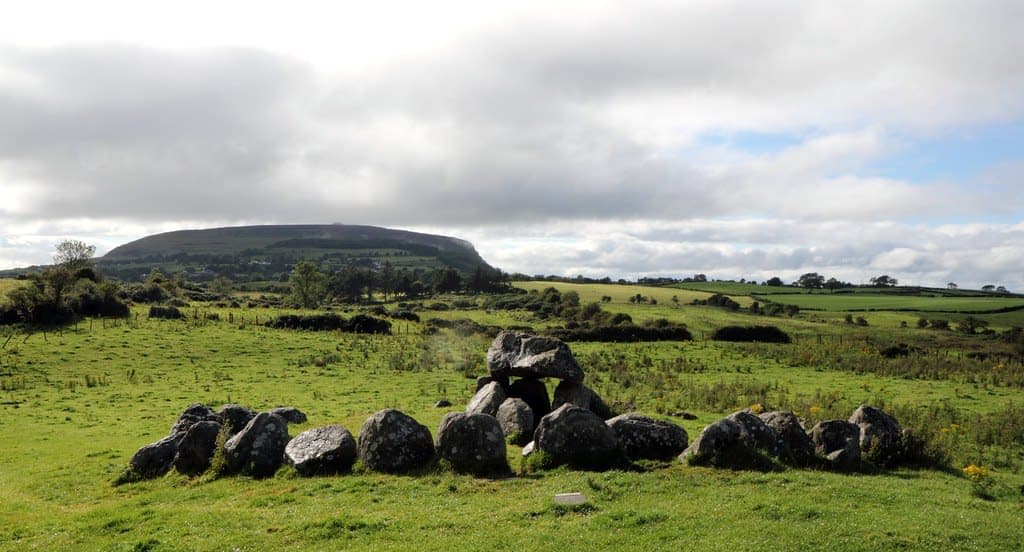
Carrowmore
County Sligo, Sligo Municipal Borough District, Ireland
44.5 km away
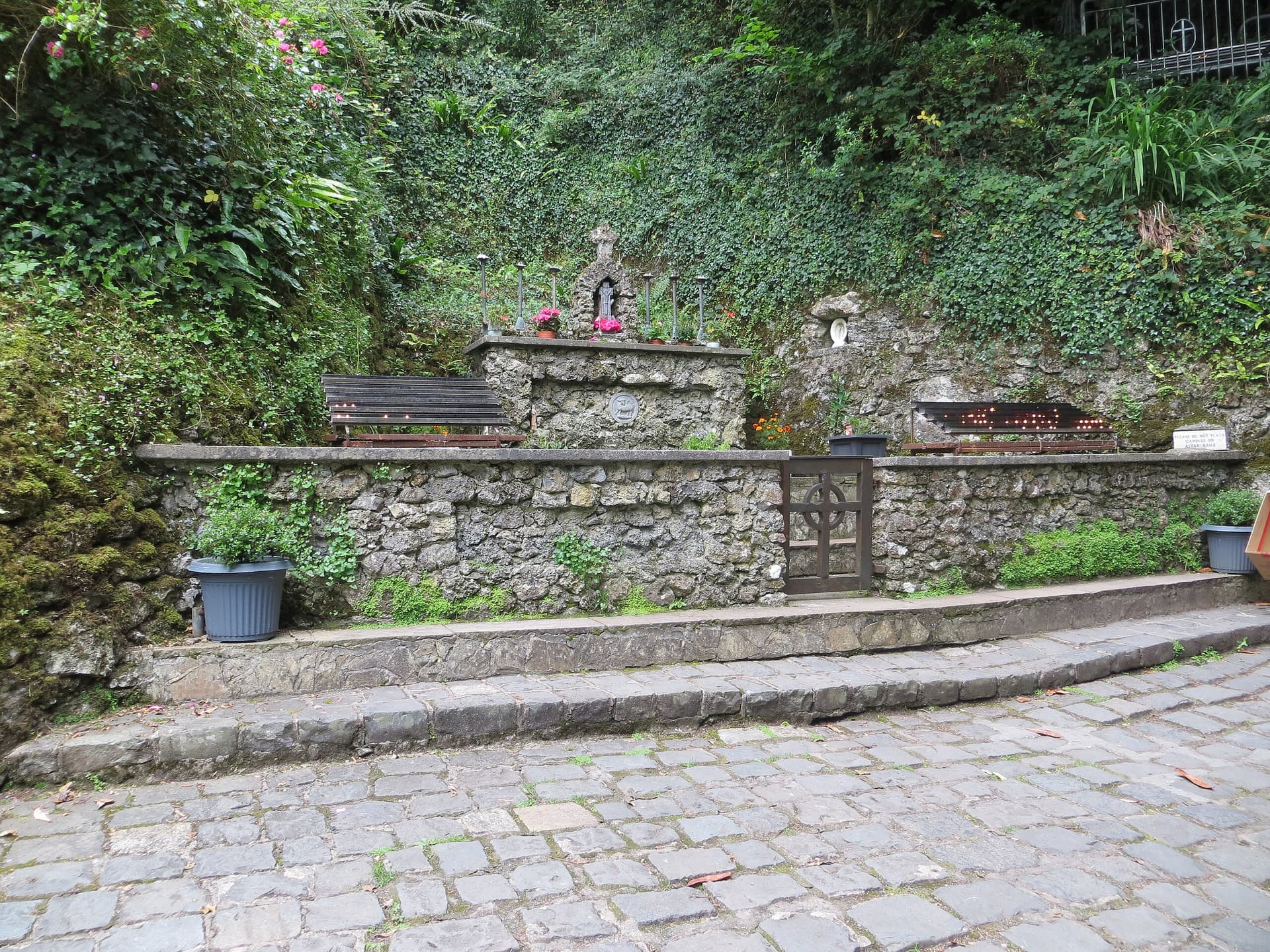
Tobar Nalt
County Sligo, Sligo Municipal Borough District, Ireland
46.6 km away