Antelope and Buffalo Springs (Chickasaw National Recreation Area)
Sacred healing waters where the Chickasaw ensured all could drink
Sulphur, Oklahoma, United States
At A Glance
- Coordinates
- 34.5054, -96.9633
- Suggested Duration
- One to two hours is sufficient to walk the Antelope and Buffalo Springs trail and spend contemplative time at each spring. A full day allows exploration of the broader park, including swimming in Travertine Creek, visiting Bromide Hill, and exploring Travertine Nature Center exhibits.
- Access
- The primary access point is Travertine Nature Center at 1504 Perimeter Road, Sulphur, Oklahoma 73086. From Interstate 35, take Highway 7 east to Highway 177 south. The park has FREE ADMISSION, honoring the original agreement when the Chickasaw and Choctaw sold the land. Note that the park was heavily damaged by a tornado in 2024. Check current conditions with the National Park Service before visiting.
Pilgrim Tips
- The primary access point is Travertine Nature Center at 1504 Perimeter Road, Sulphur, Oklahoma 73086. From Interstate 35, take Highway 7 east to Highway 177 south. The park has FREE ADMISSION, honoring the original agreement when the Chickasaw and Choctaw sold the land. Note that the park was heavily damaged by a tornado in 2024. Check current conditions with the National Park Service before visiting.
- Casual hiking attire is appropriate for the trails. Sturdy, comfortable shoes are recommended as terrain can be uneven. Bring swimwear if you plan to swim in Travertine Creek. Layers may be useful as temperatures can vary between shaded springs and open areas.
- Photography is permitted throughout the recreation area. Consider experiencing the springs before photographing them. At Buffalo Springs, where the quality is contemplative, excessive photography can interfere with your own experience and that of others seeking stillness.
- The springs are protected natural features within a National Recreation Area. Do not disturb the springs, remove water samples in significant quantities, or leave any offerings that would be considered litter. The tradition here is one of receiving what flows naturally, not of leaving deposits. Respect the indigenous heritage of this place. The Chickasaw's sacrifice made this site accessible. Approaching the springs with awareness of their cultural significance honors that gift.
Overview
In the Arbuckle foothills of Oklahoma, five million gallons of pure water gush daily from the earth. For centuries, indigenous peoples came here seeking healing of body and soul. When the Chickasaw Nation feared developers would commercialize these springs, they sold their land to the federal government, ensuring the waters would remain free and accessible forever. That act of sacrifice made this place what it is today.
Long before the Chickasaw called this land home, other peoples knew what rose from these hills. Ancient tribes called it the peaceful valley of rippling waters. They came to drink, to bathe, to be restored.
The springs themselves are the reason. Five million gallons surge from the earth each day, some rushing from rock faces with waterfall force, others seeping silently through woodland floors. The mineral springs carry sulphur and bromide, their sharp scent announcing what early visitors believed: that such strange waters must carry power over illness. The freshwater springs run cold and pure, drawn from deep within the Arbuckle Mountains through limestone channels older than memory.
What makes this place singular is not geology alone, but what humans chose to do with it. When the Chickasaw and Choctaw saw speculators eyeing these springs in the late 1800s, they feared what had happened at Hot Springs, Arkansas, where sacred waters became commercial resort. So they made an extraordinary decision: they sold 640 acres to the United States government in 1902, on the condition that the springs would remain free and open to all. They gave up ownership precisely to preserve access.
The park that emerged bears their name now. And true to their insistence, there is no entrance fee. The healing waters flow as they always have, available to anyone who arrives seeking what they offer.
Context And Lineage
The springs have drawn indigenous peoples for centuries, including the Caddo, Comanche, Wichita, and ultimately the Chickasaw, who arrived after their forced removal from the Southeast in the 1830s. Their 1902 sale of the land to the federal government, specifically to prevent commercialization, created one of America's earliest protected natural areas and established the free-admission policy that continues today.
According to regional indigenous tradition, ancient peoples called this the peaceful valley of rippling waters. They understood the strong-smelling mineral waters to possess healing power for both body and soul. The springs were places where one came to be restored, where the boundary between ordinary existence and something more generous grew thin.
Who first discovered the springs is lost to time. But for as long as memory extends, people have known that water emerging from the earth in such abundance, with such distinctive properties, was not ordinary water. It was a gift that required approaching with appropriate respect.
The springs exist at an intersection of geological time and human history. The Arbuckle Mountains, among the oldest in North America, have been filtering and releasing these waters for millions of years. Human use extends back thousands of years, with multiple indigenous peoples recognizing and utilizing the springs' properties.
The modern history begins with the town of Sulphur Springs in the late 1800s, the Chickasaw and Choctaw's protective land sale in 1902, and the creation of first the Sulphur Springs Reservation, then Platt National Park, and finally the present Chickasaw National Recreation Area in 1976. The CCC's 1930s stonework added lasting infrastructure, and despite a damaging 2024 tornado, the springs continue to flow and the mission of free access continues.
Chickasaw Nation
stewards
The Chickasaw arrived in Oklahoma after the Trail of Tears in the 1830s, forcibly removed from their southeastern homelands. They recognized the springs as sacred healing waters and, when commercial development threatened, made the extraordinary decision to sell the land to the federal government to ensure the waters would remain free and accessible to all. The park bears their name in honor of this sacrifice.
Pre-Contact Indigenous Peoples
original stewards
Before the Chickasaw's arrival, multiple indigenous peoples used these springs for healing and spiritual renewal. Though their specific ceremonial practices are not fully documented, the consistency of use across different tribal nations suggests the springs held recognized power that transcended any single tradition.
Why This Place Is Sacred
The springs' sacredness emerges from their life-giving force, their use across centuries by multiple indigenous peoples for healing, and the Chickasaw's profound act of preservation. Water that passes through ancient rock formations to emerge pure and cold has long been understood as a gift requiring stewardship, not exploitation.
There are places where water simply exists, and places where water seems to offer something. These springs are the latter kind.
The geology itself borders on the improbable. The Arbuckle Mountains, among the oldest in North America, contain rock formations that filter and mineralize the groundwater in distinct ways. Within a small area, some springs produce water thick with sulphur and bromide, while others, mere yards away, run completely fresh. The ancient syncline rock formations create this variance, though exactly how water chooses its path through these formations remains incompletely understood.
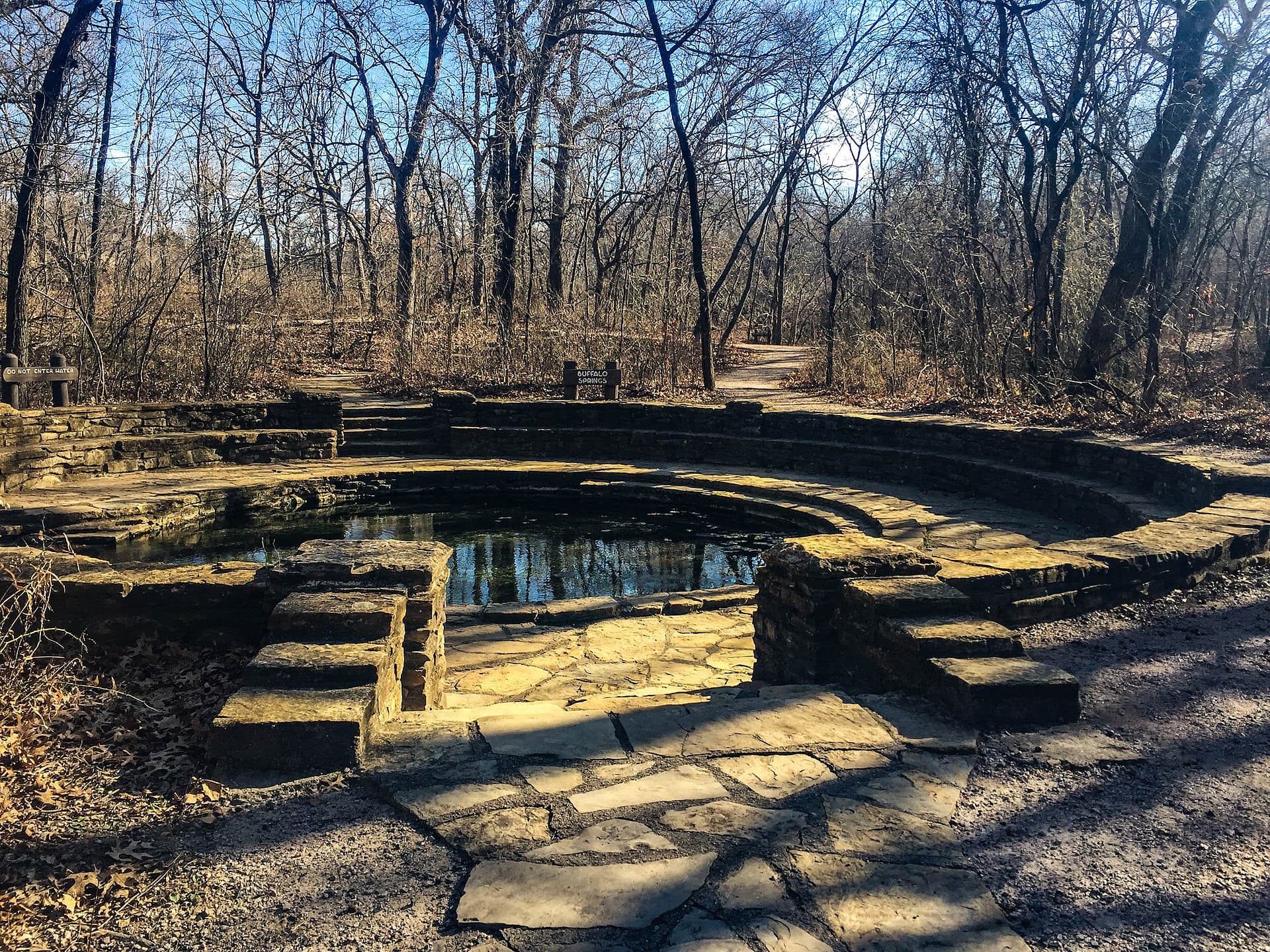
Indigenous peoples recognized the distinction. The mineral springs were for healing specific ailments, the strong smell announcing their potency. The freshwater springs, particularly Antelope and Buffalo, were for spiritual restoration. Buffalo Springs, which rises silently from the forest floor in a serene woodland setting, has long been described as a place for meditation, where the quiet emergence of water from darkness invites contemplation.
What accumulates at such places over centuries of intentional use is difficult to name but hard to miss. Generation after generation of people coming with prayers and ailments, hopes and fears. The Caddos came. The Comanches came. The Wichitas came. And when the Chickasaw arrived after the Trail of Tears, forced from their southeastern homelands, they too recognized what this place held.
Their decision to preserve it, to sacrifice ownership for the sake of access, added another layer to the springs' significance. Few sacred sites anywhere have been protected through such deliberate cultural choice. The waters flow freely because the Chickasaw understood something about stewardship that commercial interests rarely grasp: that sacred places belong to everyone precisely because they cannot be owned.
For indigenous peoples across many generations, the springs served both physical and spiritual healing. The mineral waters addressed ailments of the body, their distinctive properties believed to treat everything from skin conditions to rheumatism. The freshwater springs offered restoration of a different order, places where spirits could soothe what ailed the soul. The two types of water served complementary purposes within a worldview that did not separate body from spirit.
The springs' story shifted dramatically in the 19th century. As word spread of their healing properties, the town of Sulphur Springs grew around them, drawing visitors seeking cures. Hotels and bathhouses began to appear, and it seemed the springs would follow the path of other American healing waters toward commercial development.
The Chickasaw and Choctaw intervened. Their 1902 sale to the federal government created the Sulphur Springs Reservation, later renamed Platt National Park, and eventually merged with the Arbuckle Recreation Area to form today's Chickasaw National Recreation Area. By 1914, the park drew more visitors than Yellowstone or Yosemite, earning the title playground of the Southwest.
In the 1930s, the Civilian Conservation Corps built the stonework that now characterizes the springs, including benches at Buffalo Springs that remain ideal for contemplation. A tornado heavily damaged the park in 2024, requiring ongoing restoration, but the springs themselves continue to flow as they have for millennia.
Traditions And Practice
No formal ceremonies are documented at the springs today, though the Chickasaw Nation maintains cultural connection to the site. Traditional healing practices involving both mineral and freshwater springs were central to indigenous use. Modern visitors engage through hiking, swimming, and contemplation.
Historical indigenous practices at the springs centered on healing. The mineral springs, with their distinctive sulphur and bromide content, were used to treat physical ailments. The freshwater springs served spiritual restoration. Specific ceremonial protocols are not fully documented in available sources, but the consistent use across multiple tribal nations over centuries suggests established traditions for how to approach and receive the waters' gifts.
The Chickasaw understood the springs as places where body and soul could find restoration, where spirits could bring healing. This understanding shaped their decision to preserve the site rather than see it commercially developed.
The Chickasaw Nation maintains cultural connection to the springs as part of their heritage. No formal ceremonies are publicly documented at the site, but the Chickasaw Cultural Center in nearby Ada provides context for understanding the tribe's relationship with the land.
For most contemporary visitors, the springs are encountered through hiking, swimming, and quiet contemplation. The 1.5-mile Antelope Springs Trail and Buffalo Springs Loop from Travertine Nature Center provides easy access. Swimming in Travertine Creek at Little Niagara and Travertine Island continues the long tradition of immersion in these waters.
Walk the Antelope and Buffalo Springs loop slowly, pausing at each spring. At Antelope Springs, stand before the gush of water and feel what it communicates about abundance and the earth's generosity. At Buffalo Springs, sit on the CCC stone benches and simply watch the water's silent emergence. Let the contrast between the two springs teach something about different modes of encountering the sacred.
If you come carrying something that needs healing, you might bring it into awareness at Buffalo Springs' quiet pool. No ritual is required. Simply acknowledge what you carry in the presence of water that has witnessed countless others doing the same.
Swim in Travertine Creek if the season and your circumstances allow. The cold, clear water offers a kind of immersion that connects directly to the springs' traditional use. Let the experience be more than recreation.
Chickasaw Nation
ActiveThe Chickasaw arrived in Oklahoma after the Trail of Tears in the 1830s, forcibly removed from their southeastern homelands. They discovered these springs in their new territory and recognized them as sacred healing waters, places where spirits could bring restoration to body and soul. When commercial development threatened the springs in the late 1800s, the Chickasaw made an extraordinary decision: they sold 640 acres to the federal government in 1902, ensuring the waters would remain free and accessible to all. This act of preservation, giving up ownership specifically to protect access, represents a profound understanding of stewardship.
Traditional Chickasaw healing practices involved the mineral springs for physical ailments and the freshwater springs for spiritual restoration. While specific ceremonial protocols are not documented in available sources, the consistent use of the springs for healing across the tribe's history in Oklahoma indicates established traditions for approaching and receiving the waters. The Chickasaw Cultural Center in nearby Ada provides context for the tribe's relationship with the land.
Pre-Contact Indigenous Peoples
HistoricalBefore the Chickasaw's arrival, multiple indigenous peoples, including the Caddo, Comanche, and Wichita, used these springs for healing and spiritual purposes. According to regional tradition, ancient peoples called this the peaceful valley of rippling waters. They believed the strong-smelling mineral waters held power to heal body and soul. The consistency of use across different tribal nations over centuries suggests the springs held recognized significance that transcended any single cultural tradition.
Historical practices involved healing rituals using both mineral and freshwater springs. The specific ceremonial protocols are not fully documented, but the pattern of use indicates established traditions for how to approach the springs with appropriate respect and receive their healing properties.
Experience And Perspectives
Visitors describe a quality of peace at the springs that differs from ordinary park recreation. The contrast between Antelope Springs' dramatic gush and Buffalo Springs' silent serenity offers two modes of encounter. Many report feeling connected to something larger, a sense of gratitude for the Chickasaw's act of preservation, and the simple refreshment of cold, pure water on a warm day.
Antelope Springs announces itself. Water bursts from the rock face with force, a small waterfall emerging from the hillside as if the earth cannot contain what presses from within. The sound carries through the woods. Visitors stand before it feeling the mist on their faces, watching carbon dioxide bubble through the cold flow, and something about the sheer volume of water, the relentless surge, communicates abundance.
Buffalo Springs offers a different encounter entirely. Here water rises silently from the earth in a serene woodland setting, the spring emerging without drama through leaf-covered ground. The quiet is not emptiness but fullness, a listening quality. Those who sit on the CCC-era stone benches and simply watch the water's emergence often lose track of time. The experience is less about seeing something impressive than about being still in the presence of something patient.
The contrast between the two springs, accessible via an easy 1.5-mile trail loop from Travertine Nature Center, provides a kind of teaching. There is the sacred that overwhelms and the sacred that waits. Both are present here.
Swimming in Travertine Creek offers another dimension of encounter. The water is cold, surprisingly so for Oklahoma summers, and remarkably clear. At Little Niagara and Travertine Island, visitors immerse themselves in the same waters that have drawn people for centuries. The sensation is not merely refreshing but purifying in a way that echoes the springs' traditional use.
Come with slowness. The site rewards those who resist the impulse to photograph quickly and move on. The springs have been here for longer than human presence in this region, and they will outlast any visit. Matching your pace to the water's patience opens something.
Consider visiting early in the morning, when the trails are quiet and the springs can be encountered in relative solitude. The quality of light through the forest canopy and the absence of crowd noise allow the springs to communicate on their own terms.
If you come with questions or burdens, you are in good company. Generations have arrived here carrying what needed healing. The springs do not answer questions in words, but something about sitting with flowing water, watching what emerges continuously from darkness into light, can shift perspective in useful ways.
Understanding Antelope and Buffalo Springs requires holding multiple perspectives together. The geological facts, the indigenous traditions, and the political history of preservation each illuminate different dimensions of what makes this place significant. None alone tells the complete story.
Geologically, the springs emerge from the Arbuckle Mountains, some of the oldest rock formations in North America. Water filters through syncline formations that create the distinctive variation between mineral-rich and pure freshwater springs in close proximity. The exact processes that determine which springs produce which water types remain subjects of ongoing study.
Historically, the site is documented as one of Oklahoma's earliest protected areas. The 1902 land sale by the Chickasaw and Choctaw to the federal government, specifically to prevent commercial development, represents an unusual act of cultural preservation. By 1914, the park drew more visitors than Yellowstone or Yosemite.
For the Chickasaw Nation, these are sacred healing waters where body and soul can find restoration. The tribe's decision to sell the land rather than see it commercialized demonstrates the profound spiritual value they placed on ensuring the waters remained accessible and unspoiled. This was not merely conservation in the modern environmental sense, but the protection of a sacred trust.
Pre-contact indigenous traditions recognized the springs as places of healing power across tribal boundaries. The Caddo, Comanche, and Wichita all used these waters before the Chickasaw's arrival, suggesting the springs' significance transcended any single cultural tradition.
Contemporary spiritual practitioners recognize the springs for their healing energies and the meditative quality of Buffalo Springs in particular. Some describe the site as a place where earth energies are particularly accessible, where the barrier between ordinary and spiritual experience grows thin. These interpretations, while not grounded in indigenous tradition or scientific documentation, often emerge from genuine experiences visitors report at the site.
Much about the springs remains mysterious. The full extent of pre-contact indigenous ceremonial practice is not documented in detail. The geological processes that create such variation between springs in close proximity are not completely understood. Why water that passes through the same ancient rock formations emerges in such distinctly different forms remains partly unexplained.
The complete ceremonial protocols that historical indigenous peoples used at these springs are largely lost to time. What survives is the consistent recognition across centuries and cultures that these waters hold something worth traveling to receive.
Visit Planning
Chickasaw National Recreation Area is located in Sulphur, Oklahoma, with free admission honoring the original agreement with the Chickasaw Nation. The springs are accessible via an easy 1.5-mile trail from Travertine Nature Center. Year-round access, with spring and fall offering the most comfortable weather. Check current conditions due to 2024 tornado damage.
The primary access point is Travertine Nature Center at 1504 Perimeter Road, Sulphur, Oklahoma 73086. From Interstate 35, take Highway 7 east to Highway 177 south. The park has FREE ADMISSION, honoring the original agreement when the Chickasaw and Choctaw sold the land. Note that the park was heavily damaged by a tornado in 2024. Check current conditions with the National Park Service before visiting.
Six campgrounds within the park offer over 400 sites. Lodging is available in Sulphur and surrounding communities. The town that grew around the springs retains some of its historic character from the era when visitors came specifically seeking the healing waters.
The springs are located within a National Recreation Area with standard park rules. No formal religious protocols apply, but respectful behavior befitting a sacred site is appropriate. Stay on trails, leave no trace, and maintain the contemplative atmosphere that allows others to have meaningful encounters.
The Chickasaw sold this land specifically so everyone could access the healing waters. Honoring their intention means treating the site with the respect that worthy gift deserves.
Stay on designated trails. The springs and surrounding ecology are protected. Walking off-trail damages vegetation and can disturb the natural features that make this place what it is.
Maintain the quiet that allows encounter. At Buffalo Springs especially, conversation and noise diminish what the silence offers. If you visit with others, consider experiencing the springs in receptive quiet before discussing your impressions.
Leave no trace. This principle applies not only to garbage but to any impulse to leave offerings, carvings, or markings. The springs have endured for millennia without human additions. The tradition here is one of receiving, not depositing.
Casual hiking attire is appropriate for the trails. Sturdy, comfortable shoes are recommended as terrain can be uneven. Bring swimwear if you plan to swim in Travertine Creek. Layers may be useful as temperatures can vary between shaded springs and open areas.
Photography is permitted throughout the recreation area. Consider experiencing the springs before photographing them. At Buffalo Springs, where the quality is contemplative, excessive photography can interfere with your own experience and that of others seeking stillness.
Physical offerings are not traditionally practiced here and should not be left. The springs offer something; our appropriate response is gratitude rather than deposit. Any items left would be considered litter and removed.
No glass containers in the park. No alcohol. No smoking except in designated areas. Pets must be leashed. Swimming is permitted only in designated areas of Travertine Creek. As of 2024, some areas may be closed for tornado damage restoration, so check current conditions before visiting.
Sacred Cluster
Nearby sacred places create the location cluster described in the growth plan. This block is intentionally crawlable and links into the wider regional graph.