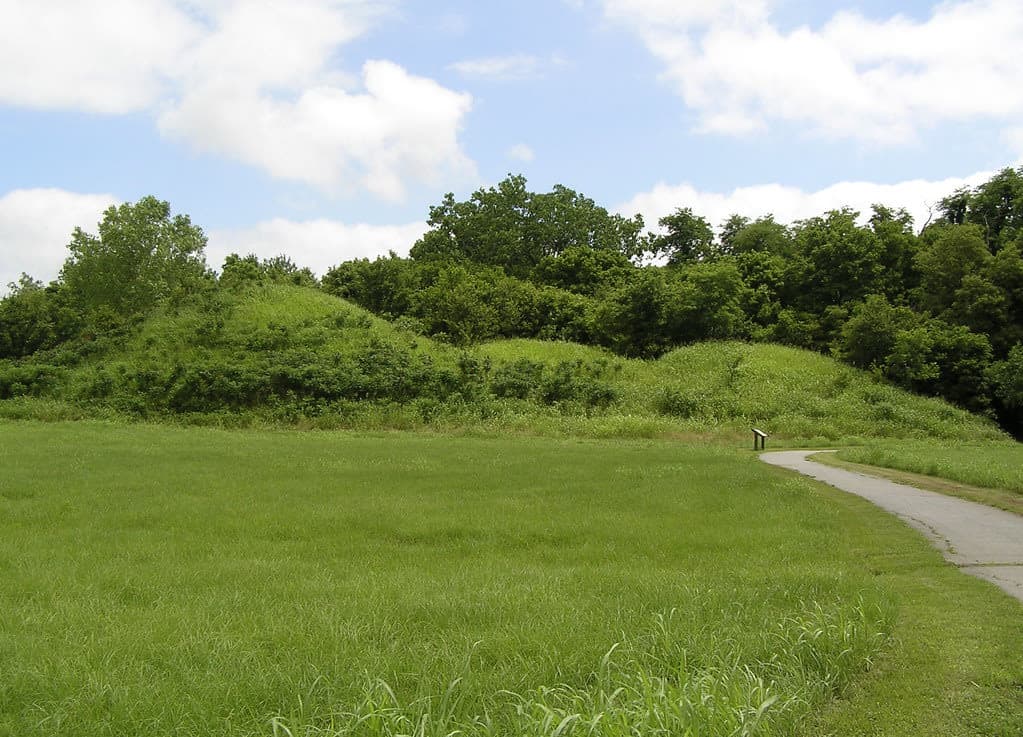
Spiro Mounds State Park
Western gateway of the Mississippian world, where the sun was honored and the dead were adorned for eternity
Spiro, Oklahoma, United States
At A Glance
- Coordinates
- 35.3117, -94.5684
- Suggested Duration
- Allow one to three hours. The interpretive center provides essential context; the trails total nearly two miles. Those seeking deeper engagement may wish to visit during a solstice or equinox tour, which offers extended time and guided interpretation.
- Access
- Address: 18154 First Street, Spiro, OK 74959. Located four miles north of US-271 in Le Flore County. Approximately fifteen miles from Fort Smith, Arkansas, which offers the nearest full range of services. Hours: Tuesday through Saturday, 9am to 4pm (closed for lunch 12pm-1pm). Admission is currently free. Guided tours available by appointment.
Pilgrim Tips
- Address: 18154 First Street, Spiro, OK 74959. Located four miles north of US-271 in Le Flore County. Approximately fifteen miles from Fort Smith, Arkansas, which offers the nearest full range of services. Hours: Tuesday through Saturday, 9am to 4pm (closed for lunch 12pm-1pm). Admission is currently free. Guided tours available by appointment.
- No formal requirements. Comfortable walking shoes are essential for the nearly two miles of trails, which include varied terrain. Dress for weather; shade is limited in some areas.
- Photography is permitted on the grounds. Check with staff regarding policies for the interpretive center and displayed artifacts. Drone use is prohibited without special permission.
- This is a burial ground. Whatever your beliefs about the dead, behavior appropriate to a cemetery is appropriate here. Do not disturb the mounds, remove any material, or leave offerings without guidance from site staff. The site is actively managed for preservation and cultural sensitivity.
Overview
Between 850 and 1450 CE, Spiro Mounds served as one of four great ceremonial centers of the Mississippian world. At solstices, as many as thirty thousand gathered to honor the Sun God through fasting, purification, and offerings. Craig Mound held the most elaborate burial cache ever found in North America, ninety percent of all known Mississippian engraved shells coming from this single hollow chamber.
The Spiro people built on the western edge of what we now call the Mississippian world, their mounds rising along the Arkansas River in present-day Oklahoma. For six centuries, this was a city of thousands, a crossroads of trade spanning most of North America, and a pilgrimage destination where tens of thousands converged at solstices to commune with the sun.
What distinguished Spiro was Craig Mound. When commercial miners tunneled into it in the 1930s, they encountered something unprecedented: a hollow chamber, preserved like a time capsule, filled with the most extraordinary collection of sacred objects ever found north of Mexico. Engraved shells depicting warrior priests and mythic beings. Copper plates embossed with cosmic imagery. Stone maces and effigy pipes of astonishing craftsmanship. Ninety percent of all known Mississippian ceremonial art came from this single chamber.
The looting scattered these objects to museums and private collections worldwide. But the site remains. The mounds still rise from the Oklahoma landscape, still aligned with the movements of sun and stars. The descendants of the builders, the Caddo Nation and Wichita peoples, still recognize this place as sacred ground.
Context And Lineage
Spiro Mounds was one of four major regional centers of the Mississippian Culture confederation, alongside Cahokia, Moundville, and Etowah. Built by Caddoan-speaking peoples between 850 and 1450 CE, it served as the western gateway of the Southeastern Ceremonial Complex, a religious system shared across the eastern half of North America. The site's catastrophic looting in the 1930s scattered its treasures but also spurred the first archaeological preservation laws in Oklahoma.
The peoples who built Spiro were part of a broader cultural phenomenon archaeologists call the Mississippian tradition. Beginning around 800 CE, communities across the eastern half of North America began building earthen mounds, developing more intensive agriculture, and participating in shared ceremonial practices. By 1000 CE, a network of major centers had emerged: Cahokia near present-day St. Louis, the largest city north of Mexico; Moundville in Alabama; Etowah in Georgia; and Spiro in Oklahoma.
These centers shared religious iconography now called the Southeastern Ceremonial Complex, sometimes known as the Southern Death Cult or Buzzard Cult, though scholars now consider these terms misleading. The iconography depicted on shells, copper, and stone suggests beliefs about cosmic order, the journey of the dead, and the power of certain individuals to mediate between worlds.
Spiro's position was distinctive: the westernmost outpost of this world, the point where Mississippian civilization met the plains. Trade goods from across North America converged here. Marine shells from the Gulf Coast, copper from the Great Lakes, obsidian from sources west of the Rockies. The builders of Spiro participated in networks spanning a continent.
The Spiro builders left no written records, but their descendants survive. Under the Native American Graves Protection and Repatriation Act (NAGPRA), the Caddo Nation of Oklahoma and the Wichita and Affiliated Tribes have been recognized as cultural descendants of the Spiro peoples. Both maintain active relationships with the site, consulting on its management and the repatriation of objects held by museums.
The connection is not merely legal but cultural. Caddoan languages, traditions, and oral histories carry forward elements of what the Spiro peoples knew, though much was lost during centuries of displacement and colonization. The site represents, for these communities, evidence of what their ancestors achieved: a civilization as sophisticated as any in the Americas, built before Europeans arrived.
The Sun God
deity
The central deity of Mississippian religion, honored at Spiro through solstice ceremonies when tens of thousands gathered to receive divine guidance through priestly intermediaries. The site's astronomical alignments suggest careful attention to solar movements.
Priestly Elite
historical
The individuals buried in Craig Mound with extraordinary offerings were likely priest-rulers who held both spiritual and political authority. The iconography on burial goods depicts figures in elaborate regalia wielding maces and participating in rituals, suggesting a class of sacred specialists.
Why This Place Is Sacred
Spiro's sacredness emerged from its role as western gateway to the Mississippian ceremonial complex, its solar alignments, and the extraordinary mortuary practices that filled Craig Mound with objects of power. As a burial ground for spiritual leaders whose offerings exceeded anything found elsewhere in North America, the site retains significance as a place where ancestors rest and the past remains present.
The Caddoan peoples who built Spiro understood themselves as participants in a cosmic order centered on the sun. Twice yearly, at summer and winter solstices, pilgrims gathered by the tens of thousands for three days of ceremony. They fasted without food, water, or sleep. They drank the Black Drink, a tea of yaupon holly that induced vomiting as purification. They smoked tobacco. They offered their attention to the Sun God through priests who served as intermediaries between worlds.
The mounds themselves were built over generations, their construction an act of devotion as much as engineering. Cedar wood featured prominently in the most sacred structures, its fragrance and durability understood as marking passages between spiritual realms. The hollow chamber within Craig Mound, archaeologists now believe, was created through the gradual collapse of these cedar structures, an accidental preservation that kept the burial offerings intact for centuries.
What those offerings reveal is a people who invested extraordinary resources in preparing their dead for the next world. The engraved shells depict scenes from Mississippian cosmology: falcon warriors, weeping eyes, the forked-eye motif that may represent otherworldly vision. The copper plates show figures in elaborate regalia. The stone maces and effigy pipes suggest ritual use by a priestly elite who wielded both spiritual and political power.
Spiro sat at the western edge of this world, the last great center before the plains. Trade goods from the Gulf Coast to the Great Lakes passed through here. The site was simultaneously a political capital, an economic hub, and a ceremonial center, though the Mississippians themselves likely did not separate these functions. Power flowed through sacred channels; the sacred was expressed through material magnificence.
Archaeological evidence indicates Spiro served as a major regional center of the Caddoan Mississippian culture, combining residential, ceremonial, and mortuary functions. The site's mounds appear to have been used for temple construction, elite burial, and perhaps astronomical observation. Craig Mound, the largest, served primarily as a mortuary for spiritual leaders whose elaborate grave goods suggest they were understood as possessing extraordinary power in life and continuing significance in death.
The site evolved over roughly six centuries. Settlement began around 850 CE as a small farming village. By 900-1000 CE, mound construction was underway. The peak period, from roughly 1000 to 1300 CE, saw as many as ten thousand people living in and around the main city. Around 1300 CE, most of the population dispersed to surrounding areas, though the site continued as a primarily ceremonial and mortuary center until its abandonment around 1450 CE.
The reasons for abandonment remain unclear. Climate change, social disruption, or the broader collapse of Mississippian ceremonial systems may have played roles. What is certain is that when Europeans arrived, Spiro had been silent for generations. The mounds slowly returned to forest, known to local farmers but unstudied until the twentieth century.
The 1930s looting was catastrophic. The Pocola Mining Company tunneled through Craig Mound, selling artifacts to collectors and tourists, destroying archaeological context that can never be recovered. When the Oklahoma legislature finally intervened in 1935, much was already lost. Later scientific excavation recovered what remained and established Spiro's significance, but the full picture of what the mound once contained will never be known.
Traditions And Practice
Historical practices at Spiro centered on solar worship and elaborate mortuary rituals. Today, the site operates as an archaeological center, with special tours during solstices and equinoxes offering contemporary visitors connection to the ceremonial calendar that structured Mississippian religious life.
The ceremonies that once animated Spiro can only be inferred from artifacts and comparison with documented practices at other Mississippian sites. What evidence suggests: solstice and equinox gatherings drawing tens of thousands of pilgrims; three-day ceremonies involving fasting from food, water, and sleep; the Black Drink purification ritual using tea brewed from yaupon holly, consumed from marine shell cups to induce vomiting; tobacco smoking as offering; elaborate mortuary rituals in which the dead were adorned with objects of cosmic power.
The chunkey game, evidenced by polished stone discs found in the mounds, likely combined sport and ceremony. Players rolled a stone disc across a prepared court while others threw spears, attempting to land closest to where the disc would stop. The game may have held divinatory significance, its outcomes interpreted as messages from spiritual powers.
Cedar featured in sacred architecture, its fragrance and resistance to decay marking transitions between realms. The hollow preservation of Craig Mound's burial chamber resulted from the gradual collapse of cedar structures, an unintended consequence that preserved the offerings for centuries.
The Oklahoma Historical Society operates Spiro Mounds Archaeological Center as an educational site. No active religious ceremonies take place within the site boundaries. However, the Caddo Nation and Wichita and Affiliated Tribes maintain cultural connection through consultation on site management and repatriation of objects.
Special tours during solstices and equinoxes offer visitors engagement with the ceremonial calendar that structured Mississippian religious life. Watching dawn break over mounds built to track that dawn creates experiential connection that mere reading cannot provide.
Visit the interpretive center before walking the trails. The context transforms what might otherwise seem simple earthworks into remnants of a sophisticated civilization. The artifacts on display, though a small fraction of what the mounds once held, demonstrate the artistry and intentionality of Caddoan culture.
Walk the full trail system slowly, allowing at least two hours. Pause at Craig Mound, where the burial chamber once held the most elaborate collection of sacred objects found in North America. Consider what it would have meant to place such treasures with the dead, to believe the journey to the next world required such preparation.
If possible, arrange your visit for a solstice or equinox tour. The experience of sunrise at a site built to honor the sun connects visitors to something beyond intellectual understanding.
Caddoan Mississippian Culture
HistoricalSpiro was one of four major regional centers of the Mississippian world, serving as the western gateway of the Southeastern Ceremonial Complex. Between approximately 850 and 1450 CE, the site functioned as a city, trade hub, and ceremonial center where tens of thousands gathered at solstices to honor the Sun God. Craig Mound held the most elaborate burial cache ever found in North America, its contents suggesting a priestly elite who wielded spiritual and political power.
Solstice and equinox ceremonies, Black Drink purification rituals using yaupon holly tea, three-day fasting periods, tobacco offerings, chunkey games, and elaborate mortuary rituals in which the dead were adorned with objects of cosmic power. Cedar was used in sacred architecture to mark passages between spiritual realms.
Caddo Nation
ActiveUnder NAGPRA, the Caddo Nation of Oklahoma is recognized as one of the cultural descendants of the Spiro builders. The site represents ancestral heritage: evidence that Caddoan peoples built a civilization as sophisticated as any in the Americas, long before European contact. The connection is not merely historical but ongoing, with the Caddo consulting on site management and working for the repatriation of objects held by museums.
Cultural preservation, educational programming, and consultation on site management and repatriation. While formal ceremonies do not currently take place at Spiro, the Caddo maintain connection to the site as sacred ground and part of their cultural identity.
Wichita and Affiliated Tribes
ActiveThe Wichita, Keechi, Waco, and Tawakonie peoples are also recognized as cultural descendants of the Spiro builders under NAGPRA. They share in the cultural heritage and sacred significance of the site, consulting on repatriation matters and maintaining connection to this place as part of their ancestral identity.
Cultural preservation and consultation on repatriation matters.
Experience And Perspectives
Visitors to Spiro Mounds report a contemplative atmosphere that invites reflection on deep American history and the achievements of pre-contact civilizations. Walking among the mounds, particularly during solstice tours, offers encounters with a past more sophisticated and spiritually rich than many visitors expect.
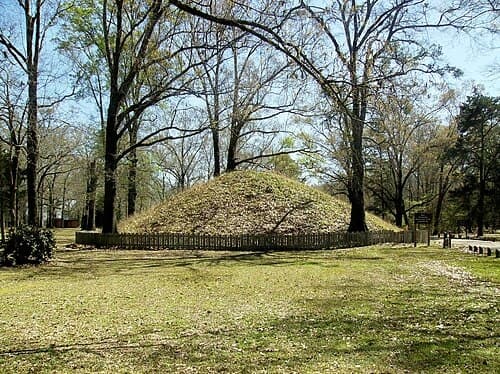
The first impression is often surprise at scale. This was a city. Not a small settlement, not a temporary camp, but a permanent center that shaped the lives of thousands. The mounds, though weathered by centuries, still define the landscape. Walking among them takes time, the two miles of trails revealing the site gradually.
Many visitors describe a sense of walking among ancestors, though they may not share ancestry with the builders. Something about standing in a place where humans gathered for six hundred years creates connection across time. The burial mounds, in particular, produce a reflective quality. People slow down. Conversation quiets.
Those who arrive with knowledge of the 1930s looting often experience complicated emotions. The story of Spiro is partly a story of loss, of sacred objects scattered to museums and private collections, of context destroyed that can never be recovered. Contemplating what was here, and what was taken, invites reflection on colonialism, grave desecration, and the ongoing work of cultural repatriation.
The solstice and equinox tours offer something different. Arriving at dawn, watching light fall across mounds that were built to track that light, visitors glimpse what the site might have meant to those who gathered here eight hundred years ago. The Oklahoma Historical Society guides these tours with attention to both archaeological and cultural significance, creating space for something more than passive sightseeing.
For members of descendant communities, particularly the Caddo Nation and Wichita peoples, the experience carries additional weight. This is not abstract history but ancestral heritage, a place where their people achieved something remarkable long before European contact.
Spiro rewards visitors who arrive with context. The interpretive center provides essential background on Mississippian culture, the site's history, and the significance of what was found in Craig Mound. Artifacts on display, though a fraction of what the mound once held, demonstrate the sophistication of Caddoan artisans.
The trails invite contemplation rather than rushing. Consider pausing at each mound, sitting in silence, allowing the scale of time to settle. These earthworks were built over generations. Rushing through in an hour misses what the site offers.
If your visit coincides with a solstice or equinox tour, arrange to attend. The experience of watching celestial events at a site built to track them connects visitors to the calendar that structured Mississippian ceremonial life. Reservations are typically required.
Spiro Mounds invites interpretation from multiple angles: archaeological, indigenous, and popular. Each offers genuine insight; each has limitations. The site is large enough to hold contradiction, and honest engagement requires acknowledging what we do not know.
Archaeological consensus recognizes Spiro as one of the four major regional centers of the Mississippian world and the westernmost outpost of the Southeastern Ceremonial Complex. James A. Brown's work on the Craig Mound artifacts established the extraordinary significance of the site: ninety percent of all known engraved shell and ritual artifacts from the Mississippian world came from this single burial chamber.
The site's function combined residential, ceremonial, and mortuary purposes. The mounds were built over generations, their construction an ongoing project that structured community life. Craig Mound served primarily as a mortuary for elite individuals whose grave goods suggest they held both spiritual and political authority.
Scholars debate specifics. The exact beliefs and rituals of Spiro's priestly class are largely inferred from iconography and comparison with documented practices elsewhere. The reasons for the site's abandonment around 1450 CE remain unclear. The hollow preservation of the Craig Mound chamber was likely accidental, resulting from the collapse of cedar structures over time.
For the Caddo Nation and Wichita and Affiliated Tribes, Spiro represents ancestral heritage. Under NAGPRA, these communities have been recognized as cultural descendants of the Spiro builders and are consulted on site management and the repatriation of objects held by museums.
This perspective understands the site not as ancient history but as living connection. The achievements of Spiro belong to these peoples. The objects removed from the mounds are not merely artifacts but sacred materials with continuing significance. The work of repatriation, ongoing for decades, is work of healing and restoration.
From this viewpoint, the 1930s looting was not merely archaeological loss but desecration of graves and theft of cultural patrimony. The scattering of objects to museums and private collections worldwide represents a wound that repatriation can only partially address.
Popular accounts sometimes emphasize the Southern Death Cult terminology, suggesting a civilization centered on morbid practices. Scholars consider this framing misleading, a product of colonial-era misunderstanding that imposed European categories onto Mississippian religion.
Some alternative theories have proposed various far-flung cultural connections: links to Aztec or Maya civilizations, or even more exotic origins. These lack archaeological support. The Mississippian tradition, including Spiro, emerged from indigenous developments in eastern North America, building on earlier Woodland cultures.
Genuine mysteries remain. The specific beliefs and rituals of Spiro's priestly class can only be inferred, not documented. Why the site was abandoned around 1450 CE is unclear, though climate change, social disruption, and broader patterns of Mississippian decline may have played roles.
How the hollow preservation chamber in Craig Mound formed remains debated. The full extent of artifacts looted in the 1930s will never be known; many remain in private collections, unavailable for study. The destruction of archaeological context means questions that careful excavation might have answered are now permanently unanswerable.
What Spiro meant to those who built it, worshipped there, and buried their dead in its mounds, we can only approach through inference. The gap between what we know and what we would like to know is itself worth sitting with.
Visit Planning
Spiro Mounds Archaeological Center is located four miles north of US-271 near the town of Spiro in eastern Oklahoma, approximately fifteen miles from Fort Smith, Arkansas. The site is open Tuesday through Saturday, with free admission. Special tours during solstices and equinoxes require advance reservation.
Address: 18154 First Street, Spiro, OK 74959. Located four miles north of US-271 in Le Flore County. Approximately fifteen miles from Fort Smith, Arkansas, which offers the nearest full range of services. Hours: Tuesday through Saturday, 9am to 4pm (closed for lunch 12pm-1pm). Admission is currently free. Guided tours available by appointment.
The nearest accommodations are in Fort Smith, Arkansas (15 miles) and Poteau, Oklahoma (12 miles). Fort Smith offers a full range of hotels, restaurants, and services. For those visiting multiple Mississippian sites, consider itineraries that include Cahokia, Moundville (Alabama), or Etowah (Georgia).
Spiro Mounds is both an archaeological site and a burial ground sacred to descendant communities. Visitors should behave with the respect appropriate to both contexts: stay on designated trails, do not disturb the mounds, and maintain a contemplative atmosphere.
The fundamental principle is respect for the dead. The mounds at Spiro are burial sites. The people interred there were ancestors of communities that still exist, peoples who consider this ground sacred. Behavior appropriate to visiting a cemetery is appropriate here.
Stay on designated trails. The mounds have survived six centuries, but they remain vulnerable to erosion and disturbance. Do not climb, dig, or probe the earthworks. Leave everything as you find it.
The interpretive center contains artifacts of great cultural significance. Photography policies apply. Ask staff before photographing displays.
Maintain an atmosphere suitable to the site's significance. Loud conversation and disruptive behavior diminish the experience for others and disrespect the place itself. Groups, particularly school groups, should be briefed on appropriate conduct before arrival.
No formal requirements. Comfortable walking shoes are essential for the nearly two miles of trails, which include varied terrain. Dress for weather; shade is limited in some areas.
Photography is permitted on the grounds. Check with staff regarding policies for the interpretive center and displayed artifacts. Drone use is prohibited without special permission.
Not traditionally practiced by visitors. Do not leave objects at the mounds without guidance from site staff. If you wish to mark your visit in some way, speak with staff about appropriate options.
Stay on designated trails. Do not climb or disturb the mounds. Do not collect artifacts, stones, or plants. The site is a protected archaeological resource; violations may result in federal prosecution under the Archaeological Resources Protection Act.
Sacred Cluster
Nearby sacred places create the location cluster described in the growth plan. This block is intentionally crawlable and links into the wider regional graph.
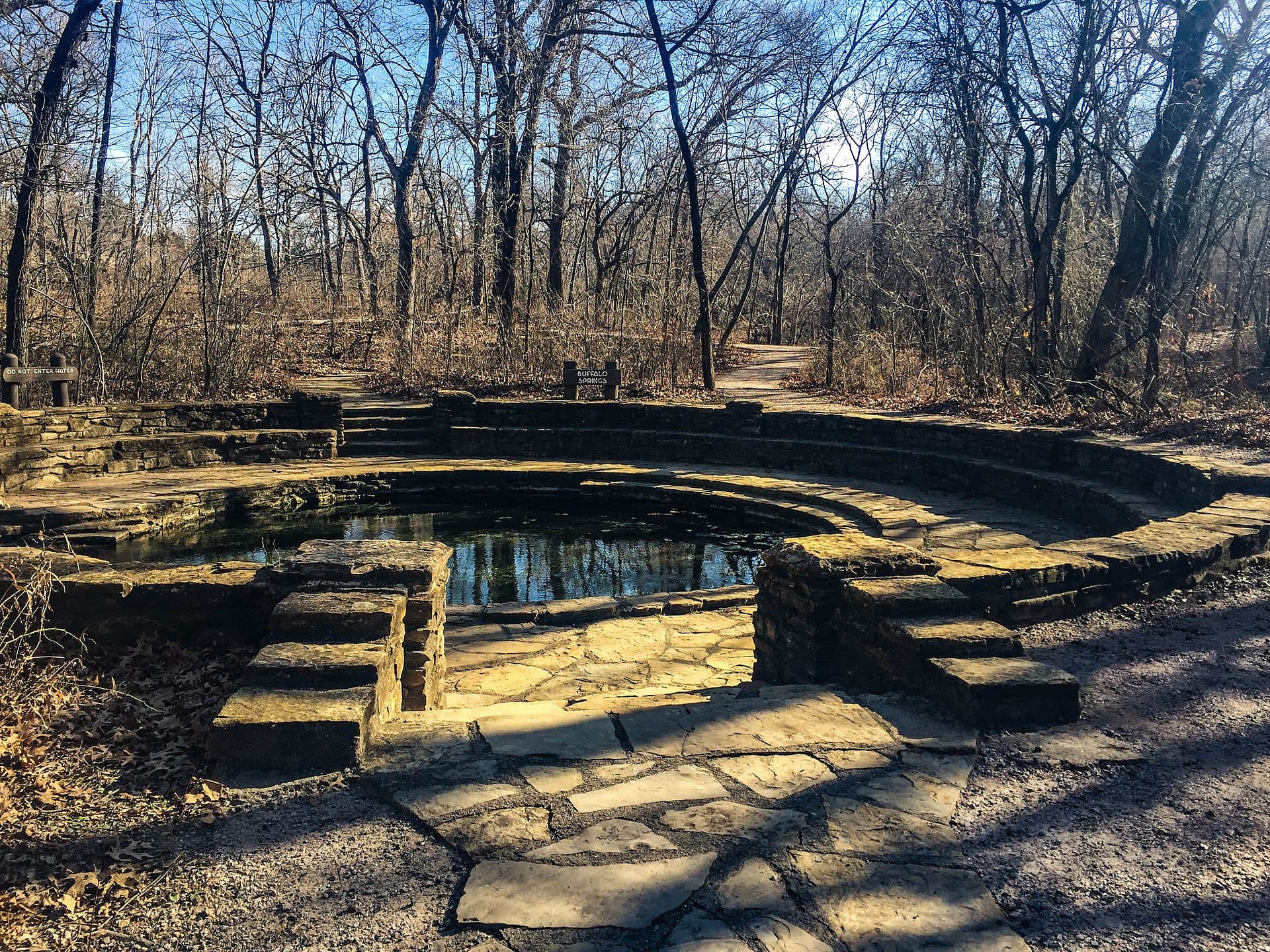
Antelope and Buffalo Springs (Chickasaw National Recreation Area)
Sulphur, Oklahoma, United States
236.1 km away
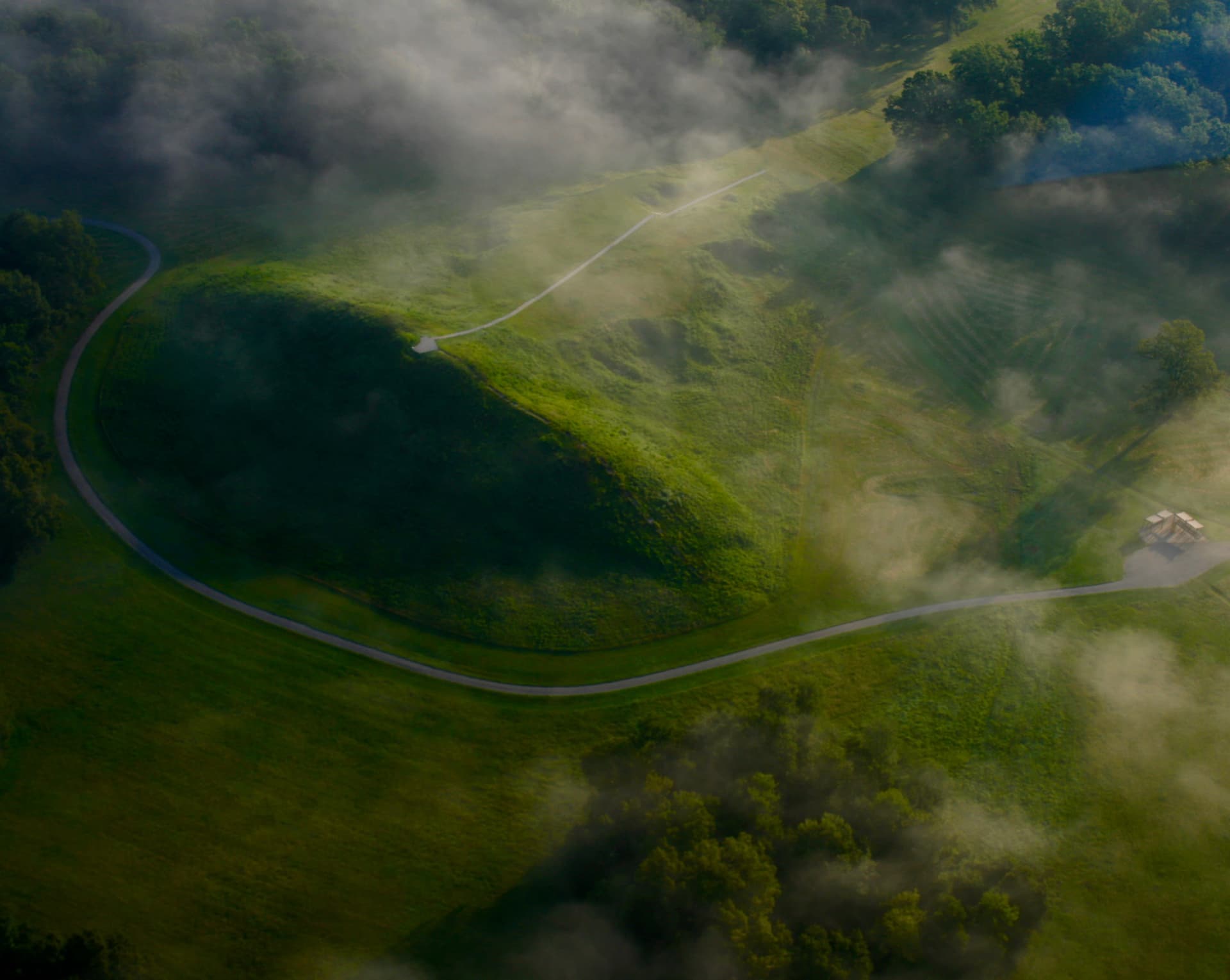
Poverty Point Mounds, Louisiana
West Carroll Parish, Louisiana, United States
416.7 km away
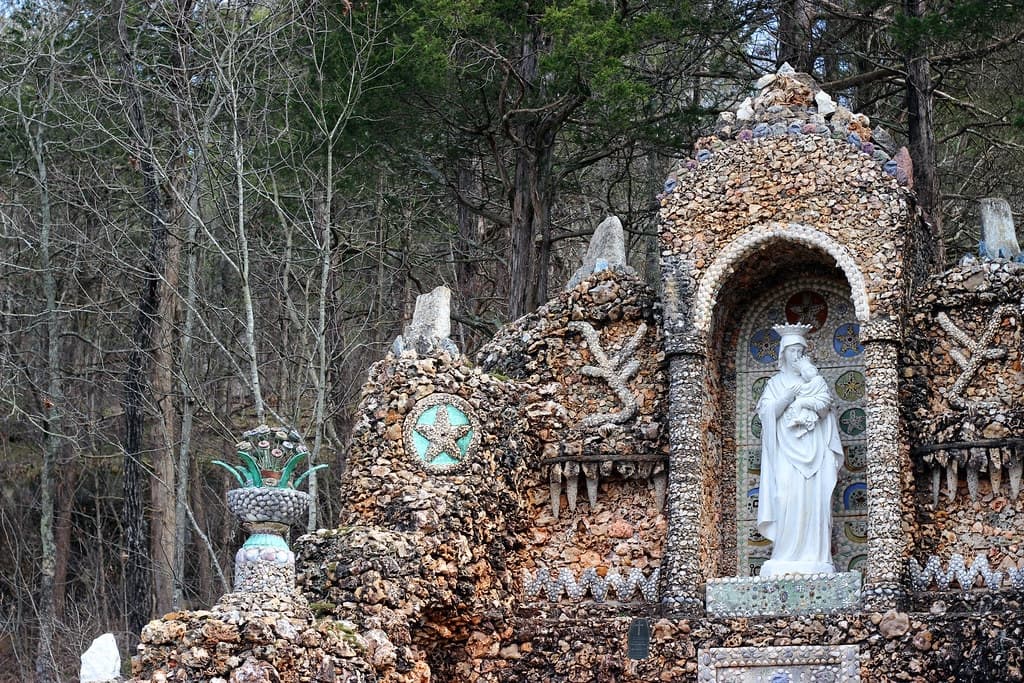
Black Madonna of Częstochowa (Eureka, MO)
Eureka, Missouri, United States
498.5 km away
Marksville mounds
Marksville, Louisiana, United States
520.2 km away