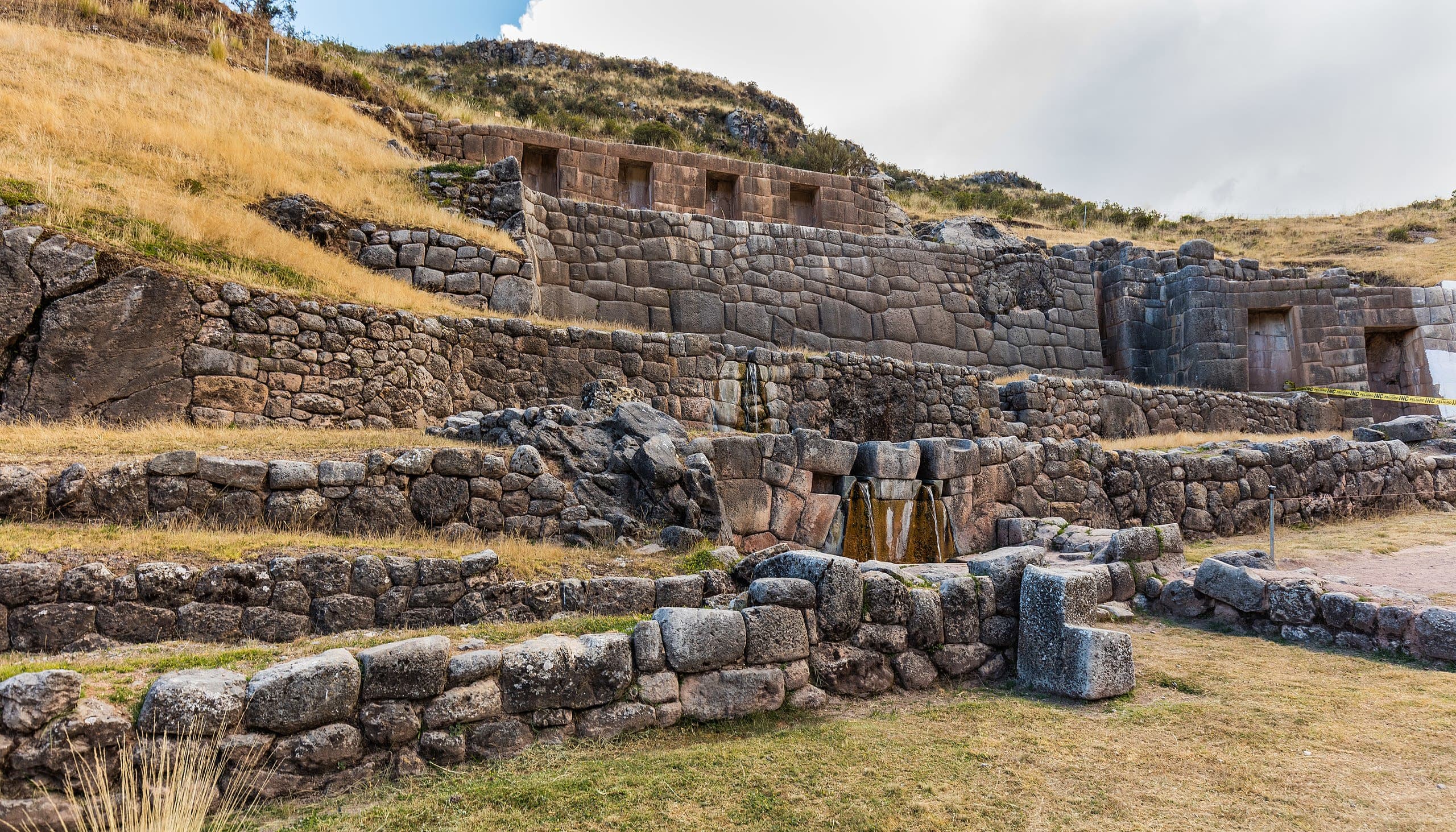
Tambomachay Archaeological Complex
The Bath of the Inca—where sacred waters have flowed unchanged for five centuries
Cuzco, Cusco, Peru
At A Glance
- Coordinates
- -13.4752, -71.9588
- Suggested Duration
- Thirty minutes to one hour; typically combined with other sites.
Pilgrim Tips
- Comfortable clothing appropriate for altitude. Sturdy shoes for uneven terrain.
- Photography permitted. Be mindful of other visitors seeking contemplative experience.
- Altitude at 3,700 meters requires acclimatization. The site is small and can be crowded; visit early.
Overview
At 3,700 meters above Cusco, water emerges from underground springs and flows through channels carved five centuries ago by Inca engineers. Tambomachay was not a bath in the ordinary sense but a water temple—a ceremonial center where the element most sacred to Andean cosmology was honored, where ritual purification prepared priests and perhaps rulers for their sacred duties. The waters still flow, unchanged in speed and volume since Pachacuti's time.
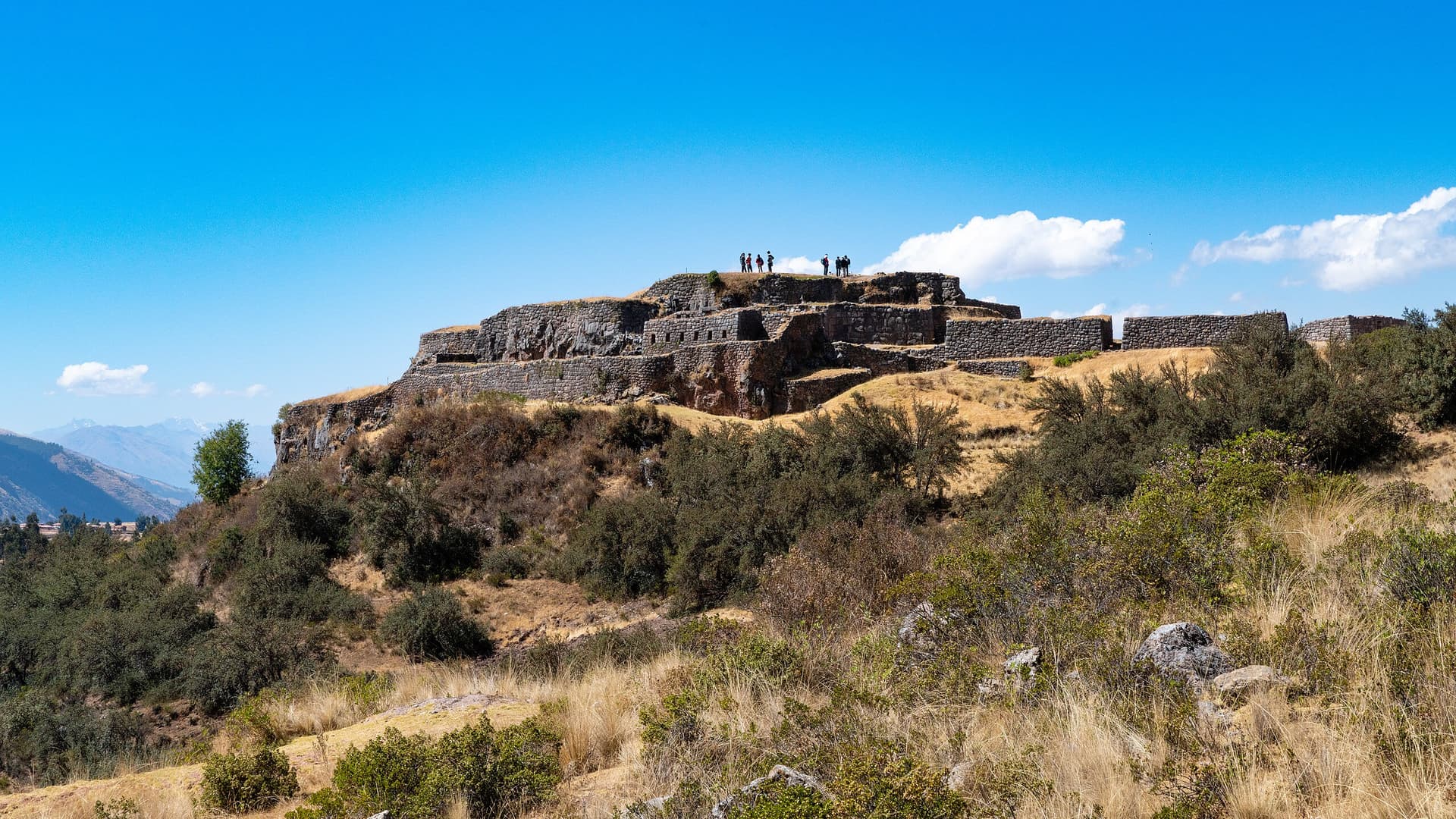
Tambomachay rises 7 kilometers from Cusco at 3,700 meters, its name possibly deriving from Quechua tampu (inn or guest house) and mach'ay (cave). But 'El Baño del Inca'—the Bath of the Inca—captures its essence more directly. This was a water temple, a place where the most sacred element in Andean cosmology received architectural honor.
The Inca saw water not merely as physical sustenance but as divine messenger, a bridge between earthly existence and cosmic forces. At Tambomachay, natural springs were channeled through stonework of extraordinary precision, creating fountains that have flowed continuously for over five hundred years—with the exact same speed and volume they maintained in Pachacuti's time.
The construction demonstrates Inca hydraulic mastery. Four tiered fountains descend through finely carved stone blocks fitted together without mortar. Underground springs feed the system, their water directed through channels that maintain constant flow regardless of season. The most striking feature: two perfectly carved stone channels from which water has flowed continuously, at exactly matching speeds, for centuries. The engineering required to achieve this constancy remains impressive by any standard.
Pachacuti built Tambomachay in the 15th century as a ceremonial site dedicated to water worship. Archaeological evidence suggests Inca rulers and priests performed ritual baths in its sacred waters—purification ceremonies that prepared them for other sacred duties. The site may also have served as a spa for the Incan elite or a military outpost guarding Cusco's northern approaches.
The religious dimension was primary. The Inca honored Apus—the spirits of mountains—and the waters that flowed from those mountains carried the Apus' blessing. Tambomachay channeled that blessing through sacred architecture, making visible and accessible what was otherwise diffuse in the landscape.
Context And Lineage
Pachacuti built Tambomachay in the 15th century as a ceremonial water temple where the Inca honored water as sacred element and performed ritual purification. The waters continue to flow unchanged.
Water held supreme sacred significance in Inca cosmology. It flowed from the Apus—mountain spirits—and carried their blessing through the landscape. Wherever water emerged from underground, thin places formed between the visible and invisible worlds.
Pachacuti, the great Inca builder, recognized the sacred springs at what would become Tambomachay. In the 15th century, he ordered the construction of a ceremonial site that would honor water and harness its purifying power. The engineers who carried out his vision were also priests—their technical achievement expressed theological understanding.
The result was a water temple of extraordinary precision. Four tiered fountains descended through carved stone. Natural springs were channeled through works that would maintain constant flow for centuries. The two matching channels—flowing at exactly the same speed—demonstrated mastery that served sacred purposes.
The site may have served multiple functions. Archaeological evidence suggests ritual baths—purification ceremonies that prepared priests and possibly rulers for their sacred duties. The site may also have functioned as a spa for the Inca elite, or as a military outpost guarding the northern approaches to Cusco. These functions were not mutually exclusive in Inca thought, where sacred and practical merged.
The Spanish conquest disrupted ceremonial use but could not stop the waters. They have flowed continuously since Pachacuti's time, unchanged in speed and volume. The site is now part of the Sacsayhuaman Archaeological Park, protected and accessible.
Inca imperial, specifically associated with Pachacuti's construction program. The site expressed the Inca understanding of water as sacred element connecting visible and invisible worlds.
Pachacuti (Inca Yupanqui)
Builder
Why This Place Is Sacred
Tambomachay's thin quality emerges from water itself—the element that connects visible and invisible worlds in Andean cosmology—and from the five centuries of unchanged flow that make the site a portal through time as well as spirit.
Water creates thin places wherever it emerges from underground—the visible appearance of what was hidden, the element that moves between worlds. At Tambomachay, the Inca honored this thinness by building architecture that frames and channels the emergence, making the sacred transition observable and participable.
The unchanged flow adds temporal thinness to the spatial. The same water emerges today that emerged when Pachacuti's priests performed purification rituals. The same channels carry it; the same fountains receive it. To place your hands in this water is to touch continuity across five centuries—the same element that prepared Inca priests for ceremony prepares you now for whatever encounter you're capable of receiving.
The Apus—mountain spirits—bless the waters that flow from their heights. Tambomachay collects and concentrates that blessing. The natural springs are gifts from the mountains; the channels are human gratitude made permanent in stone. The whole complex functions as a conversation between humans and the powers of the landscape.
The precision of the stonework adds its own dimension. The two channels that match exactly in flow speed were not accidental—they required understanding of hydraulics that expressed itself as sacred geometry. The engineers who achieved this were also priests; the technical achievement was also theological statement.
Ritual purification creates thin places in many traditions. The mikveh, the baptismal font, the sacred river—wherever water washes the boundary between states dissolves. At Tambomachay, the Inca created a site specifically designed for that dissolution, and the waters continue their work whether or not anyone enters them.
Ceremonial center dedicated to water worship and ritual purification. Possibly also served as imperial spa or military outpost.
From functioning Inca water temple through Spanish conquest to modern archaeological park. The waters continue to flow unchanged.
Traditions And Practice
The site served ritual purification and water worship—ceremonies honoring the Apus (mountain spirits) whose waters flowed through the sacred channels. Today, visitors contemplate the continuity of the unchanged waters.
Water worship and ceremonies honoring the Apus. Ritual purification baths preparing priests and rulers for sacred duties. Offerings to water sources.
The site functions as part of the Sacsayhuaman Archaeological Park, offering education about Inca water reverence and hydraulic engineering. Some visitors report spiritual experiences connected to the sacred waters.
Take time to observe the waters flowing. If permitted, touch them—connecting with the element that has flowed unchanged for five centuries. Contemplate the Inca understanding of water as divine messenger between worlds.
Inca Water Worship
HistoricalTambomachay represents the Inca tradition of honoring water as sacred element—the gift of the Apus that connected visible and invisible worlds through its emergence from underground.
Water ceremonies, ritual purification, offerings to springs. The site channeled sacred waters through architecture designed to honor the element.
Experience And Perspectives
Watch the sacred waters emerge from underground springs and flow through channels unchanged since Inca times. Touch the water that prepared priests for ceremony. Contemplate the engineering that honored an element rather than merely using it.
Tambomachay lies 7 kilometers from Cusco, typically visited as part of a half-day tour that includes Sacsayhuaman, Q'enco, and Puca Pucara. The site is small compared to the massive walls of Sacsayhuaman, but its significance is concentrated rather than diminished by its scale.
Approach with awareness of altitude: 3,700 meters requires acclimatization. The shortness of breath at this elevation may enhance your experience—the body becomes present, aware of its needs, receptive to what the site offers.
Find the fountains first. Four tiered levels descend through carved stone, water flowing from the highest to the lowest with the inevitability of gravity made beautiful. Notice how the channels direct flow, how the stonework fits without mortar, how the engineers who built this were also artists.
Seek out the two matching channels—the site's most famous feature. Water flows from both at exactly the same speed, a precision maintained for over five hundred years. Whatever understanding of hydraulics this required, it expressed itself as sacred symmetry. The balance speaks of intention, of care taken in service of something more than practical need.
If permitted, touch the water. It flows from underground springs fed by the Apus—the mountain spirits that the Inca honored as sources of blessing. This is the same water that prepared Pachacuti's priests for ceremony, the same element that has mediated between worlds for five centuries.
Contemplate the site's purpose. This was not a bath for physical cleanliness but a place for spiritual preparation. The purification that occurred here prepared priests and perhaps rulers for sacred duties—encounters with powers that required cleansing before approach.
The waters continue their work. Whether you enter them or simply witness their flow, they perform the same function they always have: making visible the sacred element that connects all living things.
Located 7 km from Cusco at 3,700 meters, as part of the Sacsayhuaman Archaeological Park. Typically visited with Sacsayhuaman, Q'enco, and Puca Pucara on a half-day tour.
Tambomachay can be understood as a water temple where the Inca honored their most sacred element, as a demonstration of hydraulic engineering that served religious purposes, as a site of ritual purification, or as a thin place where the element connecting worlds receives architectural honor.
Archaeological research has documented the site's hydraulic systems while continuing to investigate specific ceremonial practices and the site's relationship to other water temples in the Inca empire.
Within Inca cosmology, water connected visible and invisible worlds—flowing from the Apus, carrying their blessing through the landscape. Tambomachay honored this sacred element and harnessed its purifying power.
The unchanged flow of waters for five centuries invites meditation on continuity and impermanence—what changes and what remains across time.
The specific ceremonies conducted at Tambomachay and who was permitted to undergo ritual purification remain incompletely documented.
Visit Planning
Located 7 km from Cusco at 3,700 meters. Open 7:00 AM to 6:00 PM. Access via Boleto Turístico. Typically visited as part of a half-day tour including Sacsayhuaman, Q'enco, and Puca Pucara.
Full range of accommodations in Cusco city.
Approach with reverence for water as the sacred element the Inca honored here. Do not pollute the fountains or channels. Respect the continuing flow that connects present to past.
Tambomachay exists to honor water. Treat the site and its element with corresponding respect. The waters that flow here are the same that flowed for Pachacuti's priests—a continuity that merits reverence.
Comfortable clothing appropriate for altitude. Sturdy shoes for uneven terrain.
Photography permitted. Be mindful of other visitors seeking contemplative experience.
No offerings that would pollute the water.
Do not throw anything into the fountains or channels. Do not enter the water without permission. Purchase Boleto Turístico for entry.
Sacred Cluster
Nearby sacred places create the location cluster described in the growth plan. This block is intentionally crawlable and links into the wider regional graph.