Sayil Archaeological Zone
Place of the Leafcutter Ants, where a three-tiered palace rises above hidden cisterns that made life possible
Santa Elena, Yucatán, Mexico
At A Glance
- Coordinates
- 20.1792, -89.6542
- Suggested Duration
- 60-90 minutes for thorough exploration.
Pilgrim Tips
- Comfortable walking shoes. Sun protection essential.
- Photography permitted throughout.
- Bring water—the irony of visiting a site that depended on water scarcity while dehydrated is avoidable. Sun protection essential. Some paths may be overgrown.
Overview
Sayil—Place of the Leafcutter Ants—was once home to 10,000 people in a region with no surface water. The Maya solution was chultunes: underground cisterns that captured rainwater for survival. Above these hidden reservoirs rose the Great Palace, an 85-meter architectural achievement of three tiers and ninety rooms that demonstrated what the Puuc region could build when water scarcity was solved through engineering. The distinctive columns and Chaac masks honor the rain god who filled what ingenuity had created.
In the Puuc hills of western Yucatan, where no cenotes break the limestone and no rivers flow, the Maya built Sayil. They named it for the leafcutter ants whose relentless work perhaps reminded them of their own: the constant effort required to survive where water must be captured, stored, and carefully rationed.
The engineering that made Sayil possible lies underground. Chultunes—bottle-shaped cisterns carved into bedrock—captured and stored rainwater, creating the water supply that the landscape naturally denied. Population estimates based on chultun counts suggest 5,000-10,000 inhabitants at maximum population during the Terminal Classic, making Sayil one of the largest known Puuc sites.
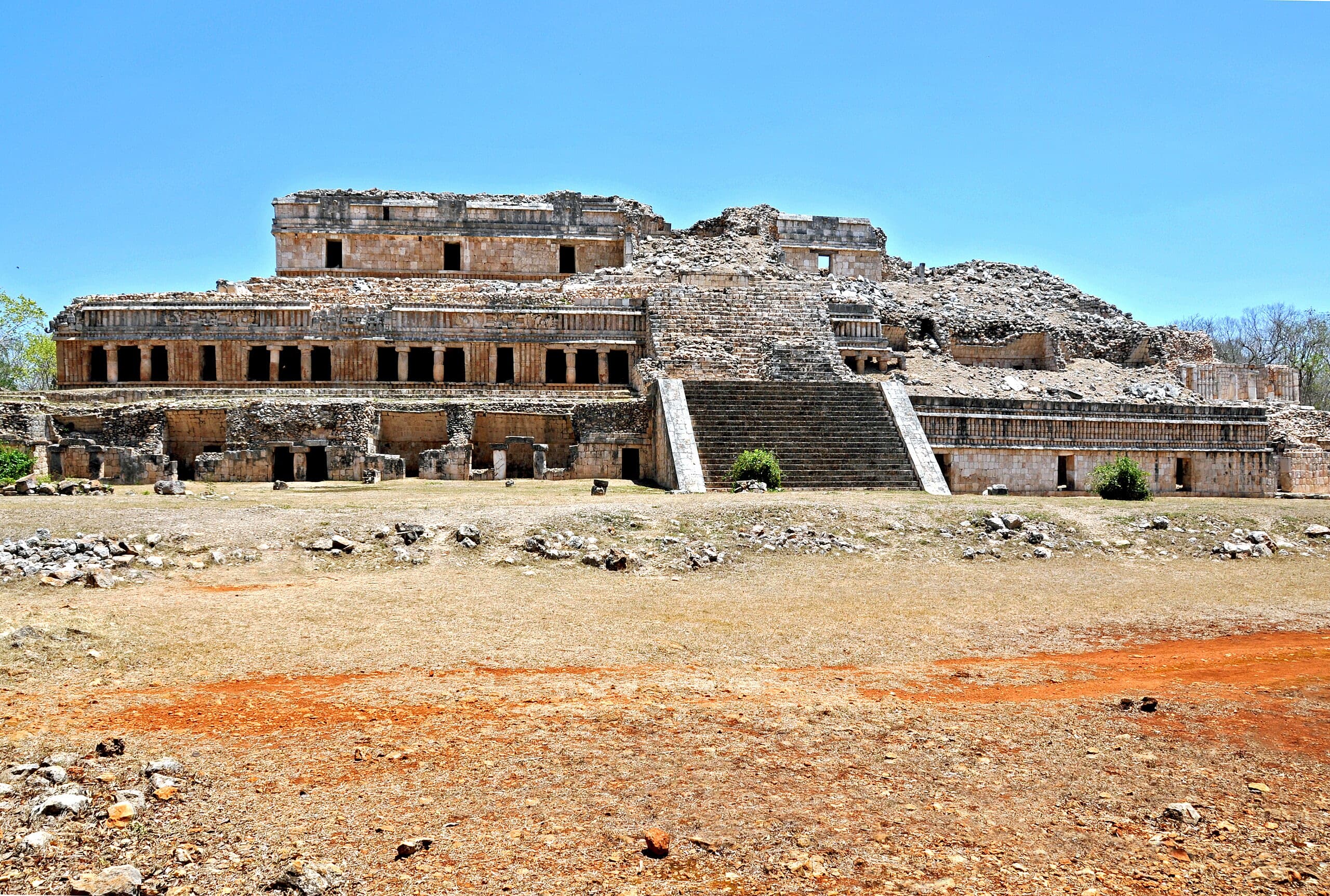
Above the hidden infrastructure rose what survival made possible: the Great Palace, 85 meters long, three tiers high, containing more than ninety rooms. This residential and administrative structure represents Puuc architecture at its most sophisticated, the coherent facades built over successive stages more than twelve centuries ago now among the best-preserved examples of Maya construction.
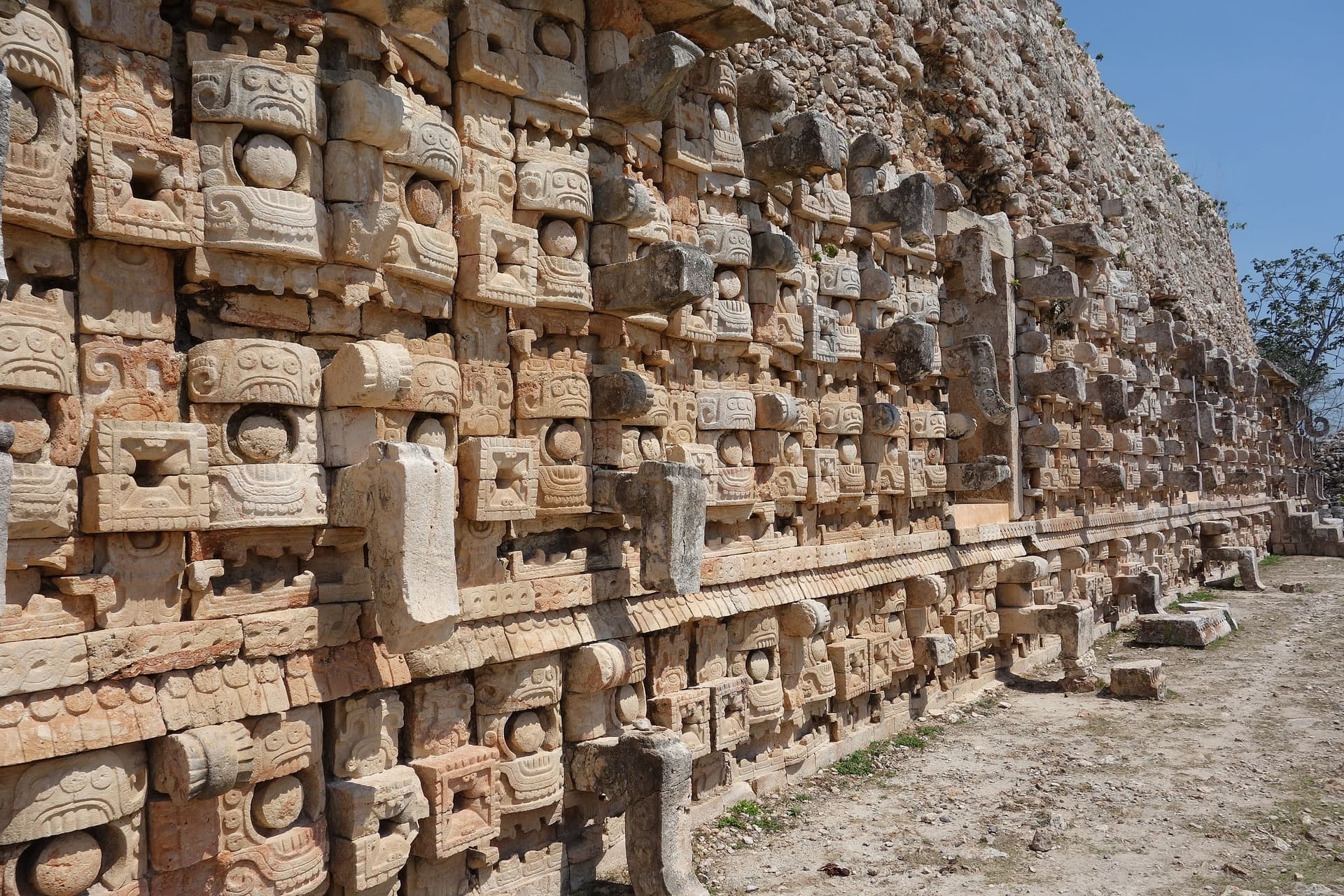
The distinctive Puuc style shapes everything at Sayil. Smooth lower walls give way to elaborately decorated upper sections featuring stone mosaic panels, geometric patterns, and Chaac masks. The rain god's face appears throughout—appropriate for a community that depended entirely on his favor to fill the cisterns that kept them alive.
The Great Palace uses columns in a way that distinguishes Puuc architecture. These structural and decorative elements create shadowed porticos and rhythmic facades, the vertical emphases breaking what could be monotonous horizontal extension. Standing before the Palace, visitors see what the Maya achieved when they solved the water problem: architecture of ambition rather than mere survival.
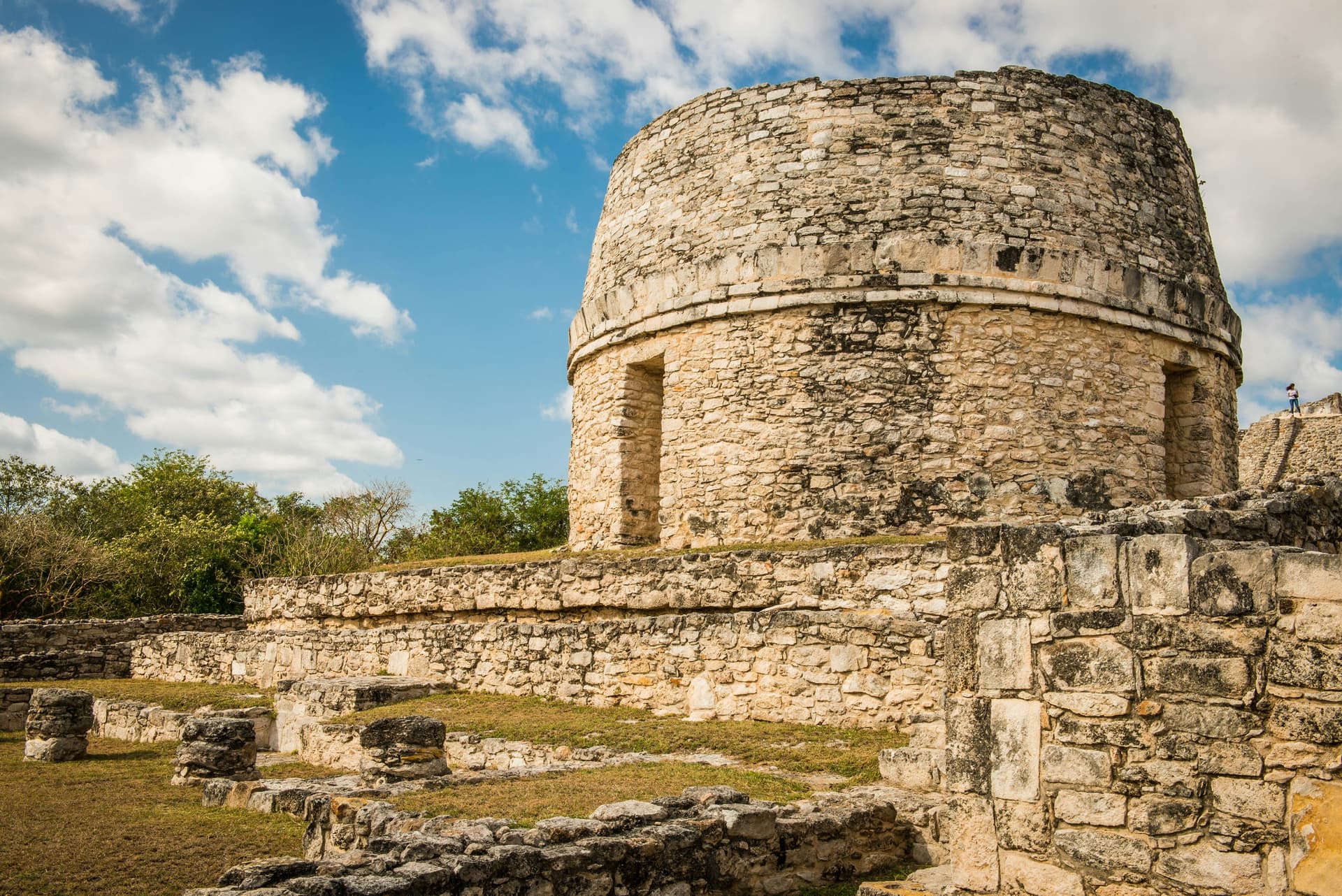
Structure 3B1—the Temple of the Hieroglyphic Doorway—preserves an interior doorway decorated with a band of hieroglyphs, written records that the 1960s decipherment finally made legible. El Mirador, a pyramidal structure at the end of the sacbe with surviving room and open roof comb, provides vertical accent to the site's horizontal spread.
The rapid decline around 950 CE and abandonment by 1000 CE follow patterns typical of the Puuc region. Drought is the likely culprit—the very threat the chultun system was built to address finally overwhelming what engineering could manage. The leafcutter ants remained; the Maya departed; the Palace settled into the silence that exploration in 1841 would break.
Context And Lineage
One of the largest Puuc sites, Sayil supported up to 10,000 people through chultun water engineering until drought around 950 CE triggered rapid decline and abandonment within two generations.
The Maya who settled Sayil chose a location that seemed to forbid settlement. The Puuc hills of western Yucatan have no cenotes, no rivers, no natural water sources. Yet the limestone that denied surface water could be carved into storage: chultunes, bottle-shaped underground cisterns that captured rainfall and held it against the months when no rain fell.
With water infrastructure solved, Sayil grew. By the Terminal Classic period (600-1000 CE), the city spread across approximately 3.5 square kilometers with population estimated at 5,000-10,000—one of the largest known Puuc sites. The Great Palace, 85 meters long and three tiers high with ninety rooms, housed elite residential and administrative functions. Hieroglyphic inscriptions testified to the city's importance.
John Lloyd Stephens and Frederick Catherwood brought Sayil to outside attention in 1841, publishing illustrated description under the name 'Zayi' in their 1843 book 'Incidents of Travel in Yucatan.' What they found was already ruins—the city had been abandoned for over 800 years.
The abandonment followed patterns typical of the Puuc region: rapid growth during the Terminal Classic followed by swift decline around 950 CE and complete abandonment by approximately 1000 CE. The cause is almost certainly drought. The chultun system that made Sayil possible depended on rain; when rain failed persistently, no engineering could compensate. Within perhaps two generations, a city of 10,000 became empty.
UNESCO recognized Sayil in 1996 as part of the World Heritage Site grouping that includes Uxmal, Kabah, and Labna. The Great Palace remains one of the finest examples of Puuc architecture, testimony to what the Maya achieved when they solved the water problem—and what they lost when the solution failed.
Maya civilization of the Puuc region; no continuous lineage of practitioners. UNESCO World Heritage Site since 1996.
John Lloyd Stephens and Frederick Catherwood
Explorers (1841)
Why This Place Is Sacred
Sayil's thin quality emerges from the tension between surface grandeur and hidden infrastructure—the magnificent Palace rising above underground cisterns that alone made survival possible, architecture celebrating what engineering achieved.
The threshold at Sayil opens where visible achievement meets invisible necessity. The Great Palace presents what the Maya wanted the world to see: 85 meters of sophisticated architecture, three tiers demonstrating mastery, ninety rooms housing functions that organized regional life. But beneath this surface stretches what made the surface possible: chultunes, the underground cisterns that captured and stored the rain without which everything visible would have been impossible.
This relationship creates Sayil's thin quality. The Palace celebrates what survival allowed; the cisterns provided what survival required. To walk the site is to move across hidden infrastructure, to stand on limestone that conceals the bottle-shaped reservoirs that captured every drop of rain the Chaac masks petitioned for.
The leafcutter ants the site is named for embody appropriate metaphor. These insects build elaborate underground structures while surface activity continues obliviously above. The Maya at Sayil did something similar: creating subterranean water systems that enabled surface civilization, engineering that remained invisible while architecture remained visible.
The Chaac masks that decorate the facades speak to this relationship. The rain god's long-nosed face appears throughout Puuc architecture because rain was everything—the water that fell from sky, that the chultunes captured, that the population rationed, that made ten thousand people sustainable where natural conditions would have supported few. The masks are not decoration but petition, architectural prayer for what the engineering required to function.
The Terminal Classic intensity—rapid growth followed by swift decline—adds urgency to Sayil's thin quality. The population that built the Great Palace, that carved the chultunes, that organized life across 3.5 square kilometers, disappeared within perhaps two generations. Drought is the likely explanation: the system that depended on rain could not survive when rain failed.
What remains is architecture that documented success and infrastructure that recorded failure. The Great Palace stands because the chultunes worked—until they didn't. The thin quality at Sayil includes this fragility: the recognition that what the Maya built, what they engineered, what they celebrated in stone, depended on forces they could petition but not control.
Sayil served as major Puuc population and administrative center, its Great Palace housing elite residential and governance functions while chultunes provided the water infrastructure that made the city possible.
Major occupation during Late and Terminal Classic (600-1000 CE). Rapid growth followed by swift decline—abandoned by approximately 1000 CE. UNESCO World Heritage Site since 1996 as part of the Uxmal group.
Traditions And Practice
Ancient practices included chultun-related water management rituals, Chaac veneration for rain, and elite residential ceremonies in the Great Palace. No continuous practice remains at this protected archaeological site.
Chultun water management and associated rituals. Rain petitions to Chaac. Elite residential and administrative ceremonies in the Palace. Hieroglyphic record keeping.
As a protected archaeological zone, Sayil does not host active religious practice. Visitors can explore the architectural achievements that water engineering made possible.
Walk the Great Palace slowly, appreciating the Puuc style's sophistication. Follow the sacbe to El Mirador. Consider the underground chultunes that made everything visible possible. Let the site's relative quiet create contemplative space.
Maya Civilization / Puuc Water Engineering
HistoricalSayil exemplifies Maya adaptation to the waterless Puuc region, with underground chultun cisterns enabling population levels that surface conditions would have prevented.
Chultun water management, Chaac veneration, elite residential ceremonies, hieroglyphic commemoration.
Experience And Perspectives
Explore the three-tiered Great Palace, one of the finest Puuc structures, walk the sacbe to El Mirador pyramid, and contemplate what underground cisterns made visible achievement possible in this Place of the Leafcutter Ants.
Arrive at Sayil via the Puuc Route from Kabah or Uxmal. The site receives fewer visitors than either neighbor, offering quiet encounter with architecture that rivals any in the region.
The Great Palace (El Palacio) dominates immediately. Approach this 85-meter structure and let its scale register: three tiers rising in coherent facades, more than ninety rooms arranged across levels that archaeology has identified as built over successive stages. This is residential and administrative architecture at its Puuc finest, columns creating rhythm, masks honoring Chaac, the whole composition demonstrating what the water-engineering beneath made possible.
Study the Puuc style that the Palace exemplifies. The smooth lower walls give way to elaborate upper decoration: stone mosaic panels fitted without mortar, geometric patterns encoding meanings we cannot fully recover, the long-nosed face of Chaac appearing in repetition that verges on prayer. The columns that distinguish Puuc architecture create vertical emphasis within horizontal extension, shadowed porticos providing respite from Yucatan's heat.
Consider what you cannot see. Beneath your feet, beneath the Palace, throughout the site spread chultunes—the bottle-shaped cisterns that captured rainwater and stored it against the dry season. Population estimates based on chultun counts range from 5,000 to 10,000; the cisterns could sustain what the architecture suggests.
Walk the sacbe—the raised causeway—south from the Palace to El Mirador. This pyramidal structure at the path's end features one surviving room and a fine open roof comb, the vertical element that Maya architecture used to crown significant structures. The walk through forest recalls that this site, like all abandoned Maya cities, was reclaimed by vegetation until modern exploration.
Structure 3B1, the Temple of the Hieroglyphic Doorway, preserves written records on an interior doorway—hieroglyphs that became legible only after the 1960s decipherment. The presence of writing testifies to Sayil's significance: not all Maya sites merited hieroglyphic commemoration.
Before leaving, stand again before the Great Palace. Let the three tiers, the ninety rooms, the columns and masks create their cumulative effect. Then remember: all this depended on rain captured in underground cisterns, on Chaac's favor filling what engineering created, on a system that worked until—around 950 CE—it suddenly didn't. The leafcutter ants the site is named for continued their underground work; the Maya who named them departed.
Located on the Puuc Route, 25 km southeast of Uxmal. The Great Palace (El Palacio) dominates the site. Sacbe connects to El Mirador pyramid. Temple of the Hieroglyphic Doorway (Structure 3B1) preserves inscriptions.
Sayil can be understood as Puuc architectural achievement, as water engineering triumph, as example of Maya adaptation to challenging environment, or as testimony to the fragility of success when drought undermines what rain made possible.
Archaeologists study the chultun system as example of Maya hydraulic engineering. Art historians analyze the Great Palace as one of the finest Puuc structures. Population estimates based on cistern capacity inform understanding of Pre-Columbian demographics.
For Maya communities, Sayil represents ancestral ingenuity—the capacity to thrive where survival seemed impossible.
Some visitors experience the site's silence as presence of those who departed—the city emptied but not forgotten.
The specific timing and sequence of abandonment is not fully documented. The meaning of some hieroglyphic inscriptions remains partially interpreted.
Visit Planning
Located on the Puuc Route, 25 km southeast of Uxmal. Open daily 8:00 AM - 5:00 PM. Part of UNESCO World Heritage Site since 1996. Quieter than Uxmal or Kabah.
No facilities at site. Full services at Uxmal or in Merida. Small kiosk/snacks near entrance.
Approach Sayil as testimony to human adaptation—architecture celebrating what engineering achieved in a landscape that seemed to forbid settlement. Respect the preservation that maintains these sophisticated structures.
Sayil is a UNESCO World Heritage Site under INAH administration. The Great Palace represents some of the finest Puuc architecture; treat it accordingly.
Comfortable walking shoes. Sun protection essential.
Photography permitted throughout.
Contemporary offerings not part of the site's practice. Entrance fees support preservation.
Stay on marked trails. Some areas may have limited access. Do not touch carved surfaces.
Sacred Cluster
Nearby sacred places create the location cluster described in the growth plan. This block is intentionally crawlable and links into the wider regional graph.