Sakafuneishi Site
Where carved turtles channeled sacred water for an empress and her gods
Asuka, Nara Prefecture, Japan
At A Glance
- Coordinates
- 34.4752, 135.8236
- Suggested Duration
- Thirty minutes to one hour for the site itself. Allow a full day to explore the Sakafuneishi Site alongside Asuka's other monuments (Ishibutai Kofun, Asuka-dera Temple, Takamatsuzuka Tomb, and the various 'mysterious stones').
- Access
- By public transport: Akakame Loop Bus to Manyo Culture Hall West stop, then walk. By bicycle: rental available at Asuka Station; cycling is the recommended way to explore Asuka's spread-out sites. By car: parking available nearby. The turtle-shaped monument area requires a 300 yen admission fee for adults. The Sakafuneishi stone on the hillside above is freely accessible but requires a short uphill walk.
Pilgrim Tips
- By public transport: Akakame Loop Bus to Manyo Culture Hall West stop, then walk. By bicycle: rental available at Asuka Station; cycling is the recommended way to explore Asuka's spread-out sites. By car: parking available nearby. The turtle-shaped monument area requires a 300 yen admission fee for adults. The Sakafuneishi stone on the hillside above is freely accessible but requires a short uphill walk.
- No specific requirements. Comfortable walking shoes are recommended for the hillside path to the Sakafuneishi stone.
- Photography is permitted throughout the site.
- Do not touch or climb on the stone monuments. The preservation of these features depends on visitor restraint. The hillside path to the Sakafuneishi stone requires comfortable walking shoes.
Overview
In the hills of Asuka, Japan's ancient capital, water once flowed through a turtle-shaped stone basin in ceremonies conducted for Empress Saimei nearly fourteen centuries ago. The purpose of these water rituals remains debated—purification, harvest blessing, rain-making—but their sophistication is undeniable. Above the turtle monument, the enigmatic Sakafuneishi stone has puzzled scholars for generations, its carved channels and basins defying definitive interpretation.
The Sakafuneishi Site embodies the mystery of Asuka-period Japan—a time when Buddhism, Shinto, and continental influences were synthesizing into what would become Japanese civilization, and when the precise nature of imperial ritual remains tantalizingly unclear.
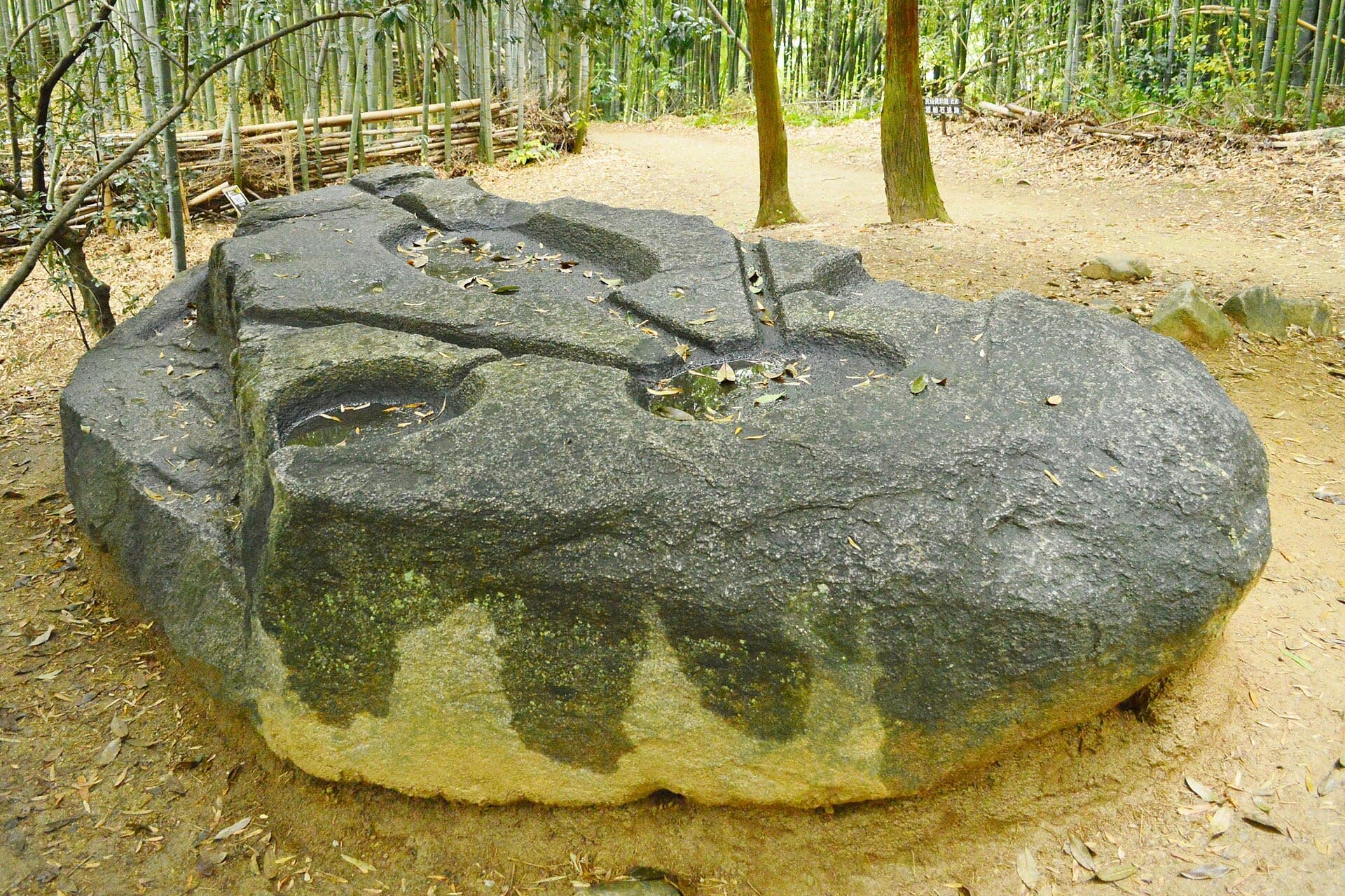
Two features dominate the site. On the hillside above sits the Sakafuneishi stone itself—5.5 meters of granite carved with channels and basin-like depressions whose purpose has been debated for centuries. Below, discovered only in 2000, lies the turtle-shaped stone monument: an elaborately carved basin through which water flowed from head to tail, part of a ceremonial complex that transformed understanding of the entire site.
Empress Saimei, who reigned from 655 to 661 CE, was known for ambitious construction projects and ritual innovations. Historical records in the Nihon Shoki mention her building of the Futatsuki-no-miya, which scholars have tentatively identified with this hillside location. If correct, the Sakafuneishi Site represents the empress's vision of sacred space—a place where water, stone, and careful engineering served purposes we can name only approximately: purification, perhaps, or ceremonies addressing the relationship between imperial power and cosmic forces.
The turtle shape carries weight beyond mere form. In East Asian cosmology, the turtle represents longevity, cosmic order, and the connection between heaven and earth. That such a creature was carved to channel sacred water suggests the rituals performed here addressed matters of profound significance to the Asuka court.
Part of the Asuka-Fujiwara nomination for UNESCO World Heritage status, the site stands as testament to a formative period in Japanese spirituality—when the practices that would later separate into Shinto and Buddhist streams flowed together in ways we are still working to understand.
Context And Lineage
The Sakafuneishi Site dates to the mid-seventh century CE, during the reign of Empress Saimei. It is part of the Asuka-Fujiwara nomination for UNESCO World Heritage status, recognizing its role in the formative period of Japanese civilization.
The Nihon Shoki, one of Japan's earliest historical chronicles, records that Empress Saimei constructed the Futatsuki-no-miya ('Palace of Two Trees' or 'Palace of Two Ridges') on a hillside east of the Asuka plain. Scholars have tentatively identified the Sakafuneishi Site with this structure, though the identification remains debated.
Empress Saimei was a remarkable figure—the only woman to reign twice as empress (first as Kogyoku, 642-645, then as Saimei, 655-661). She was known for ambitious construction projects and for ritual innovations that drew on both indigenous traditions and continental (Korean and Chinese) influences. If the Sakafuneishi Site is indeed her Futatsuki-no-miya, it represents her vision of sacred space at a formative moment in Japanese history.
The name 'Sakafuneishi' ('Sake-boat Stone') reflects later folk interpretation rather than original meaning. Local tradition held that the carved channels were used for sake production, though this interpretation is now considered unlikely given the site's ceremonial character.
The site predates the formal separation of Shinto and Buddhism that later characterized Japanese religion. The rituals conducted here drew on indigenous traditions (water purification, reverence for natural features) and continental influences (East Asian turtle symbolism, Buddhist-influenced court ceremony). This synthesis would eventually develop into the distinct religious streams of later Japanese history.
Empress Saimei (斉明天皇)
Reigned 655-661 CE. Known for major construction projects and ritual innovations. The Nihon Shoki associates her with the construction that created this site.
Emperor Tenmu
Reigned 673-686 CE. Archaeological evidence indicates renovations to the site during his reign, suggesting continued imperial use.
Why This Place Is Sacred
The Sakafuneishi Site functioned as sacred space where water mediated between earthly and celestial realms. The turtle's cosmological significance, the elaborate engineering devoted to channeling water, and the connection to imperial ritual mark this as ground where the Asuka court conducted some of its most important ceremonies.
What made this hillside a place where an empress built her ritual complex? The archaeological evidence and historical context point to several factors that marked it as spiritually significant.
Water served as the site's organizing principle. The entire complex was engineered to capture, channel, and distribute water through carved stone features. The turtle-shaped monument collected water from a supply channel, allowed it to fill the carved shell basin, and released it through the tail. Other stone features—including the coin-shaped basin found nearby—participated in this water system. Such elaborate engineering for purposes other than practical irrigation suggests the water itself was the point: its movement through sacred space, its contact with cosmologically significant forms, its transformation into something more than ordinary water.
The turtle carries specific meaning in East Asian thought. Associated with longevity, with the cosmic order, with the support that maintains heaven in its proper relation to earth, the turtle was not casually chosen as the form for this monument. Whatever rituals were performed here drew on this symbolism—perhaps addressing imperial longevity, perhaps cosmic harmony, perhaps the relationship between the empress and celestial powers.
The hillside location east of the ancient palace areas placed the site at a remove from daily governance while remaining connected to it. This was not a palace but a place apart, where different rules applied, where ordinary life gave way to ritual activity. The elevation, the view across the Asuka valley, the separation from residential and administrative centers all contributed to marking this as ground of a different order.
The Sakafuneishi stone above adds layers of mystery. Its channels and basins have been interpreted variously as astronomical instruments, topographical maps, alchemical apparatus, or features of water ritual. The uncertainty itself is part of the site's character—after fourteen centuries, the stones resist definitive interpretation, maintaining something of the numinous quality that ambiguity can produce.
Historical and archaeological evidence indicates the site was constructed during the reign of Empress Saimei (655-661 CE) as an imperial ritual complex. The Nihon Shoki mentions her construction of the Futatsuki-no-miya, tentatively identified with this location. The water system and turtle monument suggest ceremonies related to purification, agricultural blessing, or imperial rites of cosmic significance.
The site was renovated during the reign of Emperor Tenmu in the late seventh century, indicating continued imperial interest. Use appears to have extended until the early tenth century, when the site fell into disuse. The Sakafuneishi stone remained visible through the centuries, attracting folklore and speculation, while the turtle monument and associated features lay buried until excavation in 2000.
Traditions And Practice
The water purification and imperial rituals that animated the site fell silent by the early tenth century. No active practice continues here. Visitors engage through observation, contemplation, and reflection on the mystery of ritual forms whose full meaning we cannot recover.
Archaeological evidence indicates water ceremonies using the turtle-shaped monument and associated stone features. Water flowed through the system in ways that suggest ritual significance—collection, transformation through contact with cosmologically meaningful forms, and redistribution. The elaborate engineering ensures these were not practical water management features but ceremonial installations.
The Nihon Shoki mentions various imperial rituals during the Asuka period, including ceremonies for agricultural blessing, rain-making, and purification. Any or all of these may have been conducted at this site. The turtle's association with cosmic order and longevity in East Asian thought suggests the rituals addressed matters of imperial and cosmic significance.
The Sakafuneishi stone's channels have prompted multiple theories: production of sake, oil, or mercury vermilion; astronomical observation using reflected sunlight or water; topographical mapping; or further water ritual purposes. None has achieved scholarly consensus, indicating the limits of what archaeological evidence can reveal about ancient intention.
No religious practice continues at the Sakafuneishi Site. It serves archaeological, educational, and tourism purposes. The site is part of the Asuka-Fujiwara nomination for UNESCO World Heritage inscription.
Without active tradition to guide practice, visitors must find their own modes of engagement. The site rewards contemplative observation—tracing the water system's path, considering what might have warranted such elaborate engineering, holding the mystery of uncertain purpose without demanding resolution. Standing before the Sakafuneishi stone and accepting that fourteen centuries have not answered all questions can itself be a form of practice.
Imperial Shinto/Court Ritual
HistoricalThe Sakafuneishi Site represents a major seventh-century ritual complex associated with Empress Saimei. The site is believed to be connected to the Futatsuki-no-miya mentioned in the Nihon Shoki. The complex water system—turtle-shaped basin, coin-shaped basin, stone channels, and paved areas—suggests elaborate purification or agricultural rituals conducted by the imperial court. The site demonstrates the synthesis of indigenous and continental influences in Asuka-period religion.
Water purification rituals using the turtle-shaped monument and associated stone features. Possible ceremonies for agricultural blessing, rain-making, or imperial purification. The water system collected, transformed, and redistributed water through ceremonial installations. The site was maintained and renovated through Emperor Tenmu's reign and remained in use until the early tenth century.
Experience And Perspectives
Visitors encounter both the mysterious Sakafuneishi stone on the hillside and the turtle-shaped monument below. The juxtaposition of features whose purpose remains debated creates a contemplative atmosphere. The site fits naturally into exploration of Asuka's concentration of ancient monuments.
The Sakafuneishi Site offers two distinct but connected experiences. The turtle-shaped stone monument, discovered in 2000, presents a remarkably well-preserved ritual installation whose form and water system remain legible after fourteen centuries. The Sakafuneishi stone above, visible throughout those centuries, presents a more enigmatic face—its channels and basins inviting interpretation while resisting certainty.
The turtle monument rewards close attention. The carved form is unmistakable: the rounded shell, the head through which water entered, the tail through which it exited. Standing before it, visitors can trace the path water would have followed—from supply channel, through the head, filling the shell basin, draining through the tail into further stone features below. The engineering is sophisticated. The symbolism is clear even if its specific application is not. Here, water moved through a turtle shape for purposes that mattered deeply to someone—an empress, most likely, conducting rites that addressed concerns beyond our full recovery.
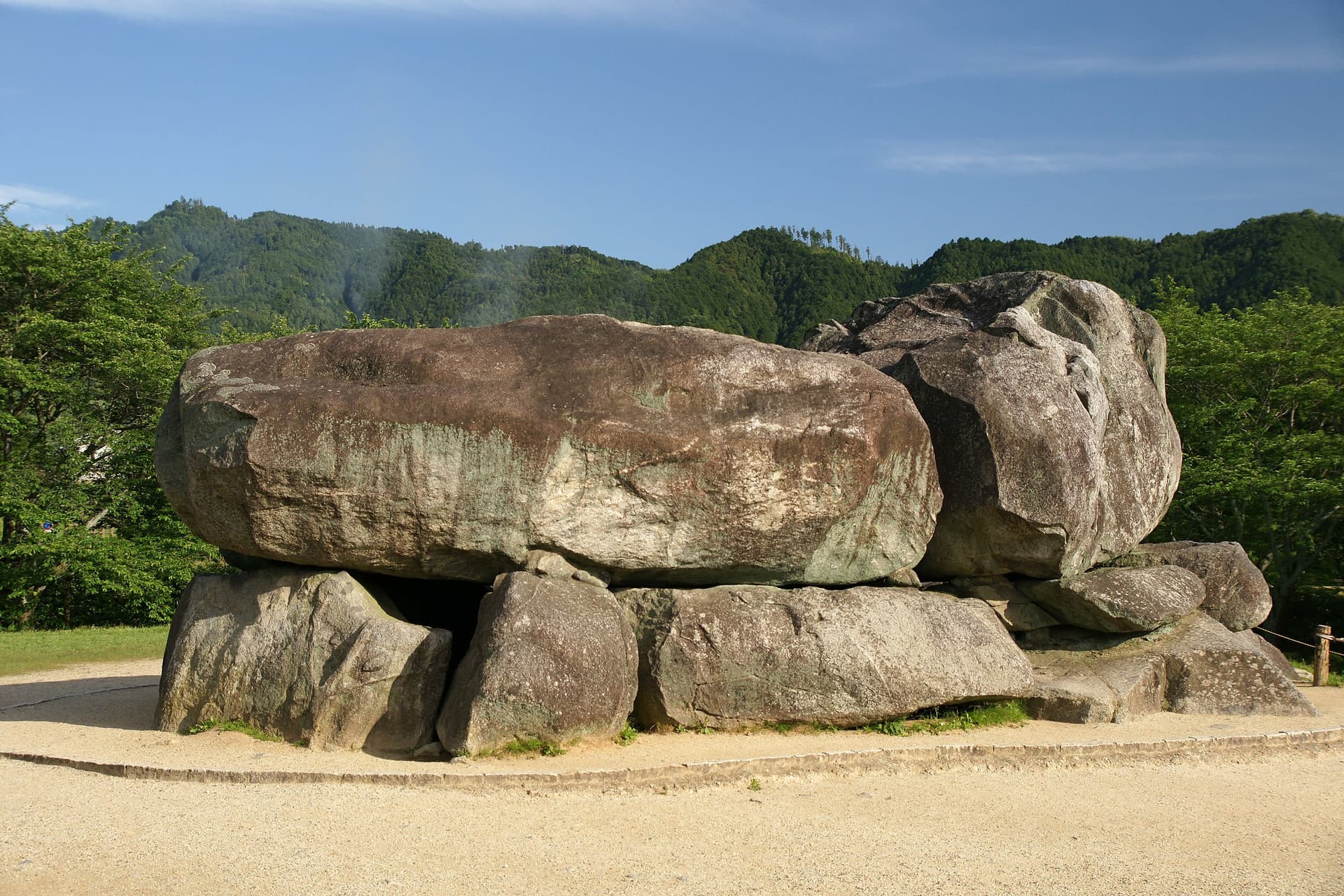
The path to the Sakafuneishi stone climbs the wooded hillside. The stone itself is massive—5.5 meters long—and the carvings are clearly visible: channels running in multiple directions, basin-like depressions, features that suggest purposeful design without revealing their purpose. The various theories about its function (sake brewing, oil pressing, alchemical work, astronomical observation, water ritual, topographical map) indicate the range of possibilities that the evidence does not definitively resolve.
The site's pastoral setting in the Asuka landscape adds to its contemplative quality. This valley was Japan's capital before Nara, before Kyoto—the place where many aspects of Japanese civilization were first formulated. The concentration of ancient monuments in this small area creates a pilgrimage route through formative history, of which the Sakafuneishi Site is one significant stop.
For those interested in mystery, the site delivers. Fourteen centuries have not answered all questions. For those interested in early Japanese spirituality, the site offers direct encounter with imperial ritual practice at a moment when Buddhism, indigenous traditions, and continental influences were flowing together into new forms. For those seeking contemplative space, the hillside setting provides it.
Begin at the turtle-shaped monument to experience the more legible feature first. Note the water channel system and consider what purposes such elaborate engineering might have served. Then climb to the Sakafuneishi stone to encounter the deeper mystery. Allow the site's ambiguity to work rather than seeking definitive answers. The experience benefits from prior reading about Asuka-period history and Empress Saimei.
The Sakafuneishi Site can be approached through multiple frameworks: as archaeological evidence of Asuka-period imperial ritual, as a mystery whose full meaning remains unrecovered, as part of the formative period when Japanese civilization was taking shape, or as all of these simultaneously.
Archaeological consensus recognizes the site as a significant imperial ritual installation from the Asuka period, likely connected to Empress Saimei's construction projects mentioned in the Nihon Shoki. The 2000 excavation discovering the turtle-shaped monument transformed understanding of the site, revealing an elaborate water system previously unsuspected.
The site demonstrates the synthesis of indigenous and continental influences in early Japanese court religion. The water purification practices echo indigenous traditions; the turtle symbolism draws on East Asian cosmological concepts. This synthesis characterizes the Asuka period, when Buddhist, Shinto, and continental influences were flowing together into new forms.
The site is part of the Asuka-Fujiwara nomination for UNESCO World Heritage inscription, recognized for its importance in documenting the formation of Japanese civilization.
The site predates the formal separation of Shinto and Buddhism that later characterized Japanese religion. It represents early imperial ritual practice drawing on both indigenous traditions—reverence for natural features, water purification, sacred mountains—and continental influences from Korea and China. These practices would later develop into the distinct streams of Japanese religious history.
In later Shinto practice, water purification (misogi) became and remains central. The Sakafuneishi Site may represent an early imperial form of such practices, though the specific relationship between seventh-century court ritual and later Shinto formalization remains scholarly speculation.
The Sakafuneishi stone has attracted various alternative interpretations: an astronomical observatory using reflected light or water; an alchemical laboratory for producing mercury vermilion (used in religious contexts); a topographical map of the Asuka region; a sacrificial altar. The solstice angle of certain channels has been noted as potentially significant.
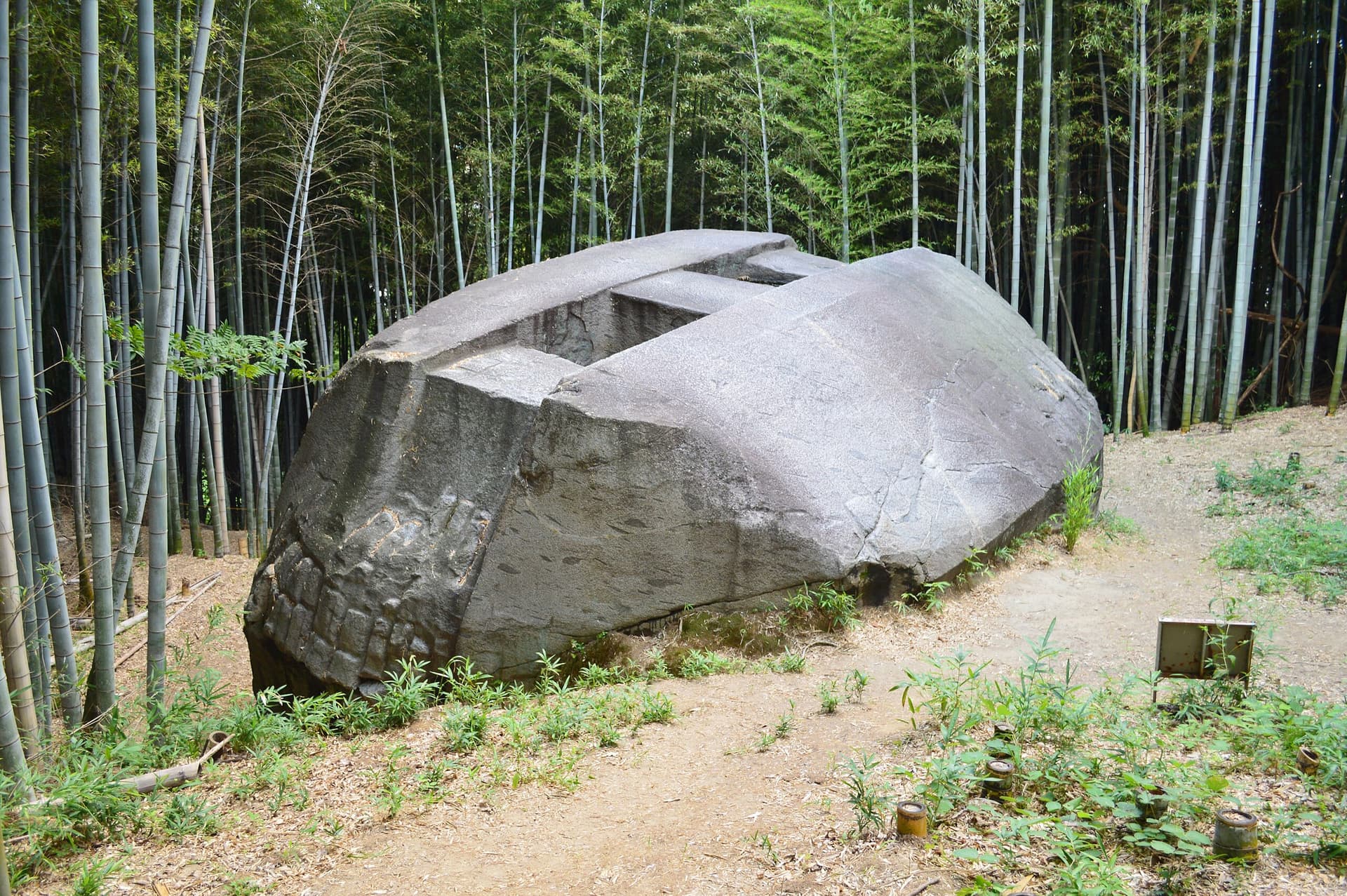
The site's reputation as a 'power spot' (pawaa supotto) draws some visitors interested in earth energies or spiritual presence. The concentration of mysterious stone monuments throughout Asuka—Turtle Stone, Monkey Stone, Masuda no Iwafune, and others—has generated esoteric interpretations connecting them as part of a larger sacred geometry.
Fundamental questions about the Sakafuneishi Site remain unanswerable with current evidence. The specific rituals conducted here, the words spoken, the experiences sought—all this lies beyond recovery. The purpose of the Sakafuneishi stone's channels and basins has been debated for centuries without resolution. The full extent of the ritual complex continues to be revealed through excavation, suggesting more discoveries may come.
Why Empress Saimei chose this hillside, how the site related to her other construction projects, what happened during the ceremonies conducted here—these questions maintain the site's character as a place where not everything is known, where mystery persists.
Visit Planning
The site is located in Asuka Village, Nara Prefecture, and fits naturally into a day exploring Asuka's concentration of ancient monuments. The turtle monument area requires an admission fee; the Sakafuneishi stone is freely accessible. Bicycle rental is recommended for exploring multiple Asuka sites.
By public transport: Akakame Loop Bus to Manyo Culture Hall West stop, then walk. By bicycle: rental available at Asuka Station; cycling is the recommended way to explore Asuka's spread-out sites. By car: parking available nearby.
The turtle-shaped monument area requires a 300 yen admission fee for adults. The Sakafuneishi stone on the hillside above is freely accessible but requires a short uphill walk.
Limited accommodation within Asuka Village itself. More options available in Kashihara to the north or Sakurai to the east. Day trips from Nara or Osaka are common.
The site is an archaeological preserve, not an active place of worship. The primary etiquette concerns protection of the stone monuments and respectful engagement with a heritage site.
The Sakafuneishi Site is an archaeological site preserved for its historical and cultural significance, not an active place of worship. No religious community conducts ceremonies here; no tradition requires specific protocols from visitors. The etiquette is straightforward: protect what has survived fourteen centuries.
The stone monuments—turtle, coin-shape, and Sakafuneishi stone above—represent irreplaceable evidence of Asuka-period ritual. Touch, climbing, or other physical contact accelerates deterioration. Viewing from the designated areas allows appreciation while preserving the site for future generations and future study.
The site's mystery invites interpretation, speculation, and imagination. These responses are appropriate. What would not be appropriate is claiming certainty where the archaeological evidence maintains ambiguity. The honest acknowledgment that we do not fully understand these features is itself a form of respect.
No specific requirements. Comfortable walking shoes are recommended for the hillside path to the Sakafuneishi stone.
Photography is permitted throughout the site.
Not applicable—no active tradition governs offerings.
Do not touch or climb on the stone monuments. Admission fee (300 yen for adults) applies to the turtle-shaped monument area. The Sakafuneishi stone on the hilltop is freely accessible.
Sacred Cluster
Nearby sacred places create the location cluster described in the growth plan. This block is intentionally crawlable and links into the wider regional graph.