Masuda Iwafune, Asuka
An 800-ton mystery carved by unknown hands for forgotten purpose in ancient Japan
Kashihara, Nara Prefecture, Japan
At A Glance
- Coordinates
- 34.4705, 135.7887
- Suggested Duration
- 1-2 hours including the walk to and from the site
- Access
- Located near Okadera Station on the Kintetsu Yoshino Line. The stone is approximately 1 km from Asuka Station. A hiking path leads through bamboo forest to the site. No entrance fee.
Pilgrim Tips
- Located near Okadera Station on the Kintetsu Yoshino Line. The stone is approximately 1 km from Asuka Station. A hiking path leads through bamboo forest to the site. No entrance fee.
- Comfortable hiking clothing and footwear suitable for walking through forest
- Photography is freely permitted and the site makes a dramatic subject
- The site is not dangerous but does require a walk through forest. Be prepared for outdoor conditions. The stone is large enough that falls from attempting to climb it could cause injury; stay on the ground.
Overview
Hidden in a bamboo forest near Asuka, an 800-ton carved granite boulder defies explanation. Who carved Masuda Iwafune? Why? The stone keeps its secret, offering only precision cuts and two mysterious square holes as evidence of purpose now lost to time.
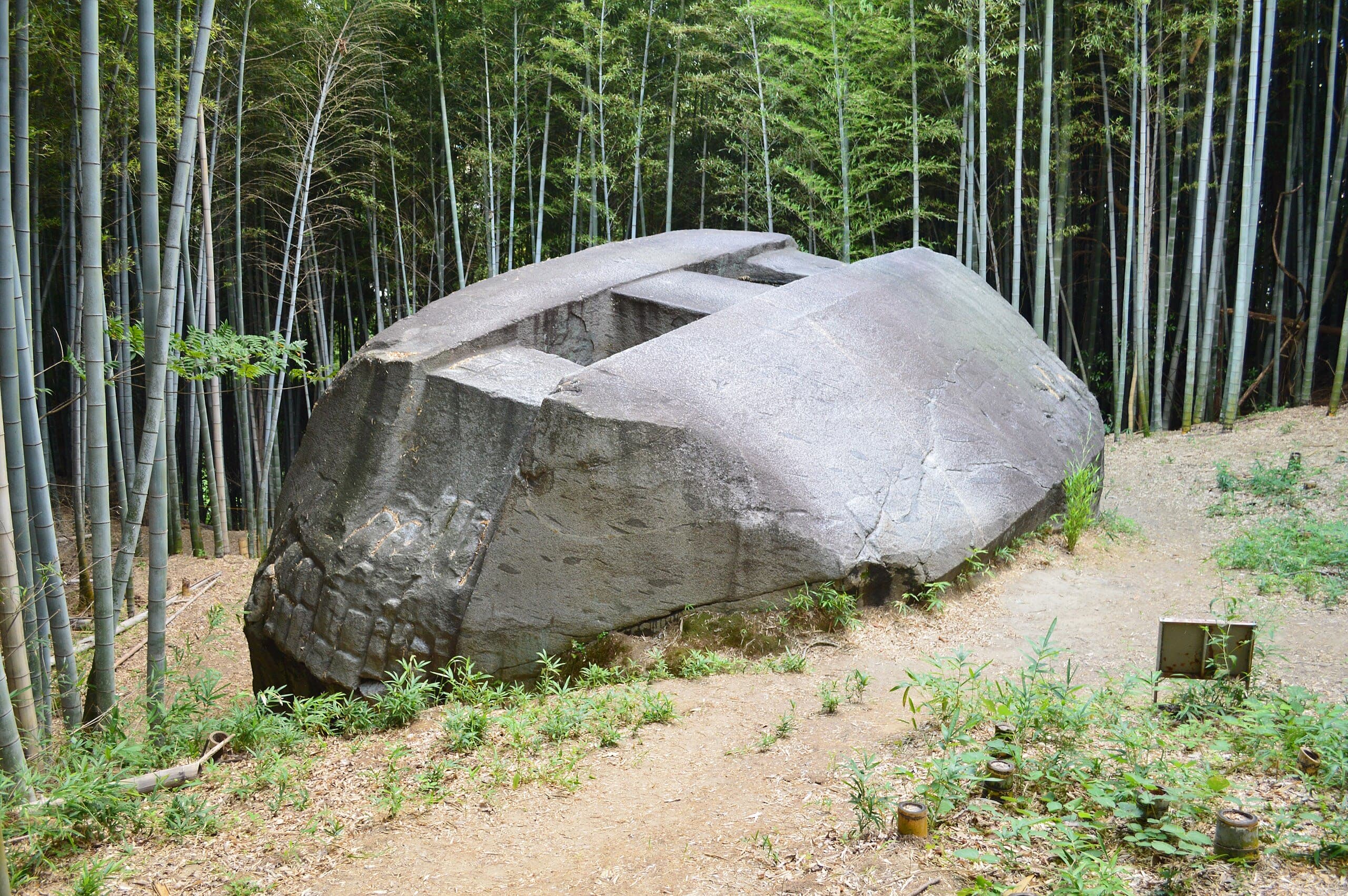
In the hills above the ancient Asuka region, where Japan's earliest imperial capitals rose and fell, something waits in the shadows of a bamboo forest. It is enormous: 11 meters long, 8 meters wide, nearly 5 meters high, weighing some 800 tons. Its top has been flattened with precision. Two square holes, each exactly one meter on each side, pierce its surface. Lines and marks suggest a systematic approach to its shaping. And no one knows why it exists.
Masuda Iwafune, the 'Rock Ship of Masuda,' takes its name from a nearby pond that no longer exists. But the stone remains, a monument to something completely forgotten. Archaeologists date its carving technique to the Kofun period, roughly the 7th century CE, when the artisans who built Japan's great burial mounds were at the height of their skill. But Kofun tombs followed patterns; Masuda Iwafune follows none. It was perhaps intended as an astronomical observatory, aligned with markers of the lunar calendar. Perhaps as the entrance to a tomb that was never completed. Perhaps as a memorial for the lake. Perhaps for something we cannot imagine.
The mystery is the message. To stand before Masuda Iwafune is to confront the reality that knowledge is fragile, that purposes can be utterly lost, that our ancestors did things we cannot understand. The stone does not answer questions. It asks them, and in the asking, opens something that answers would close.
Context And Lineage
Masuda Iwafune was carved during the Kofun period (approximately 7th century CE) by unknown artisans for unknown purpose. The complete loss of its original meaning exemplifies how much of ancient Japan remains beyond our understanding.
There is no surviving origin story for Masuda Iwafune. The stone exists; the story is gone. Scholars can point to the carving technique, which resembles Kofun-period tomb construction, suggesting the same artisans may have created both. But why they carved this particular stone, what it meant to them, what rituals or purposes it served, none of this has survived. The stone is an origin without a story, a cause without a known effect.
There is no lineage. Whatever tradition created Masuda Iwafune left no trace beyond the stone itself. The site has no priesthood, no continuing practice, no inherited interpretation.
Unknown Artisans
The Kofun-period craftsmen who carved the stone remain anonymous. Their techniques are recognizable; their identities and purposes are not.
Why This Place Is Sacred
Masuda Iwafune's thin place quality emerges paradoxically from absence rather than presence, from what has been lost rather than what remains. The complete erasure of purpose from an 800-ton carved monument creates an opening into mystery that more documented sites cannot offer.
Most thin places derive their power from accumulated tradition, continuous practice, or documented sacred history. Masuda Iwafune operates differently. Here, the thinness comes from the gap, the absolute absence of explanation for what is undeniably present. The stone is massive, carefully shaped, precisely cut. Someone went to enormous trouble to create it. And we have no idea why.
This absence creates a peculiar quality of encounter. At documented sacred sites, visitors receive tradition, participate in known patterns, connect with lineages of meaning. At Masuda Iwafune, there is nothing to receive except the stone itself and the questions it raises. The mind, confronted with massive intentional work and zero surviving explanation, is forced into unfamiliar territory.
The bamboo forest setting contributes to the effect. The stone is not displayed in a museum or surrounded by explanatory plaques. It waits in green shadow, discovered rather than toured. The approach through the forest builds anticipation; the sudden encounter with the massive carved form delivers impact that the mind must process without guidance.
For those who can sit with not-knowing, who find contemplative value in questions that refuse answers, Masuda Iwafune offers something increasingly rare: genuine mystery. The 7th-century artisans who carved these surfaces had purpose, belief, understanding that we cannot access. That unreachable intention haunts the stone, making it thin not by connecting us to the divine but by reminding us how much has been lost between past and present.
Unknown. Theories include astronomical observatory aligned with lunar calendar, unfinished entrance to a royal tomb, commemorative monument for Masuda Lake, or Buddhist ceremonial purpose. None has definitive evidence.
The stone has remained essentially unchanged since its creation. Whatever function it served was abandoned or forgotten completely. Today it draws those interested in ancient mysteries and unexplained archaeology.
Traditions And Practice
No traditional practices are associated with Masuda Iwafune. Contemporary visitors engage the site through contemplation and speculation rather than ritual.
Unknown. Whatever practices accompanied the stone's original function have been completely lost.
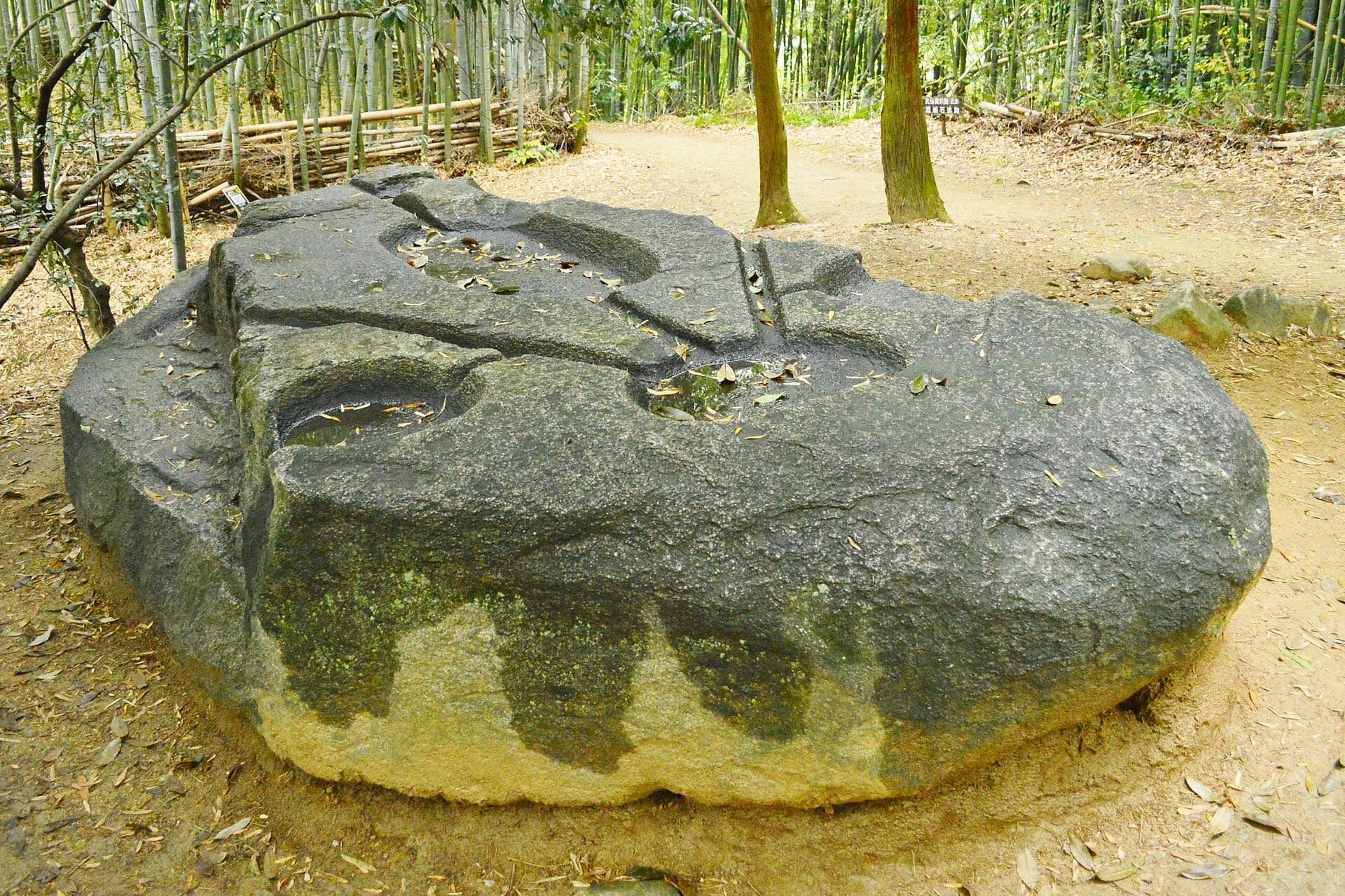
Contemporary engagement with Masuda Iwafune is primarily contemplative and investigative. Visitors observe, photograph, speculate, and wonder. Some engage the site as a meditation on impermanence and the fragility of memory. Others approach it as archaeological puzzle, comparing it to similar mysterious stones in the Asuka region.
Sit with the stone rather than immediately photographing it. Allow questions to arise naturally without rushing to accept any particular theory. Consider what it means that human beings invested enormous effort in creating something whose purpose has been entirely forgotten. If you have time, explore other mysterious stones in the Asuka region, which may reveal patterns or connections.
Unknown Ancient Tradition
HistoricalThe tradition that created Masuda Iwafune is completely unknown. No texts, no oral traditions, no continuous practices preserve any understanding of why this massive stone was carved.
Unknown
Experience And Perspectives
Visitors to Masuda Iwafune experience encounter with genuine archaeological mystery. The hidden location, the massive scale, and the complete absence of explanation create conditions for contemplation of time, memory, and the limits of knowledge.
The journey to Masuda Iwafune begins with intention. This is not a site one stumbles upon; it requires seeking. From Okadera or Asuka Station, the path leads into the hills, passing through ordinary Japanese countryside before entering the bamboo forest that shelters the stone.
The bamboo creates a particular atmosphere: filtered light, the sound of wind moving through leaves, a sense of enclosure and privacy. The path climbs gently. Other visitors are few. The stone is not heavily touristed, and this relative solitude contributes to the experience.
Then the forest opens, and the stone is there. The scale is the first impact: this is not a minor carving but a massive piece of work, occupying space in a way that demands attention. The flatness of the top surface, the precision of the two square holes, the marks of systematic shaping, these details become visible as initial shock gives way to observation.
The absence of explanation is the second impact. At most archaeological sites, plaques explain what you are seeing. Here, the plaques can only say that the purpose is unknown. Visitors are left to form their own responses to an 800-ton question mark.
Many report the experience as contemplative: the stone does not demand prayer or practice but invites sitting with uncertainty. What were these people doing? Why did they stop? What did they believe? The questions arise naturally, and the stone provides no answers. For some, this frustrates; for others, it opens.
Approach Masuda Iwafune prepared to encounter mystery rather than explanation. Allow the walk through the bamboo forest to become transition from everyday awareness. When you reach the stone, take time simply to observe before reading theories about its purpose. Let the questions arise naturally. Consider that whatever you see and feel, the original creators saw and felt something entirely different, something we cannot recover.
Masuda Iwafune defies interpretation by offering nothing to interpret. The perspectives below are all speculative, as no historical record explains the stone's purpose.
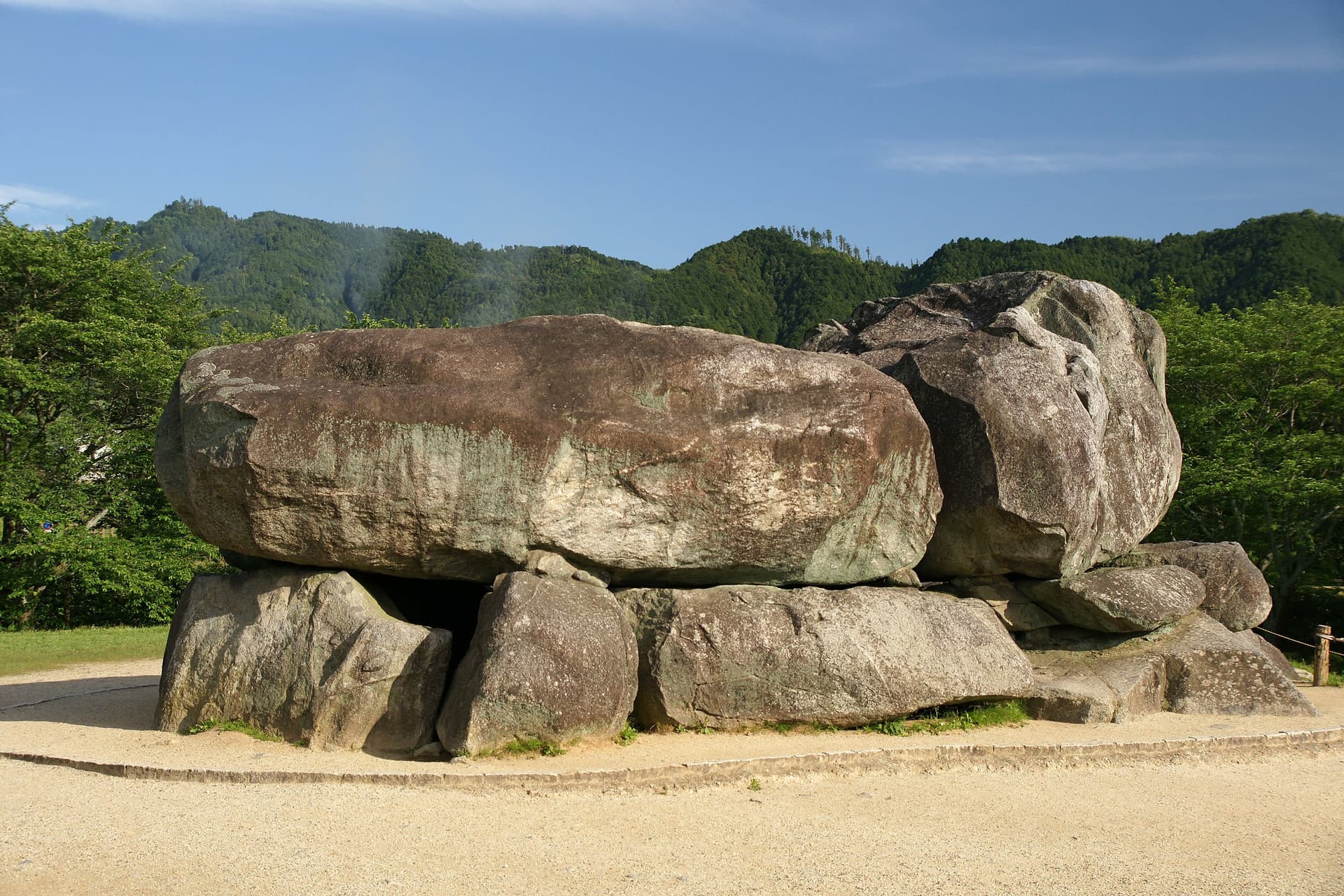
Archaeologists acknowledge that the purpose of Masuda Iwafune remains unknown. The carving technique resembles Kofun-period work, but the function is unclear. Leading theories include astronomical observatory (the orientation suggests possible lunar calendar alignment), unfinished tomb entrance, or commemorative monument for the nearby lake. Comparative analysis with similar megaliths like Ishi-no-Hoden may eventually yield insights.
No traditional interpretation survives. Whatever meaning the stone held for its creators has been completely erased by time.
Alternative researchers place Masuda Iwafune within worldwide patterns of megalithic construction, suggesting connections to sites in other countries or lost technological knowledge. Others propose that the stone served purposes beyond current archaeological understanding.
Everything about Masuda Iwafune is unknown except its physical existence: its purpose, its builders, its associated practices, and why the work was apparently abandoned. This complete mystery is precisely what draws seekers to the site.
Visit Planning
Masuda Iwafune is located in a bamboo forest near Asuka, accessible by foot from Okadera or Asuka Station. Allow 1-2 hours for the visit including the walk.
Located near Okadera Station on the Kintetsu Yoshino Line. The stone is approximately 1 km from Asuka Station. A hiking path leads through bamboo forest to the site. No entrance fee.
Asuka and nearby Kashihara have limited accommodations. Larger cities like Nara and Osaka are within day-trip distance.
Basic respect for the archaeological site is appropriate. No religious etiquette applies as no active tradition is associated with the stone.
As an archaeological site rather than active sacred place, Masuda Iwafune has few formal requirements. However, respect for the ancient work is appropriate. Do not climb on the stone, attempt to chip pieces away, or vandalize the surface. The marks on the stone have survived 1,300+ years; they deserve continued protection.
The quiet atmosphere of the bamboo forest invites contemplative engagement rather than loud socializing. While no formal silence is required, maintaining the peaceful character of the site enhances everyone's experience.
Comfortable hiking clothing and footwear suitable for walking through forest
Photography is freely permitted and the site makes a dramatic subject
Not applicable; no active religious tradition
{"Do not climb on or damage the megalith","Stay on designated paths","Respect the quiet atmosphere"}
Sacred Cluster
Nearby sacred places create the location cluster described in the growth plan. This block is intentionally crawlable and links into the wider regional graph.