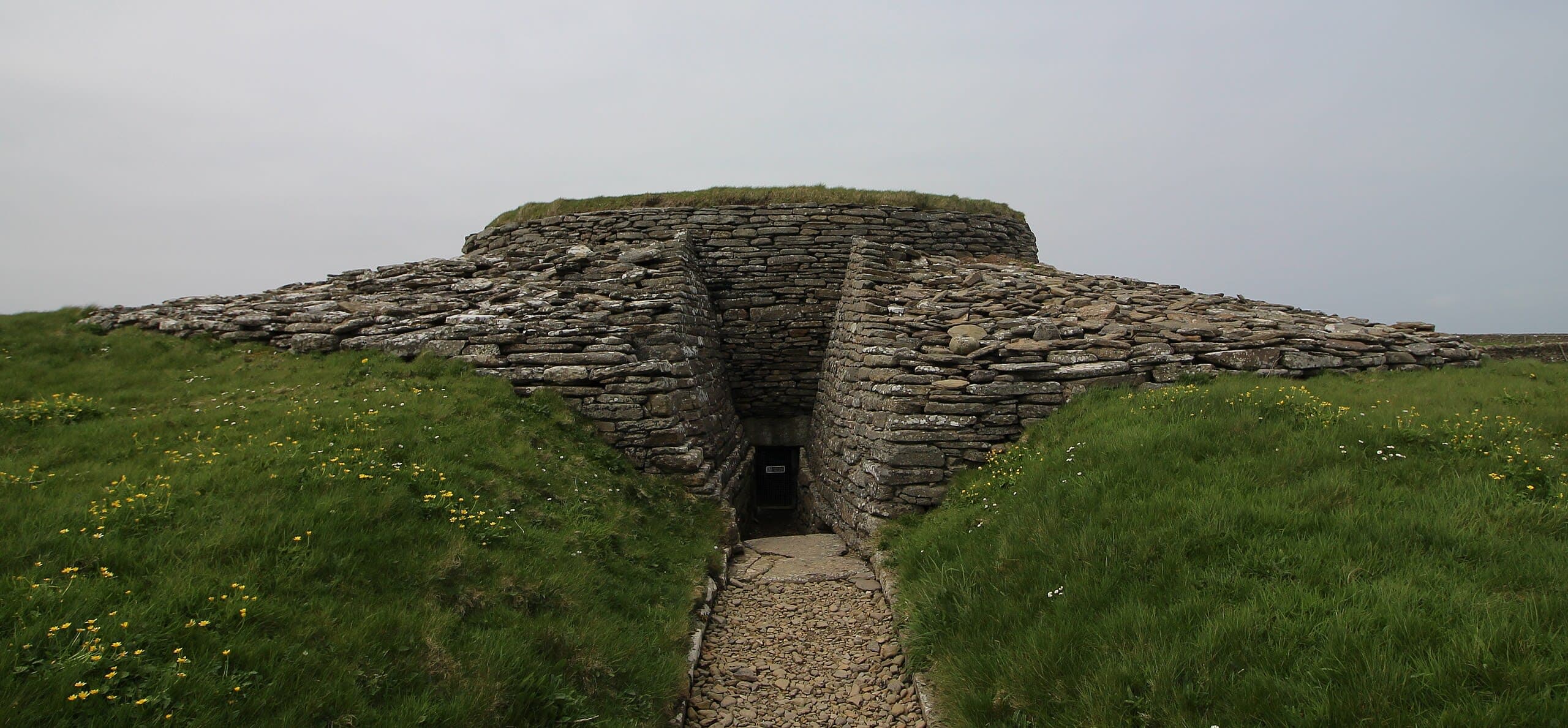
Quoyness Chambered Cairn
An exceptionally preserved Neolithic passage tomb on Sanday, where architecture echoes Maeshowe across a thousand years of Atlantic silence
Sanday, Orkney Islands, United Kingdom
At A Glance
- Coordinates
- 59.2256, -2.5682
- Suggested Duration
- One hour to fully appreciate the tomb and its coastal setting.
- Access
- Sanday is reached by Orkney Ferries from Kirkwall, approximately eighty minutes. The cairn is on the Elsness peninsula on Sanday's southeastern coast, accessed by a minor road. A car park and information panel are provided. The walk from the car park to the cairn is short and over relatively flat ground.
Pilgrim Tips
- Sanday is reached by Orkney Ferries from Kirkwall, approximately eighty minutes. The cairn is on the Elsness peninsula on Sanday's southeastern coast, accessed by a minor road. A car park and information panel are provided. The walk from the car park to the cairn is short and over relatively flat ground.
- Wear clothing suitable for crawling through an eight-metre passage. Knee pads are useful. Waterproof trousers advisable as the passage floor can be damp.
- Photography is permitted. Interior photography requires a light source. The passage and chamber create dramatic images.
- The eight-metre passage requires crawling on hands and knees. Not suitable for those with claustrophobia, significant mobility limitations, or respiratory conditions. A torch is essential. The passage floor can be damp. Wear clothing you do not mind getting dirty.
Overview
On the Elsness peninsula of Sanday, one of Orkney's northern isles, a chambered cairn of exceptional preservation stands near the shore. Quoyness was built around 3000 BCE in the Maeshowe architectural tradition: a long, low entrance passage leading to a central rectangular chamber with six side cells. The tomb's design is so close to Quanterness on the Orkney Mainland that the two appear to follow the same architectural template, separated by miles of open water. To enter Quoyness is to step into a space designed five thousand years ago with a sophistication that challenges assumptions about prehistoric capabilities.
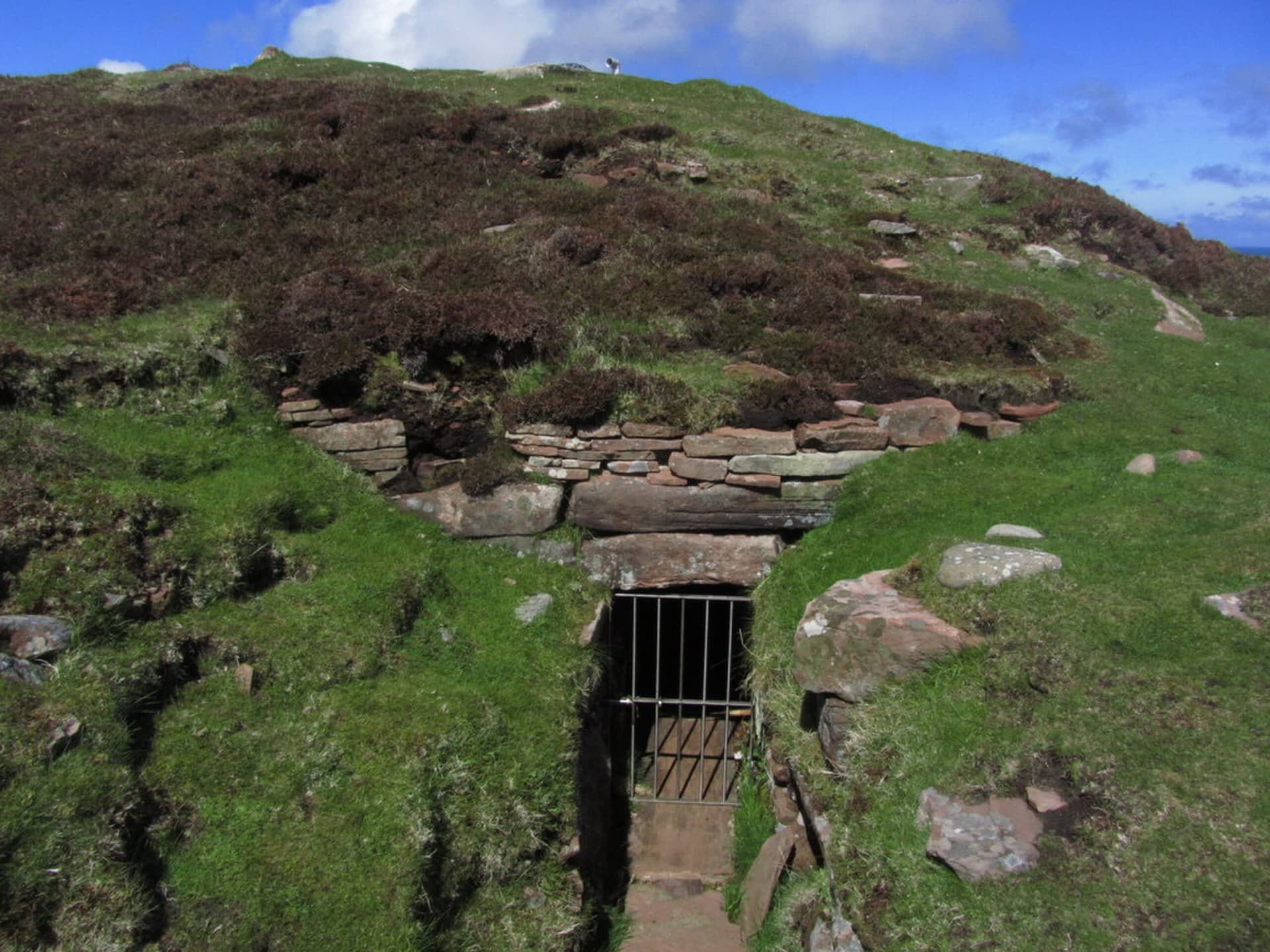
Quoyness announces its presence modestly. The cairn stands near the shore on Sanday's southeastern coast, a grass-covered mound that rises from flat terrain. A modern entrance structure protects the passage opening. There is a car park, an information panel, and a sense that this site, unlike many Orkney monuments, has been formally prepared for visitors.
The preparation is warranted. Quoyness is one of the finest Maeshowe-type chambered cairns in Orkney, exceptional in its preservation and architectural clarity. The entrance passage runs approximately eight metres into the mound, low enough at roughly eighty centimetres to require crawling on hands and knees. The passage is narrow, between fifty-five and sixty-five centimetres wide. These dimensions are not the result of collapse but original design: the builders intended that entry should demand physical submission.
The central chamber opens after the passage, a rectangular space measuring four metres by 1.8 metres. Six side cells branch off from the main chamber, each a small vaulted space that once held human remains. The stonework throughout is careful and deliberate, the walls built with dressed slabs, the corbelling still intact after five millennia.
James Farrer and George Petrie first excavated Quoyness in 1867, believing they were digging into a broch. They discovered instead a Neolithic tomb of remarkable quality. Vere Gordon Childe re-excavated the site in 1951-52 for the Ministry of Works, establishing its architectural significance and recovering Neolithic pottery comparable to finds from Rinyo and Skara Brae settlements. A slate disc found in the chamber has parallels with artefacts from western Scotland, Wales, Spain, and Portugal, hinting at connections across Atlantic Europe that predate history.
The skeletal remains of several individuals were recovered from the side cells, confirming the tomb's function as a communal burial monument. These people were placed here with care, in a structure designed to endure, at a location chosen with attention to the coast, the sea, and the wider landscape of Sanday.
Context And Lineage
Quoyness is a Maeshowe-type chambered cairn of the Orkney Neolithic, built around 3000 BCE. It belongs to a distinctive Orcadian architectural tradition that produced some of the most sophisticated prehistoric monuments in the British Isles. Pottery found at the site connects it to the Rinyo and Skara Brae cultural horizon, while a slate disc has parallels across Atlantic Europe.
No origin narrative survives. The tomb was built by Neolithic farming communities on Sanday as part of the broader Orcadian tradition of chambered cairn construction. The choice of the Elsness peninsula, near the coast, may reflect beliefs about the relationship between death and the sea, or may be a matter of practical geography. The architectural template closely matches Quanterness on the Orkney Mainland, suggesting shared building knowledge across the archipelago.
No continuous tradition connects the present to the Neolithic builders. The tomb was sealed and forgotten for millennia before its rediscovery in the nineteenth century. Its modern significance is archaeological and contemplative.
James Farrer
Vere Gordon Childe
Why This Place Is Sacred
Quoyness offers the particular thinness of architectural precision from deep antiquity. The tomb's sophistication, its carefully measured passage, its symmetrical chamber, its corbelled cells, speaks of a society that understood both engineering and meaning. To crawl through the passage and stand in the chamber is to occupy a space that has not fundamentally changed since its builders completed it five thousand years ago.
The passage is the threshold. Eight metres of stone-lined crawl space, barely wide enough for shoulders, the ceiling pressing close. There is no way to enter Quoyness without physically engaging with its architecture. You cannot walk in upright, cannot enter with dignity intact. The passage demands that you become small, that you humble yourself, that you move through darkness toward the chamber of the dead.
This design is not accidental. The Maeshowe-type builders understood the phenomenology of transition. Every passage tomb in this tradition uses the same technique: a narrow, low entrance that transforms the act of entering into a bodily experience of crossing a threshold. The passage at Quoyness is particularly long, extending the transition, prolonging the journey from light to darkness.
The chamber, when it opens around you, feels earned. The rectangular space is tall enough to stand in, after the crawl of the passage a sudden vertical liberation. The six side cells create a geometry of enclosure, small spaces radiating from the central void. The stonework is visible in torchlight, the dressed slabs fitted with care, the corbelling rising to a point that has held for five thousand years.
The quality of silence in the chamber is distinctive. The passage insulates the interior from wind and wave, creating a stillness that belongs to the earth rather than the air. Standing here, you share space with an absence: the remains that once occupied these cells are gone, removed by excavation, but the architecture that housed them persists.
The shore location adds its own quality. Emerging from the passage, the sea is nearby, the flat landscape of Sanday stretching to the horizon. The contrast between the tomb's enclosed darkness and the open light of the coast creates a perceptual reset that may approximate the original builders' intention.
Quoyness functioned as a communal burial monument. Skeletal remains of several individuals were recovered from the side cells during excavation. The Maeshowe-type design, with its accessible passage, allowed repeated entry and the ongoing management of the dead, suggesting a culture in which the relationship between living and dead was maintained rather than concluded at burial.
The tomb was built around 3000 BCE and was likely in use for several centuries. It was first excavated in 1867 by Farrer and Petrie, who mistakenly identified it as a broch. Childe's 1951-52 re-excavation established the site's true nature and architectural significance. The monument was placed in state guardianship and is now managed by Historic Environment Scotland.
Traditions And Practice
No formal ceremonies are conducted at Quoyness today. The site is managed as a heritage monument by Historic Environment Scotland. Individual visitors may engage in personal reflection within the chamber.
Original practices are known only through material evidence. The tomb was designed for communal burial with repeated access, suggesting ongoing rituals involving the dead. Pottery found at the site connects to the Rinyo-Skara Brae cultural tradition, but specific ceremonial practices cannot be reconstructed.
No organised spiritual practices take place at the site. Visitors come for archaeological interest and personal reflection.
The passage crawl is the primary practice Quoyness offers. Allow it to be slow and deliberate. In the chamber, stand in stillness. The darkness, the silence, the knowledge that this space held the dead for centuries create their own conditions for contemplation. No additional practice is required.
Neolithic Orcadian Burial Tradition (Maeshowe Type)
HistoricalQuoyness represents the highest achievement of the Maeshowe-type passage tomb tradition in Orkney's northern isles. This architectural form, characterised by long entrance passages, central rectangular chambers, and radiating side cells, was distinctive to Orkney and represents one of the most sophisticated Neolithic building traditions in the British Isles. The tomb's construction around 3000 BCE places it in the same cultural horizon as Maeshowe, Quanterness, and the great settlement sites of Skara Brae and Rinyo.
The tomb was designed for communal burial with repeated access. Skeletal remains of several individuals were found in the side cells. Neolithic pottery and a slate disc with Atlantic connections were recovered, indicating that the burial rites involved material culture of significance. The passage design allowed the living to maintain ongoing relationship with the dead.
Experience And Perspectives
Quoyness is one of the most accessible and rewarding Neolithic tombs in Orkney's northern isles. The entrance passage requires crawling for approximately eight metres, but the reward is one of the finest preserved Maeshowe-type chambers in Scotland. The coastal setting and Sanday's open landscape add to the quality of the visit.
The cairn is reached by a short walk from the car park on the Elsness peninsula. The flat terrain and relatively good path make this one of the more accessible prehistoric sites on Sanday. An information panel at the entrance provides context.
The passage entrance is protected by a modern structure. Before entering, take a moment to register the setting: the sea nearby, the flat grassland of Elsness, the sky. Then bend down and enter.
The eight-metre crawl is the defining experience. The passage floor is packed earth, the walls dressed stone, the ceiling low and close. A torch illuminates the stonework but also creates shadows that emphasise the passage's length. Progress is slow, deliberate, physical. There is no shortcut.
The central chamber opens with a sense of arrival. After the passage's compression, the vertical space of the chamber feels expansive. The six side cells, each a small vaulted alcove, create niches of deeper darkness around the central space. The stonework is exceptionally well-preserved, the corbelling intact, the dressed slabs fitted with precision.
Standing in the chamber, allow your eyes to adjust. Allow the silence to register. This space was built for the dead, and the dead were here for centuries. The passage you crawled through was the only connection between their world and the world of the living.
The return crawl through the passage, moving from darkness toward light, reverses the entry experience. Emerging onto the Sanday coast, the world appears renewed, as though seen for the first time. This is, perhaps, the most powerful aspect of the Quoyness experience.
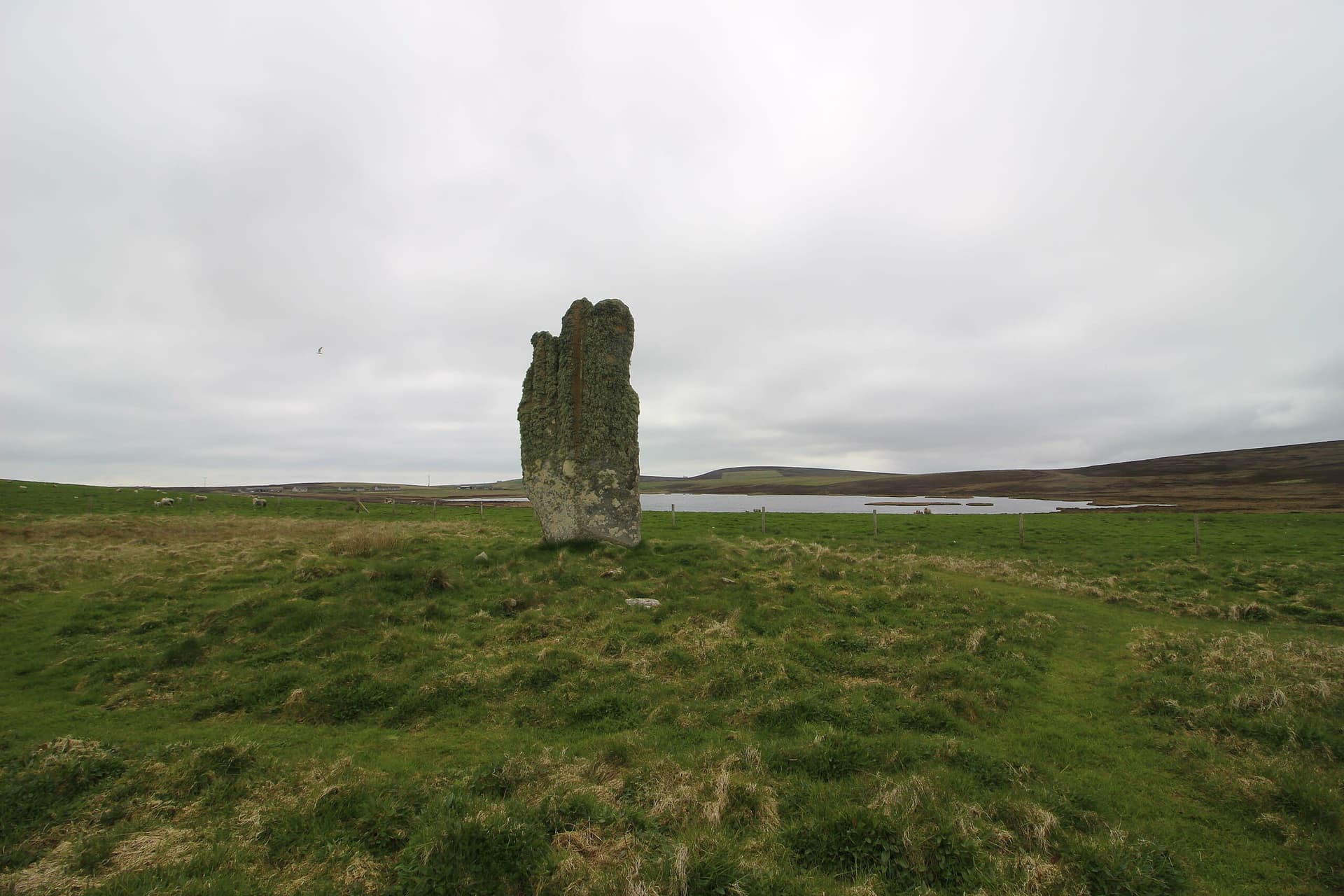
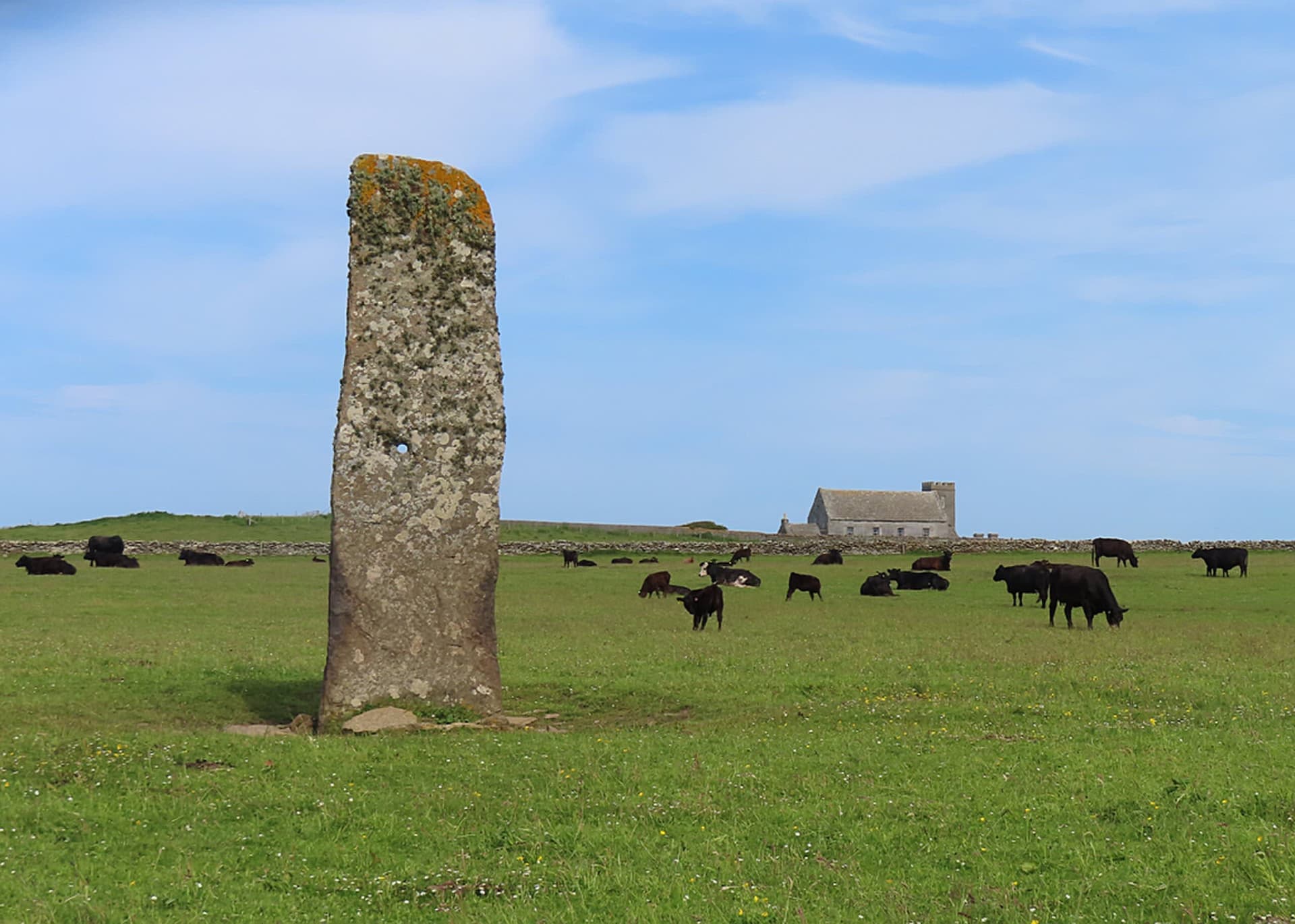
Quoyness is located on the Elsness peninsula on Sanday's southeastern coast. A car park and information panel are provided. Sanday is reached by Orkney Ferries from Kirkwall, with sailings taking approximately eighty minutes. The tomb can be combined with visits to Sanday's other archaeological sites, including the Quoyness Stone and other prehistoric features on the Elsness peninsula.
Quoyness is one of the most important Neolithic tombs in Scotland, yet it remains relatively little visited compared to sites on the Orkney Mainland. Its architectural quality and preservation make it a key reference point for understanding the Maeshowe-type tradition.
Quoyness is recognised as one of the finest Maeshowe-type chambered cairns in Orkney. Childe's 1951-52 excavation established the site's architectural significance and recovered Neolithic pottery with affinities to the Rinyo and Skara Brae cultural horizon. A slate disc from the chamber has parallels with artefacts from western Scotland, Wales, the Iberian Peninsula, and Portugal, suggesting long-distance connections across Atlantic Europe in the Neolithic period. The tomb's layout is virtually identical to Quanterness on the Orkney Mainland, indicating shared architectural knowledge across the archipelago. The passage dimensions, chamber proportions, and side cell arrangement follow a precise template.
No oral tradition survives from the Neolithic builders. The specific beliefs and cosmology that motivated the construction of Quoyness are irrecoverable. Comparative study suggests ancestor veneration and ongoing relationship with the dead, but these are inferences from material evidence.
Some visitors experience the passage crawl as a symbolic death and rebirth, an interpretation consistent with the tomb's design as a transition from the world of the living to the realm of the dead. Others note the coastal location as potentially significant, placing the dead at the boundary between land and sea.
How long the tomb remained in active use, what specific ceremonies accompanied burials, whether the passage had astronomical alignments, and what the slate disc signified to its makers are all unknown. The Atlantic connections suggested by the artefacts raise questions about Neolithic trade and communication networks that remain largely unanswered.
Visit Planning
Quoyness Chambered Cairn is located on the Elsness peninsula of Sanday, one of Orkney's northern isles. It is one of the more accessible prehistoric sites in the outer islands, with a car park and information panel. Reaching Sanday requires a ferry from Kirkwall.
Sanday is reached by Orkney Ferries from Kirkwall, approximately eighty minutes. The cairn is on the Elsness peninsula on Sanday's southeastern coast, accessed by a minor road. A car park and information panel are provided. The walk from the car park to the cairn is short and over relatively flat ground.
Limited accommodation on Sanday, including B&Bs and self-catering options. Book well in advance during summer. More extensive options in Kirkwall.
Quoyness is a heritage site in the care of Historic Environment Scotland, freely accessible throughout the year.
The site is accessible at all times without admission charge. A car park and information panel are provided. A torch is essential for the interior. Sturdy clothing suitable for crawling is advisable.
As a protected monument, it is illegal to damage, disturb, or excavate any part of the structure. Do not leave objects inside the chamber. Do not force entry if the passage is flooded or obstructed.
Wear clothing suitable for crawling through an eight-metre passage. Knee pads are useful. Waterproof trousers advisable as the passage floor can be damp.
Photography is permitted. Interior photography requires a light source. The passage and chamber create dramatic images.
Not traditional or expected. Do not leave objects inside the tomb.
Do not damage, disturb, or excavate any part of the monument. Do not climb on the cairn mound.
Sacred Cluster
Nearby sacred places create the location cluster described in the growth plan. This block is intentionally crawlable and links into the wider regional graph.