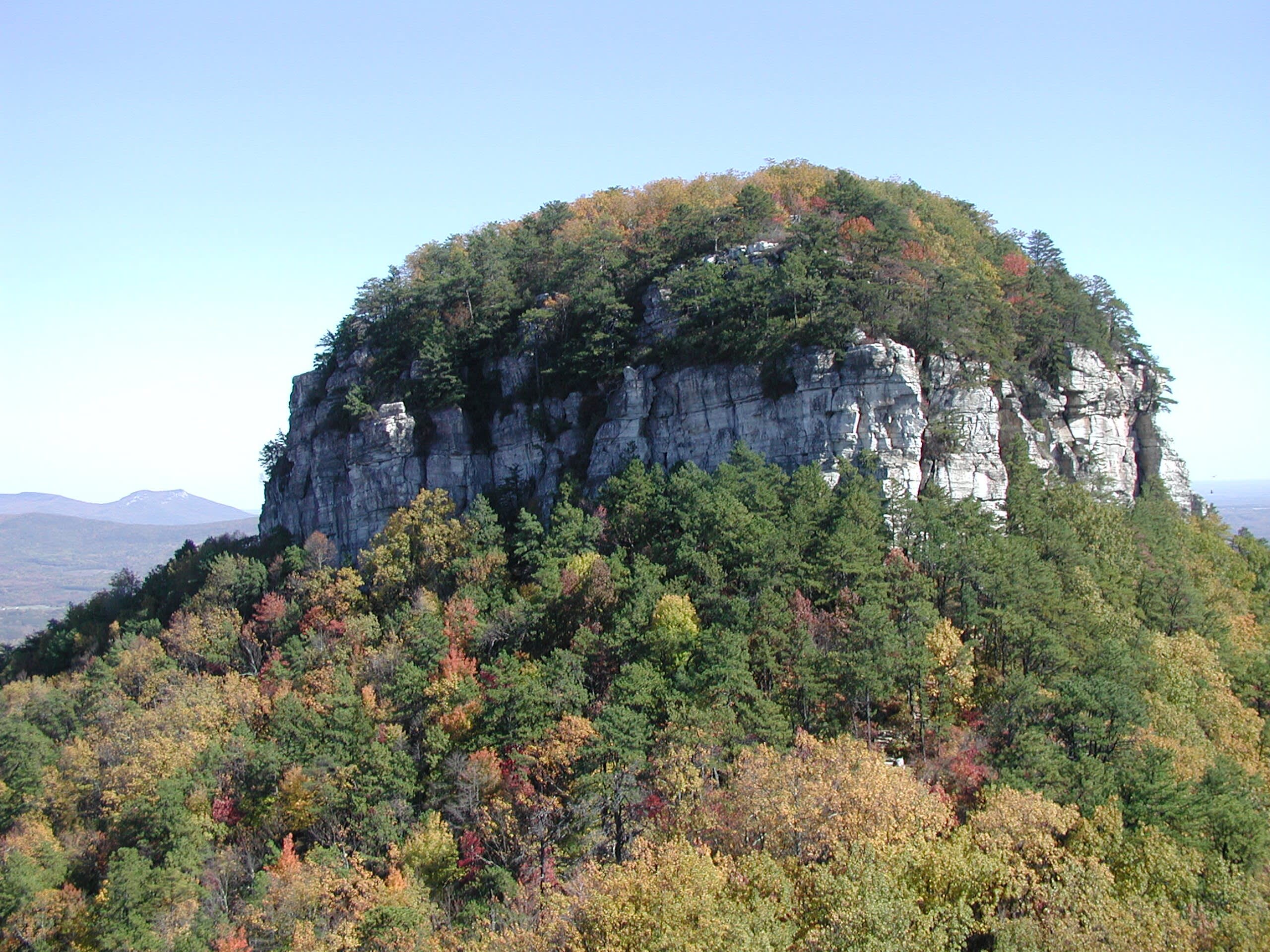
Pilot Mountain, North Carolina
Where Cherokee spirit-beings dwell within the mountain and the Saura found their Great Guide
Pinnacle, North Carolina, United States
At A Glance
- Coordinates
- 36.3401, -80.4742
- Suggested Duration
- Allow two to four hours for a meaningful visit including the visitor center, overlooks, and Jomeokee Trail. The trail itself takes approximately one hour at a contemplative pace. Add time if combining with the Little Pinnacle trails or the river section of the park.
Pilgrim Tips
- Wear appropriate hiking attire and sturdy footwear, particularly for the Jomeokee Trail, which includes rocky and uneven sections. Weather at the summit can differ from conditions below, bring layers. Sun protection is advisable at the exposed overlooks.
- Photography is permitted throughout the park for personal use. Commercial photography may require permits. At overlooks, be considerate of others waiting to access viewpoints. The Big Pinnacle's distinctive silhouette is the iconic image, particularly effective at dawn or dusk when light creates dramatic contrast.
- Respect the closure of the Big Pinnacle summit. This restriction protects rare plant species that have evolved on the quartzite formation. The limitation also preserves something important: not everything must be accessible, not every summit conquered. Let the pinnacle remain as the Nunne'hi's dwelling was understood to be, a place one does not enter uninvited. Do not leave offerings or conduct ceremonies that impact the site. Leave no trace principles apply here as at any natural area. The mountain does not require your objects, only your attention. Avoid framing indigenous heritage as quaint mythology or primitive belief. The Saura and Cherokee understandings of this mountain were sophisticated responses to the same landscape you are encountering. They deserve respect rather than condescension.
Overview
Pilot Mountain rises from the North Carolina Piedmont like a sentinel from another age. The Saura called it Jomeokee, the Great Guide, a beacon orienting travelers across ancient trade routes. The Cherokee knew it as Tsuwa'tel'da, dwelling place of the Nunne'hi, spirit-beings who maintained a hidden town deep within the mountain's heart. This billion-year-old quartzite pinnacle still serves as guide and threshold, inviting those who climb its slopes to consider what might exist just beyond the visible.
Something about Pilot Mountain commands attention from fifty miles away. The distinctive pinnacle, a solitary knob of quartzite rising 1,400 feet above the surrounding Piedmont, has served as landmark and lodestone for as long as people have walked this land. The Saura, whose territory once encompassed this region, called it Jomeokee, meaning Great Guide or Pilot. For them, this unmistakable silhouette oriented travel across the vast landscape, a fixed point in a world of forest and river.
The Cherokee, who displaced the Saura in the early eighteenth century, understood the mountain differently. They called it Tsuwa'tel'da and knew it as one of the dwelling places of the Nunne'hi, powerful spirit-beings who lived in a hidden town inside the mountain itself. According to accounts recorded by ethnographer James Mooney, the Nunne'hi were invisible unless they chose to reveal themselves. They were favorably disposed toward the Cherokee, offering advice, socializing at dances, and coming to their aid in battle. Smoke from their underground townhouse could once be seen emerging from the mountain's summit.
Today, Pilot Mountain stands as a state park, its trails worn by hikers and its overlooks crowded on clear days. The Saura have long been displaced, eventually merging with other tribes after abandoning their villages in 1710. No documented Cherokee ceremonies currently occur here. Yet the mountain persists, as it has for a billion years, its quartzite bones older than complex life itself. For those who know its stories, Pilot Mountain remains what it has always been: a threshold between the visible world and something less easily named.
Context And Lineage
Pilot Mountain's human history spans thousands of years, from the Saura who named it Jomeokee to the Cherokee who understood it as Tsuwa'tel'da, dwelling of the Nunne'hi. Geological history reaches incomparably further, the quartzite pinnacle representing rocks formed approximately one billion years ago. The mountain has witnessed cultures rise and fall while itself remaining essentially unchanged.
The Cherokee narrative associated with Pilot Mountain was recorded by ethnographer James Mooney during his fieldwork in the late nineteenth and early twentieth centuries. The story concerns a man named Tsuwe'nahi from the old town of Kanuga on Pigeon River. He was known as lazy, spending time in the woods but never bringing home game.
One day a stranger encountered Tsuwe'nahi and invited him to visit his town. They traveled together to Tsuwa'tel'da, Pilot Knob, where the stranger led him into a cave. They went deep into the heart of the mountain. Inside, Tsuwe'nahi found 'an open country like a wide bottom land, with a great settlement and hundreds of people.' These were the Nunne'hi, the spirit-beings who lived inside the mountain.
The Nunne'hi welcomed Tsuwe'nahi and brought him before their chief. The hidden people appeared just like the Cherokee in their customs and appearance. Tsuwe'nahi stayed for a time in their settlement, though accounts vary about what transpired there. Eventually he returned to the outer world.
The story identifies Pilot Mountain as one of several locations where the Nunne'hi maintained their hidden towns. The lost settlement of Kanasta is believed by some Cherokee to still exist inside Pilot Mountain, with the hidden people watching over their Cherokee brothers and sisters to this day. In the old times, smoke from their underground townhouse could be seen emerging from the mountain's summit.
No comparable founding narrative survives from the Saura. Their name Jomeokee, meaning Great Guide, suggests a practical rather than mythological relationship, though absence of evidence does not prove absence of spiritual significance.
Pilot Mountain's significance spans multiple cultural lineages. The Saura occupied the region before European contact, using the mountain as a navigational landmark. Their relationship to the site ended when Cherokee expansion forced them from the area in the early eighteenth century. The Saura eventually merged with the Catawba and other tribes.
The Cherokee understood Pilot Mountain through a different cosmological framework, as a dwelling place of the Nunne'hi. Cherokee presence in the region was itself disrupted by colonization and removal policies. Contemporary Cherokee communities are centered in Oklahoma and the Qualla Boundary in western North Carolina.
The mountain's significance to contemporary visitors draws on these layered histories. Nature spirituality, secular appreciation of geological wonder, and awareness of indigenous heritage all inform how people experience the site today. The state park's interpretive programming acknowledges both Saura and Cherokee connections, preserving at least the names and stories associated with this landscape.
The Nunne'hi
Spirit-beings dwelling within the mountain
James Mooney
Ethnographer
Tsuwe'nahi
Figure in Cherokee narrative
Why This Place Is Sacred
Pilot Mountain possesses qualities that have drawn spiritual attention across cultures: a distinctive form visible from great distances, geological antiquity measured in billions of years, and an association with hidden realms and guiding presence. The Cherokee understood it as literally containing another world. The Saura experienced it as a fixed point of orientation in the cosmos. Both responses speak to something the mountain itself seems to evoke.
The pinnacle rises in a way that separates it from its surroundings. Unlike mountains that build gradually through foothills and ridgelines, Pilot Mountain stands alone, a monadnock, the surviving remnant of an ancient mountain range eroded over hundreds of millions of years. The quartzite that forms the Big Pinnacle is approximately one billion years old, among the oldest exposed rock on the Eastern Seaboard. To stand at its base is to encounter deep time in visible form.
This geological distinctiveness may partly explain why multiple cultures have attributed extraordinary significance to the site. The Cherokee did not merely consider the mountain sacred in some abstract sense. According to Mooney's ethnographic research, they understood Tsuwa'tel'da as one of several mountains where the Nunne'hi maintained hidden towns. The story of Tsuwe'nahi describes a lazy hunter who was invited by a stranger to visit the settlement inside: entering through a cave, he found 'an open country like a wide bottom land, with a great settlement and hundreds of people.' The hidden realm was not metaphorical. It was believed to exist within the mountain's physical body.
The Nunne'hi themselves occupied a liminal position in Cherokee cosmology. They resembled the Cherokee in appearance and customs but were invisible unless they chose to be seen. They could be encountered at dances, on trails, or in times of need. They were powerful but not dangerous, protectors rather than predators. Their dwelling places, scattered across Cherokee territory, represented points where the ordinary world thinned enough to permit passage between realms.
For visitors today, Pilot Mountain may not open to reveal a hidden country. But the qualities that made it significant persist. The pinnacle's commanding presence, the silence that settles on its higher slopes, the vista that stretches to the Blue Ridge Mountains, the sense of standing on something ancient and enduring, all these create conditions where ordinary attention shifts. Whether one calls this thinness, sacredness, or simply the effect of landscape on consciousness, the mountain continues to offer it.
The Saura likely used Pilot Mountain primarily as a navigational landmark. Its distinctive silhouette, visible from great distances across the relatively flat Piedmont, served to orient travelers on trade routes that later became the Great Wagon Road. Whether the Saura attached additional ceremonial or spiritual significance to the mountain is not documented in surviving sources.
The Cherokee relationship appears to have been more explicitly spiritual. The identification of Tsuwa'tel'da as a Nunne'hi dwelling place suggests the mountain was understood as a point of contact between worlds. Whether specific ceremonies were conducted at the site cannot be determined from available records. The Nunne'hi, according to Cherokee belief, could be contacted through ritual fasting that allowed one to see the normally invisible spirit-beings. Whether such fasting practices occurred at Pilot Mountain specifically is unknown.
The Saura occupied the Pilot Mountain region until the early eighteenth century, when pressure from the Cherokee and other groups forced their abandonment of villages in the area by 1710. The Saura eventually merged with the Catawba and other tribes, their distinct identity as a people gradually fading. Their name for the mountain, Jomeokee, survives primarily through park signage and trail names.
The Cherokee presence in the region was itself eventually disrupted by European colonization and the Indian Removal policies of the nineteenth century. The Cherokee Nation today is centered in Oklahoma and western North Carolina, far from Pilot Mountain. No active Cherokee ceremonial use of the site is documented.
European settlers recognized the mountain's navigational value and by 1751 it appeared on the Fry-Jefferson map. The name Pilot Mountain, which began appearing on maps around 1808, reflects this utilitarian understanding. In 1968, the site became North Carolina's fourteenth state park. In 1976, it was designated a National Natural Landmark. A state-of-the-art visitor center opened in 2020, offering interpretive programming about both natural and cultural history.
Traditions And Practice
No traditional Saura or Cherokee ceremonies are documented as occurring at Pilot Mountain today. The state park offers interpretive programming about natural and cultural history. Visitors seeking meaningful engagement can walk the Jomeokee Trail, named for the Saura word, and approach the mountain with awareness of its significance to the peoples who knew it before.
Specific ceremonies practiced by the Saura at Pilot Mountain are not documented in surviving sources. The Saura were displaced from the region by the early eighteenth century, and their traditions were not systematically recorded before disruption.
For the Cherokee, the Nunne'hi could be contacted through ritual fasting that allowed one to see the normally invisible spirit-beings. Whether such fasting practices occurred specifically at Pilot Mountain is not recorded. The Nunne'hi stories suggest that encounters with these beings were often spontaneous rather than ritually induced. A stranger might appear on a trail, at a dance, or in time of need, and only later would the human realize they had encountered one of the hidden people.
The absence of documented ceremonial practice does not indicate absence of sacredness. The Cherokee understanding of Tsuwa'tel'da was that it contained a hidden world. This belief may not have required ritual activity at the site itself, the mountain being significant for what it was rather than for what was done there.
No formal indigenous ceremonies are currently documented at Pilot Mountain. Unlike some sacred sites where tribal nations have reclaimed ceremonial access, Pilot Mountain has not been the focus of such reconnection efforts, possibly because the Saura no longer exist as a distinct tribal entity and the Cherokee ceremonial geography centers on other sites closer to their communities.
The state park offers interpretive programming about the mountain's natural and cultural history. The visitor center, which opened in 2020, includes exhibits on geology, ecology, and indigenous heritage. Guided programs are available seasonally.
Contemporary nature spirituality brings some visitors seeking connection with the land. Pilot Mountain's dramatic form and ancient geology create conditions that many find conducive to contemplation, meditation, or personal spiritual practice. Such engagement occurs informally and individually rather than through organized ceremony.
Approach Pilot Mountain as the peoples before you approached it, with attention and respect. Learn the Saura name Jomeokee and the Cherokee name Tsuwa'tel'da before you arrive. Understanding what this place meant to those who knew it before deepens encounter.
Walk the Jomeokee Trail slowly. The path circles the base of the Big Pinnacle, bringing you into intimate contact with billion-year-old stone. Let the walk take as long as it takes. Notice the quality of silence, the texture of rock, the way the mountain makes its presence felt.
At the overlooks, linger. The views extend to the Blue Ridge Mountains, eighty miles distant. The Saura oriented their world by this pinnacle. Allow yourself a moment of orientation too, considering where you have come from and where you are going.
If you know the Cherokee story of Tsuwe'nahi and the hidden town within the mountain, let it inform your seeing. The Nunne'hi were understood as parallel to the human world, visible only when they chose to be seen. Such stories invite contemplation of what exists alongside ordinary perception, what might be present even when not apparent.
No ritual is required. Pilot Mountain does not demand performance. It asks only presence, the same quality of attention that has been offered here for thousands of years.
Saura (Sara/Cheraw)
HistoricalThe Saura were the earliest documented inhabitants of the Pilot Mountain region. They called the mountain Jomeokee, meaning Great Guide or Pilot, reflecting its use as a navigational landmark across the Piedmont landscape. The distinctive pinnacle oriented travelers on trade routes that later became the Great Wagon Road.
Specific ceremonial practices are not documented. The mountain appears to have served primarily as a navigational reference point. Whether additional spiritual significance attached to the site is unknown.
Cherokee
HistoricalThe Cherokee knew Pilot Mountain as Tsuwa'tel'da, one of the dwelling places of the Nunne'hi, powerful spirit-beings who maintained a hidden town inside the mountain. The Nunne'hi were invisible unless they chose to reveal themselves and were favorably disposed toward the Cherokee, offering guidance and protection.
According to Cherokee tradition, the Nunne'hi could be contacted through ritual fasting that allowed one to see the normally invisible beings. Whether such practices occurred specifically at Pilot Mountain is not recorded. The story of Tsuwe'nahi describes entry into the hidden town through a cave, though such entry was by invitation rather than through human effort.
Contemporary Nature Spirituality
ActivePilot Mountain draws contemporary seekers attracted by its distinctive form, geological antiquity, and indigenous associations. The mountain appears in various lists of sacred sites and places of natural power. For many visitors, the site offers opportunity for contemplation and connection with the natural world.
No organized spiritual practice occurs at the site. Individual visitors engage in personal contemplation, meditation, or simply attentive presence with the landscape. The state park framework does not accommodate formal ceremony but permits individual quiet engagement.
Experience And Perspectives
Approaching Pilot Mountain, you see it long before you arrive. The pinnacle's silhouette announces itself across miles of Piedmont, a fixed point that draws the eye. Once within the park, trails lead to overlooks where the full scale becomes apparent, the ancient quartzite rising sheer from forested slopes. The Jomeokee Trail circles the base of the Big Pinnacle, named for the Saura word, offering intimate encounter with the rock formations that have endured for a billion years.
The drive to Pilot Mountain takes you through the rolling farmland of Surry County, past tobacco barns and small towns, until the pinnacle appears on the horizon. Even at a distance, it looks improbable, too solitary and dramatic for the gentle landscape surrounding it. This is your first indication that you are approaching something out of the ordinary.
The park offers two main areas. The mountain section contains the pinnacle itself, with parking areas, trails, and overlooks. The river section, several miles away along the Yadkin River, offers different experiences, camping and canoeing among them. For those seeking the mountain's spiritual dimension, the mountain section is the destination.
From the parking area near the summit, a short walk leads to overlooks where the Big Pinnacle reveals itself in profile. The sheer quartzite walls, the vegetation clinging to ledges, the sense of ancient stone rising against sky, all create conditions for contemplation. On clear days, the Blue Ridge Mountains line the western horizon, eighty miles distant. The Saura would have seen these same peaks, using Pilot Mountain as their reference point.
The Jomeokee Trail offers a more immersive experience. This 0.9-mile path circles the base of the Big Pinnacle, passing through forest and along cliff faces. The trail is moderately challenging, with some rocky sections and elevation changes. Walking it slowly, you encounter the mountain's physical presence intimately, the texture of billion-year-old quartzite, the way light falls through canopy, the sounds of wind and bird and silence.
The summit of the Big Pinnacle itself is closed to hiking to protect rare plant species. This restriction carries its own significance. Some places are not meant to be conquered or consumed but rather approached with limitation. The Cherokee understood that the Nunne'hi's hidden realm could not be entered at will. The trail's end at the pinnacle's base preserves something of that understanding.
Visitors consistently describe a quality of peace at Pilot Mountain, a sense of perspective that the elevation alone does not fully explain. The geological scale, the natural silence, the commanding view, all contribute. But something else operates here too, something that draws people back and keeps them lingering at overlooks longer than photographic interest requires. The mountain that served as guide to the Saura continues to orient attention toward something beyond the everyday.
The Big Pinnacle rises on the north side of the mountain summit area. Overlooks along the paved path provide western and northern views. The Jomeokee Trail begins near the parking area and circles the pinnacle counterclockwise, offering different perspectives as you walk. The Little Pinnacle, a smaller formation to the south, is accessible via separate trails. For the fullest experience of the mountain's spiritual significance, allow time for the Jomeokee Trail and for sitting quietly at the overlooks rather than simply photographing and departing.
Pilot Mountain invites multiple ways of understanding. Geologists see a billion-year-old monadnock, the eroded remnant of ancient mountains. The Saura knew it as Jomeokee, the Great Guide. The Cherokee understood it as Tsuwa'tel'da, dwelling of the Nunne'hi. Contemporary visitors bring their own frameworks, from scientific appreciation to nature spirituality. None of these perspectives fully encompasses what the mountain is, and none need exclude the others.
From a geological perspective, Pilot Mountain is a monadnock, an isolated hill of erosion-resistant rock that has survived while the surrounding landscape was worn down over hundreds of millions of years. The quartzite that forms the Big Pinnacle is approximately one billion years old, metamorphosed from ancient sandstones. The Sauratown Mountains, of which Pilot Mountain is a remnant, once rose considerably higher but have been reduced by weathering and erosion to the isolated peaks we see today.
From an ethnographic perspective, James Mooney's documentation of Cherokee mythology provides the primary scholarly source for understanding indigenous associations with the mountain. His work, conducted for the Smithsonian Institution in the late nineteenth century, recorded oral traditions that were already under pressure from cultural disruption. While invaluable, his records represent a particular moment in time and should not be assumed to capture the full depth of Cherokee or Saura relationships with this landscape.
Archaeological work in the Pilot Mountain region has documented prehistoric presence but has not revealed ceremonial sites or artifacts that would illuminate how indigenous peoples used the mountain itself. The absence of such evidence may reflect limited investigation rather than limited significance.
For the Saura, Pilot Mountain was Jomeokee, the Great Guide. This understanding positioned the mountain primarily as a landmark, an orientation point for travelers crossing the Piedmont. The name suggests a relationship of practical reverence, the mountain as reliable presence in a landscape of forest and uncertainty. Whether deeper spiritual significance accompanied this understanding cannot be determined from available sources, as the Saura were dispersed before their traditions were recorded.
For the Cherokee, the mountain was Tsuwa'tel'da, one of the dwelling places of the Nunne'hi. The Nunne'hi were not gods or spirits in a simple sense but parallel beings, Cherokee-like in form and custom, inhabiting a world that coexisted with the ordinary world. They could be helpful or indifferent but were not malevolent. Their presence in certain mountains represented thinness between worlds, places where passage might occur. The story of Tsuwe'nahi entering the hidden town inside Pilot Mountain is not mere folklore but a map of spiritual geography, marking where the boundary between worlds could be crossed.
Some contemporary spiritual seekers are drawn to Pilot Mountain for its geological distinctiveness and indigenous associations. The mountain appears in various lists of sacred sites and energy vortexes. These interpretations, while drawing on the mountain's genuine qualities, typically lack connection to actual Saura or Cherokee traditions and may project frameworks developed elsewhere onto this particular landscape.
The Cherokee understanding of the Nunne'hi has attracted interest from those interested in fairy faith traditions, hollow earth theories, and parallel dimension concepts. While intriguing parallels exist across cultures regarding hidden peoples and otherworldly realms, caution is warranted in treating Cherokee cosmology as evidence for one's preferred esoteric framework. The Nunne'hi belonged to a specific cultural and spiritual context that deserves engagement on its own terms.
Genuine mysteries remain regarding Pilot Mountain's spiritual history. Whether the Saura attached ceremonial or spiritual significance to the mountain beyond its navigational function cannot be determined. What specific Cherokee practices, if any, occurred at Tsuwa'tel'da is not recorded. Whether the Nunne'hi stories were understood as literal accounts, mythological teachings, or something between cannot be recovered from available sources.
The relationship between Saura and Cherokee understandings also remains unclear. Did the Cherokee adopt or transform Saura beliefs about the mountain when they displaced them from the region? Did independent traditions develop from the mountain's inherent qualities? Did both peoples respond to something about this landscape that transcends cultural framework? These questions remain open.
What visitors report today at Pilot Mountain, the sense of peace, the quality of attention the mountain seems to invoke, has not been systematically studied. Whether this reflects the landscape's intrinsic qualities, the accumulated weight of millennia of human attention, or simply the effect of removing oneself from daily routines cannot be determined with certainty. The mountain keeps its own counsel.
Visit Planning
Pilot Mountain State Park is located 20 miles northwest of Winston-Salem, North Carolina. Admission is free, though a shuttle fee applies on busy days when the summit lot fills. The park is open year-round, with fall offering spectacular foliage and clearer views. Allow two to four hours for the main trails and overlooks.
No overnight accommodations at the mountain section of the park. The river section offers camping with reservations. The town of Pilot Mountain (adjacent to the park) and Mount Airy (15 miles north) offer hotels and bed-and-breakfasts. Winston-Salem (20 miles southeast) provides full range of urban accommodations.
Pilot Mountain is a state park open to the public. Standard hiking etiquette applies: stay on marked trails, leave no trace, and respect wildlife and other visitors. The site's indigenous heritage deserves acknowledgment through respectful engagement with the stories and names associated with the mountain.
Pilot Mountain welcomes visitors within the framework of state park management. No religious protocols govern access, and no active ceremonial use requires special accommodation. This makes the etiquette primarily one of environmental and cultural respect.
Stay on marked trails throughout your visit. The ecosystems of Pilot Mountain include rare plant communities adapted to the quartzite environment. Trail erosion and off-trail trampling damage these communities and the mountain's geological features. The closure of the Big Pinnacle summit specifically protects endangered species found nowhere else.
Leave no trace. Pack out everything you bring in. Do not collect rocks, plants, or artifacts. The billion-year-old quartzite may seem abundant, but it is irreplaceable on any human timescale. Small removals accumulate into significant damage over time.
Respect other visitors. Pilot Mountain draws hikers, photographers, rock climbers (in designated areas), and those seeking quiet contemplation. Keep noise levels appropriate to the setting. At overlooks, share the space and allow others their time with the view.
Engage with indigenous heritage thoughtfully. The Saura and Cherokee names, the story of the Nunne'hi, the understanding of Jomeokee as Great Guide, these are not decorative additions to a nature experience. They represent the ways this place was known for millennia before state park designation. Learning and using these names honors that history.
Pets must be leashed. This protects wildlife and other visitors. Not all trails permit pets; check current regulations at the visitor center.
Wear appropriate hiking attire and sturdy footwear, particularly for the Jomeokee Trail, which includes rocky and uneven sections. Weather at the summit can differ from conditions below, bring layers. Sun protection is advisable at the exposed overlooks.
Photography is permitted throughout the park for personal use. Commercial photography may require permits. At overlooks, be considerate of others waiting to access viewpoints. The Big Pinnacle's distinctive silhouette is the iconic image, particularly effective at dawn or dusk when light creates dramatic contrast.
Leaving offerings is not traditional practice at this site and is not appropriate in the state park context. Leave no trace principles apply. The mountain does not require objects, only attention.
{"Big Pinnacle summit is closed to all access to protect rare plant species","Stay on marked trails throughout the park","No collecting of rocks, plants, or any natural materials","Pets must be leashed at all times","Rock climbing permitted only in designated areas with proper equipment","No camping in the mountain section; camping available in the river section with reservation","Park hours are 8 AM to sunset; check seasonal variations"}
Sacred Cluster
Nearby sacred places create the location cluster described in the growth plan. This block is intentionally crawlable and links into the wider regional graph.
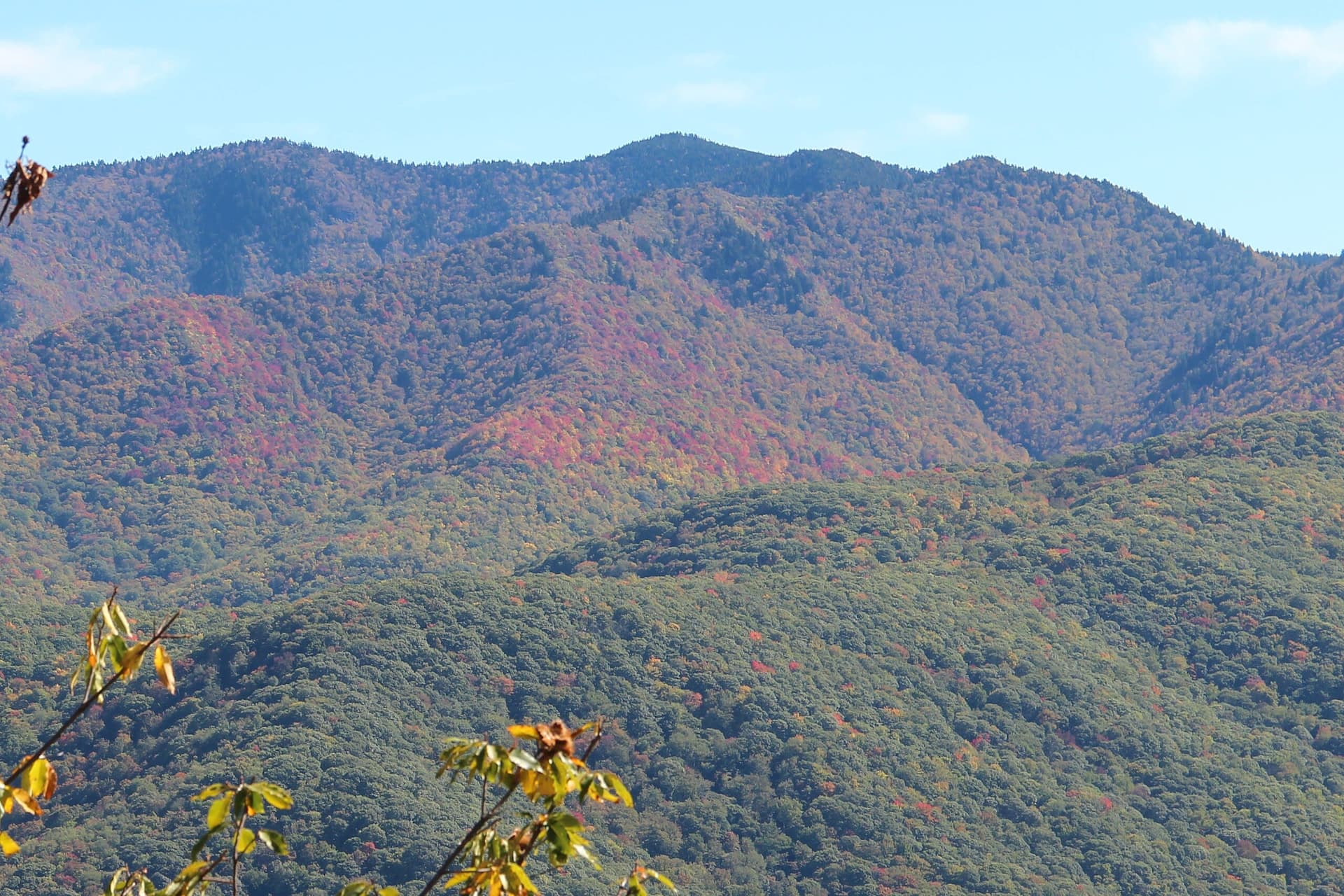
Mt. Richland-Balsam, North Carolina
Near Waynesville, North Carolina, United States
251.2 km away
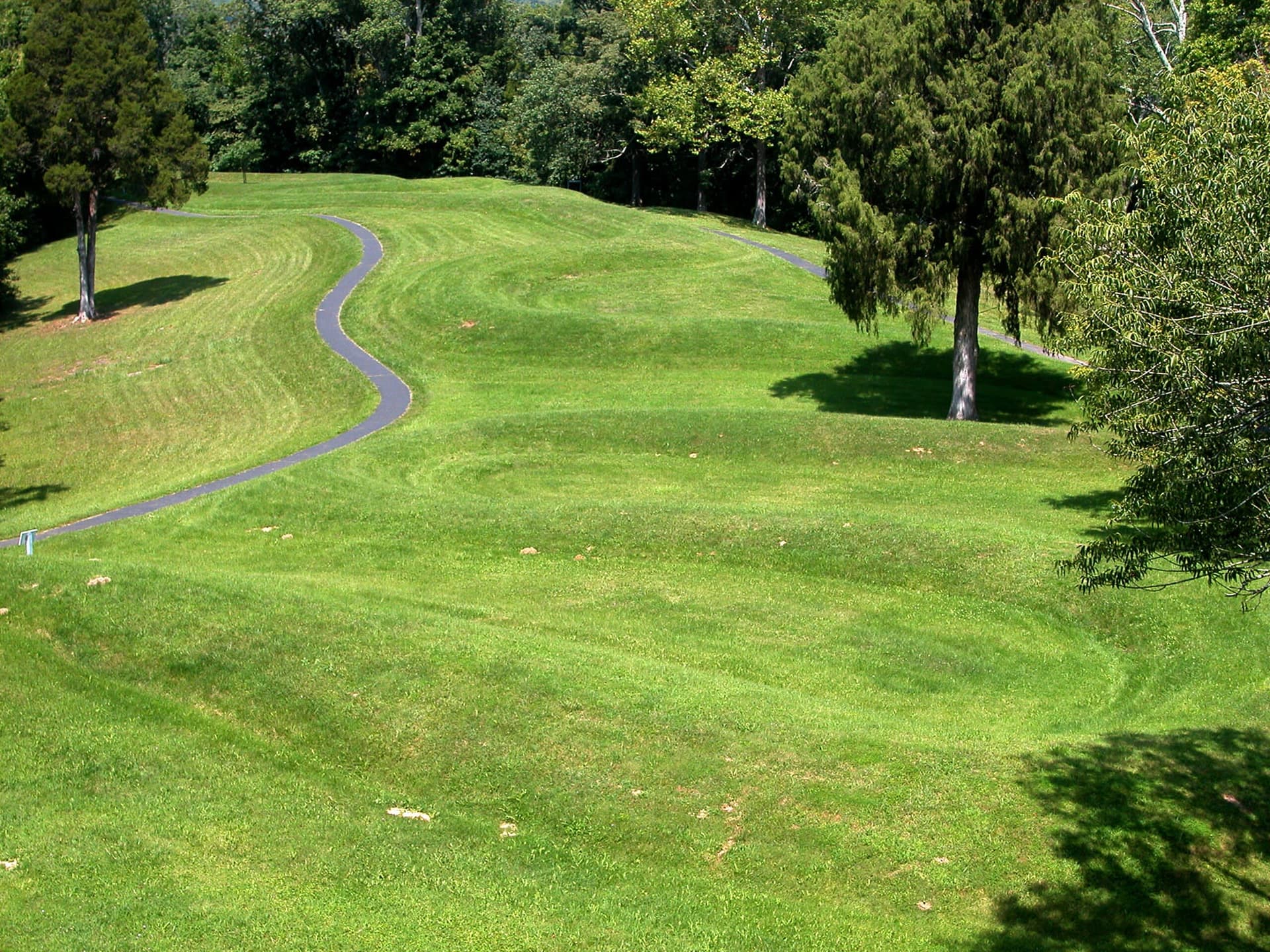
Serpent Mound, Peebles, Ohio
Bratton Township, Ohio, United States
395.9 km away
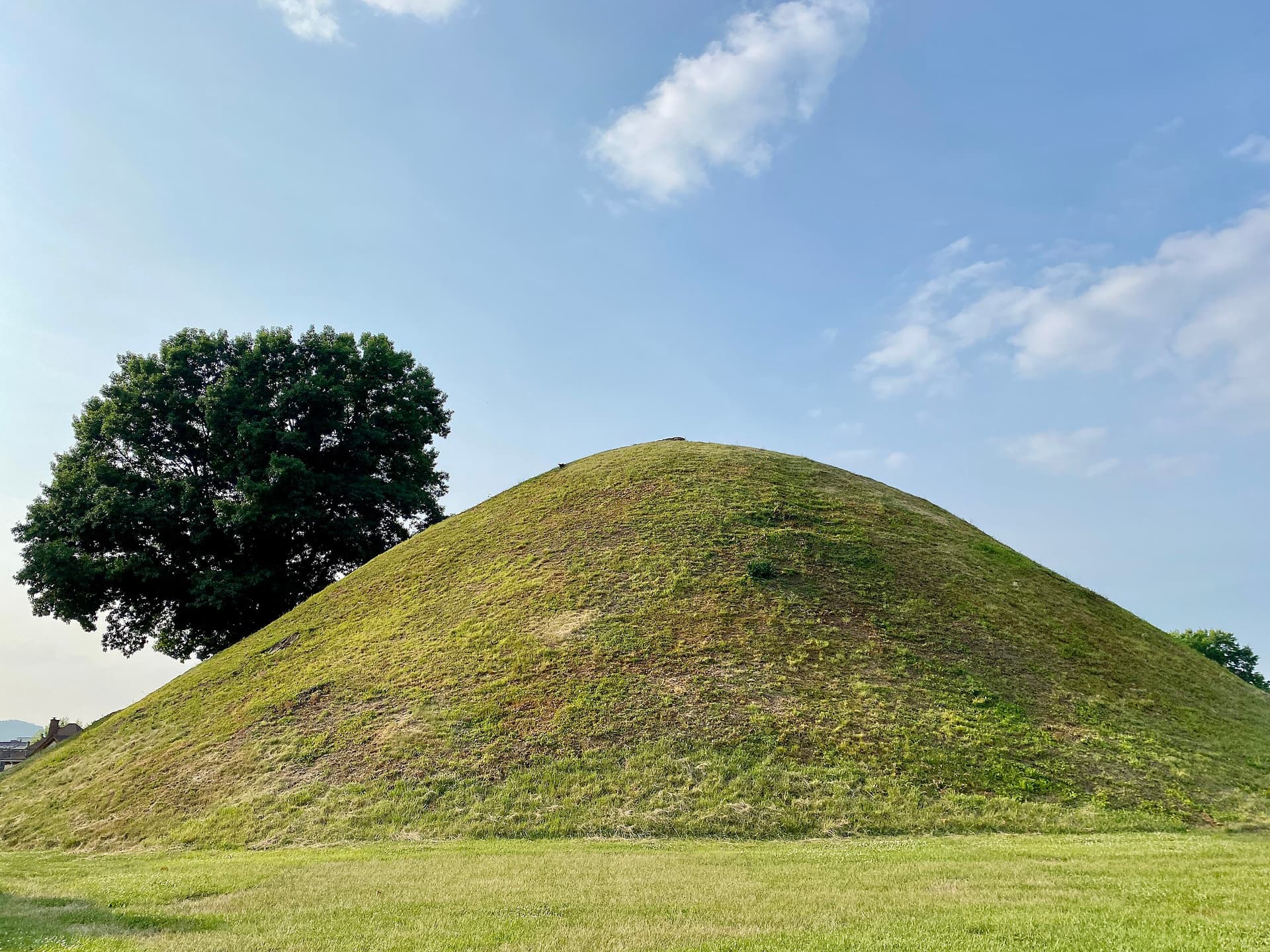
Grave Creek Mound, Moundsville, Ohio
Moundsville, West Virginia, United States
398.4 km away
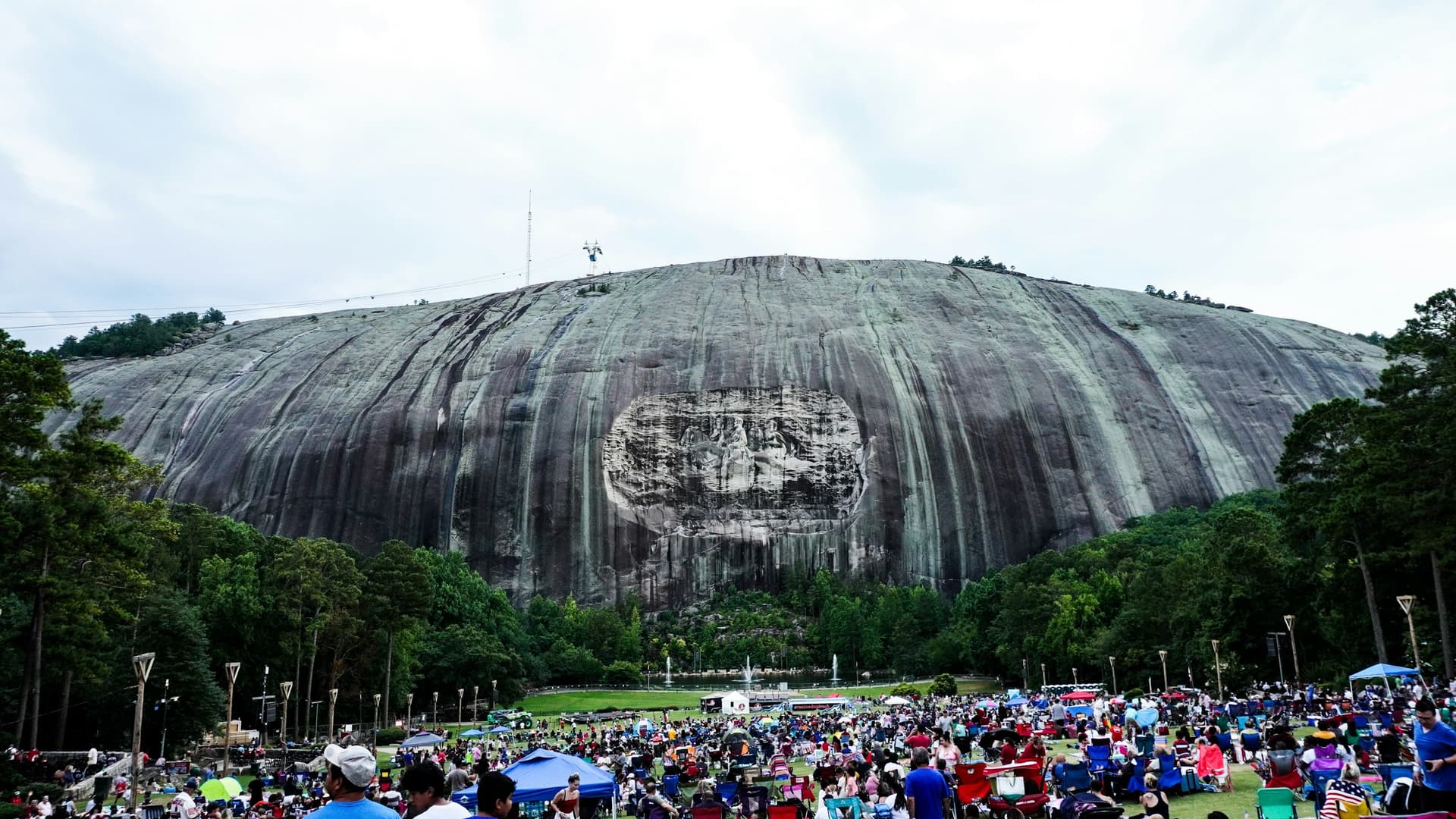
Stone Mountain, Georgia
Stone Mountain, Georgia, United States
437.1 km away