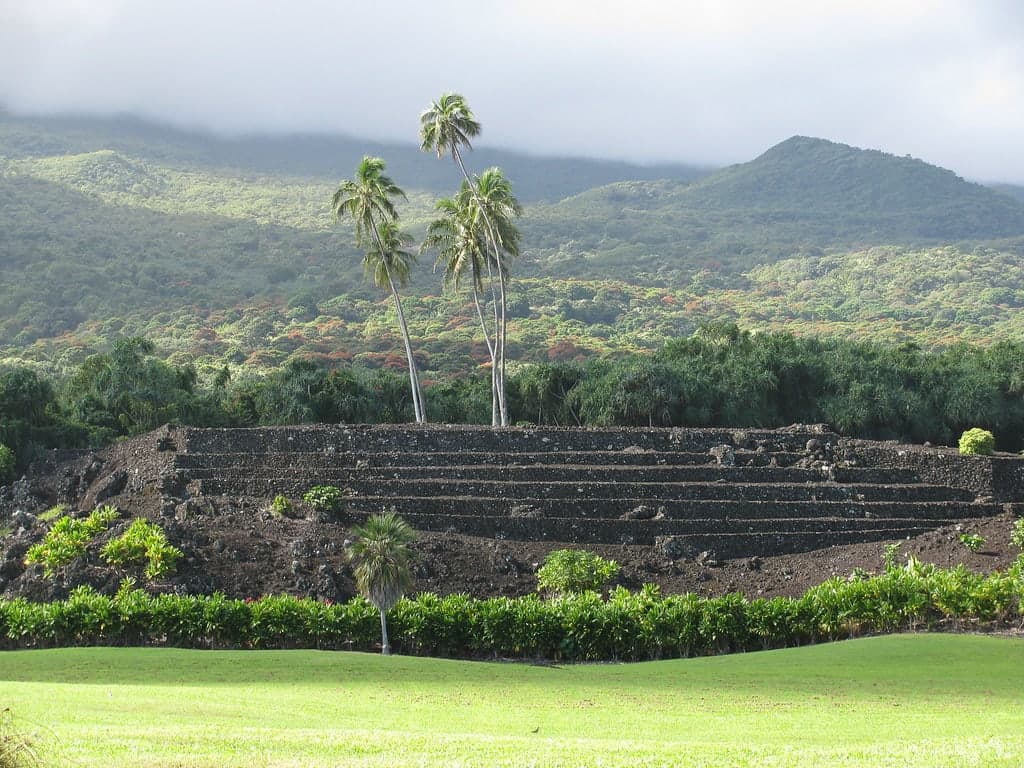
Piilanihale Heiau temple, Maui
Polynesia's largest temple, built over three centuries to house a king's devotion and a people's faith
Hana, Hawaii, United States
At A Glance
- Coordinates
- 20.8050, -156.0382
- Suggested Duration
- 1.5-2 hours for full garden exploration
Pilgrim Tips
- Modest, respectful attire appropriate for a sacred site. Comfortable walking shoes are recommended for garden paths, which can be wet and muddy. The area receives significant rainfall; be prepared.
- Photography is permitted from designated viewing areas. Approach photography with reverence, recognizing that you are documenting a sacred temple, not merely an archaeological feature. Be mindful of other visitors, particularly any who may be engaged in personal spiritual observance.
- This is not an archaeological site to be explored but a temple to be witnessed. The prohibition against climbing on the heiau is absolute and reflects both conservation requirements and sacred protocol. Maintain appropriate distance and comportment.
Overview
Deep in the jungle of Maui's remote Hana coast stands Polynesia's largest temple. Pi'ilanihale Heiau took over three hundred years to build, generation after generation carrying basalt stones by hand from as far as Hana Bay. The name means House of Pi'ilani, after the great chief who united Maui in the 1500s and completed a major phase of this monumental construction. Walls rise fifty feet from foundations covering nearly three acres. When the kapu system ended in 1819, ceremonies ceased, but the temple's sanctity never diminished. The Kahanu family entrusted it to the National Tropical Botanical Garden so that its protection and its story might continue.
For over three hundred years, the Hawaiian people built Pi'ilanihale Heiau. Not a single generation's project but a collective devotion spanning centuries, basalt stones carried by hand through jungle from as far as Hana Bay, stacked without mortar into walls that rise fifty feet from a foundation covering nearly three acres. Estimates suggest 120,000 man-days of labor went into this construction. Some people devoted their entire lives to it. This is the largest heiau in all of Polynesia, and to stand before it is to confront the profound commitment a culture made to housing the divine.
The temple bears the name of Pi'ilani, the great moi who ruled Maui in the 1500s. Pi'ilani accomplished what no chief before him had: he united all of Maui under one rule and established an era of peace. He constructed the Alaloa, the King's Highway that encircled the island. And he completed a major phase of this heiau's construction, though some traditions hold his sons finished the work after his death. The name Pi'ilanihale means House of Pi'ilani, a title scholars still debate, uncertain whether the temple functioned as a luakini heiau for major state ceremonies or as the chief's actual residence. Perhaps the distinction mattered less to the Hawaiians than it does to us.
The heiau occupied the sacred center of Hawaiian religious life. Here kahuna conducted ceremonies to honor the four great akua: Ku, Kanaloa, Kane, and Lono. Here the cosmic order was maintained through ritual, prayer, and offering. Here the mana of chiefs and commoners alike found its proper channel. Then in 1819, King Kamehameha II abolished the kapu system that had governed Hawaiian religious practice for centuries. The old ceremonies ended. But the temple remained, and the land remained sacred.
For over a century and a half, jungle embraced the heiau. The Kahanu family, descendants of the chief who held these lands in the 1800s, maintained their connection to this ground. In 1974, they donated sixty-one acres including the heiau to the National Tropical Botanical Garden, with specific requirements: the temple must be restored, cared for, and shared with the public in a manner befitting its sacred nature. Between 1998 and 1999, archaeologists from the Bishop Museum and the State of Hawaii Historic Preservation Division conducted careful restoration, restacking terrace walls that had collapsed over centuries. On April 10, 1999, a community celebration marked the work's completion with traditional protocols, including the chanting of Pi'ilani's sacred genealogy. The temple had returned to view, though it had never truly left.
Context And Lineage
Built over 300+ years beginning in the 13th century. Completed in major phase by Chief Pi'ilani in the 1500s. Active religious use ended 1819. Designated National Historic Landmark 1964. Restored 1998-1999.
The construction of Pi'ilanihale Heiau began around the 13th century, though some sources place the origin in the 14th. What is certain is that the temple was not a single generation's work but a collective project spanning centuries. The NTBG estimates 120,000 man-days of labor went into the construction, with basalt stones carried from as far as Hana Bay. Some individuals devoted their entire lives to this building. The heiau grew over time, each generation adding to what their ancestors had begun.
The name commemorates Pi'ilani, the great moi who ruled Maui in the 1500s. Before Pi'ilani, Maui was divided among competing chiefs. He achieved what none before him had: the unification of the entire island under one rule. An era of peace followed. Pi'ilani is remembered not only for conquest but for construction. He built the Alaloa, the King's Highway that encircled Maui. And he completed a major phase of this heiau's construction, though traditions differ on whether he finished the work or his sons completed it after his death.
The heiau functioned as a sacred center of Hawaiian religious life until 1819, when King Kamehameha II abolished the kapu system. The traditional religion ended, but the temple did not disappear. The jungle grew over it. The Kahanu family maintained connection to the land. In 1964, the site received designation as a National Historic Landmark. In 1974, the Kahanu/Uaiwa/Matsuda/Kumaewa family donated sixty-one acres including the heiau to the National Tropical Botanical Garden, with specific requirements for restoration and respectful public access.
The restoration project of 1998-1999 brought archaeologists from the Bishop Museum and the State of Hawaii Historic Preservation Division to restack terrace walls that had collapsed over centuries. Traditional methods guided the work. On April 10, 1999, a community celebration marked completion, conducted with traditional protocols including the chanting of Pi'ilani's genealogy. The heiau had returned to visibility, though its sanctity had never faded.
Pi'ilanihale Heiau represents the height of Hawaiian temple construction. It connects to the broader tradition of heiau across the Hawaiian Islands, sacred structures that served as the interface between human and divine realms. The temple's construction over 300+ years demonstrates the continuity of Hawaiian religious practice before Western contact and the multigenerational commitment that sacred architecture demanded.
Pi'ilani
The Kahanu Family
Why This Place Is Sacred
Three centuries of devotion encoded in stone. Generations built this temple because the place demanded a temple, and it still demands reverence today.
What makes Pi'ilanihale Heiau sacred is first a matter of scale and commitment. Three hundred years of construction. Basalt carried for miles through jungle. Walls rising fifty feet from foundations covering nearly three acres. The sheer persistence of effort testifies to something beyond civic engineering or royal vanity. People do not dedicate generations to building a structure unless they believe it houses something essential. The Hawaiians were building a home for their gods, a place where the akua could dwell among their people.
The location amplifies what the construction declares. The heiau stands in the ahupua'a of Honoma'ele, on Maui's isolated northeast coast, surrounded by one of the last undisturbed hala forests in Hawaii. The remoteness is not incidental. This is land at the edge of things, where the jungle meets the sea and the world feels less like human territory. Even the Road to Hana, that serpentine approach through fifty-nine bridges and countless curves, serves as preparation, a gradual separation from ordinary life.
The temple's survival adds another dimension to its sanctity. Many heiau across the Hawaiian Islands were dismantled after 1819, their stones repurposed for other construction, their sacred nature officially ended. Pi'ilanihale endured. Perhaps the remoteness protected it. Perhaps the Kahanu family's stewardship preserved what might otherwise have been lost. Whatever the cause, what visitors encounter today is not a ruin but a presence, a temple that has outlasted the religion that built it while retaining the weight of what it was.
Visitors consistently report an atmosphere that exceeds the sum of its historical parts. The scale registers first, that sense of approaching something built for purposes larger than human convenience. Then the silence of the surrounding forest, the quality of light filtering through hala trees, the awareness of being far from everything familiar. Many describe the experience as stepping out of time, entering a space where centuries compress into presence. The strict prohibition against climbing on the heiau reinforces this sense. You do not explore this place; you witness it.
Sacred temple for Hawaiian religious ceremonies, honoring the four major akua and maintaining cosmic order through ritual conducted by kahuna.
Construction began in the 13th century and continued in stages over 300+ years. Chief Pi'ilani completed a major phase in the 1500s. Active religious use ended with the abolition of the kapu system in 1819. Jungle encroachment through the 19th and 20th centuries. Designated National Historic Landmark in 1964. Donated to National Tropical Botanical Garden in 1974. Archaeological restoration 1998-1999 with traditional protocols observed. Today managed as protected heritage site within Kahanu Garden.
Traditions And Practice
Traditional ceremonies ended in 1819. The site is now protected heritage. Contemporary Hawaiian cultural practitioners may conduct observances with appropriate permissions. Visitors experience the heiau through respectful observation.
Pi'ilanihale Heiau was a place of ceremony and offering in the Hawaiian religious system. Kahuna conducted rituals honoring the four major akua: Ku, god of war and male activities; Kane, god of creation and life; Kanaloa, god of the ocean; and Lono, god of peace and agriculture. Large heiau like Pi'ilanihale may have functioned as luakini, state temples where the most significant ceremonies occurred. These could include human sacrifice, though the specific rituals performed at this heiau are not fully documented. Ceremonies involved prayers, chants, offerings, and the strict observation of kapu, sacred prohibitions that governed behavior in sacred spaces.
The traditional Hawaiian religious system ended with the abolition of the kapu in 1819. However, Pi'ilanihale Heiau remains profoundly sacred to Native Hawaiians. The Kahanu family's agreement with NTBG ensures the site is treated with appropriate reverence. Contemporary Hawaiian cultural practitioners may conduct ceremonies with permission and proper protocols. The April 1999 restoration celebration demonstrated ongoing cultural significance, conducted with traditional protocols including the chanting of Pi'ilani's genealogy. The site receives reverent visitation from Native Hawaiians maintaining genealogical and spiritual connections.
Approach the heiau with the reverence you would bring to any sacred site. Allow the journey to prepare you: the Road to Hana, the unpaved track, the stream crossing. Walk slowly through Kahanu Garden, noting the canoe plants that sustained Hawaiian life. When the heiau appears, take time simply to see it. Consider what it meant for generations to devote their lives to this construction. Observe the precision of the stonework, the scale of the walls, the quality of silence in the surrounding forest. If taking a guided tour, let the interpretation deepen your understanding. Carry the experience with you as you leave.
Hawaiian Religion (Traditional)
HistoricalPi'ilanihale Heiau was built during the height of the Hawaiian religious system, which centered on the worship of four major akua: Ku, Kane, Kanaloa, and Lono. Heiau were sacred temples where ali'i and kahuna conducted ceremonies to honor the gods, ensure prosperity, and maintain social order. The scale of Pi'ilanihale indicates its importance within this system.
Ceremonies conducted by kahuna on temple platforms, offerings to the gods, prayers and chants, observation of kapu, rituals marking important events. These practices ended with the abolition of the kapu system in 1819.
Contemporary Hawaiian Cultural Practice
ActiveThough traditional religious ceremonies ended in 1819, Native Hawaiians maintain profound spiritual connections to ancestral sites. Pi'ilanihale Heiau remains sacred ground, a place of genealogical and spiritual significance for descendants of those who built it.
Cultural protocols observed by visitors, educational programs interpreting Hawaiian history and spirituality, reverent visitation by Native Hawaiians, ceremonial observances by cultural practitioners with appropriate permissions.
Experience And Perspectives
The journey to Pi'ilanihale is part of the experience: the winding Road to Hana, the unpaved Ulaino Road, the crossing of a stream that floods in rain. Then you walk through garden paths surrounded by ancient hala forest before the great walls appear.
The approach prepares you. From wherever you began on Maui, the Road to Hana takes you progressively further from resort Hawaii into something older. The road narrows, curves multiply, waterfalls appear through jungle, and one-lane bridges require patience and courtesy. At mile marker thirty-one, Ulaino Road turns toward the coast, an unpaved track that adds another dimension of remoteness. A stream crossing awaits, fordable in good weather but impassable when the rains come hard. These obstacles are not failures of infrastructure but filters, separating casual interest from genuine seeking.
Kahanu Garden opens the experience gently. The paths wind through collections of canoe plants, the food and medicine that Polynesian voyagers brought across thousands of miles of open ocean to establish life on these islands. Breadfruit trees heavy with fruit. Ti plants whose leaves wrapped offerings. Kava grown for ceremonies. The garden is not mere prelude but context, demonstrating the integration of spiritual and practical that characterized Hawaiian culture. Everything served multiple purposes; nothing was merely decorative.
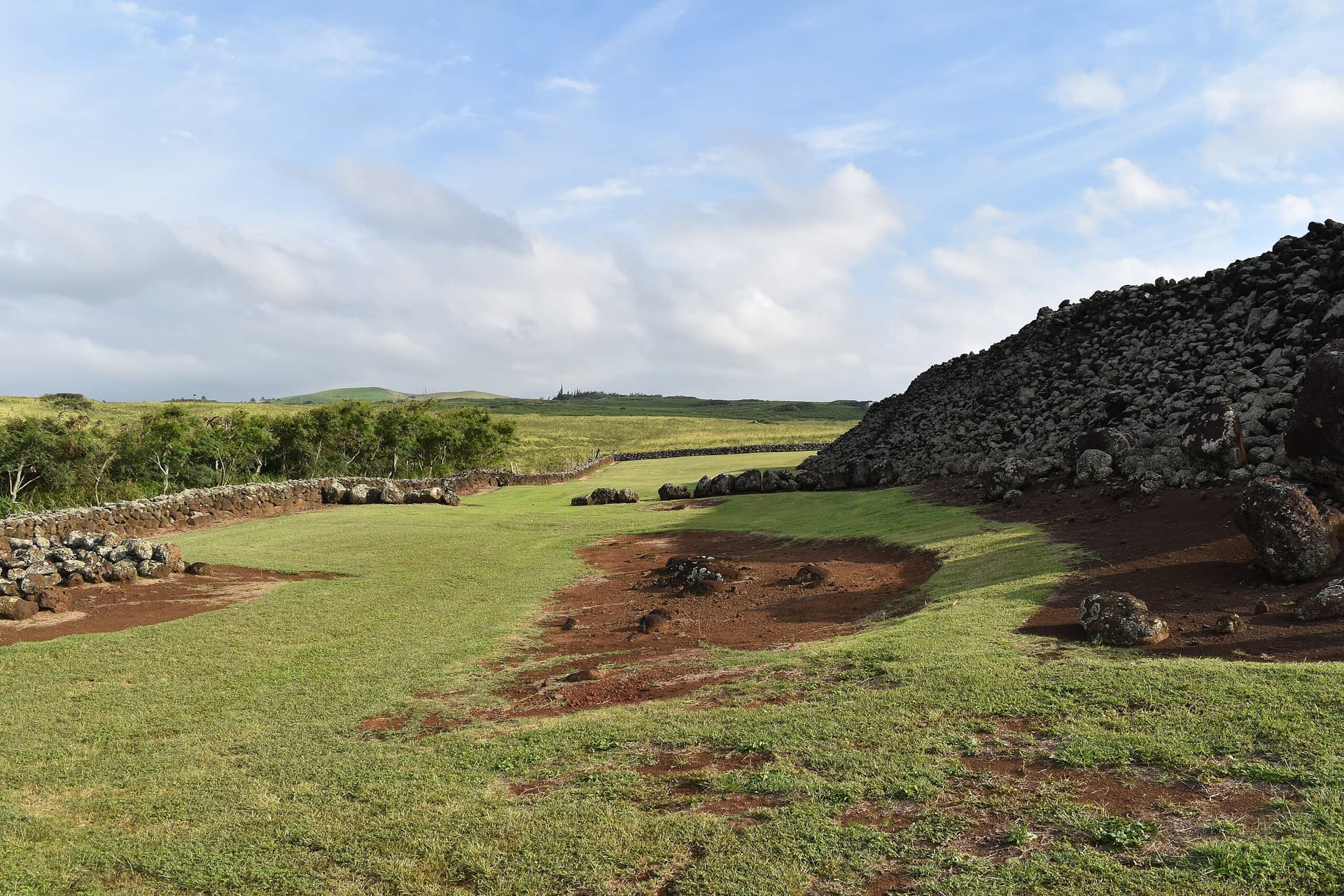
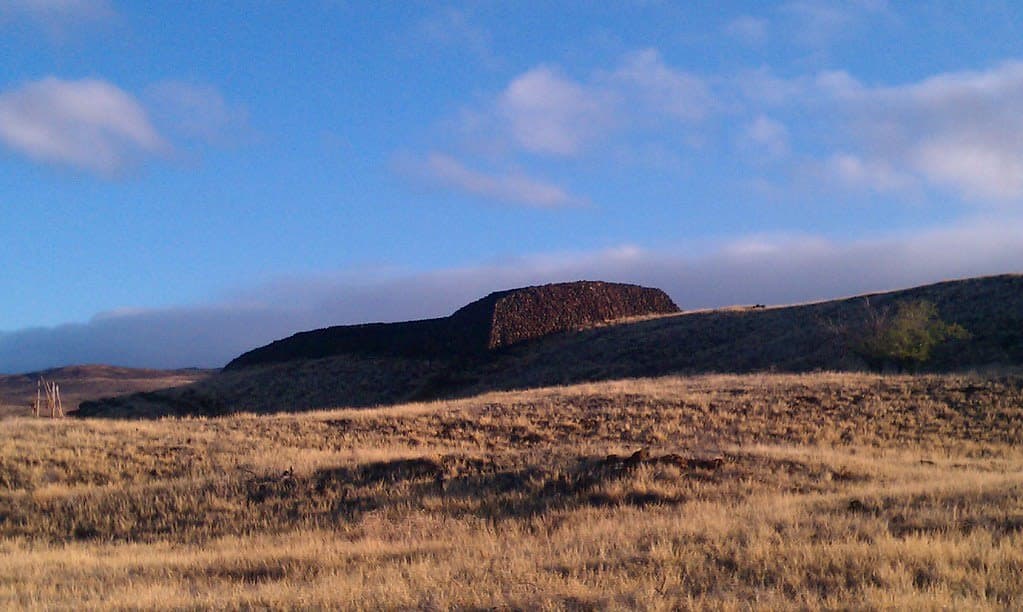
Then the heiau appears. No photograph prepares you for the scale. Walls rising fifty feet, constructed of basalt blocks fitted without mortar, extending across a foundation the size of two football fields. The precision of the stonework arrests attention. These blocks were shaped and placed by people working with hand tools over centuries, achieving fits that modern engineering respects. The how of this construction leads inevitably to the why. Such effort was not invested in the merely practical.
You view the heiau from designated paths; entry to the temple itself is absolutely forbidden. This restriction is not bureaucratic but sacred. The Kahanu family's agreement with NTBG specifically requires that the heiau be protected from intrusion. The distance maintains appropriate reverence while allowing contemplation. What ceremonies occurred on those terraces? What prayers rose from those walls? What did it mean for a chief to complete his ancestors' work, adding his stones to theirs?
The surrounding hala forest holds the experience in quietude. These are among the last undisturbed hala groves in Hawaii, their twisted forms and aerial roots creating an atmosphere that photography cannot capture. Light filters through in patterns that shift with passing clouds. The silence is not empty but full, a listening quality that many visitors report as characteristic of thin places. Something attends here.
Guided tours, available Saturdays only by reservation, add depth through interpretation. The guides, many with personal connections to Hawaiian culture, provide context that transforms observation into understanding. Self-guided visits allow more solitary contemplation but sacrifice the layer of meaning that knowledgeable interpretation provides. Either approach takes one and a half to two hours for the full garden, though many find themselves lingering longer than planned.
Enter through Kahanu Garden's main area near the parking lot. Garden paths wind through ethnobotanical collections before reaching viewpoints of the heiau. The temple itself dominates the western portion of the garden. Stay on designated paths throughout. The heiau is viewed from the exterior; no one may climb or enter the structure. The surrounding hala forest extends in all directions.
Pi'ilanihale Heiau exists at the intersection of Hawaiian religious tradition, archaeological preservation, cultural heritage, and the continuing spiritual connection of Native Hawaiians to their ancestral sites.
Pi'ilanihale Heiau is recognized as the largest heiau in Polynesia and one of the most significant archaeological sites in Hawaii. Archaeological evidence indicates construction began in the 13th-14th century and continued for over 300 years. The heiau's association with Chief Pi'ilani is well-documented in Hawaiian oral traditions. Scholars debate whether the structure functioned primarily as a luakini (state temple for major ceremonies) or as a royal residence, though these categories may represent a distinction foreign to Hawaiian thought. The 1998-1999 restoration, conducted under Bishop Museum and State of Hawaii oversight, used traditional methods to preserve the structure's integrity.
Native Hawaiians regard Pi'ilanihale Heiau as among the most sacred places in Hawaii. The temple was built by their ancestors over many generations as an expression of devotion to the akua and the ali'i. Though the traditional religious system ended with the kapu's abolition, the site's sanctity remains. The Kahanu family's decision to entrust the heiau to NTBG reflects their commitment to ensuring proper stewardship. The April 1999 restoration celebration, conducted with traditional protocols including the chanting of Pi'ilani's genealogy, demonstrated the ongoing cultural significance of this place. Contemporary Hawaiian practitioners maintain connection to the site through reverent visitation and, with appropriate permissions, ceremony.
Some visitors report powerful spiritual experiences at the heiau, describing a palpable energetic presence in the atmosphere. The site's remote location, its extraordinary scale, its surrounding ancient forest, and the knowledge that generations devoted their lives to its construction all contribute to an atmosphere many find spiritually charged. Some alternative researchers have speculated about astronomical alignments or connections to broader Polynesian spiritual traditions.
Significant questions remain about Pi'ilanihale Heiau. What specific deity or deities was the heiau dedicated to? Was it primarily a state temple or royal residence? What ceremonies were performed here, and in what manner? How was construction organized and coordinated across 300+ years? What happened at the heiau between Pi'ilani's era and the abolition of the kapu? How did this heiau survive relatively intact while others were dismantled? The answers lie in traditions that were not fully recorded before the old religion ended.
Visit Planning
Open Monday-Saturday, 9am-2pm (last entry). Admission $18 adults, $10 Hawaii residents. Guided tours Saturday only by reservation. Allow time for unpaved road and potential stream crossing.
Limited accommodations in the Hana area; advance booking is essential. Options include Hana-Maui Resort and various vacation rentals. Many visitors experience the site as part of a Road to Hana day trip from other parts of Maui.
Absolutely no one is permitted to climb on the heiau. Stay on designated paths. Observe silence and respectful behavior. Follow all staff instructions.
Pi'ilanihale Heiau is one of the most sacred sites in Hawaiian culture, and visitor behavior must reflect this status. The Kahanu family entrusted the heiau to the National Tropical Botanical Garden specifically so it would be protected and shared with appropriate respect. The restrictions are not bureaucratic impositions but expressions of sacred protocol. Honor them as you would honor the customs of any living tradition.
The primary restriction is absolute: no one may climb on the heiau. This prohibition is strictly enforced and admits no exceptions. The temple's walls have stood for centuries; they must not bear the weight of curious visitors. Beyond physical protection, the restriction maintains sacred boundaries. You do not enter a temple without invitation; you do not ascend an altar without authorization.
Stay on designated paths throughout your visit. Do not approach, touch, or disturb the heiau walls or any stones. Do not collect plants, rocks, or artifacts. Leave nothing behind. The site's integrity depends on visitors who understand that sacred places require sacred behavior.
Modest, respectful attire appropriate for a sacred site. Comfortable walking shoes are recommended for garden paths, which can be wet and muddy. The area receives significant rainfall; be prepared.
Photography is permitted from designated viewing areas. Approach photography with reverence, recognizing that you are documenting a sacred temple, not merely an archaeological feature. Be mindful of other visitors, particularly any who may be engaged in personal spiritual observance.
Do not leave offerings unless you are a Native Hawaiian cultural practitioner with appropriate permissions. Do not take anything from the site.
Absolutely no climbing on the heiau under any circumstances. Stay on designated paths and viewing areas. Do not touch or disturb the heiau walls or stones. Do not collect any plants, rocks, or artifacts. Observe silence and respectful behavior near the heiau. Follow all staff instructions. The stream crossing before the garden can be impassable during heavy rain; do not attempt crossing during flash flood conditions.
Sacred Cluster
Nearby sacred places create the location cluster described in the growth plan. This block is intentionally crawlable and links into the wider regional graph.