Iao Valley State Park, Maui
Where Hawaiian royalty rests in hidden caves beneath a needle of stone reaching toward the heavens
Wailuku, Hawaii, United States
At A Glance
- Coordinates
- 20.8804, -156.5461
- Suggested Duration
- 1.5-2 hours to explore all trails including the Ethnobotanical Loop and Streamside Trail
Pilgrim Tips
- Comfortable outdoor clothing appropriate for hiking. Bring rain gear. Iao Valley averages 386 inches of rainfall annually, making it the second wettest spot in Hawaii. Even on clear days, the mist can arrive suddenly.
- Photography is permitted on public trails. Approach photographing sacred sites with awareness of what they represent. Be mindful if you encounter anyone engaged in cultural or spiritual practice.
- Do not attempt to access off-trail areas or burial caves. These are sacred and prohibited. Be aware that you are walking through a place that holds the bones of Hawaiian royalty and the memory of a devastating battle. The beauty is real, but so is the weight. Flash floods can occur with little warning; monitor weather conditions and heed any warnings.
Overview
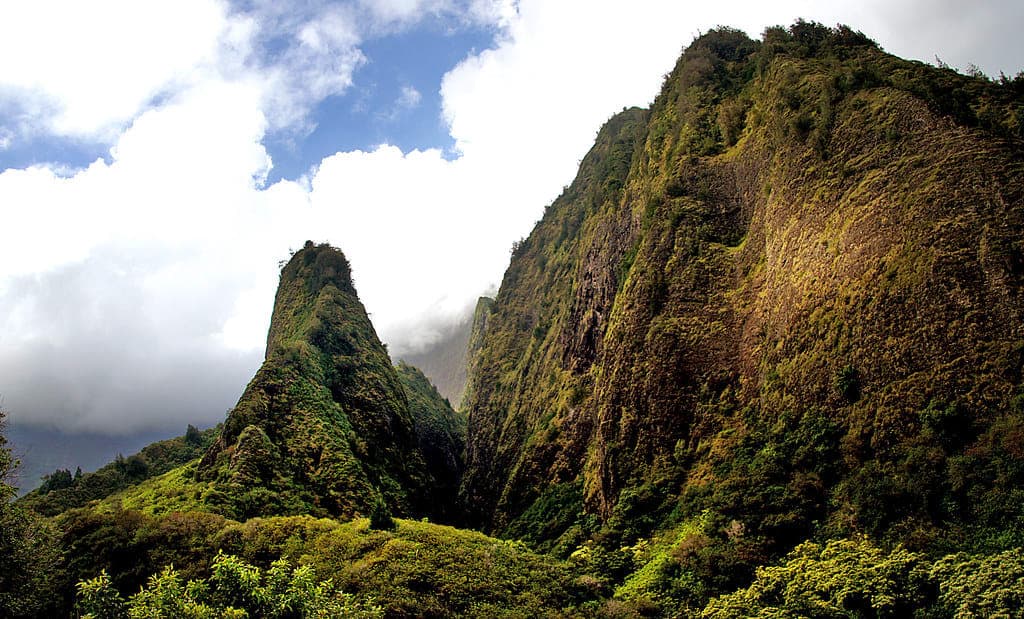
In the West Maui Mountains, mist drifts through a valley that has been sacred to Hawaiians for centuries. The Iao Needle rises 1,200 feet from the valley floor, honored in ancient times as the phallic stone of Kanaloa, god of the ocean. Hidden in the surrounding cliffs lie the bones of Hawaiian chiefs, interred in secret caves to protect their mana. In 1790, this valley became the site of the Battle of Kepaniwai, where so many warriors fell that their bodies dammed the stream. Hawaiians say the mist that fills the valley is not weather but the presence of ancestors watching over the land.
The mist arrives without warning. One moment the Iao Needle stands sharp against blue sky; the next, clouds pour through the valley like something breathing. Hawaiians understand this mist as more than meteorology. The ancestors are present here, watching, waiting, never quite gone. This is Iao Valley, one of Maui's most sacred places, where the boundary between the living and the dead has always been thin. The Iao Needle rises 1,200 feet from the valley floor, a basalt spire shaped by erosion into something that looks almost intentional. Ancient Hawaiians honored it as Kukaemoku, the phallic stone of Kanaloa, god of the ocean. A stone honoring the deity was placed at its summit. The needle served as a natural altar where ceremonies connected the earthly realm to divine presence. The name Iao means supreme cloud, and the formation's summit is often hidden in mist, as though reaching into a realm humans cannot see. The valley's cliffs hold secrets. For centuries, Hawaiian aliinot merely significant but sacredthe bones of kings and queens rest here, hidden in caves so inaccessible that their locations remain unknown. Ancient Hawaiians believed that bones contained mana, spiritual power that persisted after death. If an enemy captured and desecrated the bones of a chief, the living descendants would suffer. So the aliiwere carried into the most inaccessible places, their remains protected by the cliffs themselves. The hidden caves became vaults of accumulated spiritual power. In the late 1400s, Chief Kakae declared the valley kapu, sacred and forbidden. Only the highest chiefs and kahuna priests could enter certain areas. The valley served as a puuhonua, a place of refuge where those who had broken laws or violated taboos could find sanctuary. Two major heiau, temples, stood at the valley's mouth: Halekii, House of Images, and Pihanakalani, Gathering Place of Supernatural Beings. At the latter, a luakini heiau dedicated to Ku the war god, human sacrifices were performed. Then came 1790, and the valley's history changed. Kamehameha I, seeking to unify the Hawaiian Islands, invaded Maui with an army equipped with foreign cannons. His forces met the warriors of Kalanikupule in the valley, and the battle was decisive and devastating. So many died that their bodies dammed Iao Stream. The water ran red with blood. The battle's name, Kepaniwai, means the damming of the waters. After his victory, Kamehameha marched to Pihanakalani heiau and offered what is recorded as the last human sacrifice on Maui to his war god. The valley had witnessed both the sacred and the terrible. Today, Iao Valley State Park draws visitors who may know nothing of this history, arriving simply because guidebooks recommend it. They photograph the needle, walk the paved trails, and leave. Others come knowing exactly what lies beneath the beauty. They feel the weight of the place, the sense of being observed, the way the mist seems to carry something more than moisture. The valley casts a spell. Whether this reflects the accumulated mana of royal burials, the trauma of battle, the persistent presence of ancestors, or something beyond explanation, the pattern of reported experiences is consistent. People feel something here that they struggle to name.
Context And Lineage
For centuries, the valley has been sacred to Hawaiians as a burial ground for royalty, a temple complex, and a place of refuge. The 1790 Battle of Kepaniwai added historical trauma to spiritual significance.
The Iao Needle carries two origin stories that intertwine without contradicting each other. In one, ancient Hawaiians honored Kukaemoku as the phallic stone of Kanaloa, god of the ocean. A stone honoring the deity was placed at its summit, and the needle served as a natural altar for ceremonies connecting earth to divine presence. In the other, Iao was the beautiful daughter of the demigod Maui. Puuokamoa, a half-fish half-man demigod, was the only one who dared approach her. When they fell in love and Maui discovered them, he was enraged. Pele, goddess of fire, convinced Maui to transform Puuokamoa into a pillar of stone rather than burn him to death. The needle stands as a monument to forbidden love, an eternal reminder of the beloved who cannot return to human form. The valley became kapu when Chief Kakae declared it sacred and forbidden in the late 1400s. Only the highest chiefs and kahuna priests could enter certain areas. For centuries, the inaccessible cliffs served as the burial ground for Hawaiian aliiroyalty. The bones of chiefs were hidden in secret caves to protect their mana from desecration by enemies. The heiau at the valley mouth, Halekii and Pihanakalani, hosted ceremonies including, at the luakini heiau, human sacrifices to Ku the war god. The Battle of Kepaniwai in 1790 transformed the valley from sacred to scarred. Kamehameha I's forces, equipped with cannons obtained from foreign advisors, defeated the warriors of Kalanikupule in combat so devastating that bodies dammed the stream. Keahualono, a young girl who would later become Keopuolani, highest-ranking wife of Kamehameha and mother of kings, escaped through the valley during the battle. After victory, Kamehameha marched to Pihanakalani and offered the last human sacrifice on Maui to his war god. The valley had witnessed the culmination of one religious tradition even as the traditional system itself would end less than thirty years later.
Iao Valley represents Hawaiian sacred geography at its most concentrated: a place where natural formation, royal burial, divine worship, refuge, and historical trauma converge. The traditions practiced here connect to the broader patterns of Hawaiian religious life that existed throughout the islands until the abolition of the kapu system in 1819. The valley's significance to Native Hawaiians has never ended, even as the forms of engagement have changed.
Kamehameha I
Kahekili II
Kalanikupule
Kakae
Keopuolani
Why This Place Is Sacred
Centuries of royal burials, a natural altar to the ocean god, a battlefield where blood ran in the stream, and the ongoing presence of ancestors in the valley mist create a place where the boundary between worlds feels permeable.
Why does Iao Valley feel the way it does? The question has multiple answers, none of which can be separated from the others. The geology is dramatic, a volcanic erosion landscape that produces a stone needle rising like something placed rather than formed. The beauty is undeniable, lush green walls catching waterfalls and mist. But beauty alone does not explain what visitors report. The valley is saturated with accumulated significance. For centuries, the bones of Hawaiian royalty were carried into hidden caves in these cliffs. Ancient Hawaiians believed that bones contained mana, and that mana persists. The hidden aliifilled the valley with spiritual power that did not dissipate when the burial practices ended. Visitors today walk through a landscape charged with the essence of kings. The Iao Needle was not merely admired but worshiped. As the phallic stone of Kanaloa, it served as a natural altar connecting earth to the divine realm of the ocean god. Ceremonies conducted here were not metaphorical exercises but actual communications with deity. The stone at the needle's summit marked this place as belonging to the sacred. And then there is the blood. In 1790, the valley became a killing field. Warriors fell by the hundreds or thousands, accounts vary, but all agree that bodies dammed the stream. The place name Kepaniwai preserves this horror in ordinary speech. Trauma of that magnitude does not simply disappear. Hawaiian spiritual understanding holds that spirits can linger where death was violent or unexpected. Visitors sometimes report sensations of powerful energy streaming down from the needle, similar to what some experience at recognized vortex sites. They feel energy converging at the base of the formation when crossing the bridge. They sense a watching presence, something observing them that they cannot see. Hawaiians explain this simply: the ancestors are here. The mist is not weather. The feeling of being watched is not imagination. The aliiroyalty, the warriors who died in battle, the priests who conducted ceremonies remain present in their valley, guardians of a place that never ceased to be sacred even when formal worship ended.
The valley served multiple sacred functions: burial ground preserving the mana of chiefs, ceremonial site for worship of Kanaloa, place of refuge offering sanctuary, and temple complex for chiefly worship including human sacrifice.
The valley has been sacred to Hawaiians for centuries. Chief Kakae declared it kapu in the late 1400s. The heiau at the valley mouth date to approximately 1200-1400 CE. Formal religious practices ended in 1819 with the abolition of the traditional Hawaiian religion, when the kapu system was dismantled, temple images removed, and heiau abandoned. But the valley never stopped being sacred. The bones of aliido not lose their mana. The ancestors do not depart. Native Hawaiians continue to visit for cultural and spiritual observance, maintaining relationship with a place that holds their history and their dead.
Traditions And Practice
Formal Hawaiian religious practices ended in 1819, but Native Hawaiians continue to visit for cultural and spiritual observance. Visitors walk designated trails and may leave simple offerings.
Ceremonies at the Iao Needle altar honoring Kanaloa. Burial rites for aliiin secret caves. Worship at Halekii and Pihanakalani heiau, including human sacrifice to Ku at the luakini heiau. Puuhonua sanctuary rituals. Religious observances conducted by Chief Kahekili in the 1760s. Post-battle offerings to the war god Ku by Kamehameha I in 1790. These practices ended with the abolition of the traditional Hawaiian religion in 1819, when King Liholiho ate publicly with women, breaking the kapu system and triggering the dismantling of temples throughout the islands.
Native Hawaiians continue to visit the valley for cultural and spiritual observance. The relationship between the Hawaiian community and this place has never ceased, even as the forms of practice have changed. Ti leaves are traditionally used to wrap offerings at sacred places. Some visitors leave simple offerings such as freshly picked guava at significant stones along the path. Cultural education programs interpret the site's significance. The valley is approached with reverence by those who understand its history.
Walk the trails slowly, allowing time for the atmosphere to reveal itself. The Iao Needle Lookout Trail provides the iconic view, but the experience extends beyond the visual. Cross the bridge at the needle's base and stand there, looking up. Many report the strongest sensations at this location. The Ethnobotanical Loop offers cultural context through interpretive signs explaining traditional plant uses. A half-day visit combining the main park with Halekii-Pihana Heiau provides fuller understanding of the valley's sacred geography. Approaching with knowledge of what lies beneath the beauty transforms the experience.
Native Hawaiian sacred geography
ActiveIao Valley is one of Maui's most sacred places. The valley is wahi pana, a storied place imbued with mana and ancestral connection. The Iao Needle was honored as the phallic stone of Kanaloa, god of the ocean, and served as a natural altar for ceremonies. Chief Kakae declared the valley kapu in the late 1400s, establishing formal recognition of its sacredness.
Native Hawaiians continue to visit the valley for cultural and spiritual observance. Ti leaves are traditionally used to wrap offerings left at sacred places. Some visitors leave simple offerings at significant stones. The valley mist is understood as the presence of ancestors watching over the land. The relationship between the Hawaiian community and this place has never ceased.
Aliburial traditions
HistoricalThe sheer, inaccessible cliffs of Iao Valley were a burial site for Hawaiian aliiroyalty for centuries. The valley became a hallowed burying place for ancient chiefs and is the first place mentioned in historical legends as a site for secret burials of high chiefs. Ancient Hawaiians believed bones contained mana, and desecrating or stealing them could harm living descendants.
The bones of chiefs were secretly interred in hidden caves throughout the valley. The specific locations remain unknown and sacred. Notable figures including ancestors of King Kamehameha III and Queen Kaahumanu were laid to rest here. The burial practices ended with the changes to Hawaiian society in the 19th century, but the burials themselves remain.
Heiau worship (Halekii and Pihanakalani)
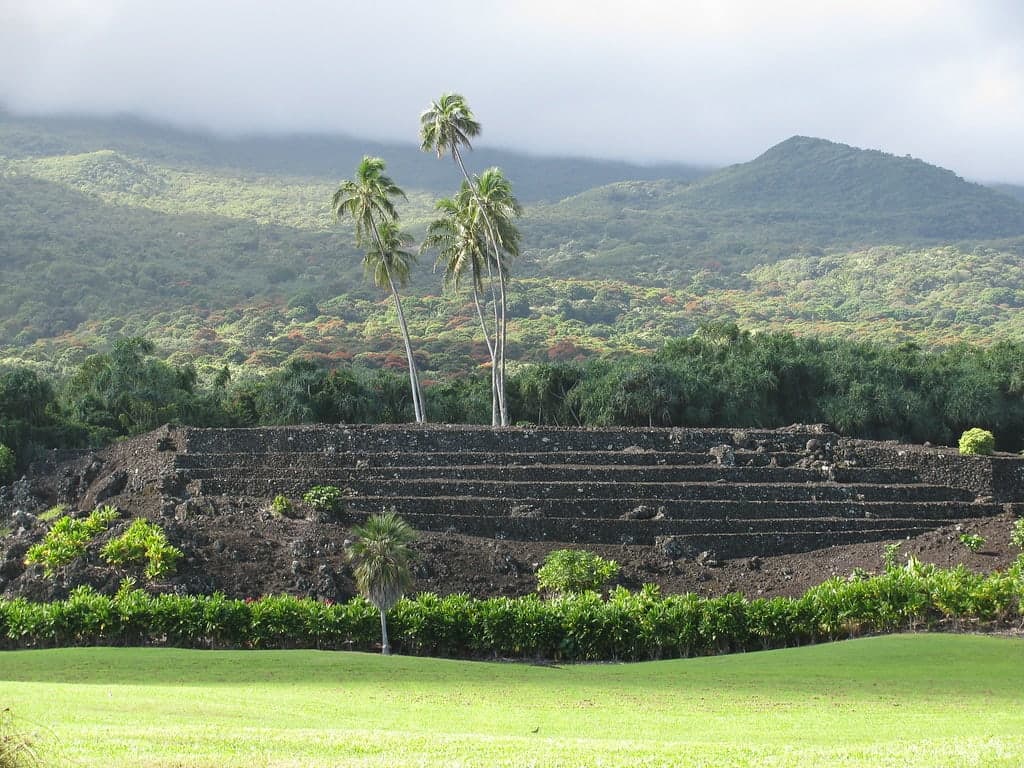
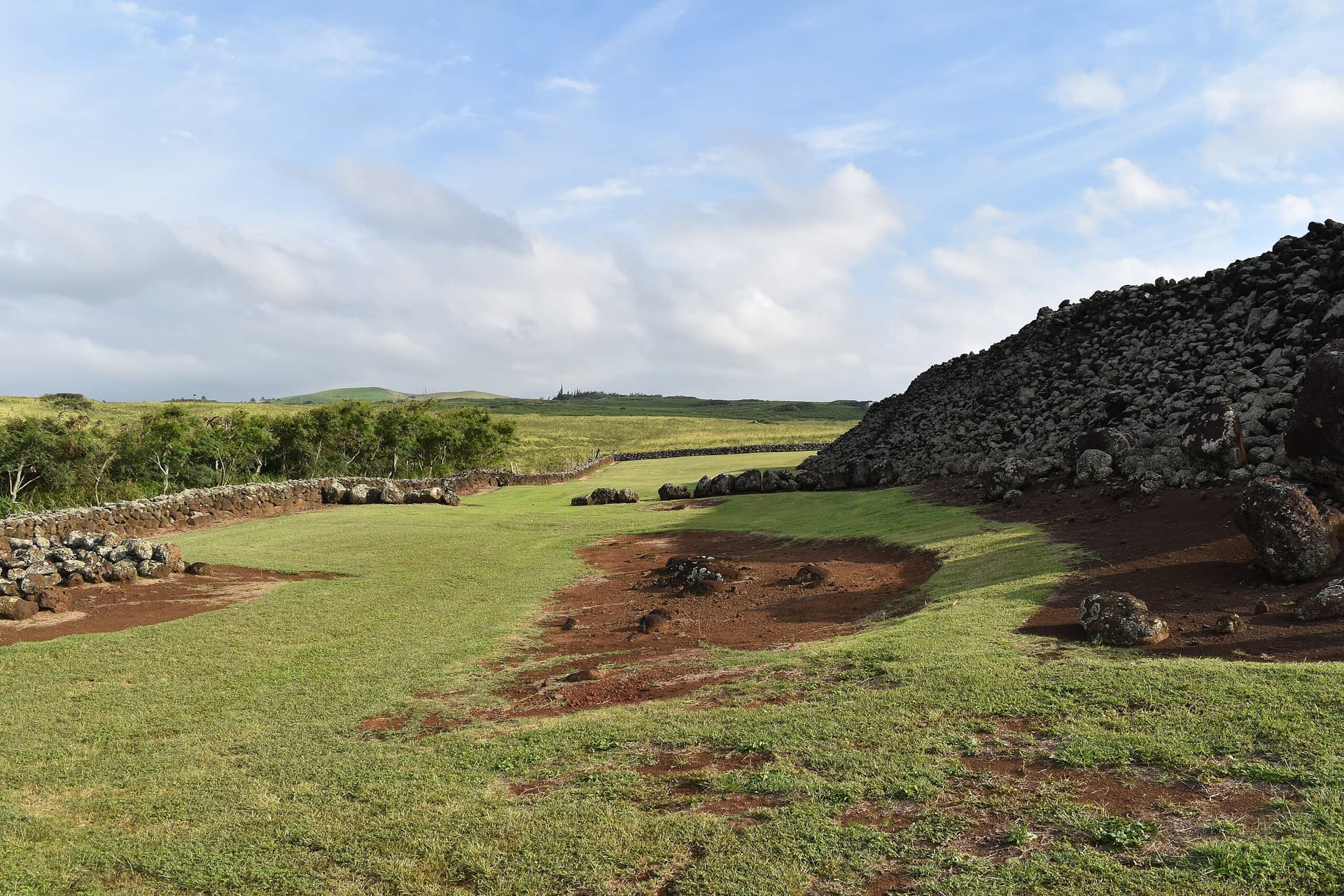
HistoricalTwo major heiau stand at the mouth of Iao Stream: Halekii, House of Images, and Pihanakalani, Gathering Place of Supernatural Beings. Pihanakalani was a luakini heiau dedicated to Ku the war god, where human sacrifices were performed. Chief Kahekili lived and worshiped at Halekii during religious observances in the 1760s. After the Battle of Kepaniwai, Kamehameha I offered what is recorded as the last human sacrifice on Maui at Pihanakalani.
Heiau worship included ceremonies conducted by kahuna priests, offerings to deities, and at luakini heiau, human sacrifice in times of war. In 1819, the traditional Hawaiian religion was abolished. The images were removed, structures dismantled, and the heiau abandoned. The sites now stand as preserved archaeological monuments on the National Register of Historic Places.
Puuhonua (place of refuge)
HistoricalIao Valley served as a puuhonua, a place of refuge in ancient Hawaiian culture. Those who had broken laws or violated kapu could seek sanctuary here. The puuhonua at Iao Valley was one of the most important places of refuge in ancient Hawaii.
Individuals fleeing punishment could reach the puuhonua and find protection from execution. Absolution was granted by kahuna priests. This was an integral part of Hawaiian justice and religious practice until the abolition of the traditional system in 1819.
Experience And Perspectives
A paved trail leads to viewpoints of the Iao Needle, but the experience extends beyond the visual. The valley's mist, the sound of the stream, and the sense of being watched create an atmosphere that visitors struggle to articulate.
The road from Wailuku winds through increasingly lush terrain, the West Maui Mountains rising on either side. The transition feels like entering something, crossing a threshold into a space with different rules. Guidebooks call this scenic. The word does not quite fit. At the park, trails lead through tropical vegetation to viewing platforms. The main destination is the Iao Needle Lookout Trail, 133 steps ascending to the upper viewpoint where Kukaemoku rises against the sky. The needle dominates, a presence that commands attention even when you try to look elsewhere. Something about its shape, its isolation, its reaching quality draws the eye back again and again. Many visitors report the strongest sensations when crossing the bridge at the needle's base. Standing there, looking up at the stone formation, people describe energy streaming downward, a rush or a pressure that has no obvious source. The experience resembles what some report at Sedona's vortex sites. Whether this reflects the geology, the expectation, or something else entirely remains uncertain. The mist arrives without schedule. Clear skies can fill with clouds in minutes, obscuring the needle, dampening sound, changing the atmosphere entirely. When the mist comes, the valley feels enclosed, intimate, as though the wider world has withdrawn. Hawaiians understand this as the ancestors making themselves present. The sensation is not threatening but watchful, attentive, as though something is taking notice of who enters. The Ethnobotanical Loop offers a different pace, winding through plants that Hawaiians used for medicine, food, and spiritual practice. Interpretive signs explain traditional uses. A thatched hale, traditional house, stands along the Mala Garden Trail. These elements provide cultural context, grounding the experience in specific knowledge rather than vague impressions. But the knowledge does not explain the feeling. Visitors leave with something they cannot quite articulate. The valley, they say, casts a spell. The phrase appears repeatedly in accounts. Something happened there, some shift in attention or presence, that persists after departure. Whether this is the accumulated mana of royal burials, the resonance of a battlefield, the architecture of stone and mist, or something beyond categorization, the consistency of the reports suggests the valley produces effects that exceed ordinary explanation.
Iao Valley State Park is located approximately 4.5 miles west of Kahului via Iao Valley Road (Route 32). The park sits within Mauna Kahalawai, the West Maui Mountains. Wailuku, the nearest town, is less than 3 miles away. The main trail to the Iao Needle Lookout includes 133 steps. Additional trails include the Ethnobotanical Loop and Streamside Trail. The Halekii-Pihana Heiau State Monument, preserving the two major heiau at the valley mouth, is located 2 miles from the main park.
Iao Valley holds multiple layers of significance that do not resolve into a single narrative. It is burial ground, temple site, battlefield, and living sacred place simultaneously.
The valley's significance is documented through historical accounts, oral traditions, and archaeological evidence. The Battle of Kepaniwai is recognized as a pivotal moment in the unification of Hawaii under Kamehameha I. The heiau at the valley mouth have been studied by archaeologists and are listed on the National Register of Historic Places. Scholars note the site's multiple layers of meaning: burial ground, temple complex, place of refuge, and battlefield. The valley exemplifies the Hawaiian concept of wahi pana, storied places where landscape, history, and spirituality intertwine. The 1994 determination that the entire 150,000-acre Mount Shasta region was eligible for the National Register for Native American cultural significance has no direct parallel here, but Iao Valley holds comparable concentrated significance for Native Hawaiians.
For Native Hawaiians, Iao Valley is not merely historically significant but actively sacred. The valley is wahi pana, a storied place imbued with mana and ancestral connection. The mist that fills the valley is understood as the presence of ancestors, not metaphorically but actually, watching over the land and its people. The bones of aliiresting in hidden caves contain mana that has not diminished. Approaching the valley requires awareness that the dead are present, that their power persists, that humans are guests in a place belonging to those who came before.
Some visitors report experiences similar to those at recognized energy vortexes such as Sedona, Arizona. These include sensations of powerful energy streaming from the Iao Needle, feelings of energy converging at the base of the formation, and altered states of attention. While not supported by mainstream scholarship, these reported experiences are consistent and sincere. The valley attracts spiritual seekers alongside cultural tourists and hikers. Whether geological, geomagnetic, or other factors contribute to these experiences remains unknown.
The exact locations of aliburial caves in the valley cliffs remain secret. The specific ceremonies conducted at the Iao Needle altar before European contact are not fully documented. The nature of the energy phenomena reported by visitors lacks scientific explanation. Complete oral traditions and chants associated with the valley may exist within Hawaiian communities but are not publicly shared. These gaps in knowledge are not deficiencies to be corrected but appropriate boundaries around sacred information.
Visit Planning
Central Maui, accessible by car from Wailuku and Kahului. Advance reservations required for non-residents. Morning visits recommended for clearest views of the needle.
No lodging within the park. Wailuku and Kahului offer full range of accommodations. Iao Valley is typically visited as a day trip from Maui resorts.
Approach with reverence. Stay on designated trails. Do not disturb or remove anything. Be mindful that the valley holds burial sites and battlefield memory.
Iao Valley is not merely a scenic attraction. It is a burial ground, a temple site, a battlefield, and a place where Native Hawaiians maintain ongoing spiritual relationship. Visitors should approach accordingly. The beauty is accessible; the significance requires awareness. Stay on designated trails. The off-trail areas are not simply protected for environmental reasons; they are sacred. Hidden in the valley's cliffs are the burial caves of Hawaiian royalty. The bones of aliiresting there contain mana that Hawaiians believe still has power. Approaching or attempting to locate these sites is disrespectful and prohibited. Do not disturb or remove anything from the site. Rocks, plants, and natural features may have significance that is not apparent. The practice of taking lava rock from Hawaii and later returning it because of perceived bad luck has become common enough to generate return mail at visitor centers. Whether one believes in such consequences or not, the pattern suggests appropriate caution. Simple offerings may be left at significant stones along the path, following Hawaiian custom. Ti leaves traditionally wrap such offerings. Freshly picked guava is acceptable. Do not leave non-biodegradable items, food that will attract pests, or anything that detracts from the site. If you encounter anyone engaged in cultural or spiritual practice, maintain respectful distance. Do not photograph people in ceremony without permission.
Comfortable outdoor clothing appropriate for hiking. Bring rain gear. Iao Valley averages 386 inches of rainfall annually, making it the second wettest spot in Hawaii. Even on clear days, the mist can arrive suddenly.
Photography is permitted on public trails. Approach photographing sacred sites with awareness of what they represent. Be mindful if you encounter anyone engaged in cultural or spiritual practice.
Ti leaves are traditionally used to wrap offerings at sacred places. Simple offerings like freshly picked guava may be left at significant stones. Do not disturb or remove anything.
Non-resident visitors must have advance parking ($10) and entry ($5) reservations through the Go Hawaii State Parks website. Hawaii residents with valid ID enter free. Park hours are 7:00 AM to 6:00 PM daily, with last entry at 4:30 PM. Stay on designated trails. Off-trail areas and burial caves are not accessible to the public.
Sacred Cluster
Nearby sacred places create the location cluster described in the growth plan. This block is intentionally crawlable and links into the wider regional graph.