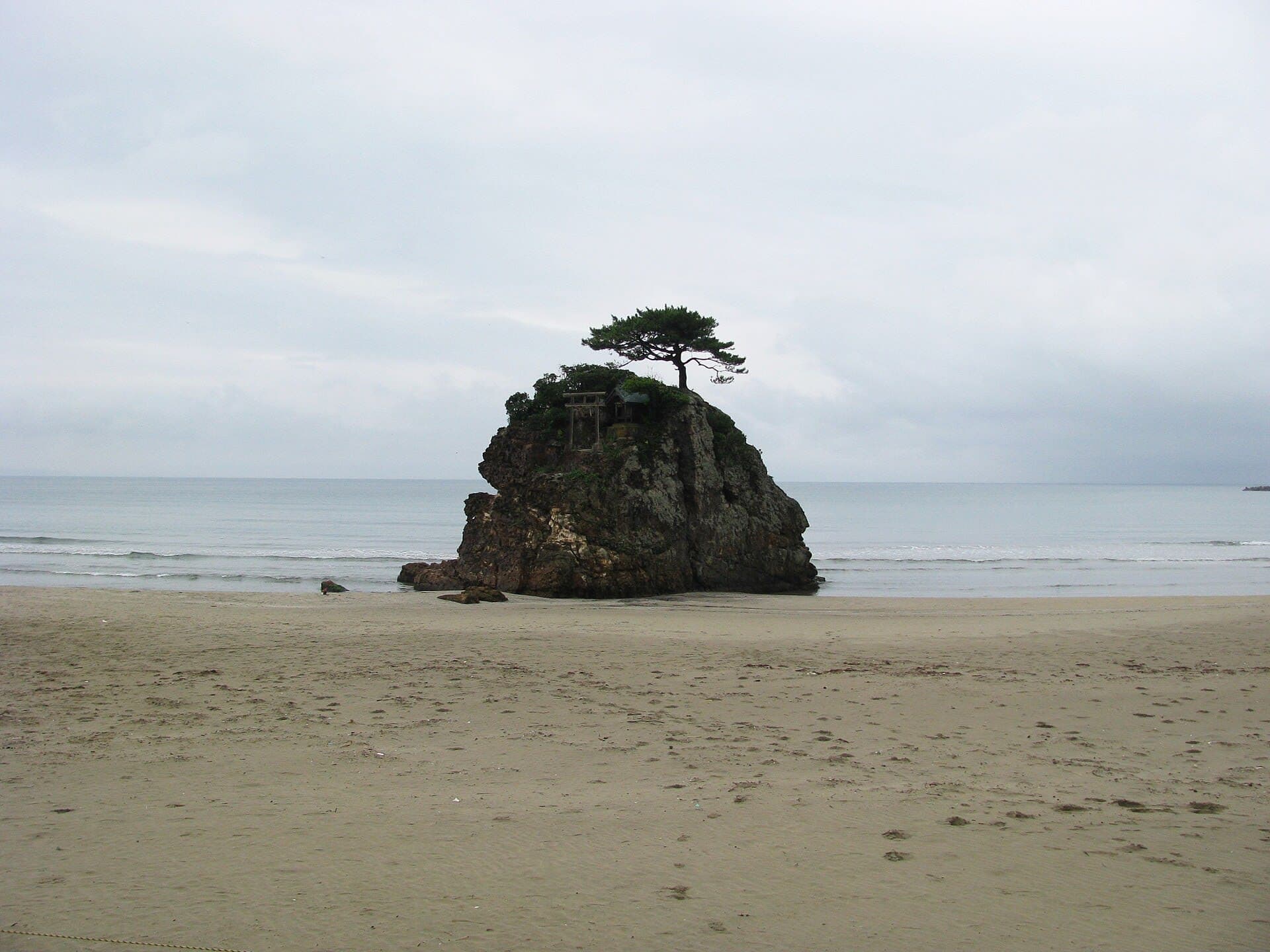
Inasa Beach
Where heaven descended to negotiate with earth in Japan's founding mythology
Izumo, Shimane Prefecture, Japan
At A Glance
- Coordinates
- 35.4017, 132.6753
- Suggested Duration
- 30 minutes to 1 hour at the beach. Combine with a visit to Izumo Taisha (approximately 20 minutes walk) for the complete pilgrimage experience including the sand exchange.
- Access
- From Izumo Taisha: 20-minute walk west along a well-marked path. From JR Izumoshi Station: Take Ichibata Bus approximately 30 minutes to Inasanohama stop, or take Ichibata Railway to Izumo Taisha-mae Station then walk 25 minutes. Parking available near the beach. The 'Kami Terasu' restaurant complex is adjacent to the parking area.
Pilgrim Tips
- From Izumo Taisha: 20-minute walk west along a well-marked path. From JR Izumoshi Station: Take Ichibata Bus approximately 30 minutes to Inasanohama stop, or take Ichibata Railway to Izumo Taisha-mae Station then walk 25 minutes. Parking available near the beach. The 'Kami Terasu' restaurant complex is adjacent to the parking area.
- No specific requirements for beach access. Respectful attire is appreciated during ceremonies.
- Photography is permitted. Be respectful during active rituals; do not use flash or intrusive equipment during ceremonies.
- Do not climb Bentenjima rock. The shrine is not accessible; offerings may be placed at the rock's base where a small offering box is located. During the Kamiari-sai ceremony, respect marked boundaries and observe quietly.
Overview
In Japanese mythology, a god descended from heaven at this beach, thrust his sword into the sand, and demanded that the ruler of the earthly realm cede power to the sun goddess's descendants. The negotiation that followed shaped Japan's spiritual cosmos. Today, the eight million kami of Japan are believed to arrive at this same shore each autumn to convene their divine council at nearby Izumo Taisha. The rock called Bentenjima marks where worlds still meet.
This is where heaven touched earth.
According to Japan's oldest written records—the Kojiki of 712 CE and the Nihon Shoki of 720 CE—the god Takemikazuchi descended at Inasa Beach to deliver an ultimatum. He thrust his sword into the sand, sat upon its upturned blade, and demanded that Okuninushi, ruler of the earthly realm, surrender control to the descendants of the sun goddess Amaterasu. After negotiations at the nearby Byobu-iwa rock, Okuninushi agreed—on the condition that a great palace be built for him and that he retain authority over the unseen world of spirits and human connections.
That palace became Izumo Taisha, one of Japan's most sacred Shinto shrines, standing a kilometer inland. And Inasa Beach became the place where the visible and invisible worlds established their relationship.
Each year during Kamiari-zuki—the 'Month with Gods' of the old lunar calendar—the eight million kami of Japan are believed to arrive at this shore to attend divine council at Izumo. While the rest of Japan calls this month Kannazuki (the 'Month without Gods'), in Izumo the gods are present, having gathered from their posts throughout the land. The Kamiari-sai ceremony welcomes them with sacred fires lit on the sand.
The rock called Bentenjima rises from the surf, a small shrine visible at its crown. At sunset, the rock's silhouette against the western sky creates the view that earned this coastline Japan Heritage recognition as 'a sacred place where the sun sets.' Visitors collect sand from the beach to exchange at Izumo Taisha—a practice of giving and receiving that echoes the original negotiation between heavenly and earthly powers.
Context And Lineage
The mythology recorded in Japan's oldest texts (712-720 CE) establishes Inasa Beach as the site of divine descent and cosmic negotiation. Annual Kamiari-sai ceremonies maintain this function as the arrival point for Japan's gathered gods.
The Kojiki (712 CE) calls this place 'Inasa-no-Kohama'; the Nihon Shoki (720 CE) names it 'Itosa-no-Kohama.' Both texts record the same essential narrative: after earlier divine messengers failed to secure the earthly realm for Amaterasu's descendants, Takemikazuchi was dispatched from heaven.
He landed at this beach, drew his sword, thrust it handle-first into the sand, and sat cross-legged upon the upturned blade—an impossible, intimidating posture. He demanded that Okuninushi cede control of the land.
Okuninushi deferred to his son Kotoshironushi, who was fishing at nearby Mihonoseki. Kotoshironushi agreed without resistance. But another son, Takeminakata, challenged Takemikazuchi to a strength contest. The thrown rocks of that contest became the Tsubute-iwa still visible on the beach. Takeminakata was defeated and fled to Suwa in Shinano Province.
Okuninushi then agreed to cede the visible world, but on conditions: a great palace must be built for him (Izumo Taisha), and he would retain authority over the unseen realm—the world of spirits, the binding of human fates (en-musubi), the connections that link people to each other and to the divine.
This negotiation established the dual structure of Shinto cosmology: the visible world ruled by Amaterasu's descendants (the imperial line), the invisible world governed by Okuninushi from his palace at Izumo.
Shinto practice at Inasa and Izumo has continued without interruption for centuries, though specific ritual forms have evolved. The designation of the 10th lunar month as Kamiari-zuki in Izumo (while the rest of Japan observes Kannazuki) reflects the ongoing centrality of this location in Japanese spiritual geography. The sand exchange practice connects contemporary visitors to ancient patterns of reciprocal relationship with sacred power.
Takemikazuchi
The thunder and sword deity who descended at Inasa to demand the land for Amaterasu's lineage
Okuninushi
The earthly ruler who negotiated the kuni-yuzuri, retaining authority over the unseen world and becoming the god of en-musubi (binding fates)
Amaterasu
The sun goddess whose descendants received authority over the visible world through this negotiation
Why This Place Is Sacred
Inasa Beach is thin by definition and tradition. Here the boundary between heavenly and earthly realms was crossed in myth; here the gods of Japan still arrive each autumn. The negotiation that took place on this sand established the structure of the Shinto cosmos.
What makes a place thin? At Inasa, the thinness is not intuited from atmosphere but established by myth and maintained by ongoing practice.
The kuni-yuzuri narrative describes a literal crossing of the boundary between realms. Takemikazuchi descended from the heavenly plain (Takamagahara) to this specific beach. His sword, thrust into the sand, marked the point of contact between worlds. The negotiation that followed did not simply transfer political power—it established the relationship between visible and invisible reality that structures Shinto cosmology to this day.
The annual gathering of gods renews this crossing. During Kamiari-zuki, deities from across Japan are understood to leave their posts and travel to Izumo for divine council. They arrive at Inasa Beach. The Kamiari-sai ceremony prepares for and welcomes this arrival—sacred fires lit, shimenawa ropes defining sacred space, himorogi spirit-seats erected. This is not commemorative reenactment but present-tense belief: the gods actually arrive, actually cross from wherever they dwell to this shore.
Bentenjima rock marks the threshold. Rising from the surf with a small shrine at its crown, the rock serves as gateway for divine visitors. The sunset view behind Bentenjima—honored with Japan Heritage recognition—positions the rock against the western horizon where the sun descends, reinforcing associations with transition, passage, liminality.
The sand exchange practice participates in the site's thinness. Visitors collect sand from Inasa and carry it to Soga no Yashiro within Izumo Taisha, where they exchange it for sand from the shrine. This reciprocal giving and receiving—earth substance transferred between sacred sites—enacts relationship with the powers that inhabit this geography.
Monthly purification rituals on the first of each month draw locals to collect seawater in bamboo tubes for household blessing. The sea at Inasa is not merely ocean but source of purifying power.
Inasa Beach's sacred status derives from its role in foundational mythology. The kuni-yuzuri negotiation established this as the place where heavenly authority asserted itself over earthly power—and where compromise created the dual structure of visible and invisible worlds.
The mythology was recorded in writing by 712-720 CE but reflects older oral traditions. The Kamiari-sai ceremony has ancient roots, though specific forms have evolved. The Japan Heritage designation (2017) as part of 'Izumo, a sacred place where the sun sets' represents contemporary recognition of ongoing sacred significance. Tourism has increased, but the site maintains its religious function.
Traditions And Practice
Active Shinto rituals continue at Inasa Beach, including the annual Kamiari-sai god-welcoming ceremony and monthly purification. Visitors participate through the sand exchange ritual, connecting the beach to Izumo Taisha.
The Kamiari-sai (God-Welcoming Festival) is the most significant annual ceremony at Inasa Beach. On the evening of the 10th day of the 10th lunar month, priests conduct elaborate preparations: sacred fires are lit on the sand, shimenawa rope barriers define the sacred space, himorogi spirit-seats are erected for the arriving deities, and the ryuja-shin (dragon-snake deity) is positioned facing the sea to guide the gods to shore. When the moment arrives, the gods are welcomed and escorted to Izumo Taisha for their divine council.
Monthly purification on the first of each month brings locals to collect seawater in bamboo tubes. This water is carried to homes and shrines for purification rituals. The practice connects daily spiritual life to the sacred geography of Inasa.
The sand exchange ritual has ancient roots. Visitors collect sand from Inasa and carry it to Soga no Yashiro, a subordinate shrine within the Izumo Taisha complex. There, they deposit their sand and receive shrine sand in exchange. The exchanged sand is believed to offer protection and blessings for the home.
All traditional rituals continue as active Shinto practice. The Kamiari-sai draws pilgrims and observers each autumn. Monthly purification remains a living local tradition. The sand exchange is popular among visitors to Izumo Taisha.
The site accommodates tourism while maintaining sacred function. The 'Kami Terasu' restaurant complex provides amenities for visitors. Posted information explains the mythology and rituals for those unfamiliar with the traditions.
Collect sand for the exchange ritual. Take dry sand from the upper beach (not wet sand from the waterline) and carry it to Soga no Yashiro at Izumo Taisha. The exchange completes a circuit connecting the two sacred sites.
Visit at sunset to see Bentenjima against the western sky. The view that earned Japan Heritage recognition is available any clear evening, but autumn sunsets can be particularly striking.
Participate in the Kamiari-sai if timing allows. Check the lunar calendar for dates (typically late October or November). The ceremony occurs in the evening; arriving early allows time to understand the setting before ritual begins.
Join monthly purification on the 1st if your visit coincides. The practice is open to participation.
Shinto
ActiveInasa Beach is one of Shinto's most mythologically significant sites. The kuni-yuzuri (transfer of the land) that occurred here established the relationship between heavenly and earthly powers that structures Shinto cosmology. The ongoing role as arrival point for the annual divine gathering maintains this significance in present practice.
Kamiari-sai (God-Welcoming Festival) on the evening of the 10th day of the 10th lunar month: sacred fires, shimenawa boundaries, himorogi spirit-seats, dragon-snake deity positioned to guide arriving gods. Monthly purification on the 1st when locals collect seawater for blessing. Year-round sand collection for the exchange ritual at Soga no Yashiro in Izumo Taisha.
Experience And Perspectives
Visitors encounter Bentenjima rock against the western sky, collect sand for the exchange ritual at Izumo Taisha, and walk shores where mythology locates divine descent. Witnessing the Kamiari-sai ceremony during the 10th lunar month offers encounter with one of Japan's most ancient continuing rituals.
The experience of Inasa Beach unfolds through mythological awareness, physical encounter, and participatory ritual.
Bentenjima commands attention. The rock rises from the surf close to shore, its small shrine visible at the crown. At sunset, the rock's silhouette against the western sky creates the view that defines this place. The light changes; the rock darkens into outline; the sun descends behind it. This is the threshold marking where the gods arrive.
The beach itself stretches southward in a sweeping white sand arc. Walking this shore, you traverse ground where mythology locates the most consequential negotiation in Japanese cosmology. Somewhere here, Takemikazuchi thrust his sword into sand. Somewhere here, the future of heavenly and earthly power was decided.
The sand exchange ritual offers participatory engagement. Collecting dry sand from the upper beach and carrying it to Soga no Yashiro at Izumo Taisha, where you exchange it for shrine sand to take home—this practice enacts relationship with the sacred geography. The exchange echoes the original negotiation: something given, something received, relationship established.
Nearby rocks carry mythological freight. Byobu-iwa (Folding Screen Rock) is where negotiations occurred; Tsubute-iwa marks where stones were thrown during the strength contest between gods. These features anchor mythology in geography.
Witnessing the Kamiari-sai ceremony transforms understanding. On the evening of the 10th day of the 10th lunar month (usually late October or November), priests light sacred fires on the sand, erect shimenawa rope barriers, prepare himorogi spirit-seats, and position the dragon-snake deity facing the sea. The gods are welcomed; the crossing happens. Observers stand on the margin of an event understood to be genuinely occurring, not merely symbolized.
The adjacent 'Kami Terasu' complex offers practical amenities, but the experience centers on the beach, the rock, the sunset, and the knowledge of what has occurred and continues to occur at this threshold.
Approach Inasa with mythological context. Know that you walk where Takemikazuchi descended, where Okuninushi negotiated the fate of the world, where gods arrive each autumn. Collect sand for the exchange ritual before visiting Izumo Taisha. Time your visit for sunset to see Bentenjima against the western sky. If possible, witness the Kamiari-sai ceremony during the 10th lunar month—this is the annual moment when the beach fulfills its essential function.
Inasa Beach can be approached as the setting of foundational Japanese mythology, as an active Shinto sacred site where annual rituals continue, or as a landscape where the relationship between visible and invisible worlds was negotiated and is still maintained.
Scholars recognize the kuni-yuzuri narrative recorded at Inasa as one of the foundational myths of Japanese religious and political ideology. The negotiation establishes key Shinto theological concepts: the division between visible and invisible realms, the authority of Amaterasu's descendants over the visible world, and the role of Okuninushi as master of the unseen world and god of en-musubi (human connections).
The continuing Kamiari-sai represents one of Japan's oldest documented rituals. The designation of the 10th lunar month as Kamiari-zuki in Izumo—while the rest of Japan observes Kannazuki—reflects the regional centrality of this mythology and the ongoing belief that gods literally gather here.
The Japan Heritage designation recognizes the entire 'sunset' landscape of Izumo—including Inasa Beach—as culturally significant sacred geography.
In Shinto understanding, the events at Inasa are not merely mythological but describe the actual establishment of cosmic order. Takemikazuchi's descent, Okuninushi's negotiation, and the ongoing annual gathering of gods are understood as events that actually occurred and continue to occur.
The sand exchange practice participates in this understanding. The sand of Inasa carries the charge of the place where heaven touched earth; exchanged for shrine sand, it connects household and sacred site in ongoing relationship.
The Kamiari-sai is not commemorative reenactment but present-tense welcome. The gods are believed to actually arrive, actually cross from their various posts throughout Japan to this shore.
Some contemporary spiritual seekers approach Inasa as a 'power spot' where spiritual energies concentrate. This framing draws on both traditional Shinto concepts and modern New Age ideas about sacred geography. Whether such language captures or distorts the site's significance depends on how it relates to the continuing Shinto tradition.
The historical depth of Kamiari-sai observances at Inasa—how far back the rituals extend in recognizable form—is not definitively established. The transition of Bentenjima's shrine from Benzaiten (a Buddhist deity associated with water) to Toyotamahiko/Watatsumi (a Shinto kami) reflects complex developments in Japanese religious history that are not fully documented.
Why Izumo became the gathering place for all gods, rather than another location, continues to be explored by scholars.
Visit Planning
Inasa Beach is a 20-minute walk west from Izumo Taisha Grand Shrine, accessible by bus from JR Izumoshi Station or by Ichibata Railway. The annual Kamiari-sai occurs on the 10th day of the 10th lunar month (typically late October or November).
From Izumo Taisha: 20-minute walk west along a well-marked path.
From JR Izumoshi Station: Take Ichibata Bus approximately 30 minutes to Inasanohama stop, or take Ichibata Railway to Izumo Taisha-mae Station then walk 25 minutes.
Parking available near the beach. The 'Kami Terasu' restaurant complex is adjacent to the parking area.
Accommodations are available in Izumo City and the Taisha area. Options range from business hotels near the station to traditional ryokan closer to the shrine area.
Inasa Beach accommodates both beachgoers and pilgrims. Respectful behavior is expected, particularly during active rituals. The sand exchange ritual has specific protocols for collection and offering.
Inasa Beach functions as both public beach and active sacred site. Daily visitors share the space with those engaged in pilgrimage and ritual practice. Mutual respect allows both uses to coexist.
During the Kamiari-sai and other ceremonies, respect the sacred spaces defined by shimenawa ropes. Observe quietly if you are not a participant. Photography may be permitted but should not interrupt proceedings.
For the sand exchange ritual, collect dry sand from the upper beach—not wet sand from the waterline. Carry the sand to Soga no Yashiro at Izumo Taisha in a container you have brought or in bags sometimes available at the shrine complex. The exchange involves depositing your sand and receiving shrine sand in return.
Bentenjima rock is not to be climbed. The small shrine at its crown is viewable but not accessible. A coin box at the rock's base allows offerings.
No specific requirements for beach access. Respectful attire is appreciated during ceremonies.
Photography is permitted. Be respectful during active rituals; do not use flash or intrusive equipment during ceremonies.
Coins may be deposited at the offering box at Bentenjima's base. Sand collection for the exchange ritual is appropriate and encouraged.
Do not climb Bentenjima rock. During ceremonies, respect boundaries marked by shimenawa ropes. Collect dry sand, not wet sand from the waterline, for the exchange ritual.
Sacred Cluster
Nearby sacred places create the location cluster described in the growth plan. This block is intentionally crawlable and links into the wider regional graph.
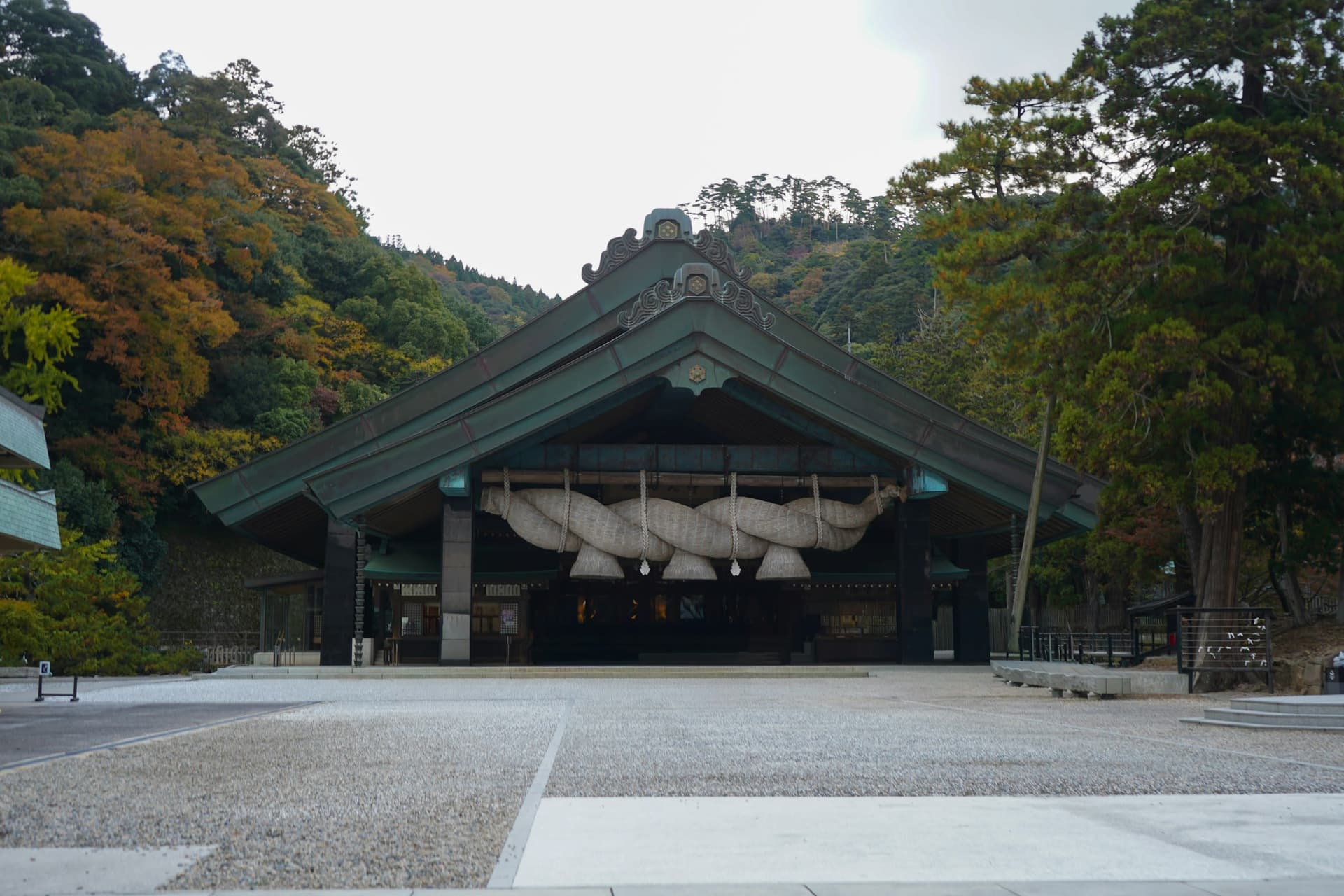
Izumo Taisha (Izumo Grand Shrine)
Izumo, Shimane Prefecture, Japan
0.9 km away
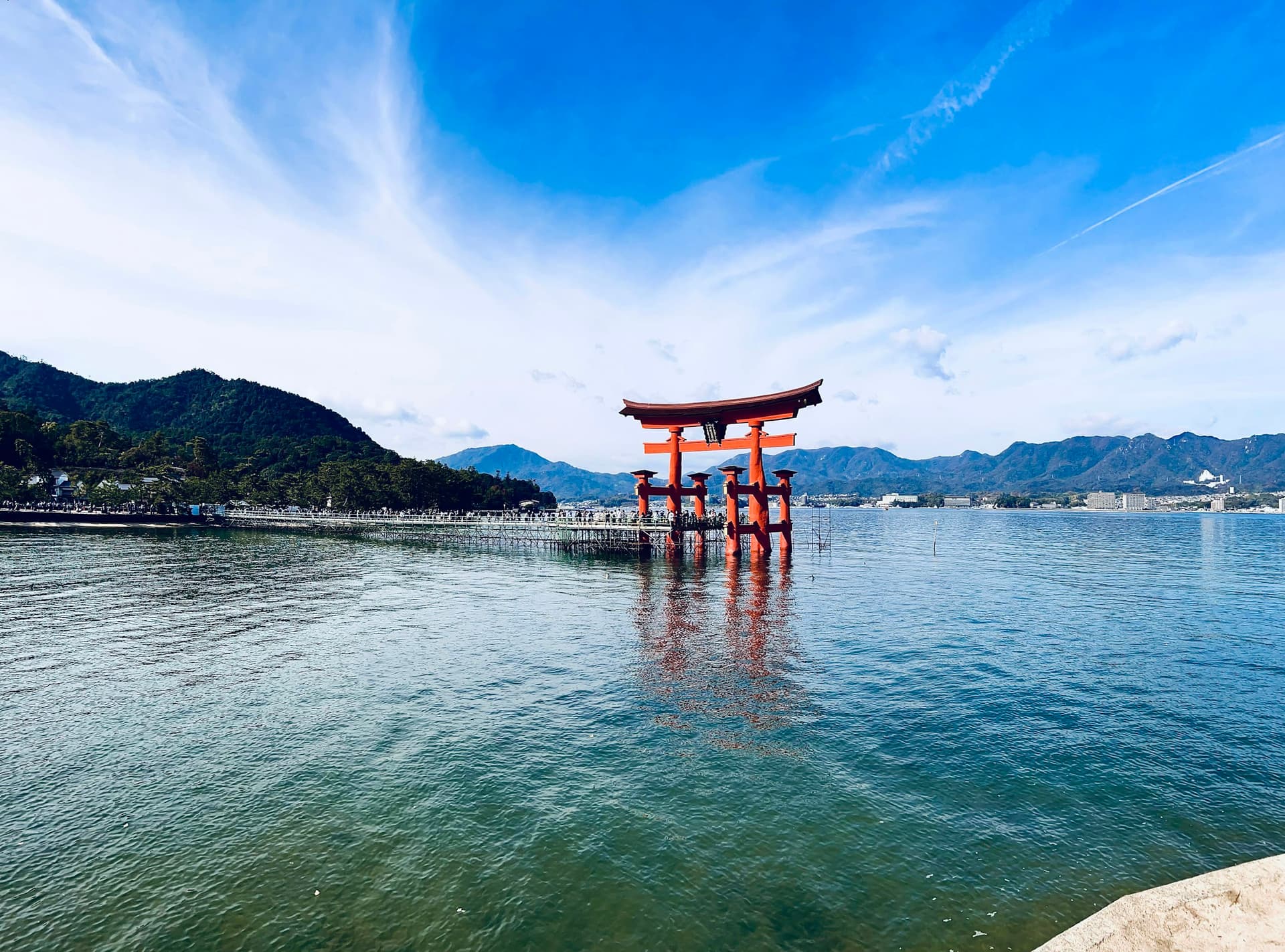
Miyajima Island
Hatsukaichi, Hiroshima Prefecture, Japan
127.2 km away
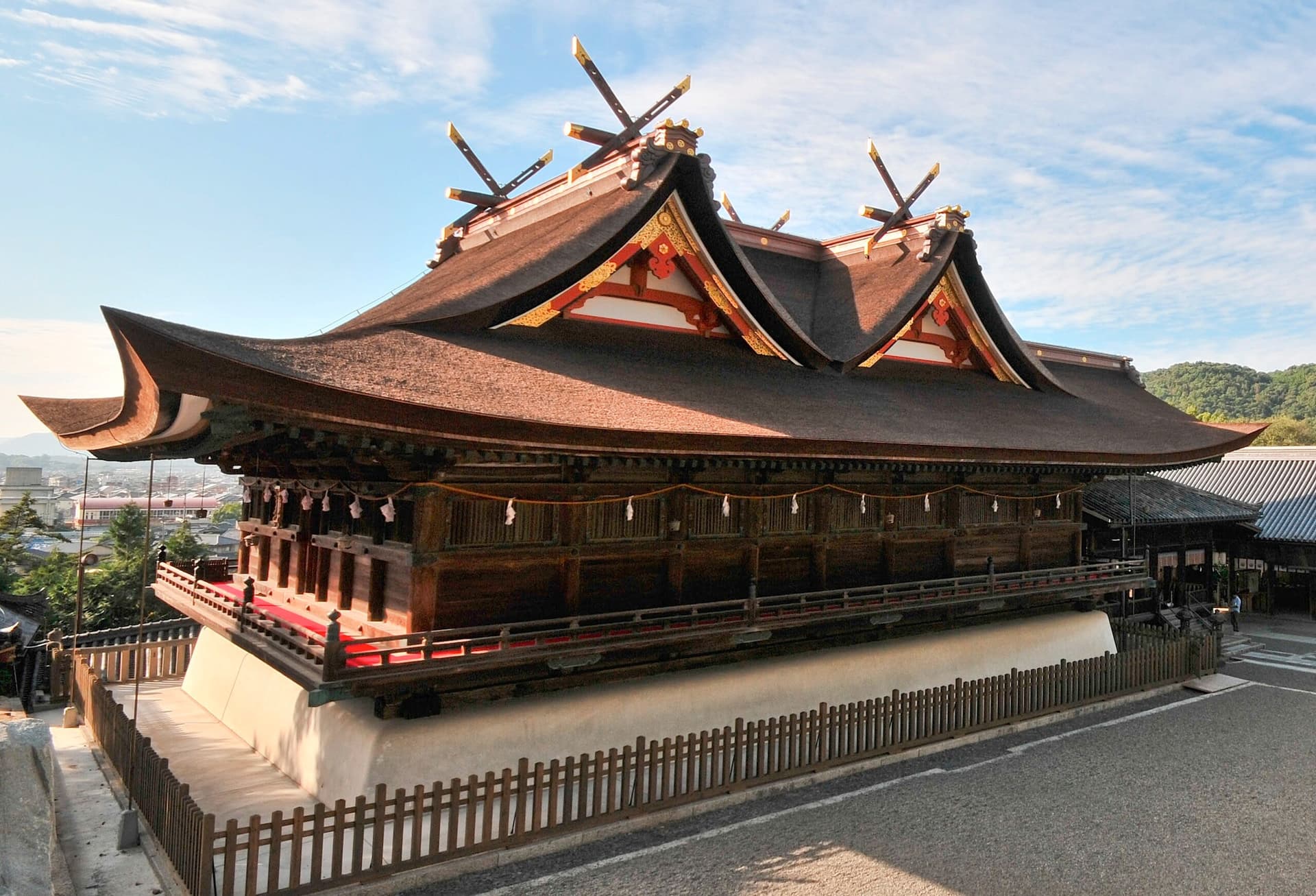
Kibitsu Jinja Shinto Shrine, Okayama
Okayama, Okayama Prefecture, Japan
134.4 km away
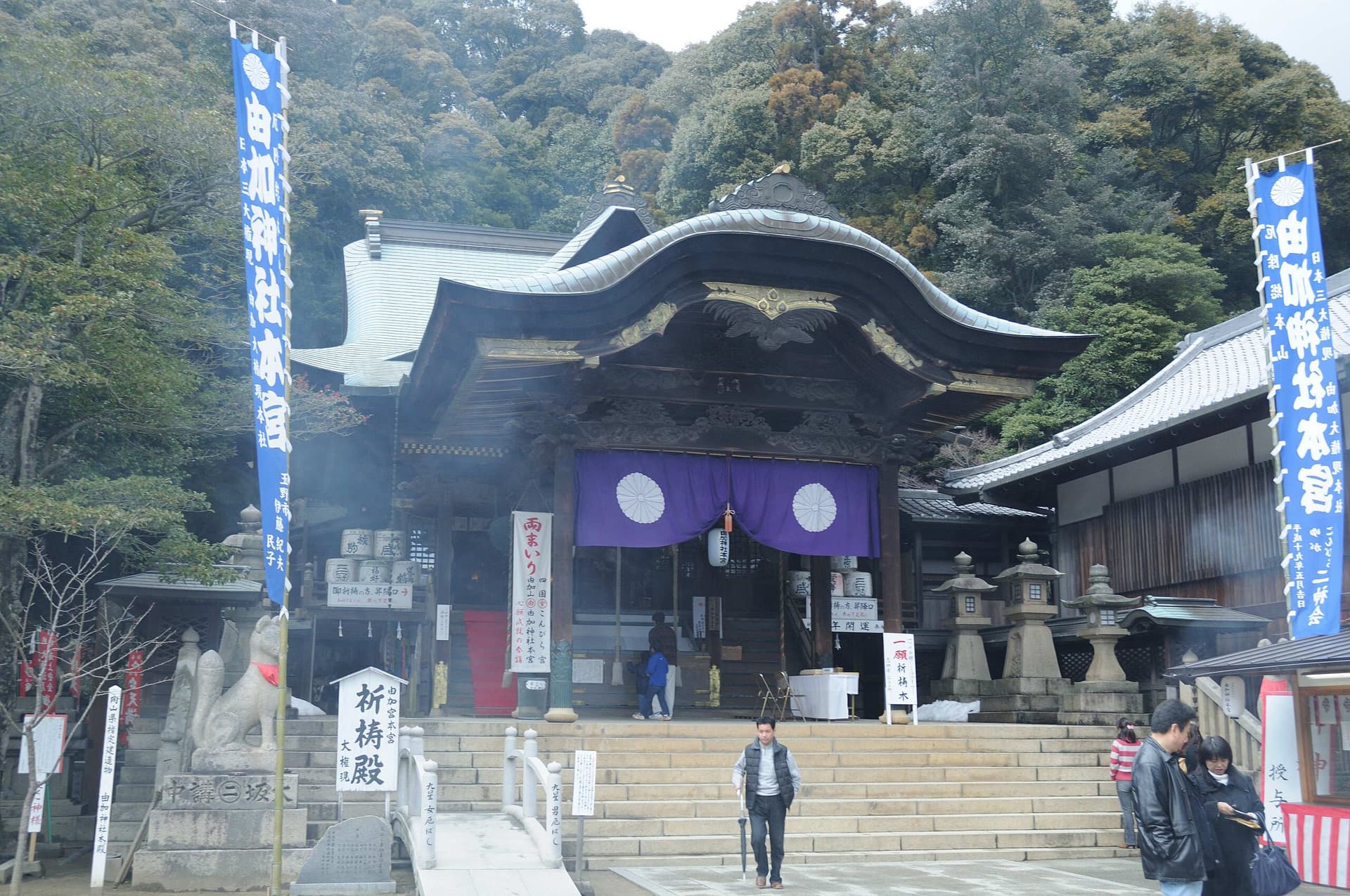
Yuga Shinto Shrine, Kurashiki
Kurashiki, Okayama Prefecture, Japan
146.1 km away