Glastonbury Tor
Where Celtic Otherworld, Christian mystery, and Arthurian legend converge on a hill that rises like a beacon
Glastonbury, Somerset, United Kingdom
At A Glance
- Coordinates
- 51.1444, -2.6986
- Suggested Duration
- A half-day allows for the Tor plus the Chalice Well gardens and White Spring Temple, with time to rest between sites.
- Best Time
- Late spring through early autumn offers the most reliable conditions. However, the summit is exposed regardless of season—bring layers and rain gear even if the forecast seems clear. Check conditions before climbing; the path becomes slippery in rain.
- Access
- The Tor is a 10-15 minute walk from Glastonbury High Street. Follow signs up Wellhouse Lane past the Chalice Well. The path is well marked. | Difficulty: Moderate. The path is paved with some steps, climbing 158 meters (518 feet) from the base. A bench midway offers rest for those who need it. The final approach is steepest. Those with heart conditions or severe respiratory issues should take care. | Time to summit: Twenty to thirty minutes at a moderate pace.
Pilgrim Tips
- The Tor is a 10-15 minute walk from Glastonbury High Street. Follow signs up Wellhouse Lane past the Chalice Well. The path is well marked. | Difficulty: Moderate. The path is paved with some steps, climbing 158 meters (518 feet) from the base. A bench midway offers rest for those who need it. The final approach is steepest. Those with heart conditions or severe respiratory issues should take care. | Time to summit: Twenty to thirty minutes at a moderate pace.
- The Tor itself has no dress requirements. Wear sturdy footwear—the paths are steep and can be slippery when wet—and dress for exposed conditions at the summit. Wind and weather shift rapidly at that elevation. The White Spring Temple is candlelit and damp year-round. Bring shoes that can get wet. Bathing involves entering spring-fed pools in near-darkness, so bring something you can immerse yourself in or be prepared to bathe nude (either is acceptable). Towels and a change of clothes are advisable. For ceremonies on the Tor, participants often dress meaningfully—robes, symbolic colors, festival costume—but this is personal choice, not requirement. Come as you are.
- Photography is permitted on the Tor and in the Chalice Well gardens. It is prohibited inside the White Spring Temple. Beyond rules, consider your relationship to documentation. Many visitors report that photography changes their experience—that holding a camera shifts them from participant to observer. You may want to leave the phone in your pocket for at least part of your visit. Never photograph people engaged in ceremony or meditation without permission. Some practitioners are fine with it; others consider it a violation. Ask first. If the answer is no, accept it graciously.
- Glastonbury's spiritual openness can attract those seeking vulnerable people. Visitors may encounter unsolicited offers of readings, healing, or guidance. Most practitioners are sincere; some are not. Trust your instincts and feel no obligation to engage. The intensity of the site affects different people differently. Those who are grief-struck, in the midst of major life transition, or psychologically vulnerable may find the experience destabilizing rather than supportive. There is no shame in limiting time on the summit or choosing quieter approaches. Seasonal festivals can be overwhelming for those seeking solitude. If you want the Tor to yourself, arrive at dawn on an off-peak weekday. The summer solstice sunrise is a communal event, not a contemplative one. Respect the diversity of practice you'll encounter. Not everyone uses the same framework. What looks strange to you may be deeply meaningful to someone else. Observe without judgment, participate only where you feel genuine resonance.
Overview
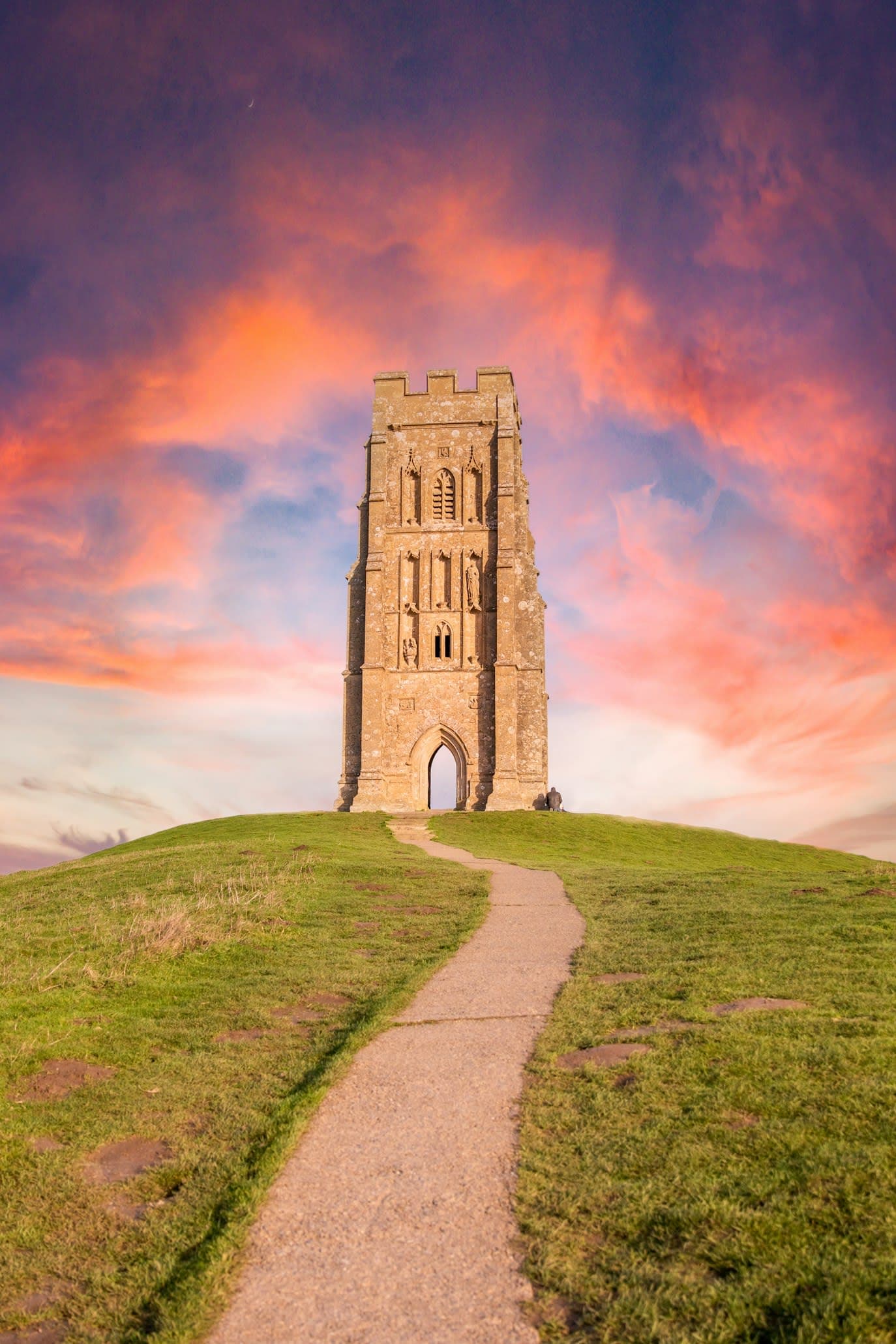
Rising 158 meters above the Somerset Levels, Glastonbury Tor has drawn seekers for millennia. Celtic tradition holds it as a gateway to Annwn, the Otherworld. Christian legend claims Joseph of Arimathea buried the Holy Grail at its foot. King Arthur is said to sleep within. Today, Druids, pilgrims, and seekers of all traditions climb to the ruined tower, drawn by something that resists easy naming.
Some hills demand attention. Glastonbury Tor is one of them—a conical rise that dominates the flat Somerset landscape like a beacon, visible for twenty miles in every direction. When the winter floods come, as they did for millennia before modern drainage, the Levels become water and the Tor becomes an island. The Isle of Avalon.
People have been climbing this hill for at least six thousand years. What drew them varies by era and telling: Iron Age tribes built on the summit. Medieval monks raised a church. Joseph of Arimathea, according to legend, arrived with the Holy Grail and buried it where a blood-red spring now flows. Celtic tradition names the Tor as the palace of Gwyn ap Nudd, Lord of the Otherworld, and says the spiraling terraces form a labyrinth that, walked with intention, leads to transformation or madness.
The ruined tower of St. Michael's Church stands alone now, stripped by earthquake and dissolution. But the hill is not empty. Dawn on the summer solstice draws hundreds to the summit for ceremonies that blend Druid, pagan, and personal practice. The springs at the Tor's base—one iron-red, one calcium-white—flow into temples where seekers bathe and pray. The town below has become Britain's acknowledged spiritual heart, where crystal shops neighbor Anglican churches and everyone, somehow, belongs.
What persists here is not one tradition but many, layered across millennia like geological strata. You need not believe any single story to feel that something gathers at this place.
Context And Lineage
Glastonbury's sacred history spans six millennia, from Neolithic flint-workers to contemporary ceremony. Archaeological evidence confirms continuous significance, while legend has layered the site with stories: Joseph of Arimathea's arrival with the Holy Grail, King Arthur's burial, and the Tor as gateway to the fairy Otherworld. History and myth interweave here until separating them becomes impossible—and perhaps beside the point.
The earliest stories that survive are not strictly historical but mythological, preserved in Welsh tradition. The Tor is the palace of Gwyn ap Nudd, Lord of Annwn—the Welsh Otherworld, neither heaven nor hell but a realm parallel to our own, where the dead and the fair folk dwell. Gwyn, whose name means 'white' or 'blessed,' rules there as king. A cave within the hollow hill, these stories say, provides passage to his realm. Some who enter return transformed; some do not return at all.
Christian legend provides a different origin. Joseph of Arimathea, the wealthy man who donated his own tomb for Jesus's burial, is said to have traveled to Britain after the Crucifixion—perhaps as a tin trader, some versions claim, who had visited before. With him he carried two cruets: one containing Christ's blood, one his sweat. At Glastonbury, exhausted, he rested on what became Wearyall Hill and thrust his staff into the ground. It flowered into the famous Holy Thorn, which still blooms at Christmas and Easter. Joseph built Britain's first church here—a simple structure of wattle and daub. And the Grail, the vessel of the Last Supper, was hidden at the Tor's base, where a spring now flows red.
Arthurian legend adds another layer. After the Battle of Camlann, the mortally wounded king was carried to the Isle of Avalon for healing. Medieval monks at Glastonbury Abbey claimed to have discovered his grave in 1191—a convenient find during a rebuilding fundraising campaign, scholars note. Yet the identification persisted. Arthur, the once and future king, sleeps in the hollow of the Tor, awaiting Britain's hour of greatest need.
These stories contradict each other in details while converging in theme: Glastonbury is a threshold, a place where ordinary geography opens onto something else.
The Tor's sacred lineage cannot be traced through a single tradition but through accumulation. Neolithic peoples left flint tools. Iron Age peoples built on the summit. Romano-British activity left Mediterranean pottery shards. Dark Age inhabitants—whether secular chieftains or religious community—left butchered animal bones, bronze and iron artifacts, and the remains of at least one crucible for metalworking.
Medieval Christianity built, lost, and rebuilt the church of St. Michael, maintaining a monastic presence until the Dissolution. The Abbey below became one of the wealthiest and most powerful in England, its authority bolstered by Glastonbury's legendary associations. When the Abbey fell, the legends dispersed into local folk tradition and antiquarian imagination.
The 19th century brought romantic revival. The 20th brought esoteric movements, earth mysteries researchers, and the counterculture's search for authentic spirituality. Contemporary Glastonbury hosts Druids, Goddess worshippers, Christians, chaos magicians, and seekers who claim no label, all drawing from the well of accumulated significance. The tradition is not preservation but continuous creation.
Gwyn ap Nudd
deity
Lord of Annwn, the Welsh Otherworld, and King of the Tylwyth Teg (fairy folk). According to Welsh tradition, the Tor serves as his palace and contains an entrance to his realm. He is associated with the Wild Hunt and rules over the spirits of the dead.
Joseph of Arimathea
saint
The wealthy Jewish member of the Sanhedrin who provided his own tomb for Jesus's burial. Christian legend holds that he later traveled to Britain, founded the first church at Glastonbury, and brought the Holy Grail. The blood-red waters of the Chalice Well are said to mark where the Grail lies hidden.
King Arthur
legendary king
The legendary king whose final resting place is claimed to be Glastonbury. After the Battle of Camlann, he was brought to the Isle of Avalon for healing. Some traditions hold he sleeps within the Tor, awaiting the moment Britain needs him most.
St. Michael
archangel
The archangel who guards thresholds and battles demonic forces. The ruined tower atop the Tor is dedicated to him. Churches to St. Michael were often built on hilltops with pre-Christian sacred associations, understood to sanctify and protect these liminal locations.
Brigid/Bride
goddess/saint
The Celtic goddess of healing, poetry, and smithcraft, later syncretized with St. Brigid of Kildare. Bride's Mound near the Tor preserves her association with Glastonbury. Her feast day, Imbolc (February 1), is still celebrated in the town.
Why This Place Is Sacred
Glastonbury Tor's power as a thin place emerges from unusual geography: a dramatic hill rising from flat marshland, twin springs of different mineral compositions emerging feet apart, and millennia of accumulated sacred use. The convergence of Celtic, Christian, and contemporary spiritual traditions creates a site where the boundary between ordinary awareness and something deeper seems permeable.
The Tor's sacredness begins with geology. When the Somerset Levels flooded each winter, this hill became an island—accessible only by boat, separated from ordinary life by water. Islands have held special significance across cultures: places apart, thresholds between worlds. The Celtic name Ynys Wydrin, Isle of Glass, evokes this quality of otherworldly shimmer.
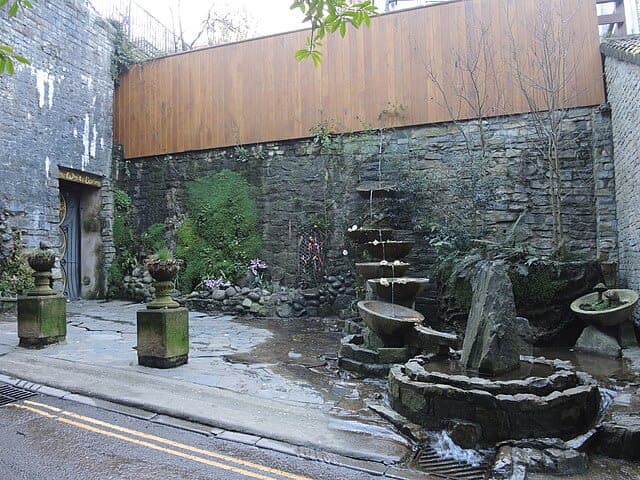
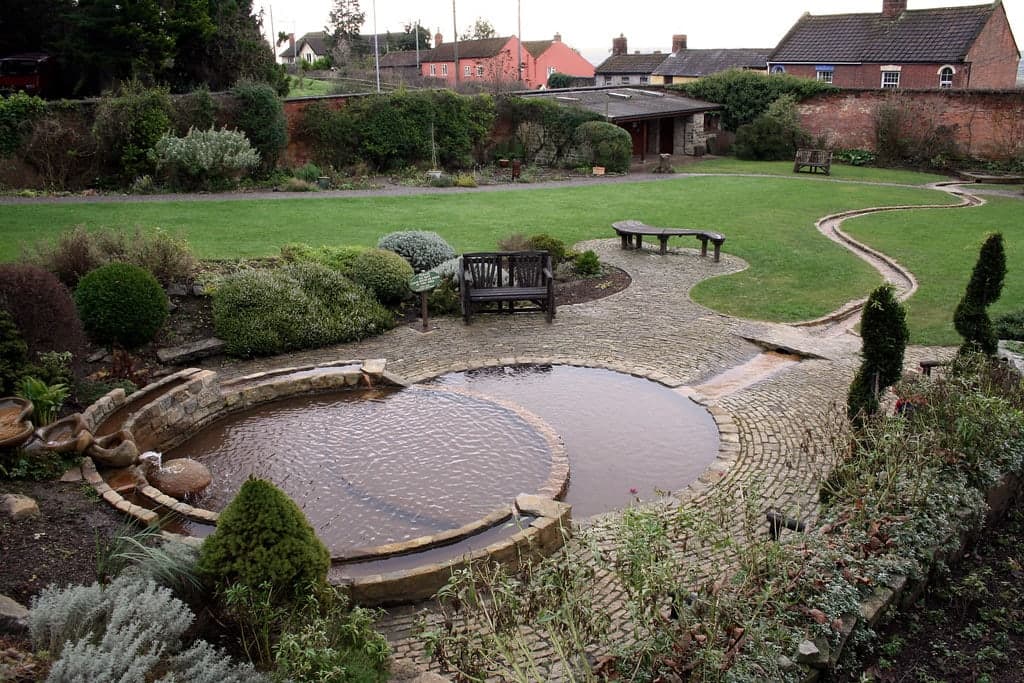
Two springs emerge at the Tor's base, flowing from the same hill yet carrying different waters. The Chalice Well runs red with iron oxide; the White Spring flows pale with calcite. They surface within meters of each other. To ancient peoples, this must have seemed miraculous—the earth offering two bloods from one body. The springs have never stopped flowing, even in the driest summers.
The terraces spiraling up the Tor's slopes add another dimension. Their origin remains contested: defensive ramparts, agricultural terracing, or ceremonial labyrinth? The labyrinth theory, though unproven archaeologically, resonates with the experience of climbing. The path winds rather than ascends directly. Your sense of direction shifts. By the time you reach the summit, the ordinary world feels further than the distance warrants.
Contemporary visitors frequently describe the same quality the Celtic peoples named: a sense of the boundary thinning. Reports of unusual clarity, emotional release, vivid dreams following visits, and spontaneous insight appear consistently across belief systems. Whether this reflects accumulated centuries of human intention, unusual geomagnetic properties, psychological response to the landscape, or something beyond explanation, the pattern is consistent enough to take seriously.
Archaeological evidence confirms human activity on the Tor from the Neolithic period onward. Flint tools suggest visits as early as the fourth millennium BCE. Iron Age peoples built on the summit, though what structures stood there remains uncertain. The terraces were likely created during or before the Iron Age, though their purpose—agricultural, defensive, or ceremonial—continues to generate scholarly debate.
In Celtic cosmology, prominent hills often served as meeting points between worlds. The Tor's association with Gwyn ap Nudd, Lord of Annwn (the Otherworld), suggests it functioned as a threshold location where the living could encounter the dead and the fairy realm. Whether formal ceremonies occurred here or the site served as a place of individual visionary encounter, the underlying function appears consistent: a point of passage.
The coming of Christianity did not end the Tor's sacred function but transformed it. A church dedicated to St. Michael—the archangel who battles dragons and guards thresholds—was built on the summit by the 11th century. This dedication was common for high places previously associated with pagan worship; Michael was understood to sanctify and protect liminal locations.
The church fell in an earthquake in 1275. Rebuilt, it was dissolved with the Abbey in 1539. The tower that remains—St. Michael's lonely silhouette against the sky—dates from the 14th century. What the monks did on this summit, beyond holding services, is unclear. But the choice to maintain a church in such an exposed, inconvenient location suggests they recognized the site's power.
The 20th century brought revival. When Dion Fortune established her occult community in Glastonbury in the 1920s, she and others began mapping the Tor's significance within a framework of ley lines and earth energies. The 1960s counterculture discovered Glastonbury as a spiritual alternative to mainstream religion. Today, the town hosts practitioners of dozens of traditions, and the Tor draws perhaps a quarter million visitors annually—some tourists, many pilgrims, all responding to something.
Traditions And Practice
Glastonbury Tor supports both organized ceremony and spontaneous personal practice. Public gatherings occur at the eight points of the Celtic calendar, with the summer solstice sunrise drawing the largest crowds. The springs at the Tor's base host more structured ritual, including bathing, offerings, and regular ceremony at the White Spring Temple. Visitors of any background can participate.
Medieval pilgrims approached Glastonbury as one of Christianity's holiest sites in Britain. Some climbed the Tor with dried peas in their shoes as penance, the small stones pressing with each step as a bodily prayer. Others walked the labyrinth terraces, treating the spiral path as a contemplative journey inward before the ascent. Water from the springs was bottled and carried away for healing.
Celtic fire festivals likely preceded the Christian era, though details are reconstructed rather than documented. Hilltops throughout Britain served as beacons for seasonal celebrations, and the Tor's prominence makes it a natural candidate. Contemporary practitioners have revived these observances, adapting fragmentary historical evidence into living practice.
The summer solstice sunrise gathering draws the largest crowds—sometimes several hundred people climbing in darkness to witness dawn from the tower. Drumming, chanting, and silent meditation mingle. Some come as practicing Druids in white robes; some come in jeans with no affiliation; all face the rising sun together.
Beltane (May 1) brings fire ceremony, the Green Man and May Queen procession through town, maypole dancing, and an all-night vigil. The dragon—a puppet creation paraded through the streets—represents the land's energy awakening. Samhain (October 31) honors the dead with procession, silence, and ceremony as the Celtic year ends and begins again.
The Glastonbury Order of Druids holds regular ceremony on the Tor, open to observers. Full moon gatherings draw smaller but dedicated groups. On any given day, visitors may encounter impromptu meditation circles, singing, or simple quiet sitting.
At the Tor's base, the White Spring Temple operates as an active Goddess temple with scheduled open days. Visitors can bathe in the spring-fed pools in candlelit darkness, receiving the waters as healing or initiation. Sound healing sessions, women's circles, and ceremonial events occur regularly. The Chalice Well gardens offer a more contemplative space for sitting with the red spring, with prayer ribbons tied to the trees and a stillness that invites inward turning.
For first-time visitors, a straightforward approach may serve best: climb to the tower, find a place to sit, and allow yourself an hour of presence without agenda. Let the site make its own introduction.
Those drawn to more structured engagement might time their visit to coincide with a seasonal gathering. The summer solstice is most dramatic but also most crowded. Equinoxes offer meaningful ceremony with fewer people. Arriving for any festival requires flexibility—these are grassroots gatherings, not ticketed events, and what happens depends on who shows up.
The springs invite ritual engagement with water. At the Chalice Well, you can drink from the lion's head fountain, sit in the gardens, and tie a prayer ribbon to the healing trees. The White Spring asks more: bathing in the dark, cold pools requires commitment. Consider visiting on an open day to observe before participating.
Walking the terraces as a labyrinth—whether historically accurate or not—can serve as moving meditation. Enter with a question, walk slowly, and observe what arises. Trust the winding. The path leads where it leads.
Celtic/Welsh Paganism
ActiveIn Celtic tradition, the Tor serves as the palace of Gwyn ap Nudd, Lord of Annwn (the Otherworld) and King of the Tylwyth Teg (fairy folk). The hill functions as a gateway between worlds, a place where the boundary thins and passage becomes possible. The spiral terraces are understood as a ceremonial labyrinth leading to initiation or encounter with otherworldly powers.
Contemporary practitioners celebrate the eight festivals of the Celtic wheel: Samhain, Yule, Imbolc, Ostara, Beltane, Litha (summer solstice), Lughnasadh, and Mabon. Fire ceremonies on the summit mark the major festivals. Walking the terraces as labyrinth meditation continues. Offerings are left at the tower and springs. Some practitioners maintain ongoing relationship with Gwyn and the land spirits through regular visitation and prayer.
Christianity
ActiveChristian tradition holds Glastonbury as the first site of Christianity in Britain, founded by Joseph of Arimathea who brought the Holy Grail from the Holy Land. The Tor's church, dedicated to St. Michael, represents the sanctification of a high place. The springs are associated with Christ's blood and sweat. King Arthur's alleged burial at the Abbey links Glastonbury to the mythology of Christian Britain.
Christian pilgrimage to Glastonbury continues, though less formally organized than in medieval times. The Abbey hosts regular services. St. John's and St. Benedict's churches serve active parishes. Some pilgrims climb the Tor as a devotional act, treating the ascent as prayer. The Holy Thorn on Wearyall Hill, said to descend from Joseph's staff, is venerated at Christmas and Easter.
Druidry
ActiveModern Druidry finds in Glastonbury a site that predates any recorded religion and continues to pulse with the sacredness of the land itself. The Tor represents connection to ancestors, to the turning seasons, and to a spirituality rooted in British soil. Many Druid orders recognize Glastonbury as a primary ceremonial center.
The Glastonbury Order of Druids and other groups hold regular ceremonies on the Tor, particularly at solstices, equinoxes, and cross-quarter days. These gatherings typically include invocation of the four directions, honoring of ancestors and the land, seasonal observance, and the sharing of mead or other offerings. Ceremonies are generally open to respectful observers.
Goddess Spirituality
ActiveGoddess-centered practitioners understand Glastonbury through the lens of sacred feminine. The Tor is the upraised breast of the Goddess, the pregnant belly of the land. The springs—red and white—represent menstrual and milk, the life-giving fluids of the feminine. The town hosts Britain's only dedicated Goddess temple and annual Goddess conference.
The White Spring Temple operates as an active Goddess temple, holding ceremonies, women's circles, and open days for bathing in the healing waters. The Goddess Temple on the High Street offers regular rituals, priestess training, and community gathering. Practitioners may engage with specific goddesses associated with the site: Brigid at Bride's Mound, the Lady of Avalon, or the Tor itself as divine feminine presence.
Earth Mysteries/Ley Line Research
ActiveEarth mysteries researchers understand Glastonbury as a primary node in a planetary energy grid. Two major ley lines—the St. Michael line and St. Mary line—interweave through the Tor, crossing at its summit. The site functions as an antenna, amplifier, or portal for earth energies that can facilitate healing, transformation, and expanded consciousness.
Practitioners may dowse the energy lines, meditate at power points, perform ceremonies designed to harmonize with earth energies, or simply spend time at sites believed to have heightened charge. Some work with crystals, sound, or other tools to interact with the energies. Research continues to map and understand the ley system.
Experience And Perspectives
Visitors to Glastonbury Tor consistently report experiences beyond ordinary tourism: profound peace, heightened clarity, emotional release, and a sense of the landscape as alive and aware. These reports come from secular visitors and spiritual seekers alike, suggesting the experience transcends belief systems.
The climb itself shifts something. Twenty to thirty minutes of steep ascent, breath quickening, the town dropping away below. By the time you reach the tower, the body has been engaged. This physical preparation may be part of the site's design—whether by ancient intention or geological accident.
At the summit, the most common word visitors use is presence. Not presence of something specific, but a quality of aliveness in the air, the stone, the view. The tower's interior, roofless and open to sky, concentrates this effect. People linger there in silence, some meditating, some simply standing. Something invites stillness.
Emotional release is remarkably common. Visitors report unexpected tears, not from sadness but from a sense of recognition or homecoming. Others describe sudden clarity about life circumstances that had seemed impossibly tangled. Decisions crystallize. Perspectives shift. Those who come during life transitions often describe the visit as pivotal, though the mechanism resists articulation.
Many describe a sense of the landscape itself as conscious—the Tor watching, the land listening. Ravens circle the tower, their calls carrying across the Levels. Butterflies gather in unusual numbers during summer months. Whether these are simply features of the environment or something more, visitors consistently attribute meaning to them.
Not everyone's experience is comfortable. Some report feeling overwhelmed, scattered, or unsettled. The intensity that some find transformative can feel destabilizing to others. Those sensitive to subtle energies sometimes need to limit their time on the summit or approach gradually.
Glastonbury Tor rewards approach with intention. Rushing up to check a box and rushing down yields little. Those who report the deepest experiences typically arrive early, before crowds, and allow time on the summit to simply be present.
Consider what you're bringing. A question, an intention, a grief, a hope—something genuine. You need not frame it in spiritual terms; you only need to be honest about what matters. The place seems to respond to authenticity.
The climb is part of the experience, not an obstacle to it. Let your breath deepen. Notice when the view opens. The terraces, whether labyrinth or not, invite a winding rather than direct approach. Resistance to the slowness may itself be information.
At the summit, find a place that draws you—inside the tower, on the grassy slopes, facing a particular direction—and stay longer than feels necessary. What happens in the second ten minutes differs from the first. What happens when you've been still long enough for the starlings to forget you're there may differ again.
Glastonbury Tor invites interpretation, and interpretations abound. Archaeologists, Christian pilgrims, Celtic reconstructionists, and earth mysteries researchers all find significance here, often at odds with each other. Rather than resolve these tensions, we present the major perspectives as offerings. What resonates is for you to discern.
Academic archaeology confirms human presence on the Tor from the Neolithic period, with significant evidence of Dark Age occupation (roughly 5th-7th century CE). Philip Rahtz's excavations in the 1960s revealed postholes, graves, metalworking debris, and Mediterranean pottery, suggesting either a high-status secular site (perhaps a chieftain's stronghold) or an early monastic community. Definitive interpretation remains elusive.
The terraces' origin is contested. Theories include Iron Age ramparts, agricultural terracing, and ceremonial labyrinth, with none conclusively proven. The labyrinth interpretation, while evocative, lacks direct archaeological evidence.
The legends of Joseph of Arimathea and King Arthur are generally considered medieval inventions, possibly promoted by the Abbey to attract pilgrims and donations. The 1191 'discovery' of Arthur's grave occurred during a rebuilding campaign after a fire, raising obvious questions. However, some scholars note that trade routes between the Mediterranean and Britain did exist in Roman times, making travel plausible if unproven.
What archaeology cannot explain is why people continue to report unusual experiences here. The consistency of these reports across cultures and belief systems remains an open question.
For Celtic reconstructionists and those who work with British folk tradition, the Tor remains what it always was: a threshold. Gwyn ap Nudd is not a symbol but a presence. The terraces form a pathway inward, and what waits at the center is encounter with the Otherworld. This is not belief in the sense of intellectual assent; it is experience, confirmed through practice.
For Christian pilgrims, Glastonbury represents the earliest flowering of their faith in Britain. Whether or not Joseph literally walked here, the tradition consecrates the ground. The Tor's church, though ruined, still stands under St. Michael's protection. The springs still run. The continuity matters more than the documentation.
Both perspectives reject the assumption that unprovable means unreal. They locate authority in experience and accumulated tradition rather than academic verification.
Earth mysteries research places Glastonbury at the intersection of two major ley lines: the St. Michael line running from Cornwall to East Anglia, and the St. Mary line weaving around it. Dowsers have mapped these energies spiraling up the Tor's terraces like a caduceus. In this understanding, the site is a node in a planetary energy grid, a place where earth currents intensify and human consciousness can shift.
Related theories propose that the Tor is hollow, containing crystal chambers, Atlantean technology, or portals to other dimensions. Katherine Maltwood's 'Glastonbury Zodiac' (1929) argues that the entire landscape forms a massive terrestrial zodiac of effigies visible only from the air, with the Tor as one feature.
These interpretations lack archaeological or scientific support. However, they often emerge from genuine experiences visitors have at the site. The language of energy, vortex, and portal may be attempts to describe something real that resists conventional vocabulary. Taking the experience seriously does not require accepting the explanatory framework—but dismissing the framework need not mean dismissing the experience.
Genuine mysteries remain, and honest engagement requires acknowledging them. Who created the terraces and why? What rituals were performed on the summit before written records? Why do so many visitors report unusual experiences—and why do some report nothing at all? What explains the twin springs, so close yet so different?
Scholars continue to debate whether the Dark Age settlement was secular or religious, whether pre-Christian worship occurred on the summit, whether there are unexcavated remains beneath the tower. The questions remain open.
Perhaps the most honest position is acknowledgment: something gathers at this place. Millennia of human attention have accumulated. Whether that accumulation itself creates the effect, or whether the effect called forth the attention, may be unanswerable—and may be the wrong question. The Tor persists. The springs flow. People keep climbing.
Visit Planning
Glastonbury Tor is freely accessible 24 hours a day and takes 20-30 minutes to climb. A half-day allows time to include the springs and explore the town. The site is most crowded during seasonal festivals and summer weekends. Early mornings offer the best chance of solitude.
The Tor is a 10-15 minute walk from Glastonbury High Street. Follow signs up Wellhouse Lane past the Chalice Well. The path is well marked. | Difficulty: Moderate. The path is paved with some steps, climbing 158 meters (518 feet) from the base. A bench midway offers rest for those who need it. The final approach is steepest. Those with heart conditions or severe respiratory issues should take care. | Time to summit: Twenty to thirty minutes at a moderate pace.
Glastonbury offers accommodations ranging from campgrounds to boutique hotels, many with spiritual orientations. Staying in town allows dawn and dusk visits to the Tor. The town's many cafes, shops, and healing practitioners can support extended pilgrimage. Some visitors treat the whole town as the sacred site, with the Tor as its highest expression.
Glastonbury Tor is simultaneously a public park, an archaeological site, and an active place of worship. Respectful behavior requires awareness of all three dimensions. The springs and temples at the base have more specific protocols. In general, approach with quietness, take nothing but photographs, and give space to those engaged in prayer or practice.
The National Trust manages the Tor as a heritage site and welcomes visitors regardless of spiritual orientation. However, you will almost always share the summit with people for whom this is holy ground. Let this awareness guide your behavior.
Voice carries in the tower's stone chamber. Keep conversation low, particularly when others are meditating. If you've come with friends and want to chat, move to the grassy slopes outside the tower where sound disperses. Those sitting in silence are not being unfriendly; they're engaged in practice that requires concentration.
If you encounter a ceremony in progress—and you may—observe quietly from a distance unless explicitly invited to join. Ceremonies are generally not secret, but they are not performances either. Do not photograph participants without permission. Some practitioners are happy to explain what they're doing; others prefer not to be interrupted. Take cues from the situation.
The White Spring Temple operates as an active place of worship with clear protocols. Silence is maintained inside. Photography is not permitted. Nudity is allowed in the bathing pools but not required. The temple asks for donations to support its maintenance. Respect the space as you would any sacred site in any tradition—because that's what it is.
The Chalice Well gardens are more relaxed but still invite reverence. The waters are for drinking and contemplation, not splashing. Prayer ribbons on the healing trees represent genuine hopes and griefs; treat them gently. If you write your own intention to tie, consider what you're asking and what you're committing to.
The Tor itself has no dress requirements. Wear sturdy footwear—the paths are steep and can be slippery when wet—and dress for exposed conditions at the summit. Wind and weather shift rapidly at that elevation.
The White Spring Temple is candlelit and damp year-round. Bring shoes that can get wet. Bathing involves entering spring-fed pools in near-darkness, so bring something you can immerse yourself in or be prepared to bathe nude (either is acceptable). Towels and a change of clothes are advisable.
For ceremonies on the Tor, participants often dress meaningfully—robes, symbolic colors, festival costume—but this is personal choice, not requirement. Come as you are.
Photography is permitted on the Tor and in the Chalice Well gardens. It is prohibited inside the White Spring Temple. Beyond rules, consider your relationship to documentation. Many visitors report that photography changes their experience—that holding a camera shifts them from participant to observer. You may want to leave the phone in your pocket for at least part of your visit.
Never photograph people engaged in ceremony or meditation without permission. Some practitioners are fine with it; others consider it a violation. Ask first. If the answer is no, accept it graciously.
Small offerings are often left at the tower, the springs, and other sacred points: flowers, crystals, coins, written prayers, food. The National Trust asks that offerings be small, biodegradable, and not harmful to wildlife. Do not leave candles (fire risk), glass (injury risk), or anything that requires removal.
Offerings are expressions of relationship. Leaving one should mean something to you, not be a checkbox. If you're unsure what to offer, your presence and attention may be enough. The simplest offering is a prayer of thanks.
Fires are prohibited on the Tor except during organized ceremonies with special permits. Loud amplified music and instruments that carry (drums, horns) require permission from the National Trust. Dogs must be on leads. Bicycles are not permitted on the paths to the summit.
At the springs, removing water for commercial sale is prohibited. Personal quantities for healing or ritual use are welcomed. The springs are not for washing dogs or equipment.
The Tor closes to motorized vehicles always. The nearest parking is a half-mile walk. There is no wheelchair access to the summit. Those with limited mobility can experience the springs and lower slopes, where the site's presence is equally palpable.
Sacred Cluster
Nearby sacred places create the location cluster described in the growth plan. This block is intentionally crawlable and links into the wider regional graph.