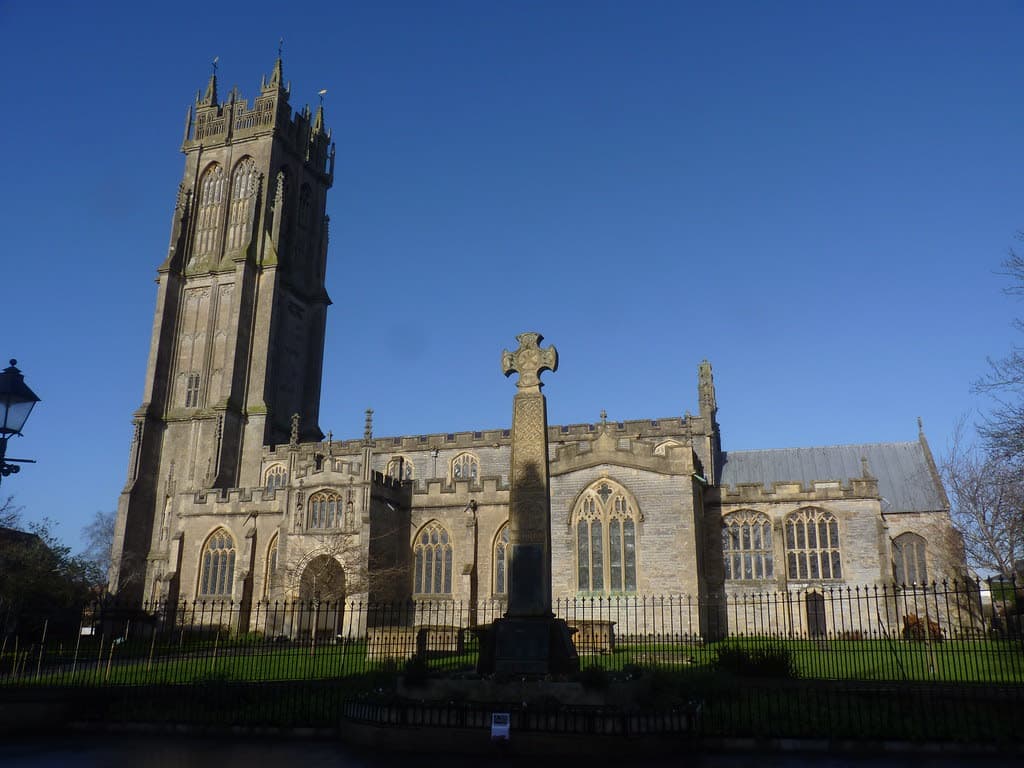
St John's Church
Glastonbury's living parish church, where legend meets weekly worship beneath a medieval tower
Glastonbury, Somerset, United Kingdom
At A Glance
- Coordinates
- 51.1482, -2.7162
- Suggested Duration
- Allow thirty to forty-five minutes for viewing the church and churchyard, including the Holy Thorn and labyrinth. If attending a service, add one to one and a half hours (Sung Eucharist runs approximately one hour). If walking the labyrinth contemplatively, add fifteen to twenty minutes.
- Access
- Located on the High Street in central Glastonbury, directly opposite the Abbey entrance. Street parking is available in the town center. The ground floor of the church is wheelchair accessible; some areas may have steps. Public toilets are available nearby in the town. The parish office can be reached at 01458 830060 (Tuesday-Friday mornings).
Pilgrim Tips
- Located on the High Street in central Glastonbury, directly opposite the Abbey entrance. Street parking is available in the town center. The ground floor of the church is wheelchair accessible; some areas may have steps. Public toilets are available nearby in the town. The parish office can be reached at 01458 830060 (Tuesday-Friday mornings).
- No formal dress code applies, but attire respectful for a place of worship is appreciated. The church interior can be cool; layered clothing is practical.
- Photography is permitted during visiting hours for personal, non-commercial use. Flash photography is discouraged. Never photograph during services. Be mindful of others present—do not photograph individuals without consent.
- The church has limited opening hours—confirm before visiting by checking the website or calling the parish office. The church may be closed for private services. During services, photography is inappropriate. The space should be treated as what it is: an active place of worship where people come to pray, not merely to tour.
Overview
On Glastonbury's High Street stands a church where prayers have risen for eight centuries. St. John the Baptist is not a museum of legend but a working parish church—Sunday Eucharist, weekday morning prayer, weddings and funerals. Yet within its walls, medieval treasures connect to Glastonbury's deepest stories: a cope worn by the last abbot before his execution, a fragment of a Joseph of Arimathea shrine, and in the churchyard, the Holy Thorn from which a sprig is sent to the monarch each Christmas.
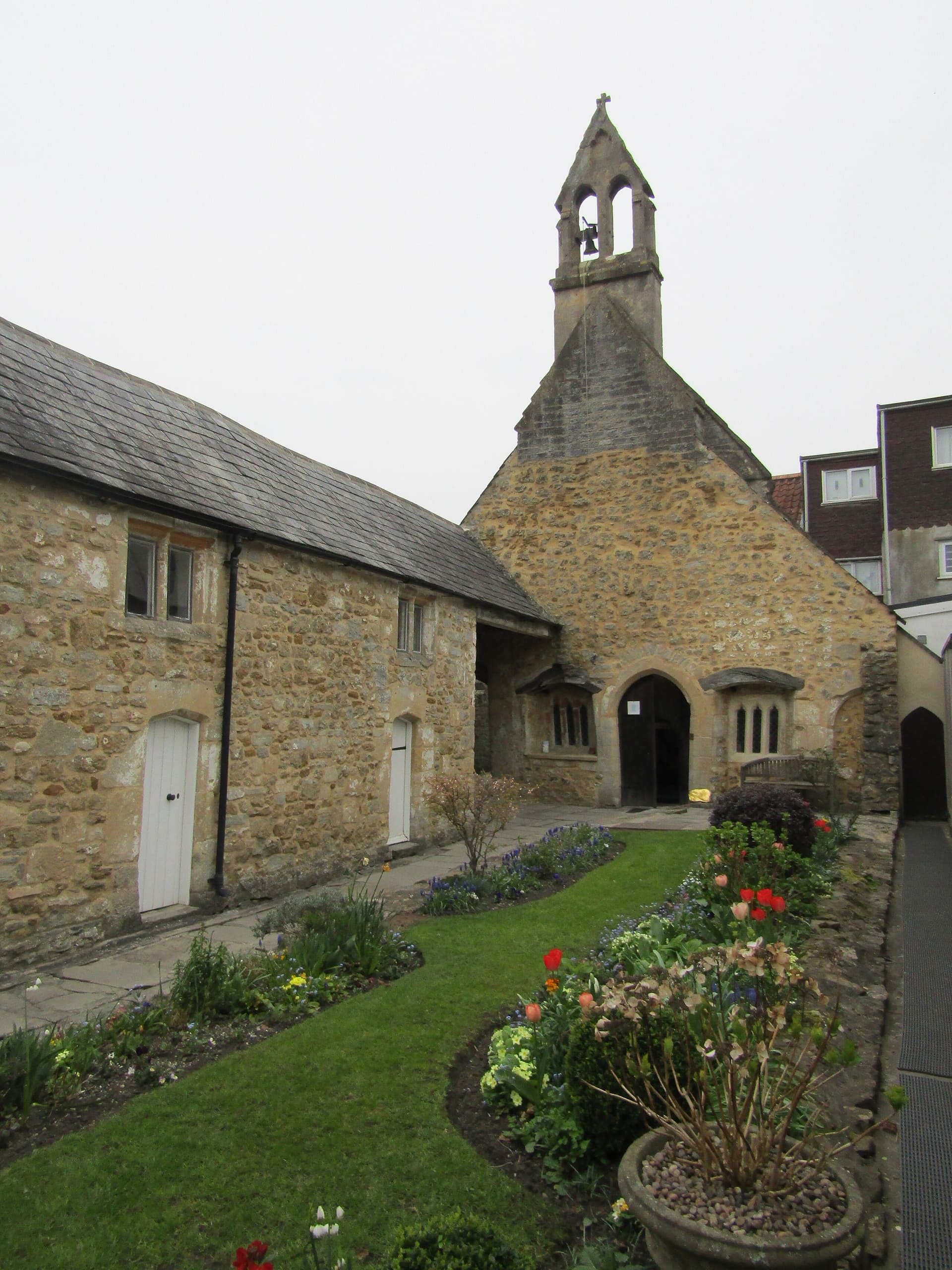
The tower of St. John's rises 134 feet above the High Street, the second tallest parish church tower in Somerset. For centuries it has served as a landmark, orienting pilgrims approaching Glastonbury from miles away. But St. John's is not merely a monument to be admired from a distance. Step inside, and you enter a space where worship continues as it has since the Middle Ages.
This is the parish church of Glastonbury, part of the Diocese of Bath and Wells. Each Sunday, the congregation gathers for Eucharist. Each Tuesday, morning prayer is offered. The rhythm of Anglican worship—Advent, Christmas, Lent, Easter, Ordinary Time—structures the year as it has structured years for generations. Visitors are explicitly welcomed: 'All are welcome to all services.'
Yet the layers of history are inescapable. The medieval stained glass in the chancel still filters light as it did in the fifteenth century. Four tomb-chests from that era remain in place. In a glass case rests a cope traditionally worn by Abbot Richard Whiting, the last abbot of Glastonbury, executed on the Tor in 1539 for remaining loyal to Rome. A tapestry commemorates him and the two monks who died with him.
In the churchyard grows a Holy Thorn, descended from cuttings of the legendary tree on Wearyall Hill. Each December, schoolchildren cut a sprig that travels to Buckingham Palace for the monarch's Christmas table. The ceremony, revived in 1929, connects modern Britain to the story that Joseph of Arimathea planted his staff on English soil. Whether one believes the legend or not, the ceremony is real. The faith continues.
Context And Lineage
St. John's Church has served Glastonbury for at least eight centuries, predating the Reformation that destroyed the Abbey. Its survival as a parish church ensured continuity of worship even as the monks were dispersed and their buildings demolished. The church preserves relics that connect to Glastonbury's legendary past while maintaining its primary function as a place of living faith.
The origins of St. John's intertwine with Glastonbury's larger sacred history. The church stands on a Saxon site, with the first documented church dating from 1175—though legend attributes the original foundation to Saint Dunstan in the tenth century. Throughout the medieval period, St. John's operated under the Abbey's jurisdiction, one of seven local churches in a special arrangement that made the Abbot the Archdeacon.
The present church emerged from rebuilding in the fifteenth century, with the magnificent tower completed around 1475 under Abbot Selwood. Built of Doulting stone, Street stone, and local Tor burr, it represented the prosperity of late medieval Glastonbury. The church was richly furnished: a silver rood, images in each chapel, costly vestments, 21 chained books including a Caxton first edition.
The Reformation transformed but did not destroy St. John's. While the Abbey was dissolved and the last abbot executed, the parish church continued under new ecclesiastical arrangements. Some of its treasures were dispersed or destroyed, but others survived—including, according to tradition, the cope worn by Abbot Whiting at his death.
The lineage of St. John's connects pre-Reformation Catholic worship to post-Reformation Anglican practice within the same physical space. The medieval artifacts—tombs, glass, vestments—persist alongside Victorian restorations and twentieth-century additions. This layering embodies English religious history: not a clean break but a continuous adaptation, with each generation adding to what predecessors built.
Abbot Richard Whiting
Last Abbot of Glastonbury, martyr
Whiting presided over the Abbey during the Dissolution. Refusing to surrender to Henry VIII, he was tried on charges of robbing Glastonbury church and executed on the Tor in November 1539. The cope traditionally worn by him is preserved at St. John's. He was beatified by the Catholic Church in 1895.
Abbot Selwood
Builder of the tower
Abbot of Glastonbury who constructed the magnificent tower around 1475, after the original began shedding pinnacles. The tower remains his monument, the second tallest parish church tower in Somerset.
Reverend Lionel Lewis
Reviver of traditions
Vicar of St. John's who in 1929 revived the custom of sending a Holy Thorn sprig to the monarch. Also instrumental in establishing the Anglo-Catholic pilgrimage tradition from 1923.
Ernst Blensdorf
Sculptor
German artist who escaped the Nazis and settled in Somerset. His 1945 carvings—Madonna with Child and Resurrection Christ, each from a single elm tree—reflect his faith and gratitude for survival.
Why This Place Is Sacred
St. John's accumulates its sacred quality through continuous use rather than antiquity alone. Eight centuries of prayer, the presence of artifacts connecting to martyrdom and legend, and the ongoing worship of a living congregation create a space where past and present interpenetrate. The church is both heritage and home—a place visitors explore and parishioners gather.
Unlike the Abbey ruins across the road, St. John's Church remains fully alive. This distinction shapes the visitor's experience fundamentally. At the Abbey, one imagines what was. At St. John's, one encounters what is.
The thinness of St. John's derives from accumulation. Layer upon layer of prayer has soaked into these stones. The medieval tomb of John Cammell, who died in 1487, still bears traces of its original paint—someone painted those colors, someone commissioned that carving, someone grieved at that grave. The Green Man boss in the ceiling has watched five centuries of worship pass beneath. Ernst Blensdorf, a refugee from Nazi Germany, carved the Madonna and Resurrection Christ from single elm trunks in 1945—his gratitude for survival made permanent in wood.
The Joseph of Arimathea window, installed in 1936, depicts saints who according to tradition accompanied Joseph to Britain: King Arviragus, St. Aristobulus, St. Simon the Zealot. Before this window stands what may be a fragment of a shrine to Joseph from the Abbey, moved here in 1928. These connections to Glastonbury's foundational legend are not museum pieces—they exist within a functioning church, their meaning renewed by each service held in their presence.
The labyrinth in the churchyard, the Glastonbury Tercentennial Labyrinth, offers a different kind of thinness—the contemplative journey inward that walking meditation provides. It sits near the Holy Thorn, creating a small sacred precinct within the larger sacred precinct of the church grounds.
The church served as a parish church for Glastonbury's lay population from at least the twelfth century, distinct from the Abbey which served the monastic community. Before the Reformation, it was one of seven churches under the Abbey's ecclesiastical jurisdiction, forming a special Archdeaconry with the Abbot as Archdeacon.
The church has evolved through three major phases. The medieval church, wealthy and decorated, served pilgrims coming to the Abbey. The post-Reformation church adapted to Anglican worship while preserving medieval fabric. The modern church, particularly since the revival of pilgrimage traditions in the early twentieth century, has reasserted Glastonbury's significance as a destination for Christian seekers. The 1929 revival of the thorn cutting ceremony and the 1923 establishment of the Anglo-Catholic pilgrimage marked a conscious reconnection to the town's sacred identity.
Traditions And Practice
St. John's maintains the regular round of Anglican worship: Sunday Eucharist, weekday morning prayer, baptisms, weddings, funerals. The church also hosts special events including Thursday lunchtime concerts, the September Anglican pilgrimage, and the December thorn cutting ceremony. A prayer team offers personal ministry. The churchyard labyrinth invites walking meditation.
Before the Reformation, the church served pilgrims coming to Glastonbury Abbey, offering masses and prayers within a richly decorated interior. The daily offices would have been observed, the liturgical year marked with appropriate vestments and ceremonies. The medieval treasures—silver rood, images, vestments—created a sensory experience of sacred presence.
After the Reformation, Anglican services replaced Catholic liturgy, but the rhythm of worship continued. The Book of Common Prayer structured services. The church remained central to community life through baptisms, marriages, and burials.
Sunday services follow the pattern: 8am Holy Communion (quieter, said service) and 10am Sung Eucharist (with music and full congregation). Tuesday morning prayer begins at 9am. A prayer team is available Tuesday mornings and during Sunday Eucharist for those seeking personal prayer ministry.
Thursday lunchtime concerts at 1pm offer musical refreshment in a sacred setting. The annual Anglican pilgrimage in September brings visitors from across England for services incorporating both the Abbey and St. John's. The December thorn cutting ceremony, typically mid-month, draws schoolchildren, the Mayor, clergy, and visitors for the cutting of the royal sprig.
The churchyard labyrinth, installed as the Glastonbury Tercentennial Labyrinth, offers contemplative walking meditation. The labyrinth's path winds inward to a center and back out—a physical metaphor for spiritual journey that requires no specific belief to experience.
If visiting during a service, participate according to your comfort—stand, sit, and kneel with the congregation or remain quietly seated throughout. The 10am Sunday Sung Eucharist offers the fullest experience of living worship in this space. Tuesday morning provides opportunity for quieter prayer and possible conversation with the prayer team.
Outside service times, move through the church slowly. The medieval artifacts reward attention: the traces of paint on John Cammell's tomb, the Green Man boss in the ceiling, the colors of the Joseph of Arimathea window. Sit in a pew and absorb the quality of silence—different from the silence of an empty building, this silence holds centuries of prayer.
In the churchyard, walk the labyrinth if time permits. The practice requires no instruction: follow the path to the center, pause, return. Visit the Holy Thorn, understanding that from this tree the Christmas sprig will travel to the royal table.
Anglican / Church of England
ActiveSt. John's has served as Glastonbury's principal parish church since the Reformation, maintaining continuous Christian worship for five centuries under Anglican practice. The church is part of the Abbey Parishes benefice within the Diocese of Bath and Wells. It positions itself as 'a Christian Spiritual Centre at the Heart of the Town for everyone'—welcoming visitors alongside the regular congregation.
Sunday services include 8am Holy Communion and 10am Sung Eucharist. Tuesday begins with 9am Morning Prayer, followed by prayer team availability from 10:30am to 12:30pm. Thursday features 1pm lunchtime concerts. The church hosts baptisms, weddings, and funerals. A small café serves visitors during opening hours.
Anglo-Catholic Pilgrimage
ActiveThe annual Anglican pilgrimage to Glastonbury revives medieval traditions within an Anglican framework. Established in 1923, it draws from the Oxford Movement's recovery of Catholic devotion within Anglicanism. St. John's serves as a key station on the pilgrimage circuit, hosting High Mass as part of the day's observances. The pilgrimage affirms Glastonbury's significance for English Christianity.
The pilgrimage takes place in early September, typically incorporating services at both the Abbey and St. John's Church. The historical pattern included Holy Communion in St. Joseph's Chapel at the Abbey, High Mass at St. John's, followed by procession and Evensong. Pilgrims travel from across England to participate.
Royal Christmas Thorn Ceremony
ActiveSince 1929, a sprig of Holy Thorn from the St. John's churchyard tree has been sent to the British monarch for the Christmas table. The ceremony connects the Crown to Glastonbury's legends and positions the town as central to British spiritual identity. The custom may have older origins—possibly Stuart times, when the Bishop of Bath and Wells sent sprigs to Queen Anne.
The ceremony takes place on a weekday in mid-December. Schoolchildren from St. John's Infants School, assisted by the Mayor, cut the sprig while singing. The Vicar offers a blessing. Clergy, councillors, and families attend. The sprig is then dispatched to Buckingham Palace. The ceremony is a local event with national significance.
Medieval Catholic Heritage
HistoricalBefore the Reformation, St. John's was one of seven churches under Glastonbury Abbey's complete ecclesiastical jurisdiction. The church housed costly treasures: a silver rood, images in each chapel, vestments, 21 chained books. This wealth reflected Glastonbury's status as England's premier pilgrimage destination. The Dissolution destroyed the Abbey but left the parish church standing.
Medieval practices—the daily offices, the celebration of saints' days, the use of elaborate vestments and vessels—ceased with the Reformation. Today, the church preserves and displays artifacts from this period: four fifteenth-century tomb-chests, medieval vestments including the Abbot Whiting cope, a possible Joseph of Arimathea shrine fragment, stained glass. A 1965 tapestry commemorates the three Glastonbury martyrs.
Experience And Perspectives
Entering St. John's from the busy High Street, the contrast is immediate. The stone walls hold a different quality of silence. Light filters through medieval and Victorian glass. The scale of the nave, the height of the tower above, the worn flags of the floor—all testify to centuries of use. This is not a space preserved in amber but a space still breathing.
The approach from the High Street passes through the churchyard, where the Holy Thorn stands to the left and the labyrinth offers its meditative path. The church door may be open during visiting hours, or closed with a notice directing visitors to service times. This unpredictability is itself a reminder: this is a working church, not a heritage attraction operating to a fixed schedule.
Inside, the Perpendicular Gothic architecture creates vertical emphasis—the eye lifts toward the clerestory windows and the paneled ceiling with its gilded bosses. One of these bosses depicts a Green Man, that enigmatic foliate face appearing in so many medieval churches, his meaning uncertain but his presence persistent.
The nave invites walking. The four medieval tomb-chests mark resting places of those whose names are partially preserved—John Cammell, whose alabaster figure retains traces of fifteenth-century paint. At the front, the Joseph of Arimathea window casts colored light across the possible shrine fragment below. The Abbot Whiting cope, displayed in its case, carries the weight of martyrdom—this fabric touched the body of a man killed for his faith.
The side chapels offer more intimate spaces. St. George's Chapel serves as war memorial, its books recording Glastonbury's fallen. St. Nicholas' Chapel, mentioned in records since 1366, has witnessed prayers for over six centuries. The Lady Chapel holds a Clayton and Bell window from 1885.
On Tuesdays, a prayer team is available in one of the side chapels, offering personal prayer ministry to anyone who asks. This practical availability of spiritual care distinguishes a living church from a heritage site.
The church sits on the High Street in central Glastonbury, its tower unmistakable. The main entrance faces the street, with the churchyard extending to either side. Glastonbury Abbey lies just across the road to the south. The visitor might enter through the churchyard gate, pausing at the Holy Thorn and labyrinth before entering the church proper. Inside, the nave runs west to east, with side chapels accessible from the aisles. The Joseph of Arimathea window and shrine fragment are in the north aisle. The medieval tombs are distributed throughout.
St. John's Church invites multiple perspectives. Historians see a well-documented medieval parish church with Victorian restoration. Art historians appreciate the Perpendicular Gothic architecture and surviving medieval fabric. Christian pilgrims encounter a living place of worship connecting them to centuries of faith. Those drawn to Glastonbury's legends find tangible connections to the Joseph of Arimathea and Arthurian narratives.
Architectural historians document St. John's as a fine example of Somerset Perpendicular Gothic, with its tower among the finest in the county. The church's foundation on a Saxon site is confirmed, with continuous use documented from the twelfth century. The relationship to Glastonbury Abbey—one of seven churches under abbatial jurisdiction—is well established in historical records.
The legends associated with the church are understood as medieval constructs. The Joseph of Arimathea narrative was promoted from the twelfth century onward, partly for pilgrimage revenue. The Holy Thorn legend appears in written sources from 1502. This does not diminish their historical significance—they reveal how medieval communities created and sustained sacred narratives—nor their continuing spiritual resonance for believers.
For Anglican Christians, St. John's represents the continuity of Christian worship in Glastonbury through the upheavals of Reformation and beyond. The church positions itself as 'a Christian Spiritual Centre at the Heart of the Town for everyone.' The weekly Eucharist connects worshippers to a tradition reaching back through centuries. The presence of the Abbot Whiting cope provides tangible connection to martyrdom—faith maintained unto death.
For Anglo-Catholics, the September pilgrimage maintains traditions revived in the 1920s, when the Oxford Movement's influence made Glastonbury's connections to early British Christianity newly significant. The pattern of pilgrimage—services at St. John's and the Abbey, processions and prayers—creates annual renewal of these connections.
Some view St. John's as part of Glastonbury's sacred geometry, positioned in relationship to the Tor, Chalice Well, and other sites along alleged energy lines. The church's dedication to John the Baptist—the initiator, the voice in the wilderness—connects to esoteric traditions of initiation and transformation. The Green Man boss in the ceiling is sometimes interpreted as evidence of pre-Christian beliefs surviving within Christian symbolism.
The churchyard labyrinth, while a modern addition, attracts those interested in labyrinth spirituality as a meditative practice predating and transcending Christianity. The practice of walking the labyrinth requires no specific belief—only the willingness to follow the path.
Questions remain unanswered. The full extent of Saxon and Norman foundations beneath the present church has not been completely excavated. What became of the church's medieval treasures after the Reformation—the 21 chained books, the silver rood, the images in each chapel—is largely unknown. Whether the Joseph of Arimathea 'shrine fragment' genuinely comes from an abbey shrine, and whether such a shrine ever existed, cannot be definitively established. Whether Dunstan genuinely built the original church, as legend claims, is uncertain.
Visit Planning
St. John's Church is centrally located on Glastonbury's High Street, easily walkable from all other town sites. Opening hours are limited and can change at short notice—checking the website or calling ahead is strongly recommended. Services offer guaranteed access. Allow thirty to forty-five minutes for a visit, longer if attending a service.
Located on the High Street in central Glastonbury, directly opposite the Abbey entrance. Street parking is available in the town center. The ground floor of the church is wheelchair accessible; some areas may have steps. Public toilets are available nearby in the town. The parish office can be reached at 01458 830060 (Tuesday-Friday mornings).
As a functioning parish church, St. John's asks for the same respect as any place of worship. During services, participate appropriately or remain quietly at the back. During visiting hours, maintain quiet, do not touch artifacts, and be mindful of any worshippers present. Photography is permitted outside services with appropriate discretion.
The etiquette for St. John's reflects its nature as both heritage site and active church. These functions coexist but sometimes require different behaviors.
When entering during visiting hours, pause to let your eyes adjust. Others may be present in prayer—individuals sitting quietly in pews, someone lighting a candle in a side chapel. Move quietly, speak softly if at all. The church's welcome is genuine but assumes respect in return.
The medieval artifacts invite close looking but not touching. The tomb-chests have survived five centuries; visitors should not risk damage for a closer view. The Abbot Whiting cope is displayed in a case; the glass protects fabric that witnessed martyrdom. The Joseph of Arimathea shrine fragment, if indeed that is what it is, deserves the reverence appropriate to something possibly connected to the town's founding legend.
During services, visitors are welcome to attend. The church states this explicitly. However, attending a service means participating as appropriate or remaining respectfully still. Photography during services is not appropriate. Mobile phones should be silenced before entering.
The prayer team's availability is a distinctive feature. If you feel drawn to receive prayer ministry, this is offered freely and without judgment. The team is available Tuesday mornings and during Sunday Eucharist.
No formal dress code applies, but attire respectful for a place of worship is appreciated. The church interior can be cool; layered clothing is practical.
Photography is permitted during visiting hours for personal, non-commercial use. Flash photography is discouraged. Never photograph during services. Be mindful of others present—do not photograph individuals without consent.
Donations support the church's maintenance and community work. The church shop and small café also provide support. If you feel moved to leave a physical offering, speak with a welcomer or parish staff rather than leaving items unattended.
Do not touch artifacts or climb on tomb-chests. Silence mobile phones. Maintain quiet throughout. During services, follow the congregation's lead or remain seated at the back. Do not enter restricted areas. Dogs are generally not permitted inside.
Sacred Cluster
Nearby sacred places create the location cluster described in the growth plan. This block is intentionally crawlable and links into the wider regional graph.