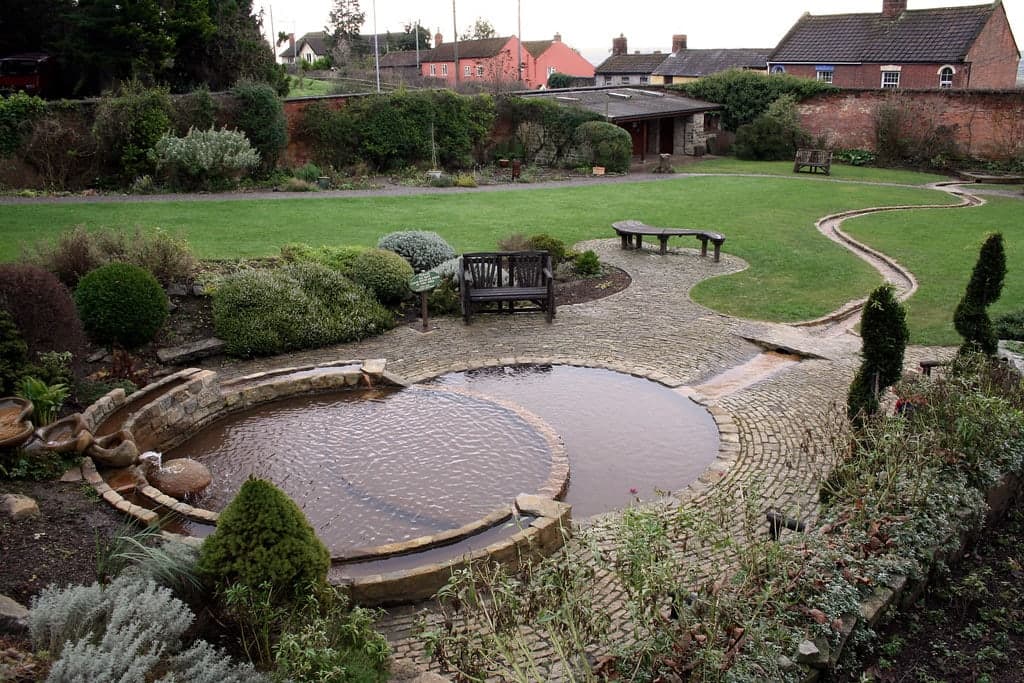
Chalice Well Gardens
Where red waters flow from beneath the Tor, carrying legends of the Grail and Goddess alike
Glastonbury, Somerset, United Kingdom
At A Glance
- Coordinates
- 51.1437, -2.7062
- Suggested Duration
- Most visitors spend one to two hours. Those seeking deeper engagement may stay longer. If you wish to participate in a Silent Minute, plan accordingly—arriving at least fifteen minutes before noon or three o'clock.
- Access
- The gardens are located on Chilkwell Street, a ten to fifteen minute walk from Glastonbury town center. No car parking exists on site except for disabled visitors. Bicycle parking is available. The spring water is freely available for drinking at the Lion's Head fountain. Containers may be purchased at the shop or brought from home to fill with water to take away.
Pilgrim Tips
- The gardens are located on Chilkwell Street, a ten to fifteen minute walk from Glastonbury town center. No car parking exists on site except for disabled visitors. Bicycle parking is available. The spring water is freely available for drinking at the Lion's Head fountain. Containers may be purchased at the shop or brought from home to fill with water to take away.
- No specific dress code applies. Comfortable clothing appropriate for garden paths serves well. Modest dress respects the contemplative atmosphere without being required.
- Personal photography is permitted throughout the gardens. Filming is not allowed. Be especially mindful near the wellhead and Lion's Head, where visitors often have intimate moments. Do not photograph people without permission.
- The water's high iron content gives it a strong metallic taste. Some people find this unpleasant; others find it grounding. Pregnant people, those with iron disorders, or anyone concerned about mineral content should consult medical guidance before drinking significant quantities. The Vesica Pool is slippery. Wade with care. Group ceremonies during public hours are not permitted without prior arrangement. If you wish to conduct ritual with others, contact the Trust about booking time outside public hours.
Overview
At the foot of Glastonbury Tor, iron-stained waters have flowed without ceasing for over two thousand years. Christian pilgrims come seeking the Holy Grail. Goddess devotees honor the sacred feminine. Pagans mark the wheel of the year. Yet beneath all interpretations, the spring simply flows—red, constant, indifferent to the meanings we bring, open to all who come seeking.
Something happens when you enter the gardens of Chalice Well. The noise of Glastonbury's busy high street falls away. The path descends through layered green toward a sound you only half-register at first—the continuous murmur of moving water. At the heart of this two-acre sanctuary, a spring rises from deep beneath Somerset, carrying with it the rust-red signature of iron dissolved over geological time. The waters have never stopped flowing, not in recorded drought, not in the hottest summers. Twenty-five thousand gallons each day, year after year, century after century.
For some, this is the blood of Christ, carried here in the Grail by Joseph of Arimathea and seeping upward through sacred ground. For others, this is the womb-water of the Goddess, the feminine counterpart to the White Spring across the road. For still others, the spring is simply what it has always been—a place where humans come to drink, to wash, to be healed, to mark transitions, to remember that something larger than themselves has been flowing since before they arrived and will continue after they leave.
The Chalice Well Trust, which has maintained the site since 1959, welcomes all these interpretations and none. The gardens are a World Peace Garden, open to seekers of every path. What you find here depends on what you bring—and on something harder to name, something the waters themselves seem to carry.
Context And Lineage
Chalice Well sits at the intersection of Christian Grail legend, Celtic water veneration, and contemporary Goddess spirituality. Its recorded history spans two thousand years, but archaeological evidence suggests human presence extending much further back.
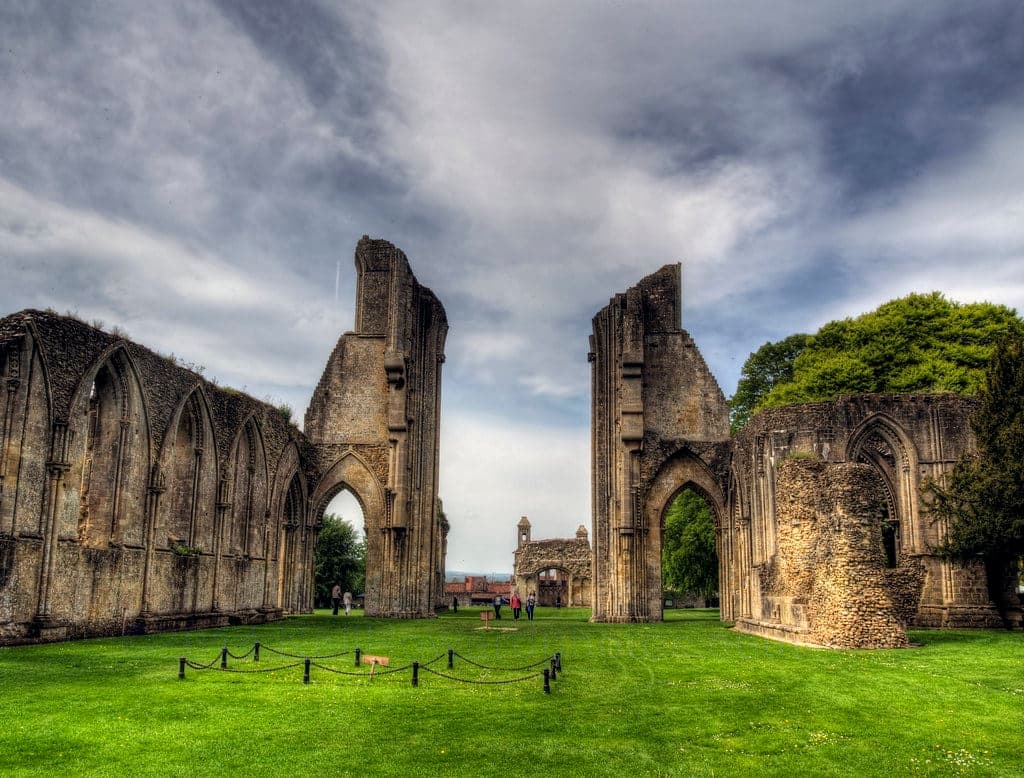
Christian legend holds that Joseph of Arimathea—the wealthy follower who buried Christ's body—traveled to Britain after the Crucifixion, carrying with him the cup from the Last Supper that had caught drops of Christ's blood. According to the story, he buried this Holy Grail beneath Glastonbury Tor, and from that spot a red spring began to flow. The legend gained prominence in the 12th century, when Glastonbury Abbey promoted the region as Avalon, the mystical isle of Arthurian romance.
Celtic tradition suggests the spring was sacred long before any Grail arrived. Water sources held profound significance in pre-Christian Britain—springs were understood as portals to the Otherworld, gifts from healing deities, places where the boundary between visible and invisible thinned. The red color would have demanded interpretation: blood, perhaps, or the signature of some subterranean power.
Science offers its own origin story. Geological research confirms the spring is fed by a deep aquifer in the Pennard Sands, filtered through layers of rock that dissolve iron into the water. When this iron-rich water meets air, it oxidizes, precipitating the red deposits that stain everything the spring touches. The chemistry is well understood. What the chemistry means is another question.
The site's spiritual lineage is multiple rather than singular. It belongs to no single tradition yet welcomes all. Celtic water veneration gave way to Christian Grail legend, which was supplemented rather than replaced by 20th-century Goddess spirituality and interfaith seeking. Each layer remains accessible, coexisting in the same small garden.
Joseph of Arimathea
mythological
According to Christian legend, Joseph was a wealthy follower of Jesus who provided the tomb for Christ's burial. Medieval tradition expanded his story, claiming he traveled to Britain with the Holy Grail and established the first Christian church at Glastonbury. While no historical evidence supports his presence in Britain, the legend has shaped Glastonbury's identity for nearly a millennium.
Alice Buckton
historical
Buckton purchased the Chalice Well property in 1912, beginning its modern preservation. An author, playwright, and spiritual seeker, she hosted gatherings at the site and worked to maintain its sacred character during a period when it might otherwise have been developed.
Wellesley Tudor Pole
historical
Tudor Pole founded the Chalice Well Trust in 1959, establishing the legal and philosophical framework that governs the site today. A spiritualist, early British Baháʼí, and founder of the Silent Minute movement during World War II, he envisioned the well as a place serving seekers of whatever religious persuasion or none. His ashes were scattered in the gardens after his death in 1968.
Why This Place Is Sacred
Pilgrims across traditions describe Chalice Well as a thin place—a site where the boundary between worlds feels permeable. The spring's constancy, the convergence of multiple sacred narratives, and the deliberate hush of the gardens all contribute to an atmosphere where something beyond ordinary experience feels possible.
The language of thin places comes from Celtic Christianity, but visitors of many backgrounds use similar words. The veil is thin here. Worlds touch. Something comes through. These reports have persisted for as long as written records exist and likely longer.
Several factors may contribute to this quality. The spring itself has never failed—a constancy that ancient peoples would have recognized as significant, a sign that this place maintains its connection to unseen sources. The waters emerge red, carrying the visual signature of blood or rust, demanding interpretation. Across the road, another spring flows—the White Spring, clear and calcium-white—creating a polarity that various traditions read as masculine and feminine, blood and water, life and death.
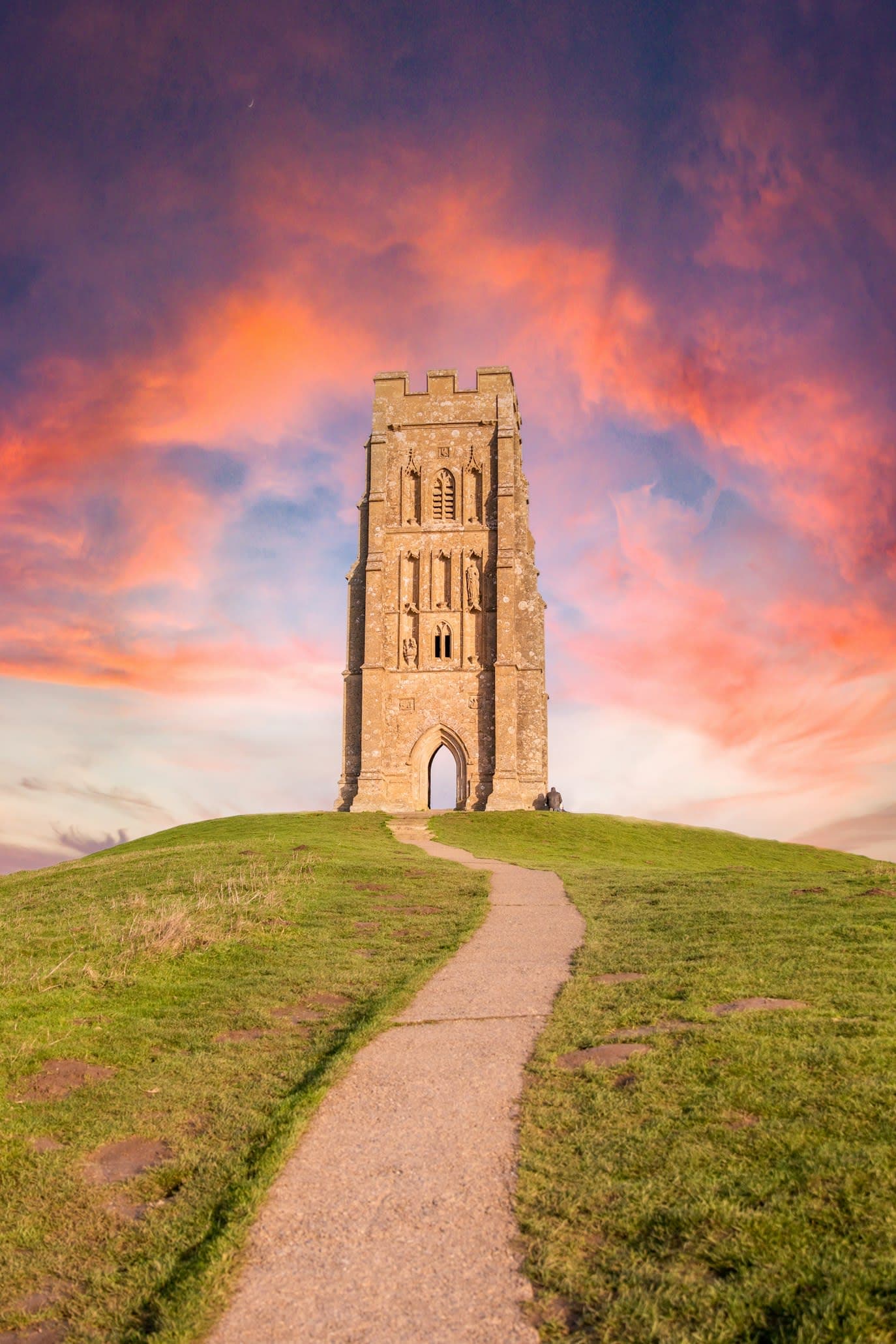
Glastonbury Tor rises just above, its terraced slopes visible from the gardens. In Celtic tradition, the Tor was an entrance to Annwn, the Otherworld. In Christian legend, Joseph of Arimathea buried the Grail at its foot. The well sits at this convergence point, gathering stories the way water gathers in low places.
The gardens themselves are designed as a journey inward. From the entrance, paths lead through increasingly quiet zones until you reach the wellhead itself—a physical pilgrimage that mirrors an interior one. The Trust observes a Silent Minute at noon and three o'clock each day, marked by a bell, when the gardens fall into collective stillness. In that moment, whatever separates this world from others may feel especially permeable.
Archaeological evidence confirms the spring has been used for at least two thousand years. Philip Rahtz's excavations uncovered Upper Paleolithic and Mesolithic flints nearby, along with Iron Age pottery, Roman sherds, and medieval artifacts—suggesting that humans have been drawn to this spot since prehistory. Whether they came for water supply, healing, or spiritual communion cannot be determined from artifacts alone. What is clear is that they kept coming.
The site's sacred associations have shifted through layers of tradition. Celtic peoples likely venerated the spring as part of widespread water-cult practices, possibly associating it with a healing goddess. The arrival of Christianity brought new narratives—the Holy Grail legend emerged in the 12th century, when Glastonbury Abbey promoted the area as Avalon. In 1751, a claimed healing brought brief fame as a spa site. Alice Buckton purchased the property in 1912, beginning its preservation. Wellesley Tudor Pole founded the Trust in 1959, explicitly creating a space where multiple traditions could coexist. The 2001 designation as a World Peace Garden reflects this ecumenical vision. Today, Christian pilgrims, Goddess devotees, Pagans, and secular seekers walk the same paths, each finding what they came for.
Traditions And Practice
Contemporary practice at Chalice Well ranges from simple contemplation to structured ritual. Visitors drink from the Lion's Head fountain, sit in meditation throughout the gardens, participate in the daily Silent Minute, and mark seasonal festivals. The Trust hosts gatherings at solstices, equinoxes, and Celtic cross-quarter days.
Historical practices at the well can only be partially reconstructed. Celtic traditions likely included votive offerings to the waters—a common practice at sacred springs throughout Britain and Ireland. Medieval Christian pilgrims would have come seeking healing and connection to Grail legend. In 1751, after one Matthew Chancellor of North Wootton claimed the waters cured his ailment, a brief spa culture emerged, with a bathhouse constructed to accommodate those taking the waters.
The Silent Minute is observed daily at noon and three o'clock. A bell rings; the gardens fall still; visitors pause wherever they are. The practice originated with Tudor Pole during World War II, when he established a nightly minute of silence at nine o'clock, observed by millions across Britain.
Seasonal gatherings mark the turning points of the year. Beltane, the summer and winter solstices, and other festivals draw larger crowds who come for ceremony and community. These are organized by the Trust and generally welcome all participants.
Personal practice varies widely. Some visitors drink from the Lion's Head with intention, treating the water as sacrament. Others bathe hands or feet in the Vesica Pool. Candles can be purchased and lit in Arthur's Courtyard as offerings. Meditation happens throughout—on benches, beside the wellhead, in the meadow. The gardens are designed to accommodate solitude; even on busy days, quiet corners exist.
Drink from the Lion's Head fountain, taking a moment before and after to notice what shifts. Participate in the Silent Minute if your visit coincides with noon or three o'clock. Bring an intention—a question, a transition, something you are releasing—and see if the gardens hold it differently than you can hold it alone. If moved to do so, light a candle. Sit somewhere until you feel complete, which may take longer than you expect.
Christian
ActiveFor Christian pilgrims, Chalice Well connects to the central mysteries of the faith. The Holy Grail—the cup from the Last Supper that caught Christ's blood at the Crucifixion—is said to be buried nearby, its presence causing the spring to flow red. The site thus participates in the Incarnation itself: spirit made matter, the divine entering physical form. Christian visitors come to pray, to contemplate the Passion, and to connect with a lineage of pilgrimage extending to the earliest centuries of British Christianity.
Christian practice at the site tends toward quiet prayer and meditation. Some visitors observe the Stations of the Cross internally while walking the gardens. Others treat drinking from the Lion's Head as a form of communion. The Silent Minute, established by the Christian spiritualist Tudor Pole, offers a structured contemplative practice. Seasonal festivals at the solstices and equinoxes incorporate Christian elements alongside others.
Celtic/Pagan
ActiveFor practitioners of Celtic Paganism, Druidry, and related paths, Chalice Well represents continuity with pre-Christian sacred traditions. Sacred springs were venerated throughout Celtic Britain as sources of healing, as portals to the Otherworld, and as places where deities could be contacted. The well sits at the foot of Glastonbury Tor—understood in Celtic tradition as an entrance to Annwn, the realm beyond. To practice here is to participate in traditions older than Christianity, renewed in contemporary form.
Pagan practice varies by tradition and individual. Seasonal celebrations—Beltane, Samhain, the solstices and equinoxes—draw gatherings for ceremony. Daily practice may include offerings to the waters, meditation oriented toward the land or ancestors, or simply sitting in awareness of the Otherworld's proximity. Some practitioners work with specific Celtic deities; others orient toward the spirit of the land itself.
Goddess Spirituality
ActiveFor those following Goddess-centered paths, Chalice Well embodies the sacred feminine. The well itself—receptive, containing, perpetually giving—is read as a manifestation of the Goddess. The Vesica Piscis symbol on the well cover represents the vulva, the portal, the creative opening through which all life emerges. The red waters suggest menstrual blood—the life-giving flow. Glastonbury more broadly is understood as a center of Goddess energy, and Chalice Well as its womb.
Goddess practitioners come for healing work, particularly related to women's mysteries, fertility, and the reclaiming of feminine sacred power. Rituals may honor Brigid, who is associated with the nearby White Spring, or the Goddess in more general form. Bathing in or anointing with the waters carries particular significance. Seasonal celebrations often include women's circles and ceremonies honoring the feminine aspects of the turning year.
Contemporary Interfaith/New Age
ActiveFor many visitors, Chalice Well belongs to no single tradition and therefore can serve all. The Trust's founding vision—a place for seekers of whatever religious persuasion or none—creates space for those who identify with multiple traditions or with none specifically. The site functions as a thin place, an energy point, a location where healing and transformation are possible regardless of the framework one brings. Glastonbury's broader identity as a spiritual center draws those on eclectic paths.
Interfaith practice is less structured than tradition-specific approaches. Meditation, personal ritual, drinking the waters with intention, simply being present—these are common. Some visitors work with crystal energy or chakra frameworks. Others practice mindfulness without metaphysical overlay. The gardens accommodate this diversity; the Trust neither endorses nor discourages particular approaches.
Experience And Perspectives
Visitors commonly report a shift upon entering the gardens—a settling of mind, an intensification of presence. The act of drinking the iron-rich waters at the Lion's Head fountain becomes ceremonial for many, whether or not they hold any specific belief. The gardens' design guides visitors through progressively quieter spaces toward the wellhead itself.
The entrance to Chalice Well lies on Chilkwell Street, a quiet road at the edge of Glastonbury. You pay at a small shop, receive a brief orientation, and step through a gate into another quality of space entirely. The gardens are not large—two acres—but they unfold with the layered intimacy of a much larger landscape.
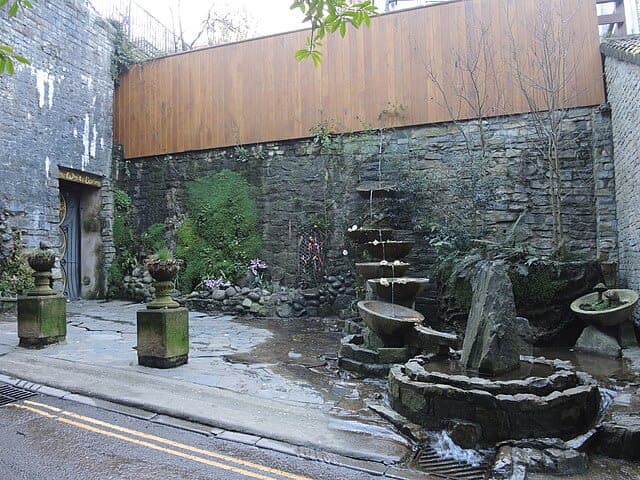
Paths wind downward through plantings chosen for contemplation rather than display. The sound of water becomes audible before you see it. At the Lion's Head fountain, a bronze lion mouth pours red-stained water into a trough where visitors can drink or bathe their hands. The taste is metallic, distinctly iron—some find it medicinal, others find it grounding, others simply drink because that is what people have done here for millennia.
The wellhead itself lies below, covered by an iron lid bearing the Vesica Piscis symbol—two interlocking circles pierced by a sword or staff. The design was created by Frederick Bligh Bond, church architect and archaeologist, and gifted to the site in 1919. Through its gaps, the red waters are visible, perpetually welling up.
Nearby, the Vesica Pool offers a space for bathing feet or hands, though the slippery stones require care. Gardens continue beyond—the King's Meadow, dedicated to rest and quiet gathering, and Arthur's Courtyard, where candles may be lit and left as offerings.
Visitors describe various things. A sense of profound peace is the most common report. Some speak of emotional release, tears that come without specific cause. Others describe clarity—problems that seemed intractable suddenly resolving into obvious solutions. Whether these experiences arise from the site itself, from the permission to stop and be still, or from something that defies explanation, the reports are consistent enough to take seriously.
Arrive without agenda if possible. The gardens reward slowness. Find a place to sit before drinking from the lion's head. Notice what you brought with you—what thoughts, what tensions, what questions—and see if something shifts. The Silent Minute at noon or three o'clock offers a moment of collective stillness that deepens whatever the gardens are already offering.
Chalice Well has been interpreted through multiple frameworks—archaeological, Christian, Celtic, feminist, esoteric. No single perspective captures the full significance of the site, and the Trust explicitly maintains space for all interpretations. What follows presents several ways of understanding what draws people here, each authoritative within its own frame.
Archaeological evidence confirms human presence at the site extending back at least two thousand years, with artifacts suggesting possibly much earlier activity. The spring's chemistry is well understood: water filtered through the Pennard Sands aquifer dissolves iron, which oxidizes upon exposure to air, creating the distinctive red deposits. The Holy Grail legend can be traced to 12th-century literary sources—Robert de Boron's Joseph d'Arimathie first connected Joseph with the Grail and Britain—rather than to earlier historical documentation. The legend's emergence coincided with Glastonbury Abbey's promotion of the region as Avalon, likely for pilgrimage revenue. Scholarly consensus views the site as a sacred spring that has attracted various religious interpretations over time, none of which can be historically verified but all of which reflect genuine human needs for meaning and healing.
Christian tradition understands Chalice Well as the burial place of the Holy Grail, brought to Britain by Joseph of Arimathea. In this view, the red waters carry the blood of Christ or the rust of crucifixion nails—a perpetual sign of sacrifice and salvation. The site connects to a larger geography of Grail legend: Glastonbury Tor as the burial site, the Holy Thorn as the miraculous plant sprung from Joseph's staff.
Goddess tradition understands the well as a manifestation of the sacred feminine, the womb-waters of the earth herself. The Vesica Piscis symbol on the well cover is read as representing the vulva, the portal between worlds, the creative opening. The red spring and the white spring across the road form a polarity—blood and milk, menstrual and nurturing, different faces of the Goddess.
Celtic tradition, insofar as it can be reconstructed, likely understood the spring as a portal to the Otherworld and a source of healing power, associated with water deities worshiped throughout Britain and Ireland.
Some contemporary seekers understand Glastonbury as the heart chakra of the Earth, with Chalice Well as a primary energy point within that system. Ley line theories connect the Tor and well to a network of sacred sites across Britain. The red and white springs are interpreted as representing alchemical polarities. Some visitors report the waters carrying healing properties beyond what iron chemistry would explain. These interpretations are not endorsed by traditional scholarship or by any institutional authority, but they represent genuine frameworks through which some visitors encounter the site.
What remains genuinely mysterious is why this particular spring has drawn humans for millennia. The iron chemistry explains the color but not the persistence of attention. Whether something beyond the measurable exists here—whether the reports of unusual peace, healing, and transformation reflect more than placebo and permission to slow down—cannot be determined by current methods. The honest answer is that we do not know why Chalice Well feels the way it does to those who come. The reports are consistent enough to take seriously. What they mean remains open.
Visit Planning
The gardens are open year-round, with extended summer hours. No booking is required. Access is by foot or bicycle from Glastonbury town center; no parking exists on site except for disabled visitors. Water from the spring is freely available to drink and take home.
The gardens are located on Chilkwell Street, a ten to fifteen minute walk from Glastonbury town center. No car parking exists on site except for disabled visitors. Bicycle parking is available. The spring water is freely available for drinking at the Lion's Head fountain. Containers may be purchased at the shop or brought from home to fill with water to take away.
Glastonbury offers numerous accommodations oriented toward spiritual seekers, from simple hostels to retreat centers. The town's high street provides all practical necessities. The Chalice Well Trust does not offer overnight accommodation but can direct inquiries to suitable options.
Chalice Well asks for quietness, presence, and respect for other visitors who may be in prayer or meditation. Mobile phones should be turned off or silenced. Groups should disperse into smaller numbers throughout the gardens. The site is open to all beliefs, which requires everyone to make space for practices they may not share.
This is an active site of contemplation where visitors from many traditions come seeking healing, peace, or encounter with the sacred. Your presence joins a flow of pilgrims extending back millennia.
The primary etiquette is quiet. The gardens function as a space of collective contemplation; noise diminishes what everyone came for. Speak softly if you speak at all. Be aware that the person on the next bench may be in the midst of something profound.
Mobile phones should be turned off or set to airplane mode. The Trust explicitly requests this. The sound of a notification can shatter the atmosphere that makes the site what it is.
No filming is permitted, including on event days. Personal photography is allowed, but be mindful not to photograph other visitors who may be in private prayer or meditation.
If you visit with a group, break into smaller numbers once inside. The Meadow is available for those who wish to gather together. Other areas work best experienced individually or in pairs.
The Silent Minute at noon and three o'clock is marked by a bell. When it rings, stop. Stand or sit in stillness. Even if you hold no particular belief, the minute offers something—a pause, a collective breath, a moment of shared presence.
No specific dress code applies. Comfortable clothing appropriate for garden paths serves well. Modest dress respects the contemplative atmosphere without being required.
Personal photography is permitted throughout the gardens. Filming is not allowed. Be especially mindful near the wellhead and Lion's Head, where visitors often have intimate moments. Do not photograph people without permission.
Candles may be purchased at the entrance and placed in Arthur's Courtyard. No objects should be left at the wellhead or in the waters. Natural offerings—flowers, leaves—may be placed in appropriate garden spaces and will be cleared by staff.
No dogs except highly trained assistance dogs. No alcohol. No picnics containing alcohol. The Vesica Pool is off-limits for safety reasons. Group ceremonies during public hours require prior arrangement. The wellhead area is for quiet contemplation, not group gathering.
Sacred Cluster
Nearby sacred places create the location cluster described in the growth plan. This block is intentionally crawlable and links into the wider regional graph.