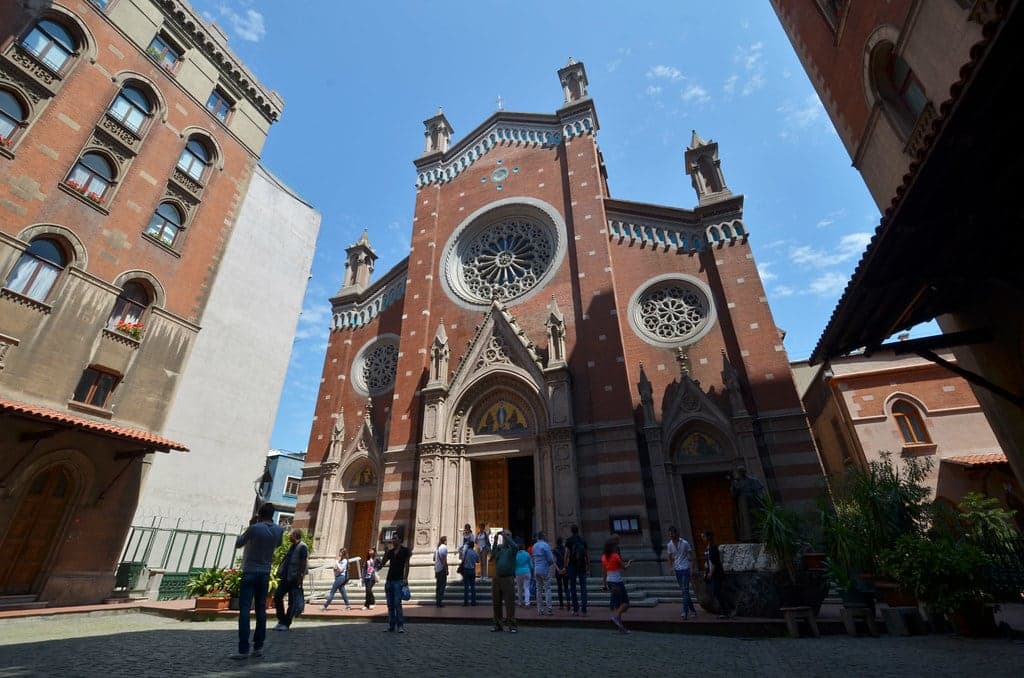
Church of Saint Anthony of Padua, Istanbul
Where Catholic faith persists in Istanbul, carrying three centuries of devotion and one pope's courage
Istanbul, Istanbul, Turkey
At A Glance
- Coordinates
- 41.0325, 28.9764
- Suggested Duration
- A contemplative visit takes 30 minutes to an hour. Those attending Mass should plan for an additional hour. Combined with exploring the statue and courtyard, most visitors spend 45 minutes to 90 minutes.
Pilgrim Tips
- Modest dress with shoulders and knees covered. No specific requirements beyond this, but clothing appropriate for a place of prayer is expected.
- Permitted outside of services, without flash. Be respectful and avoid photographing worshippers. During services, no photography is appropriate.
- Remember that this is an active place of worship. During services, visitors should remain at the back of the church and refrain from photography or movement that might disturb the congregation. Outside of services, maintain a respectful quiet. This is not a museum; people come here to pray.
Overview
Rising in red brick along Istanbul's busiest avenue, the Church of Saint Anthony of Padua has served the city's Catholic community since 1725. This is where Angelo Roncalli, the future Pope John XXIII, preached during World War II while secretly helping save thousands of Jewish lives. The church stands as a sanctuary of stillness amid the crowds of Istiklal Caddesi.
There is something startling about finding this church. You walk along Istiklal Avenue, swept up in the commerce and movement of millions, and suddenly there it is: an Italian neo-Gothic cathedral in red brick, its spire reaching above the cafes and shops, marking a threshold between worlds.
The Church of Saint Anthony of Padua has stood on this street, in one form or another, since 1725. The current building dates to 1912, designed by Giulio Mongeri for a community of Italian Levantines who had lived in Istanbul for centuries. These were the merchant families of Genoa and Venice who made the Ottoman capital their home, maintaining their faith across generations.
But the church carries a heavier significance than architecture alone can convey. Between 1935 and 1944, the Vatican's apostolic delegate in Turkey was a man named Angelo Roncalli. He preached from this pulpit. And during the darkest years of the war, he issued thousands of false baptismal certificates to Jews fleeing the Holocaust, using his position to save lives. That man became Pope John XXIII, and his statue now stands in the courtyard, unveiled by Pope Francis in 2014.
To enter the church is to step out of the city's roar into something older and quieter. The vaulted ceilings rise toward light. Masses continue daily, in Turkish, English, Italian, and Polish. Three centuries of prayer have soaked into these walls.
Context And Lineage
The Church of Saint Anthony of Padua was built by Istanbul's Italian Levantine community, the descendants of Genoese and Venetian merchants who had lived in the Ottoman Empire for centuries. The current neo-Gothic building dates to 1912, but Catholic worship has occurred on this site since 1725. The church's most significant historical moment came during World War II, when the future Pope John XXIII used it as a base for rescue operations.
The Italian community of Istanbul, primarily of Genoese and Venetian descent, had established itself in the Pera district (now Beyoglu) by the 17th century. They were part of the broader Levantine population, European Catholics who had made their lives in the Ottoman capital while maintaining their faith and cultural connections to Italy.
In 1725, this community built a church dedicated to Saint Anthony of Padua to serve their spiritual needs. For nearly two centuries, this church anchored their religious life. Then, in 1906, the city's expansion required its demolition to make way for a tramway along Istiklal Avenue.
Rather than disperse, the community chose to rebuild. They commissioned Giulio Mongeri, an Italian Levantine architect who taught at the Academy of Fine Arts, to design a grander structure. Mongeri created the neo-Gothic red brick cathedral that stands today, drawing on Tuscan-Lombard traditions. Construction took six years. On February 15, 1913, the Italian ambassador inaugurated the new church. On June 13, 1914, the Feast of Saint Anthony, it received papal blessing.
The Franciscan order first established presence in Constantinople in 1221. The Italian Catholic community in Pera developed over subsequent centuries, maintaining their faith under Ottoman rule. This community built the original church, rebuilt it more grandly, survived wars and political upheaval, and continues to gather here today. The current congregation includes Turks, expatriates, and visitors from around the world, with Masses in multiple languages reflecting this diversity.
Saint Anthony of Padua
patron_saint
A 13th-century Franciscan friar and Doctor of the Church, Anthony is one of Catholicism's most beloved saints. Known as the patron of lost things and helper of the poor, he draws devotion from millions worldwide. The church is dedicated to his intercession.
Pope John XXIII
historical
Before becoming pope, Roncalli served as Vatican ambassador to Turkey from 1935 to 1944. During World War II, he issued thousands of false baptismal certificates to save Jews from the Holocaust. He preached at this church and his statue now stands in the courtyard.
Giulio Mongeri
architect
The Italian Levantine architect who designed the current church building between 1906 and 1912. Mongeri taught at the Academy of Fine Arts and drew on Tuscan-Lombard neo-Gothic traditions for the design.
Why This Place Is Sacred
The Church of Saint Anthony of Padua derives its sacred quality from the continuity of three centuries of worship, its dedication to one of Catholicism's most beloved saints, and its profound connection to Pope John XXIII's wartime courage. The building itself was designed to elevate the spirit through architectural beauty, creating a space where the holy might feel near.
The factors that make a place thin are not always ancient. Sometimes they accumulate through consistent devotion, through the weight of prayers offered generation after generation in the same space. Saint Anthony of Padua has hosted Catholic worship in Istanbul for three hundred years.
The church is dedicated to Saint Anthony of Padua, one of the most popular saints in Catholic tradition. Known as the patron of lost things and helper of the poor, Anthony is a saint people turn to in moments of need. The devotional energy focused here, year after year, by those seeking his intercession adds a dimension beyond the building's physical beauty.
But what sets this church apart is its connection to Pope John XXIII. Angelo Roncalli served here during the years when Europe descended into genocide. He used his position not for politics but for rescue, issuing false papers to save Jewish lives. The church where he preached thus carries the memory of faith translated into moral courage. His statue in the courtyard is not merely commemorative; it marks this as a place where goodness was enacted at great risk.
The building itself contributes to its quality of thinness. Giulio Mongeri designed the church in neo-Gothic style, drawing on the Tuscan-Lombard tradition. The red brick exterior, the vaulted ceilings, the play of light through windows were all intended to lift the soul toward God. Architecture, here, is theology made visible.
Visitors entering from the commercial frenzy of Istiklal Avenue consistently describe a shift: the noise falls away, replaced by stillness. Whether this reflects acoustics, architecture, or accumulated centuries of prayer, the effect is consistent enough to take seriously.
The original 1725 church was built by Istanbul's Italian community to serve their spiritual needs in the Ottoman capital. When urban expansion required demolition in 1906, the community chose to rebuild rather than relocate, commissioning a grander structure that would anchor their faith in the rapidly modernizing city. The expansion was partly undertaken for the convenience of the Kanchi Mutt's peetadhipati, connecting it to broader institutional Catholic networks.
The church has survived fire in 1980, undergone restoration in 1983 with Italian government support, and been renovated again in 1991 and 2006. Through political changes, world wars, and demographic shifts, it has remained the center of Catholic life in Istanbul. The addition of Pope John XXIII's statue in 2014 marked a new chapter, explicitly linking the church to interfaith courage and the broader story of human dignity.
Traditions And Practice
The Church of Saint Anthony of Padua hosts daily Catholic Mass in multiple languages, continuing a tradition of worship stretching back three centuries. Visitors of all faiths are welcome to pray, light candles, and seek the intercession of Saint Anthony.
The church follows the Roman Catholic liturgical calendar, with the Feast of Saint Anthony on June 13 being the most significant celebration. Traditionally, bread is blessed on this day in honor of Saint Anthony's care for the poor. The devotional practice of praying to Saint Anthony for help finding lost things, both physical and spiritual, has been observed here since the church's founding.
Daily Masses are held in multiple languages reflecting the church's diverse community. The Saturday English Mass at 7:00 PM draws expatriates and visitors. Sunday services include Italian Mass at 11:30 AM, Polish Mass at 11:30 AM in the crypt, and English Masses at 10:00 AM and 7:00 PM. A Turkish Mass is held on Tuesdays at 11:00 AM. Confessions are available by arrangement with the priests.
Outside of services, the church remains open for individual prayer and contemplation. Visitors light candles, offer prayers, and seek the intercession of Saint Anthony for their intentions.
If you come seeking spiritual engagement, consider attending a Mass to experience the church as a living community of faith. The Saturday evening English service is accessible to most visitors. If you cannot attend a service, simply sitting in silence and opening yourself to the accumulated atmosphere of prayer can be meaningful.
Before leaving, you might light a candle and offer a prayer, whether to Saint Anthony, to the memory of Pope John XXIII and those he saved, or simply as an act of presence. The church welcomes seekers of all backgrounds.
Roman Catholicism
ActiveThe Church of Saint Anthony of Padua is the largest and most prominent Catholic church in Istanbul, serving as the center of Catholic life in the city. For three centuries, it has provided a spiritual home for the Levantine community and now serves a diverse congregation including Turkish Catholics, expatriates, and visitors. The church's connection to Pope John XXIII adds a dimension of papal significance.
Daily Mass in multiple languages (Turkish, English, Italian, Polish), confessions, celebration of the Catholic liturgical calendar with special emphasis on the Feast of Saint Anthony (June 13), veneration of Saint Anthony for intercession especially in finding lost things, candle lighting, and devotional prayer.
Experience And Perspectives
Visitors consistently describe the Church of Saint Anthony as an oasis of peace amid Istiklal Avenue's commercial intensity. The contrast between the street's noise and the church's silence creates a threshold experience. Many find themselves moved by the statue of Pope John XXIII and the story of wartime rescue it represents.
The approach itself is part of the experience. You walk along Istiklal Caddesi, Istanbul's famous pedestrian avenue, surrounded by crowds, shops, and the general intensity of one of the world's great cities. Then you see the red brick spire rising above the street level, and you descend through the courtyard into a different world.
The silence inside is not empty. It has a quality of listening, of space held open for something. The neo-Gothic vaulted ceilings draw the eye upward. Light falls through windows onto stone that has absorbed three centuries of prayer. Even visitors without Catholic faith describe a sense of peace that goes beyond mere quiet.
The statue of Pope John XXIII in the courtyard has become a focus of contemplation for many visitors. Learning what he did here during the war adds a moral weight to the physical space. This is not merely a beautiful building; it is a place where someone risked everything to save lives. That knowledge changes how the air feels.
During Mass, the church fills with Istanbul's diverse Catholic community, with prayers rising in multiple languages. For those who attend a service, there is a different quality of encounter, a sense of participating in something that has continued here for generations. But even outside service times, the church welcomes visitors seeking quiet reflection.
Those who spend time here, rather than rushing through, often describe unexpected emotional responses: a settling of anxiety, a clarity about matters that had seemed confused, sometimes tears without apparent cause. The church seems to create space for whatever needs to emerge.
Enter through the courtyard on Istiklal Avenue and pause at the statue of Pope John XXIII before descending. Take a moment to read about his story. Inside, find a pew and simply sit. The church asks nothing of you but presence. Let the noise of the street fade. Notice the light, the architecture, the silence. If you come seeking something, hold that intention lightly and see what arises.
Attending a Mass, particularly the Saturday evening English service or the Sunday Italian service, offers a deeper experience of the church's living tradition. You need not be Catholic to attend; visitors are welcome to observe reverently.
The Church of Saint Anthony of Padua can be understood through multiple lenses: as an architectural achievement, as a center of living Catholic faith, as a memorial to wartime courage, and as a symbol of interfaith coexistence in a Muslim-majority city. Each perspective illuminates something genuine about the place.
Architectural historians recognize the church as a fine example of early 20th-century neo-Gothic design, drawing on Italian Tuscan-Lombard traditions. Historians of the Levantine communities see it as a tangible remnant of the European Catholic presence in Ottoman and modern Turkish Istanbul, a presence that shaped the city's commercial and cultural life for centuries. The church's survival and continued activity is studied as an example of minority religious communities maintaining identity across political transformations.
For the Catholic community, the Church of Saint Anthony is simply home, the place where generations have been baptized, married, and mourned. Saint Anthony's intercession is understood as real and efficacious. The church's connection to Pope John XXIII adds a dimension of moral exemplarity: this is where a saint served, where faith became action. Traditional devotion continues here daily.
The appearance and character of the original 1725 church remain largely undocumented. The full extent of Angelo Roncalli's rescue activities during the war is not completely known, as much was done in secret and some records were destroyed. The church holds memories that have not been fully recorded.
Visit Planning
The Church of Saint Anthony is located on Istiklal Avenue in Beyoglu, easily accessible on foot from Taksim Square or by the historic tram. It is open daily from approximately 7:00 AM to 7:00 PM, with multiple Masses throughout the week. Admission is free.
Beyoglu offers abundant accommodation at all price points, from backpacker hostels to luxury hotels. Staying in the district allows easy access to the church and the vibrant cultural life of Istiklal Avenue.
The Church of Saint Anthony welcomes visitors of all faiths while maintaining its function as an active place of worship. Dress modestly, maintain silence especially during services, and approach the space with reverence.
The church is open to all visitors, but it asks something in return: respect for those who come here to pray. This is not primarily a tourist attraction but a sanctuary where people seek God. Your presence is welcomed as a gift, not a right.
Dress modestly. Shoulders and knees should be covered. This is not an arbitrary rule but a form of respect for the sacred character of the space. The same standard applies regardless of gender.
Inside the church, silence is the norm. Mobile phones should be switched off or silenced. Conversations should wait until you have left. During services, remain at the back of the church if you are observing rather than participating, and do not move about or take photographs.
Outside of services, photography is generally permitted, but be mindful. Use no flash, take no photos of people praying, and remember that the building exists for worship, not for social media content.
Modest dress with shoulders and knees covered. No specific requirements beyond this, but clothing appropriate for a place of prayer is expected.
Permitted outside of services, without flash. Be respectful and avoid photographing worshippers. During services, no photography is appropriate.
Donations to support the church are welcome. Candles are available for purchase. If you light a candle, it is customary to offer a prayer for your intention.
{"Maintain silence during services","Do not walk around during Mass","Turn off mobile phones","Do not photograph worshippers","Dress modestly with shoulders and knees covered"}
Sacred Cluster
Nearby sacred places create the location cluster described in the growth plan. This block is intentionally crawlable and links into the wider regional graph.
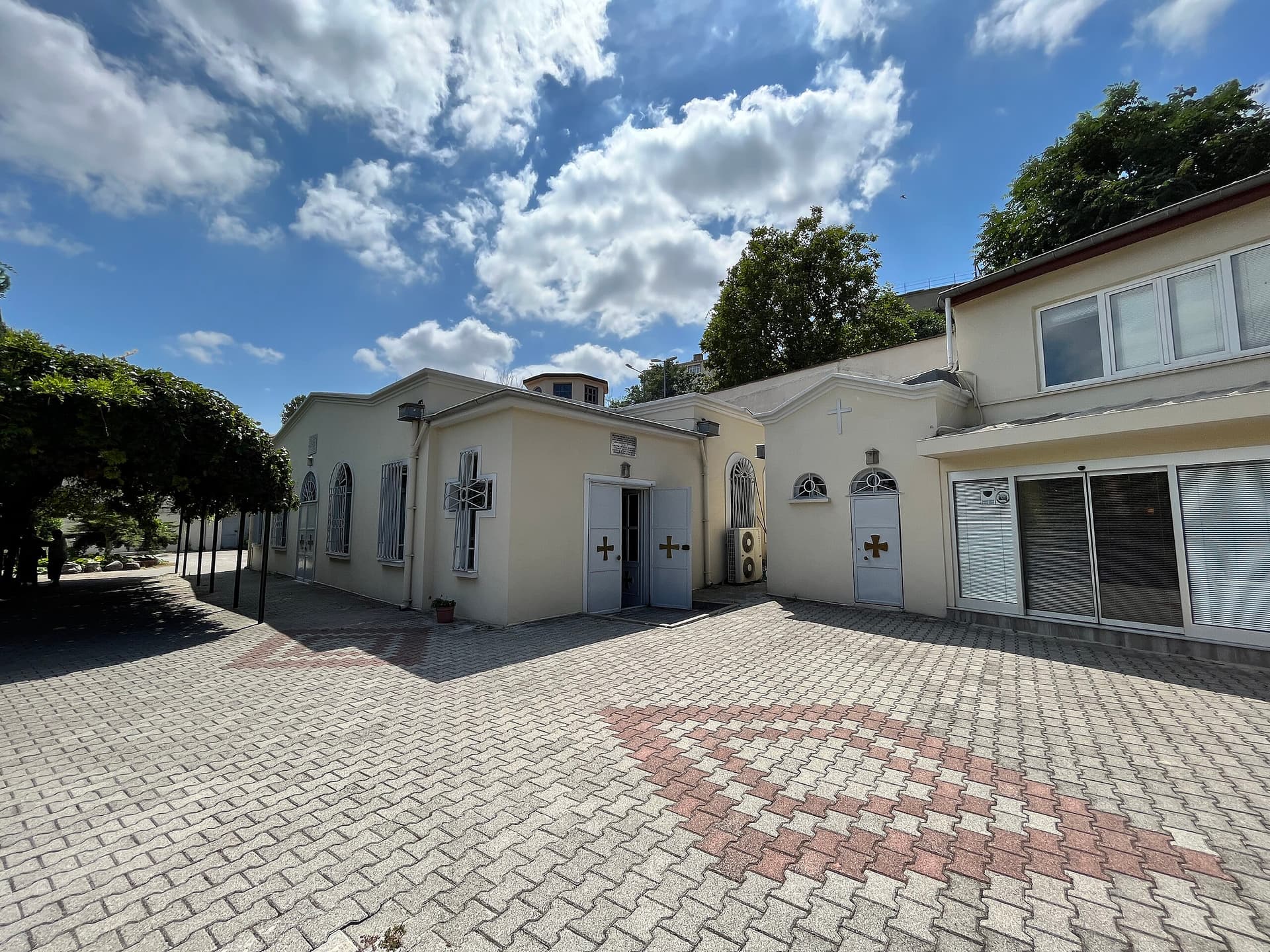
Church of St. Mary of Blachernae (Ayın Biri Kilisesi), Istanbul, Turkey
Istanbul, Istanbul, Turkey
3.2 km away
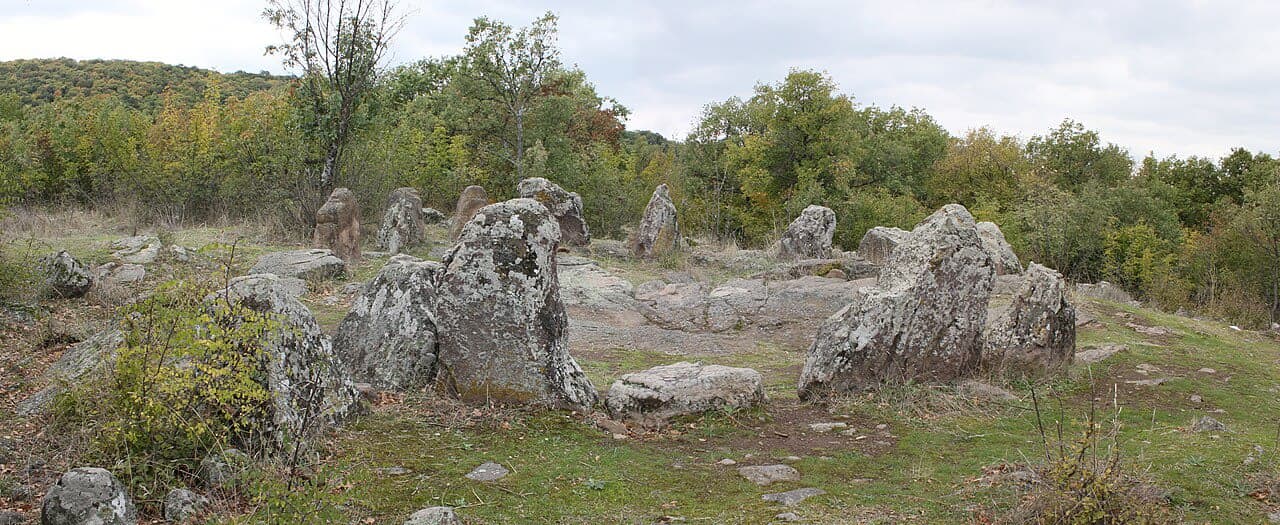
Dolni Glavanak Cromlech
Dolni Glavanak, Haskovo, Bulgaria
273.7 km away
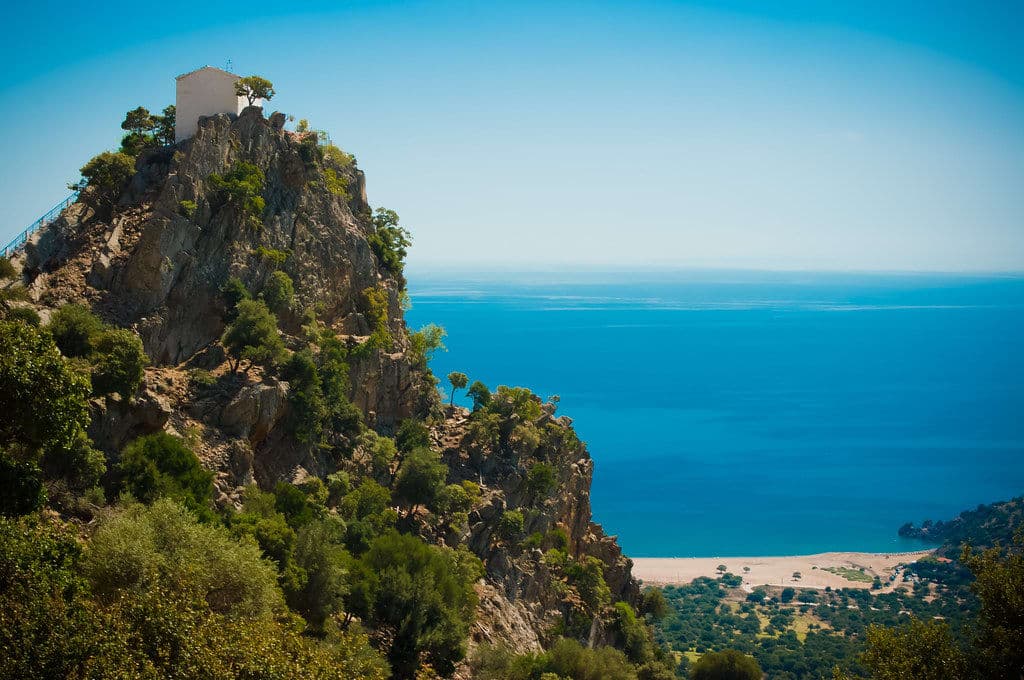
Panagia Krimniotissa
Municipality of Samothraki, Macedonia and Thrace, Greece
294.1 km away
Perperikon
Gorna Krepost, Kardzhali, Bulgaria
302.4 km away