Turkey
Adıyaman
1 site
Nemrut Dagi
Nemrut Dagi is a site of sacred significance. Approximate coordinates: 37.98050, 38.74003. Located in Kâhta, Güneydoğu Anadolu Bölgesi, Turkey.
Aegean Region
1 site
Ephesus
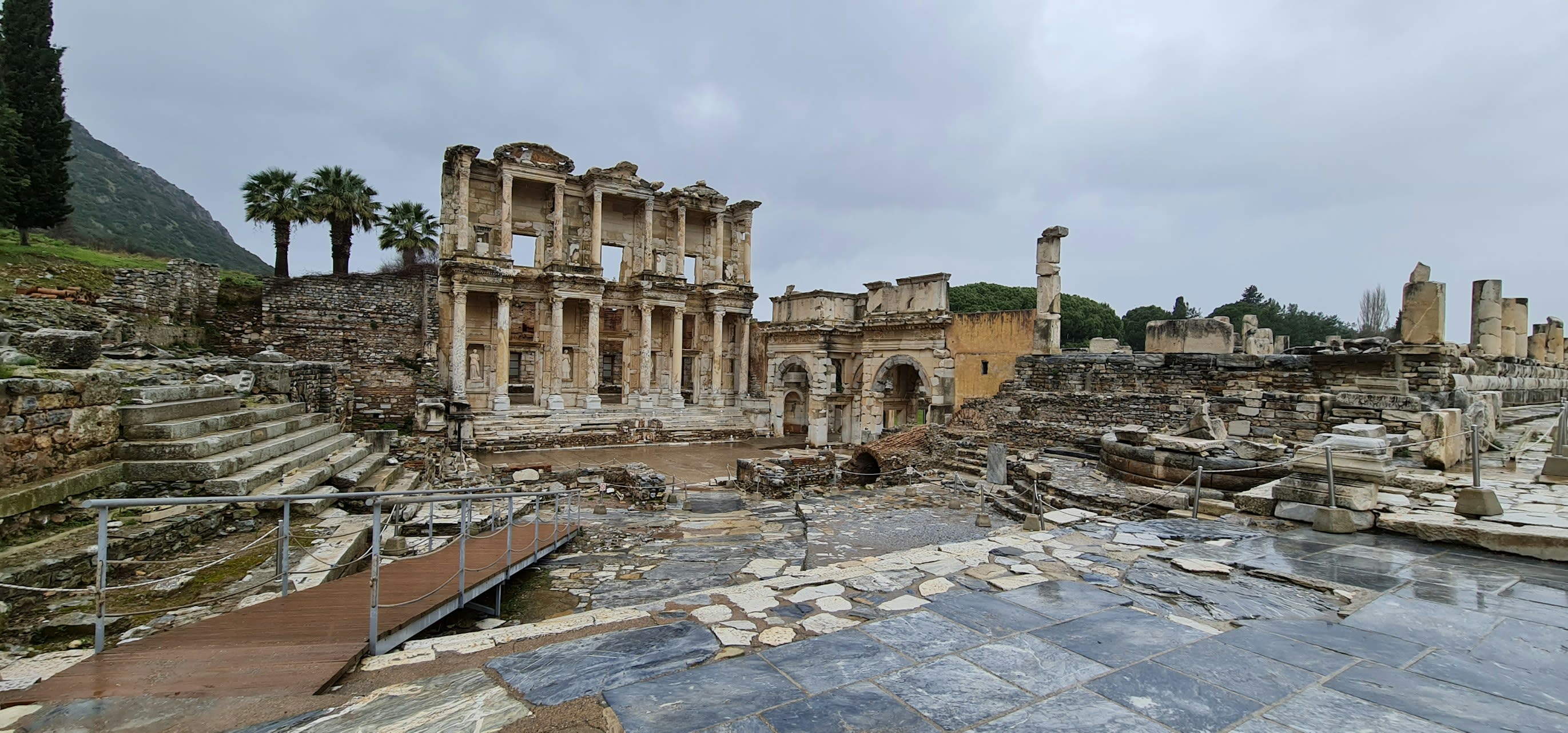
Ephesus (; Ancient Greek: Ἔφεσος, romanized: Éphesos; Turkish: Efes; may ultimately derive from Hittite: 𒀀𒉺𒀀𒊭, romanized: Apāša) was an ancient Greek city on the coast of Ionia, in present-day Selçuk in İzmir Province, Turkey. It was built in the 10th century BC on the site of Apasa, the former Arzawan capital, by Attic and Ionian Greek colonists. During the Classical Greek era, it was one of twelve cities that were members of the Ionian League. The city came under the control of the Roman Republic in 129 BC. The city was famous in its day for the nearby Temple of Artemis (completed around 550 BC), which has been designated one of the Seven Wonders of the Ancient World. Its many monumental buildings included the Library of Celsus and a theatre capable of holding 24,000 spectators. Ephesus was a recipient city of one of the Pauline epistles and one of the seven churches of Asia addressed in the Book of Revelation. The Gospel of John may have been written there, and it was the site of several 5th-century Christian Councils (Council of Ephesus). The city was destroyed by the Goths in 263. Although it was afterwards rebuilt, its importance as a port and commercial centre declined as the harbour was slowly silted up by the Küçükmenderes River. In 614, it was partially destroyed by an earthquake. Today, the ruins of Ephesus are a favourite international and local tourist attraction, being accessible from Adnan Menderes Airport and from the resort town Kuşadası. In 2015, the ruins were designated a UNESCO World Heritage Site.
Antalya
1 site
Olympus ruins, Antalya province
Olympus ruins, Antalya province, Turkey is a site of sacred significance. Approximate coordinates: 36.39561, 30.47265. Located in Kumluca, Akdeniz Bölgesi, Turkey.
Aydın
2 sites

Aphrodisias
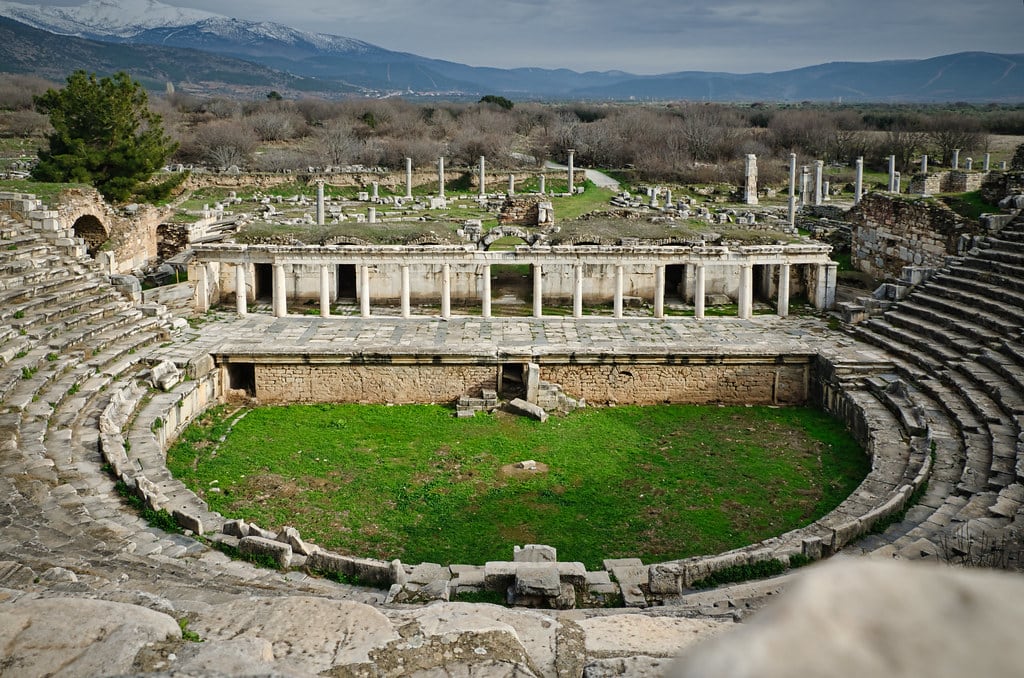
Aphrodisias (; Ancient Greek: Ἀφροδισιάς, romanized: Aphrodisiás) was a Hellenistic Greek city in the historic Caria cultural region of western Asia Minor, today's Anatolia in Turkey. It is located near the modern village of Geyre, about 100 km (62 mi) east/inland from the coast of the Aegean Sea, and 230 km (140 mi) southeast of İzmir. Aphrodisias was named after Aphrodite, the Greek goddess of love, who had here her unique cult image, the Aphrodite of Aphrodisias. According to the Suda, a Byzantine encyclopedic compilation, before the city became known as Aphrodisias (c. 3rd century BC) it had three previous Greek names: Lelégōn Pólis (Λελέγων πόλις, "City of the Leleges"), Megálē Pólis (Μεγάλη Πόλις, "Great City"), and Ninóē (Νινόη). Sometime before 640, in the Late Antique period when it was within the Byzantine Empire, the city was renamed Stauropolis (Σταυρούπολις, "City of the Cross"). In 2017, it was inscribed on the UNESCO World Heritage Site list.
Didyma
Didyma (; Ancient Greek: Δίδυμα) was an ancient Greek sanctuary on the coast of Ionia in the domain of the famous city of Miletus. Apollo was the main deity of the sanctuary of Didyma, also called Didymaion. But it was home to both of the temples dedicated to the twins Apollo and Artemis. Other deities were also honoured within the sanctuary. The Didymaion was well renowned in antiquity because of its famed oracle. This oracle of Apollo was situated within what was, and is, one of the world's greatest temples to Apollo. The remains of this Hellenistic temple belong to the best preserved temples of classical antiquity. Besides this temple other buildings existed within the sanctuary which have been rediscovered recently; a Greek theatre and the foundations of the above-mentioned Hellenistic temple of Artemis, to name but two.
Balıkesir
1 site

Mt. Ida (Kazdagi)
Mt. Ida (Kazdagi), Turkey is a site of sacred significance. Approximate coordinates: 39.70433, 26.82844. Located in Edremit, Marmara Bölgesi, Turkey.
Bursa
1 site

Bursa
Bursa (Turkish pronunciation: [ˈbuɾsa]) is a city in northwestern Turkey and the administrative center of Bursa Province. The fourth-most populous city in Turkey and second-most populous in the Marmara Region, Bursa is one of the industrial centers of the country. Most of Turkey's automotive production takes place in Bursa. As of 2019, the Metropolitan Province was home to 3 238 618 inhabitants, 2 283 697 of whom lived in the 3 city urban districts (Osmangazi, Yıldırım and Nilüfer) plus Gürsu and Kestel. Its rich history provides various places of interest in Bursa. Bursa became the capital of the Ottoman Empire (back then the Ottoman Beylik) from 1335 until the 1360s. A more recent nickname is Yeşil Bursa ("Green Bursa") referring to the parks and gardens located across the city, as well as to the vast, varied forests of the surrounding region. Bursa has a rather orderly urban growth and borders a fertile plain. The mausoleums of the early Ottoman sultans are located in Bursa, and the city's main landmarks include numerous edifices built throughout the Ottoman period. Bursa also has thermal baths, old Ottoman mansions, palaces, and several museums. Mount Uludağ, known in classical antiquity as the Mysian Olympus or alternatively Bithynian Olympus, towers over the city, and has a well-known ski resort. The shadow play characters Karagöz and Hacivat are based on historic personalities who lived and died in Bursa in the 14th century.
Çorum
1 site
Yazilikaya
Yazilikaya is a site of sacred significance. Approximate coordinates: 40.02557, 34.63193. Located in Boğazkale, Karadeniz Bölgesi, Turkey.
Eastern Anatolia Region
1 site
Darende
Darende (Turkish: Darende [daɾændæ] ) is a municipality and district of Malatya Province, Turkey. Its area is 1,482 km2, and its population is 24,588 (2022). It lies 46 miles (74 km) to the northwest of Malatya, 87 miles (140 km) south of Sivas, 110 miles (180 km) east of Kayseri.
Erzurum
1 site

Shrine of Abdurrahman Gazi Mezarlığı
Shrine of Abdurrahman Gazi Mezarlığı, Erzurum is a site of sacred significance. Approximate coordinates: 39.87833, 41.31278. Located in Palandöken, Doğu Anadolu Bölgesi, Turkey.
Hatay
6 sites
Church of St. Pierre
Church of St. Pierre, Antakya is a church of sacred significance. Approximate coordinates: 36.20926, 36.17835. Attributes: built, cultural. Tradition: Christianity. Associated figure: St. Pierre. Located in Antakya, Akdeniz Bölgesi, Turkey.

Harbiye Falls, Antakya
Harbiye Falls, Antakya, Turkey is a waterfall of sacred significance. Approximate coordinates: 36.12984, 36.14434. Attributes: natural. Located in Defne, Akdeniz Bölgesi, Turkey.
Monastery of St. Simeon the Younger, Samandagi
Monastery of St. Simeon the Younger, Samandagi, Turkey is a site of sacred significance. Approximate coordinates: 36.07665, 36.04229. Located in Samandağ, Akdeniz Bölgesi, Turkey.
Moses Tree
Moses Tree, Musa Agaci, Antakya, Turkey is a site of sacred significance. Approximate coordinates: 36.12886, 35.97212. Located in Samandağ, Akdeniz Bölgesi, Turkey.

Mount Kel Dağı
Mount Kel Dağı is a site of sacred significance. Approximate coordinates: 35.95028, 35.96944. Located in Yayladağı, Akdeniz Bölgesi, Turkey.
Virgin Mary Pool
Virgin Mary Pool, Meryem Ana Havuzu, Arsuz, Turkey is a site of sacred significance. Approximate coordinates: 36.38220, 35.92733. Located in Akdeniz Bölgesi, Turkey.
Iğdır
1 site
Mt. Ararat
Mt. Ararat is a site of sacred significance. Approximate coordinates: 39.70240, 44.29909. Located in Iğdır Merkez, Doğu Anadolu Bölgesi, Turkey.
Istanbul
8 sites

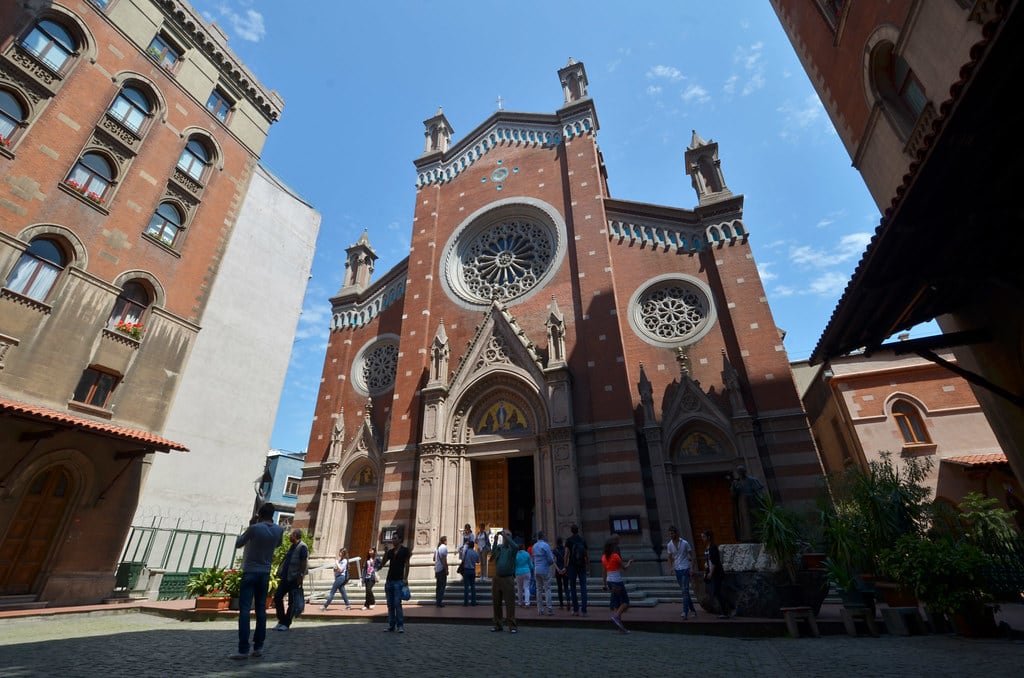
Church of Saint Anthony of Padua
Church of Saint Anthony of Padua, Istanbul is a church of sacred significance. Approximate coordinates: 41.03238, 28.97687. Attributes: built, cultural, pilgrimage. Tradition: Christianity. Associated figure: Saint Anthony of Padua. Located in Beyoğlu, Marmara Bölgesi, Turkey.

Church of St. Anthony of Padua, Istanbul
Church of St. Anthony of Padua, Istanbul, Turkey is a church of sacred significance. Approximate coordinates: 41.03231, 28.97713. Attributes: built, cultural. Tradition: Christianity. Associated figure: St. Anthony of Padua. Located in Beyoğlu, Marmara Bölgesi, Turkey.

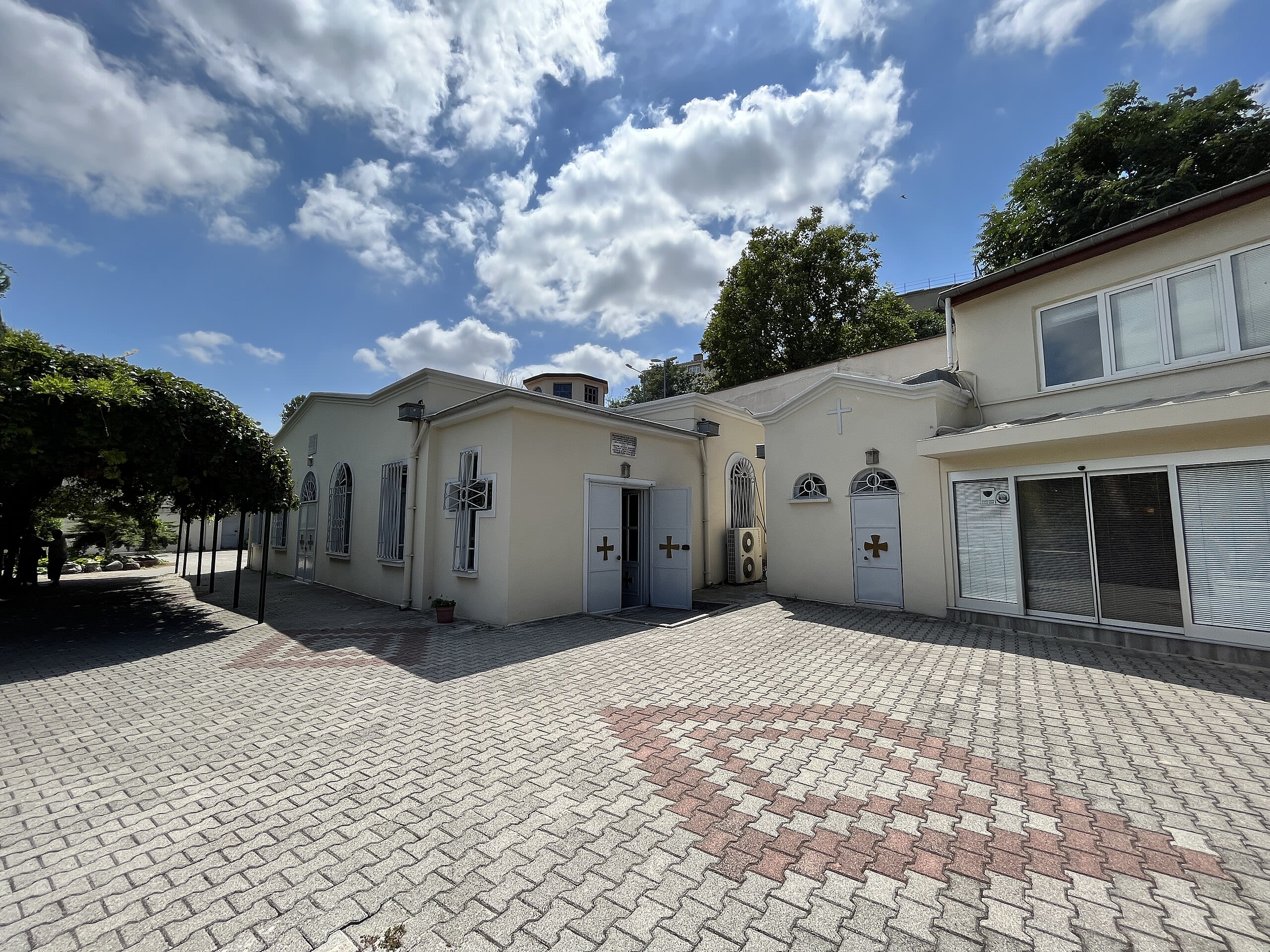
Church of St. Mary of Blachernae (Ayın Biri Kilisesi), Istanbul
The Church of Saint Mary of Blachernae (full name in Greek: Θεοτόκος των Βλαχερνών (pr. Theotókos ton Vlachernón); Turkish name: Meryem Ana Kilisesi) is an Eastern Orthodox church in Mustafa Paşa Bostanı Sokak in Ayvansaray in the Fatih district of Istanbul, just inside the old walled city. During the latter part of the Byzantine period, the original church complex on the site was one of the most important sanctuaries of Byzantium, arguably outstripping Hagia Sophia in importance due to its proximity to the Palace of the Blachernae. The Byzantine church complex was destroyed in 1434, and in the nineteenth century a small new church was built on the site. Today it is protected by a high wall, and fronted by a garden.

Eyup Sultan Mosque
Eyup Sultan Mosque, Istanbul is a mosque of sacred significance. Approximate coordinates: 41.04799, 28.93385. Attributes: built, cultural, pilgrimage. Tradition: Islam. Associated figure: Ayyub Ansari. Located in Eyüpsultan, Marmara Bölgesi, Turkey.
Joshua’s Hill
Joshua’s Hill, Istanbul is a tomb of sacred significance. Approximate coordinates: 41.16256, 29.08461. Attributes: built, cultural, pilgrimage. Tradition: Islamic. Associated figure: Joshua. Located in Beykoz, Marmara Bölgesi, Turkey.
Monastery of Saint George, Büyükada Island, Istanbul
Monastery of Saint George, Büyükada Island, Istanbul, Turkey is a site of sacred significance. Approximate coordinates: 40.84876, 29.11897. Located in Adalar, Marmara Bölgesi, Turkey.

Panagia Blaherna Ayazması
Panagia Blaherna Ayazması, Istanbul is a site of sacred significance. Approximate coordinates: 41.03864, 28.94283. Located in Fatih, Marmara Bölgesi, Turkey.
Telli Baba
Telli Baba, Istanbul is a site of sacred significance. Approximate coordinates: 41.17472, 29.07139. Located in Sarıyer, Marmara Bölgesi, Turkey.
Konya
2 sites

Konya
Konya is a major city in central Turkey, on the southwestern edge of the Central Anatolian Plateau, and is the capital of Konya Province. During antiquity and into Seljuk times it was known as Iconium. In 19th-century accounts of the city in English its name is usually spelt Konia or Koniah. In the late medieval period, Konya was the capital of the Seljuk Turks' Sultanate of Rum, from where the sultans ruled over Anatolia. As of 2024, the population of the Metropolitan Province was 2 330 024 of whom 1 433 861 live in the three urban districts (Karatay, Selcuklu, Meram), making it the sixth most populous city in Turkey, and second most populous of the Central Anatolia Region, after Ankara. City has Konya is served by TCDD high-speed train (YHT) services from Istanbul, Ankara and Karaman. The local airport (Konya Havalimanı, KYA) is served by frequent flights from Istanbul whereas flights to and from İzmir are offered few times a week.

Shrine of Hazrat Shemsuddin of Tabriz
Shrine of Hazrat Shemsuddin of Tabriz, Konya is a site of sacred significance. Approximate coordinates: 37.87368, 32.49753. Located in Karatay, İç Anadolu Bölgesi, Turkey.
Mardin
3 sites
Boncuklu Tarla
Boncuklu Tarla, Turkey is a ancient temple of sacred significance. Approximate coordinates: 37.52959, 41.84550. Attributes: built, cultural, archaeological. Located in Dargeçit, Güneydoğu Anadolu Bölgesi, Turkey.
Mor Gabriel Monastery, Midyat-Mardan
Mor Gabriel Monastery, Midyat-Mardan, Turkey is a site of sacred significance. Approximate coordinates: 37.32181, 41.53841. Located in Midyat, Güneydoğu Anadolu Bölgesi, Turkey.
Mor Hananyo Monastery (Deyrulzaffaran), Mardin
Mor Hananyo Monastery (Deyrulzaffaran), Mardin, Turkey is a site of sacred significance. Approximate coordinates: 37.29903, 40.79257. Located in Mardin, Güneydoğu Anadolu Bölgesi, Turkey.
Nevşehir
1 site

Shrine of Haji Bektash Veli
Shrine of Haji Bektash Veli is a site of sacred significance. Approximate coordinates: 38.94245, 34.56237. Located in Hacıbektaş İlçe Merkezi, İç Anadolu Bölgesi, Turkey.
Niğde
2 sites
Eski Gumus
Eski Gumus is a monastery of sacred significance. Approximate coordinates: 37.99666, 34.77125. Attributes: built, cultural, archaeological. Located in Niğde Merkez, İç Anadolu Bölgesi, Turkey.

Eski Gumus Monastery, Nigde
Eski Gumus Monastery, Nigde, Turkey is a monastery of sacred significance. Approximate coordinates: 37.99666, 34.77125. Attributes: built, cultural, archaeological. Located in Niğde Merkez, İç Anadolu Bölgesi, Turkey.
Şanlıurfa
3 sites

Balıklıgöl - Pool of Abraham, Halil-Ür Rahman Lake
Balıklıgöl - Pool of Abraham, Halil-Ür Rahman Lake, Sanliurfa is a lake of sacred significance. Approximate coordinates: 37.14765, 38.78470. Attributes: natural, cultural, pilgrimage. Tradition: Islamic. Associated figure: Abraham. Mythological context: Islamic. Located in Eyyübiye, Güneydoğu Anadolu Bölgesi, Turkey.
Göbekli Tepe
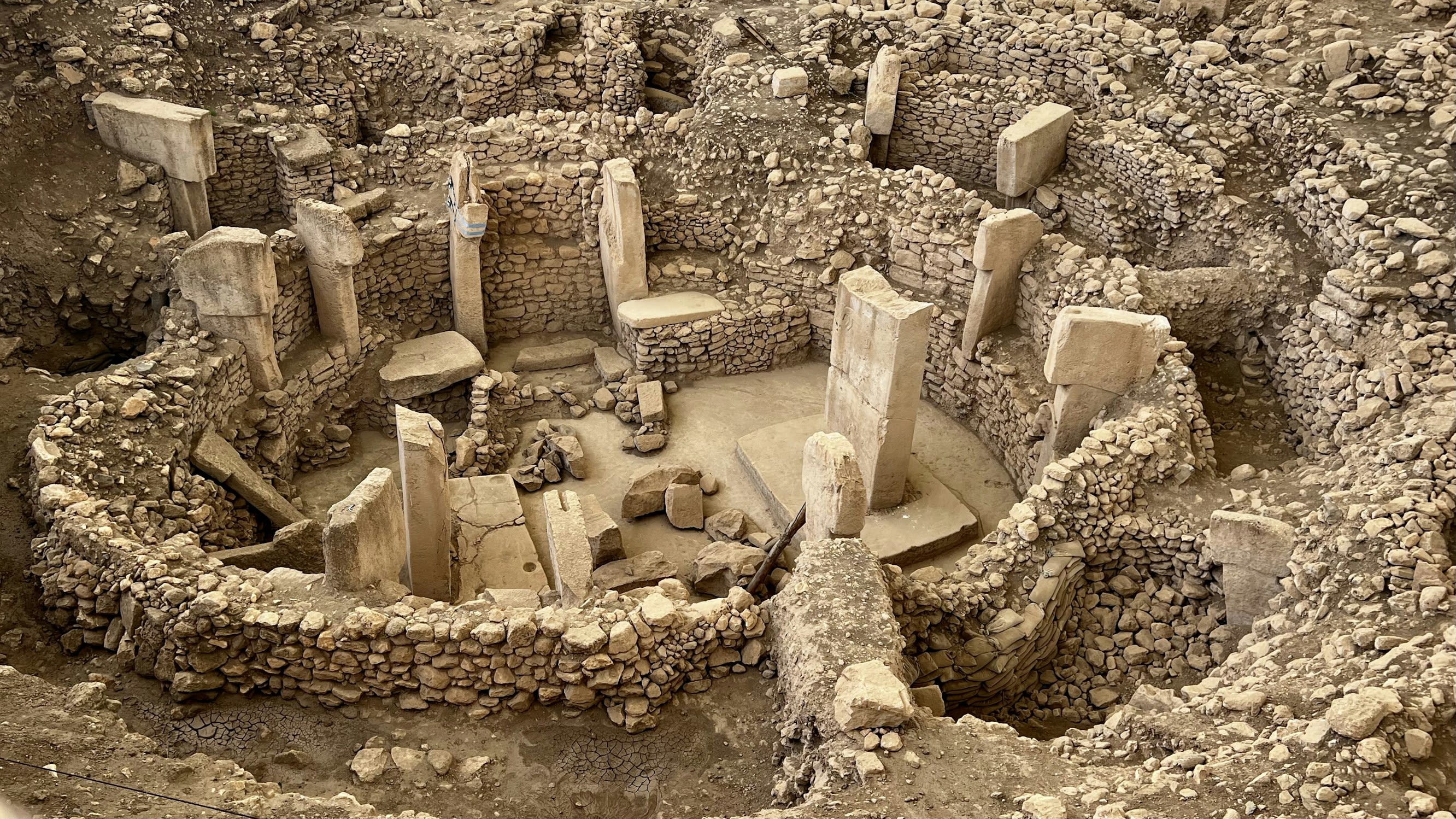
Göbekli Tepe (Turkish: [ɟœbecˈli teˈpe], 'Potbelly Hill'; Kurdish: Girê Mirazan or Xerabreşkê, 'Wish Hill') is a Neolithic archaeological site in Upper Mesopotamia (al-Jazira) in modern-day Turkey. The settlement was inhabited from around 9500 BCE to at least 8000 BCE, during the Pre-Pottery Neolithic. It is famous for its large circular structures that contain massive stone pillars – among the world's oldest known megaliths. Many of these pillars are decorated with anthropomorphic details, clothing, and sculptural reliefs of wild animals, providing archaeologists rare insights into prehistoric religion and the particular iconography of the period. The 15 m (50 ft) high, 8 ha (20-acre) tell is densely covered with ancient domestic structures and other small buildings, quarries, and stone-cut cisterns from the Neolithic, as well as some traces of activity from later periods. The site was first used at the dawn of the southwest Asian Neolithic period, which marked the appearance of the oldest permanent human settlements anywhere in the world. Prehistorians link this Neolithic Revolution to the advent of agriculture but disagree on whether farming caused people to settle down or vice versa. Göbekli Tepe, a monumental complex built on a rocky mountaintop with no clear evidence of agricultural cultivation, has played a prominent role in this debate. Recent findings suggest a settlement at Göbekli Tepe, with domestic structures, extensive cereal processing, a water supply, and tools associated with daily life. This contrasts with a previous interpretation of the site as a sanctuary used by nomads, with few or no permanent inhabitants. No definitive purpose has been determined for the megalithic structures, which have been popularly described as the "world's first temple[s]". They were likely roofed and appear to have regularly collapsed, been inundated by slope slides, and subsequently repaired or rebuilt. The architecture and iconography are similar to other contemporary sites in the vicinity, such as Karahan Tepe. The site was first noted in a 1963 archaeological survey. German archaeologist Klaus Schmidt recognised its significance in 1994 and began excavations there the following year. After he died in 2014, work continued as a joint project of Istanbul University, Şanlıurfa Museum, and the German Archaeological Institute, under the direction of Turkish prehistorian Necmi Karul. Göbekli Tepe was designated a UNESCO World Heritage Site in 2018, recognising its outstanding universal value as "one of the first manifestations of human-made monumental architecture". As of 2021, around 10% of the site has been excavated. Additional areas were examined by geophysical surveys, which showed the mound to contain at least 20 large enclosures.
Sanliurfa
Sanliurfa is a site of sacred significance. Approximate coordinates: 37.14752, 38.78652. Located in Eyyübiye, Güneydoğu Anadolu Bölgesi, Turkey.
Siirt
1 site
Veysel Karani Türbesi
Veysel Karani Türbesi is a site of sacred significance. Approximate coordinates: 38.13134, 41.71593. Located in Baykan, Güneydoğu Anadolu Bölgesi, Turkey.
Şırnak
2 sites

Mount Judi
Mount Judi (Turkish: Cudi Dağı; Arabic: ٱلْجُودِيّ, romanized: Al-Jūdiyy; Armenian: Արարադ; Kurdish: Çiyayê Cûdîyê) is a mountain in Turkey. It was considered in antiquity to be Noah's apobaterion or "Place of Descent", the location where the Ark came to rest after the Great Flood, according to very early Christian and Islamic traditions (the latter based on the Quran, 11:44). The Quranic tradition is part of the Judeo-Christian-Islamic belief. The identification of biblical Ararat with Mount Judi as the landing site of the ark persisted in Syriac and Armenian tradition throughout Late Antiquity. Only during the Middle Ages was this identification abandoned in favour of another mountain, which had not until then been referred to by any of the native peoples as Mount Ararat (a double-peaked massif, today the highest mountain in Turkey and now generally known by that name).
Mt. Judi
Mt. Judi is a site of sacred significance. Approximate coordinates: 37.36944, 42.34417. Located in Cizre, Güneydoğu Anadolu Bölgesi, Turkey.
Trabzon
1 site
Sümela Monastery
Sümela Monastery is a site of sacred significance. Approximate coordinates: 40.69012, 39.65839. Located in Maçka, Trabzon, Turkey.
Van
1 site
Akdamar Island
Akdamar Island (Turkish: Akdamar Adası), also known as Aghtamar (Armenian: Աղթամար, romanized: Aġt’amar) or Akhtamar (Armenian: Ախթամար, romanized: Axt’amar; Kurdish: Girava Axtamarê), is the second largest of the four main islands in Lake Van, in eastern Turkey. About 0.7 km2 in size, it is situated approximately 3 km from the shoreline. At the western end of the island, a hard, grey, limestone cliff rises 80 m above the lake's level (1,912 m above sea level). The island declines to the east to a level site where a spring provides ample water. It is home to the 10th century Armenian Holy Cross Cathedral, which was the seat of the Armenian Apostolic Catholicosate of Aghtamar from 1116 to 1895.