Blue Lake, New Mexico
The place of emergence that a people refused to sell
Taos County, New Mexico, United States
At A Glance
- Coordinates
- 36.5384, -105.3911
- Suggested Duration
- Taos Pueblo village visits typically last one to two hours. Allow additional time if visiting during San Geronimo Feast Day or other public events.
- Access
- Blue Lake: permanently closed to all non-Pueblo members. No exceptions. Taos Pueblo village: located approximately 2 miles north of Taos, New Mexico, on Taos Pueblo Road (NM 585). Admission fee required. Contact the Taos Pueblo Tourism Office at (575) 758-1028 for current hours, access information, and closure dates. The pueblo village is at approximately 7,000 feet elevation. Taos, New Mexico, is served by Taos Regional Airport and is approximately 70 miles north of Santa Fe via US-84 and NM-68. Mobile phone signal is generally available in the pueblo village area. No signal information is available for the restricted Blue Lake wilderness area, as non-Pueblo access is prohibited.
Pilgrim Tips
- Blue Lake: permanently closed to all non-Pueblo members. No exceptions. Taos Pueblo village: located approximately 2 miles north of Taos, New Mexico, on Taos Pueblo Road (NM 585). Admission fee required. Contact the Taos Pueblo Tourism Office at (575) 758-1028 for current hours, access information, and closure dates. The pueblo village is at approximately 7,000 feet elevation. Taos, New Mexico, is served by Taos Regional Airport and is approximately 70 miles north of Santa Fe via US-84 and NM-68. Mobile phone signal is generally available in the pueblo village area. No signal information is available for the restricted Blue Lake wilderness area, as non-Pueblo access is prohibited.
- Not applicable for Blue Lake, which is closed to visitors. For Taos Pueblo village visits, modest and respectful dress is expected. Avoid revealing clothing. Comfortable walking shoes are appropriate for the unpaved pueblo grounds.
- Photography of Blue Lake is absolutely forbidden. The lake and surrounding wilderness are closed to non-Pueblo visitors, making photography impossible by design. At Taos Pueblo village, personal photography is permitted with admission during non-ceremonial periods. Photography is strictly prohibited during all religious ceremonies and inside San Geronimo Chapel. Professional and commercial photography requires pre-approval and additional fees. Never photograph tribal members without their explicit consent.
- Do not attempt to access the Blue Lake wilderness area. The 48,000-acre area is permanently closed to all non-Pueblo visitors by federal law and is actively patrolled by tribal authorities. There is no trail, no permit, no exception. Do not ask Pueblo members to share details of Blue Lake ceremonies. The confidentiality surrounding these practices is not a reluctance to be overcome with the right approach. It is a deliberate and centuries-old assertion of spiritual sovereignty. Be wary of anyone outside Taos Pueblo who claims special knowledge of Blue Lake ceremonies or offers to share insider information. Such claims are either fabricated or represent a violation of trust.
Overview
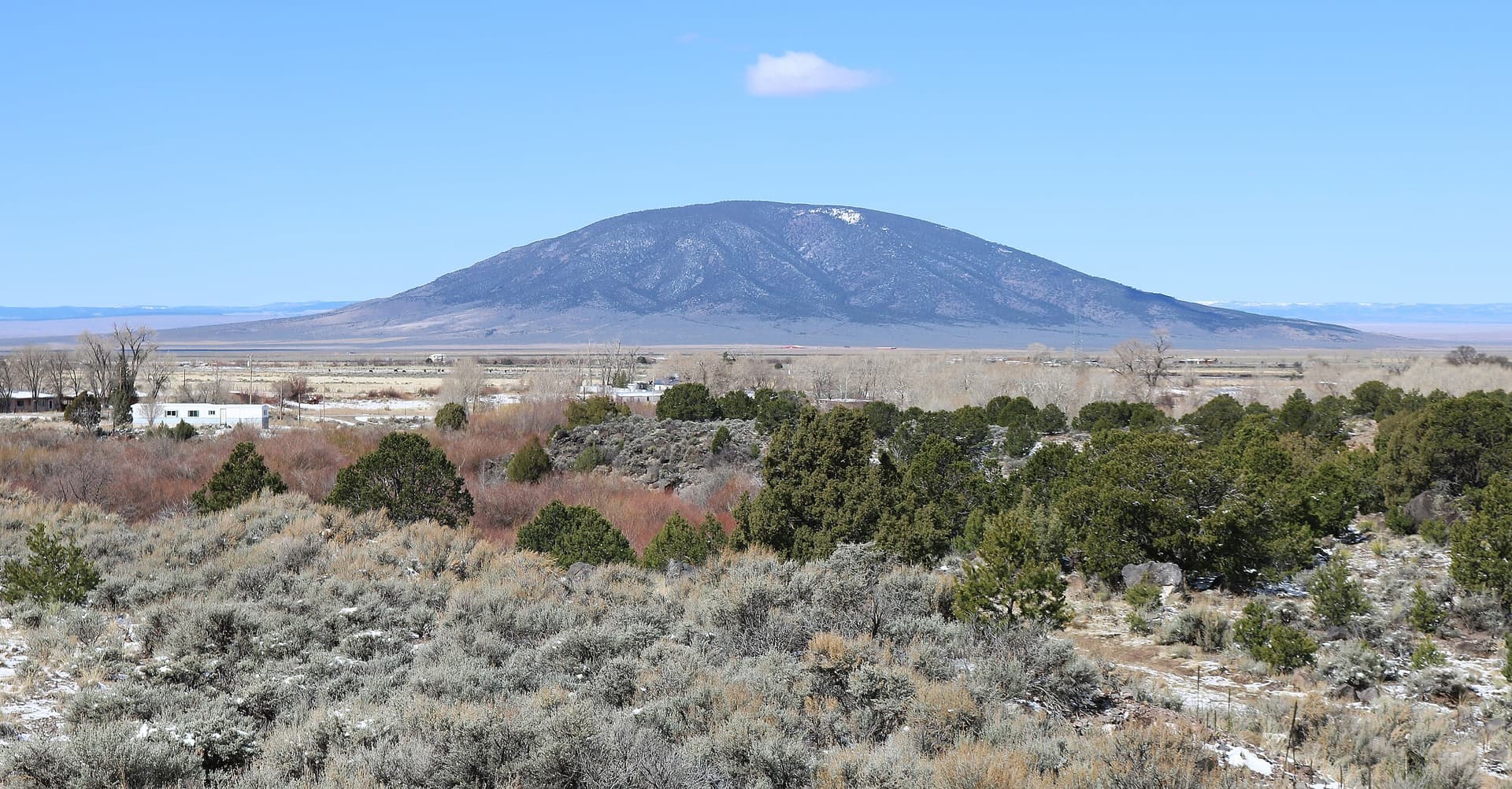
High in the Sangre de Cristo Mountains of northern New Mexico, an alpine lake sits at 11,300 feet, closed to all but the people who emerged from its waters. Blue Lake, known as Ba Whyea to the Taos Pueblo, is the most sacred site of the oldest continuously inhabited community in North America. For sixty-four years, the Pueblo fought the United States government not for money but for the return of this land. They won.
Some places are sacred because of what was built there. Others because of what happened there. Blue Lake is sacred because of what began there.
In Taos Pueblo understanding, this alpine lake at 11,300 feet in the Sangre de Cristo Mountains is the sipapu, the emergence place where the Taos people came into this world from a previous existence. It is where they began, and where, after death, they return. The surrounding mountain slopes hold the presence of ancestors. The waters feed the Rio Pueblo de Taos, which sustains their agriculture below. The sacred and the practical are not two categories here. They are one continuous reality.
You cannot visit Blue Lake. This is not an oversight or a temporary closure. The 48,000-acre wilderness surrounding the lake is permanently closed to all non-Pueblo visitors by federal law. No trail leads there for outsiders. No permit exists. No exception is made.
This restriction is itself part of the story. In 1906, the federal government seized the Blue Lake watershed and folded it into Carson National Forest. For sixty-four years, the Taos Pueblo fought to reclaim it. In 1965, the Indian Claims Commission offered approximately $300,000 in compensation. The Pueblo refused the money. They did not want payment. They wanted the land.
On December 15, 1970, President Nixon signed Public Law 91-550, returning 48,000 acres including Blue Lake to Taos Pueblo. It was the first time in American history that land, rather than money, was returned to a Native American tribe. The Pueblo's refusal to accept compensation for something they considered the source of their existence remains one of the most powerful acts of spiritual sovereignty in the Western Hemisphere.
Context And Lineage
Blue Lake has been the spiritual center of Taos Pueblo since before recorded history. The sixty-four-year legal battle to reclaim it from the U.S. government, culminating in the 1970 Blue Lake Act, became a landmark in Native American religious freedom and land rights. The Pueblo's refusal of monetary compensation and insistence on the return of the land itself set a precedent that has influenced indigenous rights movements worldwide.
In Taos Pueblo oral tradition, Blue Lake is the emergence place. The people came into this world through the sacred waters, entering from a previous existence into this one. The lake is the sipapu, a concept found across Puebloan cultures but holding particular intensity at Taos, where the physical place is identified, named, and visited.
The emergence story is not a creation myth in the Western sense, a narrative about the distant past. In Taos understanding, the emergence continues. The lake remains the point of connection between worlds. The ancestors who have died return to it. The living who make the annual pilgrimage renew the connection that sustains the community's existence.
The specific details of the emergence story, as told within Taos Pueblo ceremonial life, are not publicly shared. This discretion is not a gap in the record but a deliberate act of spiritual sovereignty. The story belongs to the people whose existence it explains.
The spiritual lineage at Blue Lake is singular. There is one tradition, Taos Pueblo, and it has maintained its relationship with the lake without interruption for at least a millennium, and by the community's own understanding, since the beginning of their existence as a people.
This continuity is remarkable. The Taos Pueblo has weathered Spanish colonization, Mexican governance, American annexation, the deliberate suppression of indigenous religion, and the seizure of their most sacred land by the federal government. Through all of it, the annual pilgrimage to Blue Lake continued. Even during the decades when the Pueblo was required to request permits from the U.S. Forest Service to access their own ceremonial site, they went.
The lineage is not merely historical. Male initiation rites, spanning six to eighteen months beginning between ages seven and ten, culminate at the annual Blue Lake pilgrimage. Each generation of Taos Pueblo men is formed, in part, by this experience. The knowledge passed down is oral, ceremonial, and experiential. It does not exist in books. It exists in the people who carry it and the place where it is renewed.
Taos Pueblo Council of Elders
spiritual and political leaders
The traditional governing body that led the sixty-four-year campaign to reclaim Blue Lake, refusing monetary compensation and insisting on the return of the land itself. Their steadfastness across multiple generations transformed a local struggle into a landmark of indigenous rights.
Paul Bernal
tribal leader and advocate
A key Taos Pueblo spokesman during the critical period of the Blue Lake struggle in the 1960s and early 1970s, who articulated the Pueblo's position to Congress and the public with clarity and moral authority.
Richard Nixon
political figure
The U.S. president who signed Public Law 91-550 on December 15, 1970, returning Blue Lake and 48,000 surrounding acres to Taos Pueblo. Nixon framed the act as a new direction in Native American policy based on self-determination rather than termination.
Theodore Roosevelt
political figure
The U.S. president who in 1906 approved the withdrawal of 48,000 acres including Blue Lake into Carson National Forest, stripping Taos Pueblo of aboriginal title without consent. His action set in motion the sixty-four-year struggle for the land's return.
Frank Waters
author and documentarian
An author who lived near Taos Pueblo and wrote extensively about Puebloan culture, including the spiritual significance of Blue Lake, helping to bring wider attention to the Pueblo's struggle while respecting boundaries of sacred secrecy.
Why This Place Is Sacred
Blue Lake's sacredness derives from its role as the emergence place of the Taos people, the dwelling place of ancestral spirits, and the headwaters that sustain their community. Over a thousand years of continuous ceremony have deepened what was already understood as the point where worlds meet. The sixty-four-year struggle to reclaim the land added another dimension: the weight of collective sacrifice for something that cannot be bought.
What makes a place thin, in the Celtic sense of the membrane between worlds being permeable, is a question that admits no single answer. Blue Lake offers one of the clearest responses available anywhere in North America.
The Taos Pueblo understanding is precise. Blue Lake is the place of emergence, the sipapu through which the people entered this world from a previous one. It is simultaneously the place of return, where the soul goes after death and where ancestral spirits reside. The mountain slopes surrounding the lake are the domain of the dead. The lake itself is the axis mundi, described in Taos cosmology as the Earth's navel, the point where the living world and the spirit world touch.
This is not metaphor in the Pueblo's understanding. It is geography of the most literal kind.
The waters of Blue Lake feed the Rio Pueblo de Taos, which flows down through the pueblo and sustains the agriculture that has supported the community for over a millennium. The sacred lake is also the practical source of physical sustenance. In Taos Pueblo worldview, this is not a coincidence but a confirmation: the spiritual and the material originate from the same source and cannot be separated.
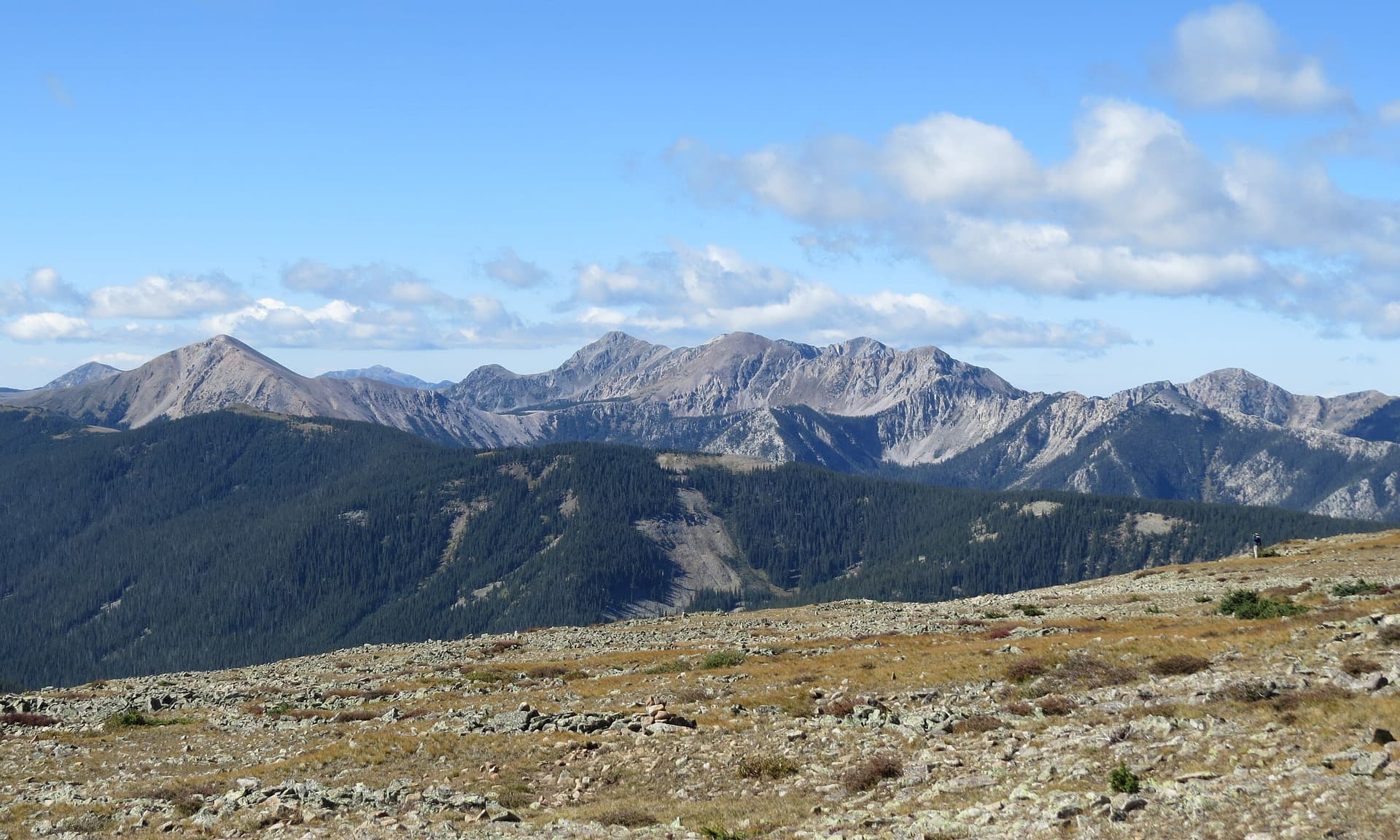
The extreme alpine setting contributes its own quality. At 11,300 feet, surrounded by peaks of the Sangre de Cristo range, Blue Lake occupies a landscape of severe isolation. The air thins. The silence deepens. The treeline gives way to bare rock and sky. Even without a millennium of ceremony, the location would command attention.
But it is the accumulated weight of continuous practice that sets this place apart. Taos Pueblo has been inhabited for over a thousand years, making it one of the oldest continuously occupied communities in North America. The annual pilgrimage to Blue Lake has been made for all of that time, and likely far longer. Each generation's prayers, initiations, and ceremonies have layered meaning into the landscape until the place and the practice became inseparable.
The sixty-four-year legal battle to reclaim the land added something else. When the Indian Claims Commission offered money in 1965, the Pueblo's refusal was not a negotiating tactic. It was a statement about what Blue Lake is: something that cannot be compensated for because it is not a commodity. The land is the people, the people are the land. To accept money would have been to agree that one could substitute for the other.
Blue Lake has served as the ceremonial and spiritual center of Taos Pueblo since time immemorial. In the Pueblo's oral tradition, the lake is the point of emergence, the place where the people entered this world. It has always been the site of the annual pilgrimage, male initiation rites, and ceremonies whose specific forms are known only to the Pueblo. The lake's purpose was never separate from daily life. As the headwaters of the Rio Pueblo de Taos, it literally feeds the community, binding the sacred and the sustaining into a single current.
The fundamental significance of Blue Lake has not changed. What has changed is the political reality surrounding it.
For centuries before European contact, the Taos Pueblo maintained their relationship with Blue Lake without external interference. The Spanish colonizers recognized Taos Pueblo as a sovereign entity, and while they imposed Christianity alongside existing practices, the remote alpine lake largely escaped colonial disruption.
The crisis came in 1906, when President Theodore Roosevelt approved the withdrawal of 48,000 acres including Blue Lake into Carson National Forest. The Pueblo was not consulted. The land was simply taken. By 1933, the U.S. Forest Service required the Pueblo to apply for permits to access their own most sacred site, requesting permission two weeks before ceremonial periods.
The Pueblo's sixty-four-year campaign to reclaim Blue Lake became one of the longest and most consequential struggles for indigenous religious freedom in American history. The 1970 return of the land, under Nixon's signing of H.R. 471, did not change Blue Lake's significance. It restored the conditions under which that significance could be fully lived.
Traditions And Practice
All ceremonial practices at Blue Lake are conducted exclusively by enrolled Taos Pueblo members and are kept strictly confidential. No outsider participation is possible or appropriate. The annual August pilgrimage remains the tribe's most important ritual. For seekers, the practice Blue Lake teaches is restraint: the willingness to honor something sacred without needing to experience it personally.
The annual August pilgrimage to Blue Lake is the most important ceremony in the Taos Pueblo religious calendar. The community ascends the mountain to the lake for ceremonies that have been conducted since time immemorial. Male initiation rites, which span six to eighteen months beginning between ages seven and ten, reach their culmination during this pilgrimage. The experience at the lake is understood to be essential to the formation of Taos Pueblo identity.
Beyond the August pilgrimage, Blue Lake serves as a site for prayer and ceremony throughout the year, always exclusively for enrolled Pueblo members. The specific nature of these practices, what is said, what is done, what is experienced, has never been disclosed to outsiders. This secrecy is not a remnant of historical caution but an active expression of spiritual sovereignty maintained across centuries.
The lake also functions as the headwaters of the Rio Pueblo de Taos, the primary water source for the community's agriculture. The ceremonial life at the lake and the agricultural life in the valley below are understood as aspects of a single relationship. The water that feeds the crops begins at the sacred source. The prayers offered at the lake sustain the community that drinks the water. Nothing is separate.
Contemporary practice at Blue Lake maintains continuity with ancestral forms. The annual pilgrimage continues. Initiation rites continue. The secrecy that has protected the ceremonial life of the community for centuries remains intact. Unlike many indigenous sacred sites where traditional practice has been disrupted, diminished, or reconstructed, Blue Lake's ceremonial life appears to have sustained its integrity through every historical upheaval.
The 1970 return of the land strengthened this continuity by removing the indignity of permit applications and federal oversight. The Pueblo now manages the Blue Lake wilderness area under its own authority, patrolling and protecting the land with tribal resources. This self-governance extends to decisions about what is shared and what is withheld from public knowledge.
Blue Lake offers no practice for the outsider seeking direct experience. What it offers instead may be more valuable: a teaching in the form of a boundary.
In a culture that treats access as a right, Blue Lake asserts that some things are not for everyone. In a world that equates documentation with understanding, the Pueblo maintains that the most important knowledge cannot be written down. In an economy that puts a price on everything, the Taos people refused $300,000 because the land was worth more than money could represent.
If you feel drawn to engage with what Blue Lake represents, consider sitting with these questions: What in your own life is sacred enough that you would refuse to sell it? What would you protect even at great cost? What knowledge do you carry that deserves to be held, not shared?
Visit Taos Pueblo when it is open. Stand beside the Rio Pueblo de Taos. Know that the water originated at one of the most protected sacred sites on the continent. Let that knowledge settle without needing to see the source.
Taos Pueblo (Tiwa) Indigenous
ActiveBlue Lake (Ba Whyea) is the most sacred site in Taos Pueblo cosmology, understood as the emergence place where the people entered this world from a previous existence, the dwelling place of ancestral spirits, and the axis mundi connecting the living and the dead. The lake is also the headwaters of the Rio Pueblo de Taos, making it both the spiritual and physical source of the community's life. The Pueblo's sixty-four-year fight to reclaim the lake from the federal government represents one of the most consequential assertions of indigenous religious sovereignty in American history.
The annual August pilgrimage to Blue Lake is the most important ceremony in the Taos Pueblo religious calendar. Male initiation rites, spanning six to eighteen months and beginning between ages seven and ten, culminate at this annual pilgrimage. Prayer, ceremony, and ritual continue at the lake throughout the year, exclusively conducted by enrolled Pueblo members. The specific forms and content of all Blue Lake ceremonies are sacred and confidential, maintained in strict secrecy as a fundamental expression of spiritual sovereignty.
Experience And Perspectives
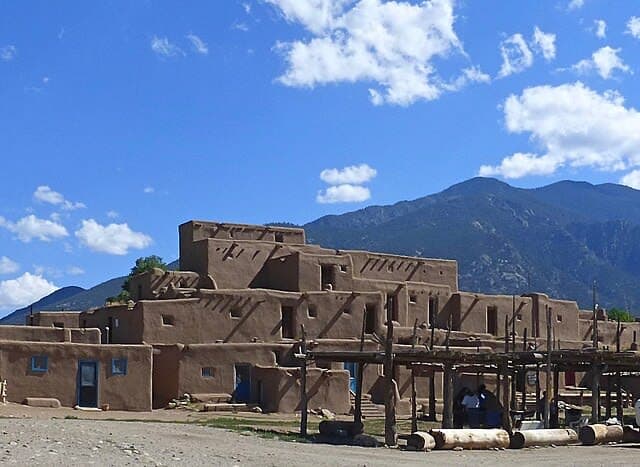
Blue Lake cannot be visited by outsiders. The 48,000-acre wilderness surrounding it is permanently closed to all non-Pueblo members. However, seekers can visit Taos Pueblo village, a UNESCO World Heritage Site, to encounter the community whose identity flows from the lake. The pueblo's adobe structures, some over a thousand years old, stand at the foot of the mountains that guard Blue Lake. The experience is one of proximity to something deliberately kept beyond reach.
There is no visitor experience to describe at Blue Lake itself, and this absence is the point.
In an era when almost every sacred site on Earth has been made accessible, photographed, commodified, and reviewed on travel websites, Blue Lake remains entirely beyond the reach of outsiders. No non-Taos person in the modern era has been permitted to observe ceremonies at the lake. No photographs of the lake taken by outsiders circulate publicly. The specific nature of the ceremonies conducted there is unknown outside the community, and this is by design.
For the seeker, this restriction carries its own teaching. Not everything sacred is meant to be accessed by everyone. Some places hold their power precisely because they are protected from casual encounter. The instinct to see, to document, to consume experience, runs deep in modern culture. Blue Lake quietly refuses all of it.
What visitors can experience is Taos Pueblo itself. The multi-story adobe structures, some dating back over a thousand years, stand on either side of the Rio Pueblo de Taos, the stream fed by Blue Lake's waters. When the pueblo is open to visitors, you walk on ground that has been continuously inhabited longer than almost any place in North America. The mountains rise behind the buildings, and somewhere beyond them, invisible and inaccessible, sits the lake.
The quality of the pueblo, when you are permitted to visit, is one of quiet continuity. People live here. Children play. Dogs wander. The buildings are not museum reconstructions but homes. The Catholic church of San Geronimo stands beside older structures, reflecting the complex layering of traditions that characterizes Taos Pueblo life. But the deeper spiritual life of the community, the ceremonies, the kiva practices, the annual pilgrimage to Blue Lake, remains invisible to the visitor, felt only as an undercurrent beneath the visible surface.
If you feel drawn to understand Blue Lake, begin by accepting what you cannot have. You will not see the lake. You will not witness the ceremonies. You will not receive an insider's understanding of what happens there. This is not a loss. It is a boundary that deserves respect.
What you can do is visit Taos Pueblo when it is open. Contact the Taos Pueblo Tourism Office at (575) 758-1028 for current hours and access. Pay the admission fee. Walk slowly. Listen more than you look. The Rio Pueblo de Taos runs through the village, carrying water from Blue Lake. You can stand beside that stream and know that the water touching the stones at your feet began at one of the most sacred places on this continent.
You can also learn the story of the sixty-four-year struggle for Blue Lake's return. The Harwood Museum of Art in Taos has presented exhibitions on this history. Understanding what the Pueblo risked and refused in their fight for the land may teach you more about the nature of the sacred than any visit to the lake itself could.
Consider what it means that a people refused $300,000 in 1965 for land they considered the source of their existence. Consider what it means that they won.
Blue Lake holds significance across multiple frameworks, but one perspective dominates: that of Taos Pueblo, the community for whom it is the center of existence. Scholarly perspectives largely affirm the Pueblo's account of the site's importance. Political and legal perspectives recognize the 1970 Blue Lake Act as a watershed moment in indigenous rights. No alternative or esoteric tradition holds competing claims to the lake.
Scholars across disciplines recognize Blue Lake as one of the most significant sacred sites in North America. The sixty-four-year legal battle for its return has been extensively documented as a landmark case in Native American religious freedom, land rights, and self-determination.
The 1970 Blue Lake Act is studied as the first time the U.S. government returned land rather than offering monetary compensation to a Native American tribe. Legal scholars note its precedent-setting implications for subsequent indigenous land claims. Political historians examine the unusual coalition of support that made the act possible, crossing partisan lines in a 70-12 Senate vote.
Anthropologists and scholars of religion have documented what can be known of Taos Pueblo's relationship with Blue Lake while respecting the community's boundaries around sacred knowledge. The consensus is that the site represents an unusually pure example of continuous sacred practice, maintained through colonial disruption and federal seizure without the discontinuities that mark many other indigenous sacred sites.
What scholarship cannot access is the experiential and ceremonial dimension. The Pueblo's deliberate secrecy around Blue Lake practices is itself a subject of scholarly interest, representing one of the most successful examples of indigenous knowledge sovereignty in the Americas.
For Taos Pueblo, Blue Lake is the emergence place, the location where the people entered this world from a previous existence. It is the dwelling place of ancestors, the destination of the soul after death, and the spiritual source of the community's ongoing life. The lake is understood as the Earth's navel, an axis mundi connecting the realm of the living with the realm of spirits.
This understanding is not archaic or symbolic. It is the living cosmology of a community that has maintained its relationship with the lake for over a millennium. The annual pilgrimage is not a commemorative ritual but a renewal of the connection that sustains the people's existence. The initiation rites conducted at the lake are not coming-of-age ceremonies in the secular sense but a genuine transmission of identity and knowledge.
Much of the Pueblo's understanding of Blue Lake is deliberately withheld from public discourse. This is not secrecy born of suspicion but an integral aspect of the spiritual practice itself. The knowledge belongs to those who have been initiated into it, and sharing it outside that context would diminish it.
The deepest dimensions of Blue Lake's significance remain unknown to outsiders by the sovereign choice of Taos Pueblo. The specific ceremonies conducted at the lake, the content of the knowledge transmitted during initiations, and the full scope of the emergence narrative as understood by the Pueblo are not documented in any public source.
This is not a gap in scholarship. It is an assertion of religious privacy maintained across centuries and now protected by federal law. The Pueblo's position is clear: some knowledge is not meant to be universally accessible, and the demand for total transparency is itself a form of cultural imperialism.
What remains open as a genuine question is why this particular lake, in this particular range, became the center of a cosmology that has endured for over a millennium. The convergence of extreme alpine isolation, headwaters significance, and the landscape's austere grandeur offers partial explanations. But partial explanations do not account for the intensity of devotion that led a people to refuse payment for something they considered beyond price.
Visit Planning
Blue Lake itself is permanently inaccessible to non-Pueblo visitors. Taos Pueblo village, the community whose identity flows from Blue Lake, is open to visitors at certain times of the year. Located approximately two miles north of Taos, New Mexico, the pueblo charges an admission fee and closes during ceremonial periods. Contact the Taos Pueblo Tourism Office at (575) 758-1028 for current hours.
Blue Lake: permanently closed to all non-Pueblo members. No exceptions. Taos Pueblo village: located approximately 2 miles north of Taos, New Mexico, on Taos Pueblo Road (NM 585). Admission fee required. Contact the Taos Pueblo Tourism Office at (575) 758-1028 for current hours, access information, and closure dates. The pueblo village is at approximately 7,000 feet elevation. Taos, New Mexico, is served by Taos Regional Airport and is approximately 70 miles north of Santa Fe via US-84 and NM-68. Mobile phone signal is generally available in the pueblo village area. No signal information is available for the restricted Blue Lake wilderness area, as non-Pueblo access is prohibited.
Taos, New Mexico, offers a full range of accommodations from hotels to bed-and-breakfasts. The town has a long history as an arts colony and spiritual-seeking destination. The Harwood Museum of Art in Taos has presented exhibitions on the Blue Lake story and is worth visiting for deeper context. No accommodations exist near Blue Lake itself, as the area is closed to non-Pueblo visitors.
Blue Lake is completely closed to non-Pueblo visitors. There is no etiquette for visiting the lake because visiting is not possible. For Taos Pueblo village visits, modest dress is expected, photography is restricted during ceremonies, and kivas and restricted areas must be avoided. The deepest etiquette Blue Lake asks of outsiders is the willingness to respect a boundary absolutely.
The etiquette of Blue Lake is the etiquette of absence. You are not invited, and the appropriate response is to honor that uninvitation completely.
This means not seeking alternative ways to view the lake, whether by hiking unauthorized routes, using drones, or searching for satellite imagery. It means not pressing Pueblo members for information about ceremonies. It means not treating the restriction as a challenge to be overcome or a secret to be uncovered.
For those visiting Taos Pueblo village, a different but related etiquette applies. The pueblo is a living community, not a museum. People's homes deserve the same respect you would extend to any neighbor's. Walk on designated paths. Do not enter buildings without invitation. Do not peer into windows or doorways.
During ceremonial periods, the pueblo closes entirely to outside visitors. These closures, typically from late February to mid-April, are not inconveniences but expressions of the same principle that protects Blue Lake: some things belong to the community alone.
When the pueblo is open, the San Geronimo Chapel may be visited, but photography inside is prohibited. Kivas, the underground ceremonial chambers visible as laddered structures, are completely off-limits. Do not approach, photograph, or attempt to look inside them.
Not applicable for Blue Lake, which is closed to visitors. For Taos Pueblo village visits, modest and respectful dress is expected. Avoid revealing clothing. Comfortable walking shoes are appropriate for the unpaved pueblo grounds.
Photography of Blue Lake is absolutely forbidden. The lake and surrounding wilderness are closed to non-Pueblo visitors, making photography impossible by design. At Taos Pueblo village, personal photography is permitted with admission during non-ceremonial periods. Photography is strictly prohibited during all religious ceremonies and inside San Geronimo Chapel. Professional and commercial photography requires pre-approval and additional fees. Never photograph tribal members without their explicit consent.
Not applicable for non-Pueblo visitors. Offering practices at Blue Lake are part of the sacred traditions of Taos Pueblo and are not shared publicly.
Blue Lake and the surrounding 48,000-acre wilderness area are permanently closed to all non-Pueblo visitors. No trails, permits, or exceptions exist. This restriction is established by federal law (Public Law 91-550) and enforced by tribal authority. At Taos Pueblo village: do not enter kivas or restricted areas, do not photograph tribal members without permission, respect all posted closures, and follow the instructions of tribal guides and staff.
Sacred Cluster
Nearby sacred places create the location cluster described in the growth plan. This block is intentionally crawlable and links into the wider regional graph.