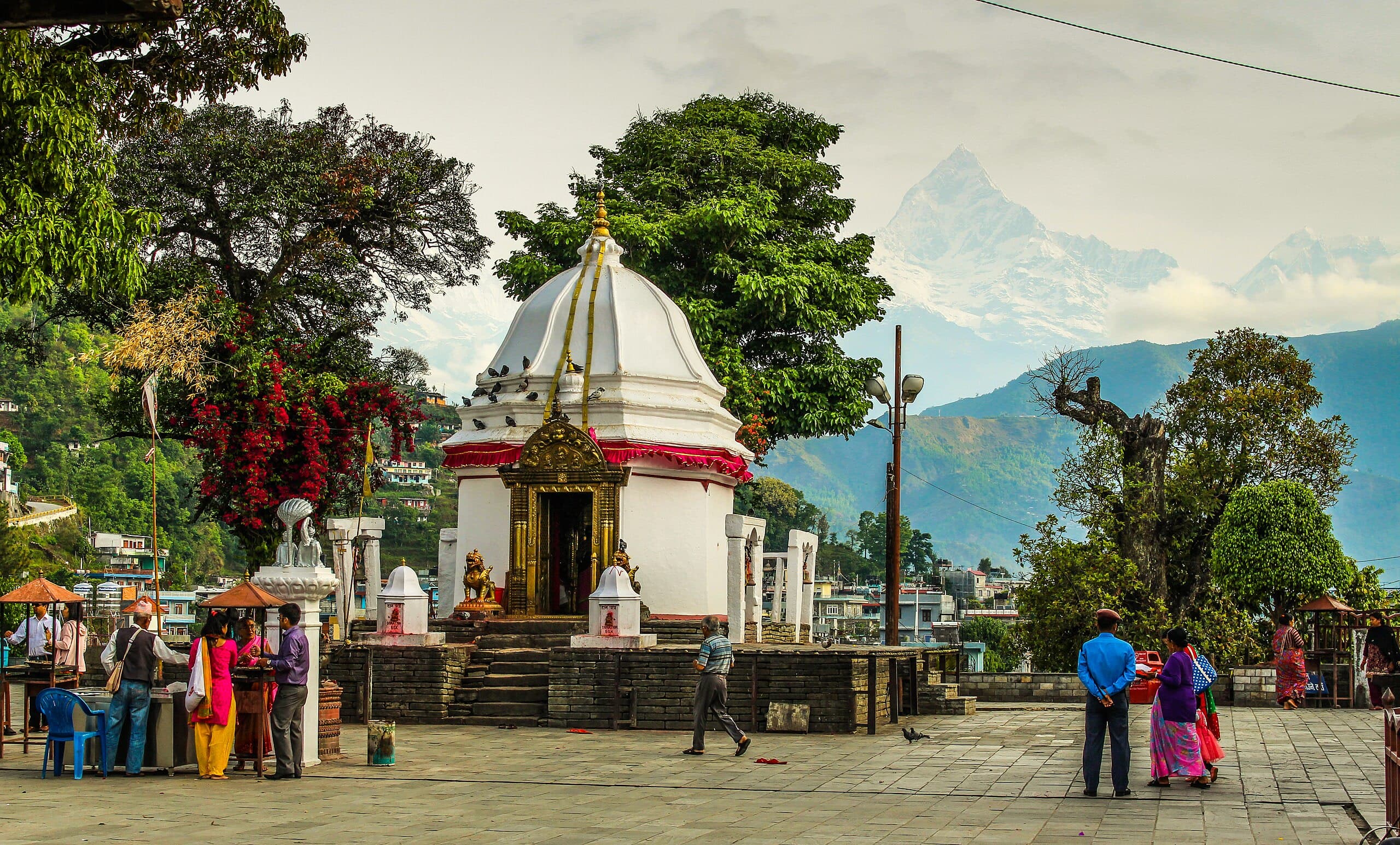
Bindabasini Temple, Pokhara
Pokhara's ancient guardian goddess, where devotion rises with the dawn
Pokhara, Gandaki Province, Nepal
At A Glance
- Coordinates
- 28.2376, 83.9842
- Suggested Duration
- 1-2 hours allows for temple visit, circumambulation, and contemplation. Festival days may warrant longer visits.
- Access
- The temple sits on a hill in central Pokhara, easily reached on foot from Lakeside (20-30 minutes walk) or by taxi from other areas. Stone steps approach from multiple directions. A lift is available for those with mobility challenges, inaugurated by the President of Nepal in 2019.
Pilgrim Tips
- The temple sits on a hill in central Pokhara, easily reached on foot from Lakeside (20-30 minutes walk) or by taxi from other areas. Stone steps approach from multiple directions. A lift is available for those with mobility challenges, inaugurated by the President of Nepal in 2019.
- Modest dress covering shoulders and legs. No specific requirements but respect for the devotional atmosphere is expected.
- Prohibited inside the main temple. Courtyard and grounds may be photographed discreetly.
- Animal sacrifice may disturb visitors unaccustomed to traditional Shakti worship. Those who wish to avoid witnessing this should visit on days other than Saturday and Tuesday, and avoid major festival periods. Photography is prohibited inside the main temple.
Overview
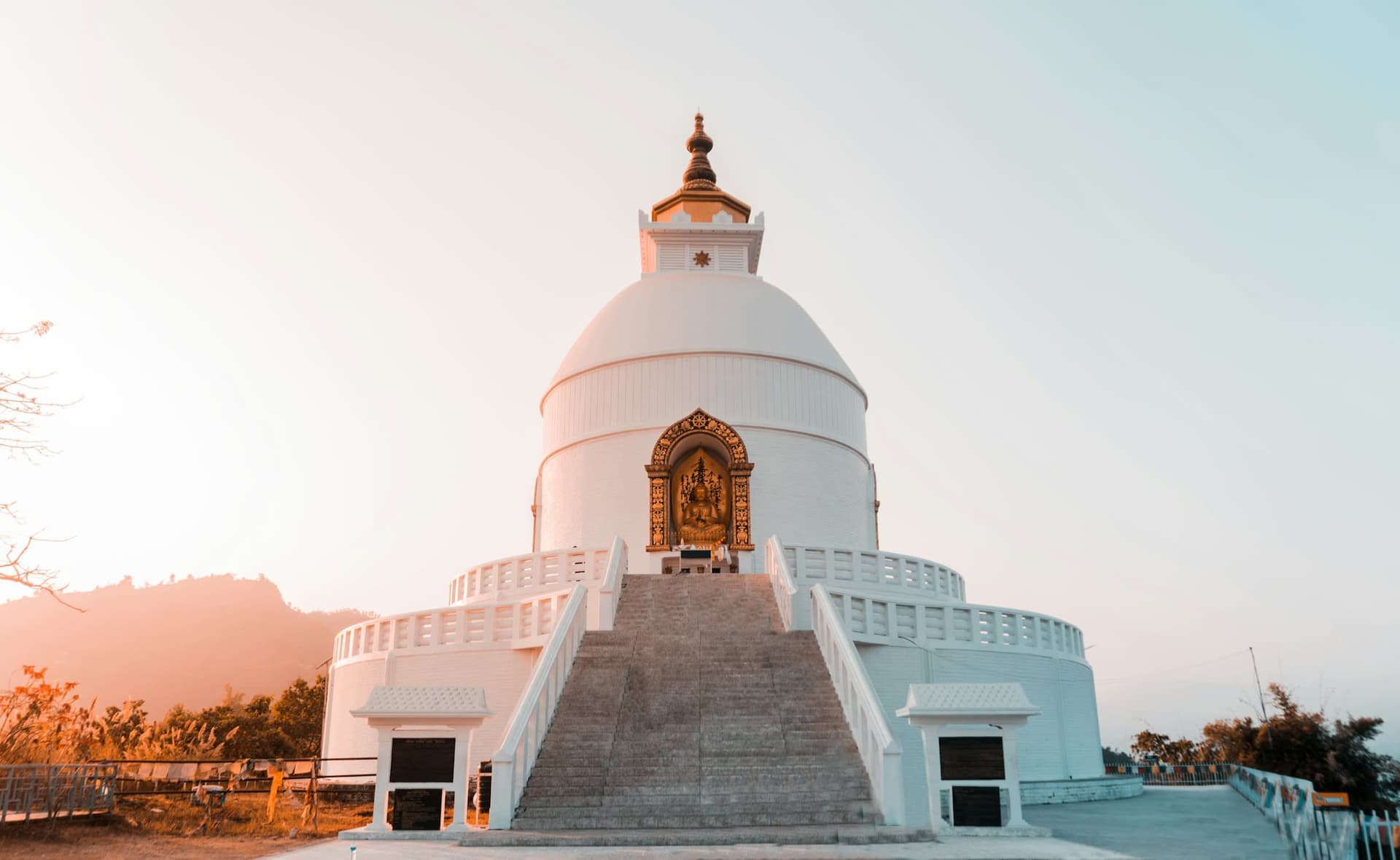
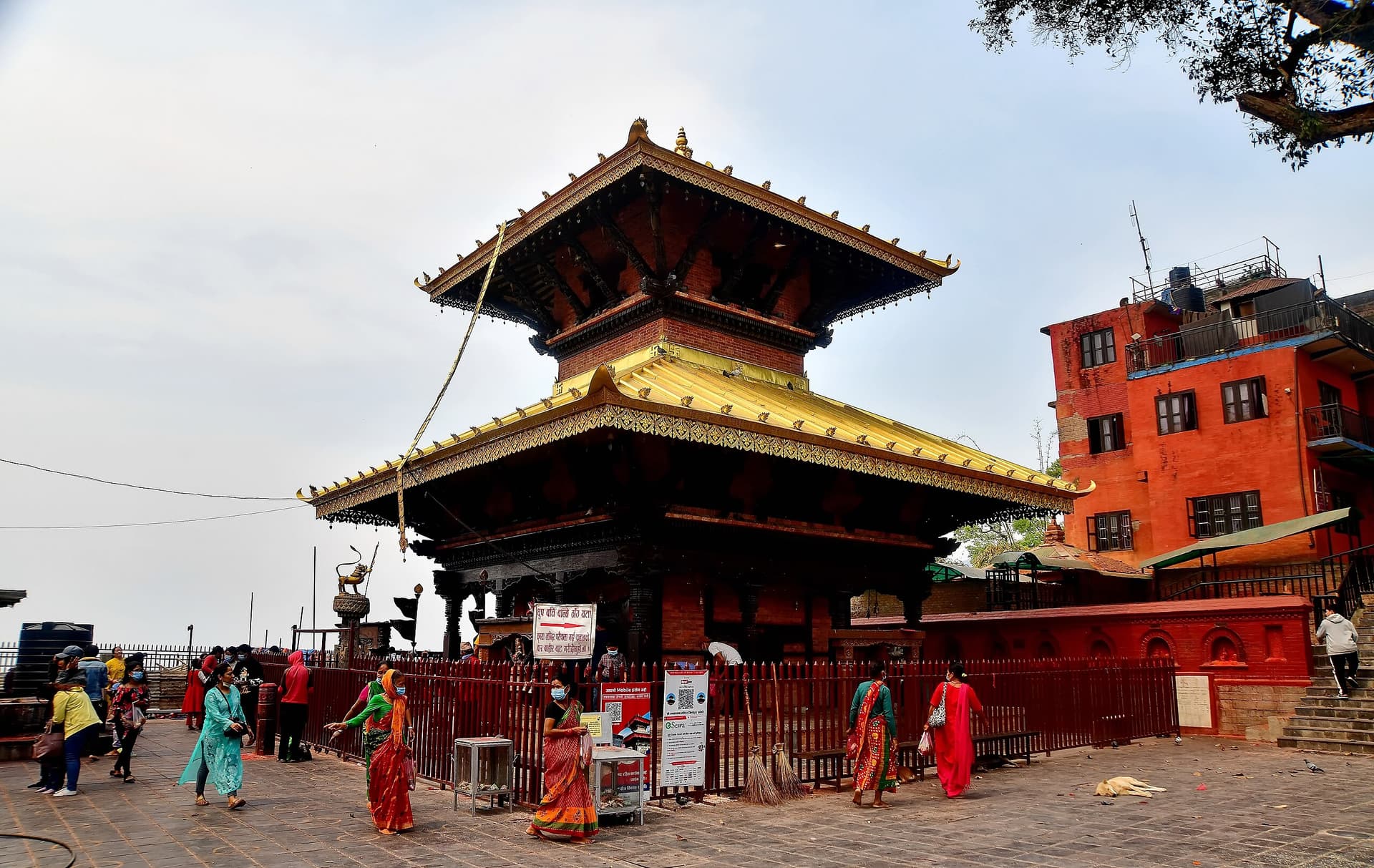
On a hill overlooking the Annapurna range, Pokhara's oldest temple pulses with devotion. Bindabasini Temple has anchored the city's spiritual life since the 1760s, when a goddess statue brought from India refused to leave this spot. Each Saturday, the temple fills with bells, drums, and the fervent prayers of worshippers seeking Durga's blessing. The white pagoda against Himalayan peaks creates one of Nepal's most striking devotional landscapes.
The sound reaches you before the temple comes into view—bells layering over drums, the rise and fall of devotional songs carrying across Pokhara's morning air. Bindabasini Temple has stood on this hill since the 1760s, when a divine statue being transported from India became inexplicably immovable at this precise location. The goddess had chosen her home.
Today, as it has for over two centuries, the temple awakens before the city. Daily puja begins at 4 am, when priests offer prayers to Durga in her manifestation as Bhagwati. The goddess appears here as a sacred Saligram stone—a dark, naturally occurring fossil that Hindu tradition recognizes as a direct embodiment of divinity.
The temple's hilltop setting, at roughly 1,000 meters elevation, offers views that collapse the distance between devotion and the Himalayas. On clear mornings, Machapuchare's distinctive fishtail peak seems close enough to touch. This visual alignment between temple and sacred mountain amplifies the sense that worship here occurs at a threshold between worlds.
Context And Lineage
Founded after a royal dream in the 1760s, Bindabasini Temple has served as Pokhara's spiritual heart through centuries of change, including a devastating fire and modern development.
The temple's origin involves a king—accounts vary between Siddhi Narayan Shah of Kaski and Khadgaman Malla of Parbat—who received a dream instructing him to bring a statue of the goddess from Bindhyachal Parbat in present-day Uttar Pradesh, India. Men were dispatched on the journey, and they successfully obtained the statue and began the return trip.
When they stopped to camp at the current temple location, they found the next morning that the statue could not be lifted. No amount of effort would move it. This was understood as divine communication: the goddess wished to remain here. A temple was built on the spot, and what began as a failed transport mission became a revelation of sacred geography.
The name itself encodes this meaning: 'Bindhya' refers to the goddess's incarnation, and 'Basini' means 'dweller of a place.' The goddess became the dweller of this hill.
The temple belongs to the Shakti tradition—worship of the divine feminine as the creative and destructive power underlying reality. Within Pokhara, it serves as the primary center for this form of devotion, connecting local practice to the broader network of Shakti Peethas across the Indian subcontinent.
Siddhi Narayan Shah (or Khadgaman Malla)
King who received divine instruction to establish the temple
Why This Place Is Sacred
As a principal Shakti Peetha in western Nepal, Bindabasini Temple represents a place where divine feminine energy manifests with particular intensity. The goddess's choice to remain here—refusing transport to her intended destination—marks this as a site of self-revealed sanctity.
The concept of sacred geography in Hindu tradition holds that certain locations serve as portals where the divine becomes more accessible. Bindabasini Temple belongs to this category by virtue of the goddess's own choosing. When the statue being brought from Bindhyachal Parbat in India became impossible to lift from this hillside, tradition understood this not as failure but as revelation. The goddess was announcing where she wished to dwell.
This self-determination by the deity continues to shape the temple's spiritual character. Worshippers approach not merely a building but a location the goddess actively selected. The hilltop setting reinforces this sense of threshold—elevated above the ordinary world, with clear sightlines to the Himalayan peaks that have their own sacred significance in Hindu cosmology.
The presence of multiple shrines within the complex—to Shiva, Hanuman, Krishna, Ganesh, and others—creates a concentrated field of devotional focus. Each shrine adds its own resonance to the larger sacred geography, while Durga's presence as Bhagwati remains the temple's spiritual center.
The temple was established to house a divine statue that chose this location as her permanent home. From its founding, it served as the primary Shakti shrine for the Pokhara region.
The 1949 fire that devastated much of Pokhara reportedly started at the temple during an offering ceremony. The temple survived and was restored, demonstrating both vulnerability and persistence. Modern additions include a lift installed in 2019 to make the temple accessible to elderly and disabled pilgrims. Throughout these changes, the essential character of the worship—centered on the self-revealed goddess—has remained consistent.
Traditions And Practice
Daily worship begins before dawn and intensifies dramatically on Saturdays and during major festivals. Animal sacrifice remains central to traditional practice.
Nitya Puja—daily worship—begins at 4 am and sets the rhythm for the temple's life. Priests perform ritual offerings to Bhagwati, maintaining the continuous relationship between goddess and devotees that has defined this space since its founding.
Animal sacrifice, primarily of roosters and male goats, occurs on Saturdays and Tuesdays. During Dashain, the festival celebrating Durga's victory over the buffalo demon, the practice intensifies. For traditional practitioners, these offerings represent the most potent form of devotion—giving life to sustain the goddess who sustains all life.
Modern additions like the accessibility lift reflect changing needs while the core practices persist. During Shrawan month (July-August), the temple hosts multiple celebrations: Haritalika Teej, Ganesh Puja, Janai Purnima, and Nawadurga Mahotsav follow in succession. The nine days of Navaratri bring particularly intense activity, with Durga Bali rituals and recitation of the Devi Bhagwat Purana continuing throughout.
Visitors seeking the full intensity of Bindabasini worship might time their visit for Saturday morning. Those preferring contemplative quiet should choose weekday mornings. The temple opens to visitors after the 4 am puja concludes, typically around 5:30 am.
Joining the circumambulation of the temple complex offers participation without intrusion. Observing the worship with respect—especially during active offerings—allows engagement with living tradition while honoring its boundaries.
Hinduism (Shaktism)
ActiveBindabasini Temple stands as western Nepal's principal Shakti shrine, where the goddess Durga manifests as Bhagwati in the form of a sacred Saligram stone.
Daily Nitya Puja at 4 am, animal sacrifice on Saturdays and Tuesdays, major festivals including Navaratri and Dashain, devotional songs and fire ceremonies.
Experience And Perspectives
Visiting Bindabasini Temple means stepping into living devotion. The intensity peaks on Saturdays when drums and hymns fill the air, and devotees crowd the courtyard with offerings.
The approach to Bindabasini Temple sets the tone for the encounter. Stone steps ascend through park-like grounds, the white pagoda gradually revealing itself against whatever the Himalayas offer that day—sometimes crystal peaks, sometimes the suggestion of mountains behind cloud. The climb itself becomes preparation, heart rate rising with altitude and anticipation.
Entering the temple complex through the golden metal gate, flanked by twin metal lions, visitors step from the ordinary world into concentrated sacred space. The soundscape transforms: bells ring continuously as devotees announce their arrival to the goddess, drums maintain steady rhythms, and devotional songs weave through everything.
The intensity varies dramatically by day. Saturdays and Tuesdays bring the most fervent worship, including animal sacrifice—a practice that remains central to traditional Shakti devotion. The rest of the week offers quieter contemplation. Early mornings, especially, allow visitors to experience the temple's atmosphere without crowds, watching the day's first light touch both temple and mountains.
For those unaccustomed to active Hindu worship, the sensory richness can feel overwhelming. Incense smoke, vermillion powder, flower offerings, the press of bodies, the ceaseless sound—all create an environment where ordinary consciousness shifts. Whether this registers as spiritual presence, cultural immersion, or sensory overload depends on the visitor.
The temple sits atop a small hill in central Pokhara, accessible by foot from Lakeside or by taxi from other areas. Stone steps lead up from multiple sides. The main temple houses the Bhagwati Saligram, with surrounding shrines dedicated to other Hindu deities. A Bhajan Griha (devotional song room) and Havan Kunda (fire ceremony area) serve ritual functions.
Bindabasini Temple sits at the intersection of devotional certainty and scholarly inquiry. Traditional understanding holds that the goddess herself chose this location; academic analysis contextualizes the temple within broader patterns of Shakti worship across the subcontinent.
Historians place the temple's founding in the 1760s, during a period of consolidation for the various kingdoms that would eventually become unified Nepal. The establishment of major temples served both religious and political purposes, anchoring royal authority to divine sanction. The specific legend of the immovable statue follows a pattern found across South Asia, where divine self-revelation legitimizes sacred sites.
Within Shakti tradition, Bindabasini Temple functions as a Shakti Peetha—a place where the goddess's power manifests with particular intensity. Devotees understand the temple not as something humans built for the goddess but as a location the goddess claimed for herself. This inverts the usual relationship between sacred space and human construction.
The precise circumstances of the temple's founding remain uncertain, with different sources attributing the originating dream to different kings. The 1949 fire that allegedly started at the temple during an offering ceremony raises questions about the relationship between religious practice and the destruction that followed, though details of what actually occurred remain unclear.
Visit Planning
Located in central Pokhara, Bindabasini Temple is easily accessible year-round. Saturdays and festival days bring the most intense worship.
The temple sits on a hill in central Pokhara, easily reached on foot from Lakeside (20-30 minutes walk) or by taxi from other areas. Stone steps approach from multiple directions. A lift is available for those with mobility challenges, inaugurated by the President of Nepal in 2019.
Pokhara's Lakeside area offers extensive accommodation options in all price ranges. The temple is accessible as a morning or afternoon visit from any Pokhara base.
Remove shoes before entering the temple premises. Dress modestly. Photography is prohibited inside the main temple.
Approaching Bindabasini Temple as a visitor rather than a devotee requires particular attention to context. The temple is not a museum; it is a living site of active worship. Every moment, someone is engaged in prayer, offering, or ritual.
Remove shoes before entering the temple premises—this marks the transition from ordinary ground to sacred space. Dress modestly, covering shoulders and legs. The temple does not enforce strict dress codes but respect for the setting is appreciated.
Photography is strictly prohibited inside the main temple. The temple courtyard and grounds may be photographed with discretion, but pointing cameras at people engaged in worship is inconsiderate.
Traditional offerings include flowers, incense, vermillion powder, and food items. These can be purchased near the temple entrance. If you choose to make an offering, observe how devotees ahead of you do so and follow their pattern.
Modest dress covering shoulders and legs. No specific requirements but respect for the devotional atmosphere is expected.
Prohibited inside the main temple. Courtyard and grounds may be photographed discreetly.
Flowers, incense, vermillion, and food items are traditional. Purchase from vendors near the entrance.
{"Remove shoes in temple premises","No photography inside main temple","Respect ongoing worship activities"}
Sacred Cluster
Nearby sacred places create the location cluster described in the growth plan. This block is intentionally crawlable and links into the wider regional graph.