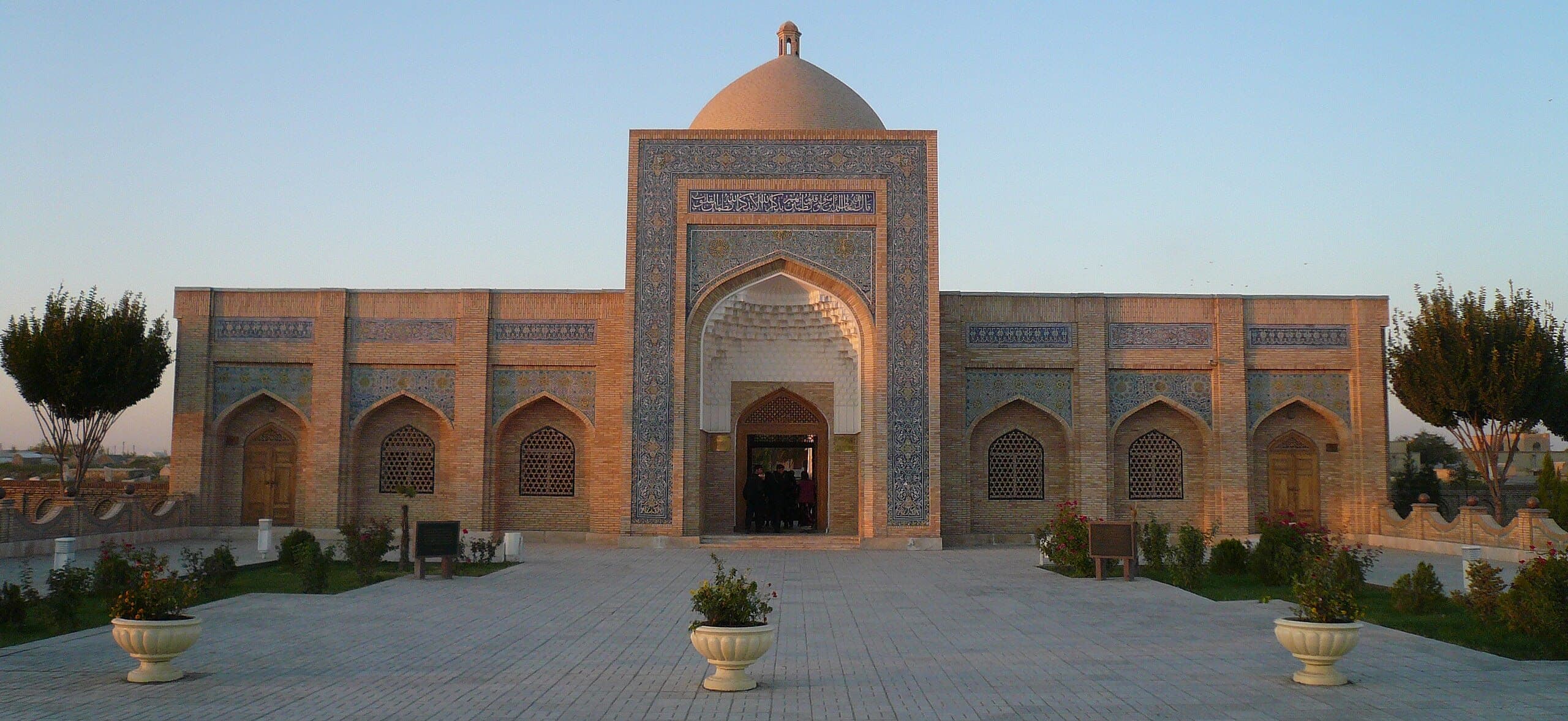
Bahauddin Naqshband Memorial Complex
Where a walking staff became a tree and three pilgrimages became one hajj
Bukhara, Bukhara Province, Uzbekistan
At A Glance
- Coordinates
- 39.7691, 64.4513
- Suggested Duration
- Most visitors spend 1-2 hours at the complex. This allows time to explore the mausoleum, observe pilgrimage rituals, visit the sacred mulberry tree, see the Sufi museum, and walk to the tomb of Naqshband's mother. Pilgrims staying longer may spend half a day or more.
- Access
- The complex is located approximately 10-12 km northeast of Bukhara city center, in the village of Kasri Orifon. By taxi from central Bukhara, the journey takes about 20 minutes and should cost a modest fare (negotiate in advance or use a metered taxi). The site can be combined with a broader Bukhara tour. Tour operators include the complex in many standard itineraries. No public transport directly serves the site.
Pilgrim Tips
- The complex is located approximately 10-12 km northeast of Bukhara city center, in the village of Kasri Orifon. By taxi from central Bukhara, the journey takes about 20 minutes and should cost a modest fare (negotiate in advance or use a metered taxi). The site can be combined with a broader Bukhara tour. Tour operators include the complex in many standard itineraries. No public transport directly serves the site.
- Modest dress expected: shoulders and knees covered for all visitors. Women should cover their hair in mosque areas and may wish to bring a long skirt or loose trousers. Men should avoid shorts. Light, breathable fabrics are practical given Bukhara's summer heat.
- Photography is generally permitted in exterior areas and the courtyard. Avoid photographing pilgrims engaged in prayer or ritual without permission. The mausoleum interior may have restrictions; observe posted signs. Drone photography is likely prohibited. The sacred mulberry tree is a popular subject; photograph respectfully.
- The wish-fulfillment rituals are living practices for Muslim pilgrims, not tourist performances. Observe with respect. Do not interrupt pilgrims engaged in prayer or ritual. Photography should be discreet and should not disturb worship. Be aware that Friday prayers and Islamic holidays bring larger crowds and more intensive ritual activity.
Overview
In a village outside Bukhara, pilgrims have gathered for six centuries at the tomb of Baha-ud-Din Naqshband, founder of one of the largest Sufi orders in the world. Called the 'Central Asian Mecca,' the site draws over two million visitors annually who circle a sacred wishing stone, crawl beneath an ancient mulberry said to have grown from the master's staff, and seek the blessings of a saint who taught that the hands should work while the heart remains with God.
The teaching that made Baha-ud-Din Naqshband exceptional among Sufi masters was not withdrawal but engagement. While other mystics retreated to monasteries, Naqshband insisted that spiritual practice belonged in the marketplace, the field, the workshop. 'Let the heart be with God and the hands be with work,' he taught. This integration of the sacred and the ordinary defined both his life and his order.
Naqshband was born in 1318 in a village twelve kilometers from Bukhara, in what is now Uzbekistan. The number seven marked his existence: born in the seventh month, he had memorized the Quran by age seven and would die at seventy. He made multiple pilgrimages to Mecca, studied with various masters, and eventually founded an order that would spread from Turkey to Indonesia, becoming one of the largest Sufi fraternities in history.
When he died in 1389, the faithful began gathering at his grave. A mausoleum rose in 1544, then mosques, a madrasah, pilgrim hostels. The Soviet period suppressed the shrine, but it reopened in 1993 and was restored to its former prominence. In 2023, UNESCO inscribed the site as part of the Silk Roads corridor.
The complex is called the 'Central Asian Mecca' because local tradition holds that walking here from Bukhara three times equals one hajj. Over two million pilgrims come annually—to circle the tombstone, to press their foreheads against the Sangi Murod wishing stone, to crawl beneath the trunk of the mulberry that legend says grew from the master's staff. What they seek is what seekers have always sought: blessing, healing, the fulfillment of hopes. What Naqshband taught was that such seeking need not take them out of the world.
Context And Lineage
Baha-ud-Din Naqshband was born near Bukhara in 1318 and died in 1389. His grave became a pilgrimage site immediately after his death. The mausoleum was built in 1544, and the complex grew over subsequent centuries. Soviet suppression closed the shrine for most of the twentieth century; it reopened in 1993 and was extensively restored. UNESCO inscribed the site in 2023.
Baha-ud-Din Naqshband was born in March 1318 in the village of Qasr-i Hinduvan (now Kasri Orifon), about twelve kilometers from Bukhara. His life was marked by the number seven, considered holy in Sufism: born in the seventh month, he memorized the Quran by age seven and died at seventy. He studied with various Sufi masters and eventually founded his own order, the Naqshbandiyya, which would become one of the largest in the world.
Unlike many Sufi orders that emphasized withdrawal from society, Naqshband taught that spiritual practice should happen amid daily work. His famous principle—'Let the heart be with God and the hands be with work'—attracted followers who wanted to pursue the mystical path without abandoning their trades and families.
After his death in 1389, his grave immediately became a pilgrimage destination. The faithful came to pray at his tomb, and traditions of wish fulfillment developed around the site. Khan Abdulaziz built the formal mausoleum in 1544, 155 years after Naqshband's death. Over subsequent centuries, the complex expanded to include mosques, a madrasah, a khanqah (Sufi lodge), a minaret, and pilgrim hostels.
Legend holds that Naqshband once planted his walking staff in the ground at this site, and from it grew the sacred mulberry tree whose trunk still stands in the courtyard. Another legend suggests a fire temple occupied this spot before Islam, indicating the location's deep sacred history.
The Naqshbandi Sufi order traces its spiritual lineage (silsila) through a chain of masters back to the Prophet Muhammad via Abu Bakr as-Siddiq, the first Caliph. This distinguishes it from most other Sufi orders, which trace their lineage through Ali, the Prophet's son-in-law. The order emphasizes silent remembrance (dhikr khafi) rather than the vocal dhikr common in other orders. After Naqshband's death, the order continued through various masters and spread across the Islamic world, establishing major branches in Turkey, India, Indonesia, and elsewhere. The order remains active today, with followers in many countries.
Baha-ud-Din Naqshband
Founder of the Naqshbandi Order
Khan Abdulaziz
Builder of the mausoleum
Why This Place Is Sacred
The memorial complex is thin because it gathers centuries of devotion at the tomb of a saint who taught that the sacred permeates the ordinary. The continuity of pilgrimage, the wish-fulfillment traditions, the sacred mulberry tree, and the site's survival through Soviet suppression all contribute to an atmosphere visitors describe as spiritually charged.
What makes a place thin? At the Bahauddin Naqshband Memorial Complex, the answer begins with accumulation. For over six hundred years, pilgrims have walked here from Bukhara, prayed at this tomb, circled this stone, crawled beneath this tree. Each visit leaves an invisible layer. The weight of all that hope, all that seeking, all that faith deposits itself in the stones and the air.
But accumulation alone does not explain the thinness. The presence matters too. Naqshband was not a withdrawn mystic seeking escape from the world. His teaching was that the heart could be with God while the hands worked in the world—that butchers and weavers and farmers could attain what hermits sought. This grounding of spirituality in ordinary life gives the site a different quality than monastic retreats. The pilgrims who come here are not leaving the world behind. They bring their worldly concerns—their illnesses, their hopes for children, their business troubles—and present them to a saint who understood worldly concerns.
The traditions of wish fulfillment concentrate this energy. The Sangi Murod stone, set into the mausoleum wall, is believed to grant wishes to those who circle it. The sacred mulberry tree, whose trunk pilgrims crawl beneath while making wishes, is said to have grown from Naqshband's staff. Whether these beliefs are literally true matters less than what they do: they give pilgrims a practice, a gesture, a point of contact. The stone is smooth from countless hands. The ground beneath the tree is worn from countless knees.
The suppression of the site during Soviet times adds another dimension to its thinness. From 1917 to 1993, the shrine was closed, its religious function forbidden. Faith went underground. When the site reopened, the restoration was not just architectural but spiritual—a community reclaiming what had been taken. Sites that survive persecution often carry a particular intensity. The act of preservation becomes part of what is preserved.
There is also the matter of sacred geography. Tradition holds that a fire temple stood here before Islam arrived. Whatever drew pre-Islamic worshippers to this spot may still draw worshippers today. Some places seem to invite the sacred regardless of the tradition that names it.
The thinness at this site is not dramatic or overwhelming. It is quiet, practical, communal—qualities that match Naqshband's teaching. Pilgrims do not come here for visions or ecstasies. They come to make a wish, to remember God, and to return to their lives with something renewed.
The site was established as a burial ground for Baha-ud-Din Naqshband in 1389. The mausoleum built in 1544 formalized what had already become a pilgrimage destination. The location may have been sacred before Islam, with tradition suggesting a fire temple stood here in pre-Islamic times.
From simple grave to mausoleum (1544), the site grew to include the Kushbegi mosque, Muzafar Khan mosque, a madrasah, a khanqah (Sufi lodge), a minaret (1885), and pilgrim hostels. Soviet suppression closed the shrine from roughly 1920 to 1993. Major restorations occurred in 1993, 2003, and 2010. A Sufi museum and scientific center opened in 2004. UNESCO inscription came in 2023 as part of the Silk Roads: Zarafshan-Karakum Corridor.
Traditions And Practice
Pilgrims circumambulate Naqshband's tomb, circle the Sangi Murod wishing stone, and crawl beneath the sacred mulberry tree while making wishes. Regular prayers occur in the mosques. Offerings are cooked in mass kitchens after wishes are granted. Walking from Bukhara to the shrine three times is believed to equal one hajj.
The core pilgrimage ritual involves circumambulating and praying at Naqshband's tombstone. Pilgrims press their foreheads against the stone, recite prayers, and make requests for blessing. The Sangi Murod—a stone set into the mausoleum wall—is circled by those seeking wish fulfillment. Pilgrims crawl beneath the trunk of the sacred mulberry tree while making wishes, a practice that has worn the ground smooth over centuries. Rags, small offerings, and written wishes are tied to the tree's branches.
Local tradition holds that walking from Bukhara to the mausoleum three times equals one hajj to Mecca. This equivalence elevates the pilgrimage's spiritual significance and draws devotees who may be unable to travel to Mecca.
Many pilgrims visit the tomb of Naqshband's mother before approaching the main shrine, following a traditional sequence that honors the saint's family. When wishes are granted, pilgrims return to make offerings, which are cooked in the mass kitchens established for this purpose.
The site continues to function as both an active pilgrimage destination and a tourist attraction. Over two million visitors come annually. Regular prayers occur in the Kushbegi and Muzafar Khan mosques; Friday prayers draw larger crowds. The Sufi museum, established in 2004, educates visitors about Naqshband's teachings and the history of the order. Pilgrim hostels accommodate those staying for extended periods. The wish-fulfillment traditions remain active and are practiced by pilgrims of various ages.
Non-Muslim visitors are welcome to observe the pilgrimage rituals respectfully. The courtyard, mausoleum exterior, sacred tree, and museum are accessible to all. Consider sitting quietly in the courtyard and observing the rhythm of pilgrimage—the circling, the prayers, the hope expressed in simple gestures. The Sufi museum provides helpful context for understanding what you witness.
Naqshbandi Sufism
ActiveBaha-ud-Din Naqshband (1318-1389) founded one of the largest Sufi orders in the world. The Naqshbandi order is distinctive in tracing its spiritual lineage (silsila) through Abu Bakr as-Siddiq, the first Caliph, rather than through Ali—a lineage shared by almost all other Sufi orders. The order emphasizes silent remembrance of God (dhikr khafi) rather than vocal practices, and teaches that Sufis should engage fully with the world rather than withdraw as ascetics. Naqshband's famous principle was: 'Let the heart be with God and the hands be with work.' The order spread from Central Asia to Turkey, South Asia, Southeast Asia, and beyond, becoming one of the most influential spiritual movements in Islamic history. This site, the burial place of the founder, is the holiest location for the order.
Pilgrims circumambulate Naqshband's tomb, pressing their foreheads against the tombstone and reciting prayers. They circle the Sangi Murod (wishing stone) for wish fulfillment. They crawl beneath the trunk of the sacred mulberry tree—believed to have grown from Naqshband's walking staff—while making wishes. Rags, money, and written wishes are tied to the tree branches. When wishes are granted, pilgrims return to cook offerings in the mass kitchens. The tradition holds that walking from Bukhara to the mausoleum three times equals one hajj to Mecca, elevating the pilgrimage's spiritual significance. Many pilgrims visit the tomb of Naqshband's mother before the main shrine.
Sunni Islam
ActiveThe complex includes functioning mosques (Kushbegi and Muzafar Khan) used for regular prayers. The site represents mainstream Sunni Islam's embrace of Sufi spirituality—the two are not opposed but integrated. The architectural ensemble (mausoleum, mosques, madrasah, minaret) reflects classical Islamic built traditions. The number seven, considered holy in Islamic and Sufi tradition, pervades the saint's biography and the site's symbolism.
Regular daily prayers occur in the mosques. Friday prayers draw larger crowds. Islamic holidays (Eid al-Fitr, Eid al-Adha) see increased activity. The site functions as both a pilgrimage destination for the saint's tomb and a community worship space for regular Islamic observance. The presence of a madrasah historically made this an educational as well as devotional center.
Experience And Perspectives
You arrive from Bukhara through flat Central Asian landscape. The complex announces itself with a minaret and domed structures. Inside, you find pilgrims circling the mausoleum, pressing their foreheads to the wishing stone, crawling beneath the ancient mulberry trunk. The atmosphere is active but reverent—the steady rhythm of an ongoing pilgrimage.
The drive from Bukhara takes twenty minutes through flat countryside dotted with cotton fields. The village of Kasri Orifon—the old name means 'Castle of the Knowledgeable'—clusters around the memorial complex. You notice the minaret first, then the domes.
The entrance leads into a landscaped courtyard where a rectangular reservoir reflects the sky. Pilgrims in various stages of ritual move through the space: some approaching the mausoleum, some circling, some emerging with the calm that comes after prayer. The mix of tourists with cameras and devotees with prayer beads is seamless; both are welcome here.
The mausoleum itself is modest in scale but rich in devotion. Naqshband's tombstone, protected by a carved wooden enclosure, receives the prayers of those who have walked far to stand here. The Sangi Murod—the wishing stone—is set into the wall. Watch the pilgrims: they touch it, circle it, lean their foreheads against it, their lips moving in prayer or wish.
Outside, the sacred mulberry dominates the courtyard. The trunk is ancient and gnarled, propped now by supports. A gap beneath it is worn smooth by generations of pilgrims crawling through while making wishes. Whether the tree truly grew from Naqshband's staff is beyond verification. What is verifiable is the procession of hopeful visitors, the rags tied to the branches, the prayers whispered as knees touch earth.
The Kushbegi mosque and Muzafar Khan mosque accommodate regular prayers. The Sufi museum provides context for visitors unfamiliar with Naqshband's teachings or the order he founded. Before leaving, many pilgrims visit the tomb of Naqshband's mother, a smaller shrine that completes the sense of pilgrimage.
The atmosphere is not dramatic. There are no theatrical displays of piety, no theatrical architecture meant to awe. The thinness here is practical, sustained, woven into ordinary life—which is, after all, what Naqshband taught.
The Bahauddin Naqshband Memorial Complex is located approximately 10-12 km northeast of Bukhara city center, in the village of Kasri Orifon. By taxi from central Bukhara, the journey takes about 20 minutes. The complex opens around 8 AM and closes around 7 PM, though hours may vary. Enter through the main gate into the central courtyard with its reservoir. The mausoleum containing Naqshband's tomb and the Sangi Murod stone is the central focus. The sacred mulberry tree stands in the courtyard. The Kushbegi and Muzafar Khan mosques are on either side. The tomb of Naqshband's mother is a short walk away. The Sufi museum provides educational context. Plan for 1-2 hours. Modest dress is required; women should bring a head covering for mosque areas.
The Bahauddin Naqshband Memorial Complex invites interpretation from multiple angles: as the shrine of one of history's most influential Sufi masters, as a living pilgrimage destination, as a case study in the survival of faith through political suppression, and as a place where ancient sacred geography persists beneath Islamic devotion.
Historians of Sufism recognize Baha-ud-Din Naqshband as one of the most significant figures in Islamic mysticism. The order he founded became one of the largest Sufi fraternities in the world, with millions of followers across Turkey, Central Asia, South Asia, and Southeast Asia. The Naqshbandi order is distinctive in several ways: it traces its spiritual lineage through Abu Bakr rather than Ali, it emphasizes silent remembrance (dhikr) rather than vocal practices, and it teaches engagement with the world rather than withdrawal.
The 2023 UNESCO inscription recognized the site's importance within the broader Silk Roads network. The memorial complex represents not just religious architecture but the intersection of spirituality, trade, and cultural exchange that defined the medieval Central Asian world. Scholars note that pilgrimage sites like this one functioned as nodes in a network of sacred geography spanning the Islamic world.
For Naqshbandi Sufis, this is the holiest site in Central Asia—the 'Central Asian Mecca.' The traditions surrounding the site (the three-visits-equal-hajj belief, the wish-fulfilling stone, the sacred tree from the master's staff) reflect centuries of accumulated devotion. The survival of the site through Soviet persecution adds to its sacred significance; the community's faith outlasted those who sought to suppress it.
Naqshband's teaching that spiritual practice should happen amid worldly work remains influential. Many pilgrims are not ascetics or contemplatives but merchants, farmers, professionals—people who find in Naqshband's message permission to seek God without abandoning their responsibilities.
The site's location on what tradition identifies as a pre-Islamic fire temple suggests sacred geography that transcends any single religion. Some visitors experience the thinness here as connected to the land itself rather than to any particular tradition. The wish-fulfillment practices—circumambulation, crawling beneath the tree, tying offerings—resemble practices at sacred sites in many cultures, suggesting universal patterns of devotion.
Several mysteries surround the site. The exact number of hajj pilgrimages Naqshband made varies wildly between sources—2, 3, or 32. The pre-Islamic fire temple is mentioned in tradition but not well documented archaeologically. How much of the sacred mulberry tree is original and how much has regenerated over centuries is unclear. The specific nature of Naqshband's spiritual experiences and teachings has been filtered through six centuries of hagiography; the historical figure beneath the legends remains somewhat obscure.
Visit Planning
Located 10-12 km northeast of Bukhara, accessible by taxi in about 20 minutes. Open approximately 8 AM to 7 PM. Entry appears to be free or nominal. Spring and autumn offer the best weather. Plan for 1-2 hours.
The complex is located approximately 10-12 km northeast of Bukhara city center, in the village of Kasri Orifon. By taxi from central Bukhara, the journey takes about 20 minutes and should cost a modest fare (negotiate in advance or use a metered taxi). The site can be combined with a broader Bukhara tour. Tour operators include the complex in many standard itineraries. No public transport directly serves the site.
Bukhara offers accommodation ranging from budget guesthouses to boutique hotels housed in historic buildings. Many visitors stay in the Old City for easy access to historical sites and combine the Naqshband complex with a day of Bukhara exploration. The complex itself has pilgrim hostels for those wishing to stay near the shrine.
Modest dress is required; women should cover their hair in mosque areas. Remove shoes before entering mosque interiors. Maintain quiet and respectful behavior. Photography is permitted in exterior areas but should not disturb pilgrims at prayer.
The Bahauddin Naqshband Memorial Complex functions as both a living religious site and a destination for cultural tourism. Both roles are accommodated, but religious observance takes priority.
Dress modestly: shoulders and knees should be covered. Women should bring a head covering for mosque areas; headscarves may be available at the entrance, but bringing your own is advised. Remove shoes before entering mosque interiors.
The site is active with pilgrims engaged in prayer and ritual throughout the day. Maintain quiet and respectful behavior. Do not walk in front of people praying. Do not interrupt pilgrims circling the tombstone or the Sangi Murod stone. The mulberry tree ritual is personal and sometimes emotional; observe from a distance unless participating.
Photography is generally permitted in the courtyard and exterior areas. Be respectful: do not photograph individuals without permission, especially pilgrims engaged in prayer. Some areas may restrict photography; observe posted signs.
The site is not a place for loud conversation, eating, or drinking. Mobile phones should be silenced. The atmosphere is contemplative, and visitors are expected to match it.
Modest dress expected: shoulders and knees covered for all visitors. Women should cover their hair in mosque areas and may wish to bring a long skirt or loose trousers. Men should avoid shorts. Light, breathable fabrics are practical given Bukhara's summer heat.
Photography is generally permitted in exterior areas and the courtyard. Avoid photographing pilgrims engaged in prayer or ritual without permission. The mausoleum interior may have restrictions; observe posted signs. Drone photography is likely prohibited. The sacred mulberry tree is a popular subject; photograph respectfully.
Offerings are a traditional practice for pilgrims, especially when wishes have been granted. Food offerings are prepared in the on-site mass kitchens. Rags, small items, and written wishes are tied to the sacred mulberry tree. Non-Muslims are not expected to make offerings but may do so if moved to participate.
Remove shoes before entering mosque interiors. Do not walk in front of people at prayer. Do not touch the tombstone enclosure without joining the prayer queue. Maintain quiet in all areas. No eating or drinking in the sacred areas. Dispose of waste properly. Do not climb on structures or the sacred tree.
Sacred Cluster
Nearby sacred places create the location cluster described in the growth plan. This block is intentionally crawlable and links into the wider regional graph.