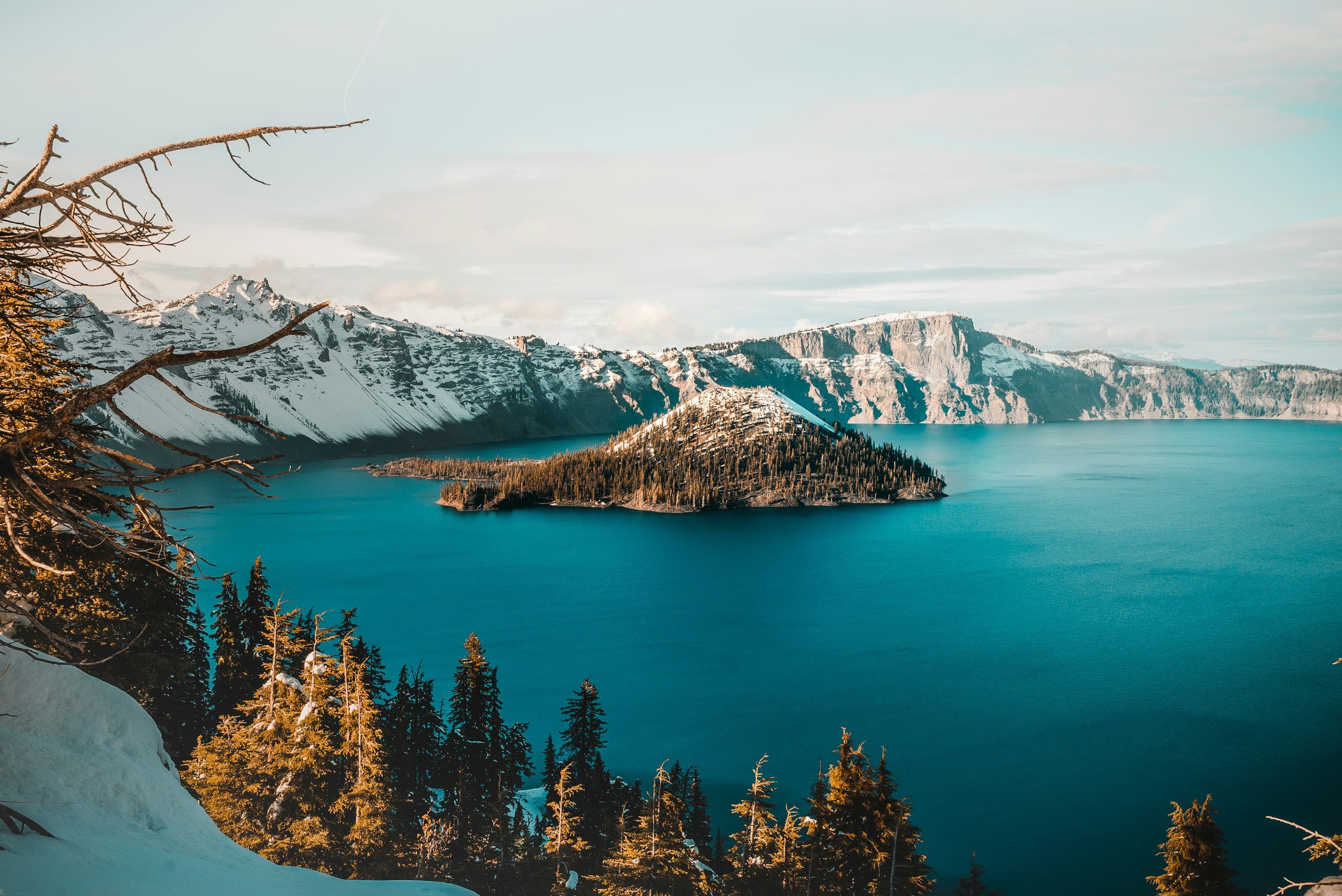
Wizard Island, Crater Lake, Oregon
The head of an underworld god, rising from America's deepest and purest waters
Klamath County, Oregon, United States
At A Glance
- Coordinates
- 42.9401, -122.1470
- Suggested Duration
- Plan for a full day. The round-trip hike to Cleetwood Cove dock takes about an hour total and is strenuous, especially the return climb. The boat tour with island drop-off allows three hours on the island. The Wizard Island Summit Trail adds 2.5 miles and 761 feet of elevation gain. Rushing diminishes the experience.
Pilgrim Tips
- Practical hiking attire is appropriate. The trail to the summit is 2.5 miles with significant elevation gain, so sturdy footwear matters. Layers accommodate the temperature variation between boat dock and summit, and the potential for weather changes at this elevation. No specific modest dress is required, but remember you are visiting a sacred site, not a beach.
- Photography is permitted throughout the park and on the island. Tripods do not require permits for personal use. Drones are prohibited. The challenge at Crater Lake is that photographs rarely capture what the eye sees, the blue appears artificial or washed out, the scale incomprehensible. Consider this an invitation to be present first and documentary second.
- Do not attempt to recreate indigenous practices. Night swimming, crater wall running, extended fasting, these emerged from a cultural and spiritual context that provided preparation and protection contemporary visitors lack. Attempting them without that context is both disrespectful and dangerous. Do not leave physical offerings. The lake's purity is carefully monitored, and any foreign materials compromise the ecological integrity that contributes to its sacred character. Be aware that for some members of the Klamath Tribes, this remains a site of active spiritual significance. Your presence as a visitor is a privilege. Behave accordingly.
Overview
Wizard Island rises from the impossible blue of Crater Lake, a volcanic cinder cone within a caldera formed when Mount Mazama collapsed 7,700 years ago. For the Klamath people, this is Giiwas, the most sacred place in their spiritual geography. The island itself is the head of Llao, an underworld deity defeated in cosmic battle. To stand on Wizard Island is to stand on the remains of a god, surrounded by waters too powerful for ordinary people.
Some places hold power that predates human naming. Crater Lake is not one of them. Here, the land itself tells a story that indigenous peoples witnessed and preserved for nearly eight millennia, a story that geology has since confirmed with remarkable precision.
When Mount Mazama exploded 7,700 years ago, the Makalak people were there. They saw the mountain collapse, watched fire fall from the sky, felt the earth shake as something vast and terrible concluded. What remained was this: a caldera filled with water so pure it approaches the limits of what water can be, and rising from those depths, a cinder cone the Klamath came to understand as the head of Llao, Chief of the Below World, left visible after his defeat by Skell, Chief of the Above World.
The name Giiwas translates simply as sacred place. But the Klamath understanding goes deeper than designation. This was a location too powerful for ordinary people, a site where shamans received their visions, where those in grief or seeking transformation could encounter the spirits dwelling in the depths. To swim here at night, underwater, seeking beings in the darkness below, was to risk everything for the possibility of power.
Contemporary visitors arrive by boat across waters of a blue that seems impossible, a color so intense it appears artificial until you realize it is the opposite of artificial, that you are seeing what water looks like when nothing obscures it. They climb a volcanic cone inside a volcano, stand in a crater within a crater, and feel something they struggle to name. The Klamath had a name for it. They still do.
Context And Lineage
Wizard Island formed through volcanic eruptions several hundred years after Mount Mazama collapsed approximately 7,700 years ago. Indigenous peoples witnessed the catastrophic eruption and preserved the event in oral traditions that align remarkably with geological evidence. The Klamath understanding of the site as the head of the underworld deity Llao, left visible after his defeat by Skell, embeds geological reality within cosmological meaning.
Long ago, before the world took its present form, Llao ruled the Below World from his home beneath a great mountain. He could climb through a hole in the summit to stand upon the earth, reaching high enough to touch the stars. When he saw the daughter of a Makalak chief, he fell in love and offered her eternal life if she would rule the Below World with him. She refused.
Llao's rejection turned to rage. He rose from beneath the mountain and swore to destroy her people with fire. The earth shook. Flames fell from the sky. Darkness covered the land as Llao's fury took form.
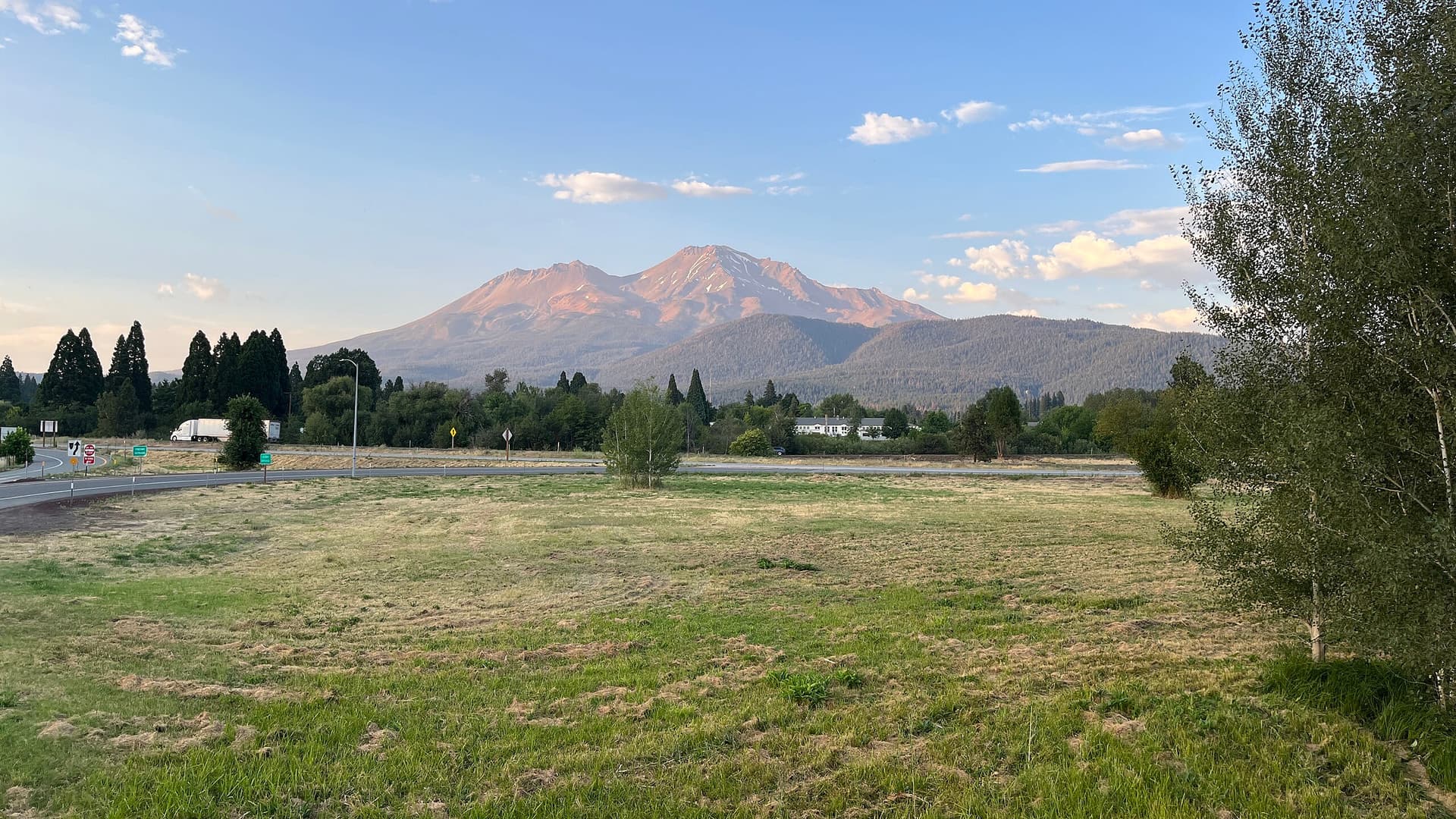
From Mount Shasta to the south, Skell, Chief of the Above World, answered. The two spirits hurled rocks at each other, boulders as large as hills, glowing red with heat. The battle shook the world. Two holy men, seeing their people caught between cosmic powers, sacrificed themselves by leaping into Llao's fire pit, hoping their deaths would bring peace.
Skell defeated Llao and cut his body into pieces, throwing them into the pit. But when Llao's head was thrown in, the creatures of the underworld recognized their master and refused to consume it. That head remains visible today as Wizard Island. Skell sealed the entrance to the Below World with the collapsed mountaintop, then filled the pit with water, creating Crater Lake.
This is not metaphor. The Klamath understand these events as having actually occurred, and geological science has confirmed the essential narrative: a volcanic mountain did collapse catastrophically, indigenous peoples were present and witnessed the event, and what remains is a water-filled caldera with a cinder cone rising from its depths.
For thousands of years, Crater Lake was Giiwas to the Klamath, a place of power approached with appropriate preparation. Vision seekers came here. Shamans received their callings in these waters. The grieving sought transformation. The site was not for casual use.
The first documented European-American encounter came in 1853, when John Wesley Hillman, searching for the Lost Cabin gold mine, stumbled upon the lake. He named it Deep Blue Lake, then apparently forgot about it, the discovery not widely recognized until later.
William Gladstone Steel arrived in 1885 and gave Wizard Island its current English name, finding resemblance to a sorcerer's hat. He spent years campaigning for the site's protection, succeeding in 1902 when Crater Lake became the fifth national park established in the United States.
This transformation from sacred site to public park fundamentally altered access. What had required preparation and purpose became available to anyone. The Klamath Tribes, whose treaty rights originally included Giiwas, found their relationship to the land mediated by a federal agency managing tourism and preservation.
Today, over half a million visitors come annually to Crater Lake. Most see it from the rim. A smaller number take the boat to Wizard Island. Fewer still arrive with awareness of what this place means to those who named it Giiwas. The layered history remains, visible to those who look.
Llao
deity
Chief of the Below World, who dwelt beneath Mount Mazama. His defeat by Skell resulted in the creation of Crater Lake, with Wizard Island as his visible remains. Llao Rock on the western rim also bears his name.
Skell
deity
Chief of the Above World, who fought Llao from Mount Shasta to protect the people. His victory sealed the underworld entrance and created the lake. Some versions name Gmok'am'c (the Creator) as Llao's defeater rather than Skell.
The Two Holy Men
mythological
Unnamed medicine men who sacrificed themselves during the battle between Llao and Skell, leaping into the fire pit hoping to end the destruction of their people.
Lalek
historical
A Klamath leader who accurately described the caldera-forming mechanism to early researchers, demonstrating how oral tradition preserved geological knowledge for millennia before Western science arrived at the same conclusions.
Why This Place Is Sacred
Wizard Island's sacred character emerges from a convergence rarely found elsewhere: a witnessed cosmic catastrophe preserved in oral tradition for millennia, a landscape of extreme geological power, waters of otherworldly purity, and the physical embodiment of mythological reality. The Klamath did not project sacredness onto this place. They recorded what happened here, and what remains.
What makes a place thin, a site where the boundary between worlds becomes permeable? At Wizard Island, the answer is written in stone and water, in oral tradition and geological record, in the consistency of human response across cultures and centuries.
The Klamath understood Crater Lake as a portal, an entrance to the Below World that Skell sealed when he defeated Llao. The island rising from those waters was not metaphor but evidence, the actual head of an underworld deity left visible as testimony to cosmic events. This understanding shaped how the Klamath approached the site. Those who came here did so with preparation, with purpose, with awareness that they were entering a place where the ordinary rules did not fully apply.
Geology confirms what tradition preserved. Mount Mazama did collapse catastrophically, sending pumice and ash across eight states and into Canada. The caldera did fill with water, fed only by rain and snow, creating one of the purest lakes on Earth. The cinder cone did rise from subsequent eruptions, its summit crater a volcano within a volcano within a volcano. The physical facts are as extreme as the mythology suggests.
The waters themselves contribute something essential. Crater Lake is the deepest lake in the United States, nearly two thousand feet from surface to floor. Its clarity has been measured at 142 feet, potentially the highest of any lake in the world. The blue visitors see, that impossible, saturated blue, results from the water's depth and purity, molecules absorbing every color but blue, scattering back what remains. You are seeing water as it rarely exists, uncontaminated, almost primordial.
Visitors who know nothing of Klamath cosmology still report experiences consistent with the traditional understanding: a sense of power, of presence, of standing somewhere that matters in ways they cannot articulate. Whether this reflects the accumulated weight of millennia of pilgrimage, the psychological impact of such extreme natural beauty, or something the Klamath recognized more accurately than modern visitors can, the effect persists.
In Klamath understanding, Crater Lake served as a site of vision questing and shamanic initiation. Those seeking spiritual power would journey here, prepared for encounters that could transform ordinary people into shamans or destroy those inadequately prepared. The lake was not a destination for casual visitation but a place of spiritual testing, where seekers swam at night seeking spirits in the depths, where grieving individuals might receive the power that would allow them to heal others.
The site also functioned as a living cosmological document, physical evidence of the battle between Llao and Skell, between the Below World and the Above World. To visit was to encounter that story not as narrative but as landscape, to stand on the remains of powers that shaped the world.
The Treaty of 1864 originally included Giiwas within Klamath Tribes treaty boundaries. The establishment of Crater Lake National Park in 1902, the fifth oldest national park in the United States, effectively removed the site from direct tribal control. This shift fundamentally altered the nature of access. What had been a sacred site requiring preparation and purpose became a tourist destination accessible to anyone with transportation and an entrance fee.
The Klamath Tribes maintain their spiritual connection to Giiwas despite these changes. The lake continues to hold significance for religious and cultural purposes, though the specific forms of contemporary practice are not publicly documented. Some tribal members still approach the site with traditional reverence. Some, according to reports, do not look directly at the lake, honoring beliefs about the power contained in such places.
For visitors outside Klamath tradition, Wizard Island has accumulated additional meanings: a bucket-list destination, a geological wonder, a backcountry hiking opportunity. These framings are not wrong, but they are incomplete. The island existed as sacred site for thousands of years before it became a tourist attraction. That history does not disappear because newer meanings have been added.
Traditions And Practice
Traditional Klamath practices at Crater Lake included vision quests, shamanic initiation, and spiritual communion involving night swimming to encounter spirits in the depths. These practices are not available to contemporary visitors, but meaningful engagement remains possible through contemplative approaches that honor the site's sacred character.
Klamath spiritual practices at Crater Lake were rigorous and transformative. Vision quests brought seekers to the water's edge to encounter supernatural beings dwelling in the depths. Some would swim at night, underwater, seeking direct contact with spirits in the darkness below. These were not casual practices but serious spiritual undertakings with the potential to transform ordinary people into shamans, or to destroy those inadequately prepared.
The crater wall running ritual tested spiritual power. Beginning at the western rim, individuals would run down the steep caldera wall to the water. Those who could reach the lake without falling were understood to possess superior spirit power. The physical challenge served as a spiritual diagnostic.
Shamanic initiation brought those called to become medicine people to Giiwas for extended periods of fasting, prayer, and communion with the dead. The site's power made it ideal for the intensive spiritual work required to receive healing abilities.
These practices emerged from a cosmology that understood the lake as genuinely dangerous, too powerful for those without proper preparation. The relationship was one of reciprocity: seekers offered their effort, their courage, their willingness to be transformed, and received in return the possibility of power.
The specific ceremonial practices of the Klamath at Crater Lake are not available to visitors outside that tradition, nor would it be appropriate to attempt them. The boat tours, the hiking trails, the viewpoints, these are the modes of access the national park provides, and they offer their own possibilities.
What remains available is approach, the quality of attention you bring to a place understood as sacred by those who knew it longest. Coming to Wizard Island as pilgrimage rather than excursion means treating the practical requirements, the descent, the boat ride, the climb, as thresholds that mark the transition from ordinary to sacred space.
Silent presence at the summit crater offers contemplative opportunity. The Witches Cauldron, small and quiet after the grandeur of the crossing, invites reflection. Sitting with the nested structure of the landscape, crater within cone within caldera, mirrors the nested structure of consciousness and invites inquiry into what lies beneath surface experience.
Arrive with intention. Before the boat crossing, consider what question or concern you bring to the island. This need not be articulated precisely, only acknowledged. The Klamath came here seeking transformation. What transformation, if any, are you seeking?
During the crossing, let the blue work on you. This color exists almost nowhere else on Earth in this intensity. Notice how it affects your state, whether it induces calm, awe, something harder to name.
At the summit, after climbing to the Witches Cauldron, take time to sit. Ten minutes of stillness, facing the small crater, allows something to settle. You might offer silent acknowledgment to Llao, whose head, according to Klamath teaching, you are standing on. You need not believe this literally to honor it as a frame.
Before leaving the island, stand at the dock and look back up at the cone you have climbed. Consider what you are leaving behind and what you carry away. Thresholds work in both directions.
Klamath Indigenous Tradition
ActiveCrater Lake, known as Giiwas meaning sacred place, holds the highest significance in Klamath spiritual geography. The lake and Wizard Island are not merely commemorative of spiritual events but are the physical results and evidence of those events. Wizard Island specifically embodies Llao, Chief of the Below World, whose head was left visible after his defeat by Skell. This is a location of genuine spiritual power, considered too powerful for ordinary people, where shamans received their visions and seekers underwent transformation.
Traditional practices included vision quests seeking supernatural beings in the lake depths, night swimming underwater to encounter spirits, crater wall running as a test of spiritual power, and extended fasting and communion with spirits during shamanic initiation. Contemporary Klamath practice at the site is not publicly documented, but the spiritual connection between the Tribes and Giiwas continues.
Modoc Indigenous Tradition
HistoricalThe Modoc people, related to the Klamath, also conducted spirit quest pilgrimages to Crater Lake despite it being in Klamath territory. This demonstrates that the site's sacred significance transcended individual tribal boundaries, recognized across the region as a place of power.
Modoc practices at Crater Lake included spirit quest pilgrimages and vision seeking ceremonies, similar in nature to Klamath practices.
Experience And Perspectives
Visitors to Wizard Island consistently report responses that exceed typical scenic appreciation: an overwhelming sense of awe at the water's color, profound stillness, awareness of geological time and power, and a contemplative quality that invites reflection on mortality and transformation. These responses span belief systems and expectations.
The boat crossing is the first threshold. You descend nearly seven hundred feet on the Cleetwood Cove Trail, the only legal access to the water, and board a vessel that will carry you across waters of a blue that cameras cannot capture. Something happens during that crossing, a shift in register, a quieting. By the time you reach the island's dock, you have already been changed.
What visitors describe most consistently is the stillness. Not silence exactly, though the lake is remarkably quiet, but something more fundamental, a quality of attention the landscape seems to demand. Mental chatter subsides. The endless commentary of the mind finds less purchase here, as if the vastness of the caldera and the depth of the water absorbed it.
The blue itself works on visitors in ways that are difficult to explain. People speak of it as unreal, impossible, too saturated to exist. But it is the opposite of artificial. It is water without interference, light filtered through purity. To see it is to realize how rarely we see things as they actually are.
Climbing Wizard Island adds another dimension. The summit trail ascends 761 feet to the Witches Cauldron, the crater within the cinder cone within the caldera. Standing there, you are on a volcano inside a volcano inside a mountain that was once a volcano. The nested structure of the landscape mirrors something about consciousness itself, layers within layers, surfaces concealing depths.
Many visitors report an acute awareness of time at scales beyond the human. The eruption that created this place happened nearly eight thousand years ago. People witnessed it. They told the story to their children, who told it to theirs, across more generations than we can easily count. To stand here is to stand in the presence of deep time, to feel both the brevity of individual life and its connection to something that endures.
Wizard Island rewards those who approach it as pilgrimage rather than excursion. The practical requirements, the descent to Cleetwood Cove, the boat ride, the climb, create natural thresholds that separate this experience from ordinary sightseeing. Use them.
Consider what you bring to the island besides water and sunscreen. The Klamath came here with questions, with grief, with the desire for transformation. Coming with intention does not require adopting Klamath beliefs, but it does require taking seriously the possibility that this place might have something to offer beyond photographs.
At the summit, take time to sit with the Witches Cauldron. This small crater, the innermost nesting in a landscape of nested circles, invites contemplation. What are you holding that might be ready to fall into the depths? What might rise from those depths in return?
The island was understood as the head of a god. Whether or not you believe in gods, there is something useful in approaching Wizard Island as though you were encountering a being rather than a landform. What would it mean to meet this place, rather than merely visit it?
Wizard Island invites multiple ways of understanding, and honest engagement requires holding them together without insisting on resolution. Geological science, indigenous cosmology, and visitor experience each reveal something genuine about this place. The challenge is allowing all three to inform without reducing any to the terms of the others.
Geological consensus establishes the essential facts with precision. Mount Mazama erupted catastrophically approximately 7,700 years ago, ejecting roughly twelve cubic miles of material and collapsing to form a caldera. Wizard Island formed through subsequent volcanic activity, a cinder cone rising from eruptions several hundred years later. Trees on the island date to approximately 800 years ago, indicating when the summit emerged above the rising water level.
Remarkably, this geological narrative aligns closely with Klamath oral tradition. Archaeological evidence, including sandals and artifacts buried under ash layers, confirms indigenous presence during the eruption. A Klamath leader named Lalek accurately described the caldera-forming mechanism to early researchers, demonstrating how oral tradition preserved geological knowledge across nearly 8,000 years, well before Western science arrived at the same conclusions. This represents one of the oldest surviving eyewitness accounts of a geological event in human history.
The lake's properties are equally extreme. At 1,949 feet, it is the deepest lake in the United States. Its clarity, measured at depths up to 142 feet, may be the highest of any lake on Earth. The intense blue results from the water's depth and purity, a direct consequence of having no inlet streams, only precipitation.
For the Klamath Tribes, Wizard Island is not a geological formation but the head of Llao, Chief of the Below World. This is not metaphor or legend in the dismissive sense those terms sometimes carry. It is an account of what happened, preserved through generations who understood themselves as descendants of those who witnessed the events.
The lake, Giiwas, is a sacred place, too powerful for ordinary people. Those who approached did so with preparation, seeking vision, seeking power, seeking transformation. The spirits dwelling in the depths could bestow shamanic abilities or destroy the unprepared. This power has not diminished because a national park was established. The relationship between the Klamath people and Giiwas continues, though the establishment of the park has constrained traditional access.
From this perspective, visitors who come without awareness of the site's significance, who treat it as scenery rather than sacred ground, are missing what matters most about the place. The geological facts are not wrong, but they are incomplete. To understand Wizard Island fully requires understanding Llao.
Several genuine mysteries persist at Wizard Island and Crater Lake. The full extent of indigenous ceremonial practice before European contact remains incompletely documented. The precise nature of the spiritual powers vision seekers received through successful quests is difficult to reconstruct from outside the tradition.
Geologists note that future volcanic activity in the caldera is considered likely, though timing cannot be predicted. The lake remains geologically active, which raises questions about what will happen over the coming centuries and millennia.
The relationship between the Klamath oral tradition and geological events raises deeper questions about the nature of memory and transmission. How does a community preserve accurate information across eight thousand years? What does it mean that this preservation occurred, and what might we learn from it about the possibilities and limits of oral tradition?
Visit Planning
Wizard Island is accessible only by boat from Cleetwood Cove during the summer season, typically June through September. The visit requires significant physical effort: a strenuous 2-mile round-trip hike to the dock, followed by the boat crossing, followed by the optional summit climb. Allow a full day. Note that the Cleetwood Cove Trail is scheduled to close in 2026 for at least two years, suspending boat tours.
No lodging exists on Wizard Island or at the immediate Cleetwood Cove area. Crater Lake Lodge on the rim offers historic accommodations that book far in advance. Mazama Village provides cabins and camping. The surrounding region offers lodging in communities like Prospect, Fort Klamath, and Chemult, all requiring drives of 30-60 minutes to the park.
Wizard Island requires respect for both indigenous sacred significance and ecological preservation. Approach with the reverence appropriate to a place held sacred for millennia. Follow national park regulations strictly, as the lake's exceptional purity depends on visitor compliance.
The most important etiquette consideration at Wizard Island is recognition. You are visiting a place that holds deep spiritual significance for the Klamath Tribes, significance that predates the national park, the United States, and European presence on this continent by thousands of years. The name Giiwas means sacred place. Some contemporary Klamath members do not look directly at the lake, honoring traditional beliefs about its power. Your presence here is permitted by a national park system that established itself on land originally included in Klamath treaty boundaries.
This recognition should inform behavior. Loud conversation and music diminish not only other visitors' experience but the quality of attention the site deserves. Photography, while permitted, should not dominate the visit. Consider spending time simply being present before documenting your presence.
The lake's exceptional purity creates ecological obligations. Crater Lake has only 79 particles per million, fed solely by rain and snow, with no inlet streams to refresh contamination. Everything you bring to the island must leave with you. Sunscreen and insect repellent affect water quality when you swim, use them thoughtfully.
Stay on designated trails. The island's volcanic soil erodes easily, and off-trail travel damages both the land and the experience of future visitors.
Practical hiking attire is appropriate. The trail to the summit is 2.5 miles with significant elevation gain, so sturdy footwear matters. Layers accommodate the temperature variation between boat dock and summit, and the potential for weather changes at this elevation. No specific modest dress is required, but remember you are visiting a sacred site, not a beach.
Photography is permitted throughout the park and on the island. Tripods do not require permits for personal use. Drones are prohibited. The challenge at Crater Lake is that photographs rarely capture what the eye sees, the blue appears artificial or washed out, the scale incomprehensible. Consider this an invitation to be present first and documentary second.
Physical offerings are not appropriate and should not be left at the site. The lake's purity is its most sacred characteristic, and foreign materials of any kind compromise that purity. If you wish to offer something, make it internal: gratitude, attention, intention. These leave no trace and honor the place.
Swimming is only permitted at designated areas. Fishing from Wizard Island is allowed with artificial flies and lures only, no live bait, to protect water purity. Collecting rocks, plants, or other natural materials is prohibited. National park entrance fee is required. Boat tour tickets must be purchased separately and advance reservation is recommended.
Sacred Cluster
Nearby sacred places create the location cluster described in the growth plan. This block is intentionally crawlable and links into the wider regional graph.