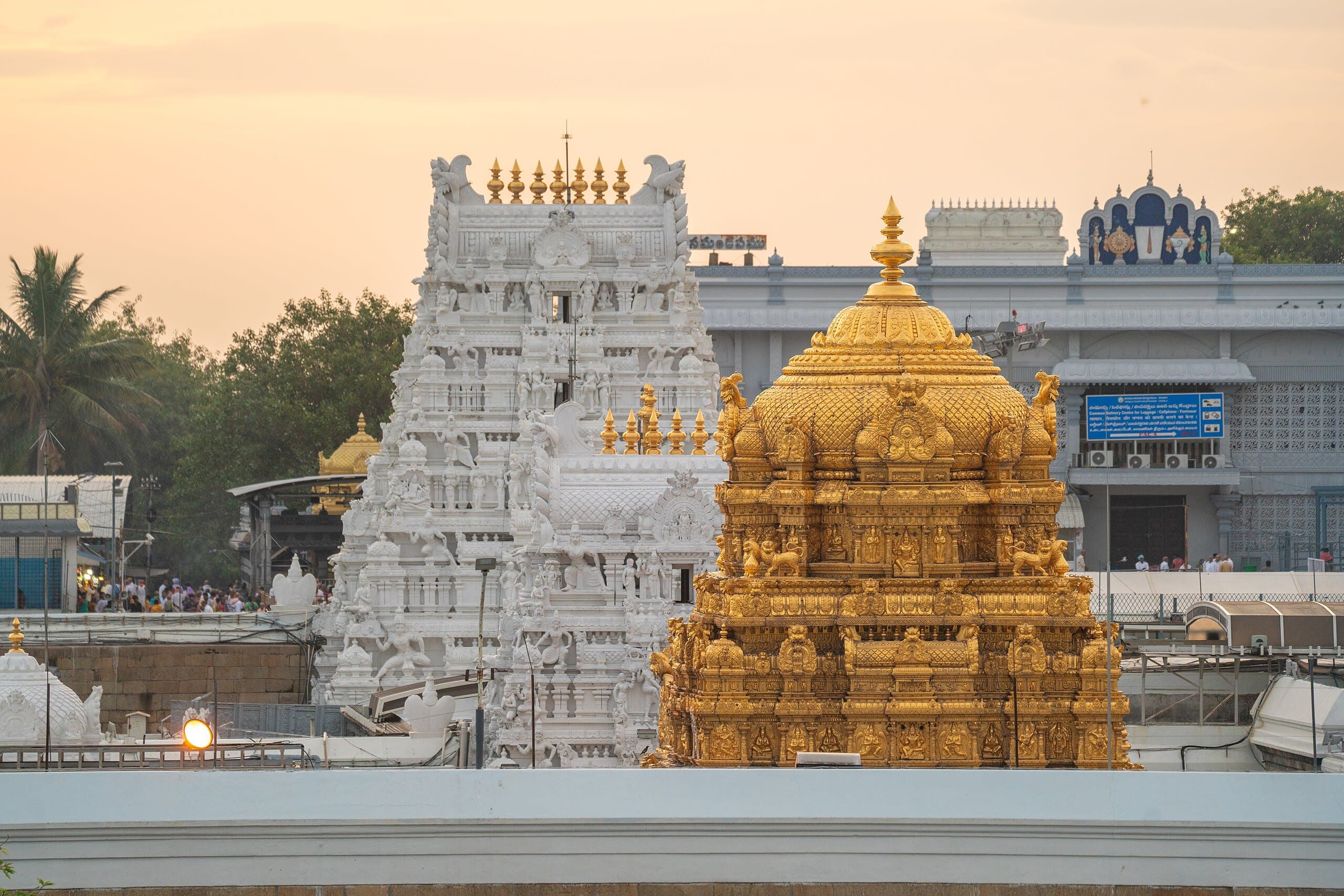
Venkateswara temple, Tirumala, Tirupati, Andhra Pradesh
Where sixty thousand pilgrims daily seek the Lord who burns away sins
Tirumala, Andhra Pradesh, India
At A Glance
- Coordinates
- 13.6833, 79.3474
- Suggested Duration
- One full day is minimum, more if you wish to participate in special sevas or walk the footpath. Many pilgrims stay two nights in Tirupati or Tirumala. The experience includes not just darshan but the entire pilgrimage arc: arrival, preparation, waiting, the moment itself, and integration afterward.
Pilgrim Tips
- Men should wear dhoti and shirt or traditional Indian formal wear. Long pants with collared shirt is acceptable. Women should wear saree, salwar kameez with dupatta, or other traditional modest dress. Rental counters near the temple provide appropriate clothing for those who arrive unprepared. Remove footwear before entering. Storage facilities are available. The floors are stone and may be hot midday.
- Photography is strictly prohibited inside the main temple complex. Mobile phones and cameras must be deposited in lockers before entry. This restriction serves both security and devotional atmosphere. The deity is not a subject for your camera.
- Peak days, particularly major festivals, Saturdays, and public holidays, may involve waits exceeding twelve hours even with tickets. Tuesday through Thursday typically offer shorter queues. Be prepared for the pace of darshan. The moment before the deity is brief, perhaps five to ten seconds. Attendants firmly move the line. Do not expect extended contemplation in the sanctum. The physical demands are significant. Long standing, walking, heat, and crowds require stamina. Those with mobility limitations should inquire about special arrangements through TTD. Be aware of touts and unofficial guides offering shortcuts or special access. Use only official TTD channels for bookings and information.
Overview
Tirumala Venkateswara Temple rises on the Seven Hills of Andhra Pradesh as the most visited religious site on Earth. Each day, tens of thousands of devotees ascend these hills to receive darshan of Lord Venkateswara, a form of Vishnu believed to have self-manifested here to guide humanity through this difficult age. The brief moment before the deity draws tears, prostrations, and transformations that pilgrims carry home.
There is no preparing for what happens in that moment. After hours of waiting, after walking nine kilometers up the hills or enduring the serpentine queues, after the press of bodies and the mounting anticipation, you are suddenly before him: Venkateswara, the Lord who burns away sins, adorned in gold and jewels, eyes covered with camphor to protect devotees from the intensity of his gaze.
The moment lasts seconds. Temple attendants keep the line moving. Yet something transfers in that instant that pilgrims struggle to articulate. They weep. They prostrate. They emerge changed.
Tirumala has drawn seekers for over seventeen hundred years. The Seven Hills on which the temple stands are understood as the seven heads of Adisesha, the divine serpent on whom Vishnu reclines in the cosmic ocean. The temple is called Kaliyuga Vaikuntha, heaven on earth during this cosmic age of strife and confusion. Where better for the Lord to wait than here, accessible to any who make the journey?
Twenty-four million pilgrims answer that call each year. More than visit Mecca. More than the Vatican. More than any other sacred site on the planet. They come from villages and cities, from India and abroad, from wealth and poverty. What draws them is not architecture or history but something simpler: the conviction, tested across generations, that prayers offered here are heard.
Context And Lineage
Tirumala Venkateswara Temple has accumulated seventeen centuries of worship, patronage from South Indian dynasties, theological development through Srivaishnava tradition, and modern administration that manages the largest pilgrimage operation on Earth. The deity is understood as Vishnu himself, descended to remain accessible through this cosmic age.
The Puranic narratives describe Vishnu's descent to the Tirumala hills during a dispute between the goddess Lakshmi and the Earth. In one telling, Lakshmi departed Vaikuntha after a quarrel, and Vishnu descended to Earth to search for her. He encountered Padmavati, daughter of a local king, and wished to marry her. To finance the wedding, he took a massive loan from Kubera, the god of wealth. That debt, tradition holds, remains unpaid, and devotees' offerings contribute to its gradual repayment.
Another narrative emphasizes Vishnu's compassion for humanity in Kali Yuga. Seeing the difficulties of spiritual practice in this age, he chose to remain at Tirumala, accessible to any who make the journey, regardless of caste, wealth, or spiritual attainment. He waits here, patient and radiant, until the end of the age.
These stories are not alternatives to historical fact but operate on a different register. They give meaning to the pilgrimage, the offerings, the elaborate rituals. They situate individual experience within cosmic narrative.
The temple's ritual life follows Vaikhanasa Agama, one of two major Vaishnava liturgical systems. The priests who serve the deity are Vaikhanasas, a hereditary community whose ritual knowledge passes through generations. The daily schedule of worship, the seasonal festivals, the specific mantras and procedures, all derive from this ancient systematization.
The Srivaishnava theological tradition, shaped by the Alvars and Ramanuja, provides the devotional and philosophical framework. The Tamil poetry of the Naalayira Divya Prabandham is recited daily, linking Tirumala to the broader network of Divya Desams celebrated in these verses.
Modern administration through TTD represents a new chapter in this lineage, maintaining traditional practice while managing unprecedented scale. The tension between bureaucratic efficiency and devotional authenticity is ongoing, navigated through policies that attempt to honor both demands.
Venkateswara
deity
The Lord who burns away sins. A form of Vishnu believed to have self-manifested at Tirumala to guide humanity through Kali Yuga. The name combines Venkata (the hills) with Ishwara (Lord). He is also known as Balaji, particularly in North India, and Srinivasa.
Padmavati
deity
The consort of Venkateswara, considered an incarnation of Lakshmi. Her temple at Tiruchanur, near the base of the hills, is traditionally visited before ascending to Tirumala. The marriage narrative between Venkateswara and Padmavati shapes much of the temple's mythology and ritual.
Ramanuja
saint
The great 12th-century philosopher and saint who revived and systematized Tirumala's worship. His theological framework and ritual prescriptions continue to guide temple practice. He is venerated throughout Srivaishnava tradition as an incarnation of Adisesha, the divine serpent.
Krishnadevaraya
historical
The Vijayanagara emperor who in 1517 donated gold to gild the Ananda Nilayam, the inner sanctum. His patronage represents the high point of royal support for the temple and established much of its current appearance.
Why This Place Is Sacred
Tirumala's sacredness rests on the convergence of multiple factors: the self-manifested (swayambhu) nature of the deity, the mythological significance of the Seven Hills as the divine serpent Adisesha, seventeen centuries of continuous worship, and the temple's designation as Kaliyuga Vaikuntha, the accessible heaven for this cosmic age. The sheer scale of devotion concentrated here creates a field of accumulated prayer that pilgrims describe as palpable.
The deity at Tirumala is not carved. According to Vaishnava teaching, Venkateswara swayambhu, self-manifested at this location to remain accessible to humanity throughout Kali Yuga, the current age of darkness and spiritual difficulty. This understanding places Tirumala among the eight Swayambhu Kshetras, sites where the divine has chosen to appear without human craft. It is also the 75th of the 108 Divya Desams, the sacred places celebrated by the Tamil Alvars in their devotional poetry.
The Seven Hills themselves carry meaning. Tirumala is not simply elevated geography but the seven heads of Adisesha, the cosmic serpent who serves as Vishnu's couch in the Ocean of Milk. To climb these hills is to traverse the body of one who attends the Lord. The landscape itself participates in the sacred.
But perhaps the most significant designation is Kaliyuga Vaikuntha. In Hindu cosmology, Vaikuntha is Vishnu's celestial abode, normally accessible only after death to the most devoted. The teaching holds that in this degenerate age, when spiritual practice is difficult and human virtue diminished, Vishnu has made himself available here. You need not be perfect to come. You need not be Hindu. You need only arrive.
Seventeen centuries of pilgrims have arrived, bringing prayers and offerings, leaving hair and tears. This accumulated devotion creates something that visitors consistently describe, even those without religious framework: a density of intention, a weight of prayer, a sense of entering a place where millions have brought their deepest hopes. The air itself seems thick with supplication and gratitude.
According to the Puranas, Lord Vishnu descended to these hills in human form to guide humanity through Kali Yuga. He remains here, some traditions say, until the end of this cosmic age. The temple is not merely a shrine but a standing offer: come, and I am here.
The founding narrative includes Venkateswara's marriage to Padmavati, for which he borrowed a vast sum from Kubera, the god of wealth. This cosmic debt, tradition holds, is repaid through the offerings of devotees. The theological frame gives meaning to the temple's extraordinary wealth and the emphasis on donation: every rupee offered participates in a transaction that connects the human and divine economies.
The temple's history weaves through South Indian dynasties. Thondaman kings began construction around 300 CE. Pallavas, Cholas, Pandyas contributed over centuries. The Reddi kingdom and then the Vijayanagara Empire brought major expansions, with Emperor Krishnadevaraya in 1517 donating gold to gild the inner shrine, the Ananda Nilayam, giving it the brilliant appearance visitors encounter today.
Saint Ramanuja's arrival in the 12th century proved transformative. The great Srivaishnava teacher revived and systematized the temple's rituals, establishing practices that continue eight centuries later. His influence extended beyond liturgy to theology, ensuring Tirumala's centrality to Srivaishnava tradition.
Colonial and post-colonial periods brought administrative changes. The British East India Company assumed oversight in 1789 before transferring it to local mahants in 1843. The creation of Tirumala Tirupati Devasthanams (TTD) in 1932 established the modern bureaucratic structure that manages the temple today: coordinating millions of visitors, collecting and distributing vast wealth, maintaining traditional rituals at unprecedented scale.
Traditions And Practice
Tirumala's practices center on darshan, the transformative act of seeing and being seen by the deity. Surrounding this core are supporting practices: walking the hills, tonsure, donation, and participation in various sevas (ritual services). The temple operates elaborate daily rituals from pre-dawn awakening to final rest, each accessible to devotees through various arrangements.
The daily ritual cycle begins at 3:00 AM with Suprabhatam, the ceremonial awakening of the deity with Vedic hymns. This is followed by Tomala Seva (garland offering), Archana (worship with recitation of the deity's names), Sahasra Namarchana (worship with the thousand names), and the first Abhishekam (ritual bathing) at 5:00 AM.
Throughout the day, numerous sevas occur: Kalyanotsavam (celestial wedding), Unjal Seva (deity on a swing), Sahasra Deepalankarana Seva (thousand-lamp decoration), and many others. Each has specific timing, significance, and means of participation. The day concludes with Ekanta Seva around midnight, when the deity is ceremonially put to rest.
Brahmotsavam, the nine-day annual festival in September or October, represents the liturgical high point. Processions of the utsava murtis (festival images) through the streets draw enormous crowds. Each day features different vehicles (vahanas) for the procession, from Garuda to the golden chariot.
Modern visitors access darshan through multiple pathways. Sarva Darshan is free but involves the longest wait, sometimes exceeding twelve hours on peak days. Special Entry Darshan (approximately Rs 300) offers shorter queues. VIP Break Darshan provides still faster access. All types lead to the same moment before the deity.
Online booking through TTD has transformed the pilgrimage logistics. Darshan tickets, accommodation, and sevas can be reserved weeks or months in advance. This bureaucratization serves the volume but changes the experience, inserting administrative procedures into devotional flow.
Tonsure remains widespread. TTD operates massive tonsure facilities processing thousands daily. The hair is sold internationally for wigs and extensions, generating revenue that supports free meals, hospitals, and educational institutions. The cycle of offering and charitable return enacts the theology of reciprocity.
If time permits, walk at least part of the footpath. Begin before dawn from Alipiri and allow four to five hours. The physical effort becomes part of your offering.
Book Suprabhatam Seva if you want to witness the deity's awakening. This requires overnight stay and early gathering but offers an intimate experience unavailable during regular darshan.
Consider tonsure if the act of surrender resonates. Many pilgrims describe it as unexpectedly moving, a visible mark of having offered something.
After darshan, collect the laddu prasadam. These sacred sweets, prepared by the temple, are famous throughout India. Eating them is not mere snacking but receiving the deity's grace in edible form.
Before ascending, visit Padmavati Temple at Tiruchanur. Tradition holds that this sequence, consort before lord, is auspicious.
Hinduism - Vaishnavism
ActiveTirumala Venkateswara Temple stands among the most important pilgrimage sites in Vaishnavism. The deity is understood as Lord Vishnu himself, self-manifested to remain accessible through Kali Yuga. The temple is one of eight Swayambhu Kshetras and the 75th of 108 Divya Desams. The name Venkateswara translates as 'Lord who burns away sins,' indicating the salvific purpose of pilgrimage here.
Darshan forms the central practice, the transformative encounter between devotee and deity. Supporting practices include walking the footpath as devotional exercise, tonsure as offering of ego and vanity, monetary donation participating in cosmic debt repayment, and participation in sevas (ritual services) from pre-dawn Suprabhatam to midnight Ekanta Seva. The annual Brahmotsavam represents the liturgical high point.
Srivaishnava Tradition
ActiveTirumala holds vital importance within Srivaishnava tradition, the southern Indian branch of Vaishnavism shaped by the Alvars and systematized by Ramanuja. The temple follows rituals established by Ramanuja in the 12th century. Daily recitation of the Naalayira Divya Prabandham connects worship here to the broader network of sacred sites celebrated in that Tamil poetry.
Temple rituals follow Vaikhanasa Agama, maintained by hereditary Vaikhanasa priests. The theological framework derives from Ramanuja's Vishishtadvaita (qualified non-dualism). Srivaishnava devotees approach Tirumala within this systematic understanding: the nature of God, soul, and their relationship; the mechanics of surrender (prapatti) and grace; the role of sacred places in the soul's journey toward liberation.
Experience And Perspectives
The pilgrimage to Tirumala is not a single experience but a sequence: the arduous journey, the extended waiting, the brief but overwhelming darshan, and the integration afterward. Each stage carries meaning. Pilgrims consistently describe the cumulative effect as transformative, reporting answered prayers, emotional release, and renewed purpose.
The experience begins long before the temple comes into view. Many devotees walk the nine kilometers from Tirupati, ascending the hills barefoot as an act of devotion. The path is marked by small shrines where pilgrims pause to rest and pray. Those who take the buses or drive still feel the climb, the gradual elevation carrying them from ordinary life toward something set apart.
Then comes the waiting. Depending on the day, the queue, and the type of darshan chosen, pilgrims may wait two hours or twelve. This waiting is not empty time. It is preparation. The crowd itself becomes a teacher, comprising every stratum of Indian society bound by common purpose. Conversations happen. Songs arise. The slow advance toward the sanctum builds anticipation to almost unbearable intensity.
The moment arrives with disorienting speed. You enter the inner sanctum. The deity stands before you, massive, adorned, his eyes covered with camphor. The camphor serves practical purpose, protecting his features from lamp-black, but tradition also holds that the full power of his gaze would overwhelm. Even veiled, his presence overwhelms. You have seconds. Attendants keep the line moving. You emerge into daylight.
What happens in those seconds defies articulation. Devotees speak of feeling seen, of receiving confirmation that prayers will be answered, of burdens lifting. The tears that follow are not sadness but release. Something has transferred.
Many pilgrims perform tonsure, offering their hair before or after darshan. This act of surrender, stripping away vanity, appears across the site: men, women, children, their newly shorn heads gleaming. The hair is sold by TTD, generating revenue that supports charitable works, completing a cycle of offering and return.
Come with genuine intention. The sincerity of your purpose matters more than your belief system. Whether you understand Venkateswara as the supreme deity, a manifestation of cosmic principle, or a focal point for human aspiration, the pilgrimage works through your engagement with it.
Consider walking at least part of the way. Even a portion of the footpath offers something the bus cannot: the gradual approach, the embodied effort, the sense of earning arrival.
During the wait, resist impatience. The queue is not obstacle but practice. Let it work on you. Notice who surrounds you. Release the need to be elsewhere.
When darshan comes, let it come. Do not grasp. The moment will be brief. Trust that what needs to transfer will transfer. The fullness of the experience often reveals itself only afterward, in the days and weeks following return.
Tirumala invites multiple framings that need not exclude each other. Scholarly analysis addresses temple economics, architectural history, and institutional administration. Traditional understanding centers on the living presence of the deity and the mechanics of grace. Each perspective illuminates what the other tends to overlook.
Academic study of Tirumala often focuses on its extraordinary economics. With annual revenues exceeding hundreds of millions of dollars, the temple represents one of the wealthiest religious institutions globally. Studies examine how this wealth is generated, managed, and distributed, tracing the flows of donation, prasadam, and charitable output.
Architectural analysis locates the temple within Dravidian temple traditions, noting the gopuram (tower) development, the mandapa (hall) configurations, and the placement of the sanctum. The Ananda Nilayam, gilded in the 16th century, represents a particular moment in South Indian temple architecture.
Sociological perspectives examine Tirumala as a case study in mass pilgrimage management, analyzing how traditional religious practice adapts to contemporary scale. The tension between devotional experience and bureaucratic processing offers insights into modernity's encounter with tradition.
For practitioners within Vaishnava tradition, Tirumala is simply what it claims to be: the residence of Lord Venkateswara, who has chosen to remain here for the welfare of humanity. The deity is not symbol or representation but the Lord himself, present and accessible.
Darshan is not merely seeing a statue. It is mutual encounter. The devotee sees the deity; the deity sees the devotee. In that exchange, grace flows. Prayers offered here reach divine ears with particular efficacy. The theological framework gives meaning to the waiting, the offering, the brief moment in the sanctum. Nothing is wasted.
The Srivaishnava tradition provides systematic understanding: the nature of the deity, the mechanics of grace, the relationship between human effort and divine response. This is not folk belief but sophisticated theology developed over centuries by scholar-saints.
Some interpreters frame Tirumala within broader frameworks of sacred geography and earth energies. The Seven Hills are sometimes described as a natural power point, with the temple sited to concentrate and distribute subtle energies. The massive congregation of devotees is understood to generate and sustain a field of spiritual power.
These interpretations typically come from outside traditional Vaishnavism, often from New Age or comparative spirituality perspectives. They lack endorsement from traditional practitioners but represent one way outsiders make sense of the site's evident power.
The precise origins of the deity remain mysterious. Traditional teaching holds swayambhu manifestation, appearing without human crafting. Historical analysis suggests ancient origins but cannot definitively date the earliest worship or determine whether a pre-existing cult was later absorbed into Vaishnavism.
What explains the consistency of transformative experience reported by pilgrims across centuries? Is it the accumulated weight of devotion, psychological dynamics of the pilgrimage process, genuine divine presence, or something else entirely? The question remains genuinely open.
How the temple will adapt to continuing growth in pilgrimage numbers while maintaining devotional authenticity represents an ongoing uncertainty. The TTD administration navigates this tension daily, with results that different observers evaluate differently.
Visit Planning
Reaching Tirumala requires traveling to Tirupati (by air, rail, or road) and ascending the hills by bus, foot, or car. Advance booking for darshan and accommodation is strongly recommended. Plan for a full day minimum. November through February offers pleasant weather; September and October bring Brahmotsavam.
TTD operates extensive accommodation ranging from basic dormitories to guest houses in both Tirumala and Tirupati. Booking through the TTD website is essential during busy periods. Private hotels in Tirupati serve all budgets. Staying in Tirumala reduces travel time but accommodation is limited and in high demand.
Tirumala requires traditional Indian dress, prohibition of electronic devices inside the temple, and behavior appropriate to one of the world's most active worship sites. This is not heritage tourism but living religion at massive scale. Your presence is permitted within a space of profound devotion.
You enter as a guest into ongoing worship. Sixty thousand people visit daily, the vast majority as devotees, not tourists. The atmosphere is devotional, the purpose is prayer, and visitors are expected to align with this purpose or at least respect it.
Silence is not maintained in the queues, where conversation and devotional songs are normal. But as you approach the sanctum, quiet your voice and attention. The culminating moment deserves your full presence. Do not photograph. Do not talk. Be there.
The crowd itself is part of the experience. You will be pressed close to strangers for hours. Accept this. The lack of personal space is not failure of organization but the reality of mass pilgrimage. Meet it with patience.
Dress modestly. Exposed shoulders, shorts, and tight clothing are not appropriate. Traditional dress is not mere costume but signal that you understand where you are. The temple dress code exists to maintain an atmosphere consistent with worship.
Men should wear dhoti and shirt or traditional Indian formal wear. Long pants with collared shirt is acceptable. Women should wear saree, salwar kameez with dupatta, or other traditional modest dress. Rental counters near the temple provide appropriate clothing for those who arrive unprepared.
Remove footwear before entering. Storage facilities are available. The floors are stone and may be hot midday.
Photography is strictly prohibited inside the main temple complex. Mobile phones and cameras must be deposited in lockers before entry. This restriction serves both security and devotional atmosphere. The deity is not a subject for your camera.
Monetary offerings are welcomed and form a significant part of temple revenue. Donation counters accept various amounts with corresponding acknowledgments. The Hundi, the offering box in the sanctum, accepts donations without minimum.
Hair, offered through tonsure at temple facilities, constitutes a major form of offering. No material offerings such as flowers or food are brought by individual pilgrims; these are provided by the temple administration.
No electronic devices inside the temple. No bags larger than small purses. No tobacco products, no alcohol. No entry under intoxication. Maintain silence in the inner sanctum. Do not attempt to linger during darshan. Follow all instructions from temple staff and security.
Sacred Cluster
Nearby sacred places create the location cluster described in the growth plan. This block is intentionally crawlable and links into the wider regional graph.
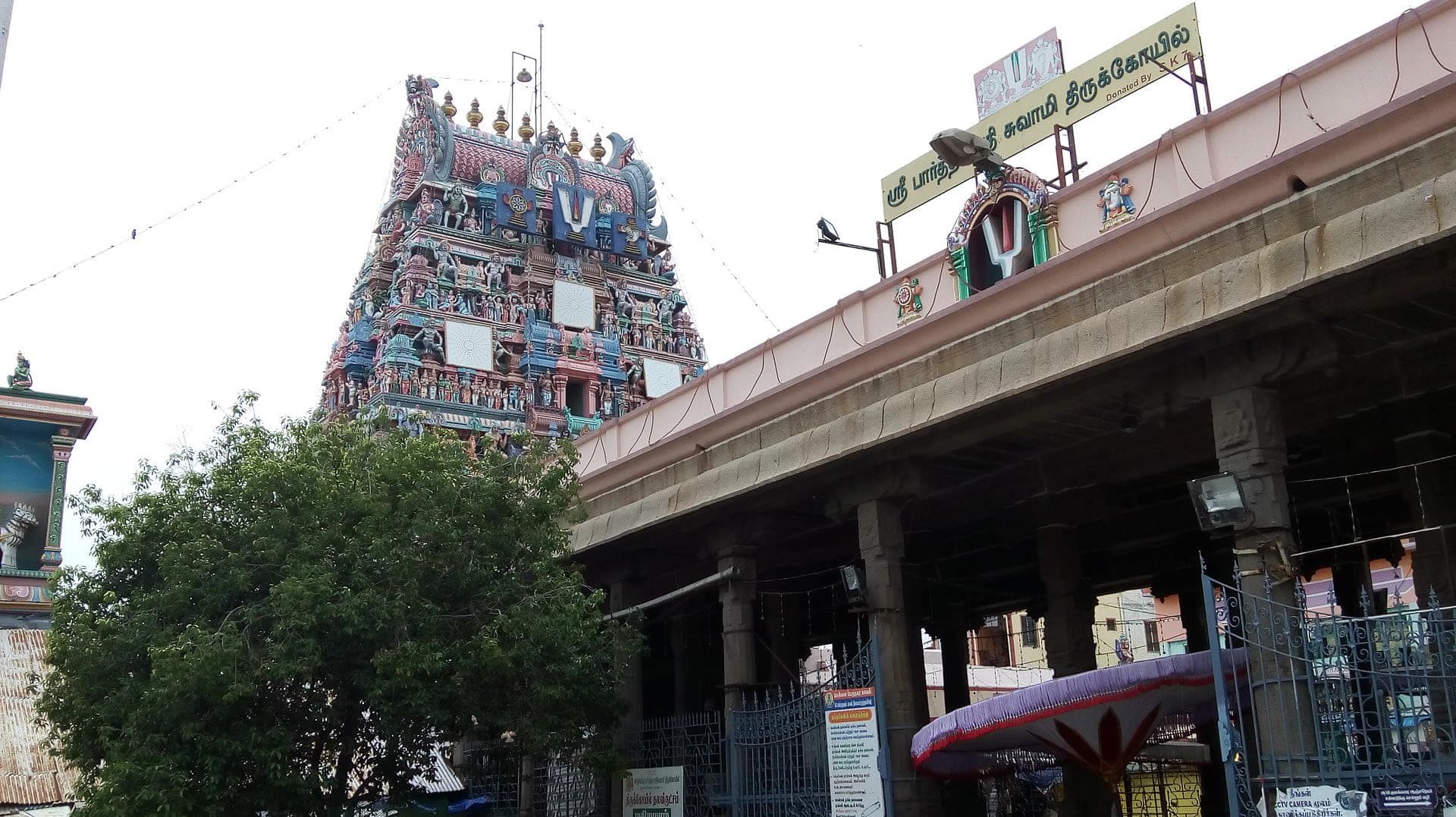
Arulmigu Sri Parthasarathyswamy Temple
Chennai, Tamil Nadu, India
122.5 km away
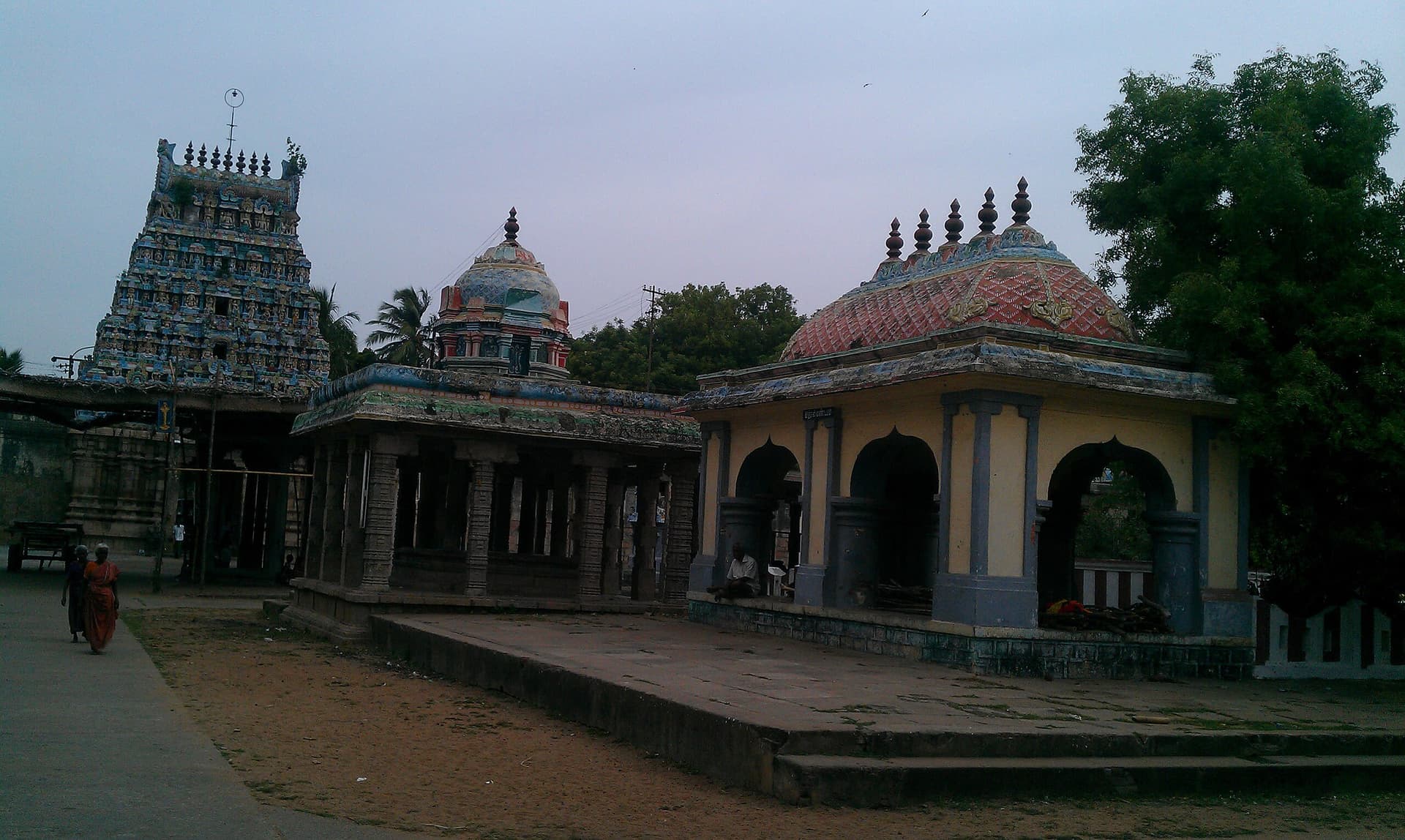
Sri Mahalingaswamy Temple
Priranavidagam, Tamil Nadu, India
299.1 km away
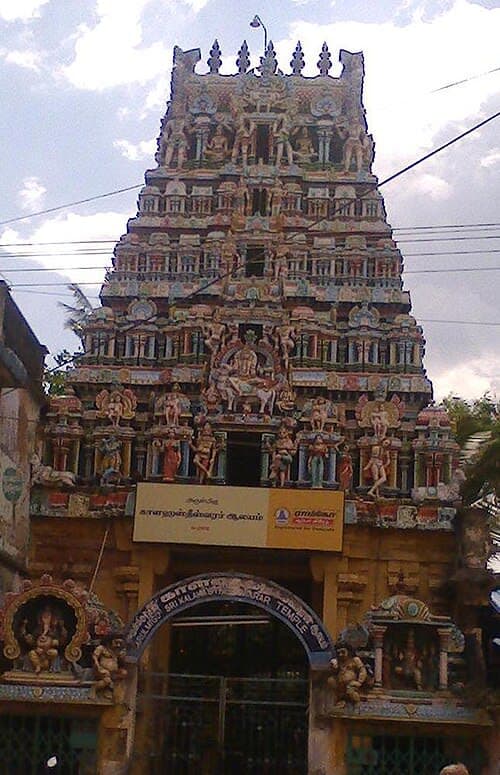
Kalahasteeswarar Temple, Kumbakonam, Tamil Nadu
Kumbakonam, Tamil Nadu, India
302.1 km away
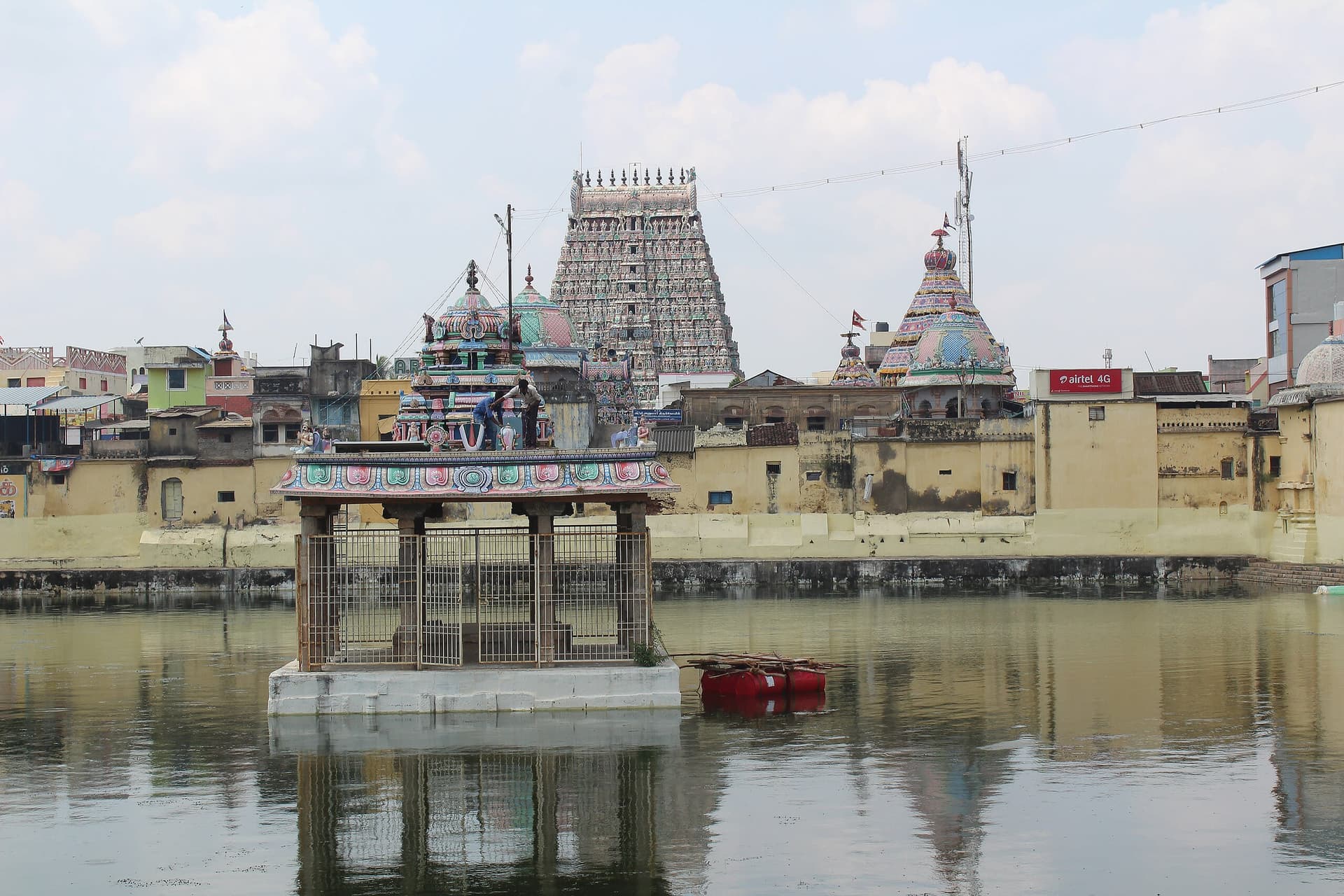
Adi Kumbeswarar Temple, Kumbakonam, Tamil Nadu
Kumbakonam, Tamil Nadu, India
303.0 km away