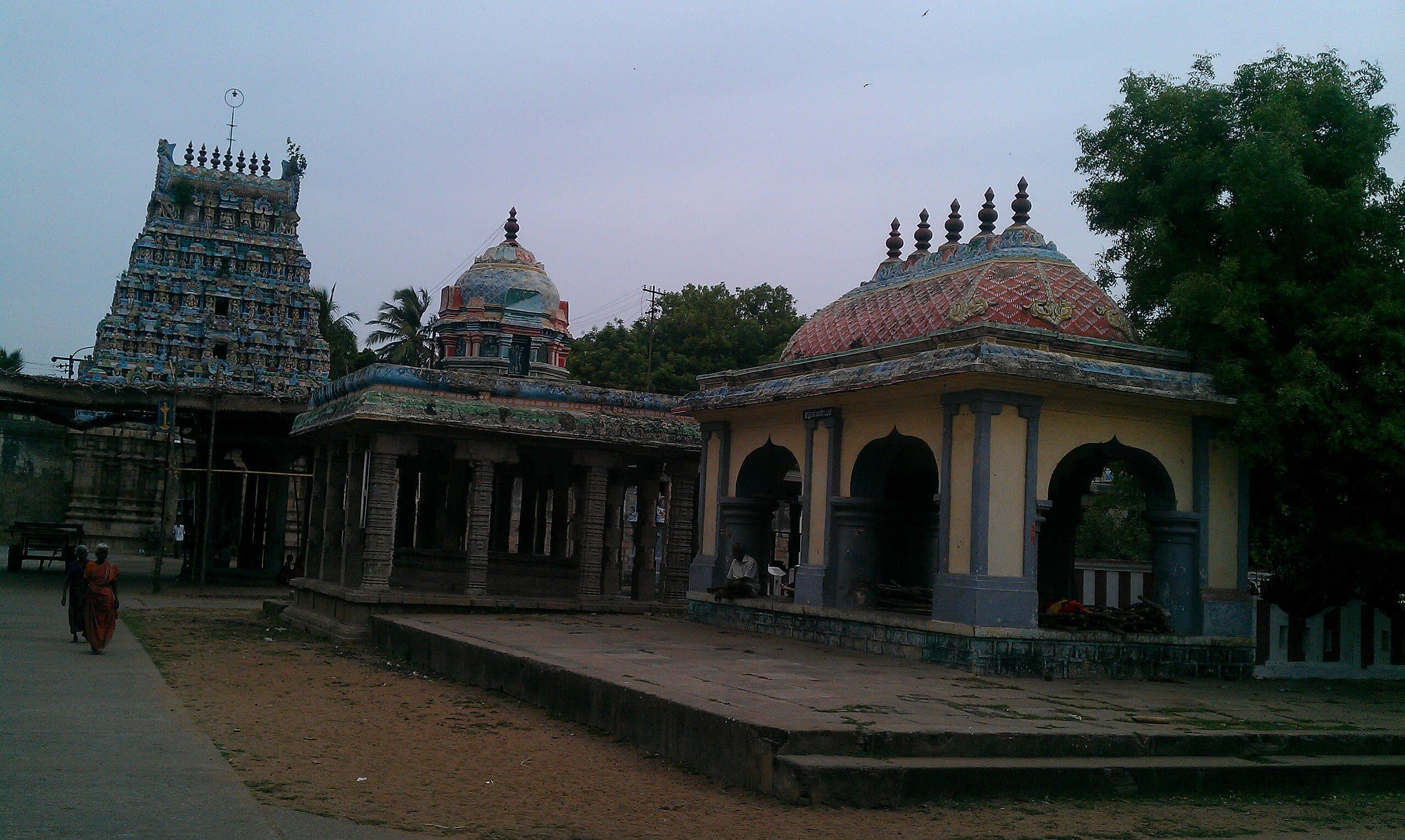
Sri Mahalingaswamy Temple
Where Shiva manifested as living flame, and three circuits of devotion lead seekers toward liberation
Priranavidagam, Tamil Nadu, India
At A Glance
- Coordinates
- 10.9952, 79.4524
- Suggested Duration
- Allow a minimum of two hours to visit all the major shrines and complete the prakaram circumambulations. During festivals, significantly more time may be needed due to crowds. Those seeking deeper engagement often return for multiple visits across different ritual times.
Pilgrim Tips
- Traditional modest attire is required. Men should wear dhoti or formal pants with shirts covering the shoulders. Women should wear saree, salwar kameez, or equivalent modest dress. Shoulders and knees should be covered. Avoid black clothing, which carries inauspicious associations in Tamil temple contexts. White, cream, and traditional colors are appropriate. Remove footwear before entering the temple precincts. Storage is available. This is non-negotiable.
- Photography may be restricted in the inner sanctum. Respect any posted restrictions or requests from temple staff. Even where photography is permitted, consider whether the image is worth the distraction from direct experience. The outer precincts and gopurams can generally be photographed. Use discretion and avoid photographing devotees in worship without their consent.
- The temple maintains living worship. Visitors should approach as pilgrims rather than tourists, recognizing that they are entering an active sacred space, not a museum. The inner sanctum may have access restrictions during specific rituals or for non-Hindus. Respect these boundaries. The outer precincts and prakaram circumambulation remain accessible. Do not interrupt ceremonies with photography or conversation. The rituals have priority. Visitors accommodate the worship, not the reverse.
Overview
At Tiruvidaimarudur, a self-manifested Shiva lingam has drawn pilgrims for over two millennia. The Tevaram hymns sung here by the great Nayanar saints still echo through the temple's three circumambulatory paths, each offering graduated spiritual blessings. This is a temple where continuous worship has never ceased, where the sacred is not memory but daily presence.
The flame that appeared to the sages still burns. Not metaphorically, but in the living presence Tamil Saivites understand as Jyothirmaya Mahalingam, the radiant great lingam, which manifested itself at Tiruvidaimarudur to answer the devotion of those performing penance.
This is one of the great Shiva temples of Tamil Nadu, classified among the Paadal Petra Sthalams, sites glorified in the seventh-century Tevaram hymns. Three of the greatest Nayanar poet-saints walked these precincts and sang praise that continues to be recited today. The temple stands as the Madhyarjuna, the middle Arjuna shrine, linking it to a sacred geography stretching from Srisailam in the north to Tirupudaimaruthur in the south.
What draws seekers here is not antiquity alone. Six daily rituals unfold according to patterns unchanged for centuries. Odhuvars chant Tevaram verses composed when these stones were new. The three prakarams, the concentric circumambulatory paths, carry the promise inscribed in tradition: walk the outer path and receive the merit of the ancient Ashwamedha sacrifice, walk the middle path and gain the blessing of circumambulating Mount Kailash itself, walk the innermost Pranava prakaram and approach moksha, liberation from the cycle of rebirth.
You do not have to accept these claims to feel something here. You only have to enter and observe what happens when devotion has been continuous for a thousand years.
Context And Lineage
Sri Mahalingaswamy Temple's documented history spans the Chola, Nayak, and Maratha periods, with traditional accounts extending the site's significance back over two millennia. The 149 inscriptions preserved on temple walls record centuries of royal patronage, while the Tevaram hymns composed here in the seventh century continue to shape Tamil Saivite devotion today.
The founding narrative holds that sages performing penance at this site were rewarded when Shiva appeared as a column of flame, manifesting the lingam that still receives worship. An alternative telling places Shiva himself as the first worshipper, demonstrating proper ritual form to the seven rishis.
Another significant narrative involves the Brahmarakshas. According to this account, Pandya King Varaguna's horse accidentally killed a Brahmin, creating the sin of Brahma hathi that pursued him as a ghostly presence. Lord Somasundarar of Madurai directed the king to seek refuge at Tiruvidaimarudur. Entering through the eastern gate and exiting through the western, the king escaped the ghost, which could not cross the temple's sacred boundary. This story establishes the site's power of purification and protection.
A third origin narrative connects to Parvati's playful blindfolding of Shiva. When her hands covered his eyes, the cosmos fell into darkness, but Tiruvidaimarudur alone remained illuminated by the radiant Jyothirmaya lingam. This accounts for the lingam's name and establishes its essential nature as light.
These narratives are not alternatives to be adjudicated but layers to be held together. Each reveals something about what the temple means to those who revere it.
The Chola dynasty established the present masonry structure in the ninth century, their characteristic architectural style still evident in the oldest portions of the temple. They inscribed their patronage on walls that now hold 149 epigraphic records spanning centuries of royal support.
The Thanjavur Nayaks brought the temple to its current extent in the sixteenth century, adding the twin shrines and expanding the prakarams. Their work created the three-fold circumambulatory structure that defines the devotee's spatial experience.
The Thanjavur Marathas continued this royal tradition. Pratap Singh's donation of one lakh lamps following the fulfillment of his prayers represents the eighteenth-century contribution to a pattern already ancient.
Today Thiruvaduthurai Adheenam maintains the temple. This Shaiva Siddhanta monastic institution ensures ritual continuity across generations, training the priests and Odhuvars who sustain the living tradition. The Adheenam also preserves the palm leaf manuscript collection, connecting the temple's physical continuation to its intellectual heritage.
Mahalingaswamy
deity
The self-manifested form of Shiva as Jyothirmaya, the radiant lingam. Understood as the central presence from which the Saptha Vigraha Moorthis radiate.
Bruhatsundarakuchaambigai (Mookambika)
deity
The consort of Mahalingaswamy, also known as Mookambika. According to tradition, Shiva emanated from her heart. One of only two Mookambika shrines in India.
Sambandar
saint
One of the three great Nayanar poet-saints, author of Tevaram hymns praising this temple. A child prodigy who received milk directly from Parvati.
Appar
saint
The second of the three Tevaram saints, originally a Jain convert whose return to Saivism produced profound devotional poetry.
Sundarar
saint
The third Tevaram poet, whose verses completed the hymnic corpus that defines the Paadal Petra Sthalams.
Why This Place Is Sacred
Sri Mahalingaswamy Temple's sacredness arises from the convergence of multiple forces: a self-manifested lingam appearing as flame to ancient sages, its position as the center of seven cardinal Shiva temples, praise by the Nayanar saints in the Tevaram, and over two millennia of unbroken worship. The temple is considered equal to Kashi itself in sanctity, a claim Tamil tradition takes literally.
In Tamil Saivite understanding, certain lingams are svayambhu, self-born. They were not carved by human hands but manifested themselves, marking places where Shiva chose to make himself accessible. The Jyothirmaya Mahalingam is such a presence. According to traditional accounts, when Sage Agastya and other rishis performed intense penance here, Shiva appeared as a column of light, jyothi, crystallizing into the form that still receives worship.
The temple's position in sacred geography amplifies its significance. It stands as the center of the Saptha Vigraha Moorthis, seven prime deities arrayed at cardinal points around it: Nataraja at Chidambaram, Chandikeswarar at Tirucheingalur, Vinayagar at Thiruvalanchuzhi, Muruga at Swamimalai, Bhairava at Sirkali, the Navagrahas at Suryanar Kovil, and Dakshinamoorthy at Alangudi. Some pilgrims trace this circuit, but the center from which they radiate remains here, at Mahalingaswamy.
The Nayanar saints understood this significance. Sambandar, Appar, and Sundarar all composed Tevaram hymns here, making it the ninety-third among the 276 temples praised in their sacred corpus. When Manikkavacakar sang his own devotion, the site's place in Tamil Saivite consciousness was secured. These hymns are not merely historical artifacts. They are chanted daily by Odhuvars, rendering the seventh-century devotion present rather than past.
Traditional teaching holds that drops of amrita, divine nectar, fell from Brahma's pot at five locations around Kumbakonam. Tiruvidaimarudur is one of these sites. The temple is accordingly considered equal to Kashi, Varanasi, in its power to grant liberation. Whether one accepts this cosmology or not, the accumulated weight of centuries of belief creates a palpable atmosphere. Something persists here that exceeds the architectural.
The temple served as a major center of Shiva worship from its earliest foundations. According to traditional accounts, Shiva himself performed worship here to demonstrate proper Saivite practice to the seven great sages. This origin narrative positions the temple not merely as a place where humans approach the divine, but as a site sanctified by divine self-worship, where the correct forms of devotion were revealed rather than invented. The temple's role in the Saptha Vigraha system suggests it was understood as a cosmic center, radiating sacred power to the surrounding temples.
The present masonry structure dates to the ninth century, when the Chola dynasty transformed an earlier shrine into the temple complex visible today. The Thanjavur Nayaks expanded it significantly in the sixteenth century, adding twin shrines for Mahalingam and Devi and elaborating the gopurams. The Thanjavur Marathas continued royal patronage into the eighteenth century. Pratap Singh, after his prayers were answered, donated one lakh metal lamps, transforming the temple's festival illumination.
Today the temple is maintained by Thiruvaduthurai Adheenam, one of the great Shaiva Siddhanta monastic institutions. The Adheenam preserves not only the physical structure but the ritual tradition, ensuring that the six daily worship cycles continue as they have for generations. A Saiva Siddhantha library housed within the complex holds palm leaf manuscripts preserving centuries of theological reflection.
Traditions And Practice
Sri Mahalingaswamy Temple maintains an elaborate cycle of daily worship, monthly observances, and annual festivals. Six rituals punctuate each day, while twelve festivals mark the annual calendar. Visitors can participate through abhishekam, circumambulation, and respectful presence during ceremonies.
The daily rhythm follows six worship cycles that have structured life at this temple for centuries. Ushathkalam opens at six in the morning, Kalasanthi follows at eight, Uchikalam marks noon, Sayarakshai comes at six in the evening, Irandamkalam at eight, and Ardha Jamam concludes the day at nine. Each worship involves specific offerings, mantras, and ceremonial actions performed by hereditary priests.
Abhishekam, the ritual bathing of the lingam, employs a sequence of sacred substances: milk, curd, panchamirtham, rice flour, honey, rosewater, tender coconut water, sandalwood paste, sacred ash, mango powder, and turmeric powder. The substances are not arbitrary but carry specific significances within Agamic tradition.
The Tevaram recitation by Odhuvars maintains the hymnic tradition inaugurated by the Nayanar saints. These trained specialists preserve melodic patterns that connect contemporary worship to seventh-century devotion.
A distinctive practice at this temple involves the worship of Lord Mahalingam before Vinayagar. In most Shiva temples, Ganesha receives worship first. Here the sequence is reversed, a local tradition that speaks to Mahalingaswamy's particular prominence.
Contemporary devotees engage the temple through multiple modes. Regular pilgrims often time visits to coincide with specific rituals, particularly the morning and evening services. Many undertake the triple circumambulation of all three prakarams, accepting the traditional understanding of graduated blessing.
Monthly Pradosham observances draw larger congregations for special abhishekam and aradhanai. The Adalvallan Mandapam contains 27 lingams representing the nakshatras, lunar mansions. Worship here addresses Nakshatra Dosha, astrological difficulties connected to one's birth star.
Annadanam, the distribution of consecrated food, continues as both merit-making activity for donors and sustenance for pilgrims. Prasad distribution following rituals extends the blessing of the abhishekam to all who receive it.
Participate in what is offered rather than merely observing. The temple welcomes devotees to arrange abhishekam through the administration, offering the substances used in the ritual bathing of the deity. This involvement transforms the visit from spectatorship to participation.
Walk the three prakarams with attention. The outer path is for settling the mind, releasing the distraction of arrival. The middle path draws you closer to the sanctum's presence. The innermost path, the Pranava prakaram, is for whatever you have come to offer or receive. Let the walking be slow.
Offer dhoti for the Lord or saree for the Goddess if this gesture resonates. The material offering represents something being given, released, dedicated. The form matters less than the sincerity of the gesture.
If Tevaram recitation is occurring, stop and attend. You need not understand Tamil to receive something from the sound. These patterns have been made in this space for over a millennium. That fact alone merits sitting with.
Shaiva Siddhanta
ActiveSri Mahalingaswamy Temple stands as one of the great pilgrimage centers of Tamil Shaiva Siddhanta, the philosophical and devotional tradition that has shaped Tamil Saivism for over a millennium. Its classification as a Paadal Petra Sthalam places it among the 276 temples glorified in the Tevaram, the foundational hymnic corpus of Tamil devotion. The temple's maintenance by Thiruvaduthurai Adheenam ensures continuity with the monastic tradition that has preserved and transmitted Shaiva Siddhanta across centuries.
The six daily rituals follow Agamic prescriptions defining proper worship. Tevaram recitation by trained Odhuvars maintains the hymnic tradition inaugurated by the Nayanar saints. The three prakaram circumambulations enact a graduated approach to the divine presence, each circuit carrying specific blessings within the tradition's soteriology. Abhishekam with prescribed substances, aradhanai with flame and flowers, and prasad distribution extend the deity's blessing to devotees.
Tamil Saivism
ActiveThe temple's glorification in the Tevaram hymns by Sambandar, Appar, and Sundarar places it within the network of sites that defined Tamil Saivite devotion in the seventh century and beyond. The Nayanar saints who composed these hymns are understood as recipients of divine grace whose poetry carries revelatory authority. Singing their verses in the settings for which they were composed connects contemporary devotees to a continuous tradition of Tamil Shiva worship.
Tevaram recitation forms the distinctive sonic environment of Tamil Saivite temples. The hymns are not background music but active worship, their performance understood as pleasing to Shiva and beneficial to hearers. Pilgrimage to Paadal Petra Sthalams represents a distinctly Tamil form of devotional practice, tracing the footsteps of the saints who sanctified these sites.
Mookambika Worship
ActiveThe temple houses one of only two Mookambika shrines in India, the other being at Kollur in Karnataka. Bruhatsundarakuchaambigai, as the Goddess is known here, is the consort of Mahalingaswamy. Traditional teaching holds that Shiva emanated from her heart, establishing a particular theology of divine relationship. The north-Indian architectural style of her shrine distinguishes it from the predominantly Dravidian temple complex.
Worship at the Mookambika shrine follows patterns specific to Goddess worship within the Shaiva framework. Offerings of saree for the Goddess parallel the dhoti offerings for the Lord. The Goddess receives her own daily worship cycle coordinated with the Mahalingaswamy rituals.
Experience And Perspectives
Visitors to Sri Mahalingaswamy Temple consistently describe an atmosphere of profound antiquity combined with living devotion. The sight of the massive ten-foot black granite lingam, the sound of Tevaram recitation filling the halls, and the power reported in the innermost prakaram create an experience that transcends typical temple tourism.
The first encounter is often visual. The main lingam rises ten feet, black granite worn smooth by centuries of abhishekam. It is larger than expected, more present. Devotees who have visited countless temples pause here, recalibrating their sense of scale.
Sound comes next. The Odhuvars sing Tevaram verses in styles preserved across generations, melodic patterns that would have been recognizable to the Nayanar saints who composed them. For Tamil-speaking pilgrims, hearing these familiar hymns in the setting for which they were composed creates a collapse of temporal distance. The seventh century becomes present.
The three prakarams offer graduated immersion. The outer Aswametha prakaram carries its promised blessing for circumambulation, but it also provides transition space, allowing the ordinary mind to settle. The middle Kodumudi prakaram draws one closer to the sanctum. The innermost Pranava prakaram, where tradition places the promise of liberation, holds a quality of stillness that visitors frequently remark upon, regardless of their theological position.
Many report that the temple works on them slowly. Initial visual impression gives way to something subtler: a settling of mental activity, a sense of being held within the accumulated devotion of generations. Those who participate in the rituals, rather than merely observing, describe intensification of this effect. The rhythms of the puja, the smoke of the camphor, the sound of the bells create conditions favorable to whatever transformation the seeker is prepared to receive.
Sri Mahalingaswamy Temple rewards participation over observation. While the architecture and sculpture merit careful attention, the deepest encounter comes through engagement with the living tradition.
Consider timing your visit to coincide with one of the six daily rituals, when the temple operates as intended rather than as heritage site. The Ushathkalam at six in the morning and the Sayarakshai at six in the evening offer particularly good conditions for sustained attention.
Walking the three prakarams is not merely touring the temple's layout. In traditional understanding, each circuit carries specific blessing. Whether or not you accept this framework, approaching the circumambulation as practice rather than sightseeing changes the quality of attention.
If Tevaram recitation is occurring, pause and listen. Even without Tamil comprehension, the melodic patterns carry something. These sounds have been made in this space for over a thousand years. That continuity itself merits contemplation.
Sri Mahalingaswamy Temple can be approached through multiple lenses: the scholarly view of its architectural and epigraphic significance, the traditional understanding of its cosmological centrality and liberating power, and interpretive frameworks that seek to explain the devotee experience. Holding these perspectives together, without collapsing them into false unity, allows the temple's full significance to emerge.
Art historians and archaeologists recognize the temple as a significant example of Chola and Nayak period architecture, with 149 inscriptions documenting over a millennium of patronage and practice. The temple's classification as a Paadal Petra Sthalam places it within the network of sites that defined seventh-century Tamil Saivism, while its position as Madhyarjuna links it to a broader pan-Indian Shiva geography.
The Saptha Vigraha concept, placing Mahalingaswamy at the center of seven surrounding deity temples, reflects a sacred geography that organized regional pilgrimage patterns. Whether this system represents medieval temple politics, genuine cosmological insight, or both, remains a question scholars continue to explore.
The architectural evolution from Chola foundations through Nayak expansion to Maratha patronage provides a readable history of Tamil temple development across dynasties.
For Tamil Saivites, the scholarly perspective, while not wrong, misses the essential point. Mahalingaswamy is not a concept or a heritage site but a living presence who grants liberation. The svayambhu lingam manifested itself through divine will, not human construction. The Tevaram hymns are not merely poetry but revealed scripture. The three prakarams carry genuine spiritual power, delivering to circumambulators exactly what tradition promises.
The equation with Kashi is not metaphor but statement of fact. What pilgrims receive at Varanasi is available here. The accumulated devotion of centuries has not merely created atmosphere but has genuinely sanctified the ground. The temple's continuous worship maintains cosmic order, benefiting not only visitors but the world entire.
Some visitors approach the temple through frameworks emphasizing energy and vibration. The temple's position at the center of the Saptha Vigraha system suggests to some a sacred geography organized around energy lines or vortexes. The three prakarams might be understood as concentric fields of increasing spiritual intensity.
These interpretations lack textual or archaeological support within the Shaiva Siddhanta tradition itself. However, they often emerge from genuine experiences visitors have within the temple. The language of energy may be contemporary vocabulary for something traditional practitioners would describe differently.
Genuine uncertainties remain. The exact antiquity of worship at this site precedes documentation. While tradition claims over two millennia, the earliest inscriptions date to the Chola period. What practices preceded the current Agamic forms? How did the Saptha Vigraha concept develop, and what was its original significance?
The relationship between the three Arjuna shrines, Madhyarjuna here at Tiruvidaimarudur, Srisailam as Thalai Maruthu, and Tirupudaimaruthur as Kadai Maruthu, suggests a cosmological framework whose full meaning is no longer transparent. Scholarly treatment of this system remains incomplete.
The conflict in traditional accounts regarding the Brahmarakshas legend, whether it involves a Chola prince or Pandya king Varaguna, reflects the layered nature of temple mythology without clear resolution.
Visit Planning
Sri Mahalingaswamy Temple is located in Tiruvidaimarudur, nine kilometers northeast of Kumbakonam in Tamil Nadu's Thanjavur District. The temple is open daily from 6 AM to 12 PM and 4:30 PM to 9 PM. Entry is free. Major festivals including the ten-day Brahmotsavam during Thaipusam draw the largest crowds.
Kumbakonam offers lodging at various price points, from budget pilgrim accommodations to more comfortable hotels. The temple town of Tiruvidaimarudur itself has limited facilities. Staying in Kumbakonam and visiting Tiruvidaimarudur as a day trip is the most practical approach.
Sri Mahalingaswamy Temple requires the respectful comportment appropriate to an active place of worship. Dress modestly, remove footwear, maintain reverence, and recognize that you are entering a space where devotees have sought the divine for over a thousand years.
This is not a heritage site but a living temple. Thousands of devotees visit daily for worship, not tourism. Your presence is welcomed within this context, but the worship has priority.
Silence is not required, but reverence is. Speak quietly if necessary. Do not engage in loud conversation or laughter. The atmosphere within the prakarams and near the sanctum is contemplative.
Move slowly and with awareness. The temple's layout rewards patient exploration rather than hurried transit. Allow the space to work on you rather than rushing to see everything.
When rituals are occurring, position yourself to observe without obstructing devotees seeking darshan. The priests' attention is on the deity and the worship, not on managing visitors. Facilitate their work by staying clear of ceremonial pathways.
If you do not know what to do, observe and follow others. Temple protocol can be learned through attention to those for whom these forms are second nature.
Traditional modest attire is required. Men should wear dhoti or formal pants with shirts covering the shoulders. Women should wear saree, salwar kameez, or equivalent modest dress. Shoulders and knees should be covered.
Avoid black clothing, which carries inauspicious associations in Tamil temple contexts. White, cream, and traditional colors are appropriate.
Remove footwear before entering the temple precincts. Storage is available. This is non-negotiable.
Photography may be restricted in the inner sanctum. Respect any posted restrictions or requests from temple staff. Even where photography is permitted, consider whether the image is worth the distraction from direct experience.
The outer precincts and gopurams can generally be photographed. Use discretion and avoid photographing devotees in worship without their consent.
Flowers, coconuts, camphor, and incense are standard offerings available at shops near the temple. Special offerings include dhoti for the Lord and saree for the Goddess.
Offerings should be purchased from temple-approved vendors to ensure appropriate quality. The temple administration can arrange for specific puja services including abhishekam.
Footwear must be removed before entering the temple. Leather items may also need to be removed or stored.
The inner sanctum may have access restrictions during specific rituals. Non-Hindus may face limitations on access to certain areas. These restrictions should be respected without argument.
Do not touch the deities, lingams, or ritual implements. Do not enter areas cordoned off for priest access. Do not consume food within the temple except prasad distributed by temple staff.
Sacred Cluster
Nearby sacred places create the location cluster described in the growth plan. This block is intentionally crawlable and links into the wider regional graph.
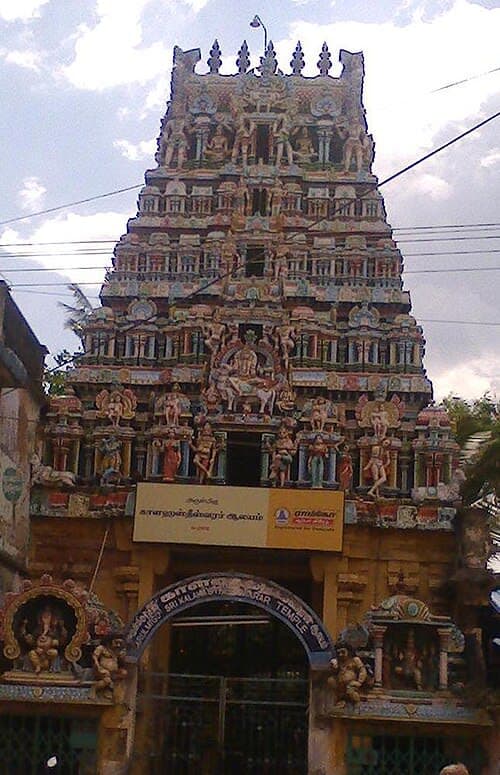
Kalahasteeswarar Temple, Kumbakonam, Tamil Nadu
Kumbakonam, Tamil Nadu, India
8.8 km away
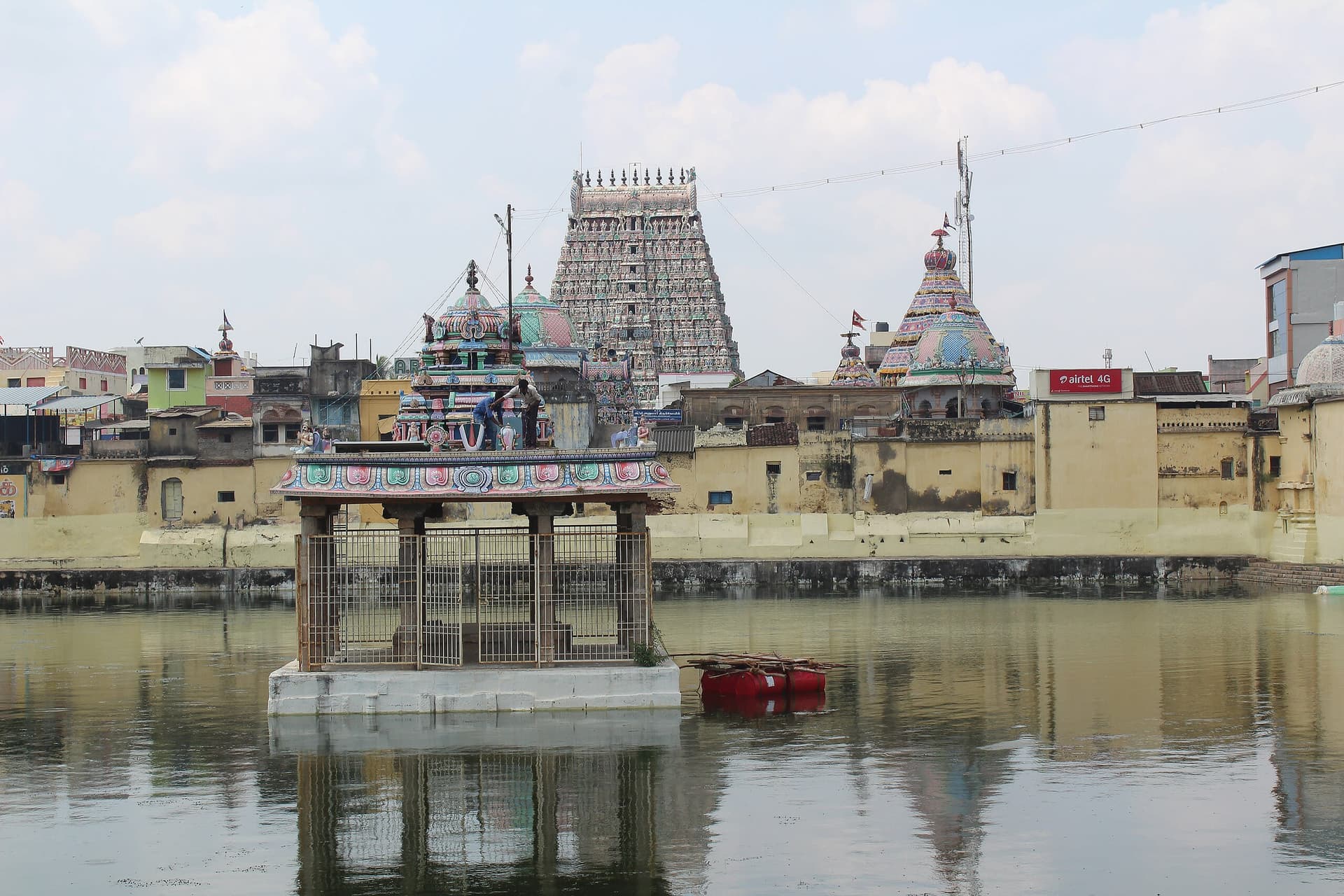
Adi Kumbeswarar Temple, Kumbakonam, Tamil Nadu
Kumbakonam, Tamil Nadu, India
9.8 km away
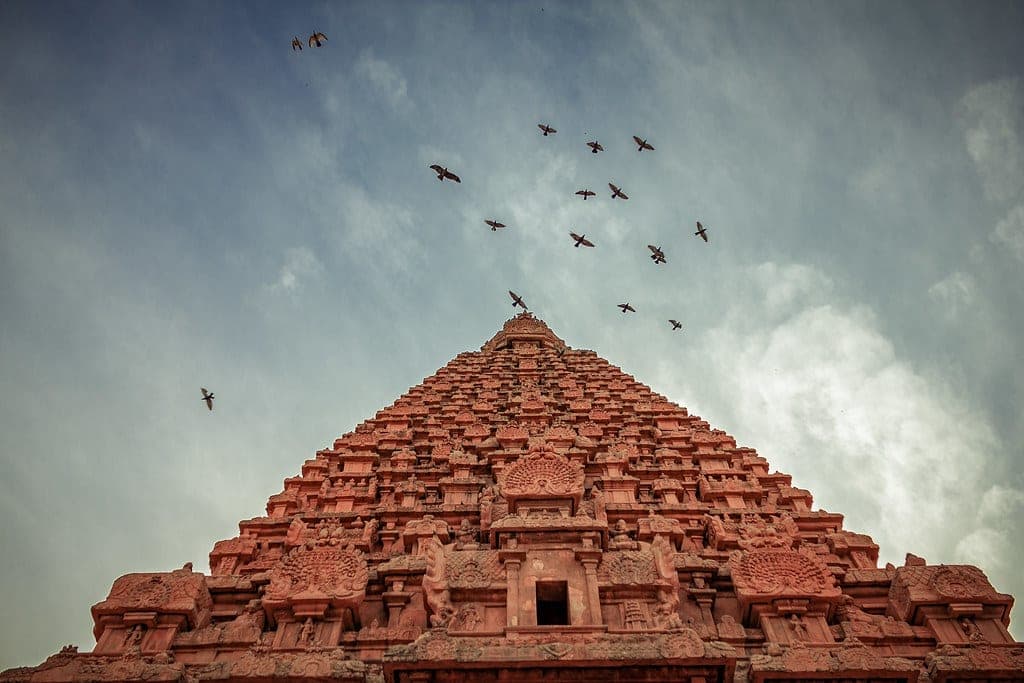
Brihadeeswara Temple, Thanjavur, Tamil Nadu
Thanjavur, Tamil Nadu, India
42.2 km away
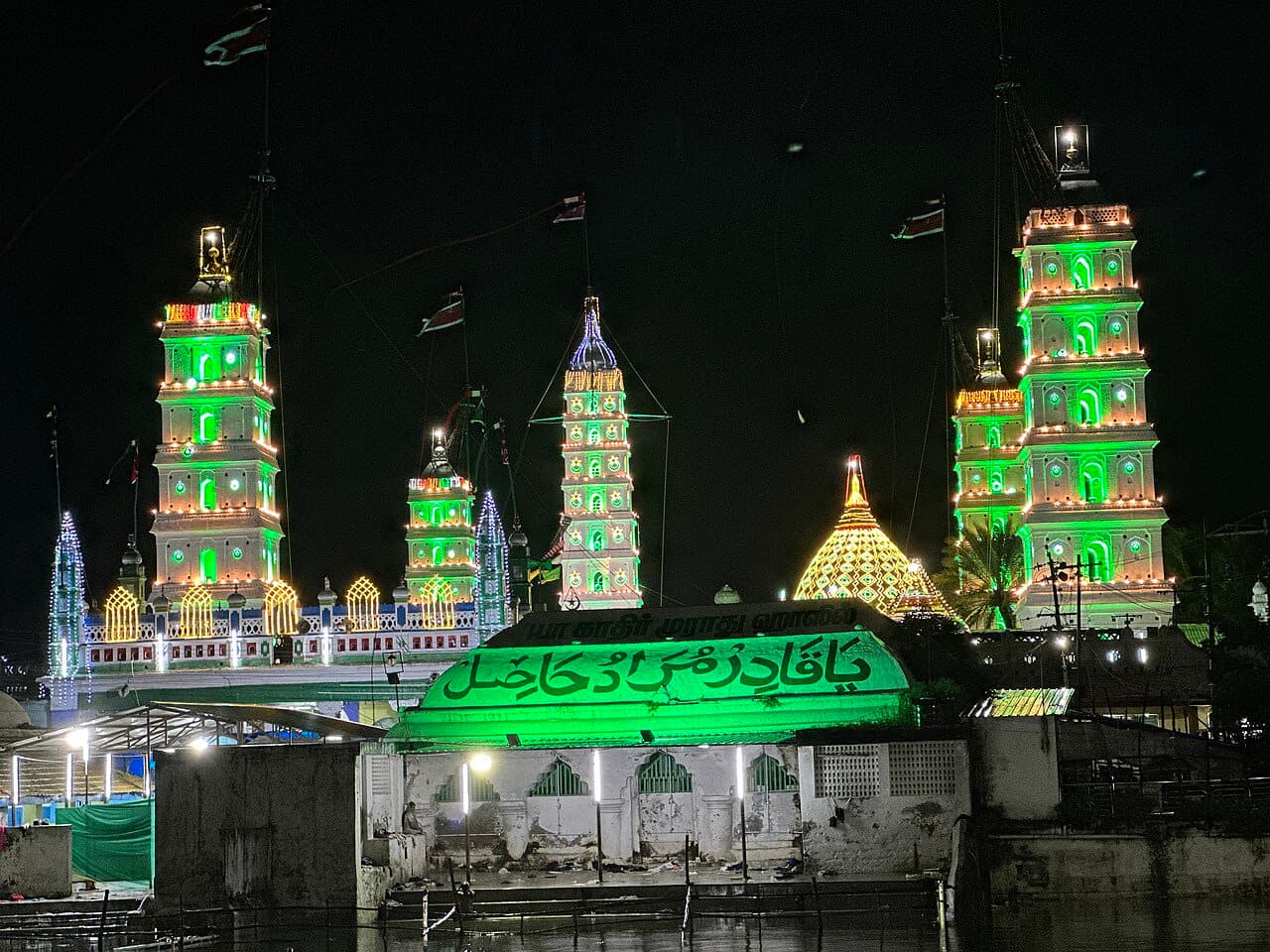
Nagore Dargah
Nagore, Tamil Nadu, India
46.8 km away