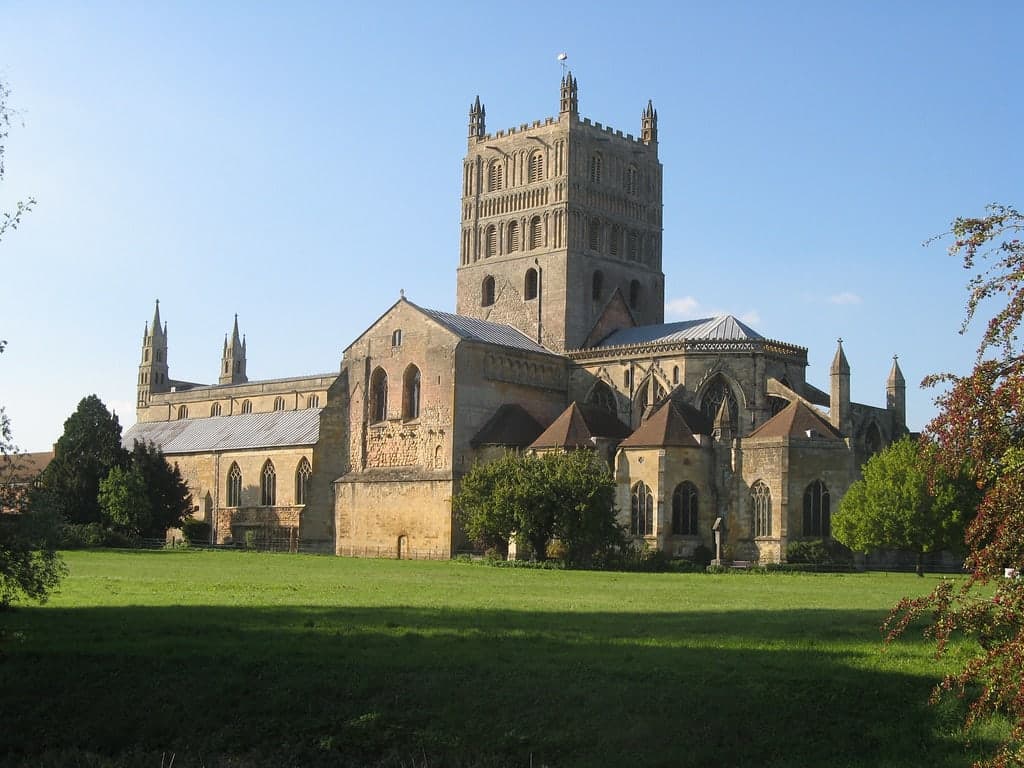
Tewkesbury Abbey
Where Norman grandeur holds a thousand years of prayer, and sanctuary still means something
Tewkesbury, England, United Kingdom
At A Glance
- Coordinates
- 51.9903, -2.1604
- Suggested Duration
- A general visit takes one to two hours, allowing time to explore the nave, choir, chapels, and medieval glass. Those attending services should add the service duration. The Tower Tour, if booked, adds approximately an hour. Those seeking deeper engagement often return multiple times across a stay in the area.
Pilgrim Tips
- No formal dress code applies, but modest and respectful attire appropriate for a place of worship is expected. This is a functioning church, not a museum. Visitors attending services should dress as they would for church in their own tradition—or as guests at a significant occasion.
- Personal photography is permitted throughout most of the abbey. Tripods and professional equipment may require advance permission. Flash photography should be avoided to protect the stained glass and to maintain the atmosphere. During services, photography of any kind is inappropriate. Social media and performative photography that treats the abbey as a backdrop rather than a sacred space diminish the experience for others. Consider whether your photographs serve memory or merely content creation.
- The abbey is an active place of worship. During services, visitors are welcome but should maintain appropriate quiet and avoid photography or movement that disturbs the congregation. Large bags should be left in the visitor centre. Those unfamiliar with Anglo-Catholic or Anglican worship may find the liturgy initially disorienting. This is not a barrier to entry—simply sit, stand, and kneel as the congregation does, or remain seated throughout if preferred. The service sheets provided offer guidance. The Tower Tours, while offering spectacular views, require pre-booking and involve significant stair climbing. They are not accessible to those with mobility limitations.
Overview
Rising above the confluence of the Severn and Avon rivers, Tewkesbury Abbey has held continuous Christian worship since the 7th century. Its massive Norman tower—the largest of its kind in existence—watches over a parish church that survived the Dissolution through the determination of ordinary townspeople. Today, the abbey's Anglo-Catholic liturgy offers seekers the contemplative richness of Choral Evensong within walls that have witnessed battlefield slaughter, royal burials, and the quiet persistence of daily prayer.
Some places hold time differently. Tewkesbury Abbey is one of them.
The building announces itself from miles away, its Norman tower rising above the Gloucestershire plain with a solidity that suggests it has always been here and always will be. The stone is honey-colored, warmed by Cotswold light, but there is nothing soft about the architecture. This is a building that was meant to last—and has.
Walk beneath the great west window and into the nave, and what strikes first is the scale. The Norman columns march toward the altar with a grandeur that rivals cathedrals, yet this is a parish church—one of England's largest. Above you, 14th-century vault bosses depict the life of Christ in a visual pilgrimage from baptism to resurrection. The light filtering through medieval stained glass carries the memory of the craftsmen who shaped it seven centuries ago.
But architecture alone does not make a place sacred. What persists at Tewkesbury is something less visible: the accumulated weight of prayer. Morning after morning, evening after evening, for more than a thousand years, voices have risen in this space. The Benedictine monks are long gone, dissolved in 1539, yet their rhythm continues. The townspeople who scraped together four hundred and fifty-three pounds to save their abbey from destruction did more than preserve a building. They preserved a tradition of worship that remains unbroken.
Today, the abbey follows the Anglo-Catholic path—formal vestments, traditional language, the beauty of holiness made audible in sung Eucharist and Choral Evensong. For seekers arriving during life transitions, the effect can be unexpectedly powerful. There is something about kneeling where others have knelt for a millennium that puts personal struggles in perspective.
Context And Lineage
Tewkesbury Abbey's origins reach back to a 7th-century hermit named Theoc who established his cell at the river confluence. The present Norman abbey was founded in 1092, consecrated in 1121, and served as one of England's wealthiest Benedictine monasteries until the Dissolution in 1539. The townspeople's purchase of the abbey church for use as their parish church ensured its survival. The Battle of Tewkesbury in 1471, a decisive moment in the Wars of the Roses, left its mark through the deaths and burials that followed.
The Chronicle of Tewkesbury records that Christian worship was first brought to this place by Theoc, a missionary from Northumbria, in the mid-7th century. The choice of location was deliberate: where the rivers Severn and Avon join, creating a liminal zone between waters. Theoc built his hermit's cell and dedicated himself to prayer. His name gave the place its identity—Theocesbyrig, which became Tewkesbury.
A monastery dedicated to Theoc's memory was established by the dukes of Mercia in the 8th century. A Benedictine priory followed in the 10th century. But the present abbey was the creation of Norman ambition. In 1087, Robert Fitzhamon received the manor of Tewkesbury from William the Conqueror. With Abbot Giraldus of Cranborne, he founded a new Benedictine abbey in 1092.
Construction began in 1102, using Caen stone imported from Normandy—the same stone that built the Tower of London and many of the great Norman churches. The crossing tower rose massive and confident, a statement of Norman power in the English landscape. The abbey was consecrated in 1121, its community already growing in wealth and influence.
The Benedictine community that shaped Tewkesbury for nearly 450 years lived according to a pattern established by St. Benedict in the 6th century. Their days were structured around the Divine Office—eight services from Matins before dawn through Compline at night—with work and study filling the hours between. The monastery became one of the wealthiest in medieval England, its abbots sitting in Parliament, its lands extending across multiple counties.
The Dissolution of 1539 ended monastic life at Tewkesbury. But the townspeople's purchase of the abbey church preserved more than a building. It preserved a continuity of worship that has never been broken. The Anglican parish that inherited the space has maintained daily services for nearly five centuries, honoring the rhythm of prayer that the monks established.
The 900th anniversary of the abbey's foundation in 2002 was marked by a major scholarly volume and renewed attention to the site's significance. Today, the abbey stands within the Diocese of Gloucester, following the Anglo-Catholic tradition that emphasizes continuity with the pre-Reformation church while embracing the Anglican synthesis of Catholic and Protestant elements.
Theoc
founder
A 7th-century missionary from Northumbria who established the first Christian worship at this site, building his hermit's cell where the rivers meet. The town's name derives from his.
Robert Fitzhamon
patron
Norman nobleman, cousin to William the Conqueror, who founded the present abbey in 1092 and was later buried within it. His patronage established Tewkesbury as a major monastic center.
Giraldus
co-founder
Abbot of Cranborne who worked with Fitzhamon to establish the abbey and transfer the monastic community to Tewkesbury.
Edward, Prince of Wales
historical
Son of Henry VI, killed at the Battle of Tewkesbury in 1471 and buried in the abbey. His death effectively ended the Lancastrian line and secured Yorkist power.
George, Duke of Clarence
historical
Brother to Edward IV, buried in the Clarence Vault behind the high altar in 1478. The identity of the remains in the vault remains a subject of scholarly interest.
Why This Place Is Sacred
Tewkesbury Abbey's character as a thin place emerges from multiple convergent factors: the site's origin at a river confluence where a 7th-century hermit made his cell, the exceptional Norman architecture creating a sense of sacred space, the medieval stained glass and vault bosses inviting contemplation, and above all the unbroken chain of worship connecting modern visitors to generations past. The Battle of Tewkesbury added a dimension of sanctuary—and its violation—that still marks the space.
The hermit Theoc understood something about place. In the mid-7th century, he chose to build his cell where the rivers Severn and Avon meet, on a gravel spit prone to flooding yet somehow set apart. River confluences have drawn spiritual seekers across cultures—liminal zones where waters merge, boundaries dissolve, and the ordinary seems less fixed.
The Norman abbey that rose on this site nearly four centuries later was designed to intensify that quality. The crossing tower—the largest Norman tower in existence—creates a vertical axis connecting earth and heaven. Light enters through the clerestory to illuminate the vast nave, while the choir beyond remains in relative shadow, drawing the eye and the spirit forward. This is architecture as theology: the journey toward the altar mirrors the journey toward God.
The 14th century added the lierne vault with its remarkable bosses depicting Christ's life. Walking the nave becomes a visual pilgrimage, each boss a station in the story from incarnation to resurrection. The stained glass in the choir clerestory, contemporary with the vault, casts pools of colored light that shift with the sun's movement. Scholars recognize this glass as among the outstanding survivors of medieval work in Europe.
But the abbey's thinness is not merely aesthetic. The Battle of Tewkesbury in 1471 left its mark in ways that go beyond the royal tombs. Lancastrian soldiers, fleeing slaughter, sought sanctuary within these walls. Some accounts say they were dragged out and killed; others speak of massacres within the church itself. The building was reconsecrated shortly after—a formal acknowledgment that something sacred had been violated and required restoration.
Something of this history lingers. Visitors occasionally speak of heaviness in certain areas, though whether this reflects historical knowledge or something independent is impossible to say. What is clearer is the quality of the ongoing worship. The Anglo-Catholic tradition practiced here emphasizes 'the beauty of holiness'—the idea that beautiful liturgy, carefully prepared and reverently performed, creates conditions for encounter with the divine. After attending Choral Evensong, with the choir's voices rising through candlelit shadows while the Book of Common Prayer's language unfolds its cadences, many find the boundary between present and past, visible and invisible, feels less solid.
Tewkesbury Abbey was founded in 1092 as a Benedictine monastery by Robert Fitzhamon, cousin to William the Conqueror, and Abbot Giraldus of Cranborne. The monastic community that gathered here lived according to the Rule of St. Benedict, structuring their days around the Liturgy of the Hours—the cycle of prayers that sanctified each portion of time from Matins before dawn to Compline at day's end. The abbey church served both the monks and the surrounding community, while agricultural lands and tithes supported the religious life within.
For nearly 450 years, Benedictine monks shaped the spiritual character of Tewkesbury. Their liturgical cycle, their hospitality to travelers, their preservation of learning—all contributed to the abbey's significance in medieval England. The community grew wealthy; the 14th-century reconstruction that gave us the current vault and windows reflects this prosperity.
The Dissolution of the Monasteries in 1539 might have been the end. Many monastic churches were demolished or fell to ruin, their lead stripped, their stones carted away for building material. But the townspeople of Tewkesbury intervened. They petitioned to purchase the abbey church for use as their parish church, offering 453 pounds. The Crown accepted.
This act of preservation transformed the abbey's identity. No longer a monastery, it became one of England's great parish churches—serving the community that had saved it. The transition from Catholic Benedictine to Anglican parish brought changes in liturgy and theology, but not in the fundamental purpose: this remained a place where people gathered to pray.
The 20th and 21st centuries have seen the abbey embrace its Anglo-Catholic heritage, emphasizing continuity with the pre-Reformation tradition while remaining firmly Anglican. The Musica Deo Sacra festival, begun in 1969, celebrates the integration of music and liturgy that has always marked this place. Pilgrims now arrive from across the globe, joining a stream of seekers that began with Theoc's solitary prayers fourteen centuries ago.
Traditions And Practice
Tewkesbury Abbey is an active Anglican parish church offering daily services in the Anglo-Catholic tradition. The principal Sunday services include Sung Eucharist at 11am and Choral Evensong at 5pm. Weekday Morning Prayer, Centering Prayer, and additional Eucharist services provide regular opportunities for worship. All services are open to visitors regardless of faith background.
The Benedictine monks who inhabited Tewkesbury for nearly 450 years structured their days around the Liturgy of the Hours: Matins before dawn, Lauds at sunrise, Prime, Terce, Sext, None marking the day's progression, Vespers at sunset, and Compline before sleep. Each service sanctified its portion of time, creating a continuous chain of prayer that held the community and, by extension, the world in God's presence.
The monks also celebrated the Feast of the Holy Relics on July 2, marking the abbey's collection of sacred objects that drew medieval pilgrims. The specific relics Tewkesbury held have been lost to history, dispersed or destroyed at the Dissolution, but their former presence added to the site's spiritual magnetism.
The abbey's current practice follows the Anglo-Catholic tradition within Anglicanism. The Sung Eucharist at 11am on Sundays uses traditional language, with most parts sung including the Collect and Gospel reading. Formal vestments, processional hymns, and careful attention to liturgical detail characterize this principal service.
Choral Evensong at 5pm on Sundays employs the Book of Common Prayer, its 16th-century language carrying a beauty that contemporary prose cannot match. During term time, the abbey's Schola Cantorum sings weekday Evensong, extending this tradition beyond Sundays.
The more informal Parish Eucharist at 9:15am on Sundays uses modern language and is followed by a parish breakfast, offering a gentler entry point for those unfamiliar with Anglo-Catholic liturgy.
Centering Prayer on Wednesday afternoons at 4pm provides a contemplative practice rooted in the Christian mystical tradition. This silent prayer, requiring nothing but stillingness and openness, echoes the contemplative core of the monastic practice that once shaped this space.
Morning Prayer at 9am Monday through Saturday maintains the rhythm of daily office that the Benedictines established. The Musica Deo Sacra festival each summer celebrates the integration of music and liturgy through special services and concerts.
For seekers approaching Tewkesbury Abbey, several paths present themselves.
Attending Choral Evensong on a Sunday evening offers perhaps the most accessible entry into the abbey's spiritual character. Arrive fifteen minutes early and choose a seat in the nave with a clear view of the choir. Let the service happen around you without pressure to participate actively. The language and music will do their work.
For those comfortable with Eucharistic worship, the Sung Eucharist at 11am provides the full expression of Anglo-Catholic practice. Even visitors from other Christian traditions, or none, may find something in the careful attention to beauty and gesture.
The Centering Prayer session offers a non-liturgical alternative. This simple practice—sitting in silence, releasing thoughts as they arise, remaining open to presence—requires no belief and imposes no expectations. It is, in its own way, a recovery of the contemplative heart of the monastic tradition.
Beyond services, spending time in the abbey simply sitting, walking the nave beneath the vault bosses, or contemplating the medieval glass creates space for whatever arises. The building has been holding people's prayers for a thousand years. It can hold yours.
Anglican Christianity (Church of England)
ActiveSince the townspeople's purchase of the abbey in 1539, Tewkesbury has served as an Anglican parish church—one of the largest in England. Within Anglicanism, the abbey follows the Anglo-Catholic tradition, emphasizing continuity with the pre-Reformation church through formal liturgy, traditional vestments, and the use of incense at festival services. The Book of Common Prayer's language shapes Choral Evensong, while the Sung Eucharist employs traditional formulations that echo Catholic practice.
Daily Morning Prayer at 9am Monday through Saturday maintains the rhythm of the divine office. Sung Eucharist at 11am on Sundays provides the principal act of worship in full Anglo-Catholic style. Choral Evensong at 5pm on Sundays, using the Book of Common Prayer, is sung by the abbey choir. Centering Prayer on Wednesday afternoons offers a contemplative practice rooted in the Christian mystical tradition. Baptisms, weddings, and funerals serve the parish community. The Musica Deo Sacra festival each summer celebrates sacred music within the liturgical context.
Benedictine Monasticism (Historical)
HistoricalFrom the foundation in 1092 until the Dissolution in 1539, Tewkesbury Abbey was a Benedictine monastery—one of the wealthiest in medieval England. The community lived according to the Rule of St. Benedict, structuring their days around the Liturgy of the Hours. Their presence shaped the architecture, endowed the art, and established the spiritual character that persists today.
The monks followed the full round of the Divine Office: Matins, Lauds, Prime, Terce, Sext, None, Vespers, and Compline, sanctifying each portion of the day with prayer and psalmody. They celebrated the feast of the Holy Relics on July 2, maintained hospitality for travelers, and supported learning and manuscript production. The elaborate liturgical practice is reflected in the scale and beauty of the surviving architecture.
Experience And Perspectives
Visitors to Tewkesbury Abbey consistently report a sense of awe at the Norman architecture, deep peace within the nave, and particularly moving experiences during choral services. The combination of scale, acoustic resonance, and accumulated spiritual practice creates conditions where personal reflection becomes natural and emotional responses are common.
The first encounter is often one of scale. Walking through the west door, the eyes lift involuntarily. The Norman columns that support the nave are massive—whole tree trunks could fit within them—and yet the overall effect is not oppressive but elevating. The space draws you upward, then forward.
What visitors frequently describe is a quality of stillness that goes beyond mere quiet. Even when others are present, photographing or murmuring to companions, the abbey seems to hold a silence underneath the surface noise. Some attribute this to the architecture's acoustic properties; others to the centuries of prayer that have soaked into the stone. Perhaps both are true.
The medieval stained glass requires patience to appreciate. The figures in the choir clerestory are not immediately legible from the floor, but spending time with them rewards attention. These are works that were created for contemplation, not consumption. Let your eyes adjust. Let the colors settle into you.
The vault bosses above the nave offer a different kind of engagement. Walking slowly from west to east, you can follow the life of Christ in 14th-century carving: baptism, miracles, passion, resurrection. This is the pilgrimage the builders intended—a journey through sacred narrative that prepares you for encounter at the altar.
But the most powerful experiences often come during worship. Choral Evensong, sung to the Book of Common Prayer's 16th-century language, has a capacity to reach places that modern speech cannot. The combination of candlelight, incense (at festival services), the choir's trained voices, and the building's resonance creates conditions where something shifts. Visitors report unexpected tears, sudden clarity about life situations, a sense of being held by something larger than themselves. The same is true of the Sunday morning Sung Eucharist, with its formal procession and traditional language.
Those dealing with grief or major life transitions often find the abbey particularly supportive. The building has seen death before—the Battle of Tewkesbury, the plague years, the ordinary passings of parish life across centuries. It holds suffering without being overwhelmed by it. There is something steadying about bringing personal pain into a space that has witnessed so much.
Tewkesbury Abbey rewards those who come with time and without agenda. The best first approach is simply to enter and sit. Choose one of the chairs near the crossing, where the nave meets the transepts beneath the great tower. Let the space work on you before you work on understanding it.
If you can, return for a service. Choral Evensong on Sunday at 5pm offers the full experience of Anglican choral tradition in this extraordinary acoustic. The Sung Eucharist at 11am on Sundays provides the complete Anglo-Catholic liturgy. Even if you do not share the faith, the experience of sitting within this tradition—watching how carefully each gesture is performed, how the music and words interweave—can open something.
The Centering Prayer session on Wednesday afternoons at 4pm offers a contemplative alternative for those who find liturgy less accessible. This simple practice of silent prayer, based on the medieval cloud of unknowing, requires nothing but willingness to sit quietly with others in shared intention.
Bring questions if you have them. Not questions for the tour guide, but questions for yourself. What in your life needs the perspective of centuries? What grief might this building hold alongside you? What clarity might come from stillness?
Tewkesbury Abbey invites consideration from multiple angles: the architectural historian sees one of Britain's finest Norman churches; the believer encounters a living tradition of worship; the pilgrim finds a waypoint on ancient paths; the history enthusiast discovers connections to the Wars of the Roses. Each perspective holds truth, and honoring the abbey means holding them together.
Architectural historians recognize Tewkesbury Abbey as one of the finest examples of Norman Romanesque architecture in Britain. The crossing tower is the largest Norman tower in existence, its massive proportions creating a commanding presence both inside and out. The 14th-century lierne vault above the nave, with its bosses depicting the life of Christ, represents the High Gothic achievement in English church architecture.
The stained glass in the choir clerestory has been the subject of significant scholarly attention. The Corpus Vitrearum Medii Aevi, the international scholarly body for medieval stained glass, has documented and preserved the original cartoons for this exceptional work. The glass represents some of the outstanding survivors of 14th-century glazing in Europe.
The comprehensive volume edited by Richard K. Morris and Ron Shoesmith for the abbey's 900th anniversary in 2002 provides the definitive academic study, covering architecture, archaeology, history, and art.
One area of ongoing scholarly interest is the Clarence Vault behind the high altar, where George, Duke of Clarence, was buried in 1478. The identity of remains in the vault has not been confirmed through DNA analysis, and some scholars suggest additional bodies from the Battle of Tewkesbury may have been interred there.
For the parish community and the wider Anglican communion, Tewkesbury Abbey is above all a living church. The Anglo-Catholic tradition practiced here emphasizes continuity with the pre-Reformation past while embracing the distinctive Anglican synthesis of Catholic and Protestant elements.
The daily rhythm of services—Morning Prayer, Eucharist, Evensong—maintains the pattern of worship that the Benedictine monks established, adapted for the parish context. The emphasis on 'the beauty of holiness' expressed through music, vestments, and careful liturgy reflects a conviction that worship should engage the whole person, not merely the intellect.
The tradition understands the abbey as a thin place—a location where the boundary between heaven and earth is unusually permeable. This is not simply a matter of architecture or history but of the accumulated prayer of generations, the faithful persistence of worship through civil war and plague, Reformation and modernity.
Several genuine mysteries remain unresolved at Tewkesbury Abbey. The exact nature and fate of the holy relics once venerated here—whose feast was celebrated on July 2—has been lost. What relics did the abbey possess? Where did they go at the Dissolution?
The relationship between Theoc's original 7th-century hermitage and the later abbey site is not archaeologically established. Did the Norman abbey rise on exactly the same location, or nearby?
The full story of what happened in the abbey during and after the Battle of Tewkesbury in 1471 remains unclear. Different sources give different accounts of whether sanctuary was honored or violated. The treatment of the Lancastrian dead, and who exactly lies buried where, has not been definitively established.
The identity of all remains in the Clarence Vault awaits DNA analysis. Scholarly interest persists, but the vault remains inaccessible.
Visit Planning
Tewkesbury Abbey is open daily from 9:30am to 4pm, with free admission. Located in the market town of Tewkesbury in Gloucestershire, it is accessible by car via the M5 or by train to Ashchurch station. The abbey offers a tea room, visitor centre, and gift shop. Several significant early Christian sites lie within a few miles, making the area rich for sacred site pilgrimage.
Tewkesbury offers a range of accommodation from historic inns to bed and breakfasts. The town's medieval street pattern, with its half-timbered buildings and network of alleys, rewards exploration. For those seeking a contemplative context, retreat houses in the Cotswolds provide nearby options.
Tewkesbury Abbey welcomes visitors of all faiths and backgrounds. As an active place of worship, respectful behavior is expected: quiet conversation, silenced phones, and modest attire. Photography is permitted for personal use but should not disturb services or private prayer. Donations toward the abbey's upkeep are welcomed.
The principle underlying all etiquette at Tewkesbury Abbey is respect—for the building, for those who worship here, and for the tradition of prayer that the space holds.
The abbey is both tourist destination and living church. These identities coexist, but the latter takes precedence. When services are in progress, whether a simple morning prayer with a handful of attendees or a packed festival Eucharist, the worship must not be interrupted. Visitors are welcome to join services, sitting at the back if uncertain, or to wait quietly in the nave until the service concludes.
Between services, the abbey remains a place of prayer. Some will be here for contemplation, sitting in silence before the altar or in one of the side chapels. Others may be preparing for personal prayer or simply finding a moment of stillness. Quiet conversation is appropriate; loud voices or running children are not.
The building itself demands care. These stones have stood for nine centuries; the stained glass is irreplaceable; the vault bosses represent 14th-century craftsmanship that cannot be recreated. Do not touch, lean against, or climb on architectural features.
Dogs are welcome in the abbey, reflecting the inclusive character of an English parish church. They must be well-behaved and on lead.
No formal dress code applies, but modest and respectful attire appropriate for a place of worship is expected. This is a functioning church, not a museum. Visitors attending services should dress as they would for church in their own tradition—or as guests at a significant occasion.
Personal photography is permitted throughout most of the abbey. Tripods and professional equipment may require advance permission. Flash photography should be avoided to protect the stained glass and to maintain the atmosphere. During services, photography of any kind is inappropriate.
Social media and performative photography that treats the abbey as a backdrop rather than a sacred space diminish the experience for others. Consider whether your photographs serve memory or merely content creation.
Tewkesbury Abbey is free to enter, relying on donations for its maintenance and conservation. Donation boxes are located near the entrance and throughout the building. The abbey shop and tea room provide additional support.
For those wishing to make a more substantial contribution, the abbey welcomes gifts toward specific conservation projects, endowments for musical programs, or support for the ongoing ministry.
Certain areas require pre-booked access. The Tower Tour, offering views from the top of the Norman tower, must be reserved in advance and costs £10. The Clarence Vault behind the high altar is not accessible to visitors.
Mobility access is available through the main gates and North Path, with level access to most of the main church. Wheelchairs can be borrowed. A hearing loop system operates throughout the main body of the church, and large print service materials and Braille hymn books are available. The Tower and Upper Room are not accessible to those with mobility limitations.
Sacred Cluster
Nearby sacred places create the location cluster described in the growth plan. This block is intentionally crawlable and links into the wider regional graph.
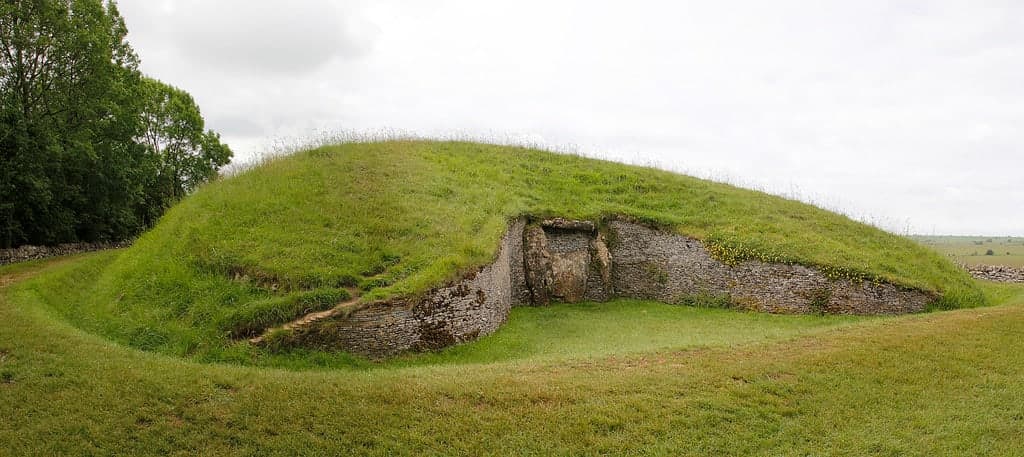
Belas Knap Long Barrow
Tewkesbury, England, United Kingdom
14.7 km away
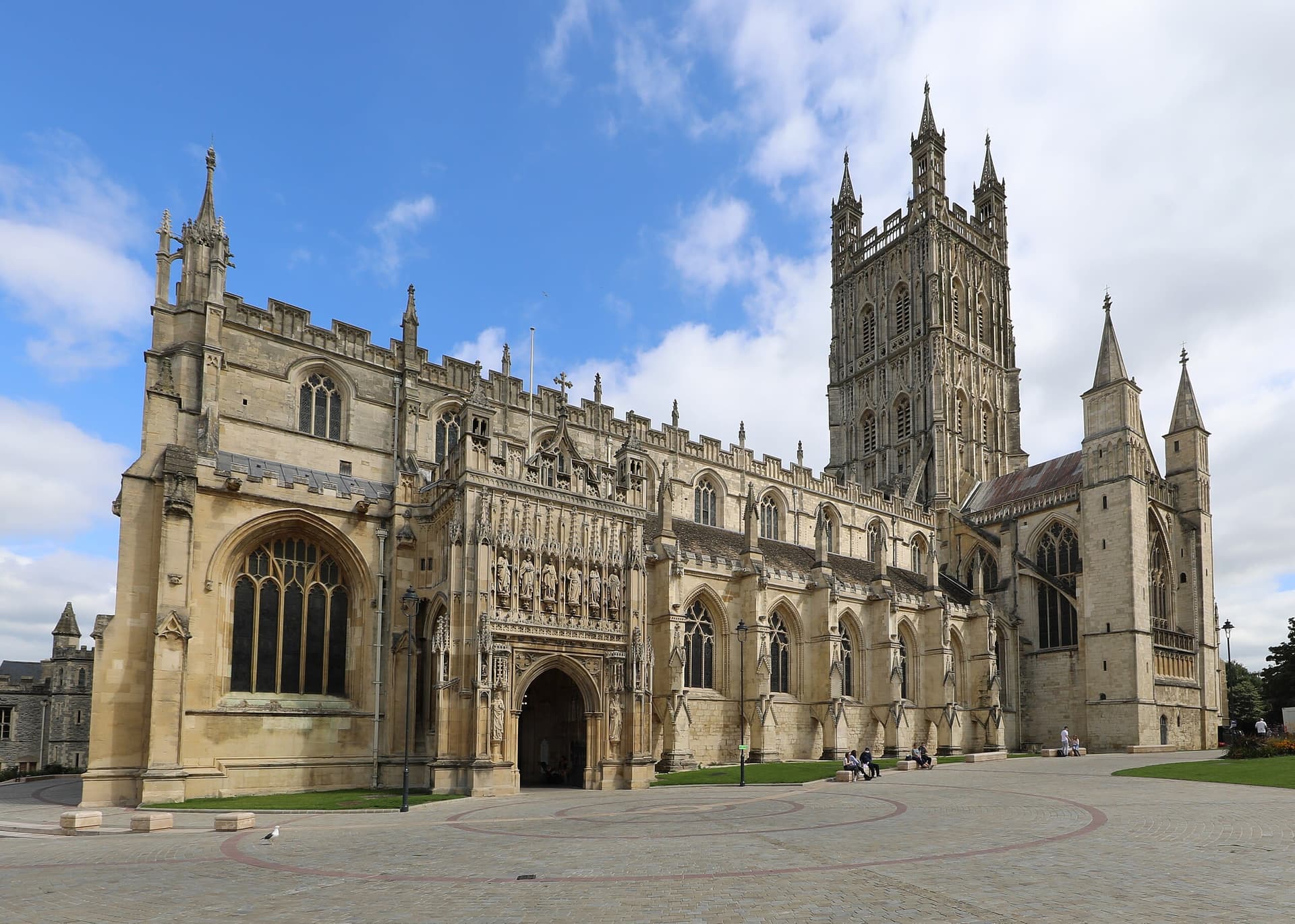
Gloucester Cathedral
Gloucester, Gloucestershire, United Kingdom
14.9 km away
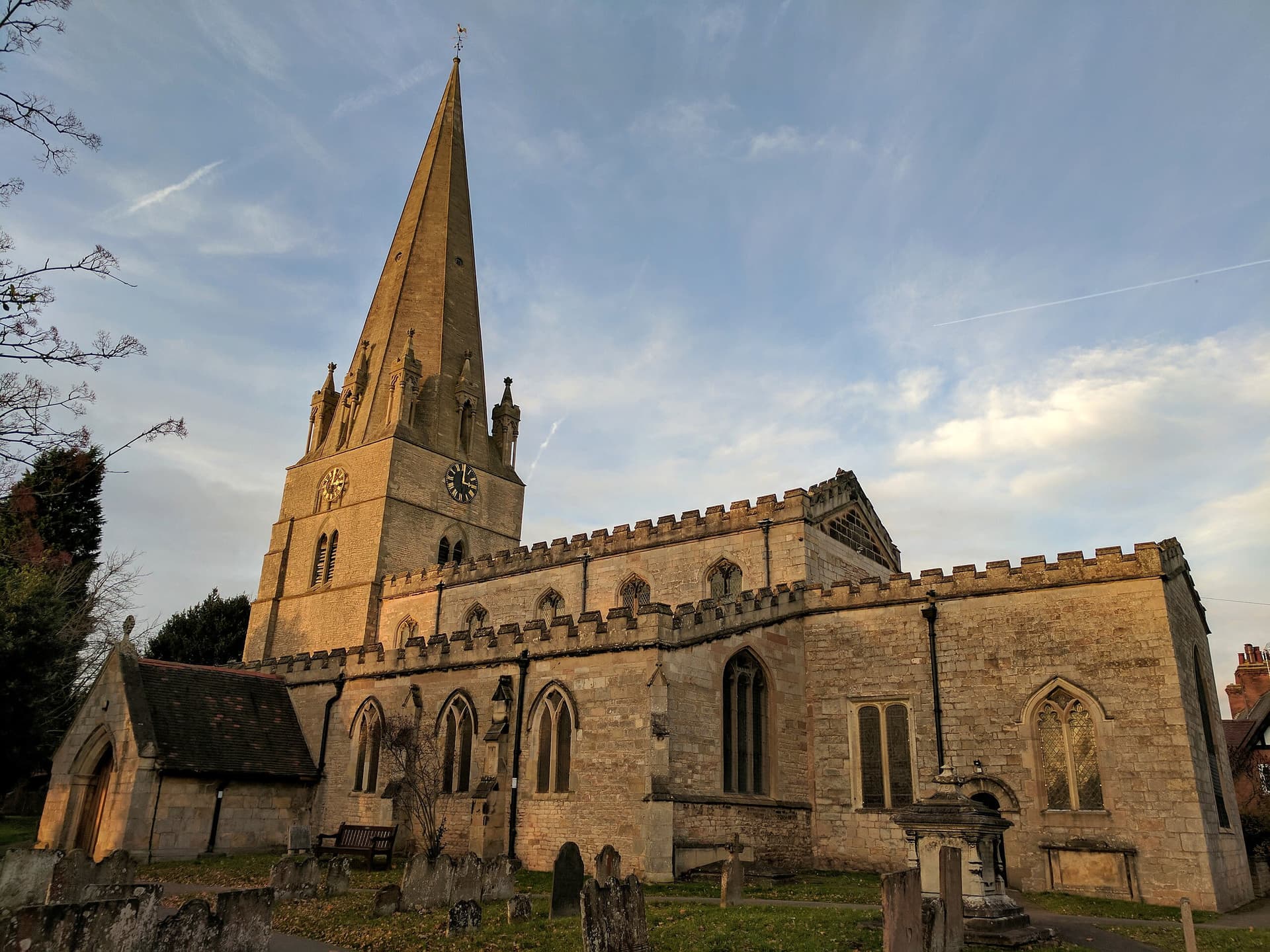
Church of St. Mary and St. Edwin, Evesham, England
Wychavon, England, United Kingdom
18.8 km away
Church of St. Mary’s
Cotswold District, England, United Kingdom
20.5 km away