Belas Knap Long Barrow
A Neolithic tomb older than Stonehenge, where the door leads nowhere and everywhere
Tewkesbury, England, United Kingdom
At A Glance
- Coordinates
- 51.9276, -1.9708
- Suggested Duration
- 2 hours including approach and time for contemplation
Pilgrim Tips
- Sturdy footwear essential for the steep approach. Layered clothing advised—the ridge can be windy.
- Permitted throughout. Early morning light through the trees and mist around the barrow can be particularly atmospheric.
- The approach is steep and can be slippery when wet. The site has no facilities. Dogs must be leashed due to grazing sheep.
Overview
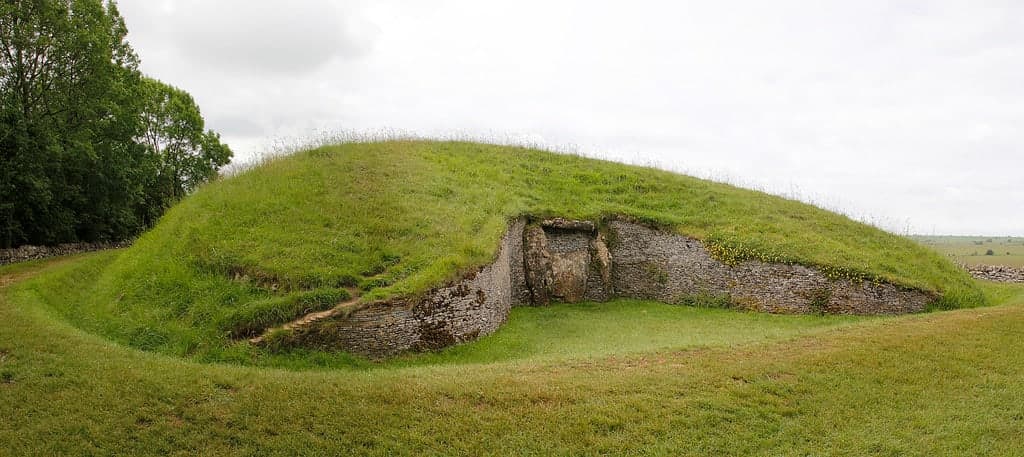
On a Cotswold ridge, 5,800 years of presence wait in a grassy mound 178 feet long. The false entrance—an imposing stone portal—leads nowhere, or perhaps to wherever spirits go. The real burial chambers, hidden on the sides, held 38 people: men, women, children, an entire community's dead interred over eight centuries. Belas Knap is among the oldest structures in Britain, built before the pyramids, before Stonehenge. Walk the steep path through beech woods and emerge onto a hilltop where Neolithic farmers chose to honor their dead.
The door leads nowhere. At the north end of Belas Knap, a massive stone portal crowned by a great lintel presents itself with all the authority of an entrance. But step through and you meet only packed earth and blocking stones. This is a false entrance—a spirit door, some suggest, through which the dead might pass even as the living cannot. The real chambers are elsewhere: small openings on the long sides of the barrow, easily overlooked, leading into darkness where thirty-eight people once lay. Belas Knap is a Neolithic long barrow, part of the Cotswold-Severn tradition of chambered tombs that predates Stonehenge by a thousand years. Construction began around 3800 BC; for eight centuries, successive generations returned to inter their dead. Men and women, children and elders, all were placed here together. When archaeologists excavated in the 1860s and 1920s, they found not an elite cemetery but a community's collective resting place. The barrow commands its ridge. Looking out from the mound, the Vale of Evesham spreads below; the Malvern Hills rise in the distance. Neolithic people chose this place with intention—a prominent location visible across the landscape, a monument that announced presence and permanence. The dead would rest where the living could see them, where the community's continuity was written in stone and earth. Today Belas Knap stands restored, its drystone walls reconstructed, its grass-covered mound maintained by English Heritage. But the spirit door still faces north, still leads nowhere visible, still invites questions that 5,800 years have not resolved.
Context And Lineage
Neolithic farming communities built Belas Knap between 3800-3000 BC as a communal tomb. The false entrance remains one of the most enigmatic features of any British prehistoric monument.
Around 3800 BC, Neolithic farmers began constructing a massive monument on a Cotswold ridge. They shaped local limestone into orthostats and drystone walls, heaping earth and stone into a mound that would eventually stretch 178 feet. Over the next eight hundred years, successive generations returned to inter their dead in four chambers accessed from the sides of the barrow. Men and women, children and elders, those who died peacefully and those who died from violent head wounds—all were placed here together. Then, around 3000 BC, the community deliberately blocked the chambers. The tomb's active use ended, but the monument remained, visible across the landscape for the next five thousand years. During the Roman period, people entered the chambers again; Romano-British pottery found within shows the site retained significance. Victorian archaeologists excavated in the 1860s, finding the remains of thirty-eight individuals along with animal bones, pottery fragments, and flint tools. Emma Dent of nearby Sudeley Castle commissioned initial restoration. Further excavation and more thorough restoration in 1928-1930 created the appearance we see today.
Belas Knap belongs to the Cotswold-Severn group of chambered tombs, among the oldest architectural traditions in Britain. Related monuments include Hetty Pegler's Tump, Notgrove, Nympsfield, and West Kennet Long Barrow. The tradition spans southwest England and south Wales, representing a shared culture of communal burial and ancestor veneration among Neolithic farming communities.
The 38 individuals
Emma Dent
Why This Place Is Sacred
The false entrance poses the question directly: where do the dead go? The Neolithic builders knew, or believed they knew. We can only stand before the spirit door and wonder.
What creates the particular atmosphere of Belas Knap? Perhaps it is the false entrance itself—that magnificent doorway that promises entry and delivers stone. The spirit door theory suggests it was built precisely to do what it does: allow passage to those who no longer need physical openings. If so, the builders created architecture for two audiences: the living, who would see the imposing portal and understand that something sacred lay within; and the dead, who would pass through regardless of whether the stones allowed. But the age of the site contributes too. This is among the oldest surviving human construction in Britain. When the first stones were laid at Belas Knap, the great stone circle at Stonehenge did not yet exist. Egypt's pyramids would not rise for another thousand years. The communities who built this barrow were not primitive—they were skilled builders who worked over generations to create something that would outlast them by six millennia. They succeeded. The communal nature of the burials speaks to values we can recognize. These were not kings' tombs. The thirty-eight individuals found within represented all ages and both sexes: a community that cared for its dead collectively, returning again and again over centuries to add new burials to old. When, around 3000 BC, the chambers were deliberately blocked, a chapter closed. But the monument remained, a statement visible across the landscape that these people had lived, had died, had been remembered. Two of the skeletons showed evidence of violent death—severe head wounds that speak of conflict. Neolithic life was not idyllic. But even those who died violently were brought here, incorporated into the community of the dead.
Communal burial site serving Neolithic farming communities over multiple generations. The false entrance may have functioned as a spirit door for ongoing communion with ancestors.
Constructed c. 3800-3700 BC. Active burial use until c. 3000 BC. Romano-British pottery in chambers suggests accessibility in Roman period. Site remained visible but unused through medieval period. Excavated 1863-1865, partially restored afterward. Further excavation and restoration 1928-1930 created current appearance. Now managed by English Heritage.
Traditions And Practice
No active religious practices. The site attracts visitors interested in prehistory, sacred landscapes, and contemplative experience.
Communal burial over multiple generations. Possible ceremonies at the false entrance—the remains of five infants found in the blocking rubble suggest ritual focus here. Offerings may have been left for ancestors. The deliberate blocking of chambers around 3000 BC marked a formal ending of active use.
English Heritage maintains the site as an archaeological monument. Visitors come for historical interest, landscape walking, and contemplative experience. Some modern pagans and earth-based spiritual practitioners regard the site as sacred and may visit for personal ritual. The site lies on the Cotswold Way, drawing long-distance walkers.
Walk the Cotswold Way section from Winchcombe for the full approach experience. Arrive early morning when mist may gather around the barrow and solitude is more likely. Take time at the false entrance—stand before the spirit door and let its enigma work on you. Enter the side chambers if physically able; the experience of being where the dead once lay concentrates attention. Walk the perimeter and appreciate the scale. Finally, face outward and see what the Neolithic builders saw: a landscape over which the dead would watch.
Cotswold-Severn burial tradition
HistoricalBelas Knap belongs to one of the oldest architectural traditions in Britain, predating Stonehenge and the Egyptian pyramids. The Cotswold-Severn group includes dozens of chambered tombs across southwest England and south Wales, all sharing similar trapezoid shapes and chambered construction.
Communal burial over multiple generations. Deliberate blocking of chambers to end active use. Possible ongoing ritual at false entrances.
Modern sacred landscape engagement
ActiveWhile no formal religious practice continues at Belas Knap, the site attracts visitors who engage with it as sacred space. This includes modern pagans, earth-based spiritual practitioners, and individuals drawn to ancient sites for contemplative purposes.
Personal meditation and ritual. Pilgrimage walking via the Cotswold Way. Seasonal visits at solstices and equinoxes. Photography and documentation. Scholarly and educational visits.
Experience And Perspectives
A steep half-mile climb through beech woods to emerge on a windswept ridge where the barrow commands views across the Vale of Evesham.
You begin below, in the lay-by on the Cotswold Way or in the market town of Winchcombe a mile distant. The path climbs steeply through fields and then into beech woodland, passing through kissing gates and over stiles. This is not easy access; the site demands effort. But that difficulty may be part of the point—you arrive having earned arrival, breathing harder, more present in your body. The trees fall away and the ridge opens before you. The barrow appears as a long grassy mound, higher at the north end where the false entrance waits. Walk around the perimeter first, following the drystone retaining wall that traces the trapezoid outline. The four burial chambers present themselves as dark openings in the sides—small, unimposing, easy to miss if you were not looking. The false entrance is different. This commands attention. Massive orthostats frame an opening crowned by a great lintel. It looks like a door; it feels like a door; it invites entry. But there is no entry, only the stone that blocks what might have been passage. Stand before it and the question poses itself: what did they intend? If this is a spirit door, the dead would pass through regardless. The blocked passage would matter only to the living—a reminder that we cannot follow where the dead have gone. Enter the side chambers if you wish. Duck through the low openings into darkness where once the dead lay. The chambers are small, intimate, nothing like the grand portal of the false entrance. This is where the bones actually rested; this is where the community placed its members across eight hundred years. Return to the surface and the landscape asserts itself. The Vale of Evesham spreads below; the Malvern Hills mark the horizon. On clear days the view extends for miles. The Neolithic builders chose this place; from here, the monument was visible to those farming the valley below. The dead watched over the living from their ridge-top home.
Approach from the lay-by on Cotswold Way via steep footpath (half mile) or from Winchcombe via Cotswold Way (1.5 miles). The false entrance faces north. Four burial chambers open from the sides: one southeastern, one northeastern, one western, one southern. The southeastern and northeastern chambers are most accessible for entry.
Belas Knap stands at the intersection of archaeology, landscape, and existential question—a monument built to house the dead and commune with ancestors.
Archaeologists classify Belas Knap as a Cotswold-Severn chambered tomb. Radiocarbon dating places construction c. 3800-3700 BC with use continuing until c. 3000 BC. The false entrance is paralleled at other sites in the group but remains enigmatic—theories range from tomb protection to spirit door. The egalitarian burial pattern (all ages, both sexes) is well-documented and suggests communal rather than elite use. Some skeletal remains show evidence of violent death, providing rare insight into Neolithic conflict.
The Neolithic communities who built Belas Knap left no written records. Their beliefs must be reconstructed from material evidence and comparison with other megalithic cultures. The communal burial pattern, the hilltop location, the false entrance, and the long period of use all suggest ancestor veneration and ongoing relationship between living and dead.
Julian Cope and others interpret long barrow ground plans as representing the body of a goddess or woman—the entrance as vulvic opening, burial as return to the womb of Mother Earth. Some modern pagans regard the site as sacred and visit for ritual purposes. Reports of energy sensations, atmosphere, and presence are common among visitors. Ley line theories connect Belas Knap to other ancient sites in the Cotswolds and beyond.
Why was the false entrance built? Why were infants buried in its blocking rubble rather than in the chambers? Why were the chambers deliberately sealed around 3000 BC? What ceremonies accompanied burials? Did the site have astronomical alignments? What relationship existed between the dead in different chambers? These questions cannot be answered from the archaeological record.
Visit Planning
Free access during daylight hours. Steep half-mile walk from parking. No facilities at site. Winchcombe nearby offers amenities.
Winchcombe offers B&Bs, inns, and small hotels. The Cotswolds has extensive accommodation throughout the region.
Open access heritage site. Free entry. Leave no trace. Respect the structure.
Belas Knap is an archaeological monument, not an active religious site. But it was built as sacred space, and many visitors experience it as such. Approach with the respect you would bring to any place where humans have honored their dead for millennia. The structure is restored but ancient; do not climb on the mound or remove stones. Enter the chambers carefully—they are small and delicate. Take nothing but photographs; leave nothing but footprints.
Sturdy footwear essential for the steep approach. Layered clothing advised—the ridge can be windy.
Permitted throughout. Early morning light through the trees and mist around the barrow can be particularly atmospheric.
Not traditionally practiced. Modern offerings should not be left—this is leave-no-trace land.
Dogs on leads due to grazing livestock. Do not disturb the structure.
Sacred Cluster
Nearby sacred places create the location cluster described in the growth plan. This block is intentionally crawlable and links into the wider regional graph.
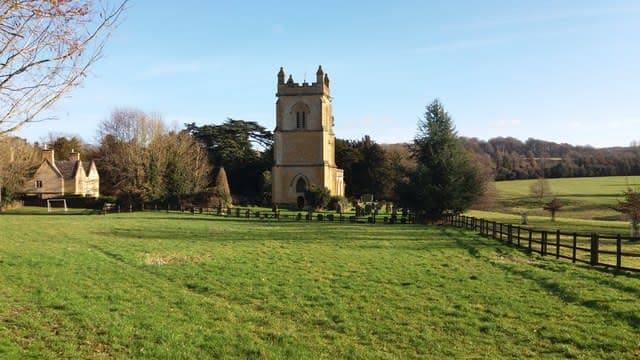
Church of St. Mary’s
Cotswold District, England, United Kingdom
7.4 km away
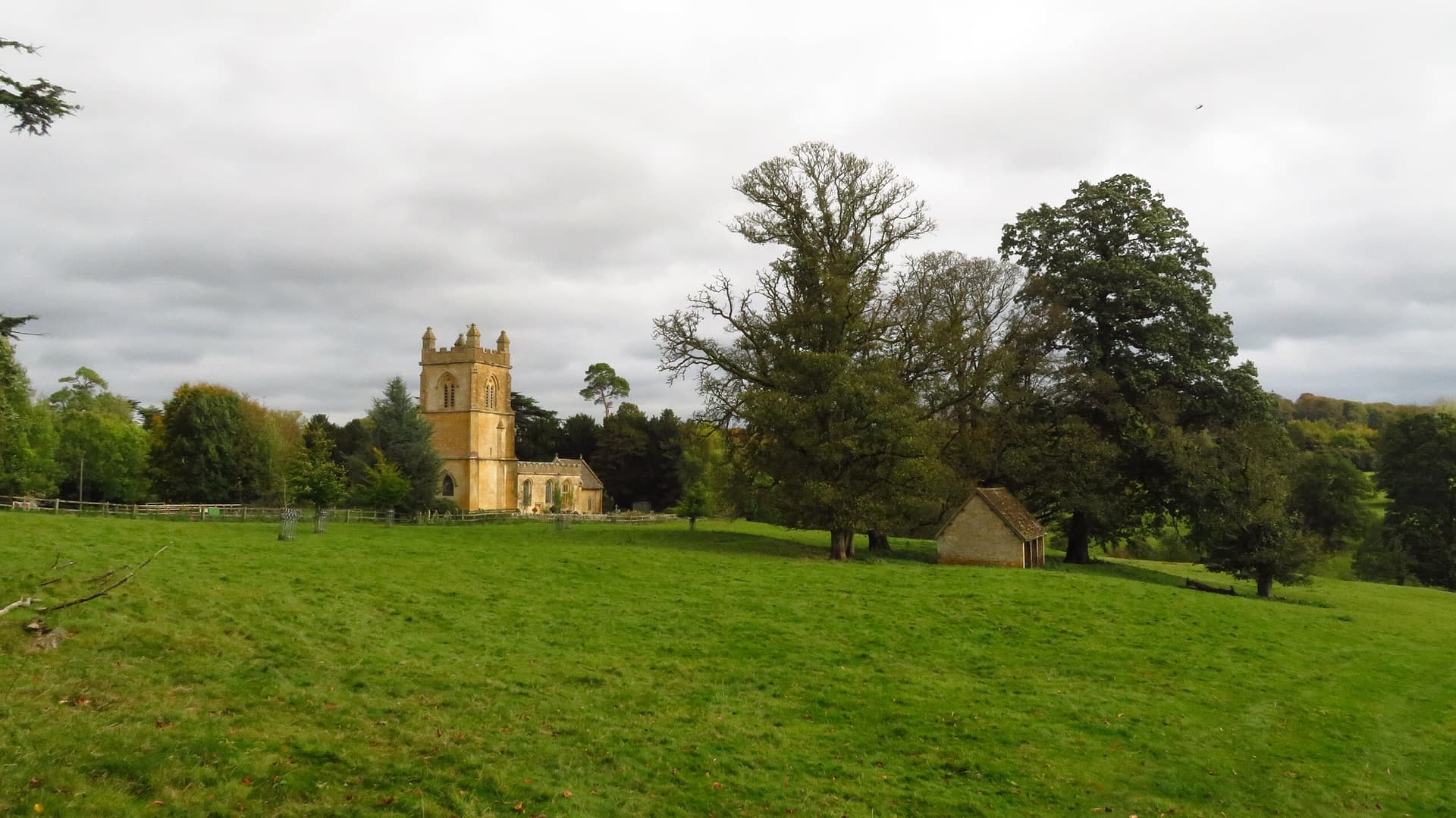
St. Mary Church, Temple Guitling
Cotswold District, England, United Kingdom
12.7 km away
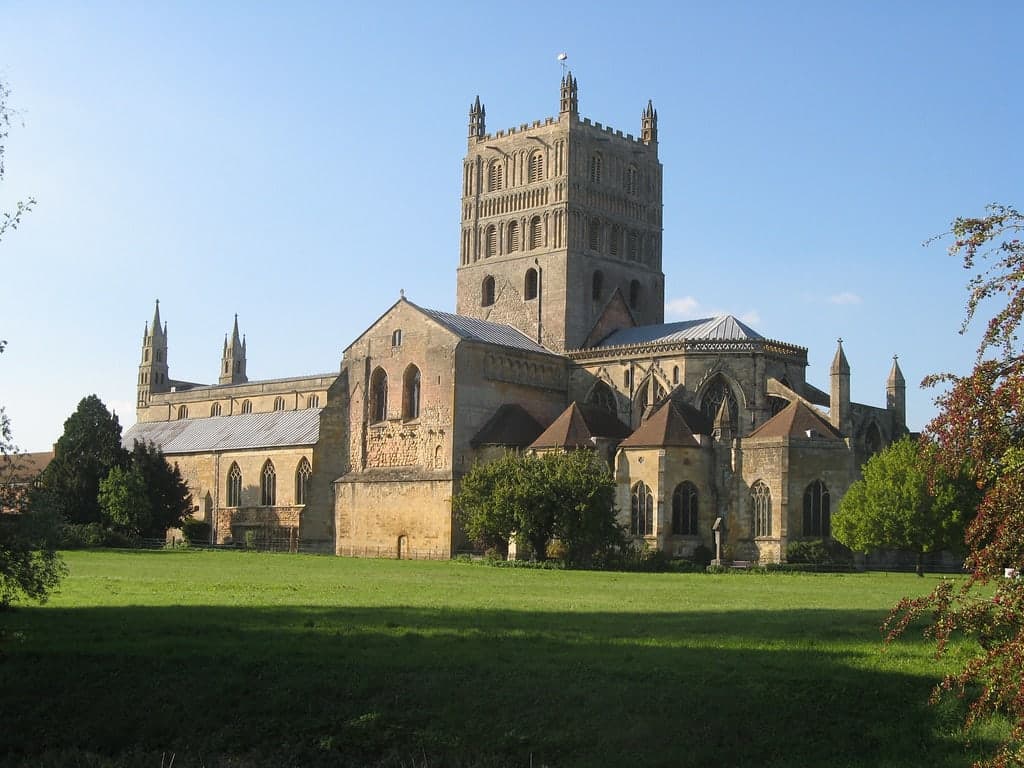
Tewkesbury Abbey
Tewkesbury, England, United Kingdom
14.7 km away
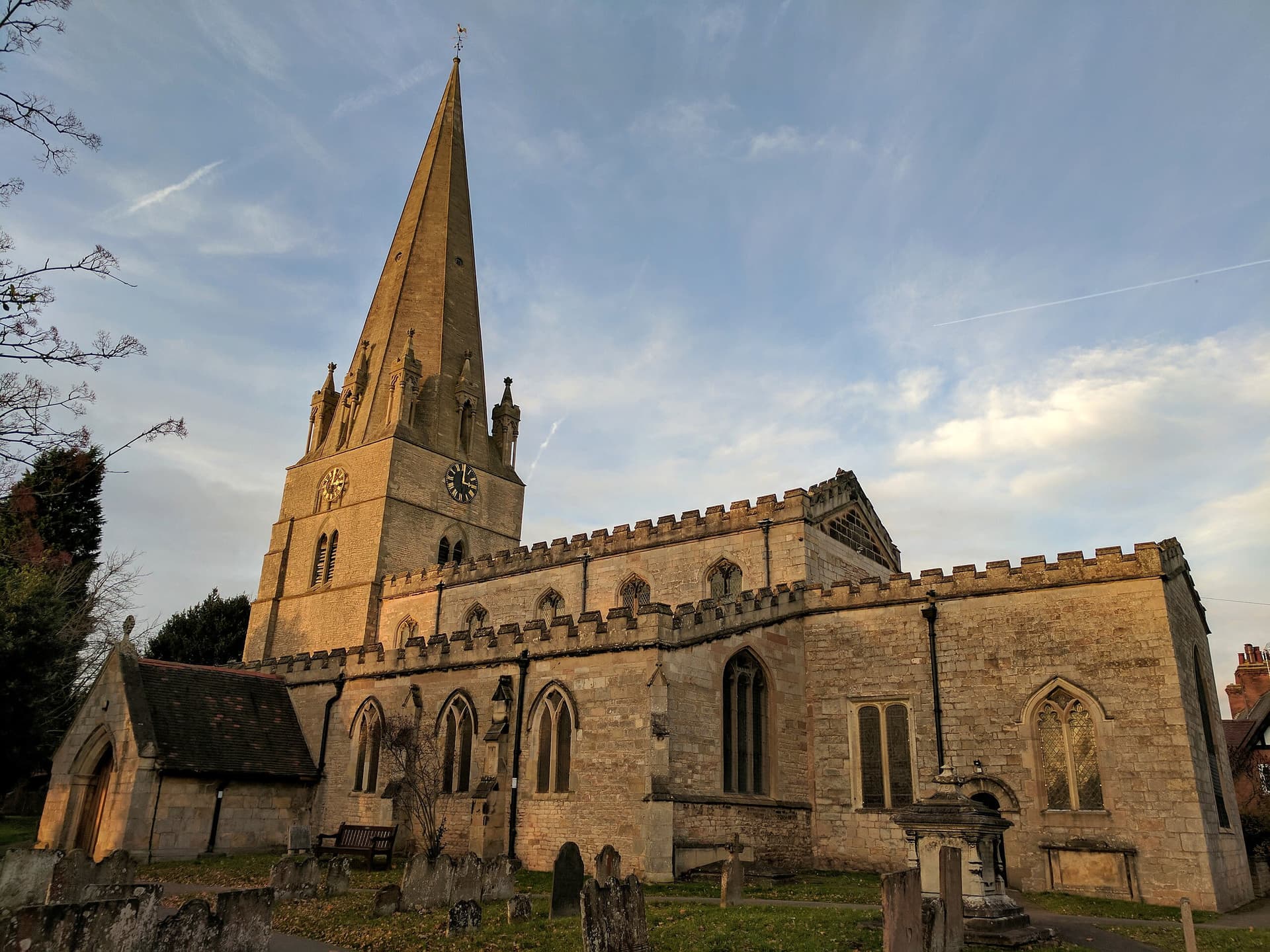
Church of St. Mary and St. Edwin, Evesham, England
Wychavon, England, United Kingdom
18.9 km away