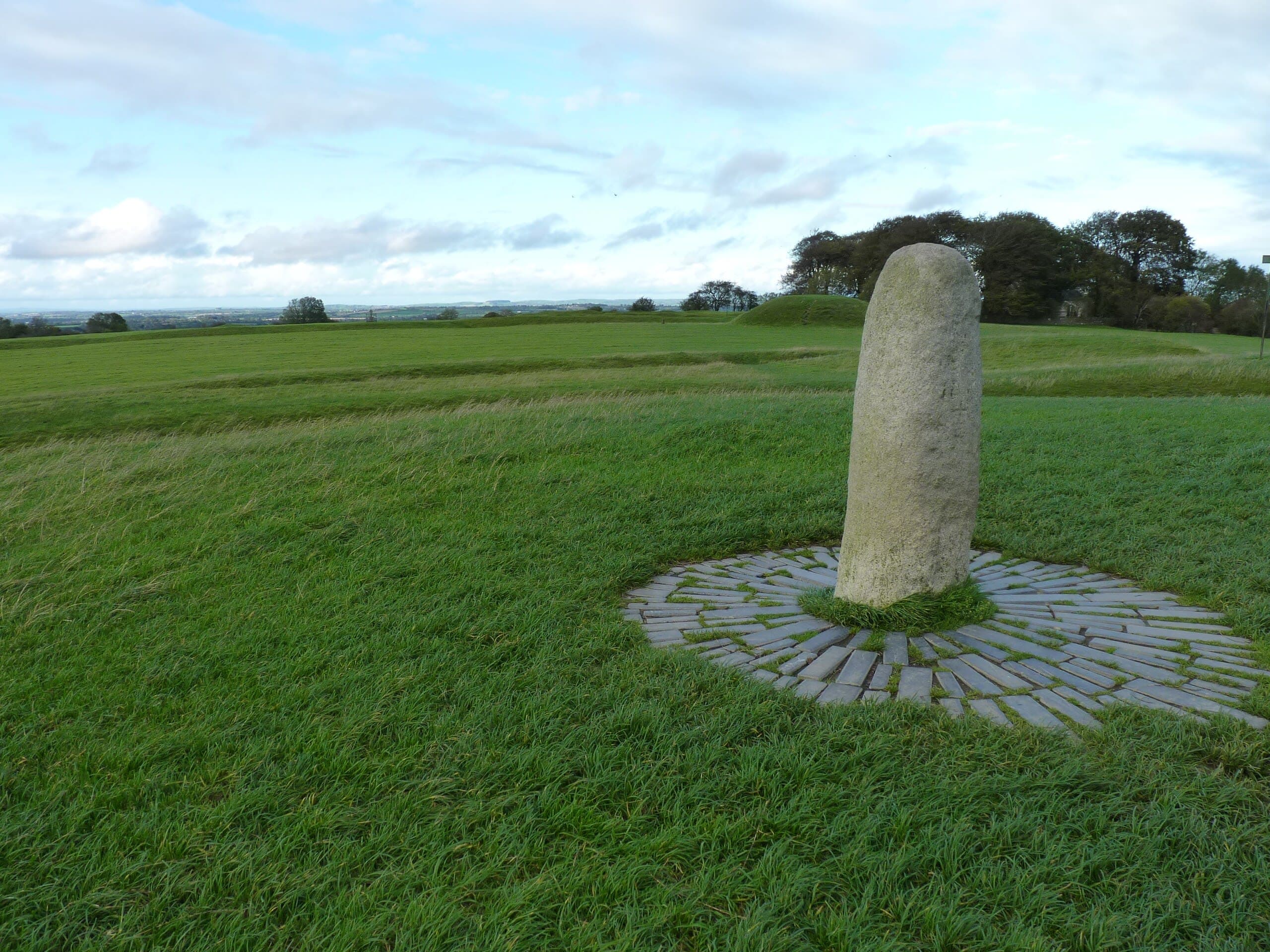
Stone Of Destiny
The stone that once cried out for kings, now waiting in silence on Ireland's sacred hill
Navan, County Meath, Ireland
At A Glance
- Coordinates
- 53.5732, -6.6072
- Suggested Duration
- Minimum 30 minutes to approach the stone, stand with it, and take in the view. Longer if you wish to explore the rest of Tara. Half a day if attending ceremonies or combining with Boyne Valley sites.
Pilgrim Tips
- Dress for Irish weather, which can change quickly. Layers, rain gear, and sturdy shoes are practical. The hilltop is exposed and often windy.
- Photography of the stone is freely permitted. Be considerate of others who may be seeking a clear view or a moment of uninterrupted connection.
- The Lia Fail stands on an open heritage site with no formal restrictions on approach. However, it is a protected monument. Do not attempt to chip pieces from it, carve upon it, or damage it in any way. Leave no offerings that will become litter. The stone asks only for presence, not for gifts.
Overview
The Lia Fail stands on the Hill of Tara, a granite pillar that legend says once roared to recognize the rightful High King of Ireland. One of the four treasures brought by the Tuatha De Danann, this stone bound royal authority to divine approval and land sovereignty. Though it has not cried out for centuries, seekers still come to touch what kings once touched.
There is nothing remarkable about the stone itself. A pillar of pale granite, roughly human height, it stands on a grassy mound overlooking the Irish midlands. No carving adorns it. No inscription explains its significance. It looks like what it is: a standing stone, one of thousands across Ireland.
Yet this stone was said to choose kings. When the rightful ruler of Ireland placed his foot upon it, the Lia Fail would roar, its voice carrying across the land to announce what heaven had decided. For centuries, High Kings were crowned here, their authority legitimized not by human election but by the stone's supernatural recognition.
The Tuatha De Danann, the divine race of Irish mythology, brought the Lia Fail from the mystical city of Falias. It was one of four treasures they carried to Ireland: a stone that knew truth, a sword that ensured victory, a spear that never missed, a cauldron that was never empty. The stone's gift was sovereignty, the ability to recognize when power rested in the right hands.
The stone fell silent long ago. Legend says the hero Cuchulainn struck it with his sword when it failed to cry out for his protege, and from that day it spoke only for Conn of the Hundred Battles and, tradition holds, for Brian Boru at his coronation in 1002 CE. But the site has not lost its pull. Visitors still climb the Forrad, still stand before the pale pillar, still reach out to touch what kings touched when Ireland had kings.
Whether this is the original stone, moved in 1824 to mark a different kind of sacrifice, or whether the true Lia Fail lies buried elsewhere on the hill, the effect persists. Something about standing before it, looking out across the land it once legitimized, produces an experience that exceeds its modest appearance.
Context And Lineage
The Lia Fail is one of the four treasures of the Tuatha De Danann, the divine race of Irish mythology. It served as the coronation stone for the High Kings of Ireland until the end of sacred kingship. The stone was moved to its current location in 1824 to commemorate those killed in the 1798 rebellion.
According to the Lebor Gabala Erenn, the Book of the Taking of Ireland, the Tuatha De Danann arrived from the Northern Isles, where they had lived in four cities and learned magic and skills beyond mortal knowing. From each city, they brought a treasure. From Falias came the Lia Fail, brought by the poet Morfessa.
The stone was placed at Tara, and its purpose was made known: it would cry out beneath the foot of the true king, recognizing legitimacy that no human judgment could confer. Every High King from mythological times through Muirchertach mac Ercae around 500 CE was said to be crowned upon it.
Then came Cuchulainn's rage. When the stone failed to cry out for his protege Lugaid Riab nDerg, the hero split it with his sword. From that day, the stone fell silent, roaring only twice more: for Conn of the Hundred Battles and, centuries later, for Brian Boru at the height of his power.
The stone's use for coronation ended with the decline of sacred kingship. By the time the last High King abandoned Tara in 1022, the old rituals had given way to new forms of legitimacy. The stone remained but its voice had fallen silent.
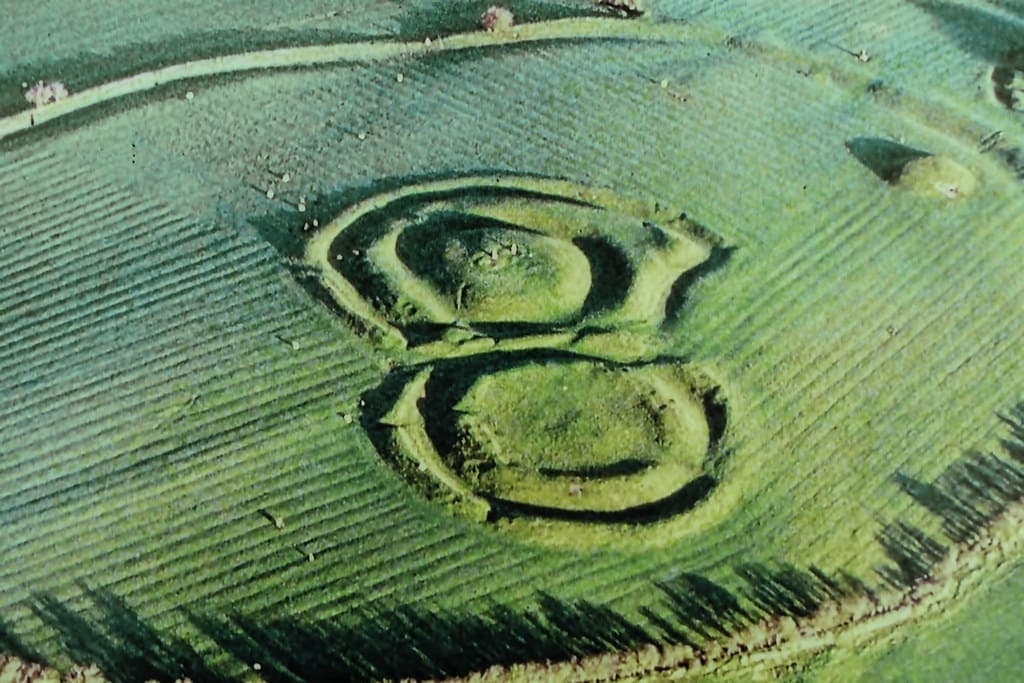
In 1798, United Irishmen made their stand at Tara, and British forces killed approximately 400 rebels on the hill. In 1824, the stone was moved to mark their mass grave, adding a layer of nationalist martyrdom to its ancient associations. Some scholars suggest the original stone may still lie buried near the Mound of the Hostages, while the current monument serves a different commemorative purpose.
Modern practitioners have restored the stone to active ceremonial use, gathering at solstices, equinoxes, and Celtic fire festivals to reconnect with traditions that were interrupted but never entirely forgotten.
Morfessa
mythological figure
The poet of the Tuatha De Danann who brought the Lia Fail from the city of Falias to Ireland.
Cuchulainn
legendary hero
The greatest hero of Irish legend, whose rage at the stone's silence for his protege led him to split it with his sword, silencing it for centuries.
Conn of the Hundred Battles
legendary king
The High King for whom the stone roared after Cuchulainn's blow, one of only two occasions after its silencing.
Brian Boru
historical king
The last great High King of Ireland, crowned in 1002 CE. Tradition holds the stone roared at his coronation, the last time it was ever heard.
Why This Place Is Sacred
The Lia Fail's sacredness derives from its mythological origin as one of the four treasures of the Tuatha De Danann, its centuries of use in coronation ritual concentrating power in the stone, its location at Tara where the veil between worlds was understood as thin, and the ongoing devotion of seekers who continue to gather here for seasonal celebrations.
The stone's power is relational. It means nothing apart from the hill on which it stands, the tradition that animated it, the kingdom it legitimized. The Lia Fail is thinness condensed into object form, a node in the network of sacred geography that once held Ireland together.
In Celtic understanding, certain objects could hold and transmit spiritual power. The four treasures of the Tuatha De Danann were not merely magical tools but embodiments of sovereignty itself. The Lia Fail carried the capacity to recognize legitimate rule, functioning as a kind of divine sensor that could detect whether a king's claim was true.
The coronation ceremony joined this capacity to the broader system of Irish sacral kingship. When a king was crowned on the Lia Fail, he entered into relationship not just with the stone but with the goddess of sovereignty, the land itself, and the cosmic order that Tara represented. The stone's cry was the land's voice, affirming that the old compact between rulers and ruled, humans and powers, remained intact.
This system ended long ago. But the stone remains, and the site remains, and the question of what persists at a sacred place after its animating tradition has fallen silent remains open. Modern druids and neo-pagans have revived seasonal celebrations at Tara, including ceremonies that acknowledge the Lia Fail. Whether these practices reconnect with something continuous or create something new, they demonstrate that the stone has not been forgotten.
For visitors who come without such frameworks, the effect is subtler but often present. Standing before the stone, looking across the same view that kings surveyed, something shifts. The scale of history becomes momentarily real. The question of what made this stone different from all others presses itself forward.
The Lia Fail served as the instrument of royal coronation, the means by which divine approval was made audible. The king would stand or place his foot upon the stone while druids performed accompanying rituals. The stone's cry confirmed legitimacy to all present and, symbolically, to all Ireland.
After the decline of the High Kingship, the stone remained at Tara as heritage rather than active instrument. The current stone was moved to its present position atop the Forrad in 1824 to mark the mass grave of those killed in the 1798 rebellion, adding a layer of national martyrdom to its associations. Whether this stone is the original Lia Fail or whether the true coronation stone lies buried near the Mound of the Hostages remains debated.
Traditions And Practice
Modern druids and neo-pagans conduct seasonal ceremonies at the Lia Fail during the eight festivals of the Celtic wheel: Samhain, Winter Solstice, Imbolc, Spring Equinox, Bealtaine, Summer Solstice, Lughnasa, and Autumn Equinox. Personal visits for connection and meditation are possible year-round. Touching the stone with respectful intention is common.
The traditional coronation ceremony involved the king standing or placing his foot on the stone while druids performed rituals invoking divine blessing. The king would symbolically marry the goddess of sovereignty, drinking ale and entering into relationship with the land itself. When the stone roared, all present knew that heaven had confirmed the king's right to rule.
The Tara Celebrations organization and various druid groups coordinate seasonal gatherings that acknowledge the Lia Fail within broader rituals honoring the Celtic calendar. Summer solstice draws the largest crowds. Samhain ceremonies often include the fire procession from Tlachtga, connecting the stone's sovereignty symbolism to the renewal of the sacred year.
Individual visitors come throughout the year for personal meditation and connection. Many touch the stone seeking blessing or simply to establish physical contact with something so ancient and significant. Some bring specific intentions, particularly around questions of purpose, calling, or legitimate authority in their own lives.
If you come seeking connection with the stone, consider these approaches:
Visit during a seasonal celebration if possible. The solstices and fire festivals offer opportunities to experience the stone in ceremonial context, surrounded by those who have kept its memory alive.
Approach slowly. Let the stone come into view as you climb the Forrad. Register the moment when it appears against the sky.
Stand beside it in silence before speaking or photographing. Let whatever arises arise without rushing to interpret it.
Touch gently if you choose to touch. The stone has been weathered by time and by hands. Add yours to the accumulated contact with care.
Consider what legitimate authority means in your life. What voice would confirm the rightness of your path? The stone was an oracle of such questions. Standing before it, they naturally surface.
Ancient Irish Kingship
HistoricalThe Lia Fail served as the coronation stone for the High Kings of Ireland, the means by which divine approval was made audible. The stone's cry confirmed legitimacy and bound the king to the land through supernatural recognition.
The king would stand upon the stone. Druids performed accompanying rituals. The king symbolically married the goddess of sovereignty and drank ale. When the stone roared, legitimacy was confirmed to all present.
Contemporary Celtic Spirituality
ActiveFor modern druids, neo-pagans, and practitioners of Celtic reconstructionism, the Lia Fail remains a focus for ceremonial practice and personal encounter. The stone represents connection to ancestral wisdom, sovereignty, and the power of place.
Seasonal ceremonies at solstices, equinoxes, and Celtic fire festivals. Personal pilgrimage and meditation. Rituals for claiming personal sovereignty or discerning calling. Touching or approaching the stone with specific intentions.
Experience And Perspectives
Visitors to the Lia Fail frequently report a profound sense of connection to Irish heritage and the weight of history, unusual emotional responses when approaching or touching the stone, and the sense of standing at a place where something significant once happened and perhaps still does. These reports come from both those with Irish ancestry and those without.
The approach to the Lia Fail matters. You walk up the slope of the Forrad, the mound that tradition identifies as the Royal Seat, and the stone comes into view gradually against the sky. It stands alone on the summit, pale against the green grass, unremarkable in form but commanding in position.
Many visitors describe unexpected emotion when they reach it. Not a response to beauty or grandeur, for the stone offers neither. Something closer to recognition, though of what remains unclear. The stone seems to expect something from those who approach it, or perhaps it is the weight of expectation that visitors bring.
Touching the stone is common, though one should do so gently. The surface is weathered, cool in all but the hottest weather. Those who rest their hands on it often fall silent for a moment, not knowing quite what they expected but registering that something has been exchanged.
The view from beside the stone reinforces the experience. From this point, the Irish midlands spread in all directions. You see the kingdom the stone once legitimized. You understand, viscerally, why kings who ruled from here felt they ruled the world.
Those with Irish ancestry often describe the experience as homecoming, not in a sentimental way but as recognition of belonging to something that extends back through time. The stone becomes a kind of touchpoint, a physical connection to ancestors who lived under the authority it once conferred.
Contemporary practitioners who attend seasonal celebrations report that the stone functions differently in ritual context. In ceremony, with intention focused and others gathered, the stone seems to activate in ways that casual visits do not evoke. Whether this reflects the power of collective focus or something in the stone itself responding, the distinction is commonly noted.
The Lia Fail invites approach rather than observation. It is meant to be stood beside, touched, encountered. Move slowly as you ascend the Forrad. Let the stone come into view naturally. When you reach it, take time before speaking or photographing.
Consider what legitimacy means to you, what authority you recognize, what voice might confirm the rightness of your path. The stone was an oracle of sovereignty. Standing before it, such questions naturally arise.
The Lia Fail invites multiple interpretations that do not always agree. Archaeological questions about the stone's identity and location exist alongside living traditions that treat it as a focus for ceremonial practice and personal encounters that occur regardless of scholarly debates.
Scholars debate whether the current stone is the original Lia Fail. Medieval sources locate the coronation stone near the Mound of the Hostages, not atop the Forrad. The stone was moved to its current position in 1824 to mark the mass grave from the 1798 rebellion. Some historians suggest traditional coronation stones were smaller and portable. The original may remain buried in the soil.
The stone's geological composition, white granite likely from County Down, confirms it was deliberately transported to Tara. Whatever its specific history, it has stood on this hill as an object of significance for a very long time.
Scottish chroniclers claim the Lia Fail is the same stone as the Stone of Scone, taken to Scotland in antiquity. Geological evidence contradicts this, as the Stone of Scone is red sandstone. The connection appears to be legendary rather than historical.
Irish traditional lore treats the Lia Fail as one of the most sacred objects in the nation's heritage. The Tuatha De Danann origin story connects the stone to Ireland's mythological past and the divine beings who once walked the land. The stone's voice represents the land's own consciousness, its capacity to recognize legitimate authority.
This understanding did not end with the High Kingship. The stone's relocation in 1824 to mark the rebels' grave added a layer of nationalist significance, connecting ancient sovereignty to modern struggles for independence. The stone came to represent not just royal authority but Irish identity itself.
Contemporary practitioners experience the Lia Fail as a focus for spiritual energy, a point where concentrated ritual power can be accessed. Some work with the stone in ceremonies aimed at claiming personal sovereignty, discerning calling, or connecting with Celtic deities. The stone's phallic shape connects it to interpretations involving fertility and creative power.
New Age framings sometimes describe the stone as marking a ley line or energy vortex. These interpretations lack scholarly support but may emerge from genuine experiences at the site.
Whether the current stone is the original Lia Fail remains uncertain. What ritual sounds the stone actually produced, if any, is unknown. The full coronation ceremony performed by the druids is lost. Why the stone fell silent after Cuchulainn's blow, according to legend, and whether it will ever speak again, remain questions the stone itself does not answer.
Visit Planning
The Lia Fail stands on the Forrad at the Hill of Tara, near Navan in County Meath. The site is open year-round with free access. Seasonal celebrations at solstices and Celtic fire festivals offer opportunities for ritual participation. Plan 30 minutes minimum to approach the stone meaningfully, longer if attending ceremonies.
Navan offers various accommodation options. Dublin is accessible for day trips. The Boyne Valley provides an excellent base for exploring Ireland's ancient heritage.
The Lia Fail is publicly accessible with no formal etiquette requirements. Respectful behavior, gentle touching rather than climbing or damaging, and consideration for others sharing the site are the basic expectations. Dress for Irish weather.
There is no gatekeeper at the Lia Fail, no priest who must be propitiated, no tradition whose approval is required. The stone stands open to anyone who climbs the Forrad, and visitors are free to engage as they choose. This freedom carries responsibility.
Touch gently if you touch at all. The stone has survived millennia but is not indestructible. It is one of Ireland's most photographed monuments, and each contact leaves its trace.
Respect others who may be engaged in their own practice. The summit of the Forrad is not large, and during busy periods multiple visitors share the space. Give room to those who are meditating, photographing, or simply standing in silence.
Treat the site as what it is: a place that has mattered to many people for many centuries. You need not believe in its power to recognize that others do and have.
Dress for Irish weather, which can change quickly. Layers, rain gear, and sturdy shoes are practical. The hilltop is exposed and often windy.
Photography of the stone is freely permitted. Be considerate of others who may be seeking a clear view or a moment of uninterrupted connection.
Leaving offerings is not traditional and is discouraged by site management. If you wish to offer something, make it invisible: a thought, a prayer, a moment of attention.
Do not climb on the stone, carve upon it, or attempt to remove pieces. These are violations of heritage protection laws and of basic respect for the monument.
Sacred Cluster
Nearby sacred places create the location cluster described in the growth plan. This block is intentionally crawlable and links into the wider regional graph.