Newgrange
A Neolithic temple aligned to capture the winter solstice sunrise, older than Stonehenge and the pyramids
Donore, County Meath, Ireland
At A Glance
- Coordinates
- 53.6947, -6.4756
- Suggested Duration
- Allow 2-4 hours for the Visitor Centre, tour, and shuttle transport. The monument tour lasts approximately 1 hour. A full day permits exploration of Knowth (when open) and the Visitor Centre exhibition.
- Access
- Brú na Bóinne Visitor Centre is located near Donore, County Meath, approximately 50 km north of Dublin. Access by car via M1 motorway (exit at Donore) or via N2/N51. Bus Éireann services to Drogheda connect with local transport. All visitors must start at the Visitor Centre—do not go directly to the monument. Pre-booking essential via heritageireland.ie.
Pilgrim Tips
- Brú na Bóinne Visitor Centre is located near Donore, County Meath, approximately 50 km north of Dublin. Access by car via M1 motorway (exit at Donore) or via N2/N51. Bus Éireann services to Drogheda connect with local transport. All visitors must start at the Visitor Centre—do not go directly to the monument. Pre-booking essential via heritageireland.ie.
- Practical outdoor clothing appropriate for Irish weather. The site is outdoors with no shelter; rain is always possible. Comfortable shoes for walking. Avoid bulky bags or backpacks that make navigating the narrow passage difficult.
- Photography is NOT permitted in the passage or chamber—this is strictly enforced. Exterior photography is welcome. Commercial photography or filming requires advance permit from the Office of Public Works.
- The passage is narrow and low (approximately 1.8 meters); visitors with claustrophobia or mobility limitations should consider carefully. Photography is not permitted in the passage and chamber. The experience is guided and timed—personal ritual within the monument is not possible. Winter solstice access is by lottery only; do not attempt to access the monument outside the managed system.
Overview
Five thousand years ago, people moved thirty-five hundred tons of stone to build a monument aligned with a single moment of sunrise on the shortest day of the year. Newgrange stands in the Boyne Valley as one of humanity's oldest and most sophisticated sacred structures—a passage tomb where the returning light of the winter solstice penetrates to the burial chamber, illuminating the dead with the promise of the sun's rebirth.
In the green farmland of County Meath, where the River Boyne curves through Ireland's ancient heartland, a great white mound rises from the earth. Newgrange was old before the first stones of Stonehenge were raised, ancient before the pyramids began to climb the Egyptian desert. Built around 3100 BCE by Neolithic farming communities, this passage tomb represents one of humanity's earliest and most ambitious attempts to mark the relationship between life, death, and the cosmos.
The monument's builders achieved something extraordinary. They aligned a nineteen-meter passage with a roofbox designed to catch the first rays of the rising sun on the winter solstice. On the shortest day of the year—and for a few days before and after—light streams through this aperture, travels the length of the dark passage, and illuminates the cruciform chamber where the dead once lay. For seventeen minutes, the space that had been dark for 364 days blazes with golden light.
What belief drove such precision? The builders invested an estimated 300,000 tons of labor moving stone, calculating angles, and engineering a roofbox that has functioned flawlessly for five millennia. They knew the winter solstice as the turning point—the moment when the dying sun reaches its nadir and begins its return toward the longer days of spring. By aligning their tomb with this moment, they connected death with solar rebirth, the darkness of the grave with the promise of returning light.
The kerbstones surrounding the mound carry Ireland's finest megalithic art, including the famous triple spiral whose meaning continues to inspire speculation. Celtic mythology later claimed the site as the dwelling of the Dagda, chief god of the divine race called the Tuatha Dé Danann. Today, over 200,000 visitors annually come to stand where their ancestors stood, to enter the passage their ancestors built, and—for a fortunate few selected by lottery—to witness the sunrise that their ancestors planned for future generations to see.
Context And Lineage
Newgrange stands at the heart of the Brú na Bóinne ceremonial landscape, built by Neolithic farming communities around 3100 BCE—five centuries before Stonehenge and nearly a millennium before the Egyptian pyramids. Celtic mythology later claimed it as the dwelling of the gods.
No narrative survives from the Neolithic builders of Newgrange, but their construction speaks eloquently of their beliefs. They chose a site in the bend of the River Boyne, a location already established as a ceremonial landscape with older monuments nearby. They gathered stone from miles around—granite, quartz, greywacke—transporting an estimated 200,000 tons to create their mound. They calculated the angle of the winter solstice sunrise and designed a roofbox to capture it. They carved spirals, lozenges, and the unique triple spiral into their kerbstones.
These were not casual acts but expressions of profound religious conviction. The investment of labor—estimated at decades of work by hundreds of people—could only have been motivated by belief that the monument served essential spiritual purposes. Whether they understood the winter solstice as the sun's rebirth, as the moment when the dead could travel to the otherworld, or as something else entirely, they built a structure to mark it for their descendants to witness.
Celtic peoples arriving two thousand years later inherited a monument whose origins were already lost to time. They created myths to explain what they found. Newgrange became Sí an Bhrú, the dwelling of the Dagda Mór, chief of the Tuatha Dé Danann, and his son Aengus, god of love. The myth tells of the Dagda making love to Boann, goddess of the River Boyne, and conceiving Aengus—a story some scholars interpret as encoding the winter solstice phenomenon, with the sun god entering the earth's womb at the year's turning.
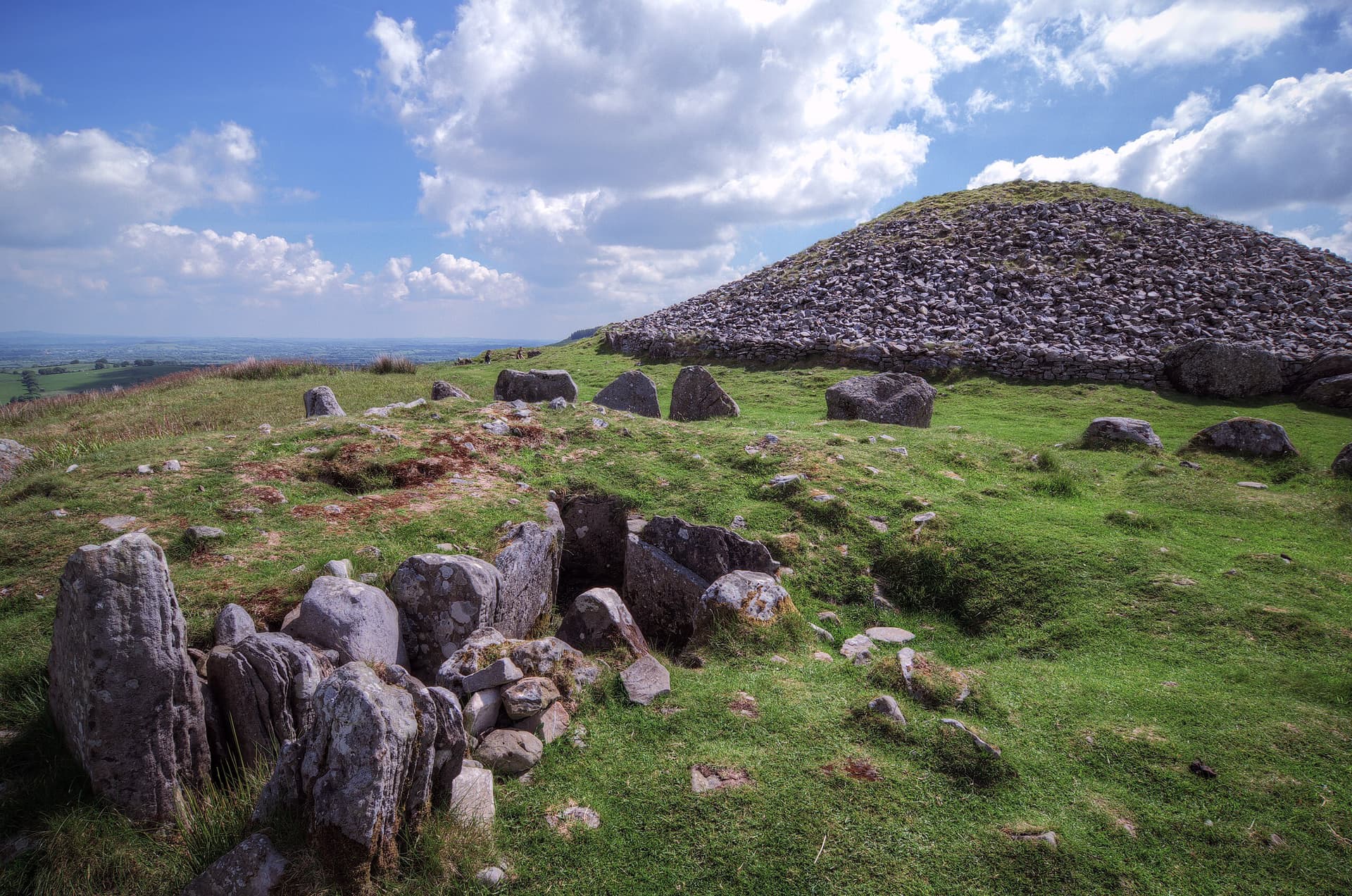
Newgrange stands within the Brú na Bóinne complex, which includes the passage tombs of Knowth and Dowth and numerous smaller monuments. This ceremonial landscape represents one of the most significant concentrations of prehistoric architecture in Western Europe. The winter solstice alignment connects Newgrange to a broader pattern of astronomical awareness in Neolithic Ireland, including the equinox alignments at Loughcrew. The site's recognition as a UNESCO World Heritage Site (1993) places it within a global network of protected sacred landscapes.
The Neolithic Builders
Farming communities who constructed the monument around 3100 BCE; DNA evidence suggests possible elite social structure
The Dagda
In Celtic mythology, chief god of the Tuatha Dé Danann, whose dwelling was believed to be Newgrange
Aengus
Celtic god of love, son of the Dagda, associated with Newgrange and with swans
Edward Lhwyd
Welsh antiquarian who made the first scholarly description of Newgrange in 1699
Professor Michael J. O'Kelly
Archaeologist who excavated Newgrange 1962-1975 and was first to witness the winter solstice illumination since prehistoric times (1967)
Why This Place Is Sacred
Newgrange embodies thin place qualities through its precise astronomical alignment creating an annual moment of cosmic significance, its function as a portal between the worlds of living and dead, and its continuous sacred recognition spanning five thousand years from Neolithic builders through Celtic mythology to contemporary pilgrimage.
The concept of thin places describes locations where the membrane between ordinary reality and something deeper grows permeable. Newgrange possesses this quality in concentrated form.
The monument's astronomical alignment creates a thin place in time as well as space. The winter solstice marks the year's threshold moment—the point when the dying sun reaches its lowest arc before beginning its return. By aligning their burial chamber with this sunrise, the Neolithic builders created conditions where cosmic threshold (solstice) meets existential threshold (death). Whatever they believed about the afterlife, they clearly understood that certain moments open doorways unavailable at other times.
The passage tomb architecture amplifies this liminal quality. Entering the narrow passage, visitors move from light to darkness, from the ordinary world to a space created for the dead. The cruciform chamber, with its corbelled ceiling rising above, creates an interior volume that feels set apart from normal reality. When the solstice light enters, it transforms this dark space—demonstrating that even death is not beyond the sun's reach.
The massive human investment in construction speaks to the depth of sacred intention. Five thousand years ago, people without metal tools or wheeled transport moved approximately 200,000 tons of stone and earth to create this monument. Such labor implies religious motivation powerful enough to organize communities across years of effort. The result was not a temporary structure but one designed to function perfectly for millennia—and it has.
Celtic mythology later recognized what the builders had created, claiming Newgrange as the dwelling of the gods. The divine beings who inhabited the mound were understood as present but normally invisible—a thin place conception that parallels the solstice phenomenon itself.
Newgrange functioned as a passage tomb where the dead were interred in the cruciform chamber. Burnt and unburnt human remains were deposited along with possible grave goods or votive offerings. The winter solstice alignment suggests ceremonies connecting death with solar rebirth—the dead receiving the light of the returning sun on the year's darkest day.
After the primary Neolithic use period, the monument continued to attract ritual attention. A stone circle may have been added around 2000 BCE. Celtic peoples arriving around 500 BCE incorporated the site into their mythology as the dwelling of the Tuatha Dé Danann. Through the medieval period, Newgrange retained its reputation as a place of supernatural power. Modern recognition began with Edward Lhwyd's 1699 description. Professor O'Kelly's 1962-1975 excavations and his 1967 witnessing of the solstice illumination established Newgrange as a global heritage site. UNESCO inscription in 1993 confirmed its universal significance.
Traditions And Practice
Contemporary engagement with Newgrange centers on guided tours that provide access to the passage and chamber, with the winter solstice observation—accessible by lottery—representing the most powerful continuation of the monument's original purpose.
The specific ceremonies of the Neolithic builders remain unknown, but the architecture suggests their outline. The winter solstice alignment implies observances marking the sun's return. The deposition of human remains—both cremated and unburnt—indicates funerary rituals that may have coincided with the solstice. The grave goods and possible votive offerings suggest ceremonies of honoring the dead.
Celtic mythology records that Newgrange was the dwelling of divine beings, suggesting continued ritual recognition through the Iron Age. The story of Aengus tricking the Dagda to gain possession of the mound suggests possible traditions of ceremonial approach to the site.
Modern practice at Newgrange occurs within the framework of heritage tourism managed by the Office of Public Works. Guided tours provide access to the passage and chamber with archaeological interpretation. The Visitor Centre exhibition offers context through artifacts, audio-visual presentation, and interactive displays.
The winter solstice observation represents the most direct connection to the monument's original purpose. Approximately 30,000 people apply annually for 50 lottery places. Winners receive access on the mornings around the solstice (weather permitting) to witness what Professor O'Kelly witnessed in 1967—the sunrise entering the roofbox, traveling the passage, and illuminating the chamber for seventeen minutes.
Modern pagans and druids recognize Newgrange as one of Europe's most significant sacred sites. While formal ceremonies are not permitted within the monument, the surrounding landscape and the Boyne Valley more broadly attract those seeking connection with ancient astronomical wisdom.
For those visiting Newgrange, the guided tour structure limits personal practice within the monument. However, meaningful engagement is possible: approach the visit as pilgrimage rather than tourism, maintain interior silence in the chamber rather than chatting, take time at the entrance stone to contemplate its carvings, and consider what motivated people to move 200,000 tons of stone five thousand years ago. If you apply for the winter solstice lottery and win, treat the experience with whatever ceremony feels appropriate. Outside the managed site, the Boyne Valley landscape offers opportunities for walking meditation and contemplation.
Neolithic Funerary and Astronomical Practice
HistoricalThe builders of Newgrange created one of humanity's earliest known astronomical monuments, aligning a burial chamber with the winter solstice sunrise. This achievement demonstrates sophisticated understanding of solar cycles and profound beliefs connecting death with celestial phenomena.
Burial of the dead in the cruciform chamber, possible solstice ceremonies, creation of megalithic art.
Celtic Mythology
HistoricalCeltic peoples who arrived in Ireland around 500 BCE incorporated the ancient monuments into their mythology, identifying Newgrange as the dwelling of the Tuatha Dé Danann.
Mythological narratives and possible ceremonial veneration of the site.
Contemporary Heritage Pilgrimage
ActiveOver 200,000 visitors annually come to Newgrange seeking encounter with Ireland's deep past and human achievement.
Guided tours of the monument, viewing megalithic art, experiencing simulated or actual winter solstice illumination.
Contemporary Paganism and Druidry
ActiveModern spiritual practitioners recognize Newgrange as one of Europe's most important ancient sacred sites, particularly significant at the winter solstice.
Pilgrimage, meditation, solstice observance (when possible), engagement with the Boyne Valley sacred landscape.
Experience And Perspectives
Visitors to Newgrange encounter a carefully managed heritage site where the physical experience of entering the passage, standing in the chamber, and viewing the megalithic art can produce profound encounters with human antiquity. The winter solstice illumination, accessible by lottery, represents one of archaeology's most transformative experiences.
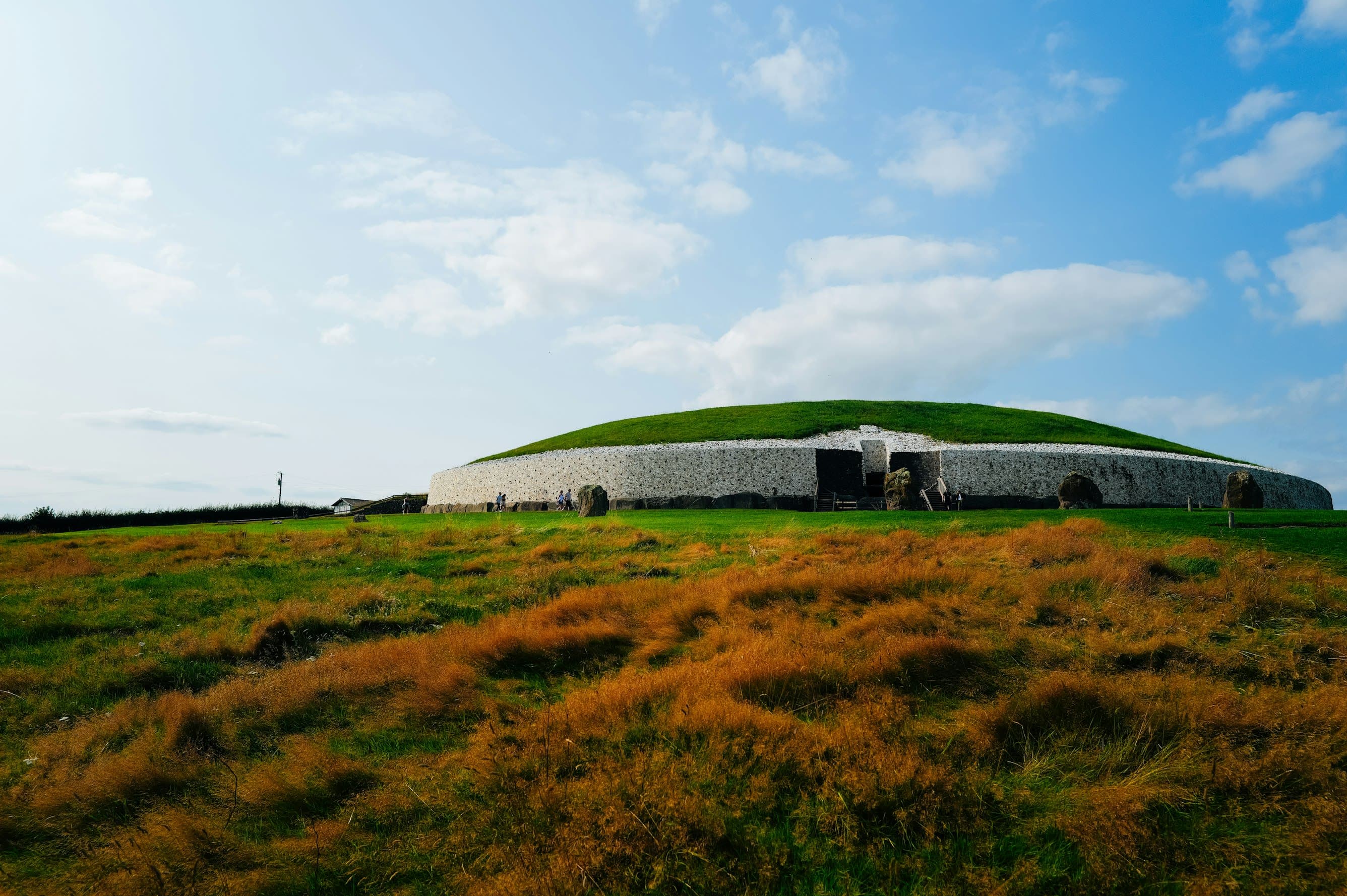
The experience of Newgrange begins at the Brú na Bóinne Visitor Centre, where an exhibition provides context for what visitors will encounter. The shuttle bus ride to the monument builds anticipation as the white quartz facade becomes visible—a reconstruction based on archaeological evidence of how the monument originally appeared.
Approaching on foot, the scale becomes apparent. The mound rises thirteen meters high and stretches eighty-five meters across. The entrance stone, a massive slab carved with the famous triple spiral and surrounding patterns, guards the passage mouth. These carvings—created five thousand years ago without metal tools—represent the finest megalithic art in Western Europe.
Entering the passage requires ducking slightly; the ceiling is approximately 1.8 meters at its highest. The stones lining the passage bear their own carvings, visible in the guide's torchlight. As you move inward, you leave the daylight behind. The passage rises gradually, ascending toward the chamber at the heart of the mound.
The chamber opens into a cruciform space—three recesses surrounding a central area where visitors stand. Stone basins, possibly used for depositing remains or offerings, occupy the recesses. The corbelled ceiling rises high above, each layer of stone slightly overlapping the one below, creating a domed space that has remained waterproof for five millennia. Here, in this darkness, the dead were placed. Here, on the winter solstice, the sun finds its way.
Most visitors experience a simulated solstice illumination—electric light demonstrating what the sunrise achieves on the real morning. Even this simulation produces powerful responses. Those who win the lottery and witness the actual phenomenon report transformative experiences: standing in darkness as the first edge of light appears, watching it crawl along the passage floor, seeing the chamber flood with gold, understanding viscerally what the builders intended—these moments can reshape one's sense of time, human achievement, and the persistence of sacred intention.
Approach Newgrange with awareness that you enter one of humanity's oldest sacred structures. Pre-book your visit—spontaneous access is not possible. Begin at the Visitor Centre exhibition, which provides essential context. On the tour, move slowly through the passage, taking in each carved stone. In the chamber, resist the urge to immediately photograph (photography is prohibited anyway); instead, simply stand in the space the builders created for their dead. Feel the corbelled ceiling above you. Imagine the darkness before the solstice light enters. If you are fortunate enough to win the lottery, approach the actual solstice morning with whatever ceremony feels appropriate to you.
Understanding Newgrange requires holding multiple interpretive frameworks simultaneously. Archaeological science provides dates, construction details, and burial evidence. Celtic mythology offers narratives that medieval Irish people used to explain what they found. Contemporary spiritual seekers bring their own frameworks for engaging with the monument's power. The builders themselves remain silent, their intentions encoded in stone.
Archaeological consensus establishes Newgrange as a Neolithic passage tomb built around 3100 BCE—predating Stonehenge by approximately five centuries and the pyramids of Giza by nearly a millennium. The monument was constructed by farming communities who had arrived in Ireland several centuries earlier. The winter solstice alignment is precisely calculated and functionally intentional. Human remains deposited in the chamber include both cremated and unburnt bones. Grave goods or votive offerings were found, though their significance is debated.
DNA analysis of skeletal material has revealed that an individual buried in the most prestigious chamber location had parents who were first-degree relatives—possibly brother and sister. This pattern of elite inbreeding parallels practices documented in other early civilizations with 'god-king' rulers, suggesting possible similar social structures among Newgrange's builders.
The megalithic art—seventy-five engraved stones including the famous entrance stone with its triple spiral—represents the finest examples in Western Europe. The specific meanings of these carvings remain unknown; interpretations range from astronomical notation to cosmological mapping to purely aesthetic expression.
Celtic mythology, developed approximately 2,500 years after Newgrange was built, provides Ireland's indigenous interpretation of the monument. Newgrange was known as Sí an Bhrú or An Brug—the dwelling place of the Tuatha Dé Danann, the divine race who inhabited Ireland before mortal humans. The Dagda, chief god, lived in the mound with his son Aengus, god of love.
The myth of Aengus's conception may encode the winter solstice phenomenon. The Dagda (sun god) made love to Boann (goddess of the River Boyne, earth mother), and she conceived Aengus at the time of grianstad—the sun-standstill, the solstice. The light entering the mound represents the divine conception that produces the magical child.
Additionally, the hero Cúchulainn was said to have been conceived at Newgrange, adding another layer of supernatural significance to the site.
Modern pagans, druids, and spiritual seekers recognize Newgrange as one of Earth's most powerful sacred sites. The winter solstice alignment is understood as deliberate sacred engineering—creating conditions for transformation at the moment when the sun dies and is reborn. The triple spiral is interpreted as representing cycles of existence (birth-death-rebirth), the three realms of Celtic cosmology (land, sea, sky), or the goddess in her three aspects (maiden, mother, crone).
Some understand Newgrange as an initiation chamber—a space where the living could experience symbolic death and rebirth, entering the darkness of the passage and emerging transformed. Others see it as a portal between worlds, accessible particularly at liminal times like the solstice.
Fundamental questions remain unanswered. What did the Neolithic builders believe about death, the afterlife, and the sun's relationship to both? What ceremonies accompanied burial in the chamber? What was the meaning of the triple spiral and other carvings? How was the astronomical knowledge required for the alignment calculated and transmitted? What was the social organization that could mobilize labor for such massive construction? The stones hold these secrets, and five thousand years of silence suggest they may never speak.
Visit Planning
Newgrange requires advance booking through the Brú na Bóinne Visitor Centre, with all access via guided tour and shuttle bus. Allow half a day minimum; the winter solstice experience requires winning an annual lottery.
Brú na Bóinne Visitor Centre is located near Donore, County Meath, approximately 50 km north of Dublin. Access by car via M1 motorway (exit at Donore) or via N2/N51. Bus Éireann services to Drogheda connect with local transport. All visitors must start at the Visitor Centre—do not go directly to the monument. Pre-booking essential via heritageireland.ie.
Drogheda (8 km) offers various accommodation options. Dublin (50 km) provides extensive choices. The Boyne Valley region has B&Bs and hotels for those wishing to explore the wider sacred landscape.
Newgrange is managed as a heritage site with specific protocols: visitors must start at the Brú na Bóinne Visitor Centre, follow guided tours, and refrain from photography inside the monument. The site's universal significance calls for reverent attention regardless of personal belief.
Visiting Newgrange means engaging with Ireland's most important prehistoric monument through a carefully managed system designed to protect the site while providing access. Understanding and respecting this system constitutes basic etiquette.
All visits begin at the Brú na Bóinne Visitor Centre on the south side of the River Boyne. Do not drive directly to the monument—you will not gain access. Pre-booking is essential; walk-up visitors may find the day's tours fully allocated. Arrive at least fifteen to twenty minutes before your scheduled tour time.
On the tour, follow your guide's instructions. The passage is narrow, and the group moves together. Do not touch the stones or the megalithic art—the oils from human hands contribute to surface degradation over time. Photography is not permitted in the passage or chamber; guides will explain the reasons. The prohibition preserves the atmosphere and protects the monument.
In the chamber, the impulse to speak often arises. Consider instead maintaining silence, allowing the space to work on your awareness without words. The simulated solstice illumination that most tours include provides a moment for quiet reflection rather than commentary.
Recognize that you share this experience with people from many backgrounds. Some come as tourists, some as students, some as pilgrims. All deserve space for their own encounter with the monument. The reverence you bring contributes to the experience of those around you.
Practical outdoor clothing appropriate for Irish weather. The site is outdoors with no shelter; rain is always possible. Comfortable shoes for walking. Avoid bulky bags or backpacks that make navigating the narrow passage difficult.
Photography is NOT permitted in the passage or chamber—this is strictly enforced. Exterior photography is welcome. Commercial photography or filming requires advance permit from the Office of Public Works.
No offerings should be left at the monument. Newgrange is managed as an archaeological heritage site, not an active ritual space. If you wish to make offerings, do so internally—through prayer, dedication, or intention rather than physical objects.
{"All visitors must begin at Brú na Bóinne Visitor Centre","Pre-booking is essential","Follow your guide and stay with the tour group","No photography in the passage or chamber","Do not touch the stones or megalithic art","No offerings or objects should be left at the monument","Unaccompanied minors not permitted","The passage may not suit those with claustrophobia or mobility limitations"}
Sacred Cluster
Nearby sacred places create the location cluster described in the growth plan. This block is intentionally crawlable and links into the wider regional graph.