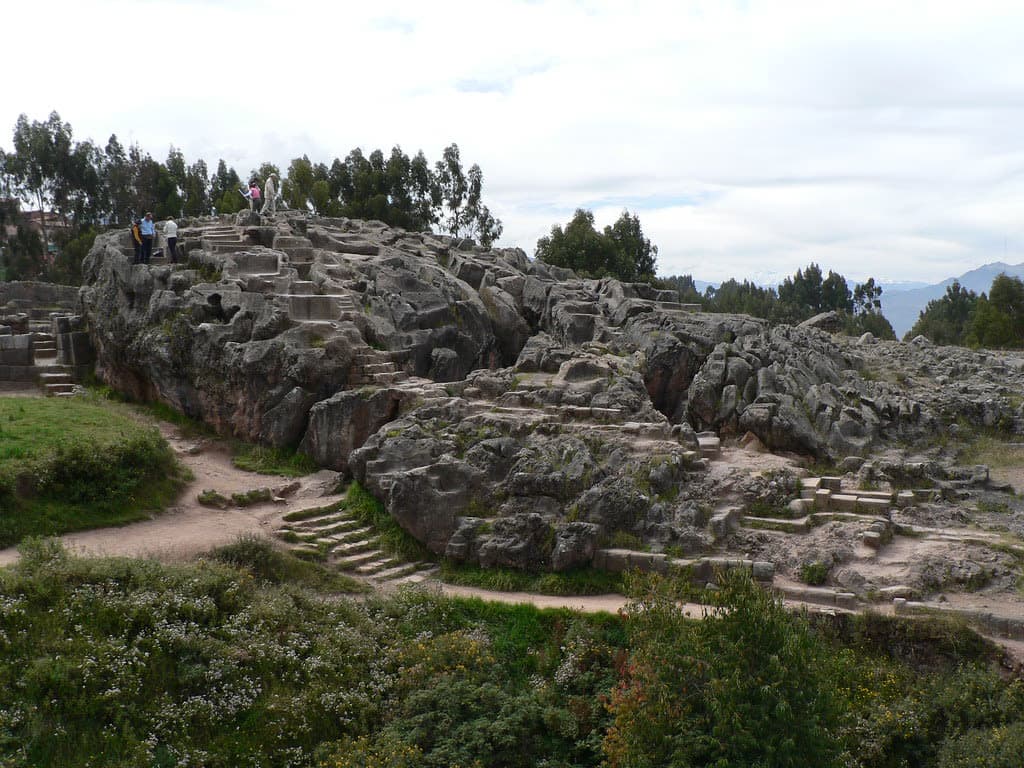
Q'enco Archeological Complex
The Labyrinth—where zigzag channels carried blood offerings to the underworld and a puma awoke at winter solstice
Cuzco, Cusco, Peru
At A Glance
- Coordinates
- -13.5089, -71.9707
- Suggested Duration
- One to two hours; often combined with other sites on a half-day tour.
Pilgrim Tips
- Comfortable clothing for climbing and descending into chambers. Sturdy shoes for uneven rock surfaces.
- Photography permitted. Flash may be restricted in the underground chamber.
- The underground chamber is narrow and may be challenging for those with claustrophobia. Altitude at 3,580 meters requires acclimatization.
Overview
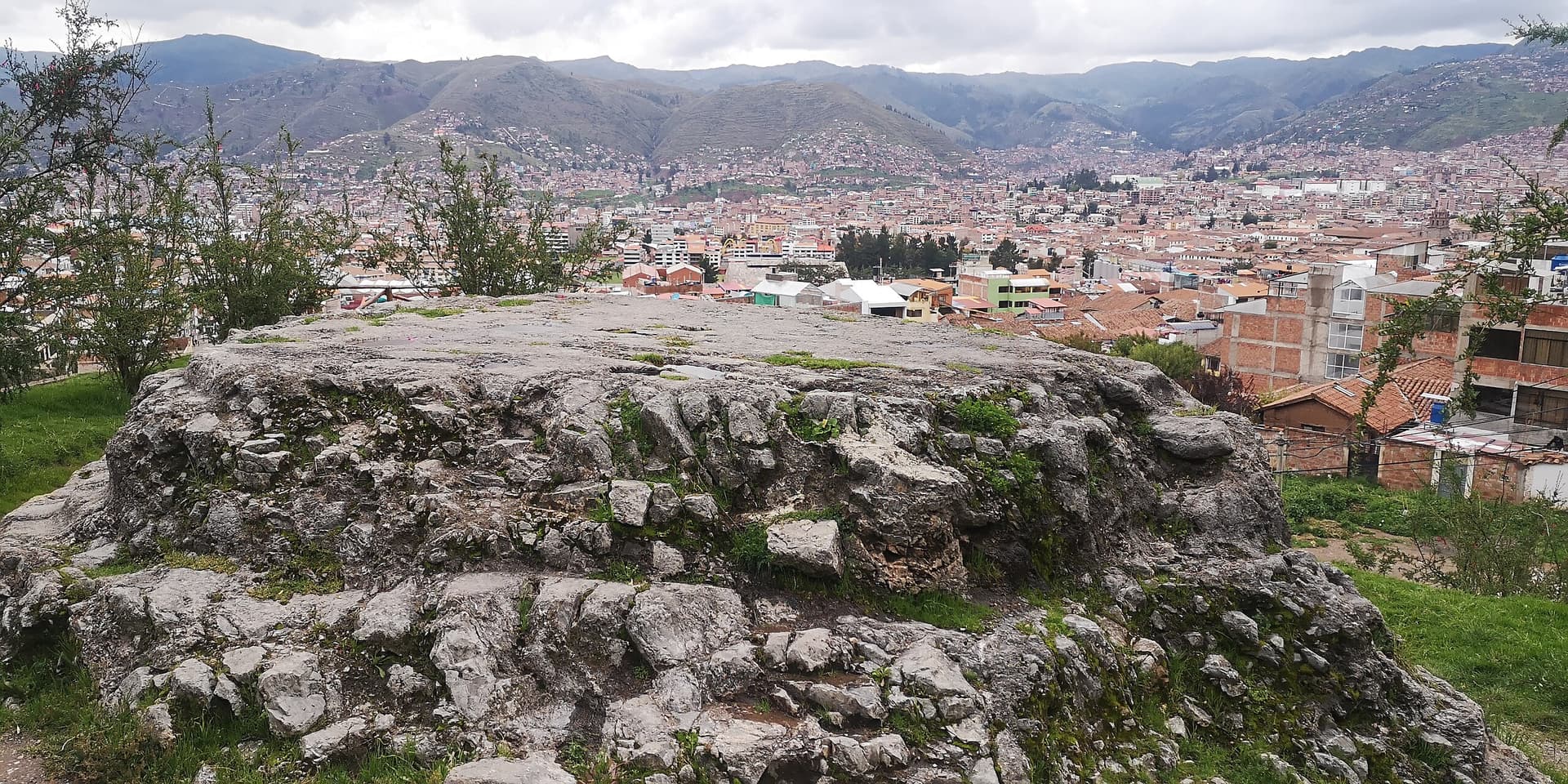
Q'enco rises from Socorro hill, four kilometers from Cusco—a huaca carved entirely from living rock. Its name means 'labyrinth' in Quechua, and the site justifies it: underground chambers with tables carved from solid stone, zigzag channels that once ran with chicha or sacrificial blood, and an amphitheater whose central rock may have been sculpted into a puma. At winter solstice, the first rays strike the Intihuatana, and the stone puma's eyes seem to shine.
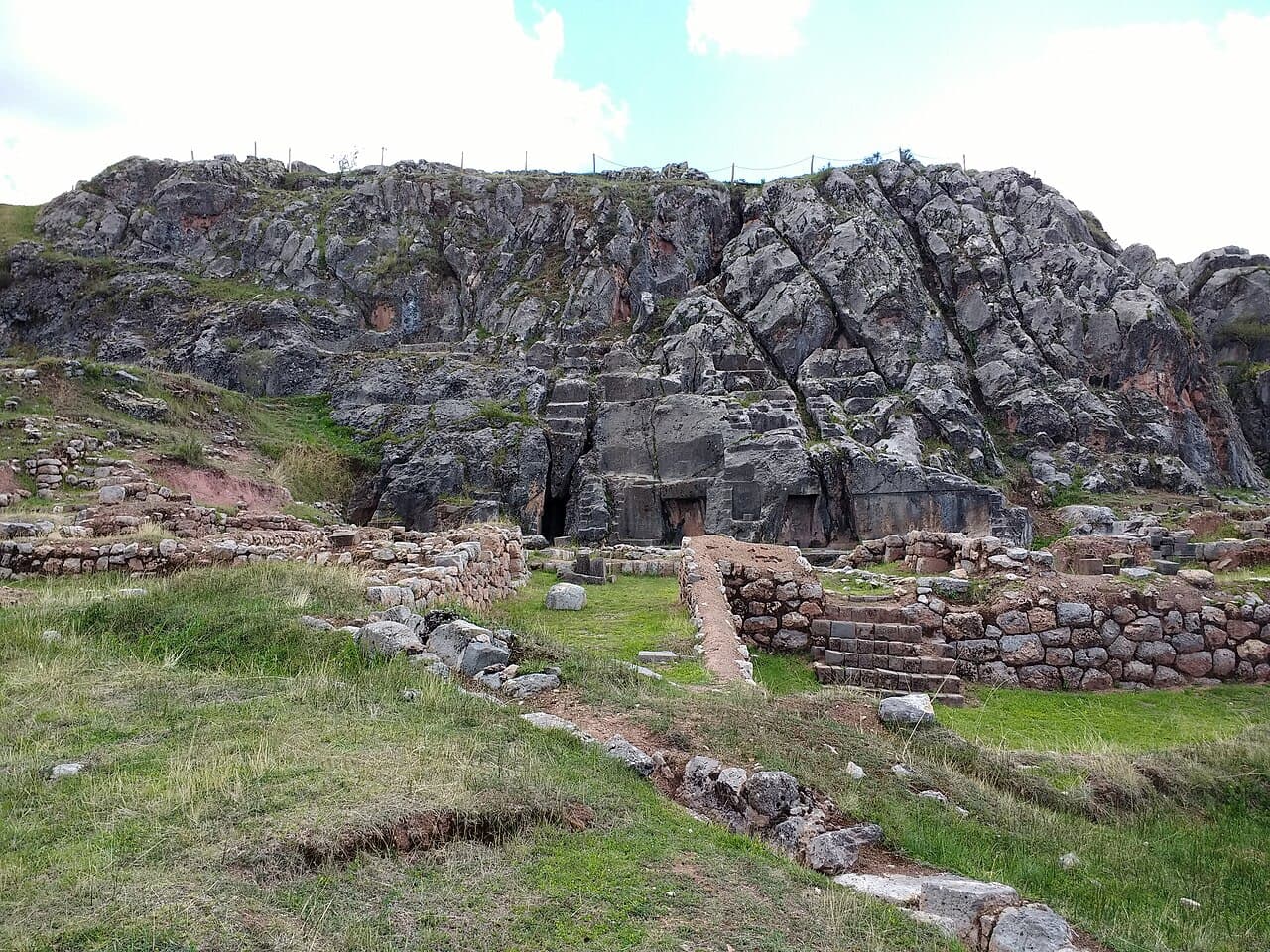
Q'enco—also spelled Kenko, Qenko, or Quenco—stands among the largest huacas in the Cusco region, its Quechua name meaning 'labyrinth' or 'zigzag.' The site is entirely sculpted from natural rock formations, an integration of architecture and geology that makes it unique even among Inca sacred sites.
The Spanish tried to destroy Q'enco during the colonial campaign against indigenous religion. But stone proved more resistant than memory. What they could not demolish—the underground chamber, the zigzag channels, the amphitheater—survived to testify to practices that made colonial authorities so anxious.
The site served worship of the sun, the moon, and Pachamama. But archaeologists believe darker ceremonies also occurred here. The underground chamber contains a ceremonial table carved from a single massive rock, with niches on either side. A gutter runs along one wall. The discovery of many bones within this gutter suggests ritual sacrifices—whether human or animal remains debated.
Carved into the cave walls are three animals central to Andean cosmology: the condor (representing the upper world), the puma (the earthly realm), and the snake (the underworld). This trinity connected the three levels of Inca reality in a single sacred space.
The zigzag channels that give Q'enco its name may have carried chicha (corn beer) as offerings, or may have run with blood during sacrificial ceremonies. The channels twist across rock surfaces, their irregular path perhaps encoding astronomical alignments or simply maximizing sacred contact between offering and stone.
At the site's heart, an Intihuatana served astronomical observation. When the winter solstice sun strikes this stone, the light creates a figure resembling a puma with shining eyes—a moment that must have gathered priests and pilgrims to witness the rebirth of sacred light.
Context And Lineage
Q'enco served as one of the largest huacas in the Cusco region, where ceremonies honored sun, moon, and Pachamama while the underground chamber connected to the underworld. Spanish colonial destruction attempted but failed to erase this sacred site.
The Inca recognized sacred power in rock formations, and Q'enco offered exceptional raw material. Natural caves and outcroppings on Socorro hill became the foundation for a huaca that would rank among the largest in the Cusco region.
Ica sculptors shaped the site without quarrying or transporting stone—they worked with what geology had provided, carving chambers within, channels across, and an amphitheater around the existing formations. The result integrated architecture and landscape in ways that made Q'enco impossible to relocate or replicate.
The site served multiple functions. The amphitheater hosted public ceremonies, its 19 niches possibly holding sacred objects or images during festivals. The underground chamber served more private rituals: mummification, sacrifice, consultation with the powers of the underworld. The zigzag channels carried liquid offerings—chicha or blood—across stone surfaces, feeding the huaca and the forces it contained.
When Spanish colonial authorities launched the 'extirpation of idolatries' campaign, Q'enco was a target. Indigenous worship at this site could not be tolerated. But while the Spanish could destroy wooden images and burn textiles, they could not destroy stone. Q'enco's integration with living rock protected it from complete elimination.
The site was rediscovered by modern archaeology and declared Cultural Heritage of the Cusco Region. Today it forms part of the Sacsayhuaman Archaeological Park, accessible via the Boleto Turístico that covers Cusco's major sites.
Inca religious practice, specifically the huaca tradition that recognized sacred power in natural formations. No continuous practice after Spanish colonial suppression.
Unknown Inca rulers and priests
Builders and practitioners
Why This Place Is Sacred
Q'enco's thin quality emerges from its integration with living rock, its function as portal to the underworld through the carved cave, and its role in sacrificial ceremonies where blood or chicha flowed through zigzag channels to feed the earth.
To enter Q'enco is to enter stone itself—not structures built upon rock but chambers carved within it, channels cut across its surface, an amphitheater shaped from what geology provided. The Inca here did not build so much as reveal, sculpting sacred space from what the mountain had already created.
The underground chamber creates the most intense thin place. Descend into the cave where floor, ceiling, walls, tables, and cupboards all emerge from a single giant rock. This space was understood as entrance to the world of the dead—the underworld that the snake represented in Inca cosmology. The ceremonial table may have held bodies during mummification, or living offerings during sacrifice. The gutter that collected whatever flowed from the table carried it deeper, an offering to what lay below.
The bones found in that gutter speak of practices that made colonial authorities desperate to destroy this site. Whether human or animal, those bones testified to blood offerings that connected the living to the dead through the medium of carved stone.
The zigzag channels add another dimension. The word Q'enco means this irregular path, and following it across the rock surfaces is itself a kind of meditation. The channels may have carried chicha during festival offerings, or blood during sacrificial ceremonies. Either way, they trace a sacred geography across stone that amplified whatever power the offerings contained.
At winter solstice, when sunlight strikes the Intihuatana and creates the image of a shining-eyed puma, Q'enco reveals its relationship to celestial cycles. The underworld chamber, the surface channels, and the solar alignment connect earth, sky, and what lies below in a single sacred geography.
The Spanish understood the threat Q'enco posed to their religious monopoly. That they could not destroy it entirely testifies to the resistance of stone and the persistence of sacred place.
Major huaca serving worship of the sun, moon, and Pachamama, as well as mummification ceremonies and possibly human or animal sacrifice. The underground chamber symbolized entrance to the underworld.
From Inca ceremonial center through Spanish attempted destruction to modern protected heritage site. Declared Cultural Heritage of the Cusco Region.
Traditions And Practice
Q'enco served worship of sun, moon, and Pachamama through public ceremonies in the amphitheater and private rituals in the underground chamber. Offerings flowed through zigzag channels; sacrifices may have occurred on the carved table; mummification prepared the dead for the afterlife.
Sun, moon, and Pachamama worship. Ritual sacrifices (possibly human and animal). Mummification ceremonies in underground chamber. Chicha and blood offerings through zigzag channels. Public ceremonies in amphitheater. Astronomical observations using Intihuatana.
The site functions as part of the Sacsayhuaman Archaeological Park, offering education about Inca religious practices. No active ceremonial use, though some visitors report spiritual experiences.
Enter the underground chamber with awareness that you are crossing the threshold the Inca understood as entrance to the underworld. Trace the zigzag channels contemplatively. Seek the carved condor, puma, and snake that represent the three worlds.
Inca Huaca Tradition
HistoricalQ'enco represents the Inca practice of recognizing and elaborating sacred power in natural rock formations. As one of the largest huacas in the Cusco region, it served worship of sun, moon, Pachamama, and the underworld powers.
Public ceremonies in amphitheater, private rituals in underground chamber, offerings through zigzag channels, possible human and animal sacrifice, mummification ceremonies.
Experience And Perspectives
Explore the amphitheater with its mysterious central stone, descend into the underground chamber carved from solid rock, trace the zigzag channels across stone surfaces, and contemplate the cosmological carvings of condor, puma, and snake.
Q'enco lies just four kilometers northeast of Cusco's historic center, at 3,580 meters on Socorro hill. The site forms part of the Sacsayhuaman Archaeological Park and is typically visited alongside Sacsayhuaman, Puca Pucara, and Tambomachay.
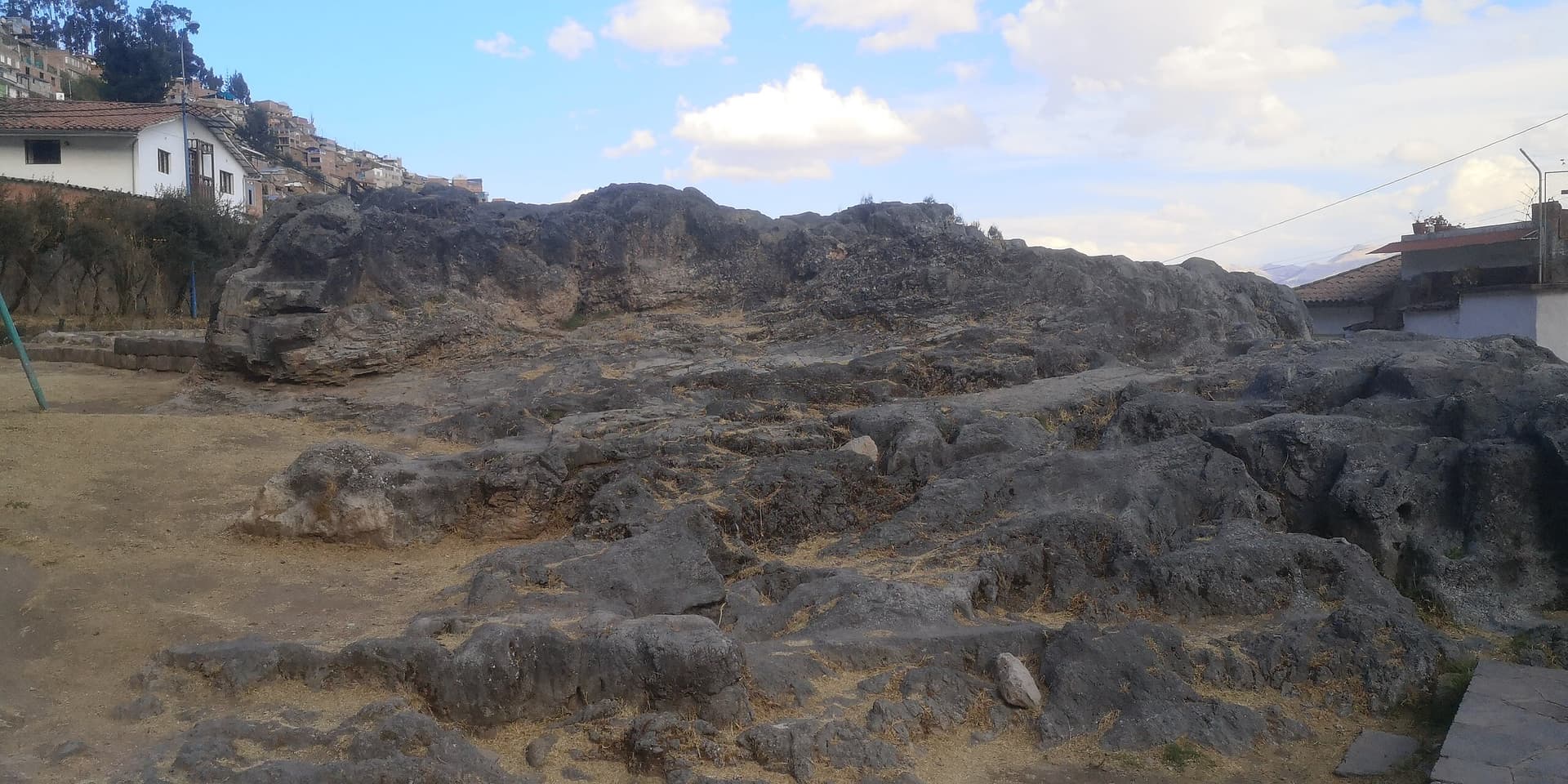
Begin at the amphitheater—a huge semicircular area 55 meters long with 19 incomplete niches distributed along the outer wall. During Inca times, this served as a temple for public ceremonies. At the center stands a mysterious upright rock that may have been carved into the shape of a puma or another sacred symbol. Let your eyes work to see what centuries of weathering have obscured.
Find the zigzag channels that give the site its name. Trace their irregular paths across the rock surfaces. Whether these carried chicha as festive offerings or blood from sacrifices, they represent the desire to feed the stone, to offer liquid life to what seems solid and eternal.
The underground chamber awaits descent. Enter carefully—the passage is narrow and the space intimate. Everything you see was carved from a single massive rock: floor, ceiling, walls, the ceremonial table, the niches, the cupboards. This was the entrance to the underworld in Inca cosmology. The gutter along one wall collected whatever flowed from the table—offerings that were then conveyed to the realm of the dead.
Search for the carvings of condor, puma, and snake—the three animals that represented the three worlds of Inca cosmology. Their presence here, at the threshold between worlds, makes theological sense: at the point of passage, all three realms converge.
If you can time your visit for winter solstice, observe how the first rays of sunlight strike the Intihuatana and create the figure of a puma with shining eyes. This moment crystallizes Q'enco's purpose: to connect celestial cycles with earthly ceremony and underworld power.
Located 4 km northeast of Cusco's historic center on Socorro hill, at 3,580 meters. Part of the Sacsayhuaman Archaeological Park. Typically visited as part of a half-day tour including Sacsayhuaman, Puca Pucara, and Tambomachay.
Q'enco can be understood as a huaca where natural rock became sacred architecture, as a site of sacrifice and mummification, as a portal to the underworld in Inca cosmology, or as an astronomical observatory marked by the solstice puma.
Archaeological investigation has documented the site's multiple ceremonial functions while the bones found in the chamber gutter continue to raise questions about the nature of sacrificial practices.
Within Inca cosmology, Q'enco connected the three worlds—upper (condor), earthly (puma), and underworld (snake)—in a single sacred site where offerings fed all dimensions of reality.
The site's survival despite Spanish destruction attempts invites reflection on the resistance of sacred place to attempts at erasure.
Whether the sacrifices conducted here were human or animal remains uncertain. The precise ceremonies performed and their calendrical timing are not fully documented.
Visit Planning
Located 4 km northeast of Cusco at 3,580 meters. Part of Sacsayhuaman Archaeological Park. Access via Boleto Turístico. Commonly visited with Sacsayhuaman, Puca Pucara, and Tambomachay.
Full range of accommodations in Cusco city.
Approach Q'enco with reverence for its role as a site of sacrifice, mummification, and communication with the underworld. Do not disturb channels, carvings, or chamber surfaces.
Q'enco served as a site where life was offered—whether animal, human, or liquid. The underground chamber was understood as entrance to the world of the dead. Approach with the gravity these functions deserve.
Comfortable clothing for climbing and descending into chambers. Sturdy shoes for uneven rock surfaces.
Photography permitted. Flash may be restricted in the underground chamber.
No offerings should be placed at the site. Respect the archaeological integrity of channels and carved surfaces.
Do not pour liquids into the zigzag channels. Do not touch or climb on carved surfaces. Purchase Boleto Turístico for entry.
Sacred Cluster
Nearby sacred places create the location cluster described in the growth plan. This block is intentionally crawlable and links into the wider regional graph.