Panagia Kera
Seven centuries of frescoed prayer hidden under plaster, revealed again to the Cretan light
Agios Nikolaos Municipal Unit, Region of Crete, Greece
At A Glance
- Coordinates
- 35.1568, 25.6552
- Suggested Duration
- Allow 30 to 45 minutes for a focused visit to the church interior, giving adequate time for your eyes to adjust and for the fresco program across all three aisles to be absorbed. Combined with a visit to Ancient Lato (3 km north, approximately one hour) and the traditional village of Kritsa (1 km south, 30 minutes to an hour for a stroll), the excursion fills a satisfying half-day.
- Access
- Panagia Kera is located approximately 1 km north of the village of Kritsa and 8 to 11 km south of Agios Nikolaos, in the Lasithi regional unit of eastern Crete. By car from Agios Nikolaos, the drive takes 15 to 20 minutes on a well-maintained road. Parking is available near the church. KTEL buses run between Agios Nikolaos and Kritsa with 5 to 7 daily departures, approximately 15 minutes and 1.60 euros. The church is well-signposted and sits just off the main road. Opening hours: 08:30 to 15:30 daily, closed Tuesdays. Entrance fee approximately 2 to 4 euros. The approach to the church is level and poses no significant mobility barriers, though the interior space is compact and can feel tight when busy. Mobile phone signal is generally available in the area. For emergency assistance, the nearest hospital is in Agios Nikolaos. Contact the Agios Nikolaos archaeological museum or the Greek Ministry of Culture website for current hours and fees.
Pilgrim Tips
- Panagia Kera is located approximately 1 km north of the village of Kritsa and 8 to 11 km south of Agios Nikolaos, in the Lasithi regional unit of eastern Crete. By car from Agios Nikolaos, the drive takes 15 to 20 minutes on a well-maintained road. Parking is available near the church. KTEL buses run between Agios Nikolaos and Kritsa with 5 to 7 daily departures, approximately 15 minutes and 1.60 euros. The church is well-signposted and sits just off the main road. Opening hours: 08:30 to 15:30 daily, closed Tuesdays. Entrance fee approximately 2 to 4 euros. The approach to the church is level and poses no significant mobility barriers, though the interior space is compact and can feel tight when busy. Mobile phone signal is generally available in the area. For emergency assistance, the nearest hospital is in Agios Nikolaos. Contact the Agios Nikolaos archaeological museum or the Greek Ministry of Culture website for current hours and fees.
- Modest dress: shoulders and knees covered for all visitors. Light, breathable fabrics with coverage are recommended for the warm Cretan climate. Wraps or scarves may be available at the entrance but should not be relied upon.
- Flash photography is strictly prohibited inside the church — the fragile frescoes cannot tolerate repeated flash exposure. Some sources indicate that non-flash photography is permitted, while others suggest photography is not allowed inside at all. Check current signage at the entrance and ask staff if in doubt. During religious services, put cameras and phones away entirely. Exterior photography is freely permitted.
- On feast days (August 15 and September 8), the church becomes an active worship space and visitor access may be restricted or modified. If you visit during a service, behave as a respectful guest at someone else's prayer. Photography rules should be confirmed at the entrance — policies regarding flash and interior photography vary across sources. Do not touch the frescoes or walls under any circumstances.
Overview
Panagia Kera stands among olive groves on the road to Kritsa in eastern Crete, a small three-aisled Byzantine church whose interior holds what scholars consider the finest ensemble of medieval frescoes on the island. Built in the 13th century and expanded across the 14th, it was painted floor to vault with the full sweep of salvation history. During Ottoman occupation, Cretan Christians covered these frescoes in plaster to save them from destruction. They remained hidden until 1971. Today the church operates as both a protected heritage monument and a living place of worship, its feast days drawing Orthodox pilgrims to venerate a replica of the miraculous icon of the Virgin Hodegetria.
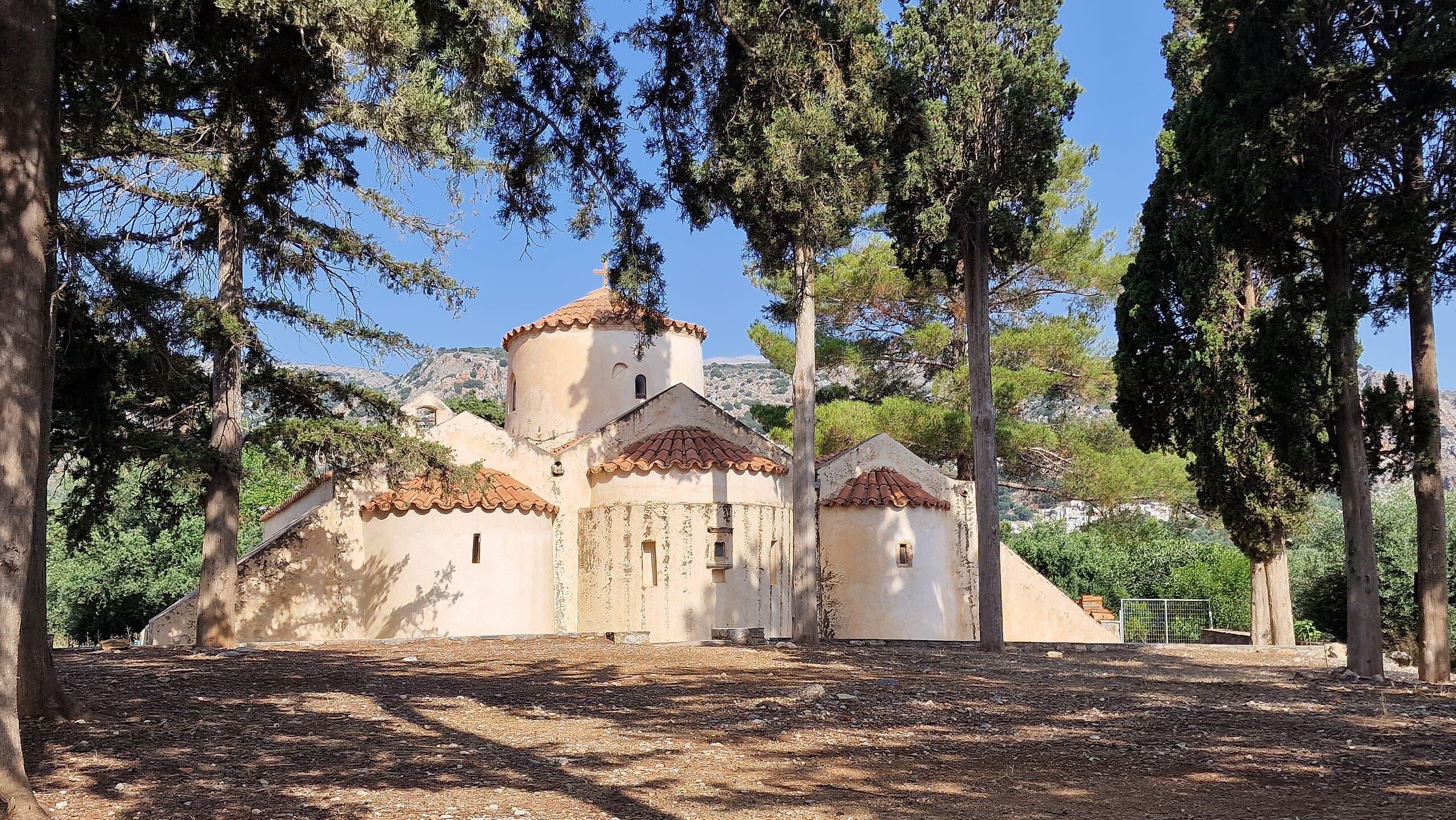
Approaching from the coast road out of Agios Nikolaos, the church appears without announcement. No dome rises above the treeline. No bell tower commands the valley. Panagia Kera is a modest building set back from the road among olive trees, its stone walls low and its profile unassuming. Nothing in the exterior prepares you for what waits inside.
The interior is another order of experience entirely. Every surface — vault, wall, apse, pillar, arch — is covered with frescoes painted across two centuries of devotion. The central nave, dating to the mid-13th century, holds the oldest layers: fragments in the sanctuary apse and dome arches that survive from the church's first generation. The south aisle, dedicated to Saint Anne, was painted in the early 14th century with scenes from the life of the Virgin Mary in vivid Paleologian colors. The north aisle, dedicated to Saint Anthony, was completed in 1348 with imagery of the Second Coming and Last Judgment. Together, the three aisles form a devotional triptych that moves from the earthly life of Mary through her cosmic role as Theotokos to the final reckoning of all souls.
These frescoes were not intended as decoration. In the Orthodox understanding, an icon-saturated church is a threshold space — a room where the boundary between the visible and invisible worlds grows thin. For roughly five hundred years, this threshold was sealed. When the Ottomans took Crete in 1669, the local Christians faced a choice: allow the frescoes to be destroyed or conceal them. They chose concealment, covering the painted surfaces with plaster and surrendering the visual splendor of their church to preserve it for a future they could not see. The frescoes remained hidden for over two centuries, and were not fully revealed until 1971.
What the plaster preserved is extraordinary. The pigments retain a vibrancy that startles — deep blues, warm reds, burnished golds that have not faded in seven hundred years. The figures look out from the walls with the grave, direct gaze of Byzantine iconography, each face both a portrait and a prayer. On the feast days of August 15 and September 8, this heritage monument becomes a church again, and the painted saints watch over the living faithful as they were always meant to.
Context And Lineage
Built in the 13th century and painted across the 14th by anonymous masters of the Paleologian Renaissance, Panagia Kera preserves Crete's finest Byzantine fresco ensemble — funded by village patrons, concealed under Ottoman rule, and rediscovered in the modern era.
The origins of Panagia Kera are entangled with both documented history and devotional tradition. The church was built in the mid-13th century, during the period when Crete was under Venetian rule following the Fourth Crusade. Despite the political dominance of Catholic Venice, the Orthodox Cretan population maintained their churches and their worship, and Panagia Kera appears to have been built as a parish church serving the village of Kritsa and its surrounding communities.
The deeper layer of the origin story involves the miraculous icon of the Virgin Hodegetria. According to tradition, this icon was housed in the church from its earliest days. During the Byzantine Iconoclasm of the 8th and 9th centuries — when imperial authorities ordered the destruction of religious images — the icon was reportedly taken to Constantinople. Local tradition holds that it miraculously returned to Crete, an event understood as evidence of the Virgin's particular attachment to this place. In 1498, the original icon was relocated to Rome under circumstances that remain unclear. A replica was created in 1732 and installed in the church, where it continues to serve as the focus of Marian veneration.
What is certain is that by the mid-14th century, the church had grown from a single-nave structure to a three-aisled complex, its expansion funded by the collective resources of the village and by named patrons whose generosity is recorded in fresco inscriptions. The anonymous painters who covered its walls worked in the Paleologian Renaissance style — the final flowering of Byzantine art, characterized by vivid color, dynamic composition, and a new attention to human expression that would eventually feed into the Cretan School of painting and, through it, into the work of El Greco.
Panagia Kera belongs to the Eastern Orthodox tradition of Cretan Christianity, which maintained its identity and practice through centuries of Venetian and Ottoman rule. The church's fresco program places it within the Paleologian Renaissance — the final great period of Byzantine art, spanning roughly the late 13th to mid-14th centuries. This style, blending traditional Byzantine iconography with new interest in naturalism and emotional expression, was brought to Crete by painters likely trained in Constantinople or other major centers. It established the artistic tradition that would develop into the Cretan School of icon painting, a school whose most famous son, Domenikos Theotokopoulos — El Greco — carried its sensibility into the Western Renaissance. The church is now protected by the Greek Ministry of Culture and Sports as a monument of national heritage.
Antonios Lameras
Named patron of the south aisle dedicated to Saint Anne, whose donation alongside the collective contribution of the village of Kritsa funded the expansion and fresco decoration in the early 14th century. His commemorative inscription and portrait survive in the frescoes, offering a rare window into lay patronage in Venetian Crete.
Georgios Mazizanis
Patron who, with his wife, funded the construction and painting of the north aisle dedicated to Saint Anthony in 1348. Their dedicatory fresco inscription provides one of the few precise dates in the church's history and documents the practice of spousal co-patronage in medieval Cretan communities.
The anonymous fresco painters
The artists who painted all three aisles across roughly a century of work remain unidentified. No signatures or documentary records have survived. The quality of their work — sophisticated command of Paleologian techniques blending Byzantine iconographic tradition with subtle Western influences — suggests connections to major Byzantine artistic centers, and their achievement anticipated the Cretan School that would later produce El Greco.
The Cretan Christians of the Ottoman period
The unnamed community members who, after the Ottoman conquest of 1669, made the collective decision to cover the church's frescoes in plaster rather than allow their destruction. This act of preservation through concealment saved the paintings for over two centuries and is itself one of the site's most significant human stories.
Parthenios Hairetis (connected tradition)
Cretan monk who in 1677 documented the miraculous icon tradition at sites across Crete. While primarily associated with Panagia Chrysopigi on Sifnos, his documentation of the Hodegetria tradition reflects the broader network of Marian devotion to which Panagia Kera belongs.
Why This Place Is Sacred
A complete medieval sacred environment — every surface painted with the full narrative of Christian salvation — preserved through centuries of deliberate concealment and revealed again in the modern era, where worship continues beneath the gaze of seven-hundred-year-old saints.
Several qualities converge to give Panagia Kera the atmosphere that visitors consistently describe as enveloping, concentrated, and strangely intimate.
The first is completeness. Unlike fragmentary fresco programs that survive as patches on otherwise bare walls, the painting at Panagia Kera covers virtually every interior surface. The theological program is coherent: the central nave presents Christological scenes and the Dormition of the Virgin, the south aisle unfolds the life of Mary from birth to death, and the north aisle confronts the viewer with the Last Judgment. To stand inside is to be surrounded by narrative — above, beside, and before you, the story of creation, incarnation, and redemption is made visible. This totality creates an effect that exceeds the sum of individual images. The room itself becomes the icon.
The second is scale. Panagia Kera is small. The three aisles together occupy a space not much larger than a generous living room. Where grand cathedrals achieve the sacred through vastness and vertical lift, this church achieves it through proximity. The painted figures are close enough to touch — close enough that individual brushstrokes are visible, close enough that the expressions on the saints' faces register as personal rather than monumental. Visitors report not looking at the frescoes so much as being looked at by them.
The third is the layered history of concealment and revelation. The knowledge that these images survived only because Cretan Christians chose to bury them — giving up the lived experience of their sacred art to ensure its future — adds a dimension of sacrifice to the encounter. The plaster was an act of faith directed at people who had not yet been born. To see the frescoes now is to be the intended beneficiary of a three-hundred-year wager.
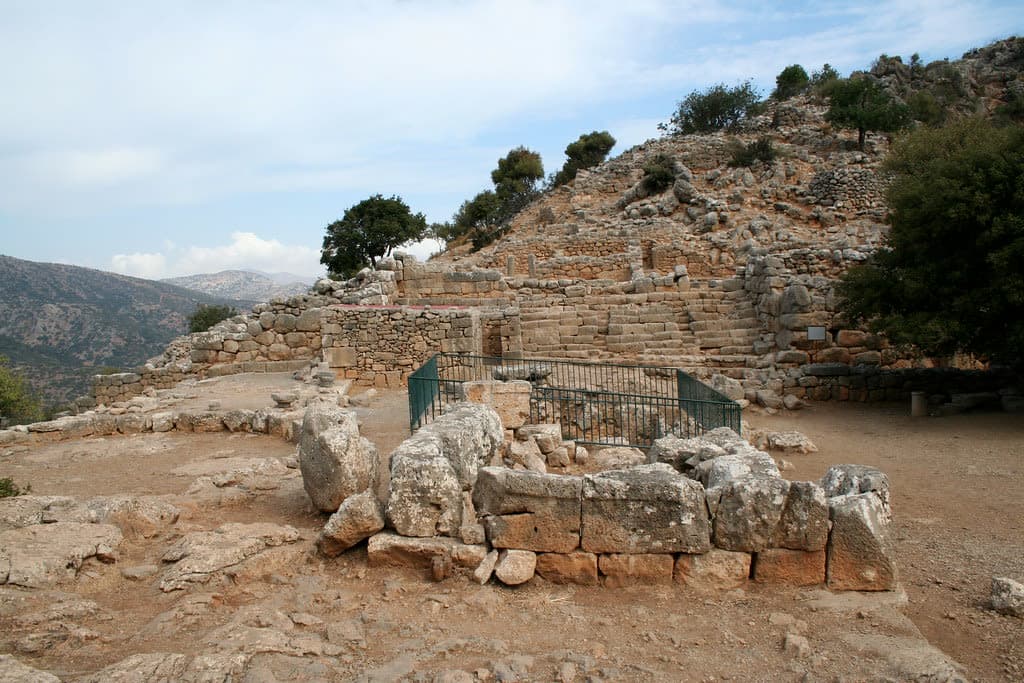
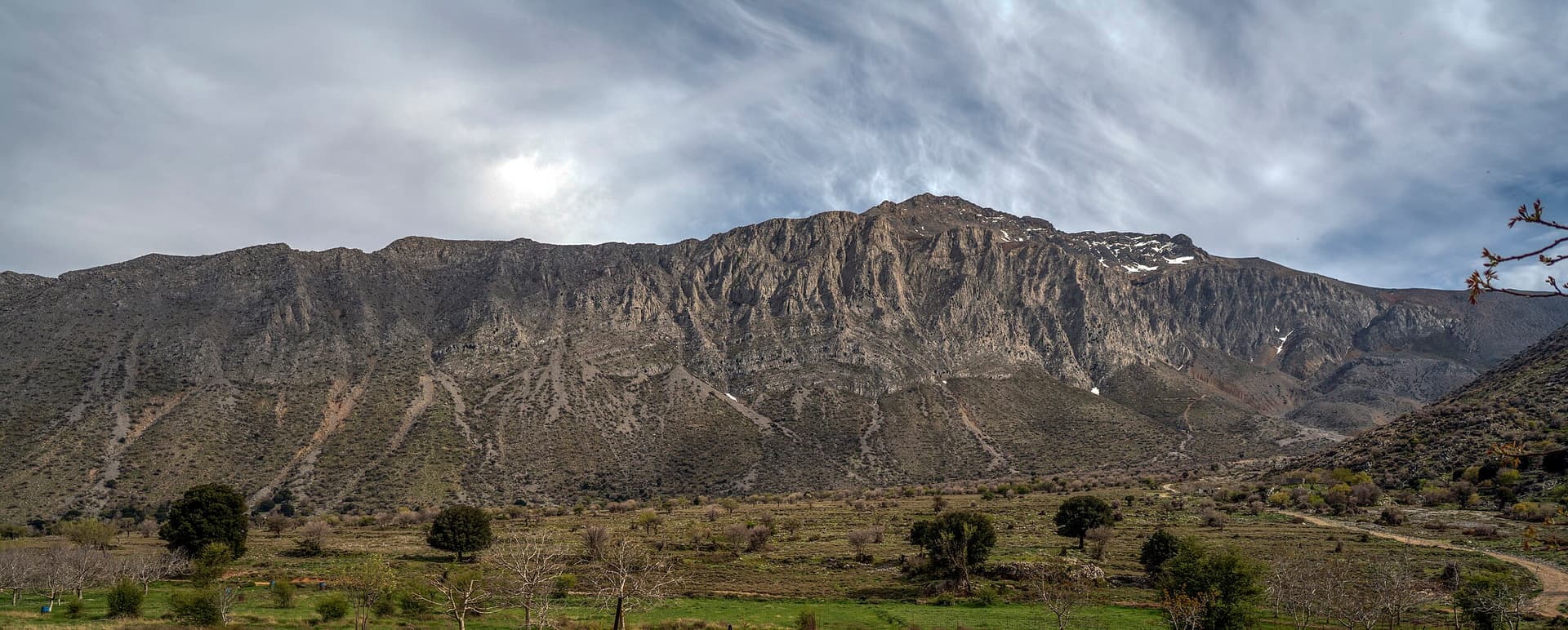
The fourth is the setting. The Dikte mountain range rises to the south, and the land around the church carries older associations. The Dikte Mountains were, in Minoan mythology, the birthplace of Zeus. The ancient Dorian city of Lato lies three kilometers to the north, its temples long vanished but its foundations still visible. Panagia Kera sits in a landscape that has drawn human devotion for millennia, even if the names and forms of that devotion have changed.
The church was built in the mid-13th century as a place of Marian worship dedicated to the Dormition of the Theotokos — the passing of the Virgin Mary into heavenly rest. The central nave honored the Virgin Mary, while the two side aisles, added in the early to mid-14th century, expanded the devotional program to include Saint Anne, the mother of Mary, and Saint Anthony, the father of Christian monasticism. The church served the village of Kritsa and likely functioned in connection with a monastic community, though the precise nature of this relationship remains debated among scholars.
The church's physical development occurred in two principal phases. The central nave with its vaulted roof and dome was built and painted in the mid-13th century. In the early to mid-14th century, two side aisles were added along with a western entrance, belfry, and buttresses. The south aisle was funded collectively by the village of Kritsa and the patron Antonios Lameras. The north aisle was completed in 1348 through the patronage of Georgios Mazizanis and his wife, whose names survive in a dedicatory fresco inscription.
The church's most consequential transformation was not architectural but an act of deliberate concealment. Following the Ottoman conquest of Crete in 1669, the fresco program was covered in plaster — a decision that preserved the paintings but removed them from the devotional life of the community for over two centuries. Restoration work in the early 1950s addressed structural issues, and in 1971 the full extent of the hidden frescoes was revealed beneath their plaster covering. The church is now managed by the Greek Ministry of Culture as a protected heritage monument, while continuing to host active Orthodox worship on its feast days.
Traditions And Practice
Active Orthodox worship on feast days (August 15 and September 8), with year-round pilgrimage to the miraculous icon. Operates as a heritage monument with ticketed admission for visitors on non-liturgical days.
The church's devotional life centers on two great feast days that mark its identity as a Marian sanctuary. August 15, the Dormition of the Theotokos, is the most spiritually charged day of the year — the feast to which the church itself is dedicated. Across Crete, August is known as the month of the Panagia, and the approach to the feast gathers intensity throughout the preceding weeks. Pilgrims come to venerate the 1732 replica of the miraculous icon of the Virgin Hodegetria, to light candles, to pray, and to participate in the liturgical celebration of the Virgin's passage from earthly life to heavenly rest.
September 8, the Nativity of the Theotokos, is the church's consecration feast — its panegyri, or name day celebration. This date carries particular significance because the south aisle is dedicated to Saint Anne, the mother of Mary, and the feast of Mary's birth thus resonates through the dedicated space of her mother's shrine. The panegyri draws the community of Kritsa and surrounding villages, combining liturgical worship with the communal gathering that is characteristic of Greek sacred celebrations.
The tradition of the miraculous icon extends across the church's full history. The Hodegetria — the Virgin who 'shows the way' — was one of the most venerated icon types in the Byzantine world. The tradition that the original icon miraculously returned to Crete after being taken to Constantinople during the Iconoclasm invested this particular church with a reputation for divine presence that pilgrims have honored for centuries. Though the original was relocated to Rome in 1498, the 1732 replica has served as the continuous focus of veneration, with reports of healings and spiritual experiences attributed to the Panagia's intercession.
On non-liturgical days, the church operates as a ticketed heritage site under the management of the Greek Ministry of Culture. Visitors enter during opening hours, pay a modest admission fee, and encounter the fresco program in the quiet of a monitored cultural space. Orthodox visitors may still pray and light candles. The dual identity — heritage monument and active church — is managed through the calendar: most of the year, Panagia Kera is a place of contemplation and art appreciation; on feast days, it returns to its original function as a space of communal worship.
Pilgrimage to the site continues throughout the year, though it peaks in August during the month of the Panagia. Orthodox faithful visit to venerate the icon, to offer prayers, and to carry personal petitions to the Virgin. The church's setting — among olive groves on the road to Kritsa, beneath the Dikte mountains — reinforces the devotional experience with landscape qualities that have drawn human reverence since antiquity.
Enter slowly and allow your eyes to adjust. The darkness after the bright Cretan sun is part of the design — it quiets the senses and shifts attention inward. Move through the three aisles in sequence: begin with the central nave and its oldest frescoes, then the south aisle with its luminous narrative of Mary's life, then the north aisle with its confrontation with the Last Judgment. In each space, look upward. The vaulted ceilings hold some of the most accomplished painting, and most visitors initially focus on the walls.
If candle-lighting speaks to you, candles may be available. The gesture is simple and welcomed regardless of belief. Spend time with the donor portraits in the south aisle — these are real people, named and remembered across seven centuries, who paid for what you are now receiving. Their faces, painted among the saints, carry an immediacy that collapses time.
Afterward, sit with the exterior for a moment before leaving. The contrast between the unassuming stone walls and the richness within is itself a lesson in the Orthodox understanding that the sacred is often hidden, and that revelation requires patience.
Eastern Orthodox Christianity
ActivePanagia Kera is dedicated to the Dormition of the Theotokos, one of the most important feasts in the Orthodox calendar. The church has served as a center of Marian devotion in eastern Crete since at least the 13th century. Its three aisles — honoring the Virgin Mary, Saint Anne, and Saint Anthony — create a devotional triptych that encompasses maternal lineage, monastic discipline, and the cosmic role of the Theotokos. The tradition of the miraculous icon of the Virgin Hodegetria invests the site with a reputation for divine presence that sustains active pilgrimage.
Feast day celebration of the Dormition of the Theotokos on August 15, drawing pilgrims from across eastern CreteConsecration celebration (panegyri) on September 8, the Nativity of the TheotokosVeneration of the 1732 replica icon of the Virgin HodegetriaCandle-lighting and personal prayer by Orthodox faithfulLiturgical services on major feast days
Venetian-era Cretan Christianity
HistoricalThe church's major fresco campaigns were executed during the Venetian occupation of Crete (1204-1669). Despite political tensions between Venetian rulers and the Orthodox population, the frescoes demonstrate that Cretan communities maintained vibrant religious and artistic life. The donor inscriptions document a patronage system in which individual benefactors and the village collectively funded church expansion, producing a distinctive Creto-Byzantine artistic synthesis that would later influence the renowned Cretan School of painting.
Communal church patronage by the village of KritsaIndividual donor patronage with commemorative inscriptions and donor portraits in frescoesCommission of fresco cycles following Paleologian Renaissance artistic conventions
Experience And Perspectives
A modest stone exterior gives way to an interior where every surface is alive with seven-hundred-year-old frescoes — vivid blues, reds, and golds depicting the full arc of salvation history, all within a space intimate enough that the painted figures seem to lean toward you.
The road from Agios Nikolaos climbs gently through olive groves and scrubland, the landscape growing drier and more aromatic as Kritsa approaches. A kilometer before the village, a sign marks the turn. There is parking, a small ticket office, and the church itself — stone walls partially rendered, a low profile among the trees. From outside, it could be any of a hundred rural Cretan churches.
The transition happens at the door. Stepping from the bright Cretan sun into the dim interior, your eyes need a moment to adjust. When they do, the frescoes emerge from every direction — not as individual paintings to be examined one by one, but as a single encompassing environment of color and form. The sensation is less like entering a gallery than like stepping into a book whose pages wrap around you.
Begin in the central nave, where the oldest frescoes survive. The sanctuary apse holds fragments from the mid-13th century — grave, hieratic figures rendered in the mature Byzantine manner, their eyes following you with the characteristic frontality of Orthodox iconography. The dome and arches above carry scenes from the life of Christ, the pigments still holding their depth after seven centuries.
The south aisle, dedicated to Saint Anne, rewards extended attention. Here the life of the Virgin unfolds in a continuous visual narrative — her birth, her presentation at the Temple, the Annunciation — painted in the warmer, more dynamic style of the early 14th century Paleologian Renaissance. The colors are what visitors remember: a blue that seems to hold its own light, a red that warms rather than recedes, gold that catches whatever illumination reaches it. The donors who funded this aisle — the village collectively and Antonios Lameras individually — are commemorated in portrait and inscription, their faces appearing among the saints with a directness that closes the distance between the 14th century and the present.
The north aisle shifts the register entirely. Dedicated to Saint Anthony, its frescoes present the Second Coming and the Last Judgment. The imagery here is eschatological and urgent: the weighing of souls, the separation of the saved and the damned, the river of fire. This aisle was completed in 1348 — a year that, in western Europe, was the year of the Black Death. Whether the apocalyptic intensity of these particular paintings reflects an awareness of the plague that was then moving through the Mediterranean world is speculation, but the coincidence of dates adds a layer of historical resonance.
Allow the visit to be slow. The smallness of the space is a gift. Stand in the center where the three aisles converge and turn slowly. The theological program becomes legible as a spatial experience: birth and life to one side, judgment and eternity to the other, and the Dormition of the Virgin — the passage from earthly existence to heavenly rest — directly ahead. This is how the church was designed to work. Not as a collection of images but as an immersive environment of prayer.
Outside afterward, the sunlight feels almost excessive. The olive trees, the distant mountains, the sound of insects in the heat — the ordinary world reasserts itself. But the intensity of the interior lingers, and the knowledge that these images survived three centuries under plaster gives the encounter a quality of recovered treasure.
Visit in the morning, when light through the small windows creates the most favorable conditions for viewing the frescoes and when visitor numbers are smallest. Allow at least 30 to 45 minutes inside to let your eyes adjust and to absorb the full fresco program across all three aisles. Pair the visit with the short drive to Ancient Lato, three kilometers north, to experience both the Byzantine and the classical layers of this landscape. The traditional village of Kritsa, one kilometer to the south, offers cafes for reflection afterward.
Panagia Kera can be understood through the lens of art history, Orthodox devotion, the politics of cultural survival under occupation, or the phenomenology of sacred space. Each frame reveals something the others miss.
Art historians and Byzantine scholars consider Panagia Kera the most important repository of medieval frescoes in Crete. The fresco program spans two principal phases: the mid-13th century (central nave, with fragments surviving in the sanctuary apse and dome arches) and the early to mid-14th century (both side aisles, with the north aisle precisely dated to 1348 through a donor inscription). The style is classified within the Paleologian Renaissance, the last great flowering of Byzantine art that emerged after the recapture of Constantinople in 1261. Key characteristics include vivid polychromy, dynamic compositions that break from earlier hieratic rigidity, and a new attention to facial expression and spatial depth.
The frescoes are particularly valued for documenting the intersection of Byzantine and Western artistic traditions in Venetian Crete. The anonymous painters blended Orthodox iconographic conventions with subtle influences from Italian painting, producing a distinctive Creto-Byzantine style. This synthesis is understood as a precursor to the Cretan School of icon painting that would flourish in the 15th and 16th centuries. The donor inscriptions — Antonios Lameras for the Saint Anne aisle, Georgios Mazizanis and his wife for the Saint Anthony aisle — provide valuable documentary evidence of church patronage practices in Venetian Crete, a period for which such records are relatively scarce.
For Orthodox Cretans, Panagia Kera embodies the resilience of their faith across centuries of foreign rule. The church was built and decorated during the Venetian occupation, a period when the Orthodox population maintained their religious identity despite the political dominance of Catholic Venice. The Venetians generally permitted Orthodox worship, and the richness of the fresco program at Panagia Kera testifies to the vitality of the community's devotion.
The concealment of the frescoes during the Ottoman period is understood not merely as a practical conservation measure but as a spiritual act — a community choosing to blind itself to the beauty of its own sacred space in order to preserve that beauty for the future. The 1971 revelation of the hidden paintings is experienced as a kind of resurrection, an emergence from darkness that mirrors theological themes central to Orthodox faith.
The tradition of the miraculous icon of the Virgin Hodegetria connects Panagia Kera to one of the most important icon types in Orthodoxy. The Hodegetria — the Virgin who 'shows the way,' pointing to the Christ child as the path of salvation — was said to have been painted by Luke the Evangelist himself. Though the original icon was relocated to Rome in 1498, the 1732 replica sustains the devotional relationship, and pilgrims continue to attribute healings and answered prayers to the Virgin's presence at this site.
Some visitors and writers have noted that the experience of entering Panagia Kera shares qualities with sites described in Celtic and other traditions as 'thin places' — locations where the barrier between the material and the numinous seems permeable. The totality of the fresco program, the intimacy of the scale, and the play of dim light on painted surfaces create an environment that affects perception in ways that exceed art appreciation. Whether this is understood as the cumulative effect of seven centuries of prayer, the phenomenology of a particular kind of enclosed visual environment, or something less easily categorized remains a matter of the visitor's own framework.
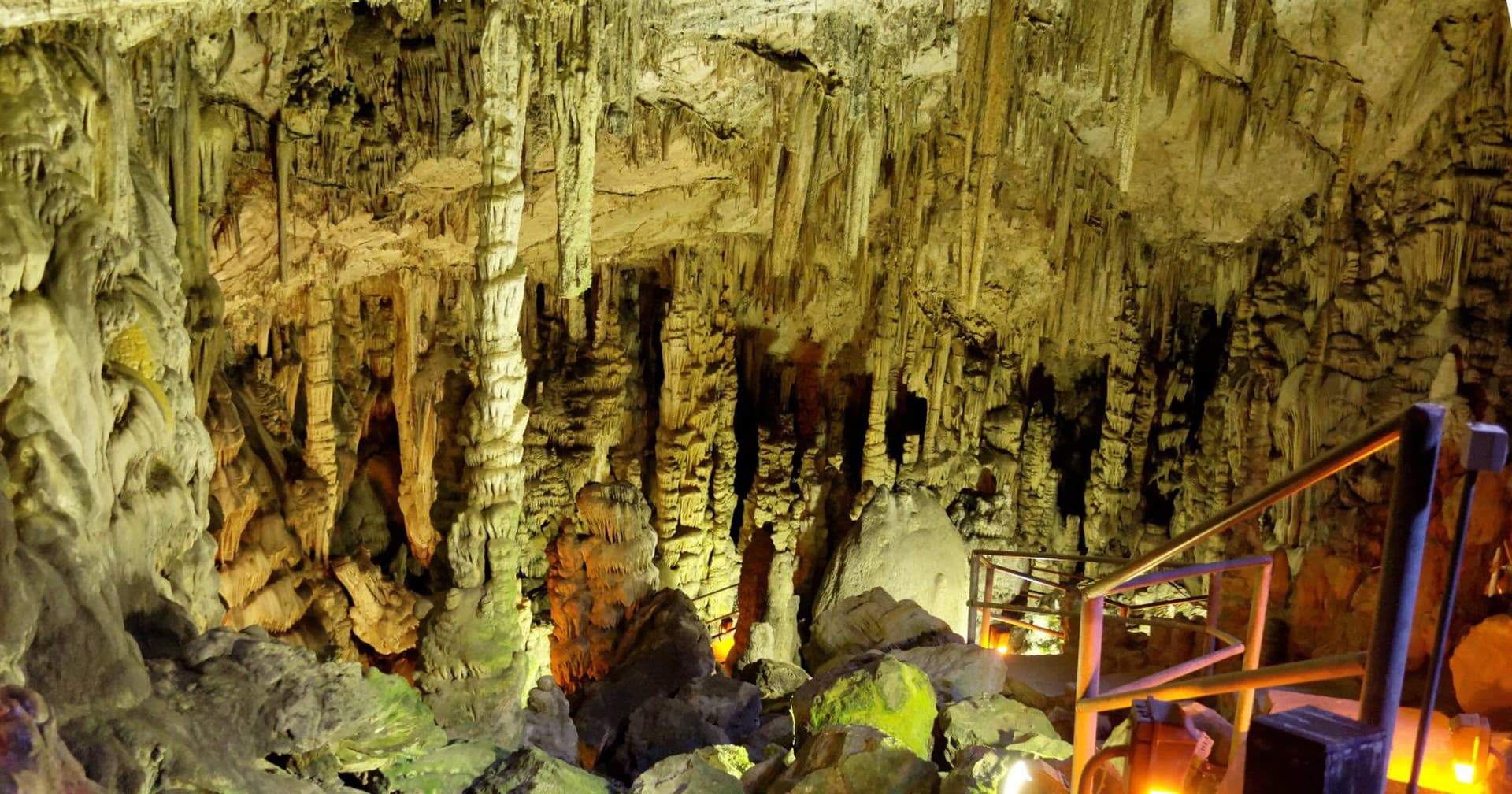
The church's position in the Dikte mountain landscape also invites association with older sacred geographies. The Dikte range was, in Minoan and early Greek mythology, associated with the birthplace of Zeus. The Diktaean Cave, traditionally identified as the site of Zeus's birth, lies to the south. Whether the medieval Christians who built Panagia Kera were conscious of these pre-Christian associations is unknown, but the landscape's long history of sacred use suggests that some places draw devotion across traditions and centuries for reasons that precede any particular theology.
The identity of the fresco painters remains the site's most significant open question. No signatures, workshop marks, or documentary records have been found. The quality and sophistication of the work suggest artists with connections to major Byzantine centers, possibly Constantinople itself, but this remains inference rather than evidence. The exact date of the central nave's construction is also uncertain — scholarly consensus places it in the mid-13th century, but some sources argue for a 12th-century origin. Whether the church originally served as a parish church, a monastic foundation, or both continues to be debated. The circumstances of the original icon's relocation to Rome in 1498 — whether it was taken for safekeeping, as a diplomatic gesture, or under duress — are not definitively established. And the precise moment when the frescoes were concealed under plaster during the Ottoman period is unknown: it could have been immediately upon the conquest of 1669 or at any point during the subsequent 229 years of occupation.
Visit Planning
One kilometer north of Kritsa, 10 km south of Agios Nikolaos in eastern Crete. Open daily except Tuesdays, 08:30-15:30. Small entrance fee. Accessible by car or bus. Allow 30-45 minutes for the church, half a day with Ancient Lato and Kritsa village.
Panagia Kera is located approximately 1 km north of the village of Kritsa and 8 to 11 km south of Agios Nikolaos, in the Lasithi regional unit of eastern Crete. By car from Agios Nikolaos, the drive takes 15 to 20 minutes on a well-maintained road. Parking is available near the church. KTEL buses run between Agios Nikolaos and Kritsa with 5 to 7 daily departures, approximately 15 minutes and 1.60 euros. The church is well-signposted and sits just off the main road. Opening hours: 08:30 to 15:30 daily, closed Tuesdays. Entrance fee approximately 2 to 4 euros. The approach to the church is level and poses no significant mobility barriers, though the interior space is compact and can feel tight when busy. Mobile phone signal is generally available in the area. For emergency assistance, the nearest hospital is in Agios Nikolaos. Contact the Agios Nikolaos archaeological museum or the Greek Ministry of Culture website for current hours and fees.
Agios Nikolaos, the nearest town (10 km north), offers a full range of accommodations from hotels to guesthouses, with waterfront dining and easy access to the Lasithi coast. Kritsa village has limited accommodation options but provides an atmospheric base in a traditional Cretan mountain community. The excursion to Panagia Kera is easily managed as a half-day trip from Agios Nikolaos or from the resort areas of Elounda, 15 km to the north.
Modest dress required. No flash photography. Do not touch the frescoes. Quiet, reverent behavior expected. During religious services, defer to worshippers.
Panagia Kera occupies the intersection of heritage site and sacred space, and the etiquette reflects both identities. The fresco program is extremely fragile — seven centuries old and preserved only through the accidental protection of Ottoman-era plaster. The rules that apply are not arbitrary restrictions but genuine conservation necessities.
Enter dressed modestly, with shoulders and knees covered. This applies to men and women equally. The requirement is both a mark of respect for the sacred function of the space and consistent with the practice at all Greek Orthodox churches. Some sources indicate that wraps may be available at the entrance, but it is advisable to come prepared, particularly during the warmer months when lighter clothing is otherwise appropriate.
Inside, maintain quiet. The small scale of the interior amplifies sound, and the contemplative atmosphere depends on the restraint of visitors. Move carefully in the narrow aisles, particularly when other visitors are present. The space accommodates small numbers comfortably; when crowded, patience and spatial awareness matter.
During active religious services on feast days, the dynamic shifts. The church is no longer a museum but a place of worship, and visitors should behave accordingly. Follow the lead of the worshippers, avoid positioning yourself between people and the iconostasis, and refrain from photography. If you arrive during a service and are unsure whether to enter, wait near the door and observe.
Modest dress: shoulders and knees covered for all visitors. Light, breathable fabrics with coverage are recommended for the warm Cretan climate. Wraps or scarves may be available at the entrance but should not be relied upon.
Flash photography is strictly prohibited inside the church — the fragile frescoes cannot tolerate repeated flash exposure. Some sources indicate that non-flash photography is permitted, while others suggest photography is not allowed inside at all. Check current signage at the entrance and ask staff if in doubt. During religious services, put cameras and phones away entirely. Exterior photography is freely permitted.
Candle-lighting is the customary offering and is open to all visitors, whether Orthodox or not. Candles are typically available for purchase at the church. No other offerings are expected or required.
Do not touch the frescoes, walls, or any painted surface. Do not lean against walls. Maintain quiet throughout the visit. No food or drink inside. No flash photography. The church is closed on Tuesdays. Entrance fee approximately 2 to 4 euros. During religious services, standard worship etiquette supersedes visitor protocols.
Sacred Cluster
Nearby sacred places create the location cluster described in the growth plan. This block is intentionally crawlable and links into the wider regional graph.