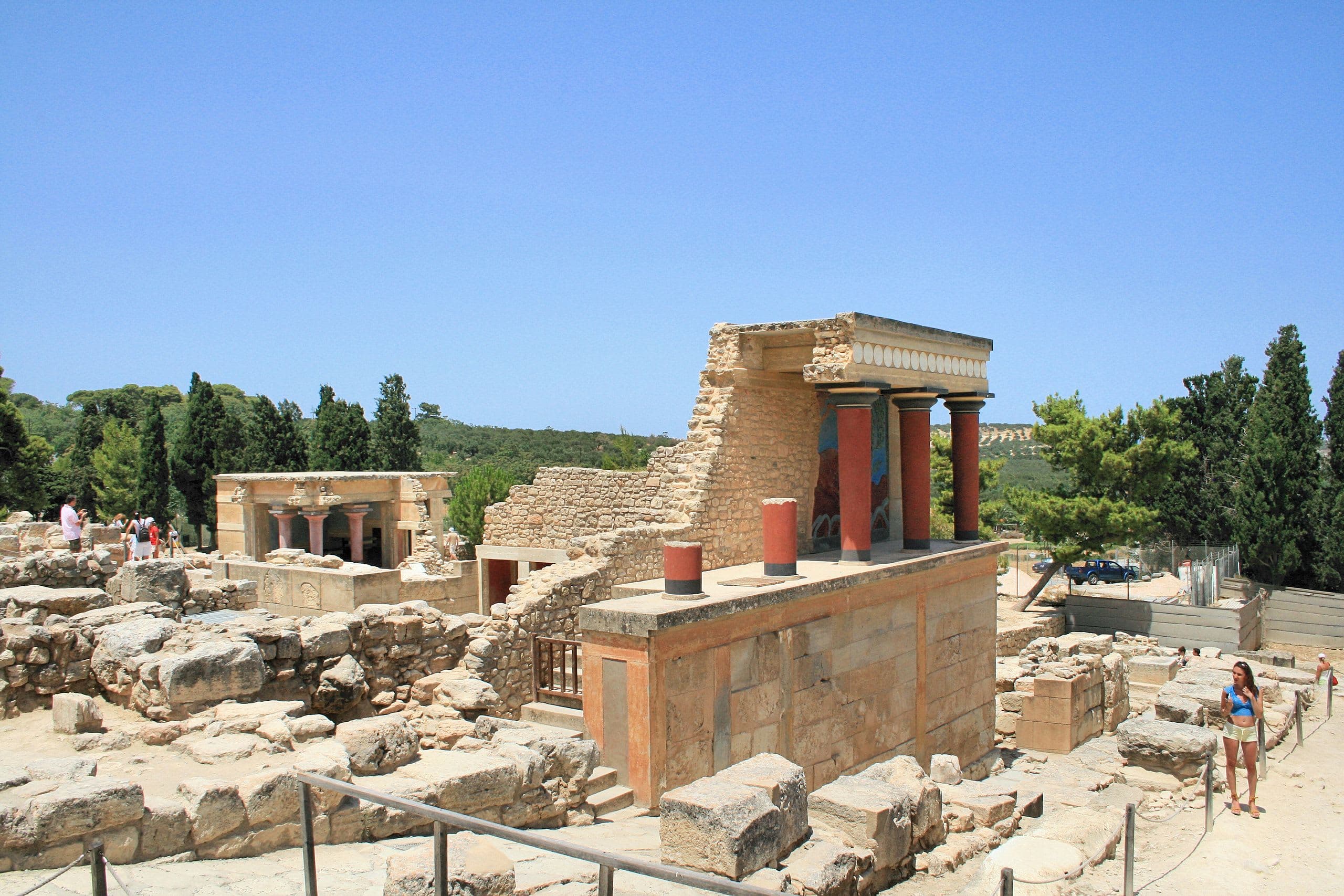
Palace of Knossos
Europe's oldest throne room, where a goddess may have sat among painted griffins
Heraklion Municipal Unit, Region of Crete, Greece
At A Glance
- Coordinates
- 35.2978, 25.1631
- Suggested Duration
- Allow 1.5 to 2 hours for a standard visit covering the Central Court, Throne Room, Grand Staircase, pillar crypts, magazines, and key reconstructions. A thorough exploration requires 3 to 4 hours. Add 2 hours for the Heraklion Archaeological Museum to see the original frescoes, snake goddesses, bull-leaping fresco, and ritual objects.
- Access
- The palace is located 5 km south of Heraklion city center, Crete, Greece (GPS: 35.2979 N, 25.1627 E). Bus number 2 runs regularly from the Heraklion Central Bus Station near the harbor, with a journey time of approximately 15 minutes. Taxis from central Heraklion take 10 to 15 minutes. Free parking is available near the entrance for those with rental cars. Summer hours (April through October): 8:00 AM to 6:00 PM. Winter hours (November through March): 8:30 AM to 5:00 PM. Last admission is 15 minutes before closing. Full adult ticket: 15 EUR. Reduced ticket (over 65 and certain student categories): 8 EUR. Free for EU citizens under 25 and all visitors under 18. Combined ticket with Heraklion Archaeological Museum: 20 EUR. Online booking available at hhticket.gr with a one-hour entry window. Self-guided audio tour: 5 EUR. Digital guide: 7 EUR. Wheelchair access is available from the main entrance to the Central Court; beyond that, uneven terrain and ancient staircases present significant challenges. A cafe and souvenir shop are located near the entrance. Restrooms are available. No water fountains on site -- bring water, especially in summer. Mobile phone signal is generally available.
Pilgrim Tips
- The palace is located 5 km south of Heraklion city center, Crete, Greece (GPS: 35.2979 N, 25.1627 E). Bus number 2 runs regularly from the Heraklion Central Bus Station near the harbor, with a journey time of approximately 15 minutes. Taxis from central Heraklion take 10 to 15 minutes. Free parking is available near the entrance for those with rental cars. Summer hours (April through October): 8:00 AM to 6:00 PM. Winter hours (November through March): 8:30 AM to 5:00 PM. Last admission is 15 minutes before closing. Full adult ticket: 15 EUR. Reduced ticket (over 65 and certain student categories): 8 EUR. Free for EU citizens under 25 and all visitors under 18. Combined ticket with Heraklion Archaeological Museum: 20 EUR. Online booking available at hhticket.gr with a one-hour entry window. Self-guided audio tour: 5 EUR. Digital guide: 7 EUR. Wheelchair access is available from the main entrance to the Central Court; beyond that, uneven terrain and ancient staircases present significant challenges. A cafe and souvenir shop are located near the entrance. Restrooms are available. No water fountains on site -- bring water, especially in summer. Mobile phone signal is generally available.
- No formal dress code applies. Comfortable, sturdy footwear is essential -- the terrain includes uneven stone surfaces, ancient staircases, and paths that become slippery in wet conditions. In summer, sun protection is critical: hat, sunscreen, sunglasses, and light breathable clothing. The site offers almost no shade.
- Personal photography and videography are freely permitted. Tripods and professional-grade equipment may require permission from the Greek Ministry of Culture. Commercial photography and filming require advance permits. Drone photography is prohibited. Flash is not a concern, as the site is almost entirely open-air.
- This is an archaeological site under legal protection. Visitors must remain on designated paths and may not touch, sit on, or climb any archaeological feature. The Throne Room is viewed from behind a barrier. Some areas are restricted for conservation. The terrain is uneven with ancient stone pathways, and the summer heat at this exposed site is severe. Bring water, wear sturdy shoes, and plan to visit early in the morning or late in the afternoon to avoid both crowds and the worst of the midday sun.
Overview
The Palace of Knossos spreads across a low hill five kilometers south of Heraklion, the ceremonial and sacred center of the first advanced civilization to emerge in Europe. Built and rebuilt by the Minoans between 1950 and 1375 BCE, its labyrinthine corridors, throne rooms, lustral basins, and pillar crypts served a culture in which religion and governance were inseparable. Inscribed as a UNESCO World Heritage Site in July 2025, Knossos remains the place where myth and archaeology converge most completely.
Before Athens raised the Parthenon, before Mycenae built its lion gate, before the Greek alphabet existed, the Minoans at Knossos were constructing a palace of more than a thousand rooms around a central courtyard aligned with the sacred peak of Mount Juktas. They engineered light wells and drainage systems, painted dolphins and griffins on wet plaster, trained young men and women to vault over the horns of charging bulls in the courtyard below, and placed a gypsum throne in a chamber that still receives the equinox sunrise through a sequence of aligned doorways.
We do not know what they called themselves. We cannot read their earliest script. We know them through their buildings, their art, their burials, and through the Greek myths that remember them as the kingdom of Minos, the lair of the Minotaur, the domain of the Labyrinth. When Arthur Evans began excavating in 1900, he found not a legendary monster but something more unsettling: evidence of a civilization that had flourished for six centuries and then vanished so thoroughly that only its stories survived.
The palace that stands today is a composite. Minoan walls of dressed limestone and gypsum merge with Evans's reinforced concrete reconstructions from the 1920s, now controversial but also now themselves a century old and protected as heritage. Some visitors find the reconstructions clarifying; others find them intrusive. Both responses are honest. What the reconstructions cannot diminish is the fundamental strangeness of the place: corridors that turn and double back, rooms that descend into half-darkness, spaces that resist the visitor's instinct to navigate by logic. The Minoans built a palace that was also a labyrinth, and standing inside it, you understand how the myth was born.
Context And Lineage
Knossos was the seat of the Minoan civilization, Europe's first advanced urban culture, functioning for over six centuries as a combined temple-palace where religion, governance, and economic redistribution were architecturally fused into a single complex of more than a thousand rooms.
Greek mythology remembers Knossos as the palace of King Minos, son of Zeus and Europa, who ruled the seas and extracted tribute from Athens. When Minos's wife Pasiphae, cursed by Poseidon, gave birth to the Minotaur -- a creature half-man, half-bull -- Minos commissioned the master craftsman Daedalus to build the Labyrinth to contain it. Every nine years, Athens sent seven young men and seven young women into the Labyrinth as sacrifice, until the Athenian hero Theseus entered the maze, slew the Minotaur, and escaped by following a thread given to him by Minos's daughter Ariadne.
The myth almost certainly encodes historical memory: Minoan naval power over the Aegean, the practice of bull-leaping that may have involved captive foreign youths, the palace's labyrinthine complexity, and a civilization so powerful that its subject peoples remembered it as a kingdom that demanded human tribute. Homer references a dancing floor built by Daedalus for Ariadne at Knossos, suggesting that the Central Court's ritual function was preserved in Greek oral tradition across centuries of forgetting.
What the myth does not capture, because the myth was told by the inheritors rather than the creators, is the religious character of the civilization itself. The Minoans appear to have centered their worship on a Great Mother Goddess associated with snakes, birds, mountains, and the cycles of nature. The palace was her dwelling as much as it was a king's, and the rituals performed within it -- bull-leaping, lustral purification, pillar crypt libations, peak sanctuary pilgrimages -- were oriented toward powers that the Greek mythmakers later reorganized into the Olympian pantheon.
Knossos belongs to a network of Minoan palatial centers across Crete -- Phaistos, Malia, Zakros, Zominthos, and Kydonia -- all of which were inscribed together as a UNESCO World Heritage serial property in July 2025. These palace-temples shared architectural principles (central courtyard orientation, west-side magazines, lustral basins) while varying in scale. Knossos was the largest and most complex, serving as the apex of a ritual geography that included peak sanctuaries on mountain summits, sacred caves in the earth below, and processional routes connecting these vertical layers. This tripartite cosmology -- mountain, palace, cave -- structured Minoan religious life as a vertical axis linking sky, human world, and underworld.
Arthur Evans
British archaeologist who purchased the Knossos site, excavated it from 1900 to 1931, and controversially reconstructed portions of the palace using reinforced concrete. His four-volume work The Palace of Minos (1921-1936) established the Minoan civilization as a distinct culture predating Mycenaean Greece. His restorations, which included speculative fresco reconstructions by the Swiss artists Emile Gilliéron father and son, have been criticized for imposing Edwardian aesthetics on Bronze Age remains, yet they remain the site's most recognizable features and are now protected as heritage in their own right.
Michael Ventris
British architect and self-taught cryptographer who in 1952 deciphered Linear B, the script found on hundreds of clay tablets at Knossos. His breakthrough proved the tablets recorded an early form of Greek, demonstrating that Mycenaean Greeks had controlled the palace after approximately 1450 BCE. The tablets revealed the names of deities worshipped at Knossos -- including Atana Potinija (Mistress Athena) and Poseidon -- bridging the gap between the Minoan Bronze Age and later Greek religion.
Minos Kalokairinos
Cretan antiquarian who conducted the first modern excavations at Knossos in 1878, uncovering part of the west wing and storage magazines before being stopped by Ottoman authorities. His work preceded Evans by over two decades and demonstrated the archaeological significance of the site, though Evans later received full credit for the excavation.
Helga Reusch and Friedrich Matz
German archaeologists who fundamentally reinterpreted the Throne Room in the mid-twentieth century. They proposed that the throne belonged not to a king but to a priestess who sat upon it as the earthly impersonator of the Minoan goddess. Their work shifted scholarly understanding of the palace from a royal residence to a temple-palace centered on goddess worship, a reinterpretation that continues to shape how the Throne Room is presented to visitors.
Marianna Ridderstad
Finnish archaeoastronomer whose peer-reviewed research documented the astronomical alignments embedded in the palace architecture. Her work demonstrated that the Throne Room receives equinox sunrise through aligned doorways, that the Lustral Basin is illuminated at the summer solstice, and that the Throne Room aligns with the heliacal rise of Spica in Virgo. These findings suggest the palace functioned as a calendrical instrument attuned to celestial rhythms.
Why This Place Is Sacred
Nine thousand years of continuous human presence, astronomical alignments, a visual axis to a sacred mountain, and an architecture deliberately designed to disorient converge at Knossos to create a space where the boundary between the mythic and the material feels genuinely permeable.
Several qualities converge to give Knossos its particular gravity, and none of them can be isolated from the others.
The first is depth of time. The hill on which the palace sits has been inhabited since approximately 7000 BCE -- one of the oldest continuously occupied sites in Europe. The Neolithic settlers who first built on this hill chose it for reasons that preceded the palace by five millennia. By the time the Minoans raised the first palace around 1950 BCE, the site already carried thousands of years of human presence. The palace did not consecrate the hill. It formalized something that had been accumulating there since before agriculture reached the Aegean.
The second is the visual axis to Mount Juktas. Standing in the Central Court and looking south, the profile of Juktas rises on the horizon with the unmistakable silhouette of a reclining human face -- a shape the Minoans recognized and revered. They built a major peak sanctuary on its summit, and the palace's central axis points directly toward it. This was not coincidence but cosmological architecture: the palace as the terrestrial counterpart of a sacred mountain, linked by line of sight and ritual purpose.
The third is astronomical precision. Research by archaeoastronomer Marianna Ridderstad has documented that the Throne Room receives the light of the rising sun at the spring and autumn equinoxes, entering through a sequence of aligned doorways. The Lustral Basin is illuminated at the summer solstice. The Throne Room also aligns with the heliacal rise of Spica, the brightest star in Virgo -- possibly connected to the Minoan goddess. These alignments embed the palace in cosmic time, making its chambers instruments for marking the turning points of the year.
The fourth is the labyrinthine quality of the architecture itself. The palace does not organize space in the way a Greek temple or a Roman forum does. It turns, folds, descends, and doubles back. Corridors lead to unexpected openings. Light wells bring sudden brightness into interior rooms. Pillar crypts plunge into subterranean darkness. This spatial disorientation was likely deliberate -- a sacred architecture designed to dissolve the visitor's certainty, to create a threshold experience that preceded and prepared for encounter with the divine.
The fifth is the convergence of myth and physical place. Walking through these corridors, you are walking through the same spaces that may have inspired the story of Theseus, Ariadne, and the Minotaur. Whether or not the Labyrinth ever existed as a separate structure, the palace's complexity is sufficient to explain the myth. The experience of being slightly lost at Knossos is not a failure of wayfinding. It is contact with the source material of one of the oldest stories in Western civilization.
The Palace of Knossos was the supreme sacred and administrative center of Minoan Crete -- a structure in which religious ritual, political authority, and economic redistribution were architecturally and functionally inseparable. It housed shrine complexes, the Throne Room where a priestess may have embodied the goddess, lustral basins for ritual purification, pillar crypts for chthonic worship, and massive storage magazines that held the agricultural wealth of the island. The palace was not a building that contained sacred spaces. It was, in its entirety, a sacred precinct.
The site's sacred history unfolds in distinct phases, though the transitions were not always clean. The first palace, built around 1950 BCE, established the fundamental layout -- the Central Court, the western magazines, the earliest shrine complexes. When an earthquake destroyed it around 1700 BCE, the Minoans rebuilt on a grander scale, adding the Throne Room, the Grand Staircase, the Central Palace Sanctuary, and the elaborate pillar crypts that characterize the Neopalatial period.
Around 1600 BCE, a destruction event sealed the Central Palace Sanctuary, burying the famous snake goddess figurines and other cult objects in what Evans called the Temple Repositories. These objects, now in the Heraklion Archaeological Museum, remain the most vivid material evidence of Minoan goddess worship.
After approximately 1450 BCE, when Mycenaean Greeks took control of Knossos, the palace's religious character shifted. Linear B tablets from this period record offerings to deities recognizable from later Greek religion -- Atana Potinija (Mistress Athena), Poseidon, and possibly an early form of Dionysus. Minoan religious infrastructure continued in use, but the language and perhaps the theology changed.
The palace's final destruction around 1375 BCE ended its active sacred life. Reduced settlement continued at the site through the end of the Bronze Age and into the Classical and Roman periods, when Knossos persisted as a city. But the palace complex was never rebuilt, and the civilization that created it passed into mythology -- becoming the kingdom of Minos, the Labyrinth, the Minotaur, until Evans's excavations beginning in 1900 restored the historical reality beneath the myths.
Traditions And Practice
No active worship occurs at Knossos. Ancient rituals centered on goddess worship, bull-leaping, and lustral purification ceased with the palace's destruction around 1375 BCE. Modern visitors engage the site as an archaeological monument, but contemplative approaches can recover something of its original sacred character.
Minoan ritual life at Knossos was woven into the fabric of the palace itself rather than confined to discrete temples. The Central Palace Sanctuary, located in the west wing, housed the palace's primary cult -- goddess worship involving offerings, libations, and possibly ecstatic ritual led by priestesses. When this sanctuary was destroyed around 1600 BCE, its contents were sealed in the Temple Repositories: two stone-lined cists that yielded the famous snake goddess figurines, ritual vessels, and other cult objects now in the Heraklion Archaeological Museum.
Bull-leaping ceremonies occupied the Central Court. The Bull-Leaping Fresco, found in fragments in the East Wing, depicts male and female athletes engaging with a charging bull -- grasping its horns, vaulting over its back, landing behind it. Whether this was sport, sacrifice, initiation, or all three simultaneously remains unresolved. The prevalence of horns of consecration throughout the palace -- stylized bull horns placed on rooftops, altars, and shrine furniture -- suggests the bull was not merely an animal but a symbol of divine power, marking every surface it adorned as sacred.
Lustral basins appear throughout the palace: sunken rectangular chambers accessed by descending staircases, their purpose debated but consistently associated with ritual rather than practical function. The absence of drainage systems argues against simple bathing. These were likely spaces of purification, anointing, or investiture -- thresholds between ordinary and sacred states.
In the pillar crypts beneath the west wing, rituals of a different character took place. Square stone pillars incised with the double axe received libations poured over their surfaces. The darkness of these underground rooms, the descent required to reach them, and the chthonic symbolism of the double axe suggest worship directed downward -- toward the earth, the underworld, the powers beneath.
Beyond the palace walls, pilgrimage to the peak sanctuary on Mount Juktas connected the Minoan ritual calendar to the mountain's cosmic authority. Clay figurines and votive offerings deposited at the summit indicate that Minoans ascended the sacred mountain as an act of devotion that complemented the palace rituals below.
No religious services are held at Knossos. The site operates as a protected archaeological monument under the Greek Ministry of Culture. A small community of modern Minoan reconstructionist practitioners draws spiritual inspiration from Knossos and may visit for personal contemplation or pilgrimage, though no organized worship takes place.
The Heraklion Archaeological Museum, five kilometers north, houses the original artifacts that once filled these spaces: the snake goddess figurines, the bull-leaping fresco, the Throne Room frescoes, the ritual vessels, and the Linear B tablets. Visiting the museum completes the experience the palace begins.
Knossos was designed as a sacred environment, and visitors willing to approach it on those terms can recover aspects of its original intention.
In the Central Court, stand still long enough for the geometry to register. The court's proportions, its alignment toward Mount Juktas, and the surrounding architecture were designed to create a contained ritual space open to the sky. Let the mountain's profile on the southern horizon settle into your awareness. The Minoans built this court to hold ceremonies under that gaze, and the relationship between enclosed courtyard and distant peak remains legible.
At the Throne Room, accept the enforced distance. You are looking into a space where rituals of investiture or divine encounter took place. The smallness of the room is significant. Whatever happened here was intimate, not public -- a transaction between a few participants and something they understood to be present.
In the pillar crypts, note the shift. You have descended from the sunlit court into a low, enclosed space marked with the double axe. The change in temperature, light, and scale was integral to the ritual's meaning. The Minoans understood that darkness is not the absence of the sacred but one of its conditions.
If the visit falls near the equinox, observe how the morning light enters the Throne Room through the sequence of aligned doorways. This alignment was not accidental. The palace was calibrated to respond to the solar calendar, and witnessing this illumination connects you to a temporal rhythm that the builders engineered into the stone.
Minoan Palace Religion (Goddess-Centered Cult)
HistoricalThe palace was the epicenter of Minoan religious life, serving as both administrative capital and primary sacred complex for over six centuries. The religion appears to have been centered on a Great Mother Goddess associated with nature, fertility, snakes, and birds. Priestesses held prominent religious roles, possibly presiding from the Throne Room itself. The integration of sacred symbols throughout the architecture -- horns of consecration on rooftops, double axes carved into pillars -- made the entire palace a sacred precinct rather than a building that happened to contain shrines.
Goddess worship in the Central Palace Sanctuary and Shrine of the Double Axes, involving offerings, libations, and ritual led by priestessesBull-leaping ceremonies in the Central Court -- sacred athletic performances by trained male and female participantsRitual purification in lustral basins -- sunken chambers used for anointing, cleansing, or investiture ritesPillar crypt rituals involving libations poured over double-axe-marked pillars in darkened underground chambersPeak sanctuary pilgrimages to Mount Juktas, visually and ritually connected to the palaceEquinox and solstice ceremonies aligned with the palace's astronomical orientationsDeposition of sacred offerings in temple repositories and kouloures
Bull Cult and Sacred Athletics
HistoricalBull worship was central to Minoan religion at Knossos. The bull represented divine power, virility, and cosmic forces. Bull-leaping was a sacred ritual performance rather than mere sport, likely connected to religious ceremonies and possibly to seasonal festivals held in the Central Court. Horns of consecration -- stylized bull horns -- marked sacred boundaries throughout the palace.
Bull-leaping rituals performed by trained male and female athletes in the Central CourtBull sacrifice as religious offering, evidenced by bone deposits and Linear B recordsDisplay of horns of consecration on rooflines, altars, and shrine furniture to mark sacred spaceRitual significance of the bull as a symbol of divine and cosmic power
Mycenaean Greek Religion at Knossos
HistoricalAfter approximately 1450 BCE, Mycenaean Greeks controlled Knossos and introduced their language while absorbing aspects of Minoan religion. Linear B tablets from this period record offerings to deities recognizable from later Greek religion, including Atana Potinija (Mistress Athena), Poseidon, and possibly early forms of Zeus and Dionysus. This syncretic period represents the bridge between Minoan and Classical Greek sacred traditions.
Recorded offerings of oil, honey, grain, and livestock to named deities documented on Linear B tabletsContinued use of Minoan sacred spaces and ritual equipment under new theological framingAdministrative recording of religious festivals and temple provisioning
Modern Minoan Reconstructionism
ActiveA small but dedicated community of modern pagans and spiritual practitioners draws on Minoan religion for inspiration, sometimes called the Minoan Path. While no organized worship takes place at the palace itself, Knossos serves as a spiritual touchstone and pilgrimage destination for practitioners who seek to recover and reinterpret Minoan sacred traditions through a contemporary spiritual lens.
Personal pilgrimage visits to Knossos and other Minoan sitesIndividual meditation and contemplation at the siteHome-based rituals drawing on Minoan symbolism including the labrys, snake goddess, and horns of consecration
Experience And Perspectives
Knossos rewards slow, attentive movement through spaces designed to disorient and transform. The palace reveals its sacred dimensions not through grandeur but through spatial complexity, changes in light, and the persistent feeling that these corridors hold more meaning than a single visit can extract.
Enter from the West Court, where three large circular pits -- the kouloures -- once received sacred offerings. Their purpose is debated, but their position at the palace threshold establishes the pattern: you have not yet entered the palace proper, and the sacred has already begun.
The Corridor of the Procession curves to the south, following the route depicted in the fresco that once lined its walls: a long file of figures bearing offerings toward the heart of the palace. The fresco is gone to the museum now, but the corridor remains, and walking it you trace the same path that ritual participants walked nearly four thousand years ago. Notice how the corridor turns -- not in a straight line but in a deliberate curve that prevents you from seeing the destination until you arrive.
The Central Court opens without warning. After the enclosure of corridors, the sudden expanse of sky and stone is physically felt. This rectangle of roughly 48 by 23 meters was the ritual center of Minoan Crete. Here, bull-leaping ceremonies were performed -- young men and women confronting a charging bull in an act that was simultaneously athletic, religious, and possibly sacrificial. Stand at the center and look south. Mount Juktas rises on the horizon, and the alignment is unmistakable. The court was oriented toward the sacred mountain, and every ceremony performed here took place under its gaze.
The Throne Room lies off the Central Court's western side. You cannot enter it, but from the barrier you can see Europe's oldest known throne -- a carved gypsum seat flanked by painted griffins in Evans's reconstruction. The room is smaller than expectations set by the name suggest, and that intimacy is part of its power. Whether a king, a priestess, or a goddess-impersonator sat here remains an open question, but the combination of throne, lustral basin, and the room's equinox alignment suggests a space designed for ritual transformation rather than political audience.
Descend to the pillar crypts. These low, dark basement rooms contain square pillars incised with the double axe symbol -- the labrys that may have given the Labyrinth its name. Libations were poured over these pillars in rituals connected to chthonic forces: the underworld, the earth, the powers below. The change in atmosphere from the sunlit courtyard to these underground chambers is abrupt and deliberate. The Minoans understood what many sacred traditions understand: that descent is a form of knowledge.
The East Wing contains the Grand Staircase -- Evans's most ambitious reconstruction, showing how light wells brought illumination down through four or five stories. Even in reconstruction, the principle is clear: the Minoans engineered their architecture to conduct light into interior spaces, creating passages from brightness to dimness and back that may have served ritual as well as practical purposes.
The magazines along the western side hold rows of giant pithoi -- storage jars taller than a person, their surfaces decorated with rope-pattern relief. These stored oil, grain, and wine in quantities sufficient to provision the entire region. In Minoan thought, abundance and sanctity were not separate categories. The storage of agricultural wealth was itself a sacred function, the palace serving as the vessel that held the bounty of the goddess's earth.
Allow at least two hours, ideally three, beginning at the 8:00 AM opening to encounter the site before the tour groups arrive. Bring water and sun protection -- shade is scarce. If visiting in late March or late September, the equinox sunrise through the Throne Room doorways is visible in the early morning. Follow the designated path but resist the urge to rush between labelled points. The spaces between the famous rooms -- the corridors, the turns, the changes in level -- are where the palace's labyrinthine character becomes felt rather than merely described. Visit the Heraklion Archaeological Museum afterward, on the same day or the next, to see the objects that once filled these rooms: the snake goddesses, the bull-leaping fresco, the ritual vessels, the undeciphered tablets.
Knossos has been interpreted through lenses as varied as the corridors of the palace itself -- as architecture, as mythology, as goddess religion, as astronomical instrument, as cautionary tale about archaeological reconstruction. No single perspective accounts for the whole.
Current scholarship understands the Palace of Knossos as a temple-palace: a structure in which religious, administrative, and economic functions were architecturally fused rather than merely coexisting. The debate over whether the building was primarily a royal residence, a religious center, or a redistributive economic hub has largely resolved into the recognition that these categories may not be separable in Minoan thought. The Throne Room is increasingly interpreted as a ritual space rather than a political audience chamber, following the work of Reusch and Matz, who proposed that a priestess sat on the throne as the goddess's earthly representative. The 2025 UNESCO inscription as part of the Minoan Palatial Centres serial property recognizes Knossos as evidence of Europe's first advanced urban civilization, emphasizing its historical significance, architectural integrity, and the integration of sacred, civic, and economic functions within a single built environment. Evans's concrete reconstructions, while problematic as archaeology, are now accepted as historically significant artifacts of early twentieth-century heritage practice and are themselves protected.
For modern Greeks and particularly for Cretans, Knossos is the foundational site of European civilization -- a source of deep cultural pride and identity. The Minoan civilization is celebrated as sophisticated, cosmopolitan, and notably egalitarian, particularly regarding gender roles: the prominence of female figures in religious iconography, the participation of women in bull-leaping, and the possible authority of priestesses in the Throne Room all contribute to a narrative of a culture that valued the feminine in ways that subsequent Greek civilizations did not. The 2025 UNESCO inscription was received as long-overdue international recognition of this significance. Cretan communities maintain a strong and sometimes protective relationship with the site and its interpretation.
The palace draws sustained interest from researchers working in archaeoastronomy, sacred geometry, and goddess spirituality. Ridderstad's peer-reviewed work on astronomical alignments provides scholarly grounding for the idea that the palace was designed as a calendrical instrument attuned to equinoxes, solstices, and stellar events. The labyrinth mythology has been reinterpreted by various writers as encoding an initiatory spiritual journey -- a passage through disorientation toward encounter with a truth that cannot be reached by direct approach. Modern goddess spirituality movements regard Knossos as primary evidence for an ancient matrifocal civilization where the divine feminine occupied the center of religious life. A 2025 hypothesis proposes that the Minotaur legend may have originated from ritual hallucinations induced by the palace's labyrinthine environment. The double axe -- the labrys -- has been adopted as a symbol by feminist and modern pagan movements, extending the palace's symbolic reach well beyond archaeology.
The undeciphered status of Linear A means that we possess no Minoan-authored texts about their own religious beliefs, practices, or mythology. Everything we understand about Minoan religion at Knossos is inferred from architecture, iconography, burial practices, and the later Greek myths that may or may not accurately preserve Minoan originals. The identity and nature of the Minoan deities is debated: one Great Mother Goddess, a pantheon of distinct figures, or something without parallel in later religions? Who occupied the Throne Room throne -- and what happened there? What were the lustral basins actually used for, given the absence of drainage? What rituals took place in the darkened pillar crypts? What did the original Throne Room griffins look like before Evans's artists reimagined them -- and what religious meaning did they carry? The 2007 infrared imaging that revealed the inaccuracy of the griffin restorations opened a question that remains unanswered: beneath the reconstructions, what did the Minoans actually paint, and what did it mean to them?
Visit Planning
Open daily year-round. Located 5 km south of Heraklion, easily reached by bus, taxi, or car. Allow 2-3 hours for the site, plus 2 hours for the Heraklion Archaeological Museum. Book tickets online to avoid queues.
The palace is located 5 km south of Heraklion city center, Crete, Greece (GPS: 35.2979 N, 25.1627 E). Bus number 2 runs regularly from the Heraklion Central Bus Station near the harbor, with a journey time of approximately 15 minutes. Taxis from central Heraklion take 10 to 15 minutes. Free parking is available near the entrance for those with rental cars. Summer hours (April through October): 8:00 AM to 6:00 PM. Winter hours (November through March): 8:30 AM to 5:00 PM. Last admission is 15 minutes before closing. Full adult ticket: 15 EUR. Reduced ticket (over 65 and certain student categories): 8 EUR. Free for EU citizens under 25 and all visitors under 18. Combined ticket with Heraklion Archaeological Museum: 20 EUR. Online booking available at hhticket.gr with a one-hour entry window. Self-guided audio tour: 5 EUR. Digital guide: 7 EUR. Wheelchair access is available from the main entrance to the Central Court; beyond that, uneven terrain and ancient staircases present significant challenges. A cafe and souvenir shop are located near the entrance. Restrooms are available. No water fountains on site -- bring water, especially in summer. Mobile phone signal is generally available.
Heraklion offers the full range of accommodation, from budget hostels to boutique hotels, all within easy reach of Knossos by bus or taxi. Staying in the old town near the harbor provides walking access to the Archaeological Museum and a 15-minute bus ride to the palace. For visitors planning to explore multiple Minoan sites across Crete, a rental car based in Heraklion is practical.
Knossos is a protected archaeological site and UNESCO World Heritage property. Stay on paths, do not touch remains, bring water and sun protection, and approach the site with the attentiveness its four millennia of sacred history deserve.
The expectations here are those of a major archaeological monument, though the site's sacred history may inform how a visitor carries themselves. Quieter movement, sustained attention to individual spaces rather than rapid coverage, and a willingness to stand in a single spot long enough for its character to emerge all serve the experience.
Designated walkways channel visitors through the complex. Security personnel are present. Stepping off paths, touching walls, sitting on ancient stonework, or climbing on structures is prohibited and may result in fines. Some areas are roped off for conservation and must be respected.
Large groups with guides are common, particularly between 10:00 and 14:00. Individual visitors seeking a more contemplative experience should plan for early morning or late afternoon, when the site's atmosphere becomes more available.
No formal dress code applies. Comfortable, sturdy footwear is essential -- the terrain includes uneven stone surfaces, ancient staircases, and paths that become slippery in wet conditions. In summer, sun protection is critical: hat, sunscreen, sunglasses, and light breathable clothing. The site offers almost no shade.
Personal photography and videography are freely permitted. Tripods and professional-grade equipment may require permission from the Greek Ministry of Culture. Commercial photography and filming require advance permits. Drone photography is prohibited. Flash is not a concern, as the site is almost entirely open-air.
Not applicable. Knossos is a protected archaeological site, not an active place of worship. Do not leave flowers, stones, coins, or any other objects at the site. Do not remove any material -- stones, pottery fragments, or plants -- from the grounds.
Stay on designated paths. Do not touch archaeological remains. Do not enter roped-off areas. Do not smoke in the archaeological zone. Large bags may need to be checked. Food may be carried but waste must be removed. The Throne Room and several other key spaces are viewed from behind barriers and cannot be entered.
Sacred Cluster
Nearby sacred places create the location cluster described in the growth plan. This block is intentionally crawlable and links into the wider regional graph.
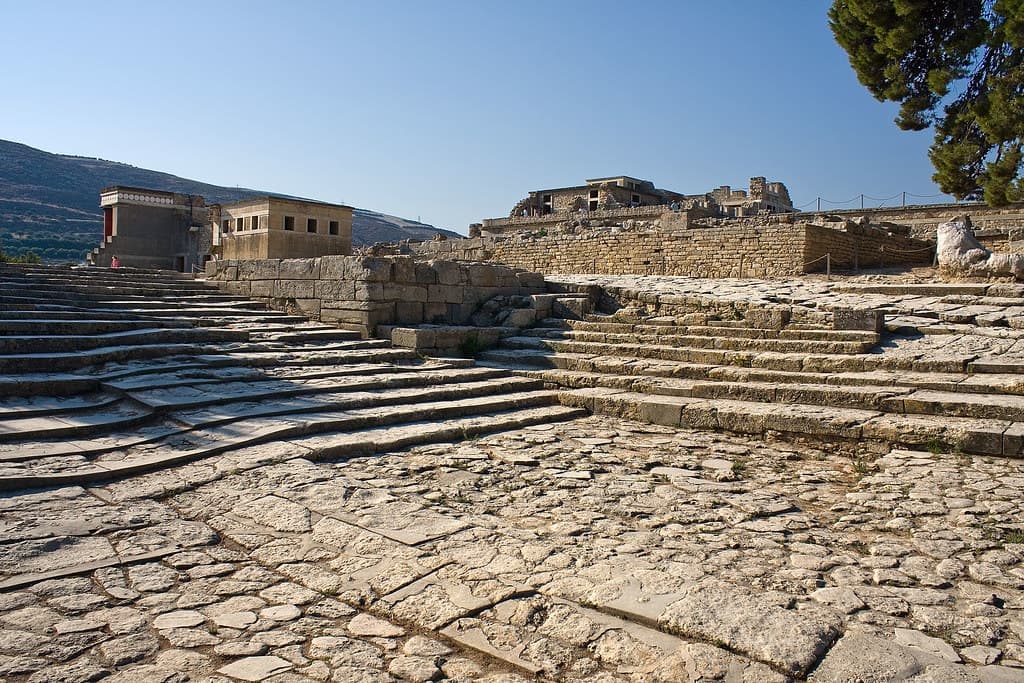
Knossos
Heraklion Municipal Unit, Region of Crete, Greece
0.0 km away
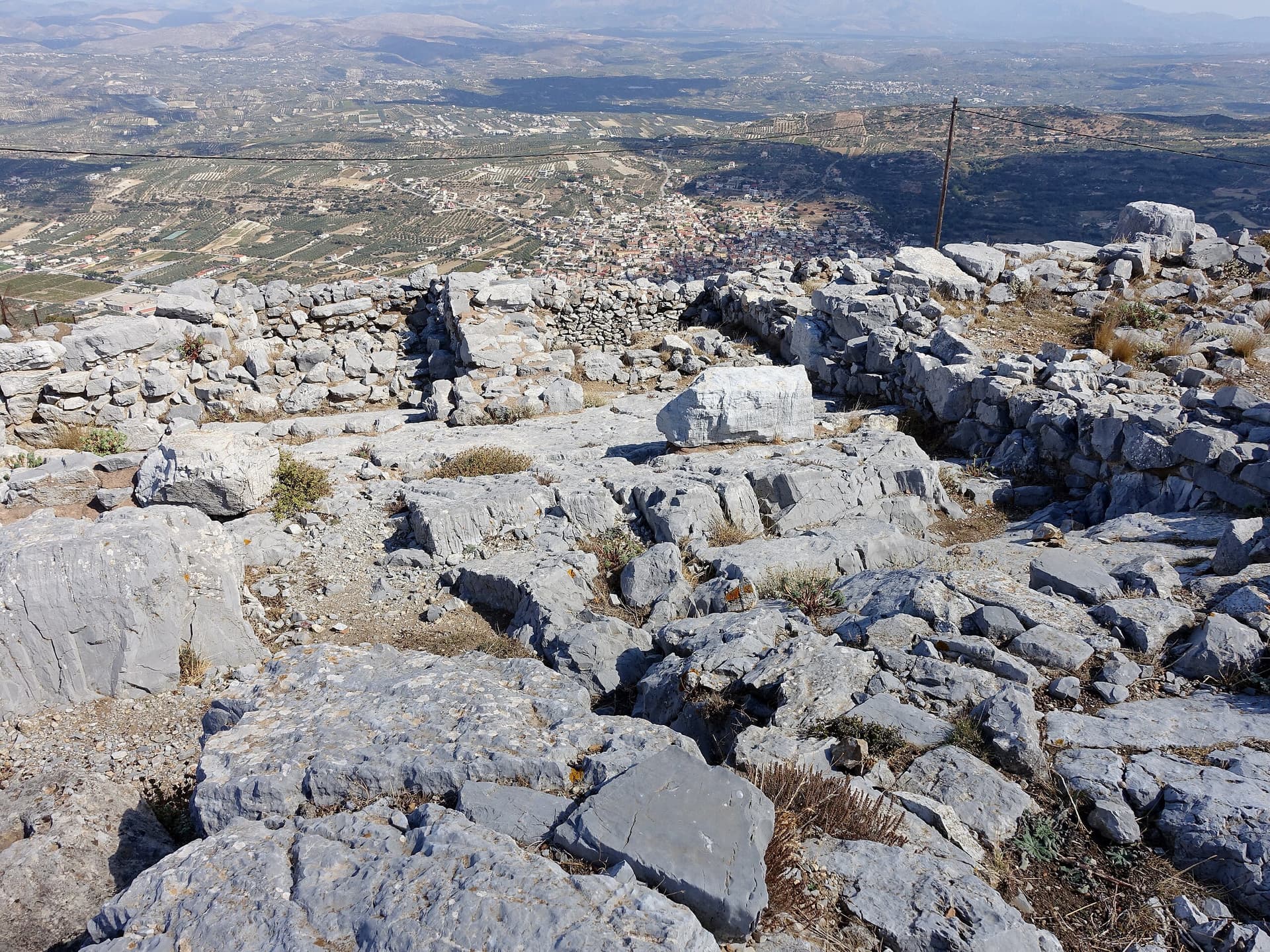
Mt. Juktas Minoan Peak Sanctuary, Crete
Archanes Municipal Unit, Region of Crete, Greece
6.7 km away
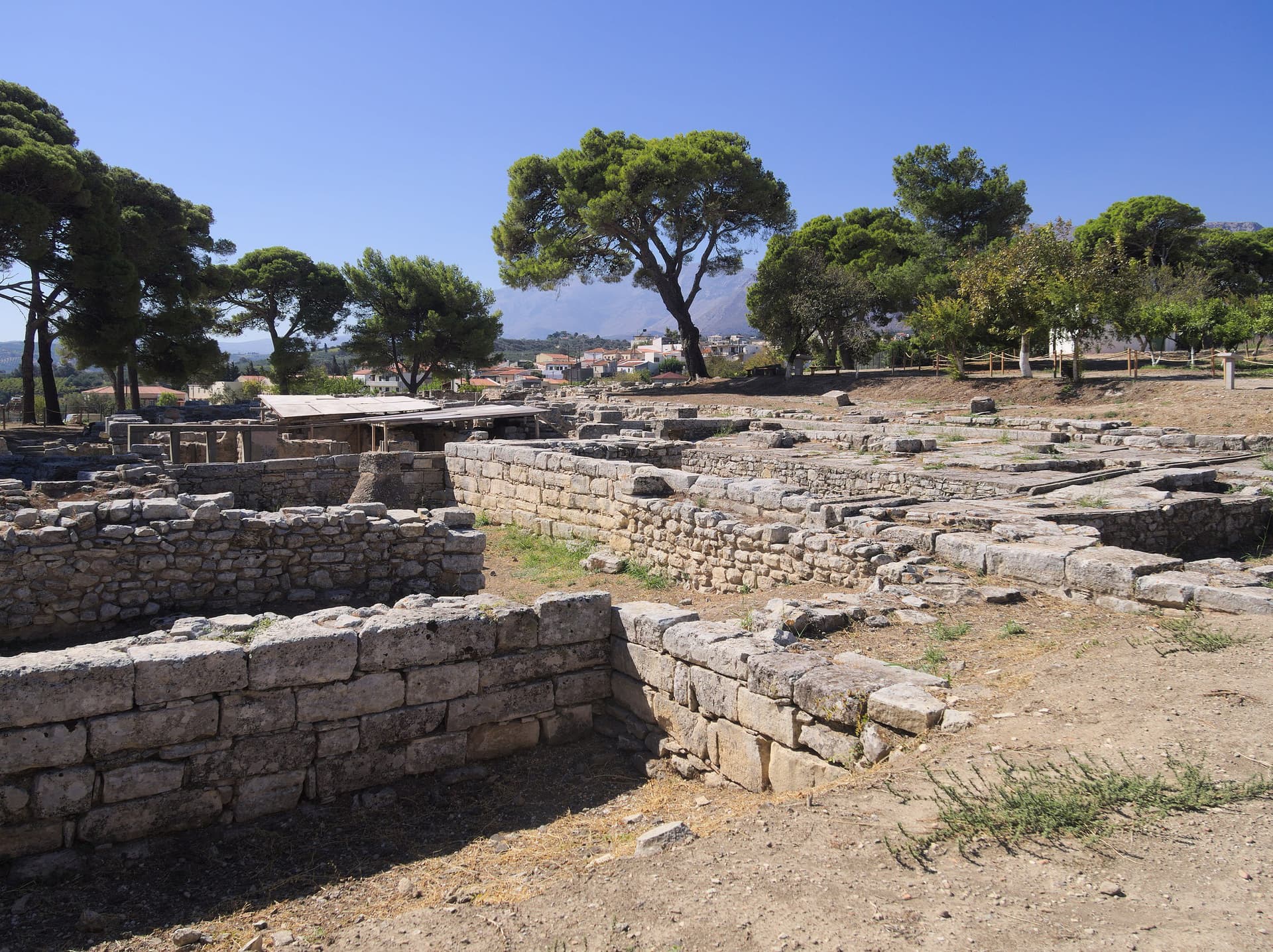
Tylissos Minoan Temple
Tylissos Municipal Unit, Region of Crete, Greece
13.0 km away
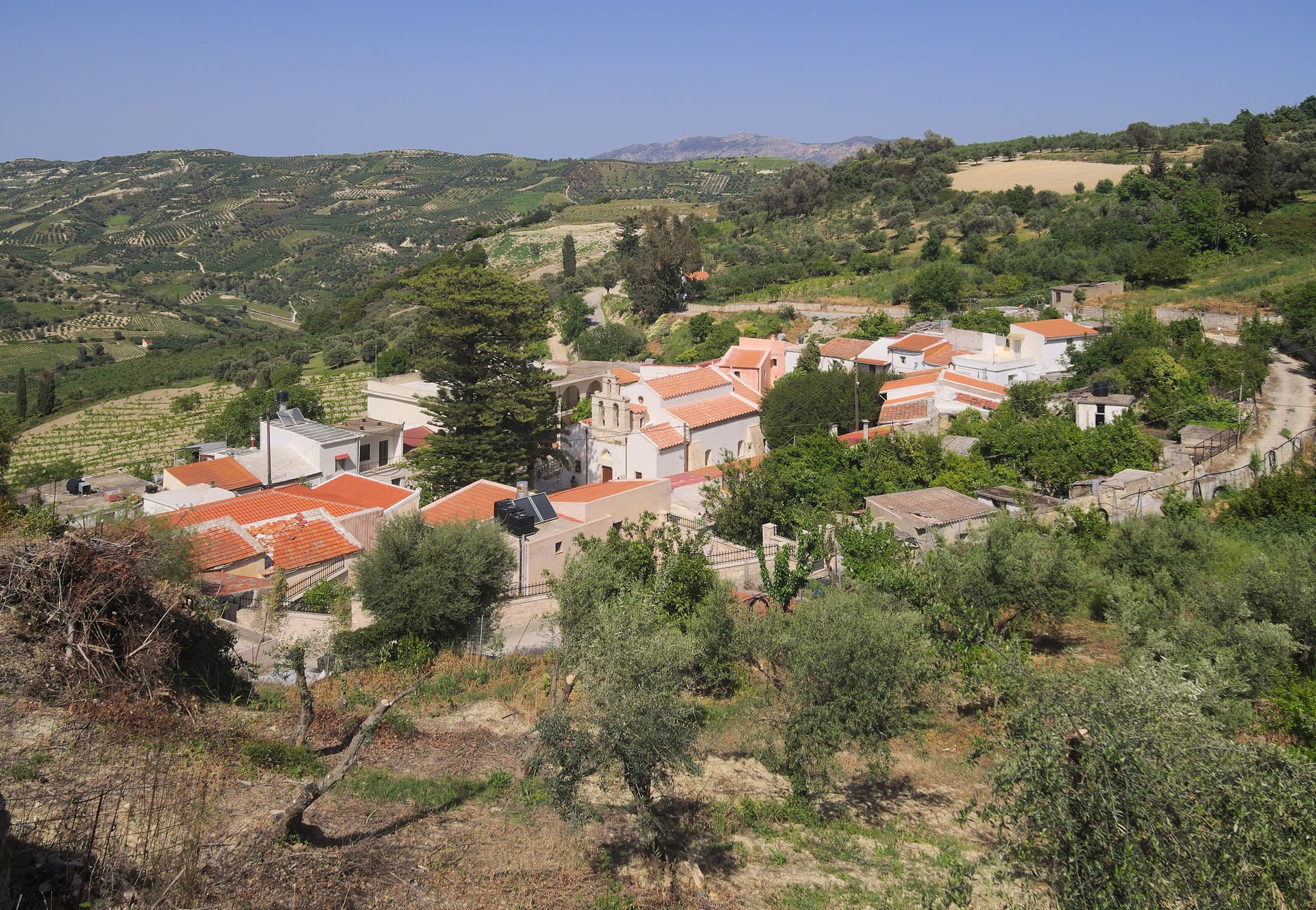
Paliani Monastery
Paliani Municipal Unit, Region of Crete, Greece
16.2 km away